NicholasA.R.Fraser

4K posts

NicholasA.R.Fraser banner
NicholasA.R.Fraser

NicholasA.R.Fraser

@NARFraser

(he/him) forensic systems auditor, political scientist, migration & multiculturalism expert @munkschool; RT is not agreement/endorsement; #FirstGen

Toronto, ON Katılım Mayıs 2011
2.1K Takip Edilen804 Takipçiler
NicholasA.R.Fraser retweetledi

kyall glennie
kyall glennie@kyall·
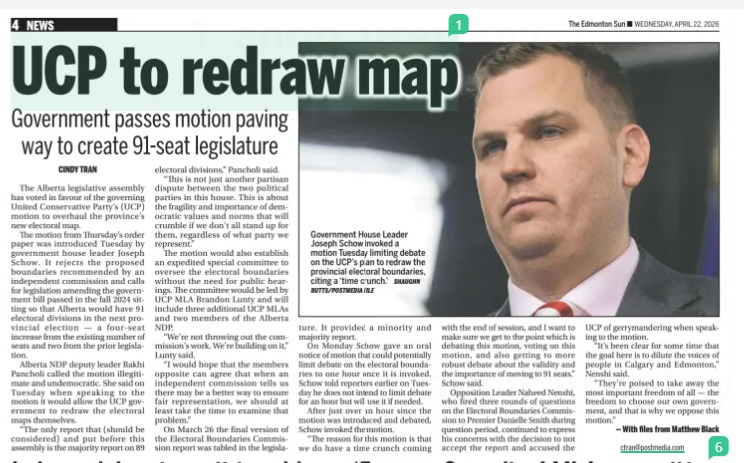
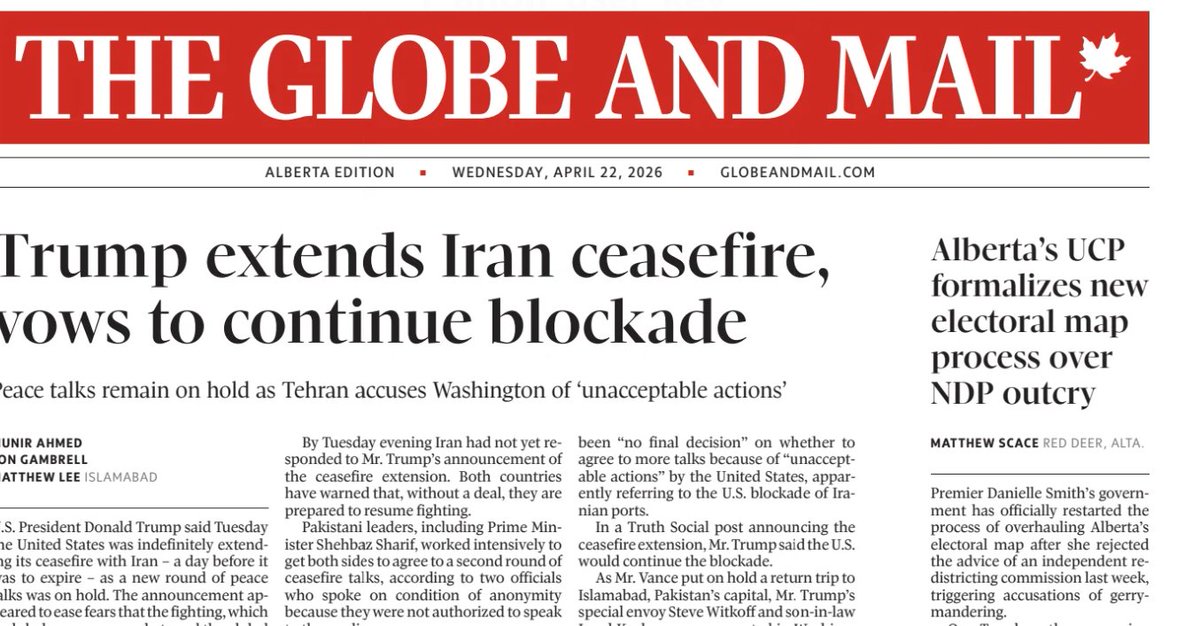
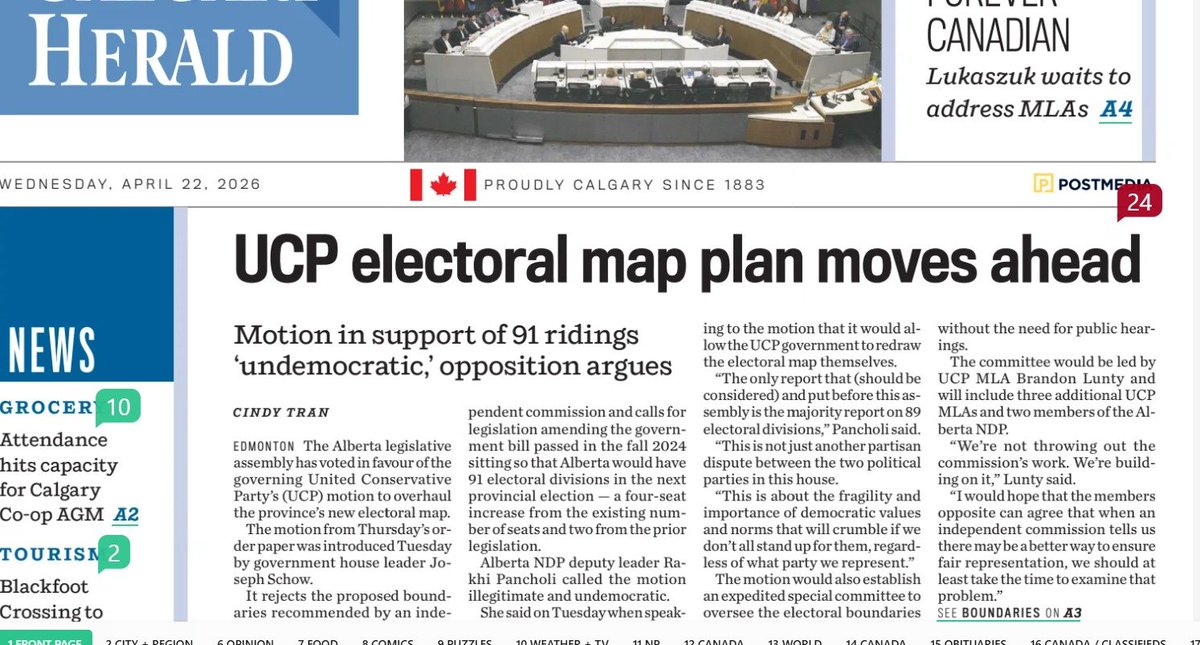
The 5 major daily newspapers in Alberta are still covering the UCP's plans to gerrymander Alberta's electoral boundaries on their front pages. Look at that headline: "UCP to redraw map." Not an independent commission - their scheme is politically directed. The fix is in.
kyall glennie tweet mediakyall glennie tweet mediakyall glennie tweet mediakyall glennie tweet media
English
14
122
209
6.4K
NicholasA.R.Fraser retweetledi
Naheed Nenshi
Naheed Nenshi@nenshi·
Alberta's 17th Premier @RachelNotley published an excellent op-ed in the Globe and Mail about how the UCP is putting democracy at risk with their attempt to rig the election: "I can say, with utter certainty, that at no time did I even casually consider abusing my power as Premier or our legislative majority. It has to stop here. "If we allow politicians to rig elections, then we will be giving them carte blanche to do anything they want. No politician should ever hold that power." Well worth the read: theglobeandmail.com/opinion/articl…
English
175
296
701
13.8K
NicholasA.R.Fraser retweetledi
Science Magazine
Science Magazine@ScienceMagazine·
For decades, biology textbooks have enshrined a simple rule: DNA is made by copying a template. After one enzyme unzips a DNA double helix into separate strands, another called a polymerase builds a complementary sequence, base by base, for each strand. Presto: two copies of the original DNA. But new research into how bacteria defend themselves from viruses now shows this synthesis rule isn’t absolute. Now, a team describes a bacterial enzyme that synthesizes DNA without a nucleic acid template, using its own structure as a guide. Learn more: scim.ag/4tTc5IA @NewsfromScience
Science Magazine tweet media
English
30
610
2.5K
366.5K
NicholasA.R.Fraser retweetledi
Massimo
Massimo@Rainmaker1973·
Studies show family meals are literally linked to better grades. According to a Columbia University study by the National Center on Addiction and Substance Abuse (CASA), children who frequently share dinner with their families achieve higher grades in school. The data reveals that teens eating five or more family meals weekly are far more likely to earn excellent marks and demonstrate advanced communication and vocabulary abilities. This research underscores how routine family engagement fosters a nurturing, stable setting that enhances emotional well-being and self-assurance—vital factors in scholastic achievement. The advantages go further: shared mealtimes provide a secure forum for self-expression, absorption of family principles, and honing of analytical thinking. Notably, the study also shows that adolescents with more family dinners are markedly less prone to risky activities like smoking or alcohol use. In today’s world of packed agendas and digital distractions, these findings highlight how the straightforward act of dining together can significantly influence a child’s trajectory. [Columbia University, National Center on Addiction and Substance Abuse (CASA). April 2025]
Massimo tweet media
English
14
170
706
65K
NicholasA.R.Fraser retweetledi
DigiMinal
DigiMinal@DIGIMINAL·
40 sites to download books for Free
DigiMinal tweet media
English
0
103
431
12.6K
NicholasA.R.Fraser retweetledi
NBER
NBER@nberpubs·
Presenting a model of university organization and sketching the evolution of the university’s products and conflicts over the last 900 years, from David M. Cutler and Edward L. Glaeser nber.org/papers/w35079
NBER tweet media
English
0
22
46
6.9K
NicholasA.R.Fraser retweetledi
Bo Wang
Bo Wang@BoWang87·
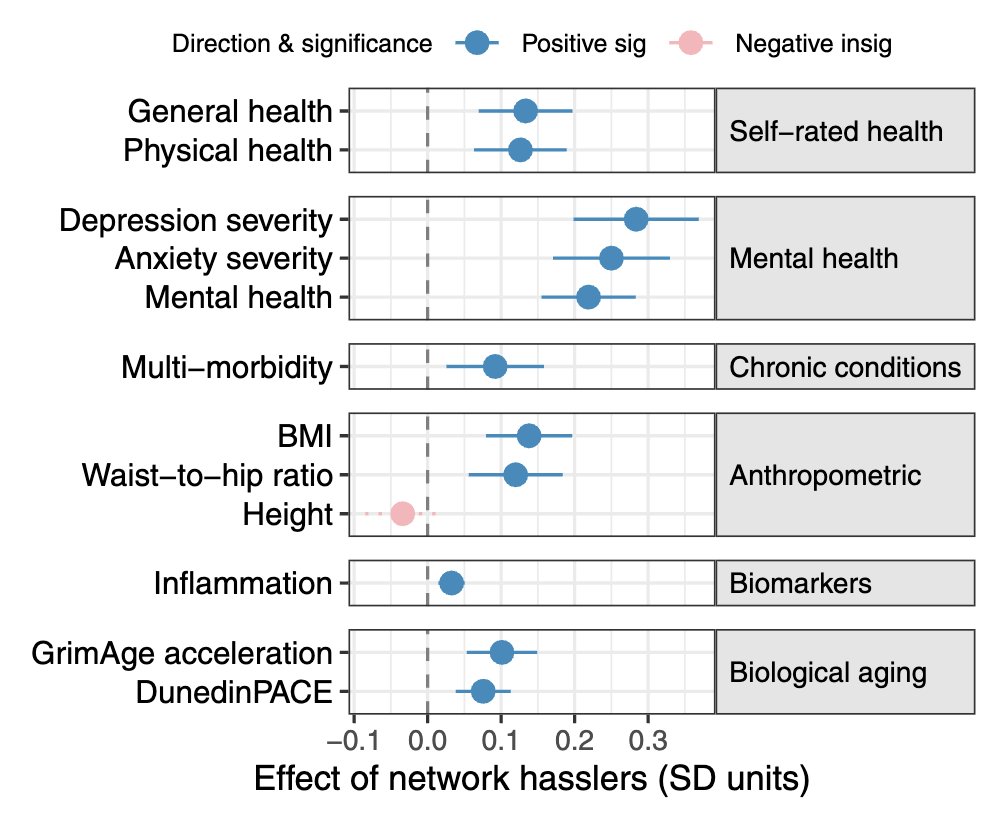
A new PNAS paper says the people around you may literally accelerate your biological aging. Each additional “hassler” in your social network was linked to: • 1.5% faster epigenetic aging • ~9 months older biological age • higher inflammation • worse physical + mental health Choose your circle carefully. Paper: pnas.org/doi/10.1073/pn…
Bo Wang tweet media
English
7
28
137
15.4K
NicholasA.R.Fraser retweetledi
Jay Van Bavel, PhD
Jay Van Bavel, PhD@jayvanbavel·
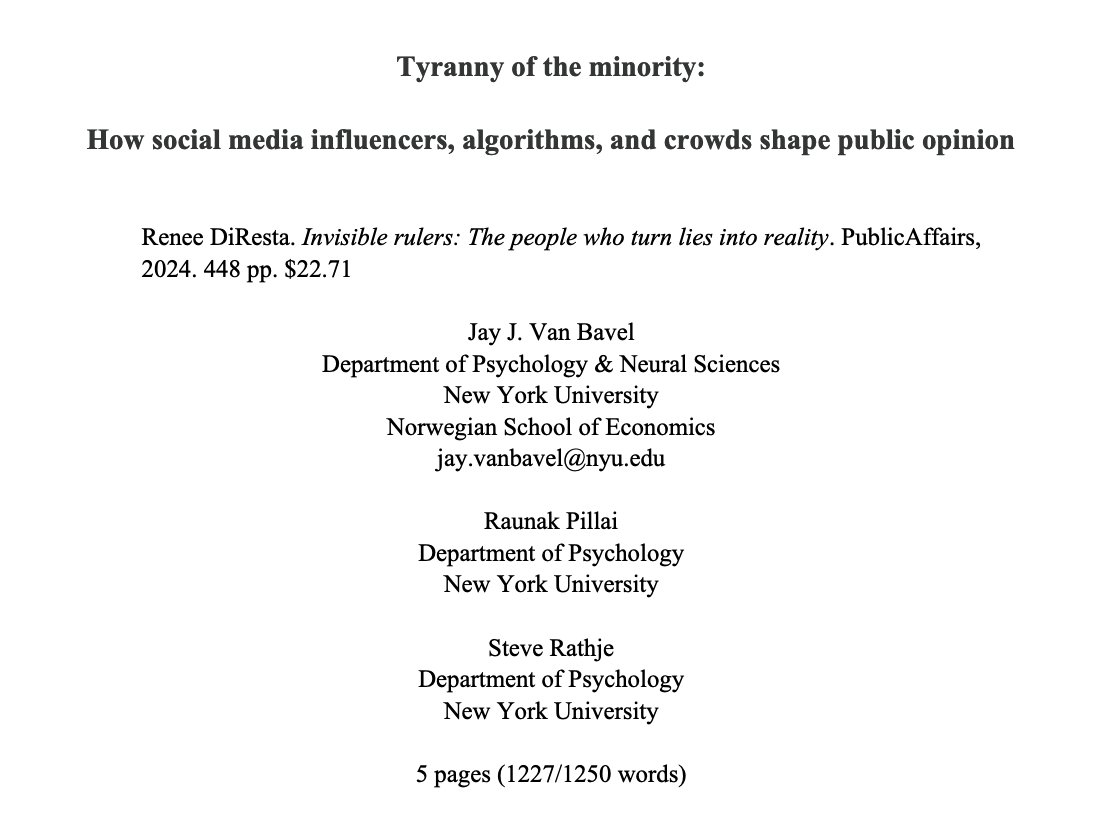
A small fraction of online actors now exerts outsized influence over what the public sees, believes, and argues about. In a new short review paper, we trace how social media influencers can turn fringe claims into viral narratives—often by exploiting a feedback loop between influencers, algorithms, and crowds. As such, the modern information environment enables a tyranny of the minority: extreme and coordinated voices dominate attention, distort perceived social norms, and create a “funhouse mirror” version of public opinion that makes fringe positions look common and conflict look inevitable. We synthesize emerging evidence that a tiny number of highly active users drives a disproportionate share of misinformation and toxicity, and explain how platform incentives reward moralized, identity-salient, and emotionally charged content. We conclude by outlining pragmatic responses—individual, institutional, and policy-level—and by highlighting how generative AI could either accelerate bespoke realities or help rebuild shared understanding, depending on how these systems are designed and governed. osf.io/preprints/psya… We (@PillaiRaunak & @steverathje2) reviewed @noUpside's fantastic book "INVISIBLE RULERS" and connected it to the research we have been doing on this topic for the past decade.
Jay Van Bavel, PhD tweet media
English
43
565
1.3K
105.2K
NicholasA.R.Fraser retweetledi
Naheed Nenshi
Naheed Nenshi@nenshi·
The independent Boundaries Commission consulted with thousands of Albertans before publishing its report. Ignoring their report is cheating. Ignoring their report is gerrymandering.
English
137
353
841
16K
NicholasA.R.Fraser retweetledi
Massimo
Massimo@Rainmaker1973·
The smartest age in life may be 55 to 60 – not in your 20s. Raw cognitive abilities, such as processing speed and memory, often peak early in life. Athletes typically hit their prime before 30, mathematicians make major breakthroughs by their mid-30s, and chess champions rarely stay dominant past 40. However, a new research reveals that overall psychological functioning—including personality traits, judgment, and emotional intelligence—peaks much later, between ages 55 and 60. A study analyzing 16 key traits across the lifespan found that conscientiousness peaks around 65, emotional stability reaches its height near 75, moral reasoning deepens in older age, and the ability to avoid cognitive biases may improve into the 70s or 80s. When combined into a single index, these traits suggest the mind is most balanced in the late 50s, blending experience, emotional steadiness, and sound judgment. This may explain why many top leaders and thinkers achieve their greatest impact in midlife. ["Worried about turning 60? Science says that’s when many of us actually peak." The Conversation, 14 Oct 2025]
Massimo tweet media
English
51
327
1.3K
86.3K
NicholasA.R.Fraser retweetledi
John B. Holbein
John B. Holbein@JohnHolbein1·
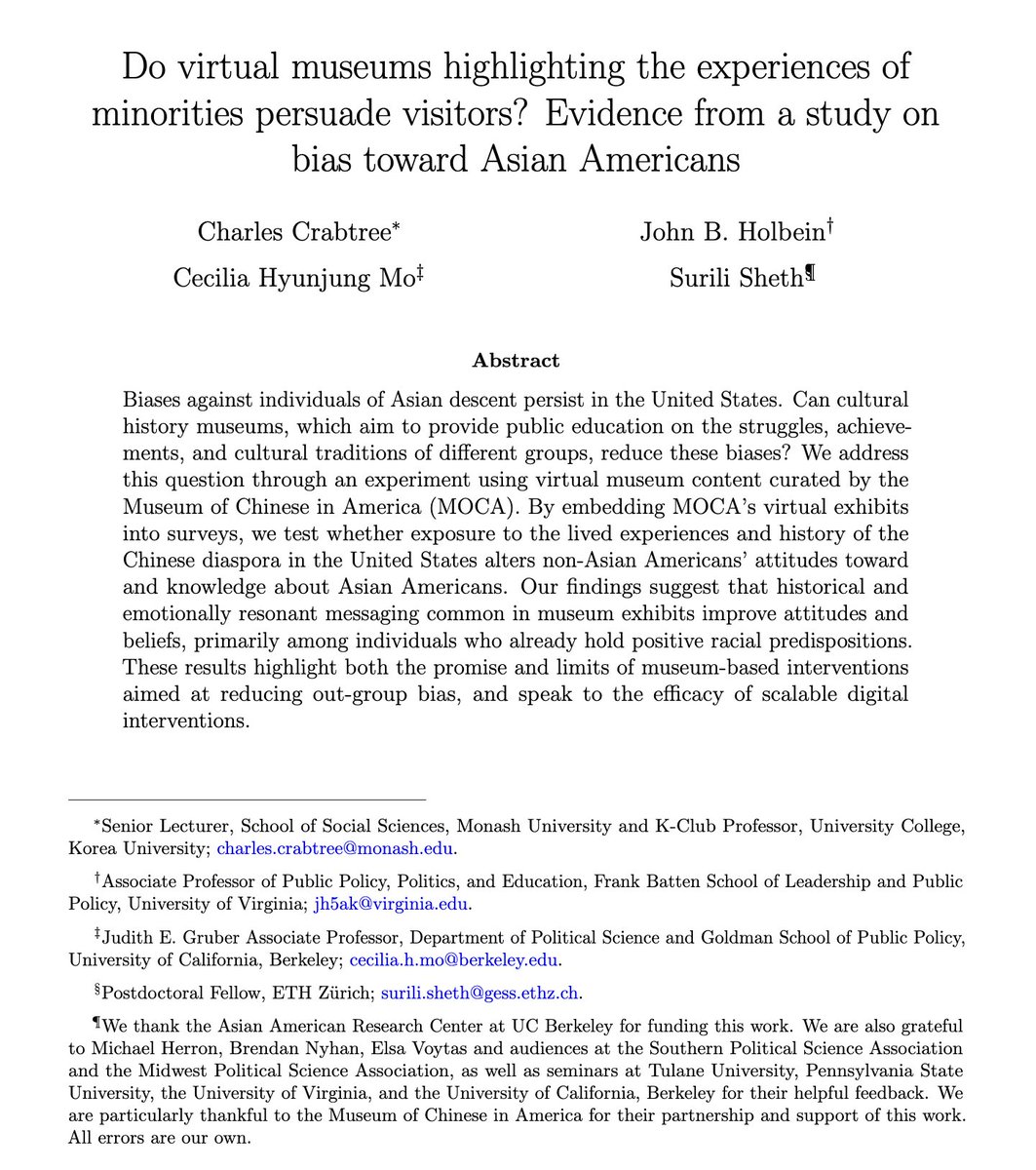
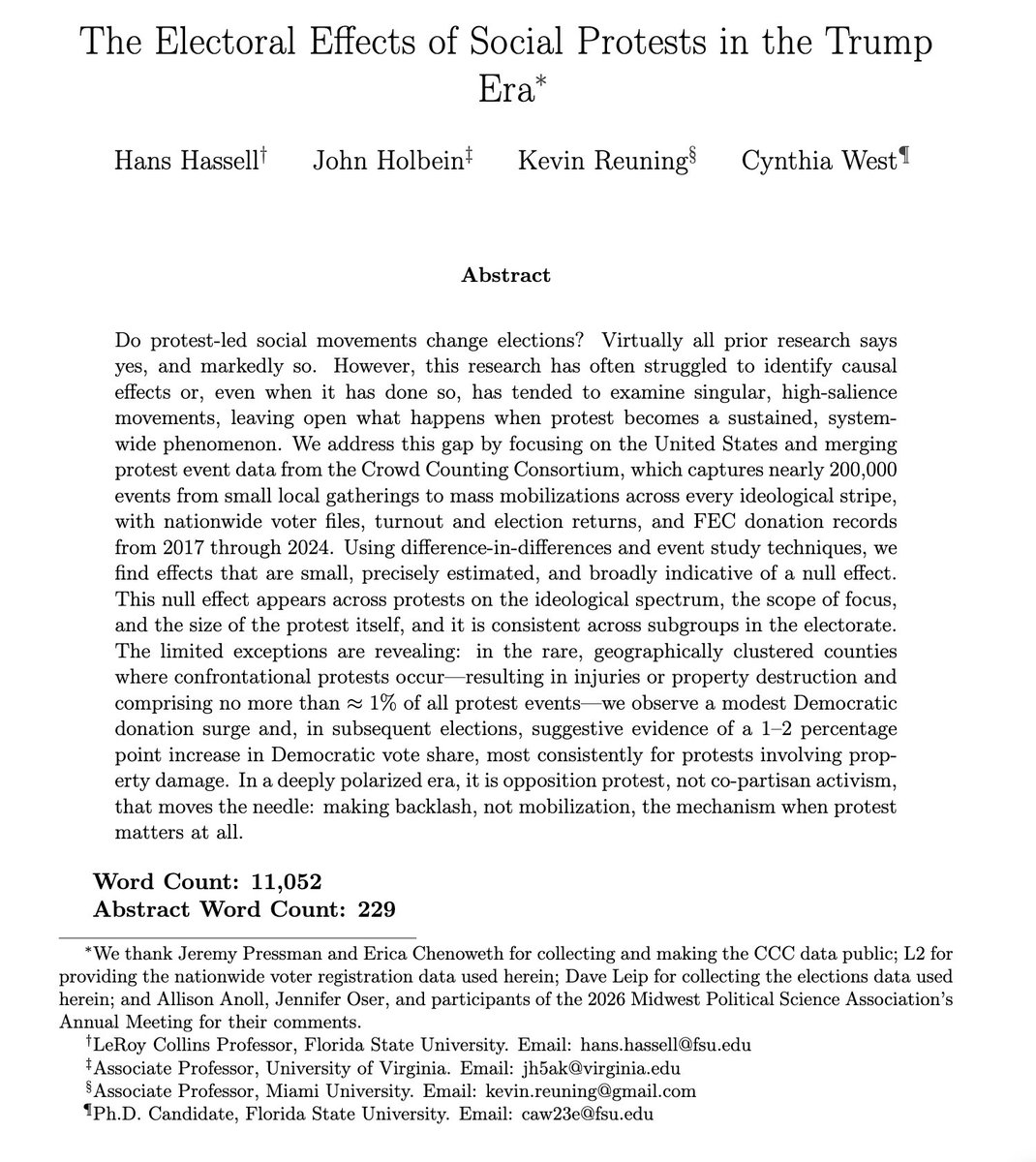
Heading to #MPSA2026? I have three papers on the program: 1. "Do virtual museums highlighting the experiences of minorities persuade visitors?" Fri, April 24, 3:20 to 4:50pm CDT 2. "The China Penalty: Measuring and Understanding a Blanket Bias Against Chinese Immigrants Across 22 Nations" Sat, April 25, 8:00 to 9:30am CDT 3. "The Electoral Effects of Social Protests in the Trump Era" Fri, April 24, 8:00 to 9:30am CDT Come and say hi!
John B. Holbein tweet mediaJohn B. Holbein tweet mediaJohn B. Holbein tweet media
English
1
2
33
3.8K
NicholasA.R.Fraser retweetledi
Steve Stewart-Williams
Steve Stewart-Williams@SteveStuWill·
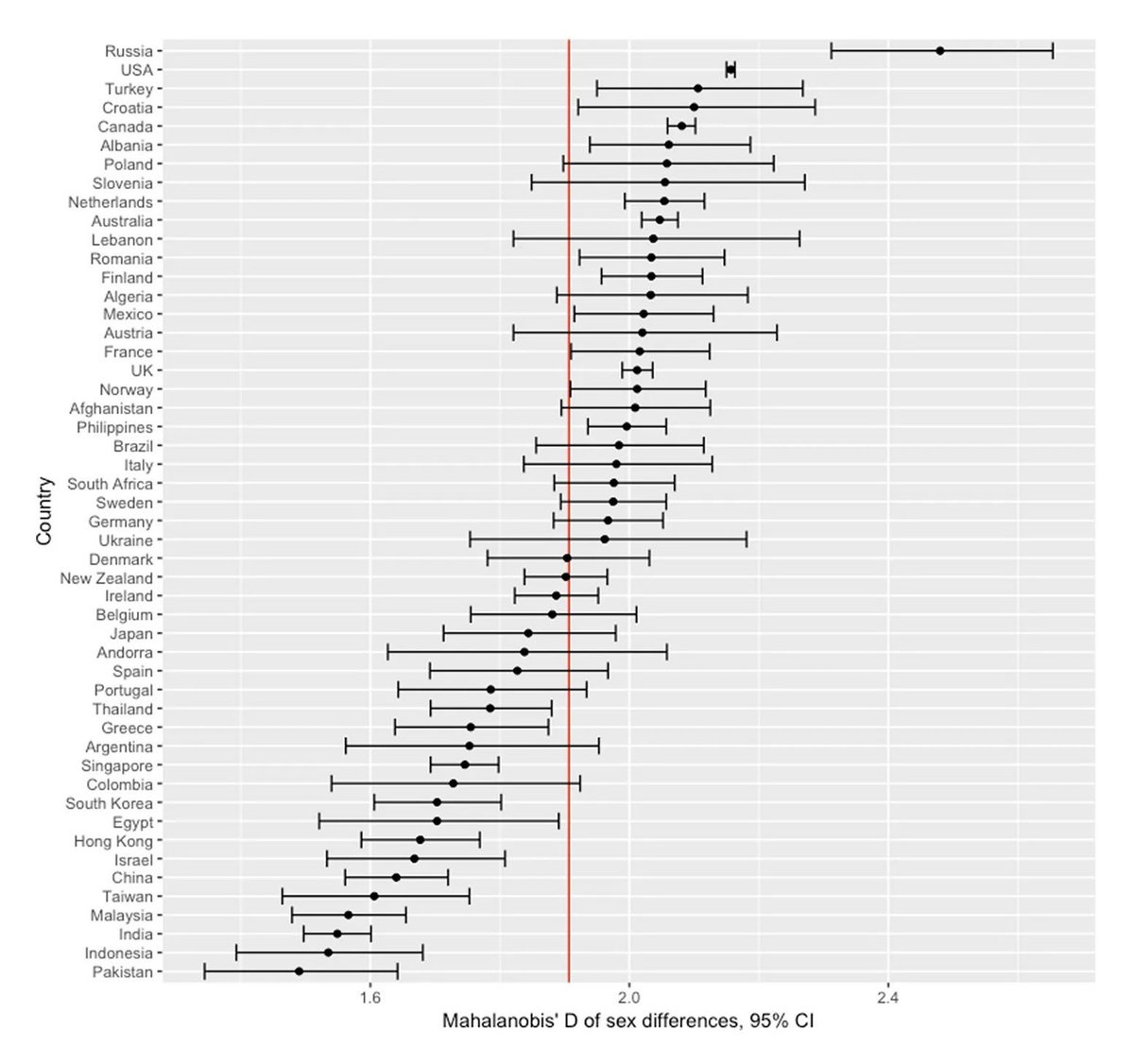
Sex differences in personality are larger, rather than smaller, in wealthier, more gender-equal nations - the opposite of what we’d expect if the differences were due to gender inequality, strict gender roles, or patriarchy. stevestewartwilliams.com/p/12-things-ev…
Steve Stewart-Williams tweet media
English
14
207
969
43K
NicholasA.R.Fraser retweetledi
Steve Stewart-Williams
Steve Stewart-Williams@SteveStuWill·
Your personality probably won’t change much in the next year or even in the next few, but it probably will change quite a lot over the next few decades. Odds are you’ll get more conscientious and agreeable, and also less neurotic. stevestewartwilliams.com/p/12-things-ev…
Steve Stewart-Williams tweet media
English
9
100
593
150.3K
NicholasA.R.Fraser retweetledi
Corey Hogan 🇨🇦
Corey Hogan 🇨🇦@coreyhoganyyc·
Separatism isn’t new in Alberta. And it’s not something to trivialize. I appreciated this conversation with Stéphane Dion and the good folks at the Pearson Centre — have a listen.
The Pearson Centre@PearsonCentre

The Pearson Centre recently met with Stéphane Dion, former federal Liberal leader and Cabinet Minister, and Corey Hogan, a current Member of Parliament for Calgary, for a conversation about Canadian separatist movements. Read and watch here: thepearsoncentre.ca/canadian-unity…

English
31
43
105
7.5K
NicholasA.R.Fraser
NicholasA.R.Fraser@NARFraser·
@JohnHolbein1 🧵 3/3 If so … If media reflect public opinion your results imply socio-political polarization beyond media are decisive. In such case, its likely changing social networks due to partisan sorting, etc. Either way, protests have less persuasive impact. …
English
1
0
1
25
John B. Holbein
John B. Holbein@JohnHolbein1·
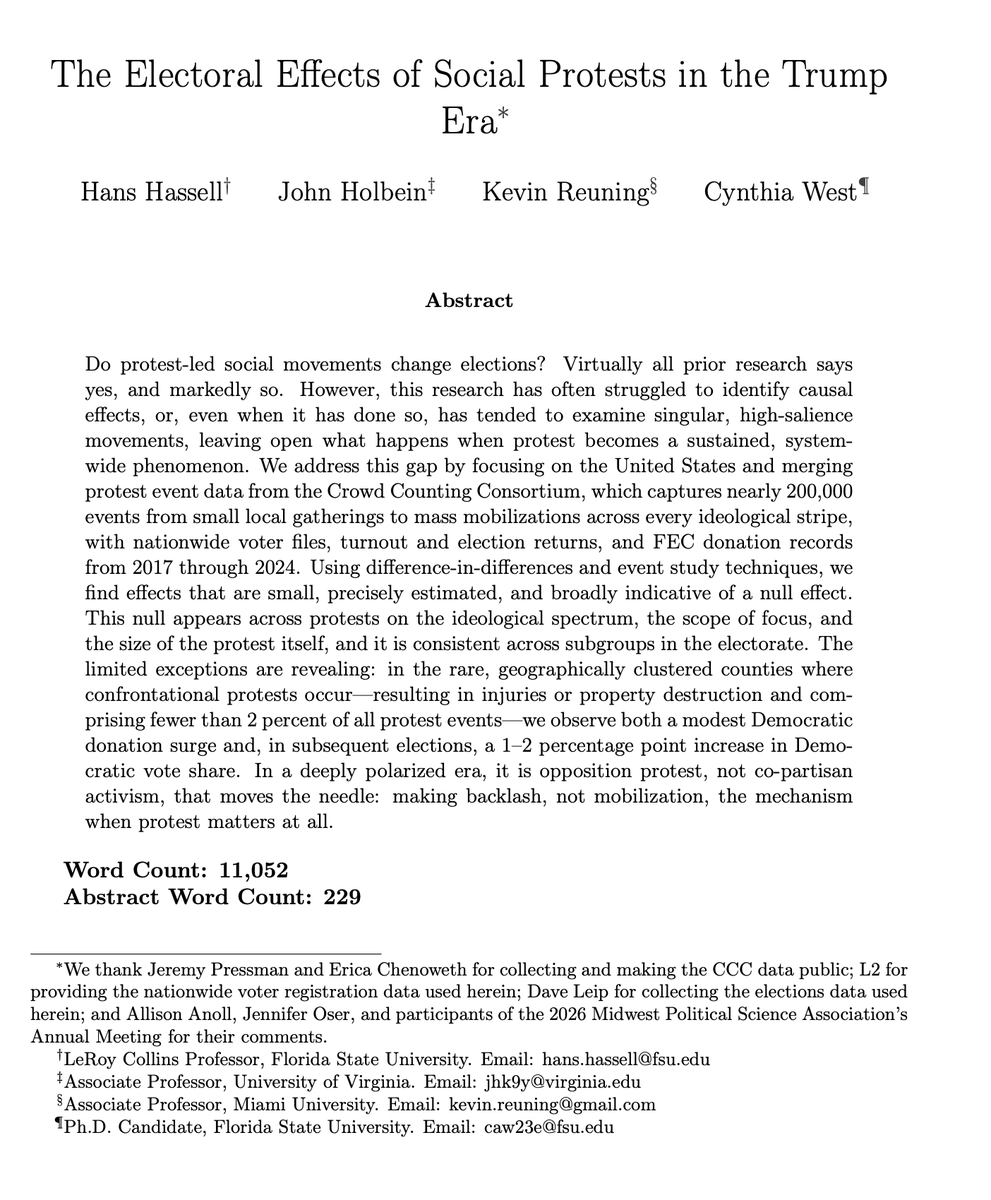
Do protests change election results? The standard answer from prior research: yes, and dramatically so. Studies of civil rights, the Tea Party, and Black Lives Matter find protests shift elections a lot. The dominant view: protest reliably moves elections. But is that always true? What about protests in the last few years? Our latest working paper challenges prevailing logic. Our finding: most recent protests have failed to shift elections.
John B. Holbein tweet media
English
14
121
443
52.8K