ARCHIVED - NASA Voyager

625 posts

ARCHIVED - NASA Voyager banner
ARCHIVED - NASA Voyager

ARCHIVED - NASA Voyager

@NASAVoyager

This account has been archived. Follow @NASAJPL & @NASASolarSystem to get the latest updates on Voyager 1 & 2, the longest operating spacecraft in deep space.

Interstellar space Katılım Ağustos 2010
50 Takip Edilen830.3K Takipçiler
Sabitlenmiş Tweet
ARCHIVED - NASA Voyager
ARCHIVED - NASA Voyager@NASAVoyager·
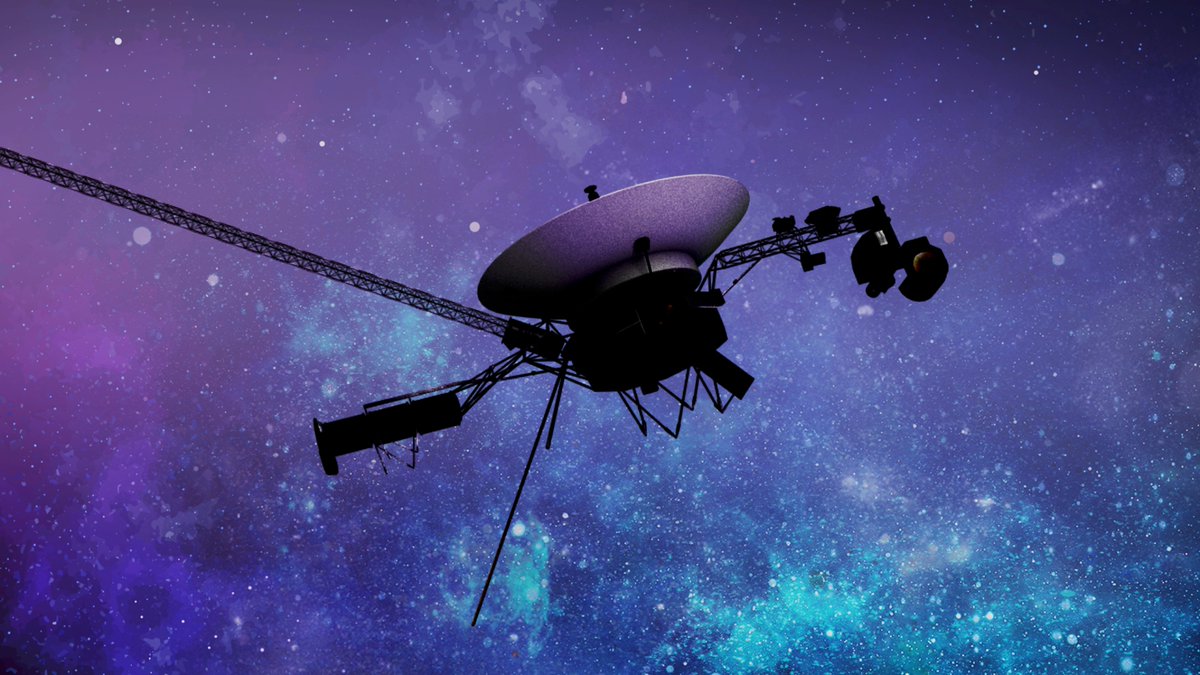
Who ever thought a pair of spacecraft launched in the ’70s would end up with a Twitter account? We're signing off here, but our mission continues. (Fingers crossed for 50 years!) Thanks for being part of this remarkable story. Stay curious. Stay kind. Stay inspired. 💫 -V1&2
ARCHIVED - NASA Voyager tweet media
English
256
1.1K
7.8K
280.2K
Laurel Kornfeld
Laurel Kornfeld@plutosavior·
@NASAVoyager Why are you signing off? What's up with all these NASA accounts being shut down?
English
1
0
2
619
ARCHIVED - NASA Voyager
ARCHIVED - NASA Voyager@NASAVoyager·
Who ever thought a pair of spacecraft launched in the ’70s would end up with a Twitter account? We're signing off here, but our mission continues. (Fingers crossed for 50 years!) Thanks for being part of this remarkable story. Stay curious. Stay kind. Stay inspired. 💫 -V1&2
ARCHIVED - NASA Voyager tweet media
English
256
1.1K
7.8K
280.2K
Chase
Chase@Rocket_To_Stars·
@NASAVoyager Thanks for keeping us updated on Voyager’s status all this time. I hope we can continue to get information from some other source.
GIF
English
2
3
172
7.4K
ARCHIVED - NASA Voyager
ARCHIVED - NASA Voyager@NASAVoyager·
My final planetary encounter – Neptune – was an historic time. From Aug. 21-29, 1989, my team held daily press conferences to share news with the world. On Aug. 25, Chuck Berry visited @NASAJPL to perform the only rock-and-roll song on the Golden Records, “Johnny B. Goode." - V2
ARCHIVED - NASA Voyager tweet media
English
16
125
907
32.7K
ARCHIVED - NASA Voyager
ARCHIVED - NASA Voyager@NASAVoyager·
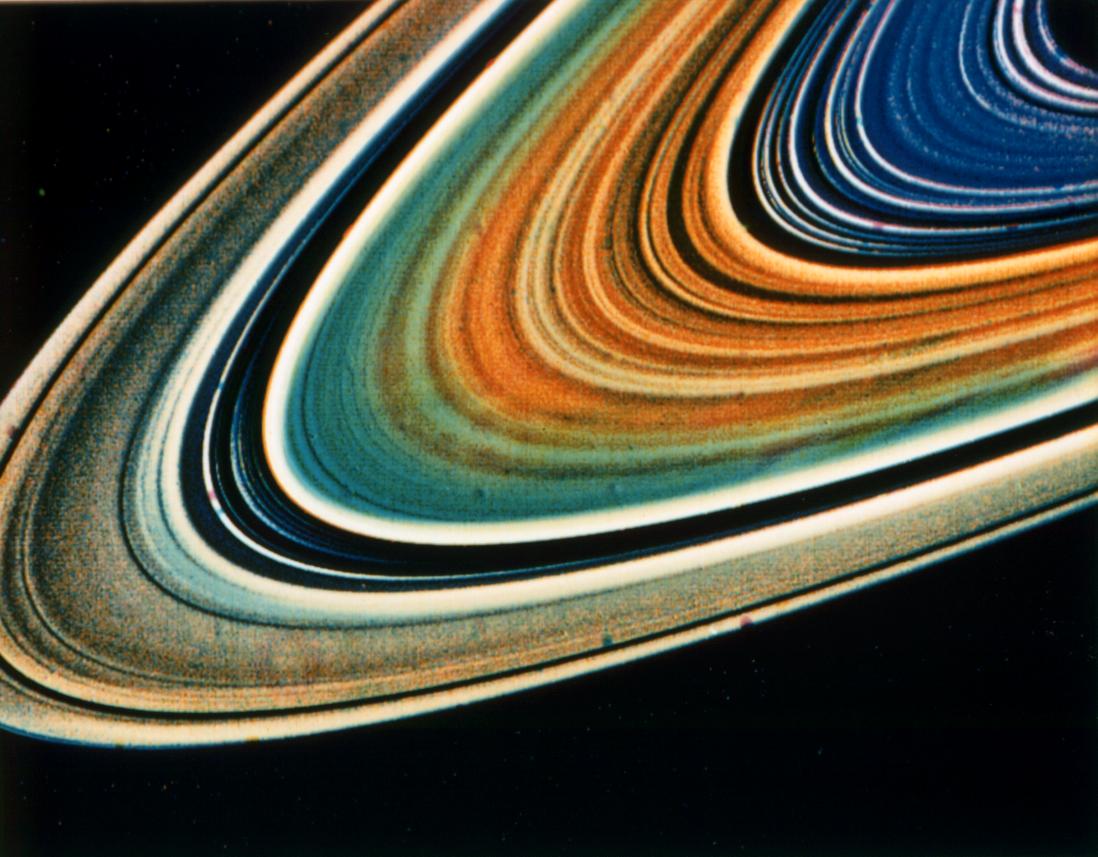
Our Saturn encounters occurred nine months apart, in November 1980 and August 1981. Some of the greatest surprises were found in the planet's rings, like this pic V2 took from a distance of 8.9 million km (5.5 million mi). Explore more: science.nasa.gov/mission/voyage…
ARCHIVED - NASA Voyager tweet media
English
18
256
1.5K
37.7K
ARCHIVED - NASA Voyager
ARCHIVED - NASA Voyager@NASAVoyager·
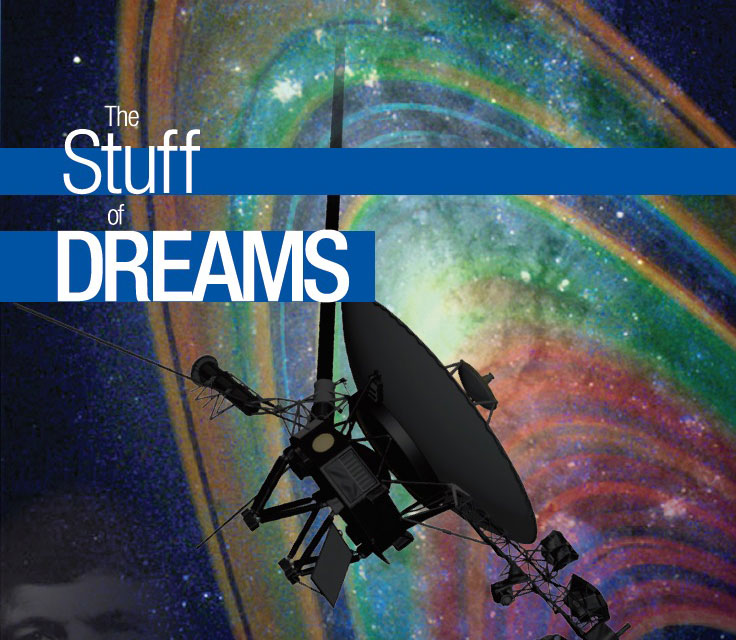
Calling all space history buffs! Watch these Voyager-themed episodes of the "JPL and the Space Age" documentary series to explore the origins and early discoveries of our missions: The Stuff of Dreams: bit.ly/3ZGV7AF The Footsteps of Voyager: bit.ly/3I7fnoW
ARCHIVED - NASA Voyager tweet media
English
7
181
791
35.5K
ARCHIVED - NASA Voyager
ARCHIVED - NASA Voyager@NASAVoyager·
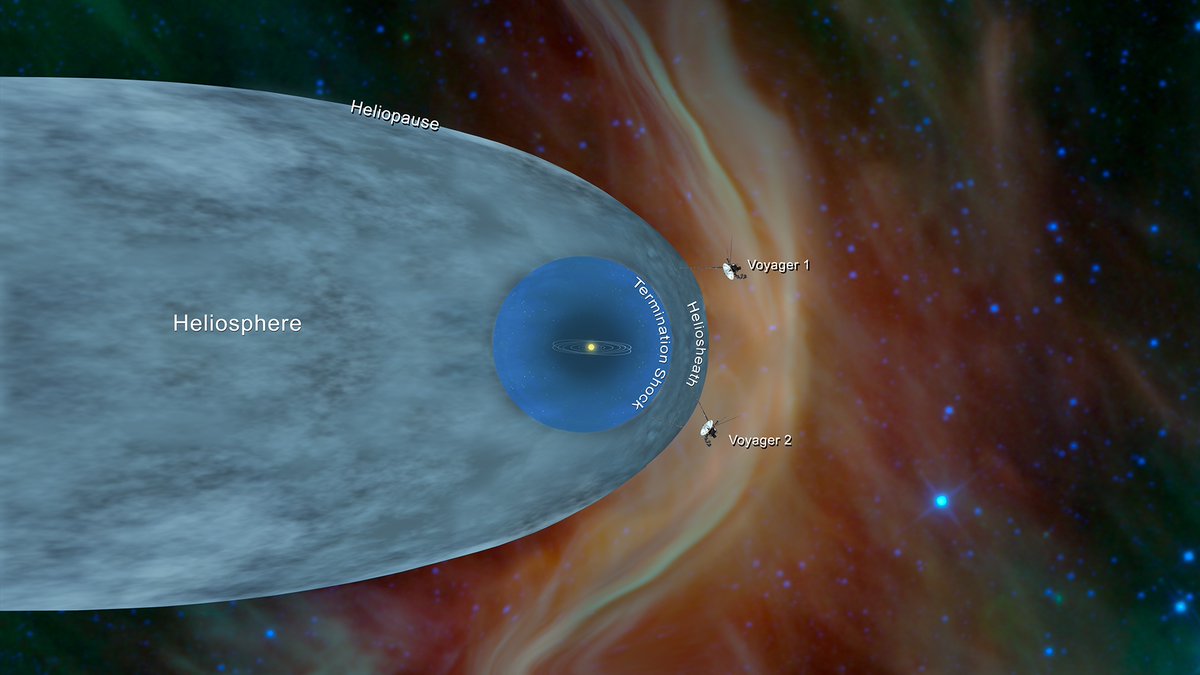
Our journeys out of the solar system were uncharted territory – and included three distinct phases: termination shock, heliosheath, and interstellar space. (TBH, the whole thing is pretty complicated, so maybe just go read about it here: science.nasa.gov/mission/voyage…)
ARCHIVED - NASA Voyager tweet media
English
23
329
1.9K
55.4K
ARCHIVED - NASA Voyager
ARCHIVED - NASA Voyager@NASAVoyager·
Fun fact about my final Neptune encounter: When I flew past the planet in the summer of 1985, it was the the most distant member of the solar system from the Sun. (Due to Pluto's irregular orbit.) No other spacecraft has visited Neptune since. - V2
ARCHIVED - NASA Voyager tweet media
English
8
36
290
18.2K
ARCHIVED - NASA Voyager
ARCHIVED - NASA Voyager@NASAVoyager·
In January 1986, I became the first (and so far only) spacecraft to explore Uranus, the second to last stop on my journey through the outer solar system. Bonus: I found 2 new Uranian rings and 10 new moons. (Previously, only 5 moons were known!) -V2
ARCHIVED - NASA Voyager tweet media
English
43
435
2.8K
53.2K
ARCHIVED - NASA Voyager
ARCHIVED - NASA Voyager@NASAVoyager·
My first planetary encounter 🤩 These views of Jupiter, captured between January and August 1979, were among the 52,000 pictures that V2 and I took during our Jovian flybys. We also collected tons of new scientific measurements. Learn more: science.nasa.gov/gallery/voyage… -V1
ARCHIVED - NASA Voyager tweet media
English
12
293
1.5K
56.2K
ARCHIVED - NASA Voyager
ARCHIVED - NASA Voyager@NASAVoyager·
@Rensontwitts Sorry, misread the question! The team expects that we'll be able to communicate into the 2030s. (But even then, it won't really be "dying," just no longer being able to communicate.)
English
1
0
17
291
Ren
Ren@Rensontwitts·
@NASAVoyager Yes, I know that. I'm asking how long till that happens? How long till you die?
English
2
0
3
783
ARCHIVED - NASA Voyager
ARCHIVED - NASA Voyager@NASAVoyager·
At 15 billion miles away, the signal I send to Earth is a lot fainter than it once was. Currently, a single 70-meter Deep Space Network antenna can receive my signal, but as I travel farther, they'll need the combined receiving power of up to six radio frequency antennas! -V1
ARCHIVED - NASA Voyager tweet media
English
89
570
5K
108.6K
ARCHIVED - NASA Voyager
ARCHIVED - NASA Voyager@NASAVoyager·
@Rensontwitts Interesting question - but it's more likely that my onboard power will reach a level that no longer allows me to communicate.
English
3
4
52
1.9K
Ren
Ren@Rensontwitts·
@NASAVoyager How much further can you travel before your power source is too feeble to send a signal.
English
2
3
24
2K
Julian Costello
Julian Costello@honunetcia·
@NASAVoyager Amazing! Are you the only Voyager craft we launched that is still transmitting back to Earth?
English
1
1
11
2K