Karthik R

1.5K posts

Karthik R banner
Karthik R

Karthik R

@NHkarthik

Bharatiya 🇮🇳 / New Yorker🇺🇸 making 🌎 a better place! 🌱

New York, NY Katılım Ağustos 2012
173 Takip Edilen139 Takipçiler
Karthik R retweetledi
Ra_Bies 3.0
Ra_Bies 3.0@Ra_Bies·
What a beautiful explanation of Entropy. Too good is this girl’s clarity and understanding of spirituality & philosophy
English
89
1.7K
5.4K
129K
Karthik R
Karthik R@NHkarthik·
@ZG121015 Averaged it further… hoping these puts work!
English
0
0
0
34
Karthik R
Karthik R@NHkarthik·
No wonder Godrej / bureau still synonymous and reliable
Parimal@Fintech03

The British Empire controlled the oceans, the gold, & the law, but they could not get past a single bolt of Bombay steel. This is the story of a failed lawyer turned mechanical insurgent who turned the humble door lock into a weapon of national pride, forcing the King’s finest locksmiths to admit they were officially locked out of India. Before the name Godrej was synonymous with furniture & rockets, it belonged to Ardeshir Godrej, a man who failed so miserably at law that he decided to start a war against British steel. Ardeshir Godrej began his career as a lawyer, but his professional life ended almost as soon as it started. In his very 1st case, he realized his client was lying. Ardeshir, possessing a terminal case of honesty, refused to defend him & walked out of the courtroom. He realized he was not built for the flexible truths of the law. He wanted to build something that was objectively, mathematically true. He turned to the 1 thing that never lies: Mechanical Engineering. At the time, the Indian market was flooded with British-made locks. But these locks had a colonial flaw, they used steel springs that would rust & snap in the humid Indian monsoon. Ardeshir wanted to make 1 that made British tech look like a toy. In a small shed in Lalbaug, Bombay, he invented the 1st lever-based lock. By removing the vulnerable spring & using a complex arrangement of levers, he created a mechanism that did not just lock, it secured. He called it the Gordian lock (a nod to the Gordian Knot that no 1 could untie). It was the 1st time an Indian product was marketed as being Unpickable. As the brand grew, the British remained skeptical. They believed native engineering could not possibly surpass the legendary locksmiths of Wolverhampton. To prove his point, Ardeshir began issuing public challenges. He invited British experts & even officers from the Royal Navy to pick his locks. In a devastating Bombay fire, while other safes melted and destroyed their contents, a Godrej safe was recovered from the ashes. When opened, the documents inside were intact & undamaged, proof of its superior fire-resistant design. The very empire Ardeshir was trying to bypass was forced to rely on his rebel steel for their own security. Ardeshir was a ghost in the corporate world. He never sought luxury. He donated 3 lakh rupees (a fortune in those days) to the Tilak Swaraj Fund in 1920. He was a Capitalist Revolutionary. Every time we hear the click of a Godrej lock today, we are hearing the echo of a failed lawyer's revenge. It is the sound of a mechanism that was built to be so honest, so stubborn, & so unbreakable that even the mightiest empire in the world had to admit they were locked out.


English
0
0
1
11
Parimal
Parimal@Fintech03·
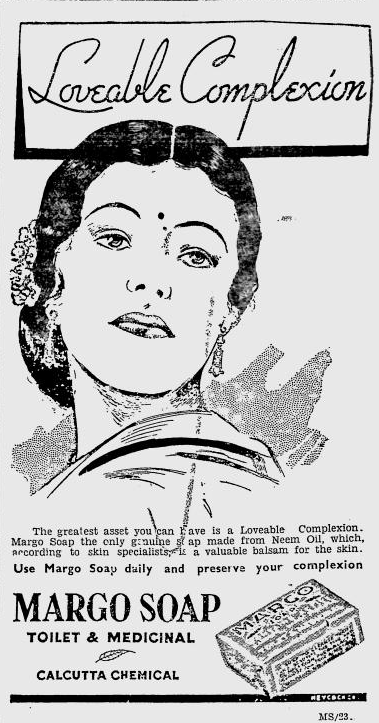
In 1920, the British soap giants (Lever Brothers) had a problem. They could make us smell like a rose, but they could not survive the Indian skin. The heat, the rashes, & the tropical infections were the enemies of the Empire. K.C. Das (I will write about him separately) & the scientists at Calcutta Chemical did not try to mask the heat; they weaponized it. They created Margo... a soap that did not just wash us; it immunized us. The British scientists had tried for yrs to make a Neem soap. They failed. Because Neem oil is notoriously difficult to saponify (turn into soap) w/o losing its medicinal properties/smelling like rotting onions. The Indian chemists used a secret cold-process method. They managed to keep the azadirachtin (the active bug killer in Neem) alive in the bar. When people used Margo, they were not just smelling herbal. They were coating their body in a biological shield. During the massive cholera & smallpox outbreaks in the early 20th century, the Margo smell became the scent of the survivor. It was the only soap the British doctors could not find a flaw in, they were forced to use it themselves. The British had a habit of patenting Latin names. Neem’s scientific name is Azadirachta indica, but it was also called Margosa. K.C. Das shortened it to Margo to make it sound modern, crisp, & international, tricking the British-educated elite into buying a peasant's remedy disguised as a high-end luxury brand. It was the 1st time an Indian brand sold Ugliness as Honesty. The green color became a silent code for Swadeshi (Made in India). If a British officer saw a Margo bar in our house, he knew he was in the home of some1 who trusted the soil more than the Crown's chemicals. The British tried to replicate Margo by creating Neem-scented soaps back in Manchester. They could not get the bite. Margo used pure Neem oil extracted from trees in the Bengal heartland. The British eventually started buying Margo in bulk for their Army Canteens because the White Soaps were causing skin rot in the humid trenches of the North-East & Burma. The British Empire which claimed to civilize India was literally being kept from rotting away by a green bar of soap made by the very subjects they were trying to rule. Every bar of Margo sold helped fund the Swadeshi spirit. The profits were used to train Indian chemists so that India would never have to depend on a British laboratory again. Margo got into the most intimate parts of an Indian's life, their morning bath, & reminded them every single day through that sharp, bitter scent: "You belong to this land." Margo was the 1st brand to realize that "Bitter is Better." While the British were selling the dream of being European (the scent of roses), Margo was selling the reality of being Indian (the scent of Neem). Today, we see Neem extracts in every global skincare brand from L'Oréal to Body Shop. They are all chasing a ghost created in a Calcutta lab in 1920. They are trying to sell us the Green Revolution, but Margo was the 1 that fought the War of the Skin when it actually mattered.
Parimal tweet mediaParimal tweet media
English
57
1.1K
2.8K
158.7K
Karthik R
Karthik R@NHkarthik·
I need to buy Amrutanjan balm…now
Parimal@Fintech03

Before the world knew the power of Big Pharma, a journalist in a tiny lab in Bombay created a substance so potent it triggered a trade war with London. It was a yellow grease that did not just soothe headaches but funded a movement, bypassed British blockades, & became 1 of the few Indian products to make the Empire's own medicine look like scented water. Unlike other brands started by chemists, Amrutanjan was founded by Kasinadhuni/Kasinathuni Nageswara Rao, a man who was primarily a journalist & a freedom fighter. In the late 1800s, the pain balm market in India was a British monopoly. If your head throbbed, you bought imported ointments. Rao saw this as a tax on pain. He retreated into a lab & perfected a formula that was significantly more potent than anything coming out of London. The British tried to push their own balms like Vicks/early menthol rubs as sophisticated & odorless. They attempted to smear Amrutanjan as primitive because of its overpowering scent. Rao leaned into the scent. He realized that in a country where literacy was low, a brand could not just be a name, it had to be an experience. He distributed free samples at music concerts (Sabhas) & religious festivals. By the time the British tried to patent the market for pain relief, the entire Indian public had already associated the smell of camphor & menthol with trust. The British balms felt alien & weak compared to the sensory explosion of the yellow tin. The smell of Amrutanjan... that piercing, camphor-heavy aroma became the literal scent of the freedom struggle. If you walked into a room & it smelled of Amrutanjan, it was a silent signal: A patriot is present. It was a scent the British police could not arrest, yet it was everywhere. The British had a Patent Medicine Tax that made imported drugs expensive. However, by classifying Amrutanjan as an Ayurvedic Proprietary Medicine, Rao managed to navigate a complex legal gray area. He essentially used the British legal system against itself. By proving his ingredients were ancient yet his manufacturing was modern, he avoided the crippling taxes that applied to purely Western drugs, while maintaining a price point (initially 10 annas) that made British imports look like daylight robbery Rao fought back not just in the market, but in the press. He used the profits from the balm to fund Andhra Patrika, 1 of the most influential anti-British newspapers. The British were literally paying for their own downfall. Every time a British officer’s wife bought a jar of Amrutanjan for a migraine (because it worked better than the London balms), she was inadvertently funding the printing of revolutionary literature that called for the end of the Raj. By the 1930s, this Indian yellow grease was being exported to Indian diaspora & locals in South Africa & Ceylon. It became a global symbol of Eastern Wisdom defeating Western Chemistry. It was 1 of those few occasions, an Indian OTC (Over the Counter) product achieved cult status internationally w/o a single pound of British investment. In fact, the yellow tin became so iconic that it did not need a label in the villages. The color & the smell were the brand. It was a biological Swadeshi. While others were fighting with words, Rao was fighting with molecular relief.

English
0
0
0
11
Karthik R retweetledi
Garuda
Garuda@garudazhwar·
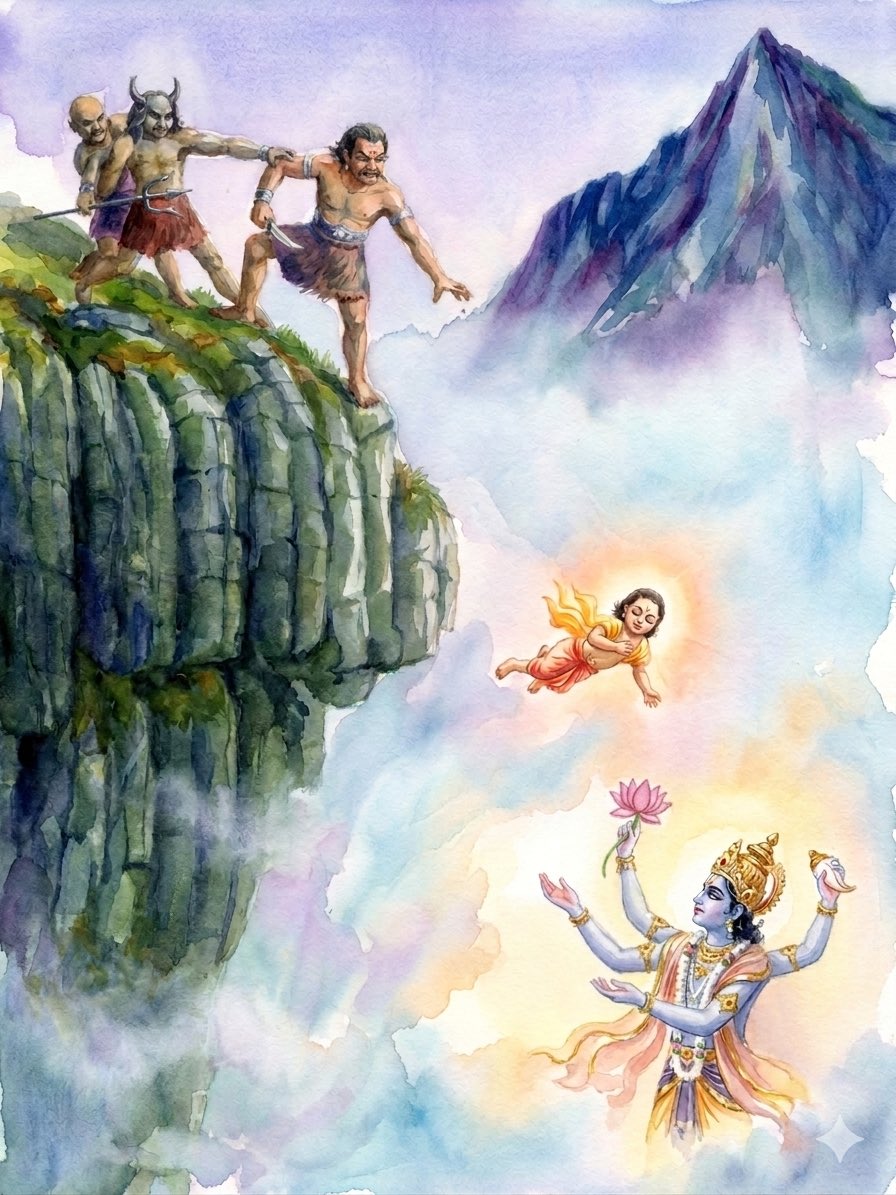
The height of the cliff doesn't matter when the depth of His mercy is infinite.
Garuda tweet media
English
12
225
2.5K
22K
Karthik R retweetledi
JIX5A
JIX5A@JIX5A·
It’s time to Decolonise Mount Everest !⛰️🏔️ Do you know why Mount Everest is called Mount Everest? ?? George Everest was the Surveyor General of India so it was his job to map the Indian subcontinent. But he was just the admin guy right? It was actually an Indian mathematician - Radhanath Sikdar who actually for the first time calculated the height and discovered that “Peak XV” was the tallest. So the British did what they do best - they measure it, they own it - they’ll name it. Peak XV was now Mount Everest!
English
105
1.1K
3.4K
141K
Karthik R
Karthik R@NHkarthik·
@adithya Dhanam… on Akshaya tritiya
हिन्दी
0
0
0
132
Adithya
Adithya@adithya·
This was used as part of something very divine and special specifically today
Adithya tweet media
English
8
3
60
2K