北澤直_Nao Kitazawa

178 posts

北澤直_Nao Kitazawa banner
北澤直_Nao Kitazawa

北澤直_Nao Kitazawa

@NKitazawa

色々やっています| ポッドキャスト @nao_tsuyoshi | 著書 誰がFinTechを制するのか KADOKAWA | Venture Partner@Eight Roads | Former head of Coinbase Japan | Investor, Entrepreneur, Attorney

日本 東京 Katılım Haziran 2018
245 Takip Edilen758 Takipçiler
北澤直_Nao Kitazawa retweetledi
Sequoia Capital
Sequoia Capital@sequoia·
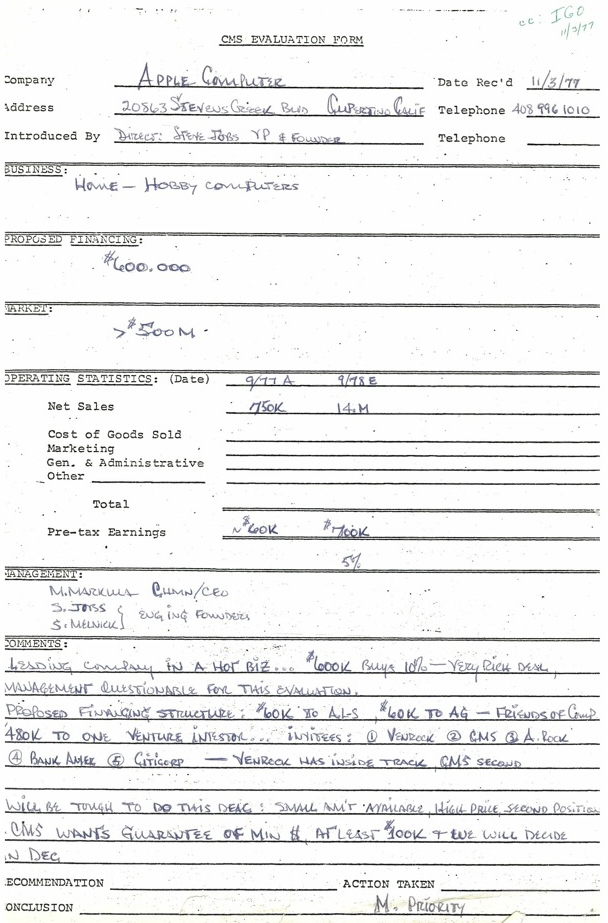
In honor of 50 years of Apple, we're sharing - for the first time ever - Don Valentine's original 1977 memo for Sequoia's investment into Apple Computer. #Apple50
Sequoia Capital tweet media
English
182
830
6K
2.2M
北澤直_Nao Kitazawa retweetledi
Justin Drake
Justin Drake@drakefjustin·
Today is a monumentous day for quantum computing and cryptography. Two breakthrough papers just landed (links in next tweet). Both papers improve Shor's algorithm, infamous for cracking RSA and elliptic curve cryptography. The two results compound, optimising separate layers of the quantum stack. The results are shocking. I expect a narrative shift and a further R&D boost toward post-quantum cryptography. The first paper is by Google Quantum AI. They tackle the (logical) Shor algorithm, tailoring it to crack Bitcoin and Ethereum signatures. The algorithm runs on ~1K logical qubits for the 256-bit elliptic curve secp256k1. Due to the low circuit depth, a fast superconducting computer would recover private keys in minutes. I'm grateful to have joined as a late paper co-author, in large part for the chance to interact with experts and the alpha gleaned from internal discussions. The second paper is by a stealthy startup called Oratomic, with ex-Google and prominent Caltech faculty. Their starting point is Google's improvements to the logical quantum circuit. They then apply improvements at the physical layer, with tricks specific to neutral atom quantum computers. The result estimates that 26,000 atomic qubits are sufficient to break 256-bit elliptic curve signatures. This would be roughly a 40x improvement in physical qubit count over previous state-of-the-art. On the flip side, a single Shor run would take ~10 days due to the relatively slow speed of neutral atoms. Below are my key takeaways. As a disclaimer, I am not a quantum expert. Time is needed for the results to be properly vetted. Based on my interactions with the team, I have faith the Google Quantum AI results are conservative. The Oratomic paper is much harder for me to assess, especially because of the use of more exotic qLDPC codes. I will take it with a grain of salt until the dust settles. → q-day: My confidence in q-day by 2032 has shot up significantly. IMO there's at least a 10% chance that by 2032 a quantum computer recovers a secp256k1 ECDSA private key from an exposed public key. While a cryptographically-relevant quantum computer (CRQC) before 2030 still feels unlikely, now is undoubtedly the time to start preparing. → censorship: The Google paper uses a zero-knowledge (ZK) proof to demonstrate the algorithm's existence without leaking actual optimisations. From now on, assume state-of-the-art algorithms will be censored. There may be self-censorship for moral or commercial reasons, or because of government pressure. A blackout in academic publications would be a tell-tale sign. → cracking time: A superconducting quantum computer, the type Google is building, could crack keys in minutes. This is because the optimised quantum circuit is just 100M Toffoli gates, which is surprisingly shallow. (Toffoli gates are hard because they require production of so-called "magic states".) Toffoli gates would consume ~10 microseconds on a superconducting platform, totalling ~1,000 sec of Shor runtime. → latency optimisations: Two latency optimisations bring key cracking time to single-digit minutes. The first parallelises computation across quantum devices. The second involves feeding the pubkey to the quantum computer mid-flight, after a generic setup phase. → fast- and slow-clock: At first approximation there are two families of quantum computers. The fast-clock flavour, which includes superconducting and photonic architectures, runs at roughly 100 kHz. The slow-clock flavour, which includes trapped ion and neutral atom architectures, runs roughly 1,000x slower (~100 Hz, or ~1 week to crack a single key). → qubit count: The size-optimised variant of the algorithm runs on 1,200 logical qubits. On a superconducting computer with surface code error correction that's roughly 500K physical qubits, a 400:1 physical-to-logical ratio. The surface code is conservative, assuming only four-way nearest-neighbour grid connectivity. It was demonstrated last year by Google on a real quantum computer. → future gains: Low-hanging fruit is still being picked, with at least one of the Google optimisations resulting from a surprisingly simple observation. Interestingly, AI was not (yet!) tasked to find optimisations. This was also the first time authors such as Craig Gidney attacked elliptic curves (as opposed to RSA). Shor logical qubit count could plausibly go under 1K soonish. → error correction: The physical-to-logical ratio for superconducting computers could go under 100:1. For superconducting computers that would be mean ~100K physical qubits for a CRQC, two orders of magnitude away from state of the art. Neutral atoms quantum computers are amenable to error correcting codes other than the surface code. While much slower to run, they can bring down the physical to logical qubit ratio closer to 10:1. → Bitcoin PoW: Commercially-viable Bitcoin PoW via Grover's algorithm is not happening any time soon. We're talking decades, possibly centuries away. This observation should help focus the discussion on ECDSA and Schnorr. (Side note: as unofficial Bitcoin security researcher, I still believe Bitcoin PoW is cooked due to the dwindling security budget.) → team quality: The folks at Google Quantum AI are the real deal. Craig Gidney (@CraigGidney) is arguably the world's top quantum circuit optimisooor. Just last year he squeezed 10x out of Shor for RSA, bringing the physical qubit count down from 10M to 1M. Special thanks to the Google team for patiently answering all my newb questions with detailed, fact-based answers. I was expecting some hype, but found none.
English
338
1.2K
5.9K
1.5M
北澤直_Nao Kitazawa retweetledi
X Corp. Japan
X Corp. Japan@XcorpJP·
Grokの自動翻訳によって日本のX好きが世界に急速にバレ始めています...! このポストもきっとバレるので、みなさんがなぜXを使っているのかを、リプライか引用ポストで教えてください。世界規模で意見交換できるかも🌎️
Nikita Bier@nikitabier

The largest cultural exchange in history just dropped.

日本語
1.7K
2.7K
16.8K
4.9M
北澤直_Nao Kitazawa retweetledi
Ricardo
Ricardo@Ric_RTP·
A single blog post just nuked $31 BILLION from IBM. Their worst day in 25 years. Down 13.2% in one session. On track for their worst MONTH since 1968. All because Anthropic published 2,000 words about COBOL. They're on a generational run right now, here's what makes them better than everyone else: Monday morning, Anthropic dropped a blog post saying Claude Code can now modernize COBOL systems. For context: COBOL is a programming language from the 1950s. It runs 95% of ATM transactions in America. Powers every major bank. Runs airline booking systems. Processes government benefits. Hundreds of BILLIONS of lines still in production. The problem? The developers who wrote it are retiring or dead. Universities stopped teaching it decades ago. So companies like IBM, Accenture, and Cognizant built MASSIVE consulting businesses around one simple fact: "We have people who understand your ancient code. You don't. Pay us." Modernizing COBOL used to require armies of consultants spending YEARS mapping workflows. Then Anthropic said: "Actually, Claude can do that in weeks." Wall Street did the math instantly. IBM: $31 billion gone. Accenture: Down 6.6%. Cognizant: Down 6%. But this wasn't just about COBOL... This was Claude's FOURTH attack in three weeks. February 3: Claude Cowork plugins drop. Legal software crashes. Thomson Reuters down 18%. $285 billion wiped across software stocks. February 6: Claude Opus 4.6 launches with agent teams. Salesforce, Workday, ServiceNow crater. The "SaaSpocalypse" headline goes viral. February 20: Claude Code Security drops. Cybersecurity stocks hemorrhage $17 billion. CrowdStrike, Cloudflare, Okta, JFrog all in freefall. February 23: COBOL modernization blog post. IBM has its worst day in a generation. One AI company. Four product announcements. Four separate market panics. The pattern is obvious now. Every week, Anthropic releases a feature. Every week, another industry gets repriced. Legal research? Done. Cybersecurity? Done. Legacy code consulting? Done. And these aren't even FINISHED products. Claude Code Security is still in "limited research preview." The COBOL tool just got a blog post. Not even a formal launch. Wall Street is trading on ANNOUNCEMENTS now. The actual products haven't even shipped to most customers. IBM defended itself saying their mainframe business isn't just COBOL. CrowdStrike CEO said Claude "doesn't replace the Falcon platform." Barclays called the selloffs "illogical." Doesn't matter. The market has decided that AI disruption is priced in TODAY. Tech stocks are crumbling. All because one company keeps publishing blog posts. This is what "disruption" actually looks like. Not a slow transition over decades. Not a gradual shift in market share. One blog post. 2,000 words. $31 billion gone. And Anthropic just announced a $350 billion valuation. With $5-6 billion in employee share sales. While legacy tech burns. There haven’t been many companies in history as disruptive as Anthropic is today.
English
22
49
128
20.1K
北澤直_Nao Kitazawa retweetledi
foobar/
foobar/@0xfoobar·
Farcaster is one of the more respectable wind-downs I've seen in crypto They: - ran a lean team with healthy burn throughout - took a contrarian bet on a huge market gap - built real decentralized tech What they didn't do: - Launch a useless token - Shill vaporware product - Run copypasta forks Any of these alternatives would've been drastically worse for users and community If crypto wants to stop getting rugged 24/7, you have to treat real builders different from vaporware scammers Would've been 1000x easier to just tokenize and coast, Farcaster actually chased PMF. That should be celebrated
English
133
70
1.2K
91.2K
北澤直_Nao Kitazawa
北澤直_Nao Kitazawa@NKitazawa·
私もAdvisory Boardの一員として参加させていただいております、Web3ビジネスコミュニティ「N.Avenue club」。毎回出席しておりますが、Web3で社会を変えようと本気で考えているメンバーが熱い議論をしているコミュニティです。
北澤直_Nao Kitazawa tweet media
日本語
0
0
1
128