Nathan Cotus ☧ ☩

20.1K posts

Nathan Cotus ☧ ☩ banner
Nathan Cotus ☧ ☩

Nathan Cotus ☧ ☩

@Nathan_Cotus

Passionate Catholic. Mere US Citizen. USAF Vet. US Constitution is sacred. Like G. Washington, hate Political Parties. USC Gamecock. Cubs. Celtic FC.

Katılım Nisan 2016
612 Takip Edilen342 Takipçiler
Nathan Cotus ☧ ☩
Nathan Cotus ☧ ☩@Nathan_Cotus·
You know, I miss @HarrisPastides as @UofSC President. He would not put up with university agencies engaging in things like Title VII violations, South Carolina Payment of Wages Act violations and Promissory Estoppel violations. Amiridis isn't even approachable.
English
0
0
0
15
Mark
Mark@Mark_Wilson_25·
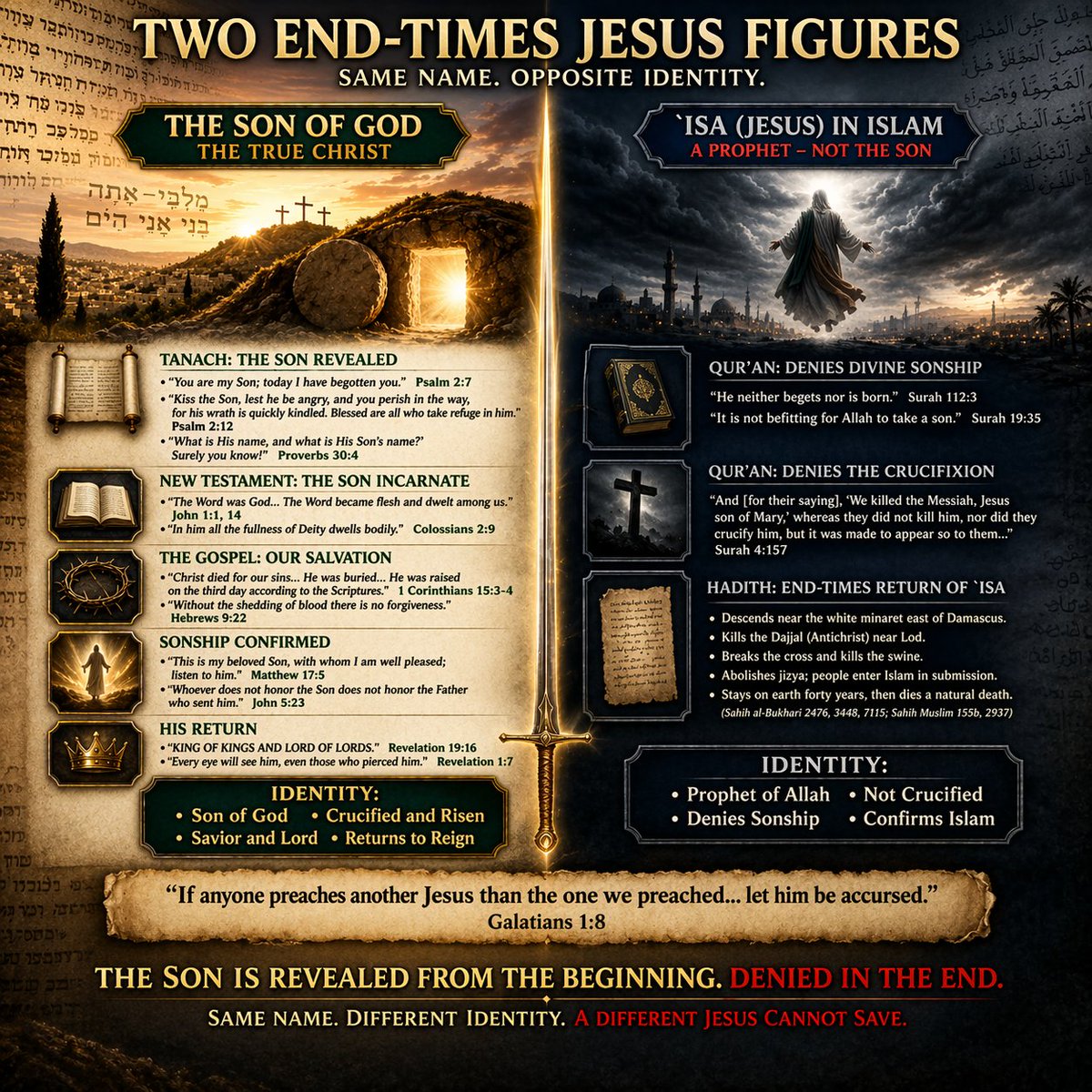
Is the Jesus of Islam the same as the Jesus of the Bible? Many people say, “We both believe in Jesus.” That sounds peaceful and respectful. But the real question is not whether both religions use His name. The real question is: Who is Jesus? Because once you define Him, the similarities collapse. The Jesus of Scripture is not merely a prophet, a moral teacher, or a miracle worker. He is the eternal Son who took on flesh. “In the beginning was the Word, and the Word was with God, and the Word was God.” “And the Word became flesh and dwelt among us.” John 1:1, 14 “For in him the whole fullness of deity dwells bodily.” Colossians 2:9 The Father did not present Jesus to the world as one prophet among many. “This is my beloved Son, with whom I am well pleased; listen to him.” Matthew 17:5 That is foundational. Christianity does not merely teach that Jesus was sent by God. Christianity teaches that Jesus is the divine Son, one with the Father, worthy of the same honor. “That all may honor the Son, just as they honor the Father. Whoever does not honor the Son does not honor the Father who sent him.” John 5:23 Now compare that with Islam. Islam does not simply “understand Jesus differently” in some minor sense. It directly denies the very truths that define Him in the New Testament. The Qur’an explicitly rejects divine Sonship. “He neither begets nor is born.” Surah 112:3 “It is not befitting for Allah to take a son.” Surah 19:35 That is not a side issue. That is not semantics. That is a direct theological rejection of the Sonship of Christ. So when someone says Islam honors Jesus, a Christian must answer carefully: It honors a figure called Isa. But it denies who Jesus actually is. That is why the issue is not respect. The issue is identity. The Jesus of the Bible is the Son of God. The Isa of Islam is explicitly not the Son of God. Those are not two perspectives on the same person. Those are conflicting claims. And the cross makes the divide even sharper. Scripture places the death and resurrection of Christ at the center of salvation itself: “Christ died for our sins in accordance with the Scriptures, that he was buried, that he was raised on the third day in accordance with the Scriptures.” 1 Corinthians 15:3–4 “Without the shedding of blood there is no forgiveness of sins.” Hebrews 9:22 “The Son of Man came not to be served but to serve, and to give his life as a ransom for many.” Mark 10:45 The cross is not incidental to Christianity. It is the center of the gospel. Remove the cross, and you do not have biblical Christianity left. But Islam denies the crucifixion. From a Christian perspective, that is not a small doctrinal disagreement. It is the denial of the very act by which Christ purchased redemption. Even the prophets anticipated His piercing: “They will look on me, on him whom they have pierced, and they shall mourn for him.” Zechariah 12:10 So the divide is total. Christianity says: God the Son came in the flesh, died for sins, rose bodily, and reigns as Lord. Islam says: God has no Son, Jesus was not crucified, and He is not Lord in that sense. Both cannot be true. And this is where Islamic eschatology becomes especially important. In Islamic end-times teaching, Isa returns. That sounds familiar on the surface, and that is exactly why clarity matters. The name is familiar. The role is not. In Muslim eschatology, Isa returns as a servant of Allah and a defender of Islamic truth. He descends from heaven, defeats Dajjal, and then takes actions loaded with theological meaning. He is said to break the cross, abolish jizya, and establish justice in submission to Islam. That matters. Not because of the symbolism alone, but because of what those acts are saying. To break the cross is not just to destroy an object. From a Christian perspective, it represents a rejection of the meaning attached to the cross: atonement, substitution, reconciliation, and the glory of the crucified Son. To reject the cross is to reject the gospel. To return in order to correct Christians is even more serious. In that framework, Jesus comes back not to receive worship as the risen Son, but to deny Christian claims about Himself. In other words, the returning Isa of Islamic eschatology does not affirm New Testament Christology. He overturns it. That is the key point. He does not come to confirm that He is the Son of God. He does not come to affirm that He died for sins. He does not come to vindicate the gospel preached by the apostles. He comes, in that system, to deny those things. So from a Christian perspective, that is not the true Christ returning. That is a radically redefined Jesus functioning in opposition to the biblical gospel. And Scripture gives categories for that. “But even if we or an angel from heaven should preach to you a gospel contrary to the one we preached to you, let him be accursed.” Galatians 1:8 “Who is the liar but he who denies that Jesus is the Christ? This is the antichrist, he who denies the Father and the Son.” 1 John 2:22 “Everyone who goes on ahead and does not abide in the teaching of Christ, does not have God.” 2 John 9 And Jesus Himself warned that end-times deception would be centered around false representations of Himself: “For false christs and false prophets will arise and perform great signs and wonders, so as to lead astray, if possible, even the elect.” Matthew 24:24 It is entirely possible that what Islam expects in their Mahdi and their Jesus is exactly what the Bible describes as the Antichrist and the False Prophet. - John MacArthur Jesus asked: “Who do you say I am?” (Matthew 16:15)
Mark tweet media
English
29
63
121
2.9K
3 Angels Ministries
3 Angels Ministries@3AngelsWatchman·
Sunday worship is claimed by satan who created it out of apostasy against GOD'S HOLY 7TH DAY (saturday)
English
19
3
12
755
Nathan Cotus ☧ ☩
Nathan Cotus ☧ ☩@Nathan_Cotus·
@WalmartThomist So when the Iranian govt. slaughtered ~30,000 people late last year/early this year the @USCCB thinks we should have turned a blind eye? Did they think that when 45 Americans died on Oct. 7th?
English
0
0
1
53
AMASEEDSOWER
AMASEEDSOWER@DrShayPhD·
I am about to block several people. This is a discussion thread, not a playground for personal attacks. Too many of you are jumping in to insult people, call names, and stir up confusion instead of addressing the actual subject with Scripture and clear thinking. That kind of behavior disrupts the thread, and I will not allow it. Attack the argument if you want, disagree all day long if you want, but use Scripture. Emotional outbursts, name calling, and disrespect need to stop. If you keep it up, I will block you and hide your posts.
English
27
12
123
2K
Nathan Cotus ☧ ☩
Nathan Cotus ☧ ☩@Nathan_Cotus·
@brettdinkins @AGAlanWilson If @AGAlanWilson is the "battle tested leader" the commercial say, ask him two questions; 1.) Why does a member of SLED call SLED's Gang Task Force a "joke". 2.) Why, when a SLED member was investigating an elderly woman's death, did his office tell them to "stop"?
English
1
0
0
16
Jamie Bonkiewicz
Jamie Bonkiewicz@JamieBonkiewicz·
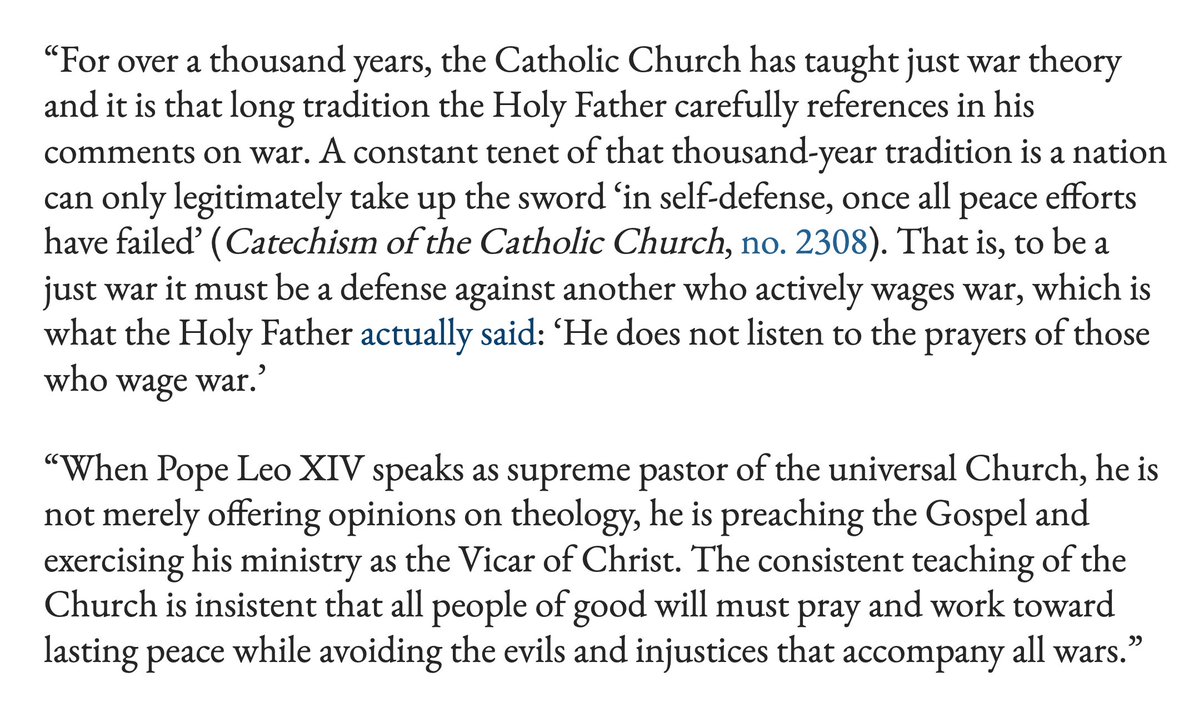
The Pope, who’s spent his entire adult life studying religion, apparently knows less about it than JD Vance, who’s been Catholic for about five minutes.
English
441
2.6K
29.6K
222.2K
Nathan Cotus ☧ ☩
Nathan Cotus ☧ ☩@Nathan_Cotus·
@DrShayPhD Remind me again, who sat down, debated, researched, prayed and decided which books were divinely inspired thus would be included in the Old Testament and New Testament of the FIRST Christian Bible at the Council or Carthage in 397 AD?
English
3
0
0
177
AMASEEDSOWER
AMASEEDSOWER@DrShayPhD·
ROME DID NOT GIVE THE WORLD THE BIBLE. The Catholic Church likes to say it gave the world the Bible. The idea even shows up in Catholic teaching, but both Scripture and history push back on that claim (Catechism of the Catholic Church, 1994). The Scriptures did not begin with Rome. They began with God speaking through the Hebrew people. The Jews were the ones entrusted with the Old Testament writings. Paul said it plainly, “unto them were committed the oracles of God” [Romans 3:2, KJV]. Therefore, the first custodians of Scripture were not Catholics, they were the Jews. That is not opinion. That is what the Bible says. By the time Jesus came into the world, the Hebrew Scriptures were already known, already recognized, and already being treated as sacred. In [Luke 24:44], Jesus referred to “the law of Moses, and the prophets, and the psalms,” which reflects the basic threefold division of the Hebrew Bible. In other words, long before Papal Rome ever existed, the Word of God was already there, already in use, and already held as authoritative by God’s people (Bruce, 1988). One major reason the manuscripts spread beyond the land of Israel is because the Jewish people were scattered. Many of them lived outside Judea in Greek speaking regions throughout the Mediterranean world. Because of that, the Hebrew Scriptures were translated into Greek. That translation is commonly called the Septuagint. Once that happened, copies of the Scriptures were no longer limited to Hebrew speaking Jews living in the land of Israel. The Word had already moved outward into the wider world through Jewish dispersion, synagogue life, and translation work long before Rome ever tried to present itself as the guardian of divine truth (Würthwein, 1995). That is a crucial point, because the early Christians made heavy use of those Scriptures. The apostles preached from them. Churches copied them. Believers shared them. The New Testament writers constantly quoted or alluded to the Old Testament, showing just how central those writings already were to the life of the church. How then did the manuscripts end up in papal hands? They got there the same way they got to other places, through copying, teaching, preaching, travel, trade routes, synagogues, and the spread of Jewish and Christian communities across the empire (Metzger, 2005). Even before the temple was destroyed in A.D. 70, the Scriptures had already been copied and circulated. Synagogues had copies and Jewish communities outside Judea had copies too. Christians were already reading those writings and quoting them as authoritative. God’s Word had already gone out into the world (Bruce, 1988). Then, as Christianity continued to spread westward, Latin became more important. That is where Latin translations came in, especially Jerome’s Vulgate. Jerome did not create Scripture. He translated existing Scripture into Latin. He was working from texts that were already known, already copied, and already received by believers. Once again, Rome did not originate the Bible. Rome accessed biblical texts that had already been preserved and passed down for centuries before the papal system ever rose to the height of its power (Metzger, 2005). That really is the heart of the issue. Translating, copying, or preserving manuscripts is not the same as creating the Word of God. A mail carrier can deliver a letter, but he did not write it. A librarian can store a book, but she did not author it. In the same way, church leaders could handle manuscripts, copy manuscripts, protect manuscripts, and even make rulings about manuscripts, without being the source of those manuscripts. They did not inspire the text simply because they possessed copies of it. The Old Testament canon came from the Jewish community, not from the Roman Catholic Church. The Jews were the original keepers of those sacred writings. The New Testament books were written by apostles and apostolic men in the first century, and those books were circulating among churches long before later Roman councils spoke on the matter. Those councils did not make the books inspired. They recognized writings that had already been received, read, copied, and treated as authoritative by the believing community (Bruce, 1988; Metzger, 1987). That is why the Catholic claim needs to be challenged. There is a difference between recognizing the canon and originating the canon. There is a difference between preserving Scripture and producing Scripture. There is a difference between handling the Word of God and being the one through whom God first gave it. Rome did not give the world the Bible. God did, through prophets and apostles, and He entrusted the Old Testament first to the Jews, not to the papacy [Romans 3:2, KJV]. Rome eventually acquired manuscripts, copied them, translated them, stored them, and used them for their own selfish ambitions, and that is to control the people. The false leap from possession to authorship, from custody to origin, and from later church control to divine source, is asinine. The Bible ended up in Roman hands because it had already spread through the Jewish world and then through the Christian world. It was already moving from place to place before Papal Rome ever rose to prominence. The Bible was already in the world before Papal Rome ever rose to power. It was already being read, copied and treated as sacred. Rome did not give the world the Bible. Rome received biblical manuscripts that were already in circulation. Now you know.
English
59
101
337
9.1K
AMASEEDSOWER
AMASEEDSOWER@DrShayPhD·
They have been programmed and manipulated to believe this from the Catechism. There is no use telling them otherwise. The Holy Spirit have to deprogram them first. But, every tree that God has not planted will be rooted up. Pray they come to their senses before too late.
Roni Jaure@RoniJaure

@DrShayPhD @chibu_sc My church has dated from Christ with the Apostle Peter as first Pope. Poor soul that whomever taught you church History missed quite a few Historical and Biblical events. A Catholic priest has a minimum of 6 to 8 years of education before ordination.

English
17
13
64
1.6K
Nathan Cotus ☧ ☩
Nathan Cotus ☧ ☩@Nathan_Cotus·
@kathleenmadigan You clearly need to do more research on Catholicism. Your second sentence is verifiably and fundamentally false.
English
0
0
0
5
Nathan Cotus ☧ ☩
Nathan Cotus ☧ ☩@Nathan_Cotus·
@Pontifex So, are you saying the Father was... illogical when He told Joshua and his men to completely lay waste to the city of Jericho?
English
0
0
0
5
Pope Leo XIV
Pope Leo XIV@Pontifex·
Let us reject the logic of violence and war, and embrace peace founded on love and justice—an unarmed peace, not based on fear, threats or weapons. This peace is disarming, because it is capable of resolving conflicts, opening hearts, and generating trust, empathy, and hope. I strongly reiterate: The world thirsts for #Peace! Enough of war and all the pain it causes through death, destruction, and exile! #ApostolicJourney #Cameroon
English
7K
14.5K
87.1K
1.6M
Nathan Cotus ☧ ☩
Nathan Cotus ☧ ☩@Nathan_Cotus·
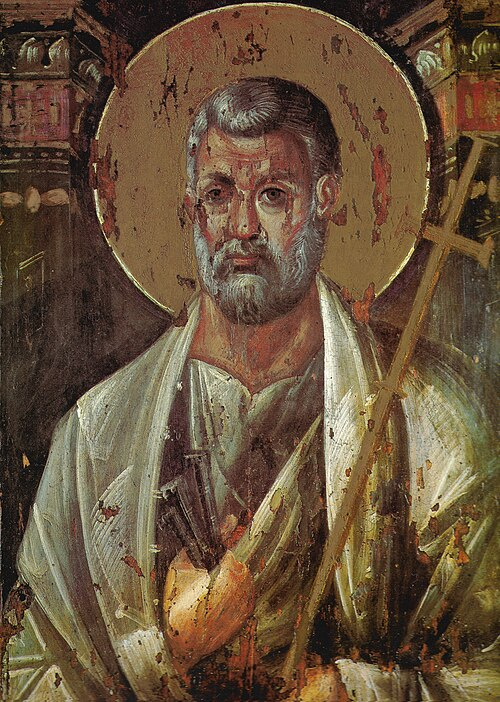
@WassonWatch Oh, one more thing... if the "Rock" is Simon's "confession", then explain something to me... Why, when Andrew first introduced Simon to Jesus (~ 2-3 years prior to the "confession") did Jesus address Simon as "Simon son of Jonah, thou shall be called Cephas" (Peter)? (JN 1:42)
Nathan Cotus ☧ ☩ tweet media
English
0
0
1
11
Nathan Cotus ☧ ☩
Nathan Cotus ☧ ☩@Nathan_Cotus·
@WassonWatch Since you felt so inclined to do all this research I am sure you discovered the name "Pope" is actually a secondary title. Did you happen to discover the Primary or Formal title for the position most people colloquially refer to as the "Pope"? 1/-
English
1
0
1
4
Wasson Watch Co.
Wasson Watch Co.@WassonWatch·
PSA: 1) The "Pope" or even a description of that role is not in the Bible. 2) The word "Pope" wasn't coined until ~3rd century, and did not become associated with the Bishop of Rome until between the 4th and 6th centuries. 3) The main Bible passage used to support the idea of a Pope (Matthew 16:13-20) simply doesn't say what many think it does. Simon Peter confesses to Jesus that, "You are the Christ, the Son of the living God." Jesus responds, "Blessed are you, Simon Bar-Jonah! For flesh and blood has not revealed this to you, but my Father who is in heaven. And I tell you, you are Peter, and on this rock I will build my church, and the gates of hell shall not prevail against it. I will give you the keys of the kingdom of heaven, and whatever you bind on earth shall be bound in haven, and whatever you loose on earth shall be loosed in haven." Couple things to unpack here. Jesus says, "...ON THIS ROCK I will build my church..." He doesn't say, "On YOU, PETER THE ROCK, I will build my church..." "This rock" is not a person. "This rock" is the confession that Peter had made a moment prior about Jesus being "The Christ, the Son of the living God." THAT is the ROCK upon which Jesus builds his church, the confession of him as savior, Christ, and God. And, after all, doesn't that make sense? The word we translate as church is from the Greek word, "ecclesia," which essentially means "gathering" or "assembly." Gathering or assembly of whom? It's the gathering or assembly of the followers of Christ, and who are the followers of Christ? They are those who confess that Jesus Christ is Lord and Savior, the Son of God! When we simply look carefully at what Jesus said, we see it fits clearly with that which we know to be true! Ok, but you might ask, "What about that part about binding on earth, and loosing on earth, and being bound up or loosed in haven and hell, etc.? What about that???" I'm glad you asked. Let's look a few chapters later at Matthew 18:15-20. Jesus explains what to do when your brother (as in another member of the church) sins against you. He explains the process to go through, but look at what he says in verses 17 through 20: "If he refuses to listen to them, tell it to the church. And if he refuses to listen even to the church, let him be to you as a Gentile and a tax collector. Truly, I say to you, whatever you bind on earth shall be bound in heaven, and whatever you loose on earth shall be loosed in heaven. Again I say to you, if two of you agree on earth about anything they ask, it will be done for them by my Father in heaven. For where two or three are gathered in my name, there am I among them." Is Jesus saying that everyone who works through an issue of forgiveness with a brother in the church is the Pope? Is he giving them some kind of Papal authority? Is he saying that everything they say is now on par with scripture? No! Both in chapter 16 and chapter 18 Jesus is helping his followers to understand that they have significant authority as believers and followers of Christ. By sharing the gospel with others they are sharing the most valuable thing possible with others (salvation and connection with God), and by casting those out of the church who should be cast out, they are withholding connection with God through his body (the church). This is great authority indeed. But it doesn't create or necessitate a Pope. 4) The doctrine of Ex Cathedra, in which the Pope "speaks for God," was not a formal doctrine of the Catholic Church until 1870. Certainly the idea existed prior to that, but considering the church went over 1,800 years without this doctrine, is notable. 5) There's nothing Biblical about the primacy of Rome. If there was a "Capitol" of the church in the New Testament, it was Jerusalem. Rome didn't become the center of gravity of the Catholic Church until Emperor Constantine's conversion in AD 312. Whether Constantine's conversion was genuine or not, the truth is that after 312 the church's power was often as much (or more) political than anything else. The Church being ROMAN Catholic is a reflection of political power, not a Holy mandate from God. When you read revelation, and see that God will establish his Kingdom in FULL on earth in the future, you see that it will be in Jerusalem, NOT Rome. That's some food for thought.
Wasson Watch Co. tweet media
English
125
166
784
15.3K
Nathan Cotus ☧ ☩
Nathan Cotus ☧ ☩@Nathan_Cotus·
@Jillie_Alexis No, you can have the pride of believing you absolutely have a greater understanding of Scripture and Christian theology than 1,900+ years of some of the most respected theologians in the history of Christendom.
English
1
0
3
44
Jillian Anderson
Jillian Anderson@Jillie_Alexis·
You don’t need the Pope to have a personal relationship with Jesus Christ.
English
1.4K
1.7K
13.8K
349.5K
Nathan Cotus ☧ ☩
Nathan Cotus ☧ ☩@Nathan_Cotus·
@michel_viot Isn't it also your responsibility as a priest to tell your brother priest, the @Pontifex, when he is speaking in error and confusing the faithful?
English
0
0
0
12
Michel Viot
Michel Viot@michel_viot·
Pour que les choses soient claires : comme pretre catholique il est de mon devoir de dire au vice-président Vance,dont je connais les qualités qu’il n’a pas le droit comme catholique de donner ordre au Pape de se taire, ni d’invoquer les questions de moralité., avec des sous entendus désagréables. Comme vice-président, il peut bien évidemment invoquer la notion de guerre juste sans qu’il soit nécessaire de médire sur la moralité de l’Eglise. Je ne rajouterai plus rien sur cette question.
Français
3.6K
2K
14.9K
351K
Nathan Cotus ☧ ☩
Nathan Cotus ☧ ☩@Nathan_Cotus·
@fitsnews So... what were your thoughts regarding our "blood/treasure" when Americans were killed by Iranian actors in these events? - Israel, 10/07/2023 (46) - Jordan, 01/28/2024 (3) - Gaza, 10/15/2003 (3) - Jerusalem, 08/19/2003 (5) - Jerusalem, 07/31/2002 (5) - Jerusalem 08/09/2001 (3)
English
0
0
1
39
Nathan Cotus ☧ ☩
Nathan Cotus ☧ ☩@Nathan_Cotus·
@Pontifex So... on who's side was our Father's heart when he told Joshua and his men to lay waste to the city of Jericho?
English
0
0
0
7
Pope Leo XIV
Pope Leo XIV@Pontifex·
God’s heart is torn apart by wars, violence, injustice and lies. But our Father’s heart is not with the wicked, the arrogant, or the proud. God’s heart is with the little ones and the humble, and with them He builds up His Kingdom of love and peace day by day. Wherever there is love and service, God is there. #ApostolicJourney #Algeria
English
11.1K
26.1K
168.7K
4M