Neha

798 posts

Neha

Neha

@NehaAt376277

Katılım Nisan 2026
1 Takip Edilen2 Takipçiler
Neha
Neha@NehaAt376277·
@goyalshaliniuk This kind of curated learning list saves a lot of time for developers trying to study modern scalable architectures properly
English
0
0
0
11
Neha retweetledi
Shalini Goyal
Shalini Goyal@goyalshaliniuk·
You might think that building a Data Pipeline is about Moving Data. No, it’s about designing a system that’s trustworthy, scalable, and built for analytics, BI, and ML. Whether you're building ETL or ELT workflows, every strong pipeline follows a predictable sequence of steps. Here’s a breakdown of the entire process into 13 practical, real-world stages used by modern data teams. 1. Define Your Use Case Start with clarity on what the pipeline must deliver - dashboards, ML features, or real-time analytics. 2. Data Collection & Preparation Gather raw data from files, APIs, databases, or event logs and standardize it for downstream use. 3. Choose the Data Sources Identify all systems feeding the pipeline, from SaaS tools to cloud storage and streaming sources. 4. Ingest the Data (Batch or Streaming) Bring data into staging layers via batch ingestion or real-time streams depending on business needs. 5. Store Data in a Raw/Staging Layer Keep unprocessed data in durable storage for auditing, replay, and lineage tracking. 6. Data Cleaning & Transformation Normalize, aggregate, deduplicate, and convert raw data into analytics-ready formats. 7. Schema Design & Data Modeling Create structured tables suited for BI and ML using Star, Snowflake, or Data Vault modeling. 8. Validation & Quality Checks Verify accuracy, completeness, and freshness before data moves into production systems. 9. Load Into the Warehouse/Lakehouse Move clean, modeled data into Snowflake, BigQuery, Redshift, or Delta Lake through ETL or ELT. 10. Build Semantic & Consumption Layers Create data marts, metrics layers, and business-friendly views for BI and ML teams. 11. Orchestrate the Pipeline Use schedulers and workflow engines to manage dependencies, retries, and pipeline reliability. 12. Deploy & Operationalize the Pipeline Push pipelines to production with CI/CD, Kubernetes, and scalable compute environments. 13. Continuous Monitoring & Improvements Track quality, schema drift, performance, and pipeline failures to prevent downtime. A great data pipeline is not built in one step - it’s engineered through a series of well-designed stages that ensure accuracy, scalability, and trust. Mastering these 13 steps gives teams the confidence to ship reliable data products that support analytics, operations, and AI workloads.
GIF
English
12
10
33
367
Neha retweetledi
Aaila Rehman
Aaila Rehman@AailaRehmanAi·
Pouvez-vous faire passer l'intelligence de Claude, ChatGPT et Gemini à 20 fois supérieure Il suffit d'ajouter une seule phrase Voici 10 phrases 'déterminantes' puissantes que personne n'utilise : [ Ajoutez en signet 🔖 vous en aurez besoin]
Aaila Rehman tweet mediaAaila Rehman tweet mediaAaila Rehman tweet media
Français
7
17
36
216
Neha retweetledi
Mayank Agarwal 💡
Mayank Agarwal 💡@TheAIWorld22·
BREAKING: Claude can now build your entire resume and LinkedIn profile like a $500/hour executive recruiter from Robert Half. For free. Here are 7 prompts that get you interview calls within 7 days: (Save this before it disappears)
English
16
53
155
26.5K
Neha retweetledi
Isabella AI
Isabella AI@IsabellaA60913·
8 PROMPTS TO USE CHATGPT AS YOUR THINKING PARTNER👇
Isabella AI tweet media
English
14
24
34
476
Neha retweetledi
Sheikh Mahfuz
Sheikh Mahfuz@Mahfuz_AI·
1 laptop. 1 Claude account. 1 killer prompt stack. That’s all you need to build a $10K/month freelance system with AI 🚀 I packed my full client-getting workflow into a 38-page guide. Was going to charge $297. Next 24H — it’s FREE 🎁 Follow + type “NEED” + RT 📩 I get DM you
Sheikh Mahfuz tweet media
English
32
45
77
527
Neha retweetledi
MD Riad Khan
MD Riad Khan@RiadMd46702·
Human Ear Hearing & Balance
MD Riad Khan tweet media
Filipino
20
36
69
419
Neha retweetledi
Anuj
Anuj@anujcodes_21·
This is the state of AI now🤯. Game of Thrones, 25 years later.
English
9
12
59
1.4K
Neha retweetledi
Theo Levi
Theo Levi@Theolevi_XAi·
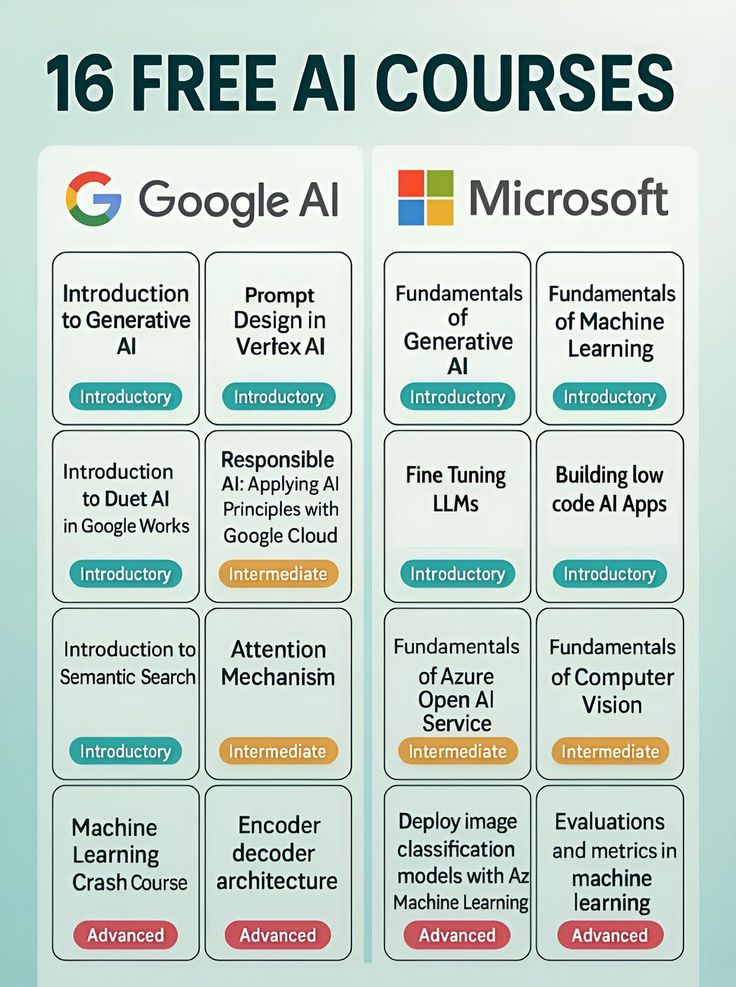
16 FREE AI COURSES 👇
Theo Levi tweet media
English
4
12
20
102
Neha retweetledi
RAVI KUMAR SAHU
RAVI KUMAR SAHU@RAVIKUMARSAHU78·
Not gonna lie… when I first imagined this scene in my head, I didn’t think AI could actually make it feel this real. Walking through the water toward Lord Shiva at sunset just feels different. The atmosphere, the clouds, the calmness… everything came out way more cinematic than I expected. Made with @yapper_so
English
17
21
72
9.3K
Neha
Neha@NehaAt376277·
@JayminSOfficial This post feels ahead of its time. A lot of people still don’t fully get this shift.
English
0
0
0
23
Jaymin Shah
Jaymin Shah@JayminSOfficial·
I've built a creative agency from scratch. The hardest part was never the strategy. It was keeping the feedback loop tight between content, performance, and the next piece of content. Most teams still run that loop manually. Publish, wait for analytics, meet about it, brief the next round, wait again. Two weeks between learning and acting on what you learned. @Higgsfield Supercomputer compresses that loop into one system. You give it a brief. It picks the workflow, routes each sub-task to the right model, and delivers finished assets. But the part worth paying attention to is what happens after. It watches what performs. It remembers your brand voice, your creative decisions, your campaign history. The next run is informed by the last one. The run after that is informed by both. That compounding is the part most people underestimate. The advantage is not in generating content faster. Everyone can do that now. The advantage is in learning faster. And systems that learn while you sleep will outpace teams that learn in standups.
Higgsfield AI 🧩@higgsfield

Supercomputer turns ideas into short dramas at scale. > Does the preliminary research > Writes a script grounded in proven craft > Storyboards with character locks > Generates scenes autonomously. Self-evaluates quality Your vision matters most. Supercomputer does the rest.

English
49
61
811
77K
Neha retweetledi
Anshul Future Tech
Anshul Future Tech@Anshul7974·
🚨 Gemini Pro is now available FREE for 1 year. Previously priced at $200/year. No payment required. Here’s how to activate it in 3 simple steps 👇
Anshul Future Tech tweet media
English
20
45
66
423
Neha retweetledi
Suryakant Chaurasiya
Suryakant Chaurasiya@coder_surya·
AI is no longer just a buzzword, it's every coder’s superpower. From writing code faster to debugging smarter, today's developers have access to some incredible AI-powered tools. Here are 12 AI tools every coder should know in 2025 - 1. GitHub Copilot – Your real-time AI pair programmer. 2. Cursor – VS Code’s AI-native cousin, built for smarter development. 3. Tabnine – Deployable AI code completion with security in mind. 4. Amazon Q Developer – AWS-integrated AI assistant. 5. Claude – Known for high-quality, production-level code generation. 6. The Sales Mind – Beyond conversation, a coding Swiss army knife.OpenAI 7. Replit Ghostwriter – In-IDE AI coding for seamless online projects. 8. Google Gemini CLI – AI coding help straight from your terminal. 9. JetBrains AI Assistant – Context-aware suggestions tailored to your project. 10. Windsurf (formerly Codeium) – AI-native IDE keeping devs in flow. 11. Devin by Cognition AI – The first autonomous AI software engineer. 12. SoftSpell – AI assistant for the entire SDLC, not just coding. Whether you’re a student, professional developer, or building your own product exploring these tools can save hours and spark innovation. For more AI guides and learning resources, check my previous posts. ♻️ Repost this to help your network 📌 If you want a high-res PDF of this guide: 1. Follow @coder_surya 2. Save the post. 3. Repost to your network. 4. Join My AI Community: whatsapp.com/channel/0029Vb… .
Suryakant Chaurasiya tweet media
English
4
19
43
406
Neha
Neha@NehaAt376277·
@goyalshaliniuk A solid reminder that modern software engineering is deeply connected to distributed systems and infrastructure design
English
0
0
0
22
Neha retweetledi
Shalini Goyal
Shalini Goyal@goyalshaliniuk·
If you want to master System Design, nothing accelerates your learning faster than studying how real-world products operate at massive scale. Here’s a guide that brings together 15 practical, high-impact case studies from companies that handle billions of users, messages, payments, queries, and media assets every single day. Each case study shows how real engineering teams solve problems like latency, consistency, sharding, caching, replication, load balancing, and global distribution - in production. Here are all 15 examples with direct sources so you can explore each one in depth: 1. How Google Search Works lnkd.in/eQkTKWtU 2. How Netflix Streams to 250+ Million Users lnkd.in/ef9K_eyN 3. How WhatsApp Handles Billions of Messages Daily lnkd.in/epdGk_mS 4. How Instagram Manages Photos, Reels & Stories at Scale lnkd.in/ej2yQZS9 5. How Uber Matches Riders & Drivers in Real Time lnkd.in/e8kdzCNp 6. How Amazon Handles Millions of Orders Per Minute lnkd.in/eikBTJYc 7. How TikTok Recommendation Engine Works lnkd.in/etUrFWj2 8. How Airbnb Manages Global Listings & Bookings lnkd.in/eXMthRyA 9. How Dropbox Handles File Sync Across Devices lnkd.in/e47Fw86V 10. How Spotify Streams Music with Ultra-Low Latency lnkd.in/eiqU3bti 11. How LinkedIn Feed Ranking Works lnkd.in/enURs4FQ 12. How PayPal Processes Global Payments Reliably lnkd.in/e83gHmpt 13. How Zoom Enables Low-Latency Video Calls lnkd.in/e5UtkMcP 14. How Pinterest Stores & Serves Billions of Images lnkd.in/etVutyPa 15. How ChatGPT Handles Massive Concurrent Queries lnkd.in/eCCSyb5e Studying these systems gives you real insight into how large-scale architectures are designed, optimized, and evolved.
Shalini Goyal tweet media
English
18
19
50
483
Jaymin Shah
Jaymin Shah@JayminSOfficial·
I usually skip benchmark comparisons. They're almost always picked to flatter. But EgoSchema is different. It measures first-person, egocentric video understanding. The AI equivalent of “look through the robot's eyes and tell me what happened.” I spent some time testing Perceptron Mk1 (“Mark One”) on the robotics workflows Perceptron walked me through, and the EgoSchema result suddenly made a lot more sense. Perceptron Mk1 scored 80.60% on it. Gemini 3.1 Flash Lite scored 62.4%. That's a completely different level of understanding. Most frontier models were trained on the internet through text, images, and static content. The physical world works differently. Context lives across time. The critical moment rarely exists in a single frame. And that's exactly where production deployments start mattering. Manufacturing QC. Robotics data pipelines. Security footage. Everything is temporal. Native video reasoning. Temporal grounding. Structured output. Perceptron calls it “Mk1” because it marks the beginning of their closed-model series for physical-world intelligence, and honestly, the name fits. It feels engineered for deployment, not just demos. Feels like one of the first video AI systems being built around how the physical world actually behaves instead of adapting static-image intelligence into video later.
Perceptron AI@perceptroninc

Today we're releasing Perceptron Mk1: frontier video and embodied reasoning.

English
56
116
938
116.2K
Neha
Neha@NehaAt376277·
@JayminSOfficial The future of embodied intelligence starts with temporal reasoning.
English
0
0
0
25
Neha retweetledi
Prime AI
Prime AI@primemans·
AI can now analyze stocks like elite hedge fund managers — completely free 🤯📈 Here are 10 powerful Claude prompts that can replace expensive $3,000/month Bloomberg terminals 💰 Save this thread now — it’ll be gold later 🔥
English
46
64
99
10.1K