Zandi Nehanda Radebe
3.7K posts

Zandi Nehanda Radebe
@NehandaRadebe
The Apartheid Museum is STOLEN property! #JusticeForBraMike #TheJudiciaryMustFall! #BlackLove #BlackPower! #IzweLethuAzania
Occupied Azania Katılım Mayıs 2010
1.6K Takip Edilen2.1K Takipçiler
Zandi Nehanda Radebe retweetledi

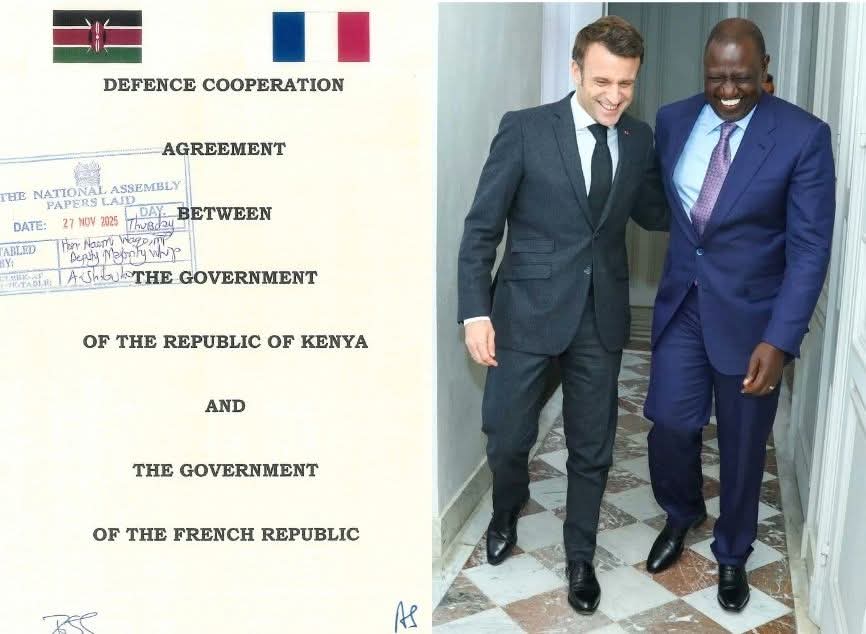
BREAKING: The William Ruto govt signed a defence deal with France allowing French troops to operate inside Kenya.
And now a Parliament report has confirmed it, while trying to amend two of some dangerous clauses partially.
Let that sink in.
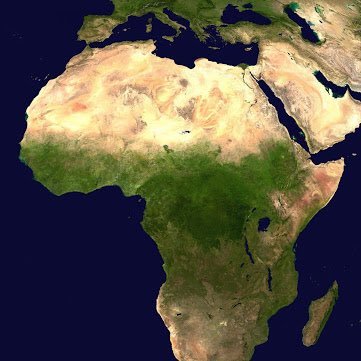
At a time when African countries are expelling French military presence, Kenya is opening the door.
The deal is too open and risky.
Here’s the reality:
If a French soldier commits a crime in Kenya:
France can detain them and not kenya
France can influence jurisdiction
If France rushes a trial (even unfairly), Kenya may NEVER prosecute again
That is reduced sovereignty.
The deal allows “training and other activities.”
What exactly are “other activities”? Why so vague?
We’ve already seen what happens with the BATUK:
Community harm and even deaths
Environmental damage by brits using white phosphorus
Weak accountability eg the wanjiru case wher the murderer is being protected in the UK
Now we’re repeating it, with the french military?
Across Africa:
Mali 🇲🇱
Burkina Faso 🇧🇫
Niger 🇳🇪
All pushed out French forces over these exact concerns.
So why is Kenya going backwards?

English
Zandi Nehanda Radebe retweetledi

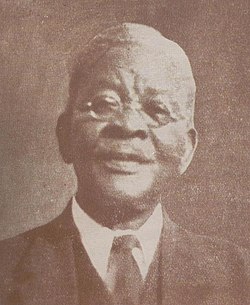
Mpilo Walter Benson Rubusana (1858 – 1936) was a South African politician, clergyman, author, and educator, best known as a founding member of the South African Native National Congress (SANNC) in 1912. He was a leading figure in the intellectual and political resistance against colonial discrimination in the Eastern Cape during the late 19th and early 20th centuries. In 1909, Rubusana became the first Black person to be elected to the Cape Council (Parliament), representing Tembuland. In 1914, he led a delegation to London to protest the Natives Land Act of 1913, which aimed to dispossess Black South Africans of their land. Ordained as a Congregational minister in 1884, he served for many years in East London. He was co-founded the Xhosa newspaper Izwi Labantu (Voice of the People) and published Zemk' Inkomo Magwalandini (1906), a collection of traditional poetry, as well as A History of South Africa from the Native Standpoint. He was highly invested in education, assisting in the establishment of more than ten schools in and around East London. He was awarded an honorary doctorate by McKinley Memorial University in the United States in 1906. Source: SAHO, Wikipedia, Cape Archives

English
Zandi Nehanda Radebe retweetledi

And that's why they're hellbent on keeping Africa underdeveloped so we keep supplying them with cheap raw materials and minerals
Nora@Heal_within96
Europe cannot survive without Africa. After WII, the European recovery plan was established and built on African minerals.
English
Zandi Nehanda Radebe retweetledi

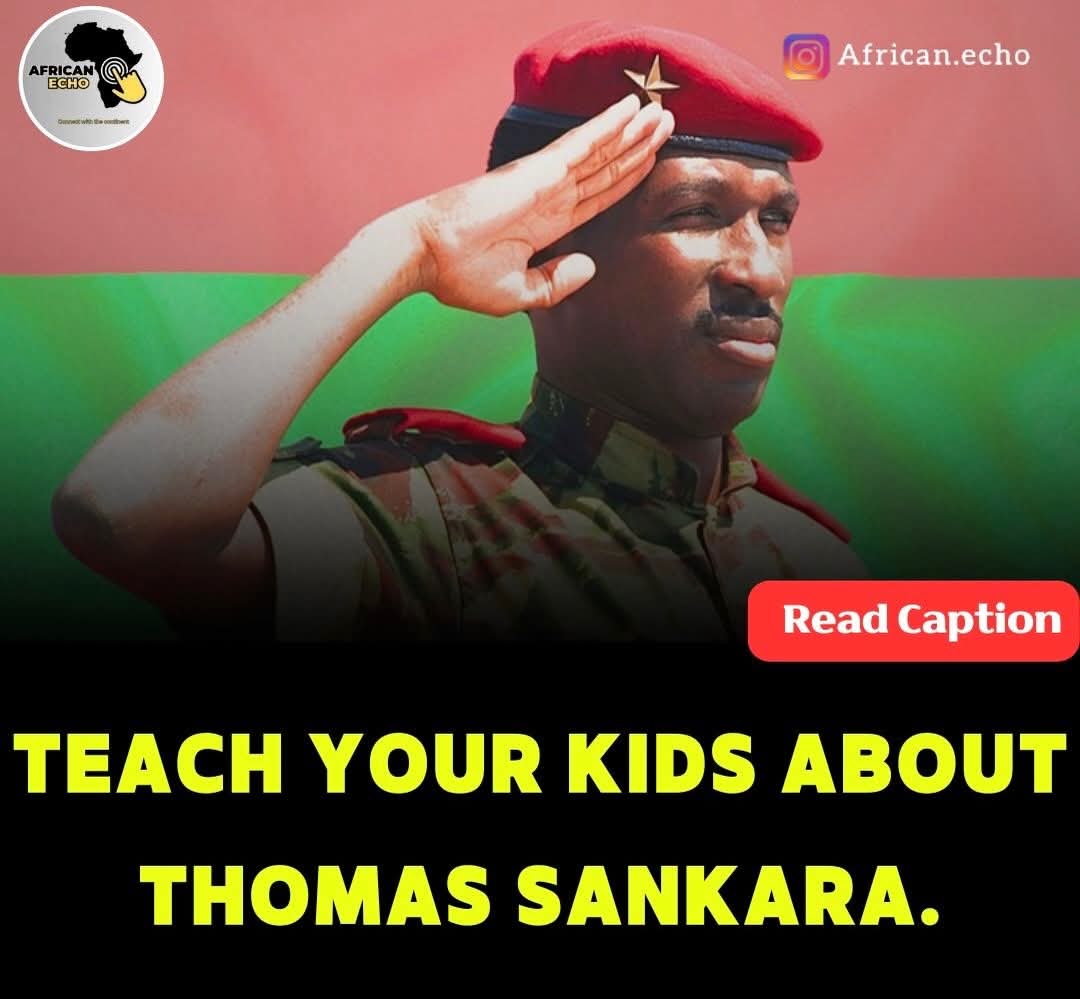
They Won’t Teach Your Kids This Man—So You Must: The Dangerous Legacy of Thomas Sankara
Why are some names celebrated… while others are quietly erased?
Thomas Sankara was not just a leader—he was a disruption. In just four years, he challenged everything: corruption, foreign dependence, inequality, and even the mindset of a colonized people.
He renamed his country from Upper Volta to Burkina Faso—“Land of Upright People.” He cut his own salary, sold off government luxury cars, and demanded leaders live like the citizens they governed. He vaccinated millions of children, planted millions of trees, and empowered women in ways many nations still struggle to do today.
But here’s the uncomfortable truth…
His ideas were too radical. Too independent. Too threatening.
In 1987, Sankara was assassinated. And slowly, his story faded from classrooms, from global conversations, from the narratives pushed to the next generation.
So ask yourself:
Why don’t we teach children about leaders who refused to bow?
Why are the boldest African visions often buried the fastest?
Because history is not just what happened—it’s what is allowed to be remembered.
Teaching your kids about Sankara is not just education.
It’s resistance. It’s restoration. It’s reclaiming a future rooted in dignity, courage, and self-determination.
If we don’t tell these stories, who will?
References:
– Speeches of Thomas Sankara (1983–1987)
– Ernest Harsch, Thomas Sankara: An African Revolutionary
– United Nations development reports on Burkina Faso (1980s)

English
Zandi Nehanda Radebe retweetledi

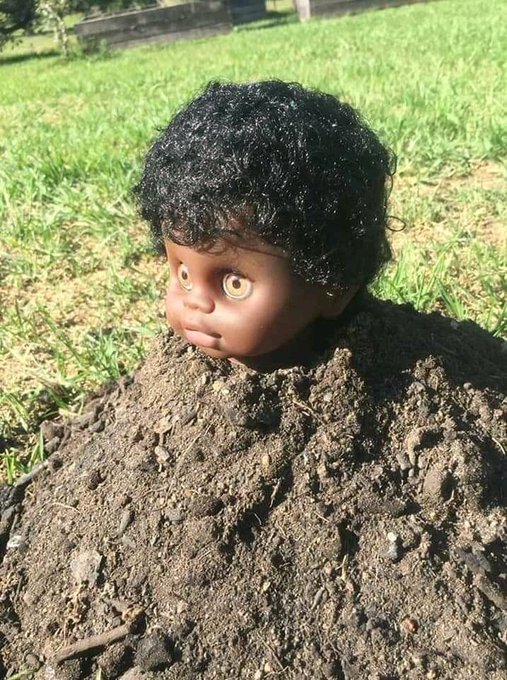
The artwork is a depiction of a historical event that involved the massacre of Aboriginal children that occurred in the colonization of Australia. As described in 'Massacres to Mining: the Colonization of Aboriginal Australia' by Janine Roberts, an Aboriginal person recounts how her mother would sit and cry and tell the story of how Aboriginal children were murdered during the colonization years: "They buried our babies in the ground with only their heads above the ground. All in a row they were. Then they had tests to see who could kick the babies' head off the furthest. One man clubbed a baby's head off from horseback."


English
Zandi Nehanda Radebe retweetledi

This mother fucker has the audacity to lecture us on what is civilised when his Epstein regime child rapists are bankrolling a genocide, just started an illigal war and breaking every international law. Gtfoh!!!!
Conscious Caracal 🇿🇦@ConCaracal
US Ambassador to South Africa, Leo Brent Bozell III, elaborates on his remarks about the "Kill the Boer" chant: "The position of my country is that it's wrong, that it's hate speech. The position of the civilised world is that it's hate speech. Judges can be wrong."
English
Zandi Nehanda Radebe retweetledi

The country's history curriculum could soon be overhauled, making way for a more African-centred approach to learning. Basic Education Minister Siviwe Gwarube has gazetted a draft curriculum for Grades 4 to 12. It challenges the narrative that history in South Africa began with the arrival of Jan van Riebeeck. What do you make of the proposal to decolonise the curriculum? #TheSouthAfricanMorning #DStv403 #DStv194
English
Zandi Nehanda Radebe retweetledi

This metal was used during the slavery period for 3 main reasons;
1. Sometimes the slàve màsters would forced an apple (a whole) into the mouths of enslaved before they wore the metal mask on them with the padlocks so that they couldn't talk.
2. To stop the enslaved from chanting our African spiritual songs. Not only that those our spiritual and war songs affected the slàve masters, it also motivated some enslaved to rèbel and fight back!
3. Last but not the least, to starve enslàved as a punishment in the slàve camps. The màsk prevented them from eating or drinking!
Gone but not forgotten! 💔😭

English
Zandi Nehanda Radebe retweetledi

Why are we quiet as Namibia and SADC when South Africa is being bullied by the US Administration. #NamSONA
English
Zandi Nehanda Radebe retweetledi

Zandi Nehanda Radebe retweetledi