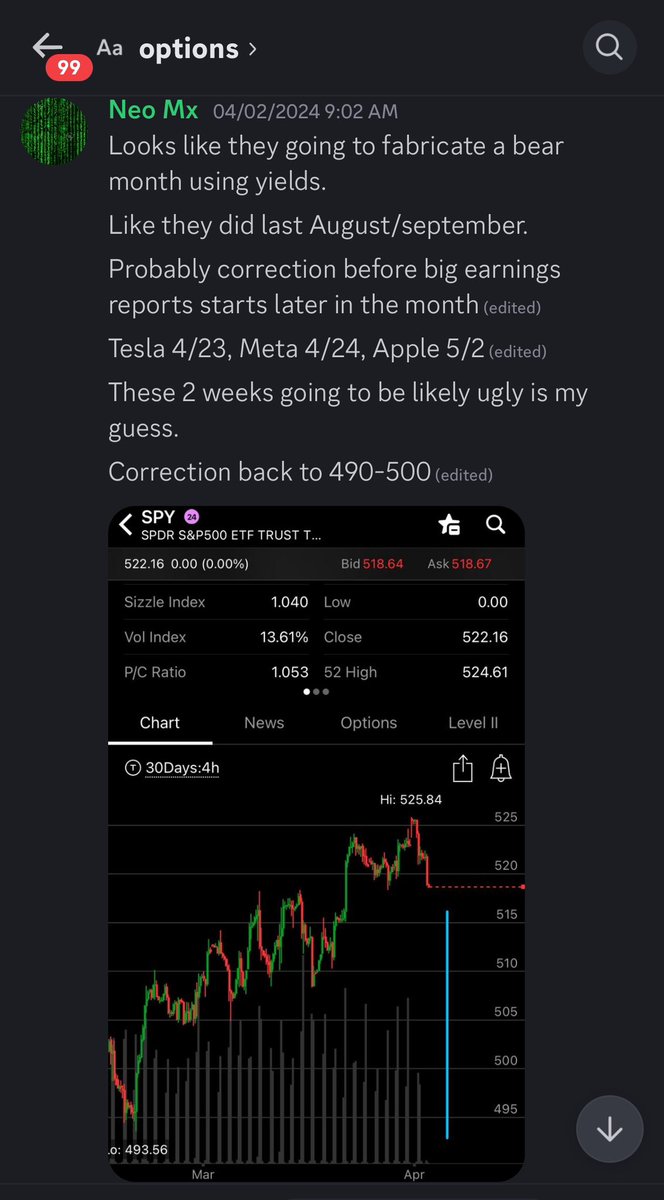
Userofintellect@userofintellect
Dear Chairman Gensler (@GaryGensler),
CC: @senatefinance and @DOJCrimDiv
Do you believe that Mr. Ken Griffin's remarks about driving equity prices up and down, based on their fund's perception of "market efficiency," constitute market manipulation? Furthermore, if retail investors decide to set a price target for individual equities grounded in their perception of market efficiency, shouldn't they also attempt to influence the price of those equities to serve market efficiency? Your response to these questions is of utmost importance, as it will provide clarity on the SEC's stance regarding market practices and transparency.
I am writing to you once again as an advocate for the retail investing and trading community, gravely concerned about the prevailing market dynamics and regulatory loopholes that seemingly favor major funds at the expense of individual investors. The recent public statements by Ken Griffin of Citadel have not only reinforced these concerns but also highlighted a glaring disparity in market access and information asymmetry.
Mr. Griffin's assertion that major fund managers set target prices and drive market movements towards these benchmarks, while operating under a façade of "market efficiency", is alarming. This practice, if unchecked, essentially transforms what should be a competitive market into a coordinated game, skewed in favor of big money. The lack of access to these "market efficiency" reports by retail investors is a significant disadvantage, creating an uneven playing field.
Further exacerbating this issue is the regulatory framework that allows major funds to delay the disclosure of their holdings and strategies for up to 135 days (90 days for a quarter plus an additional 45-day voluntary deadline to submit Form 13F). This delay not only obscures the current investment strategies of these funds but also potentially facilitates a form of tacit collusion, to the detriment of retail investors. Ken Griffin's comment about funds wanting to drive prices undermines the logic behind the 13F delay.
The situation at hand is reminiscent of the infamous Bernie Madoff scandal, where malpractices were conducted in plain sight yet went "unnoticed" for years. In your role as the Chairman of the SEC, it is imperative to consider the following:
1- Review and Amend Reporting Deadlines: The current 135-day delay in Form 13F filings needs to be re-evaluated. Reducing this time frame would enhance transparency and provide a more accurate picture of fund activities. The reason for not requiring the 13F immediate is to avoid such form drive up or down the prices but now that we learned the funds intend to drive the prices why not get some help from the retail community. Ken Griffin's comment undermines the logic behind the 13F delay.
2- Mandatory Disclosure of Market Efficiency Reports: In line with the principles of the Investment Company Act of 1940, Sarbanes-Oxley Act of 2002, and Dodd-Frank Wall Street Reform and Consumer Protection Act of 2010, I propose the SEC mandate the publication of detailed "market efficiency" reports by major fund managers.
3- Rigorous Enforcement of Fair Market Practices: The SEC must take a more proactive stance in investigating claims of market manipulation and ensuring compliance with existing regulations. This includes scrutinizing the public statements and actions of influential market players like Mr. Griffin.
4- Uphold Retail Investor Protections: The primary mandate of the SEC is to protect investors and maintain fair, orderly, and efficient markets. The current scenario suggests a deviation from this mission, particularly in the context of protecting retail investors.
The integrity of our financial markets hinges on the SEC's commitment to these principles. Retail investors rely on your leadership to safeguard their interests against manipulative market practices. It is crucial that the Commission addresses these issues with the urgency and seriousness they deserve.
In addition to the concerns and suggestions outlined above, I find it crucial to remind the Commission of its foundational statutory obligations. The U.S. Securities and Exchange Commission (SEC) is entrusted with enforcing several key regulations that are central to protecting individual retail investors and maintaining transparency in the financial markets:
- Securities Act of 1933: Often termed the "truth in securities" law, mandates the registration of securities offerings and disclosure of significant information, aiding informed investor decisions.
- Securities Exchange Act of 1934: Establishes rules for secondary trading of securities and periodic reporting by companies, enhancing market transparency and reducing fraud risks.
- Investment Advisers Act of 1940: Governs investment advisors, requiring registration and adherence to investor protection rules, including disclosures and fiduciary responsibilities.
- Investment Company Act of 1940: Regulates mutual funds and investment companies, mandating disclosures about financial conditions and investment policies.
- Sarbanes-Oxley Act of 2002: Enacted to protect investors from fraudulent corporate financial reporting, mandating strict corporate disclosure reforms.
- Dodd-Frank Wall Street Reform and Consumer Protection Act of 2010: A response to the 2008 financial crisis, enhancing financial industry transparency and consumer protections.
- JOBS Act of 2012: Aids small businesses in capital raising by easing securities regulations, affecting hedge fund transparency and disclosure requirements for emerging companies.
- Form PF (Private Fund): Required for private fund advisors, detailing assets under management and other critical fund management information.
These regulatory frameworks underscore the SEC's role in promoting fairness, transparency, and accountability in the financial markets. The current situation, as highlighted earlier in this letter, suggests a deviation from these critical mandates, especially concerning the protection of retail investors against potential market manipulations and information asymmetries.
I trust that the Commission will reflect upon these statutes and take appropriate actions to realign its practices with these foundational principles.
Thank you for your attention to this matter of great importance. I, along with the retail trading community, eagerly await your decisive and proactive response. We believe that you, Mr. Gary Gensler, must immediately resign if you fail to provide an adequate response or take appropriate action regarding these concerns. The Senate Committee on Finance is also expected to take appropriate actions in this regard.
Sincerely,
On behalf of the retail trading and investing community