
Sabitlenmiş Tweet
✞ 𝑁𝑒𝑜
10.2K posts

✞ 𝑁𝑒𝑜
@NeoTheDisciple
Follower of Yeshua, Seeker of Truth | Abolitionist | Surveyor of Ancient Architecture & Technology 🗃️
𝑷𝑺𝑨𝑳𝑴 𝟗𝟏 Katılım Mart 2024
200 Takip Edilen318 Takipçiler
✞ 𝑁𝑒𝑜 retweetledi

✞ 𝑁𝑒𝑜 retweetledi
How many bits do you divide Jesus into every day?? How many sacrifices do you make him bare every year!!
Is your god so limited that his sacrifice is so weak and limited in strength??
My God:
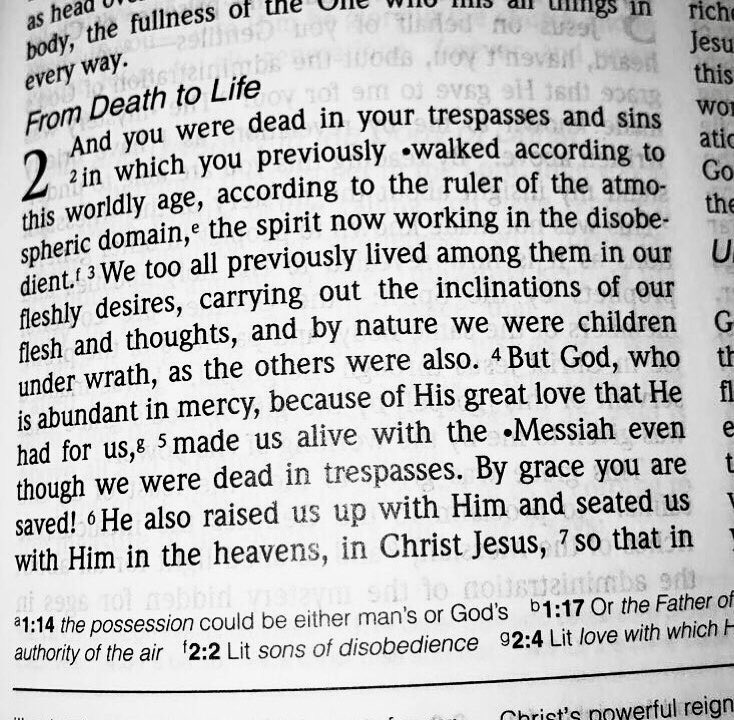
“Who needeth not daily, as those high priests, to offer up sacrifice, first for his own sins, and then for the people’s: for this he did once, when he offered up himself.”
— Hebrews 7:27 (KJV)
For by one offering he hath perfected for ever them that are sanctified.”
— Hebrews 10:14 (KJV)
English
✞ 𝑁𝑒𝑜 retweetledi

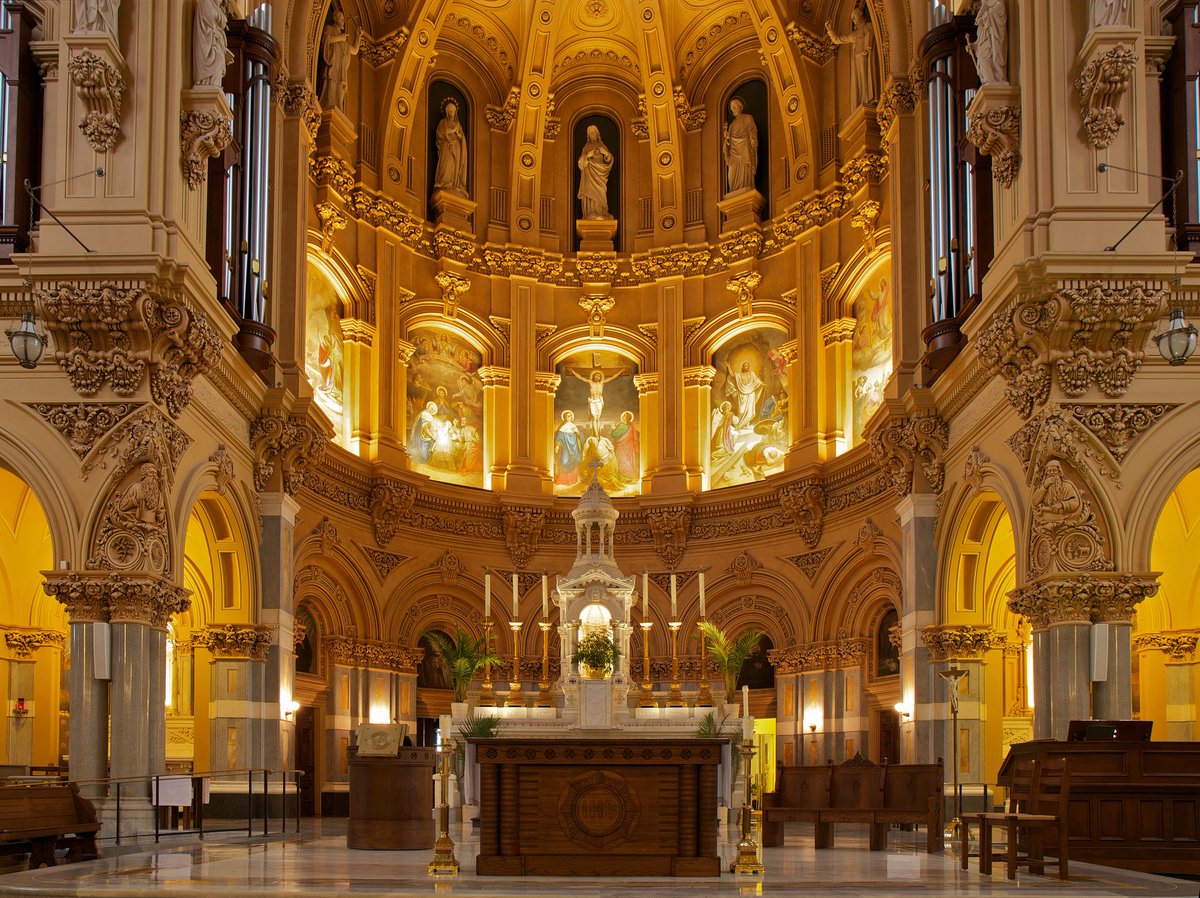
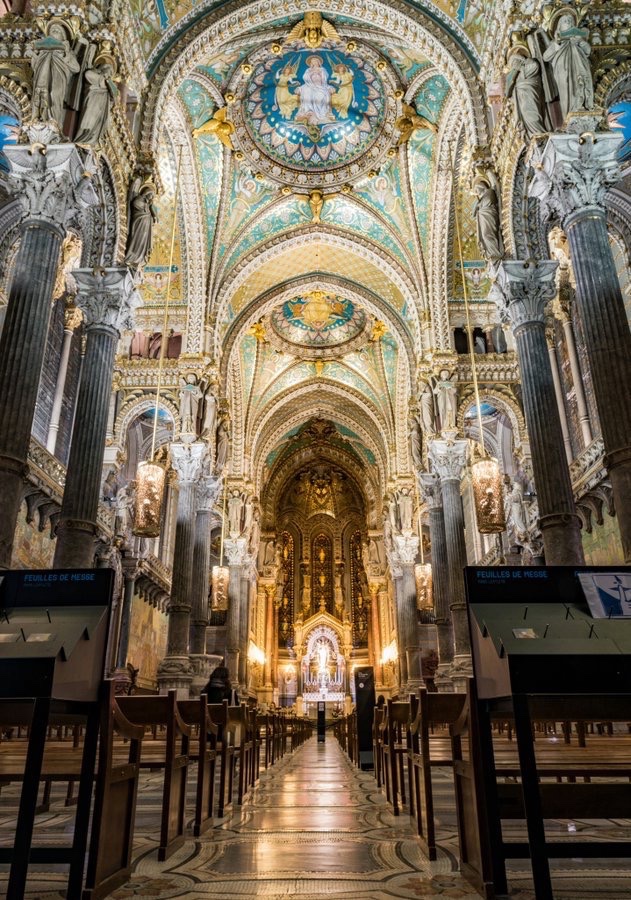
Catholism is not a crude deception, it is a masterful one. Its power lies precisely in the refining and compelling nature of its appearance. The religious services of the Catholic Church are deeply impressive in their ceremony. Their grandeur and solemn rites captivate the senses, often quieting the voice of reason and conscience. The eye is delighted by magnificent cathedrals, imposing processions, golden altars, jeweled shrines, masterful paintings, and exquisite sculptures that appeal to the real love of beauty.
The ear, too, is enthralled. The music is unparalleled, the rich tones of the organ blending with choral voices, swelling through lofty domes and pillared aisles of vast cathedrals, filling the mind with awe and reverence. Yet this outward splendor, this pomp and ceremony, only disguises a deeper spiritual emptiness and mocks the longings of the sin-weary soul. The religion of Christ requires no such adornments to commend it. In the light of the cross, true Christianity is revealed as so pure and beautiful that no external embellishment can enhance its worth. Its true beauty lies in holiness and in a meek and quiet spirit, which is precious in the sight of God.
Brilliance and refinement of arts are no proof of truth. Minds capable of producing great art and exquisite expression can remain bound to earthly and sensual pursuits. Such gifts, when misused, become tools of deception, diverting attention from eternal realities, obscuring the need of salvation, and fixing the heart on what is temporary.
A religion centered on outward forms is naturally appealing to the unrenewed heart. It demands little, flatters the senses, and soothes the conscience. The pomp and ceremony of Catholic worship possess a powerful and seductive influence, it persuades without converting, impresses without transforming. Many are drawn in, mistaking emotional experience for genuine faith. In this way, multitudes come to regard the Catholic Church as the very gate of heaven.
Only those who stand firmly upon the foundation of truth, whose hearts have been renewed by the Spirit of God, can resist its influence. Many who lack a personal, experiential knowledge of Christ will accept the form of godliness while denying its power —for such a religion is precisely what the multitudes desire.

English
✞ 𝑁𝑒𝑜 retweetledi

ghosts in the machine
Waken Minds 𓂀@wakenminds
We are the ghosts of a superior world that has already ended..
English
✞ 𝑁𝑒𝑜 retweetledi
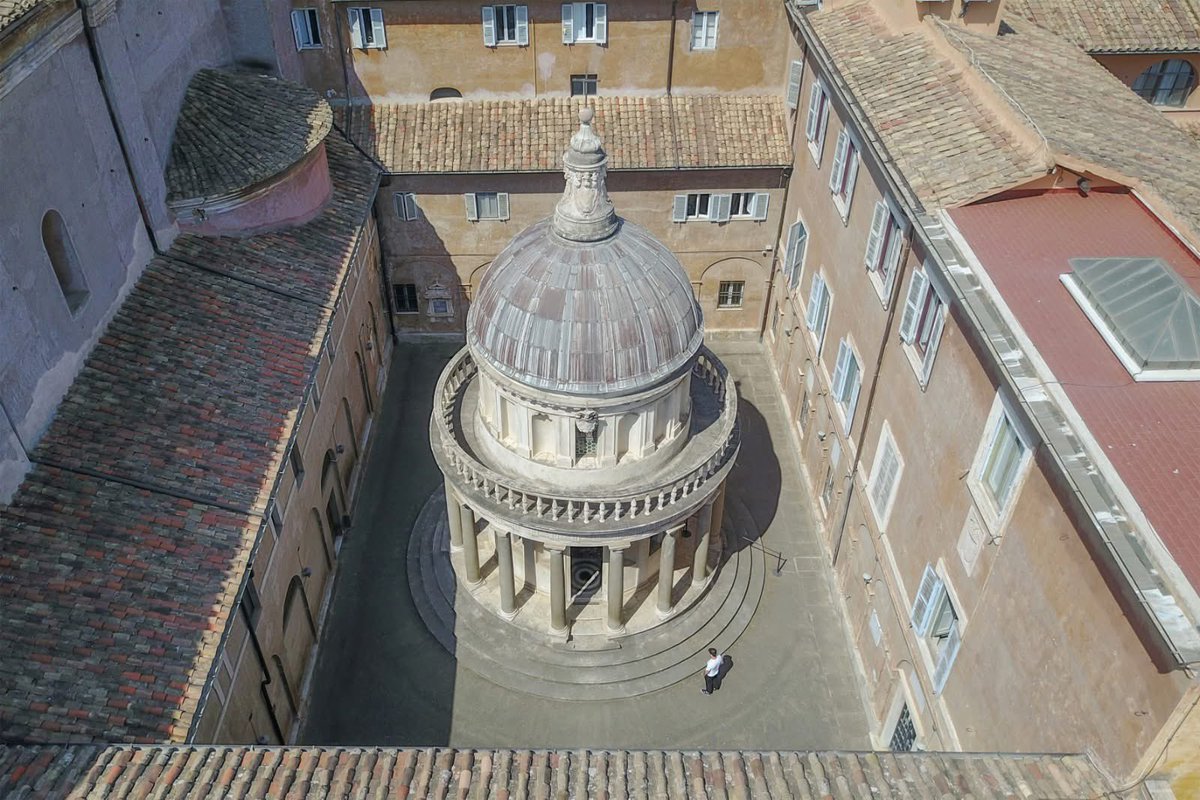
Patio de la iglesia de San Pedro en Montorio con el famoso templete de Donato Bramante.
Vía Dottrina dell'Architettura
Español
✞ 𝑁𝑒𝑜 retweetledi

Cherry blossom time in the churchyard of St Nicholas, Blakeney

Blakeney, England 🇬🇧 English
✞ 𝑁𝑒𝑜 retweetledi

Nice view of the Bevis tower at Arundel Castle, Sussex 🏴

English
✞ 𝑁𝑒𝑜 retweetledi


✞ 𝑁𝑒𝑜 retweetledi

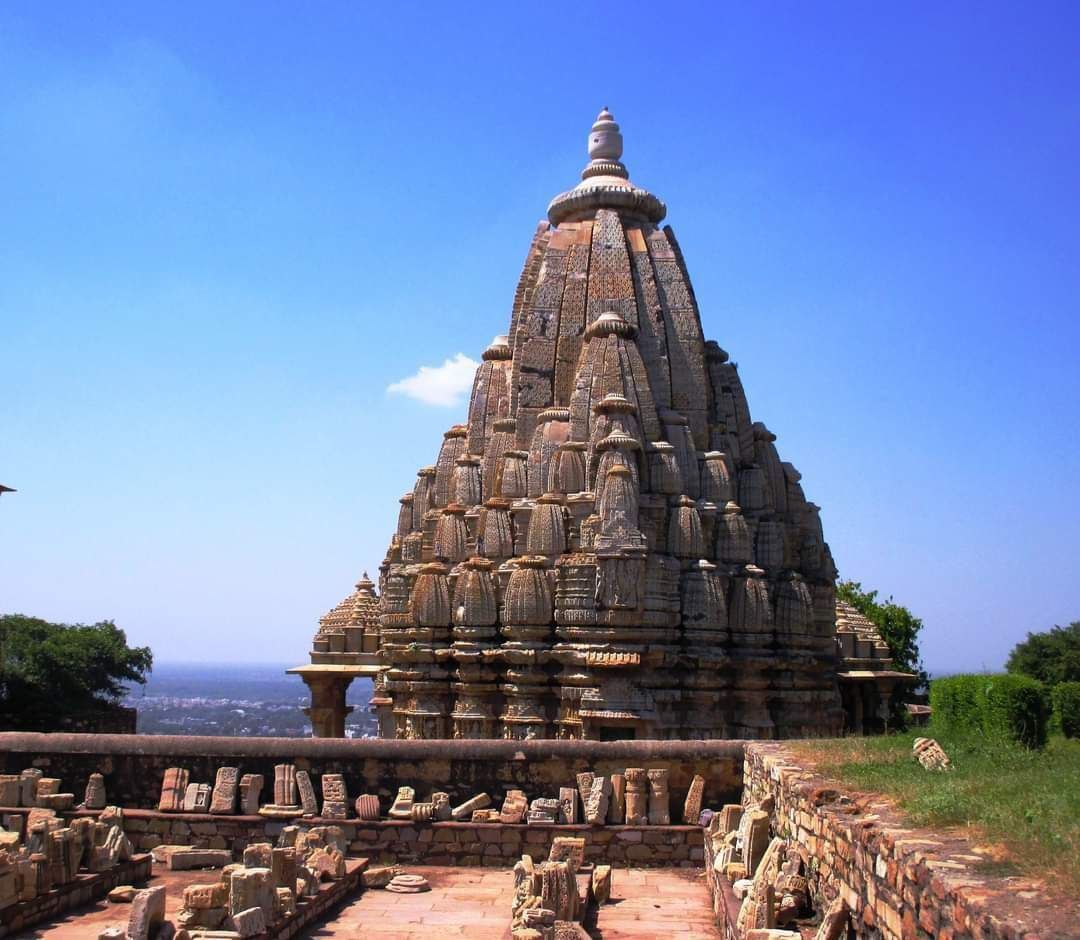
Among ancient temple ruins, some were seen as free energy aether plants and frequency healers. No firm proof exists, but it can’t be dismissed. What if past tech is today’s science fiction? Perhaps, between the stones, a forgotten power awaits.

English
✞ 𝑁𝑒𝑜 retweetledi

When the ley-line grid was powered up, and the buildings built on nodal points transmuted the energy for healing via materials and geometry - then you could astral project from sitting in a cathedral or a temple.
What is real healing?
It's about being able to leave your body.


English
@CarmenCarBackup @farmingandJesus Your identity should be rooted in Jesus, not the papacy.
English

@NeoTheDisciple @farmingandJesus The only f. satanic piece of sh*t is you. FYI.
English

No, the divine feminine is of satanic origin and opposes the natural order set by God. Nestorianism strawman due to generalization of others beliefs.
Jesus is one distinct being. The medium in which ALL things were created, this includes your goddess mary.
Daniel vs Babylon? You sure?
English

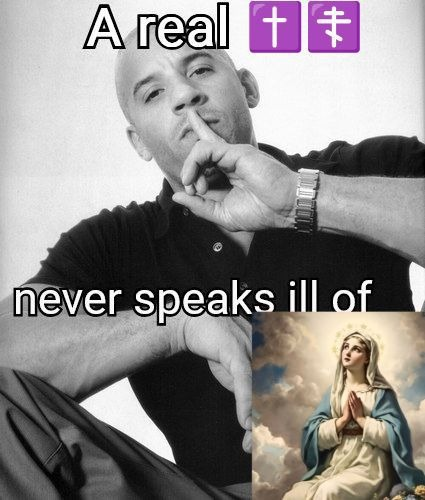
saying this a someone who aligns more with protestantism bible only christianity than anything else. she's literally the Mother of God my dudes. put some respek on it.
English
@DasStratiotes @DanielvsBabylon Blessings always brother,
we share the same Father In Heaven !
English

@NeoTheDisciple @DanielvsBabylon Not possessed
Not rich
but thanks for the blessing bro
English
@NeoTheDisciple @DanielvsBabylon sure bro send your cashapp
English
Again you’re still in the dialectic of Prot v RCC. These are all concepts brought about by men.
If I read the scriptures, does it tell me that Mary is the mother of God? Notice you’ve yet to reply with scripture that supports this assertion.
This is no different than a Catholic attempting to explain transubstantiation within the Eucharist.
Your pride is obvious, considering you’ve never conversed with me on this platform prior to this subject.
English
@NeoTheDisciple Read, you may learn something
𝔇𝔞𝔫𝔦𝔢𝔩 𝚟𝚜 𝔅𝔞𝔟𝔶𝔩𝔬𝔫@DanielvsBabylon
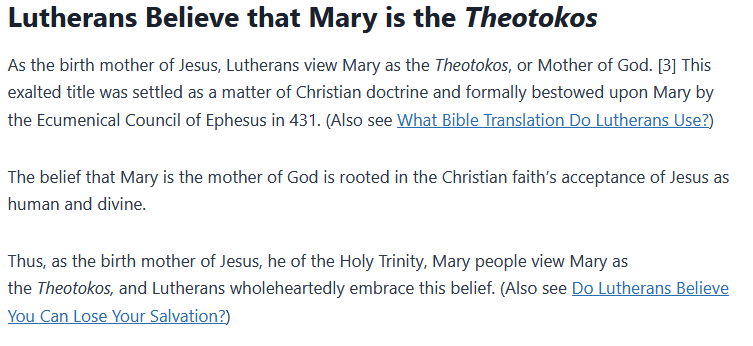
I was going to wait to post this, but the poll numbers are atrocious, and tomorrow is guaranteed to no one. The hypostatic union is salvific. Groups that reject it include but are not limited to: JW's, LDS. The hypostatic union is the culminating event of God’s immanent relationship with the created world. It is here in the womb of the Virgin Mary that the infinite and uncreated Son is united to the finite created nature of humanity. The union of the infinite and finite is the very purpose of the incarnation. Through the hypostatic union, divine attributes are operative in and through the humanity of Christ, resulting in the overcoming of spatial limitations. This union was realized at the moment of conception and was present throughout gestation until Mary gave birth to Jesus; His 2 natures, fully human-fully divine unified in one person, the newborn Christ. Hence, she is the God-bearer (Theotokos). This title indicates more about Jesus than it does Mary, it an affirmation of the hypostatic union in utero. To say that Mary is only the Christotokos, that is only mother to His human side, is a heresy called Nestorianism which is described in the infograhics below. Nestorianism rejects the title Theotokos ('God-bearer') for Mary, thus emphasizing distinction between divine and human aspects of the Incarnation. It promotes the concept of a prosopic union of two persons (divine and human) in Jesus Christ, thus trying to avoid and replace the concept of a hypostatic union of two natures. Nestorianism holds that Christ had two loosely united natures, divine and human. A brief definition of Nestorian Christology can be given as: "Jesus Christ, who is not identical with the Son but personally united with the Son, who lives in him, is one hypostasis and one nature: human." Nestorianism was condemned as heretical at the Council of Chalcedon.
English
God doesn’t have a mother, what a crazy concept?
You lot are not against Babylon, only “somewhat” and that’s fine. The luke warm “Christianity” is what is prophesied in the Bible.
I hope you have a good day brother, I understand passive aggressiveness and I don’t believe it’s a fruit of the spirit. You can save the money or perhaps give it to another person in need, if this was truly your intention.
English
@NeoTheDisciple @DanielvsBabylon are you hungry? what's your cashapp bro I got you
English
I am not Lutheran. You still dwell within the dialectic of Protestant vs. Catholic and this is why you’ve come to this assumption.
I am not ignorant to the fact that Mary is Jesus’ physical mother, however suggesting Mary is the mother of the divine being of Jesus (God) is blasphemous.
Here is a verse (not opinion of man) that asserts this claim.
John 1:1-3-
1 In the beginning was the Word, and the Word was with God, and the Word was God. 2 He was with God in the beginning. 3 Through Him all things were made; without him nothing was made that has been made.
You no longer need to cosplay as a Protestant apologists, your fruits are already revealed.
You received the engagement you sought, but was it worth it?
English
@NeoTheDisciple This is embarrassing, delete this you look foolish and are just revealing your lack of knowledge on sound doctrine here. Keep studying.
English
✞ 𝑁𝑒𝑜 retweetledi

✞ 𝑁𝑒𝑜 retweetledi