NeuraMeals

28 posts

NeuraMeals banner
NeuraMeals

NeuraMeals

@NeuraMeals

NeuraMeals is for curious minds exploring healing with honesty - grounded in science, acknowledging its limits, and guided by lived experience and humility.

Katılım Ekim 2025
35 Takip Edilen11 Takipçiler
NeuraMeals retweetledi
Dave Feldman
Dave Feldman@realDaveFeldman·
🚨 🚨 🚨OUR DOCUMENTARY IS HERE 🚨 🚨 🚨 🎥 Our film The Cholesterol Code dropped on Amazon! (Link next tweet) 🔥Personal stories of healing with keto 🔬New insights on Cholesterol 🫀Our groundbreaking study on heart disease 🙏 Please watch, share & leave an honest review! 🙏
English
64
222
896
285.1K
NeuraMeals retweetledi
Metabolic Mind
Metabolic Mind@Metabolic_Mind·
This is the core message at the heart of The Cholesterol Code. This documentary follows people whose lives have been transformed by ketogenic therapy, but their LDL rose dramatically. Is keto dangerous for them? Should they stop? The Cholesterol Code doesn’t have all the answers, but it presents a new framework for assessing heart health and offers an important perspective for individuals experiencing life changing healing from ketogenic therapy. 🎬You can watch The Cholesterol Code now on Amazon: amazon.com/gp/video/detai…
English
1
5
8
646
NeuraMeals retweetledi
Dave Feldman
Dave Feldman@realDaveFeldman·
✅Fantastic thread by @bschermd regarding many critics talking about our documentary, The Cholesterol Code, who apparently haven't actually seen it. ⚠️Spoiler warning before reading the thread -- @bschermd does reveal some things within the film to illustrate this exact point.
Bret Scher, MD@bschermd

1/ Once again, X doesn't disappoint! It's laughable seeing people negatively comment about The Cholesterol Code when it's clear they haven't even watched it. "Just eat more carbs!" "It's silly to ignore lipid lowering therapy!" In reality, the film covers both of these topics.

English
5
8
90
4.5K
NeuraMeals retweetledi
Bret Scher, MD
Bret Scher, MD@bschermd·
1/ Once again, X doesn't disappoint! It's laughable seeing people negatively comment about The Cholesterol Code when it's clear they haven't even watched it. "Just eat more carbs!" "It's silly to ignore lipid lowering therapy!" In reality, the film covers both of these topics.
English
11
18
185
13.2K
NeuraMeals retweetledi
Metabolic Mind
Metabolic Mind@Metabolic_Mind·
Type 2 diabetes doesn’t just need to be managed; it can be reversed. For years, endocrinologist @DrGlandt followed the conventional playbook: carefully adjusting medications, prescribing the latest drugs, and urging patients to eat whole grains and lean proteins. Yet her patients kept getting sicker, medications piled up, and their diabetes was treated as an inevitable, “progressive” disease. Then came a turning point. Through her research, Dr. Glandt came across scientific evidence that showed we could address insulin resistance head-on: by removing excess carbohydrates, patients could actually reverse their condition. No longer bound to insulin injections and endless prescriptions, they could reclaim their health.
English
1
18
54
7K
NeuraMeals retweetledi
Bret Scher, MD
Bret Scher, MD@bschermd·
Why do so many people believe a keto diet causes heart disease when there’s actually no evidence for that? I explore that in my latest Metabolic Mind video!
Metabolic Mind@Metabolic_Mind

There is NO evidence that a keto diet increases the risk of heart disease. What there IS emerging evidence for is the potential metabolic & mental health benefits of #TherapeuticNutritionalKetosis. These alone merit future studies on its use as a medical treatment.

English
43
84
334
61.5K
NeuraMeals retweetledi
Dr David Unwin
Dr David Unwin@lowcarbGP·
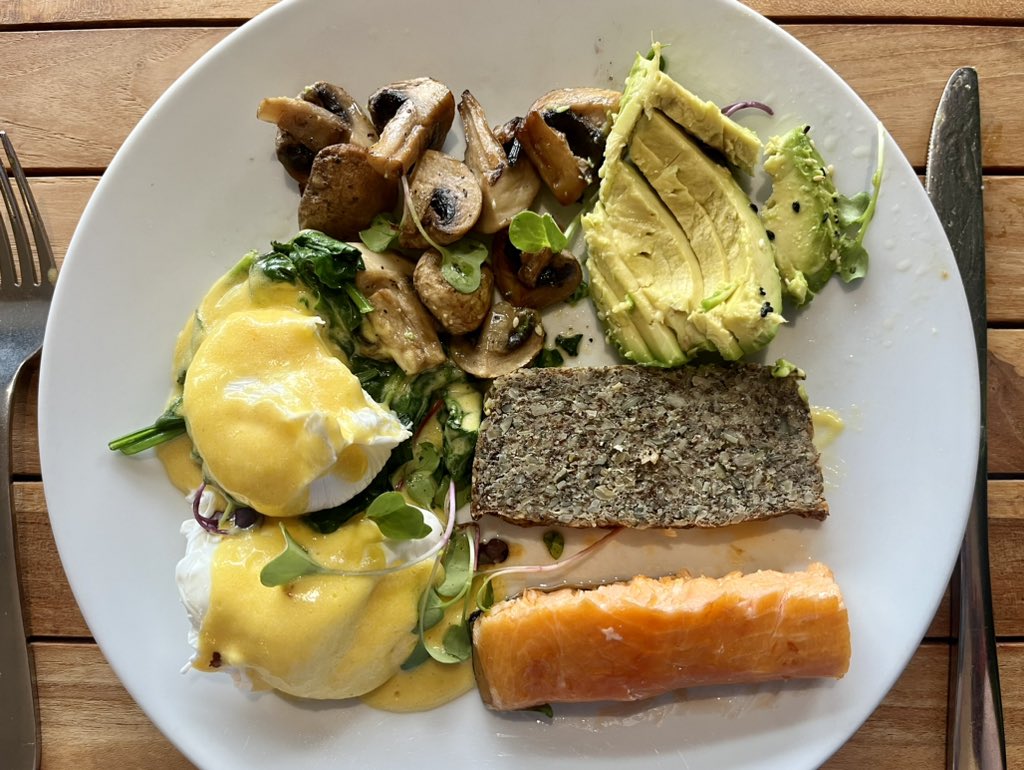
We have eaten our way into this epidemic of T2 diabetes AND we can eat our way out again by eating nutrient dense food like this that doesn’t put your blood sugar up 👍😊
Dr David Unwin tweet media
English
34
109
698
70.7K
NeuraMeals retweetledi
Robyn Dobbins
Robyn Dobbins@robynrdobbins·
In this clip from The Cholesterol Code, Matt Baszucki says what so many of us wish more people understood: What you eat doesn’t just change your weight, blood sugar, or blood pressure—it can change how your brain works. Matt talks about more stable moods, fewer mood swings, and extra energy on keto…then the familiar pushback: “Stop. Your LDL is high.” He hopes doctors will stop telling patients who feel good for the first time in years to abandon the very therapy that’s helping them—just because of one number. You’ll hear more of Matt’s story, and many like it, in the film. 💻 Streaming April 17 on Amazon See it in select theaters near you!  cholesterolcodemovie.com @matthewbaszucki @janellison @wideeyetv @realDaveFeldman #TheCholesterolCode #metabolicpsychiatry #mentalhealth #ketogenicdiet #LDL
English
6
20
97
7.2K
NeuraMeals
NeuraMeals@NeuraMeals·
@David5437893194 @realDaveFeldman @whohead1 Hope your wife is recovering well from her surgery. Thanks for considering to attend. If you don’t find other nearby screening, hope you watch it from Amazon after 4/17. You will appreciate it as much as I do.
English
0
0
1
43
David54378
David54378@David5437893194·
@NeuraMeals @realDaveFeldman @whohead1 I wanted to attend, but my wife is recovering from surgery, so, nope. Would have been neat to meet some semi-locals (Philly) with similar interests.
English
1
0
0
54
NeuraMeals
NeuraMeals@NeuraMeals·
Yes! The screening went really well—the film was incredibly well made. A few friends from the medical field attended and came up to me afterward to share how much they learned. Others also thanked me for hosting, which truly meant a lot. We had about 40 people, even though it wasn’t a huge crowd, meaningful conversations started—which was exactly the purpose. As an LMHR with an autoimmune condition, following a carnivore diet since 2022, I know how challenging and isolating this path can feel. I was deeply moved by every story and by the message your team is sharing through this powerful documentary. Thank you again, from the bottom of my heart, @realDaveFeldman and @nicknorwitz.
English
1
0
4
2.1K
NeuraMeals retweetledi
NeuraMeals
NeuraMeals@NeuraMeals·
From Lancaster, PA — I just finished the screening today. As someone who has shared a similar health journey with Dave, watching the film for the first time left my eyes wet throughout and my heart full—for what Dave has done, and for everyone who sat in the room with me. I knew this needed to be shared. And after showing Cholesterol Code, I no longer feel so alone. Thank you, @realDaveFeldman.
English
0
0
11
3.5K
NeuraMeals retweetledi
Dave Feldman
Dave Feldman@realDaveFeldman·
🚨🚨🚨It's Official🚨🚨🚨 Mark your calendars! The Cholesterol Code documentary drops April 17th, 2026 on Amazon
English
43
534
2K
153.6K
NeuraMeals
NeuraMeals@NeuraMeals·
@ApoDudz @realDaveFeldman Thank you, Austin. I am hosting one in Lancaster PA on 3/29. Not many tickets sold yet but your message reassured me why I am doing that. Even just with one life changed by viewing the film, it worths everything.
English
1
0
5
726
NeuraMeals retweetledi
Austin Dudzinski, PharmD, BCACP
I am still in sheer awe after the viewing of @realDaveFeldman’s The Cholesterol Code documentary at #CoSci. The stories of people alleviating profound human suffering are beyond moving; words cannot describe. I spent 60%+ of the documentary crying; I couldn’t help myself. I think far too often, the LMHR community is misunderstood and reduced to caricatures, all portrayed as some contrarian “LDL deniers.” In reality, many are simply vulnerable human beings…human beings just trying to reclaim their lives. For me personally, witnessing profound human suffering on a daily basis, this is much more than a number on a lab report or trivial X debates or pointless diet wars. It is about real people feeling alive again. And every person deserves a chance to find healing.❤️
English
11
22
165
24.5K
NeuraMeals retweetledi
Dave Feldman
Dave Feldman@realDaveFeldman·
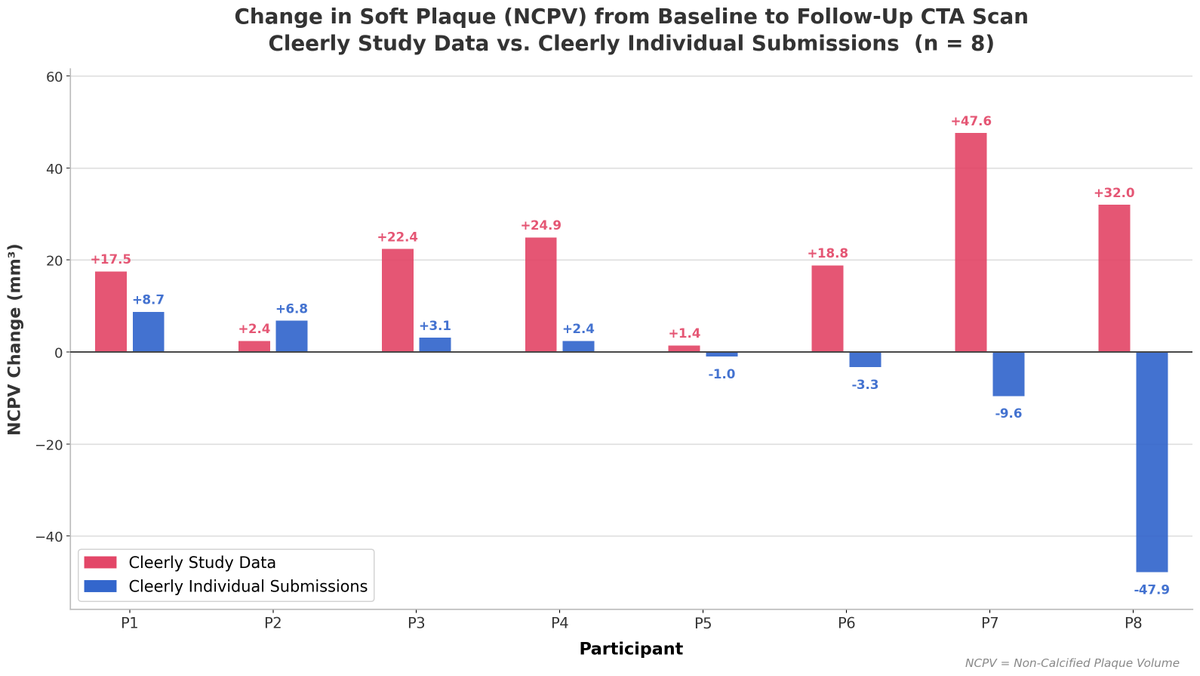
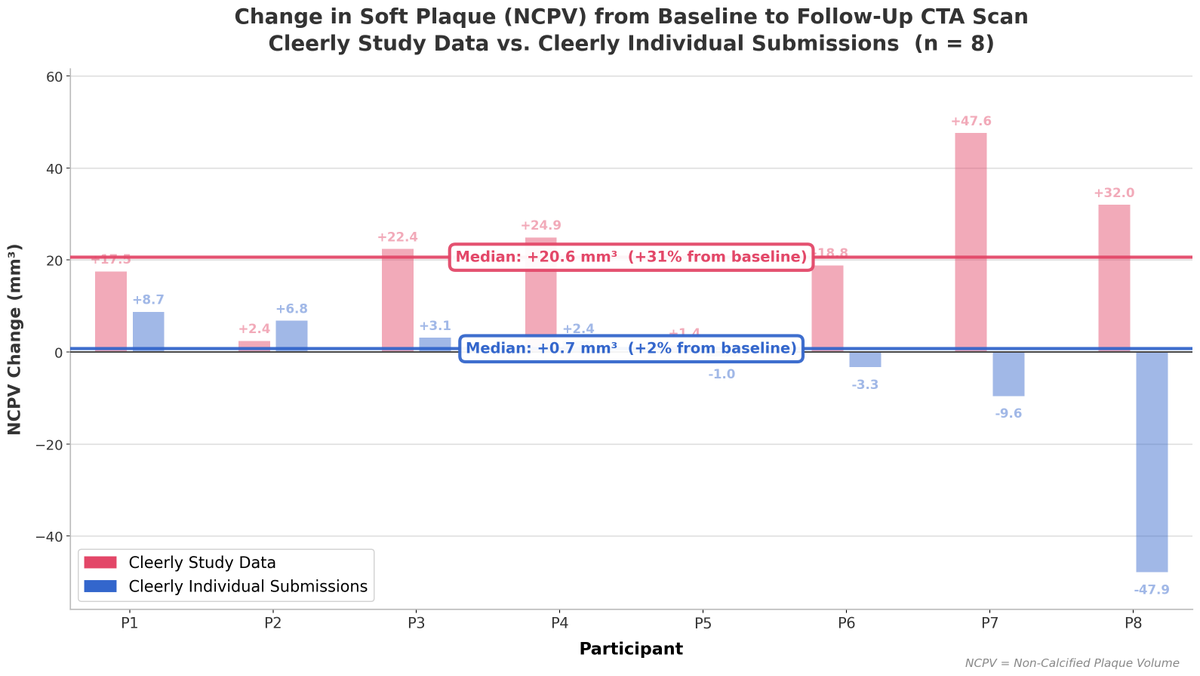
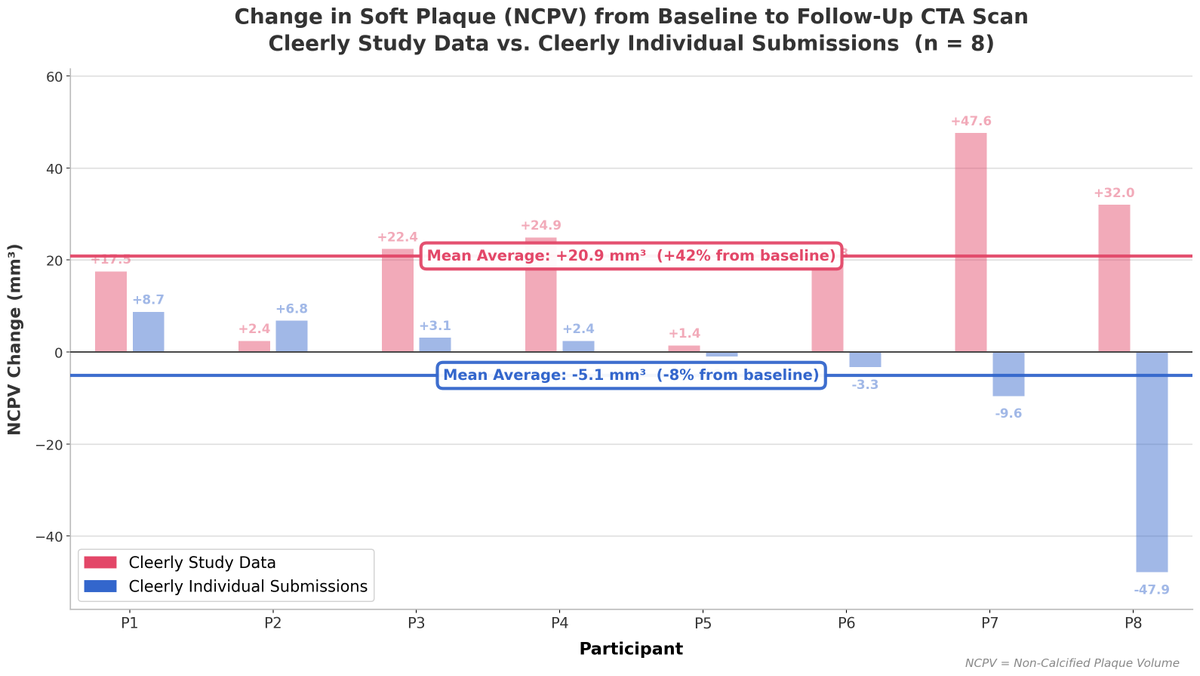
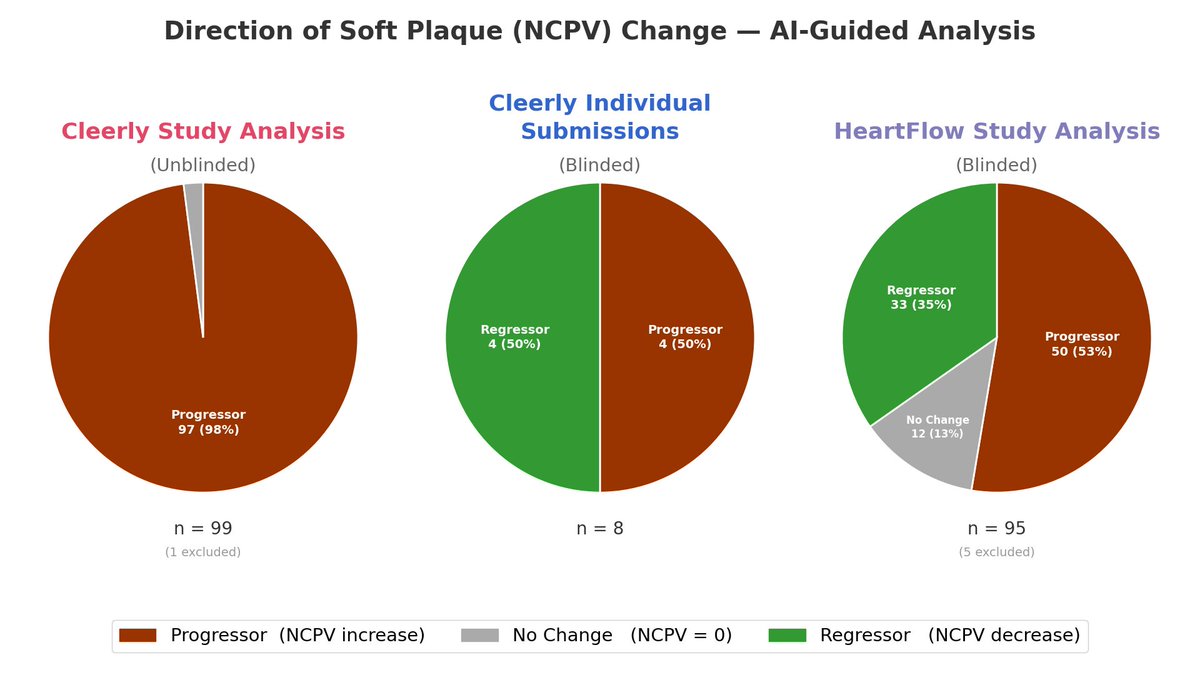
I want to share a crucial update on our study, KETO-CTA. (The video for this article is in the next tweet) Our study recruited 100 participants, each undergoing two high-resolution heart scans, known as CT angiograms, one year apart. (For more background on this study design, see preprint in the following tweet) There are now four analyses of those same 200 scans. But one of those analyses stands out — and I have some new developments to report. For a quick background, the first quantitative analysis was from an AI company, Cleerly. We published their analysis of our scans last year. After the paper was published, the Citizen Science Foundation was free to look at the raw Cleerly data, and we found a number of patterns that appeared different from what is typically seen in other coronary plaque studies. For example, in Cleerly's analysis, not one of the participants showed lower plaque levels at follow-up — even though CTA scans typically show some natural variation in both directions, especially in people who start with very little plaque. For another example within their data, people with no detectable calcium in their scans appeared to have several times more plaque progression than those who already had some calcium present. This runs counter to what many in cardiology call the "power of zero" — the well-established finding that having no coronary calcium is typically associated with lower risk and slower disease progression. Another major development: shortly after publication, we learned that the scans Cleerly was analyzing were not fully blinded. In studies like this, the order of scans is typically kept unknown to the analyst to help prevent any potential for bias. But in this case, the chronological order was available in the scans. We therefore asked Cleerly to repeat their analysis using a properly blinded set of scans, which is standard practice in longitudinal studies. Cleerly declined to perform a blinded reanalysis. Because of this, we commissioned an additional, independent analysis from Heartflow. Heartflow has been a leader in this space and is the most extensively validated AI platform for coronary CTA analysis. The Heartflow analysis was conducted with full operational blinding and completed right before the prespecified third, and final quantitative analysis, which uses Medis QAngio. These two independent platforms were consistent with each other, yet both differed substantially from the Cleerly results. As these independent results became available, we shared them privately with Cleerly and again requested a blinded reanalysis of their original work. We offered to cover any costs involved just in case this was the barrier to reanalysis. Cleerly again declined. However, a new development emerged. Several participants requested their scans from the study and submitted them directly through their own, personal cardiologist. Any cardiologist with a proper Cleerly account can appropriately submit scans on their patient's behalf. So in a sense, our participants themselves were able to provide a portion of the blinded analysis we were originally requesting. This was then shared with me on behalf of the Citizen Science Foundation. In total, there are 19 of these individual submissions — about 10% of the total scans in our study so far. Individual Submissions vs. Study Data We focused on the 8 participants who have both a baseline and a follow-up individual submission of their scans (the other 3 submissions are unpaired). [Please Note: These data are preliminary] Figure 1 compares the change in soft plaque (Non-Calcified Plaque Volume or NCPV) reported by the original Cleerly study analysis against the results from each participant's individual submission. [See Figure 1] Of the 8 participants, four showed an increase in soft plaque in both datasets — but in three of those four cases, the individual submissions reported substantially less progression than the study data. The remaining four participants all showed progression in the study data, yet every one of their individual submissions showed a decrease — a complete reversal of direction. The largest discrepancy was a single participant whose study data reported an increase of 32 mm³, while their individual submission showed a decrease of 48 mm³ — a reversal of approximately 80 mm³. The median change in soft plaque for these 8 participants was +20.6 mm³ (a 31% increase) in the original study data, compared to just +0.7 mm³ (about a 2% increase) from their individual submissions (Figure 2). The mean average is even more pronounced: the study data shows an average increase of +20.9 mm³ (42% from baseline), while the individual submissions show an average decrease of 5.1 mm³ (an 8% decline). In other words, the study data says plaque went up; the individual submissions say it went down (Figure 3). Direction of Change Across Platforms To put these individual submissions in broader context, Figure 4 compares the direction of soft plaque change across three analyses of these same scans. On the left is the original Cleerly study analysis — 99 participants after excluding one who had a procedure between scans. 98% showed an increase in soft plaque. Only 2 showed no change. Zero showed regression. In the middle are the 8 individual submissions, split right down the middle: 50% showing progression and 50% showing regression. On the right is the full Heartflow analysis across 95 participants. While 8 is a small sample size, the direction-of-change in these individual submissions is far closer to the Heartflow analysis than the original Cleerly analysis. It is worth emphasizing: 4 out of the 8 participants — fully half — received individual submission results showing less plaque in their second scan than their first. But after accounting for the single exclusion mentioned above, not one of the 99 participants in the original Cleerly study analysis showed plaque regression. We are not sure what happened with the original Cleerly analysis. We just know the other analyses are largely consistent with each other — and now, that includes these individual submissions to Cleerly as well. Next Steps We have already taken steps regarding last year's paper that contained the original Cleerly analysis. We are working with the journal on that now, and we expect news on this very soon. In the meantime, the preprint of our current paper with both Heartflow and QAngio results is available at the link below. Importantly, the two principal findings reported in the original paper have been reproduced in both the Heartflow and QAngio analyses: (1) baseline plaque strongly predicts future plaque progression, and (2) ApoB was not associated with plaque progression I want to once again thank Dr. Budoff and the Lundquist team for providing these scans to study participants who request them. If you are a participant in our study and interested in sending in your scans through your cardiologist, we now have a budget to help cover the cost of that submission. You can contact us at info@citizensciencefoundation.org for more details. Thank you again to everyone for your support. 🙏 cc @nicknorwitz @AdrianSotoMota
Dave Feldman tweet mediaDave Feldman tweet mediaDave Feldman tweet mediaDave Feldman tweet media
English
70
124
609
298.4K
NeuraMeals
NeuraMeals@NeuraMeals·
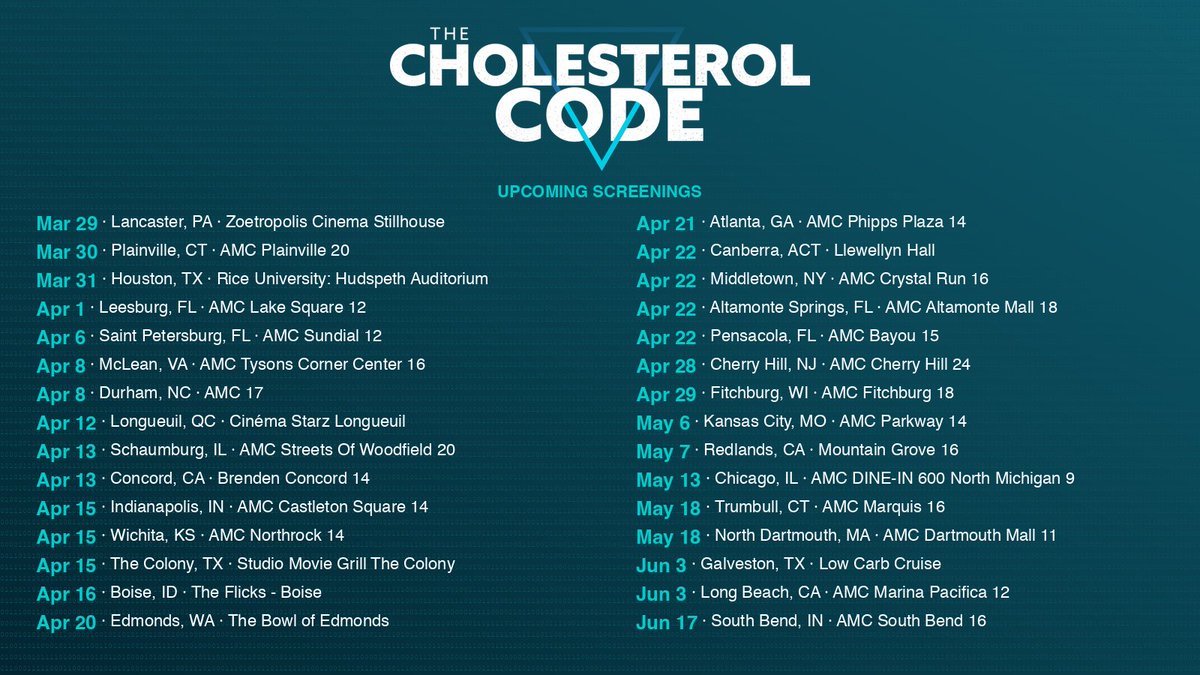
🎬Lancaster, PA screening - Privileged to host this incredible documentary by @realDaveFeldman and his team. — THE CHOLESTEROL CODE. #CholesterolCodeMovie 📅Sunday, March 29 | 11:00 am ET 📍Zoetropolis Cinema Stillhouse Address: 112 N. Water St. Lancaster, PA Tickets: Early Bird $16 The Cholesterol Code at Zoetropolis Cinema Stillhouse gathr.com/e/8b8c2e77 #GATHR #FILM #SCREENING #THE CHOLESTEROL CODE #THE-CHOLESTEROL-CODE #ZOETROPOLIS CINEMA STILLHOUSE #ZOETROPOLIS-CINEMA-STILLHOUSE #THEATRE #LANCASTER #DOCUMENTARY via @gathr
English
1
2
2
1K