

Kyle Heidt
262 posts

Kyle Heidt
@NewHeidts
Founder of NewHeidts | Ecomm HoldCo in motion. Scaling DTC brands & building a life I love while sharing the good, the gritty, and the growth along the way
Las Vegas, NV Katılım Ocak 2017
283 Takip Edilen154 Takipçiler

Ever since I started using WhisperFlow I feel like an absolute peasant if I am in places where I have to type instead of speak.
Me looking at my keyboard:
GIF
English

My OpenClaw ships banger ad briefs while I sleep.
Production-ready briefs. Scored. Validated through a QA skill tree.
And I am going to show you how to set it up in return for a little bit of clout
Here's what's actually running while I'm asleep.
OpenClaw has a skill graph. Three AI agents connected in sequence — each one feeds the next, and nothing moves forward until it passes.
The first agent is pure research. It's scraping the Meta Ad Library pulling 5–10 active competitor ads, extracting repeating hooks, mapping visual patterns, documenting copy structures, and analysing CTA approaches (offer vs urgency vs curiosity).
At the same time it's running Golden Pain Extraction — pulling verbatim emotional language from Amazon 3-star reviews, Reddit threads, TikTok comments on competitor videos, and customer service logs. Not summaries. Exact words real customers used. Each pain gets tagged and mapped to one of the 8 Life Force drives.
Then it runs an asset audit — lifestyle product shots, founder content, UGC, testimonials, before/afters. Everything gets catalogued.
All of that gets compiled into a research document. Competitor analysis. Golden Pains mapped to LFE8. Dream outcomes. Available assets. Recommended angles.
That document feeds the second agent — the brief writer.
It builds static briefs: 3 copy variations per brief, each with Headline + Subline + CTA. Left side: 3 USPs. Right side: Feature → Benefit mapping x3. Visual direction, do's and don'ts, product URL, primary image, drive assets — all included.
It builds video briefs: 3 hook variations per brief, each broken into Text Hook + Visual Hook + Audio Hook + Why It Works.
Then 3 full timed body scripts — [0–3s] Hook → [3–8s] Setup → [8–15s] Product → [15–18s] Proof → [18–20s] CTA.
The 3-Second Formula is embedded at the writing stage. Second 0–1: Triple Stack (visual hook, text hook, audio hook firing simultaneously). Second 1–3: The Promise. Second 3–5: The Rehook.
If the structure doesn't hit those timings, it doesn't get written.
Every brief then hits the QA agent. This is where most of them die.
Validation checklist: 10 Golden Rules scored out of 10.
Minimum 7 to pass.
Score below 7? It doesn't get sent to me. It gets rejected back to the brief writer with specific fix notes.
Not a soft pass. A directed rewrite. The loop runs until it passes.
Only when a brief clears every node does it hit my Telegram.
6 production-ready briefs. 3 static. 3 video. Validated hooks. Fresh angles built from real market intelligence.
Ready for designer handoff → testing → iteration → scale.
No docs opened. No prompts written. No hours wasted.
I've scaled 50+ brands to 7 and 8 figures at MHI Media.
I mapped the full skill tree — every agent, every node, every framework, every validation gate.
Like + Repost + Comment "CLOUT" and I'll send it over.
(Follow me so I can DM you)
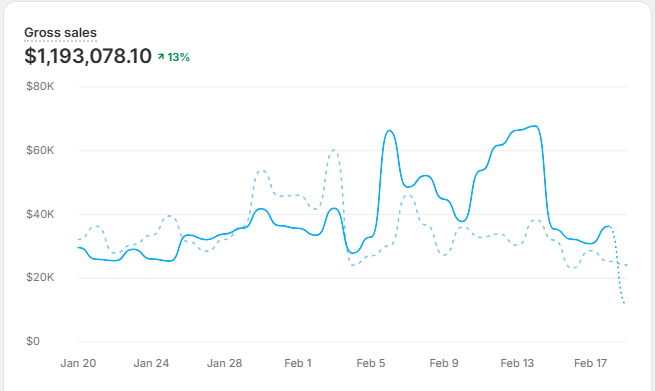
Screenshot not revelant but the last 30 days aint too bad.
English
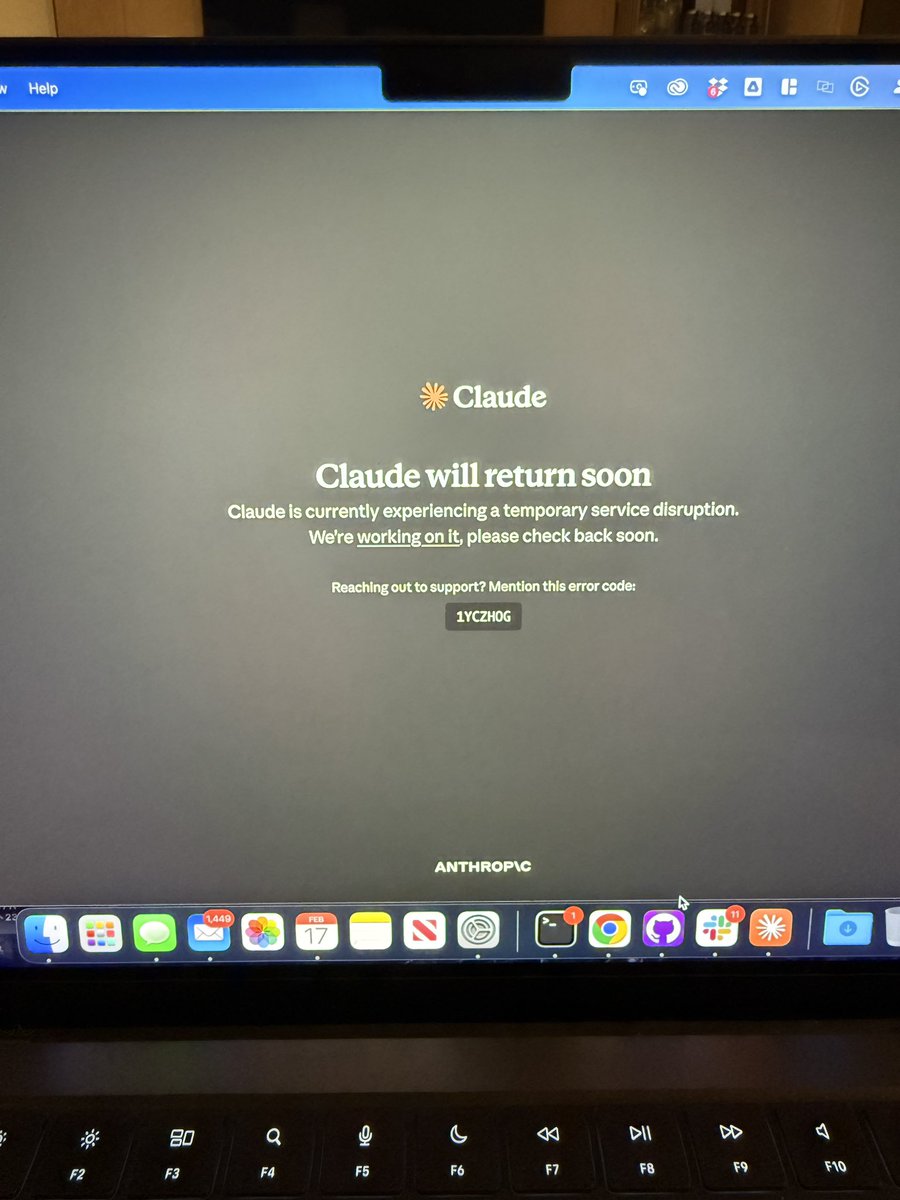
I guess I’ll just sit at my computer hitting refresh for as long as it takes for Claude to be back...
Not sure what else to do with myself these days without Claude running haha.
English
I take any X post that’s loaded with value and screen capture the post on desktop.
I then download the PDF.
Upload it to Claude CoWork.
Ask to analyze the X post and give me insight on how and where we can use this to optimize our current systems/processes.
It gives me where we’re it fits or if it doesn’t.
If it does, I stress test it.
If it works and I like the output, I have it written it into our processes.
It’s like downloading information and improving almost instantly.
Then if it is really good - Ill plug a whole section into our internal software.
English

Pretty wild you can accomplish in one year.
100K/day loading this year.
Kiel@kiel_fleming
100k year ✅ 100k month ✅ 100k week ✅ 100k day loading… So much more to learn and implement. Literally just scratching the surface. Onwards and upwards gents.
English

Adding the 2 most requested features to Ad Machine:
Ad copy ideation and creation. Figma/Canva exports.
What else should we build?
Not stopping until this thing is a no-brainer for every single one of you.

English
@theisaacmed It’s freaking amazing. Any idea to systemize or optimize life to your own liking, can now be built. 🤯 recreating all the softwares I use and pay for monthly to integrate into a software that covers all brands in the entire portfolio.
English

You don’t understand.
I was using Claude to help me set up some formulas for an excel sheet that I use to forecast revenue.
Claude suggested we build a web app instead due to limited excel functionality.
I then spent 3 hours standing up a full web app that is an interactive cashflow model that is fully custom to my business and has more robust capabilities than excel.
It sends me a slack message if things dip below a certain $ amount. Flags me if I need to review something that our team is doing.
It auto populates data from Quickbooks and sends an email to our internal bookkeeper if there is an error.
I am not technical. It walked me through setting up a db. Setting up Vercel. I can ask for any feature I want and it can seemingly add it and walk me through updating GitHub.
I can ask questions. It doesn’t get annoyed
It feels like a video game.

English

Anthropic just shipped Agent Teams into Claude Code and it completely changes how you run creative research and campaign workflows 🤯
OpenClaw has been blowing up up. 140K+ GitHub stars in a week.
Everyone’s trying to configure multi-agent setups with it right now.
Custom skills, MCP integrations, environment variables, Docker containers.
It works.
But let's be honest: it’s unnecessarily complicated for what 99% of business owners actually need.
Anthropic saw the demand and made it native.
No Mac mini, no VPS, not 6-hour installation setup.
Instead, they built right into Claude Code.
Here's how it works:
Instead of one agent doing everything solo in a straight line, a lead agent breaks your task into pieces, spins up multiple teammates, and they all work on different parts of your project at the same time.
One researches competitors, one audits your landing page, one analyzes ad creative.
They talk to each other, share findings, and coordinate through a shared task list without you managing any of it.
This is different from sub-agents.
Sub-agents can only report back to the parent. They can't message each other or share discoveries mid-task.
Agent teams can. That's the unlock.
Best use cases I'm seeing for e-comm and agencies:
→ Competitor ad research across Meta, TikTok, and YouTube in parallel
→ Landing page QA from 4 angles at once (conversion, performance, copy, technical)
→ Creative brief development where audience research, competitive analysis, and concept ideation happen simultaneously
→ Product catalog audits where 4 agents each handle a segment of your SKUs
→ Campaign launch QA checking pixels, UTMs, forms, and compliance at the same time
The catch:
It's experimental. It burns through tokens fast. Each teammate has its own context window so usage scales with team size.
But for complex marketing workflows where parallel work actually matters, it's a game changer.
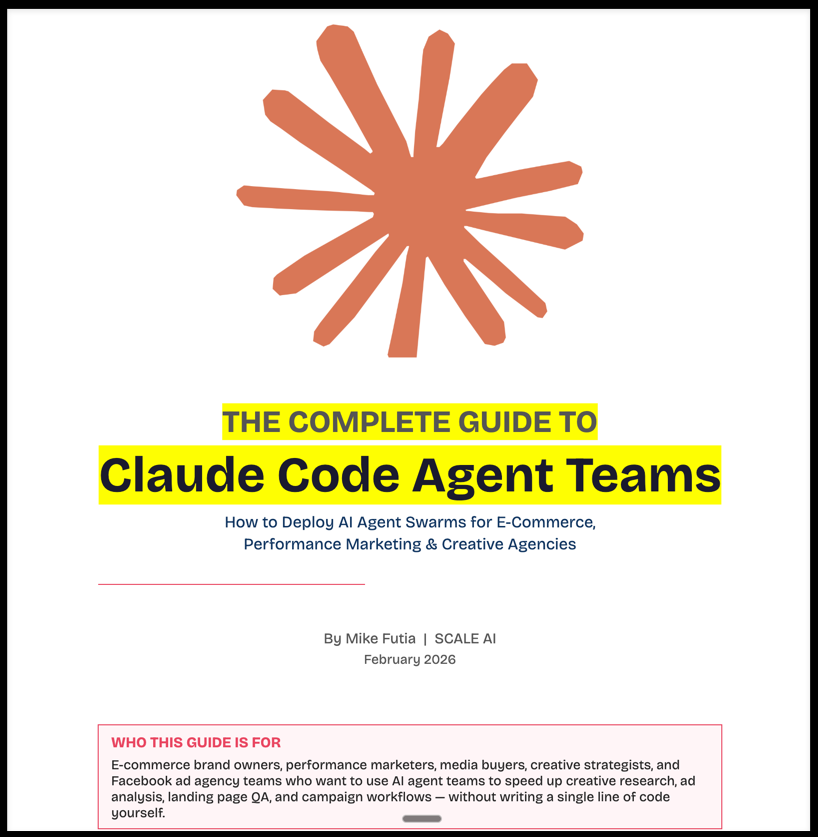
I put together a complete breakdown covering:
→ What agent teams are and how they actually work
→ How they're different from sub-agents (and when to use which)
→ How to enable them in your settings in 30 seconds
→ Copy-paste prompts for competitor research, landing page QA, and creative briefs
→ Best practices so you don't burn through tokens
→ The limitations you need to know before you start
This is one of those features that sounds small on paper but completely changes how you run research and QA once you start using it.
Want access completely for free?
> Like this post
> Comment "AGENT"
And I'll send it over (must be following so I can DM)
English
@Jake_Joseph this is awesome man, looking forward to cranking out some review videos!
English
Everyone knows Kling 3.0 is a beast at UGC ads, but the way everyone is doing it is sketchy af.
So I built something better inside Ad Machine 👇🏼
1 product image + 1 REAL customer review = ethical UGC video with full disclosure.
Fees like the right way forward.
First one is free on me. Bookmark this to try it later.
English
One of my deep rabbit holes: spend-to-creative ratio on Meta.
How many ads I test = how much budget I need for quality data.
Spending $100 testing 20 creatives? Garbage data. Only $5 per ad.
Spending $100 on 3 creatives? $33 per ad. Better signal. Faster learning. Clearer winners.
Anyone has a strict framework they use for this?
English
@maxwellfinn Same here. But then I go talk to a random stranger or friends about all this cutting edge stuff and they don’t even know what Claude is or Nano Banana or maybe has heard of Shopify. So we are in fact so ahead. 🤜🤛
English
Every day I simultaneously feel like I’m doing the most cutting edge advanced stuff and am way behind/not doing enough.
English
When you hit your limit on Claude, forgot how to complete tasks like a normal person, and have to wait to 5 pm CST for usage to reset.
GIF
English
Kyle Heidt retweetledi

I'm increasingly convinced that burnout doesn't come from working long hours or weekends. Burnout comes from working on things that drain your energy with people that do the same.
English

I just vibe coded a Meta Ad spy tool in Claude Code 🤯
Meta just made it possible to sort any brand's ads by *highest impressions* for the first time.
Which means you can now see *exactly which competitor ads* are getting the most views.
But clicking through the Ad Library one brand at a time is still painful.
So I built a tool that pulls it all into one place:
One brand URL in → top ads scraped, organized, and fully analyzed by AI.
Here's how it works:
→ Import any brand with their Ad Library URL
→ Apify scrapes their top-performing ads automatically
→ Click into any ad for full breakdown (headline, copy, CTA)
→ Gemini watches the video or analyzes the image
→ Returns asset type, visual format, messaging angle, hook tactic, offer type
No manual research.
No watching videos one by one.
No messy spreadsheets.
Here's what I built:
- 50+ DTC brands already loaded (AG1, Caraway, Chomps, Dr. Squatch, Gruns, Jones Road, Magic Spoon, Ridge)
- Weekly auto-scrape to refresh top ads
- AI analysis on any ad in one click
- Bookmark system to save winners
- Filter by brand, category, media type, or AI tags
Built 100% in Claude Code.
I recorded a full step-by-step showing exactly how I built this, including ALL the prompts.
Want access to all of the prompts for ree?
> Like this post
> Comment "META"
And I'll send it over (must be following so I can DM)
English
The goal was never to impress strangers on the internet. The goal was freedom. Still is.
English
January 2026 Portfolio Wrap-Up:
Biggest revenue month ever at $1.3M across the portfolio with $142K in Contribution Margin.
Records broken. New benchmarks hit. But also navigated wild market swings, inventory challenges, and seasonal pivots.
What I learned this month:
High AOV brands need quality over volume in everything (creative, testing, strategy)
Don't be afraid to raise prices when margins demand it
Seasonal brands require different strategies in/out of peak season
Systems and prep during slow months unlock scale during peak
The right messaging matters more than creative type.
Still learning. Still adjusting. And just trying to figure it out.
If you're running eComm brands and want to talk strategy, challenges, or wins, my DMs are open. Happy to help where I can.
English
Brand #3:
Vertical: Beauty
Market Sophistication: 5/5 (still brutal)
Competition: Insanely high
We turned off ads mid-December and focused on planning through mid-January.
Used that time to improve the entire funnel: better UX, new listicles, fresh product photos, and built out an organic marketing strategy.
Creative sourcing:
We're using BeautyPass to get UGC videos. So far, nothing's taken off.
I've learned: there are a TON of content creators comfortable on camera who have no clue how to make engaging content.
Fixing this by tightening our briefs and giving clearer direction.
Performance:
Turned ads back on mid-January as we pre-ramped into peak season.
Early traction was decent. Now ads are ripping.
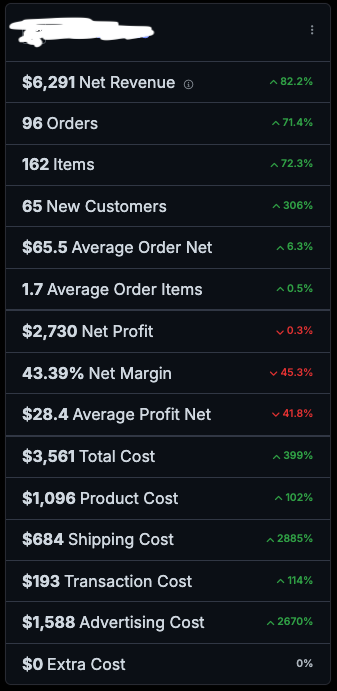
We've successfully hit our targets:
nCAC: <$24
AOV: >$65
Strong margins at high volume with both still improving.
Ramping to peak season is off to a solid start.
What's working:
We're rotating in a batch of new ads to test each week, building off winning messaging and angles.
Not testing new messaging, yet. Testing iterations of what's already proven.
Lesson: Seasonal brands need prep time. Use the off-season to fix systems, dial in creative processes, and build momentum before peak hits.
When peak comes, you're ready to scale fast.
English
Just closed our biggest month ever:
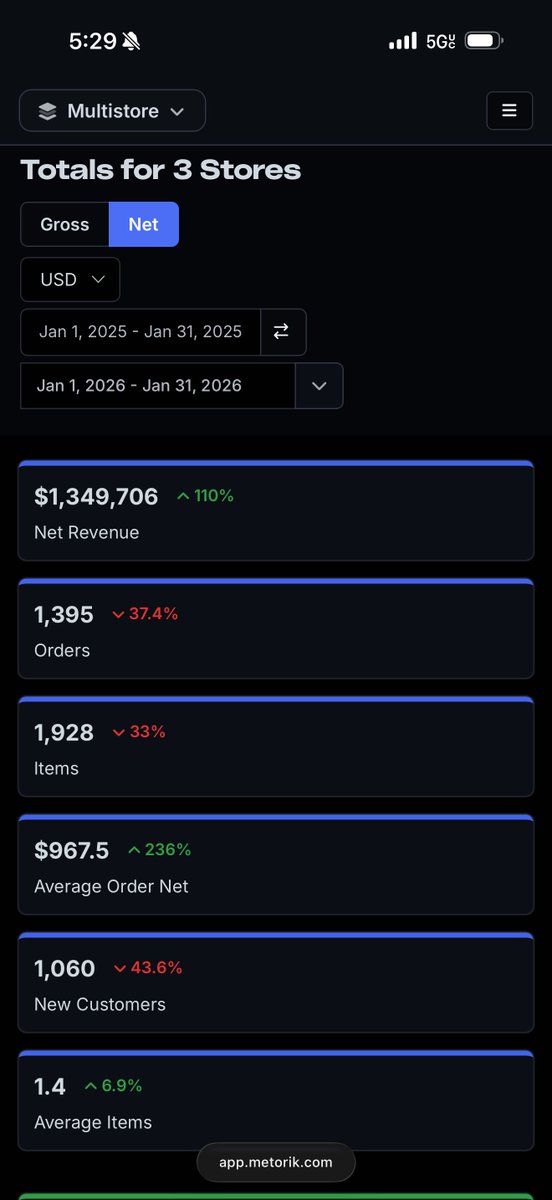
$1.3M revenue across 3 eCommerce brands.
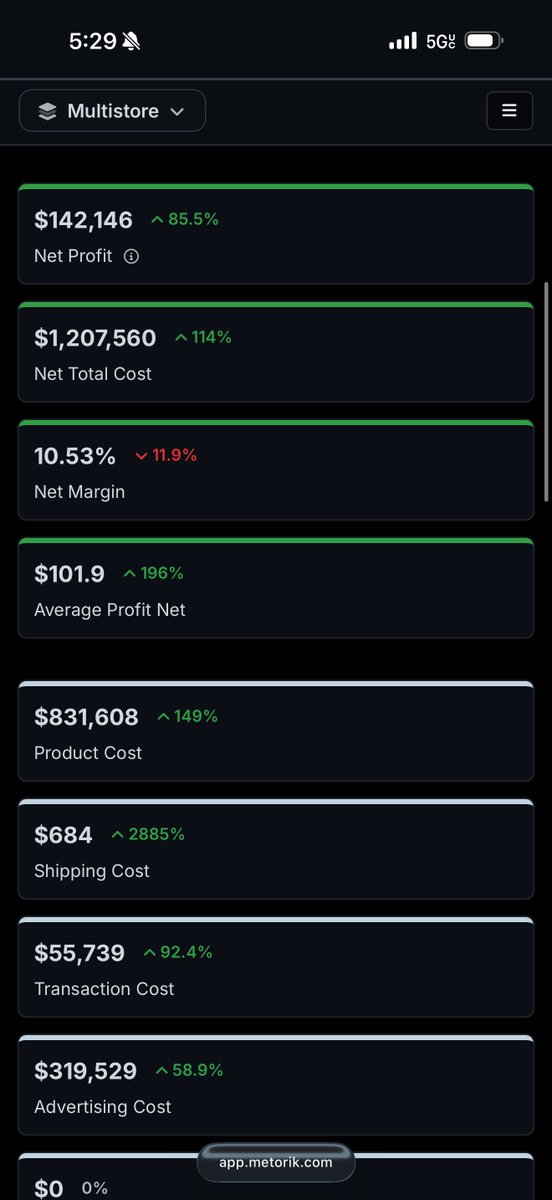
January 2026 Portfolio Numbers:
📈 Revenue: $1,349,706
💰 Contribution Margin: $142,146
Records broken for our biggest brand. Multiple all-time highs hit.
All data pulled from Metorik where we centralize reporting and compare YoY performance.
Here's what worked (and what didn't) 🧵👇
English