Sabitlenmiş Tweet

NewNG Is POssible
4.7K posts

@NewNgisPossible
Nigeria Must Work By Force
2026 Yıllık Özeti
@NewNgisPossible hesabının Twitter yılını gör


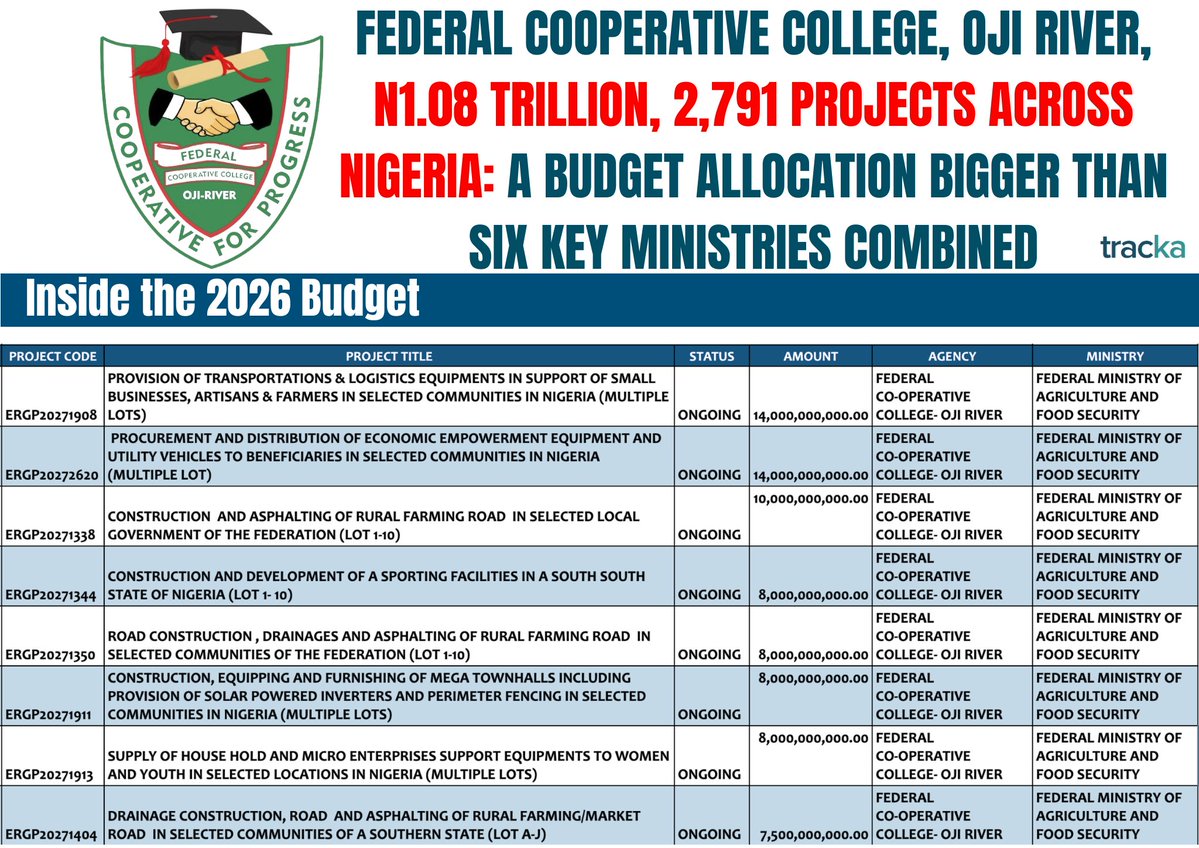
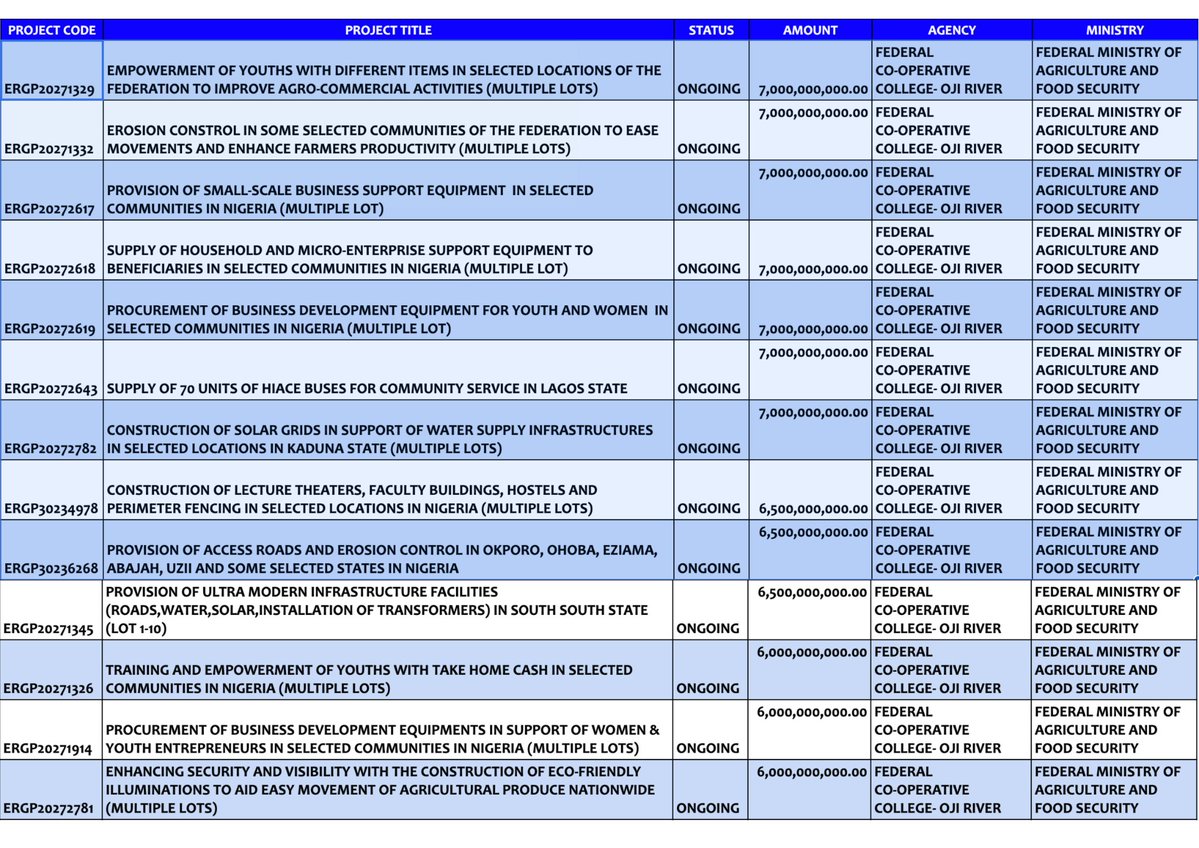
🚨 How Did a Cooperative College Get N1.08 Trillion for 2,791 Capital Projects? Our review of the 2026 FG budget reveals that the Federal Cooperative College, Oji River (@fedccojiriver), has been allocated N1.08 trillion for 2,791 capital projects spread across the 36 states in Nigeria and the FCT. This means a single federal cooperative college is expected to implement thousands of projects with nationwide coverage from Abia to Zamfara, Sokoto to Bayelsa, Lagos to Borno, and across the FCT. These projects include: 🛣️ Road and drainage constructions 💡 Solar streetlight installation, 🎓 Digital learning centres, 🌾 Supply of rice and empowerment materials, ⚽ Construction of football pitches, 🏥 Medical outreaches, ♻️ Plastic recycling and processing plants, 🩺 Dialysis centres, 🚑 Ambulance supply e.t.c Yet, the College's core mandate is to advance cooperative education and practice through capacity building, research, innovation, leadership development, and support for sustainable livelihoods. Even more concerning, many of these projects have no clearly stated implementation locations, making citizen oversight and project tracking extremely difficult. To put this allocation in perspective, the N1.08tn earmarked for FCC Oji River alone is greater than the combined allocations to six key ministries: 🏝️ Federal Ministry of Tourism - N21.76bn 🎭 Federal Ministry of Arts - N70.53bn 📡 Federal Ministry of Communications - N85.56bn ⛏️ Federal Ministry of Solid Minerals Development - N156.84bn 🔐 All six agencies under the Federal Ministry of Interior - N723.62bn This raises important questions: ❓ Why is a cooperative college implementing projects far beyond its statutory mandate? ❓ How were these projects assigned to the institution? ❓ How can citizens track projects with no clearly defined locations? ❓ What accountability mechanisms are in place to ensure value for money? At a time when Nigeria faces significant fiscal pressures and relies heavily on borrowing to fund public expenditure, public resources must be allocated transparently, strategically, and through institutions with the capacity and legal mandate to deliver results. A budget item without a clear location, defined beneficiaries, and a responsible implementing agency creates fertile ground for waste, inefficiency, and weak accountability. 📄 The comprehensive list of these allocations can be found on our website: yourtracka.org/ng/documents Cc; @NGRPresident @BudgetOfficeNG @nassnigeria