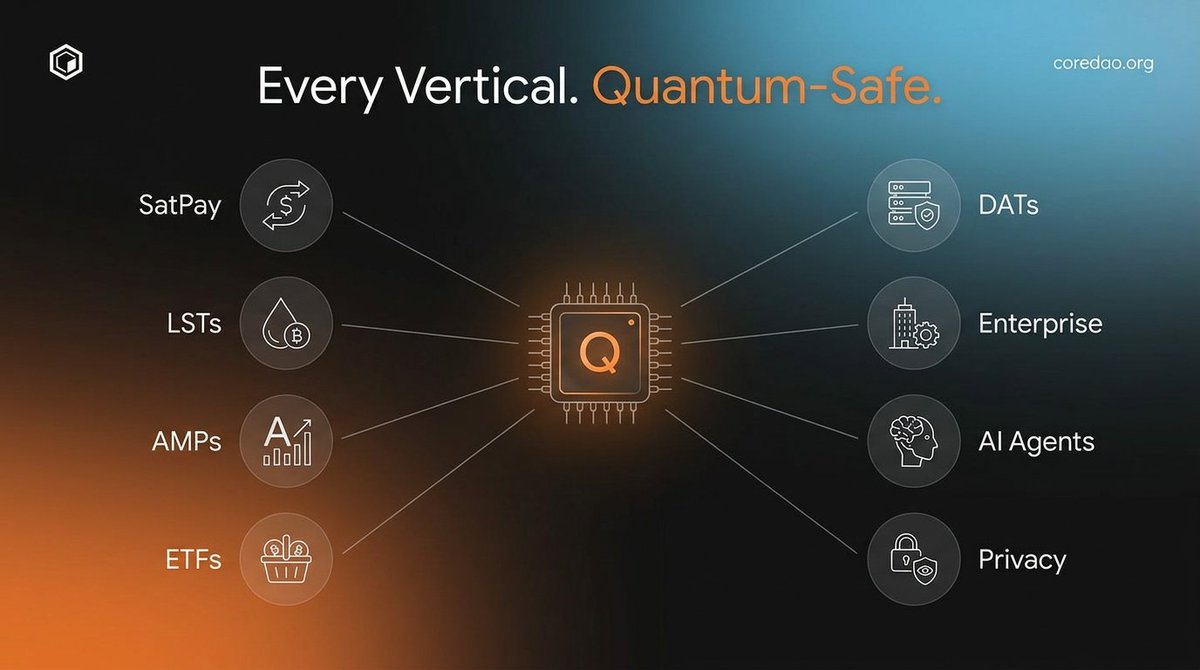
@Coredao_Org @sat_pay @_zprotocol Core provides the essential infrastructure for Bitcoin's growth.
Every key vertical seems to find its home here today.
English
Nexus
71 posts
@Nexus_cv
5+ years trading experience. for Crypto Signal:- https://t.co/jMevSjDMG3

Rich Rines on Bitcoin Yield, Privacy, and Crypto’s Next Chapter In this episode of DROPS, I sit down with @richrines to discuss the future of Bitcoin, why privacy is becoming one of crypto’s most urgent themes, and how @Coredao_Org is trying to turn dormant digital assets into yield-earning capital. Rich’s story stretches back to Bitcoin’s early years, through time at Coinbase, and into building infrastructure designed for a more mature phase of crypto. The conversation moves from ideology to product design, from self-custody to institutions, and from Bitcoin maximalism to a broader view of what financial freedom could mean in the years ahead. From Skeptic to Builder Rich first encountered Bitcoin in 2011 through a college professor. Like many people at the time, he dismissed it because digital value seemed absurd. Then Bitcoin came back into his orbit in 2013, and this time he did the homework. After reading the white paper, he says his “mind was totally blown.” He saw a system for peer-to-peer money, a sovereign-resistant store of value, and a financial network that didn’t need permission to operate. That second look changed the trajectory of his life. He has now spent more than a decade in the space, including time at Coinbase during its rise to becoming a public company. But while many builders were drawn toward newer ecosystems, Rich remained anchored to Bitcoin and the belief that its role in global finance was only beginning. What Core Is Really Building When asked to explain Core in one sentence, Rich keeps it simple: “Scaling Bitcoin.” Bitcoin’s strengths, in his view, come from restraint. It is intentionally slow, limited, and conservative. Those trade-offs reduce attack surfaces and preserve trust. But many holders want more than digital gold sitting idle. They want to earn from their Bitcoin. They want to borrow against it. They want to use it as productive collateral without selling it. And that is the opportunity Core is chasing. Rather than trying to replace Bitcoin, Core is attempting to extend its usefulness. The thesis is that trillions of dollars in dormant Bitcoin capital could eventually move into yield strategies, lending systems, and the broader decentralised finance ecosystem. Why Bitcoin Holders Want Yield Rich says the two dominant demands from Bitcoin holders today are straightforward: Safe yield and access to leverage. This reflects a maturing asset class. In earlier years, owning Bitcoin itself was the strategy. Today, large holders and institutions increasingly think like capital allocators. They ask: How can an asset be monetised without being sold? How can long-term conviction be maintained while unlocking liquidity? That is why borrowing against Bitcoin has become more attractive. Rather than liquidating a position, holders can keep upside exposure while accessing capital elsewhere. Of course, the risks are real. Crypto has already seen what happens when yield products depend on weak counterparties or reckless leverage. Rich openly references the failures of prior lending platforms and argues that the next generation must be built differently. The Self-Custody Problem One of crypto’s oldest principles is simple: not your keys, not your coins. That creates tension for yield products, because many historical models required users to hand over custody of their Bitcoin. Rich argues Core’s design tries to avoid that trade-off through Bitcoin time-locking. Instead of transferring ownership, users can lock coins for a set period, which helps in securing the network and receiving rewards. As he puts it: “We don’t want your Bitcoin.” The foundation is far more interested in a model where users keep as much control as possible. Why Privacy Is Back on the Agenda One of the most intellectually interesting parts of the conversation may be Rich’s views on privacy. He believes crypto’s early transparent systems increasingly look outdated. In his words, the industry may move from everything being public by default to everything being private by default within the next 12 to 24 months. Why? Because transparency at scale creates unintended consequences such as wallet surveillance, personal security risks, criminal targeting, corporate intelligence leaks and AI-powered financial monitoring. Rich argues that AI has made surveillance “trivial.” Tools that once required specialised teams can now be assembled quickly and cheaply or simply vibe-coded. Moreover, he contrasts Crypto with traditional banking, which is private by default. You would never expect every payment, transfer, and balance to be publicly visible. Yet crypto normalised exactly that. He sees privacy-focused systems like Zcash as a response to this imbalance. Why He’s Bullish on Zcash Rich describes Zcash as preserving some of Bitcoin’s original cypherpunk spirit: sovereignty, freedom, and privacy. Where Bitcoin has become institutionalised through ETFs and mainstream adoption, Zcash represents a more values-driven branch of the movement. He stops short of making sensational price predictions, but he is clear that the opportunity is meaningful. His core thesis is that the market for private money could be enormous, especially in a world where surveillance capabilities keep improving. That does not mean anti-government or anti-law. He points to selective disclosure models, such as viewing keys, where users can reveal information when they choose. The Bigger Lesson: Crypto Is Growing Up, Across the interview, Rich returns to one consistent idea: crypto is entering a more serious era. The next winners are no longer determined by tokens or narratives but through the problems they solve. This includes yield generation, custody architecture, privacy infrastructure, consumer-friendly interfaces, and institutional-grade trust systems. He also talks about neobanks, backend yield rails, and integrated products, which are gaining far more relevance than memes. Final Thoughts Rich Rines comes across as someone shaped by crypto’s first principles but focused on second-order execution. He still believes in freedom, self-sovereignty, and open systems. But he also understands that ideals alone are not enough. Products need to work, risks need to be managed, user interfaces must improve, and privacy must be guaranteed. If the first era of crypto was about proving digital assets could exist, the next may be about proving they can be useful, secure, and normal. And if Rich is right, Bitcoin earning yield and privacy becoming standard may both arrive sooner than many expect. 👉If you enjoyed reading the summary, head over to When Shift Happens on YouTube or your favorite podcast platform to access the full convo.


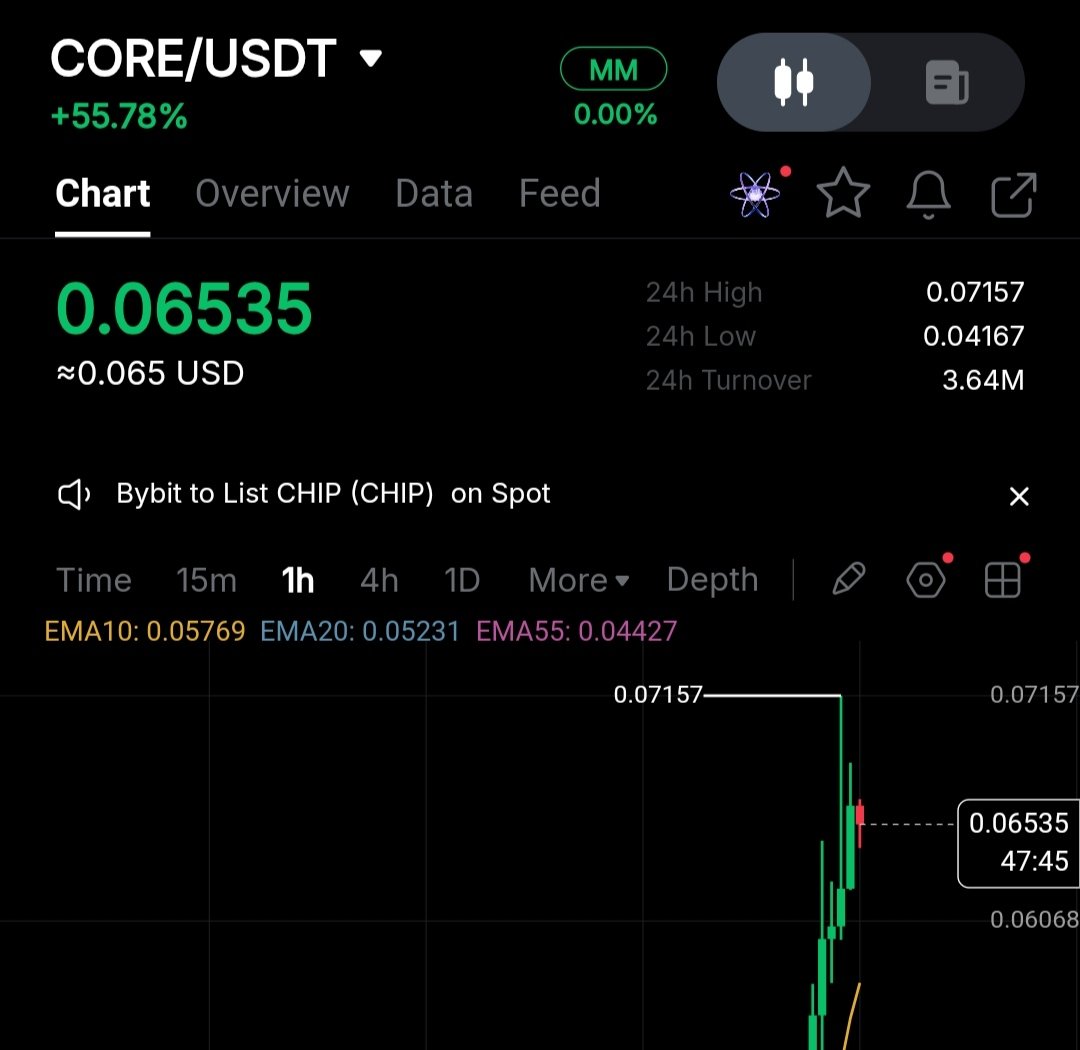
$CORE I’m accumulating heavily. First target: 0.53 zone- nearly 2x frm here. Don’t miss this chance. If u bought above 0.5 & ur portfolio is red, forget it. Start a new journey frm here.
. @richrines on what it takes to get institutions comfortable putting $10B+ into a crypto yield product: "Put all the cards on the table. Let it stand up to whatever level of scrutiny you bring" @Coredao_Org isn't built for degens. It's built to be the default yield backend for crypto - starting with BTC @_zprotocol
DROPS E35: @Coredao_org - Bitcoin yield without giving up your Bitcoin @richrines is one of the initial contributors to Core DAO, the leading Bitcoin scaling solution. He's also a long-time Zcash holder and early backer of @_zprotocol , a new privacy chain built on Core's Satoshi Plus consensus. We talk Bitcoin yield, financial privacy, AI surveillance, and why the next big move in crypto might not be where most people are looking. We talk about: - How Core DAO lets you earn yield on Bitcoin by time-locking it - without ever giving up custody - Why borrowing against Bitcoin makes sense now - OG Bitcoiners rotating to Zcash - what "transition" actually means and whether it's bad for Bitcoin - Z Protocol as the DeFi layer for private money - Why AI has made financial surveillance trivial - and why that accelerates privacy adoption - How Agents are leaving full financial fingerprints - and why privacy needs to be default on at the chain level And much more... Timestamps: 0:00 - Introduction 2:05 - What does Rich Rines do? 3:00 - Financial Freedom 4:09 - Journey from Bitcoin to Zcash 6:40 - Zcash Philosophy 8:38 - Transition to Zcash 11:20 - Who is Rich Rines? 11:46 - Bitcoin as Pristine Collateral 14:28 - Criticisms of Borrowing Strategy 16:52 - Explaining CORE 18:58 - Bitcoin Yield Story 20:29 - Misconception regarding CORE 22:08 - Time Lock 23:34 - Risk of using CORE 24:37 - Strategies used by CORE 26:42 - What Bitcoin Holders Want? 28:46 - Bitcoin Yield 30:10 - CORE Alpha 32:44 - SatPay 34:19 - Power Grid Thesis 35:37 - Satoshi Plus 37:07 - What is Z? 38:12 - Benefits of long-term Zcash Holder 40:01 - Vertical Integration 43:12 - Privacy for Agents 44:41 - Faux Privacy 46:14 - Privacy vs Government 49:01 - Zcash’s Future 50:01 - Conclusion