
Sabitlenmiş Tweet
Nic
1.9K posts


Nic
@NicOnChain
AI Content Writer || AI Product Tester || I post threads on AI tools every day
Space Katılım Mayıs 2020
708 Takip Edilen217 Takipçiler
@markessien This cannot work because the infrastructure that allows a consumer to backfeed the grid is not present. Before entering this territory, they should first fix the current state of the grid
English

Nigeria can rapidly fix the power problem for consumers by passing a very general law saying that people can directly sell solar power to their communities with no restrictions. The rest will be solved by the free market.
English
This fall I went through the toughest job-hunting season of my life.
7 interviews.
7 rejections.
A full “new-grad rejection combo.”
I interviewed across Databricks, Stripe, TikTok, Together AI, Scale AI, and more — and still ended up with almost nothing except a Meta return offer
English
Nic retweetledi

For the past few weeks, I have been working on a new feature for Aura, and this one feels special to me. I wanted to bring emotions and nature closer together, because both are connected more than we think.
I added a nature layer to Aura that understands how you feel and guides you toward something simple that can genuinely help. A walk.
With the new Maps feature, when someone logs an emotion, Aura suggests walking routes around them based on how they feel. I spent weeks researching and testing this on my own, and the science behind it is powerful. Even a short walk can reduce stress, boost your mood, and clear your mind. Studies also show that spending time in nature lowers negative thoughts and helps your mind reset.
The more I learned, the more it made sense. When emotions get heavy, movement and nature work together in a meaningful way. So I built this feature to make that support easy for anyone. Just step outside and let the world help you breathe again.
I have been testing it personally, and it already feels like something people need right now. Sometimes the answer is simple. A fifteen minute walk. Fresh air. A clearer mind.
English
Nic retweetledi

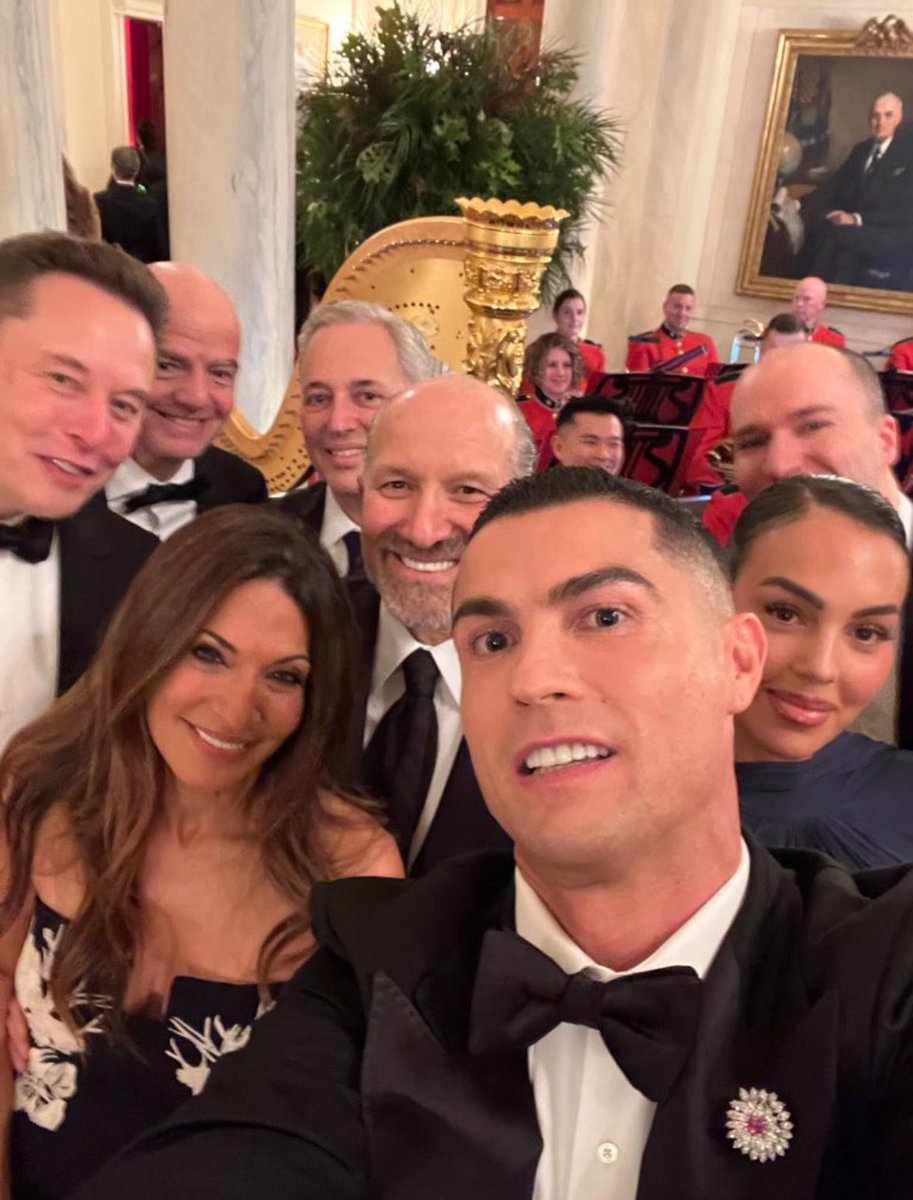
🚨🤳🏼 Cristiano Ronaldo’s selfie after visiting president Donald Trump at the White House.
@DavidSacks 📸
English
Nic retweetledi


@Adityapandeydev they say reply guy meta is dead now
what should i do guys 💀
English
Nic retweetledi

Nic retweetledi

As a reader, I rarely use LLMs. Reading is sacred.
But I do use an app I built on @wabi to take notes, capture screenshots, and chat with AI, lightly, in the margins.
As a writer, though? 100% with @karpathy on this one. It’s my second brain. And the best ghostwriter I’ve ever had.✨


Andrej Karpathy@karpathy
I’m starting to get into a habit of reading everything (blogs, articles, book chapters,…) with LLMs. Usually pass 1 is manual, then pass 2 “explain/summarize”, pass 3 Q&A. I usually end up with a better/deeper understanding than if I moved on. Growing to among top use cases. On the flip side, if you’re a writer trying to explain/communicate something, we may increasingly see less of a mindset of “I’m writing this for another human” and more “I’m writing this for an LLM”. Because once an LLM “gets it”, it can then target, personalize and serve the idea to its user.
English
Nic retweetledi

We shipped something at @wabi a few days ago that we're really excited about.
The Big Idea:
Your app data lives in the cloud and syncs in real-time with your device - streaming updates field-by-field as things change. Sounds technical, but here’s why this matters: you can now edit your app’s data just like you edit its code.
Why This Architecture Is Powerful:
Building real-time data sync is genuinely hard. Cross-device sync, cross-user sync with your friends, streaming updates - it’s complex, error-prone code that most AI models struggle to generate correctly. So we made it platform-level and completely transparent. When the AI builds your app, it doesn’t have to think about any of this. It just works.
And your data works like any modern app - accessible from any device, never lost if something happens to your phone. But here’s what’s different: you can migrate, transform, and edit it - just by asking.
And this is what makes them feel like real, polished apps: they work even when you’re not using them. Your book summary app generates daily content, your habit tracker creates timely reminders, your calorie counter can process yesterday’s meals overnight. Everything syncs automatically, so when you open the app, your new content is already waiting.
What You Can Do Right Now:
✏️ Transform all your existing data: Built a joke app with 30 jokes you love? Ask to “add funny images from the internet to each joke” - done. One edit, all 30 jokes updated. Don’t like them? “regenerate as illustrated drawings instead” - another edit, all updated again.
⚙️ Edit settings as easily as data: Recipe app making descriptions too long? Just ask to “make all recipes content shorter and more concise” - it updates the setting and can recreate existing content to match.
🔄 Recategorize everything: Have a habit tracker? “reorganize my habits into morning and evening routines” - one edit, all your data restructured.
📸 Import from screenshots: Send a screenshot of data from another app on your phone (notes, lists, whatever) and we’ll migrate it directly into your Wabi app. No manual retyping needed.
What’s Next:
This real-time sync foundation unlocks something we’ve been working on: imagine building a family meal planner where everyone can add recipes, vote on dinner options, and see updates instantly (we’re talking under a second). Or a trip planning app you share with friends where itinerary changes sync to everyone’s phones immediately. The apps you build won’t just be for you anymore.
More on that very soon!
English
Nic retweetledi
WILFWTW (what I learned from @wabi this week)
@BlasMoros captured it beautifully. I was literally writing this thread when he posted.
What happens when you stop doomscrolling and start building?
Here’s what I learned after a week of using Wabi to create 12 mini-apps—6 public, 6 in progress—and why I think we’ve entered a new era:
@mario" target="_blank" rel="nofollow noopener">wabi.ai/@mario
Blas@BlasMoros
WILFUTW (what i learned from users this week) -"what's one thing you do everyday?" is a great question to kickstart some ideas for building great mini apps. Running, meditating, cooking for kids, finding a great spot to eat, etc... All can now be appified, personalized, and made slightly more delightful in minutes -wabi is the opposite of doomscrolling. it's creative and participatory. “kneejerk creation" where you can create just for the fun of it -wabi changes the definition of creator from "developer" to "literally anyone with an idea” -personalization of apps is the killer app -there's a spark of excitement when you see someone's wabi profile and the apps they've published. it’s like an inside peek somehow. -context effects are the new network effects… -adding search and improving discovery is key to improve experience (adding asap) -we’re at the FSD moment for apps -UGC → UGS (user generated software) -it’s faster to build an app on wabi than search for it on appstore -"wabi is for weird little ideas that make you happy but aren't necessarily meant to be sustainable businesses”
English
🚨🔵🔴 BREAKING: Barcelona return to Spotify Camp Nou as new stadium debut will be against Athletic Club this week. 🏟️

English
Nic retweetledi

-wabi is the opposite of doomscrolling. it's creative and participatory. “kneejerk creation" where you can create just for the fun of it
Blas@BlasMoros
WILFUTW (what i learned from users this week) -"what's one thing you do everyday?" is a great question to kickstart some ideas for building great mini apps. Running, meditating, cooking for kids, finding a great spot to eat, etc... All can now be appified, personalized, and made slightly more delightful in minutes -wabi is the opposite of doomscrolling. it's creative and participatory. “kneejerk creation" where you can create just for the fun of it -wabi changes the definition of creator from "developer" to "literally anyone with an idea” -personalization of apps is the killer app -there's a spark of excitement when you see someone's wabi profile and the apps they've published. it’s like an inside peek somehow. -context effects are the new network effects… -adding search and improving discovery is key to improve experience (adding asap) -we’re at the FSD moment for apps -UGC → UGS (user generated software) -it’s faster to build an app on wabi than search for it on appstore -"wabi is for weird little ideas that make you happy but aren't necessarily meant to be sustainable businesses”
English
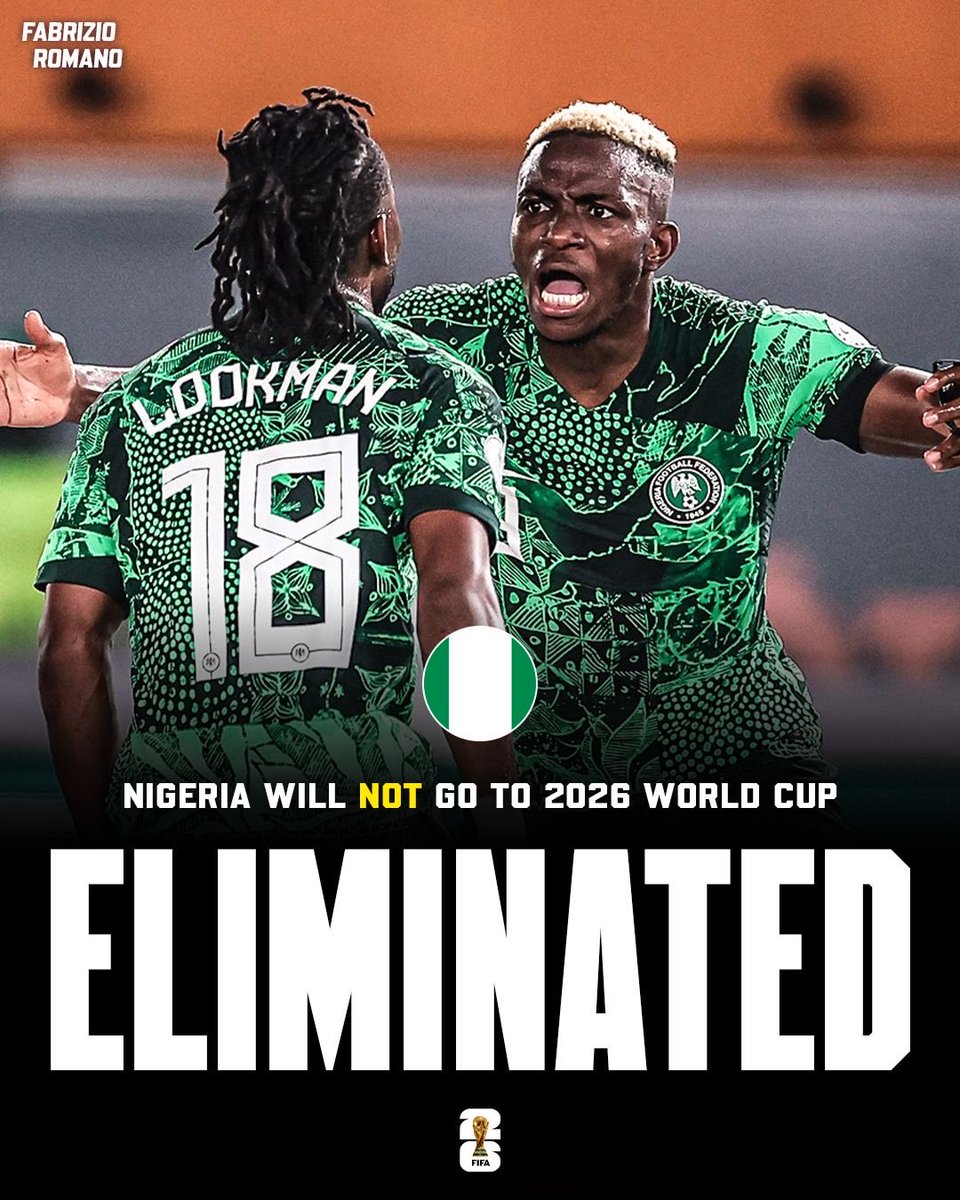
🚨🌍 OFFICIAL: After Cameroon, also Nigeria are OUT of the 2026 World Cup after losing vs Congo ❌
English
Nic retweetledi

WILFUTW (what i learned from users this week)
-"what's one thing you do everyday?" is a great question to kickstart some ideas for building great mini apps. Running, meditating, cooking for kids, finding a great spot to eat, etc... All can now be appified, personalized, and made slightly more delightful in minutes
-wabi is the opposite of doomscrolling. it's creative and participatory. “kneejerk creation" where you can create just for the fun of it
-wabi changes the definition of creator from "developer" to "literally anyone with an idea”
-personalization of apps is the killer app
-there's a spark of excitement when you see someone's wabi profile and the apps they've published. it’s like an inside peek somehow.
-context effects are the new network effects…
-adding search and improving discovery is key to improve experience (adding asap)
-we’re at the FSD moment for apps
-UGC → UGS (user generated software)
-it’s faster to build an app on wabi than search for it on appstore
-"wabi is for weird little ideas that make you happy but aren't necessarily meant to be sustainable businesses”
English
@JamesonCamp @wabi is leading this change
They allow you build mini-apps with no code at all
This is definitely the future, y’all better check them out while they are early
English

You may not realize it but this is a major shift for distribution of apps from apple
So Apple is launching something called the Mini Apps Partner Program that sounds super boring but its kinda nutty
Right now if you build an app you gotta get people to find it in the App Store, download it, another icon on their phone. Three huge barriers.
With this your app just lives inside another app that already has users. No download. They click and use it. And you get 85% instead of 70%.
WeChat has been doing this forever in China - millions of these mini apps
This is big…
Distribution just got like 10x easier. You dont need to crack the App Store or spend a ton on ads. You literally just need one partnership with an app that already has traffic.
Think of the creator economy opportunity
Think about like a fitness app partnering with actual fitness coaches.
Each coach builds their own meal plan mini-app that lives inside the main fitness app. Users can follow their specific coachs plan right there.
The coach gets instant access to thousands of users, the app gets way more variety without having to build everything.
Or education apps partnering with course creators. Each creator has their own mini-course in the app. Students can access different teachers all in one place.
Finance apps could partner with advisors who each have their own tools.
Business apps with consultants who have their own frameworks and templates.
Like this is basically the creator economy meeting distribution. Creators have the expertise and maybe audiences but zero distribution.
Apps have the users and tech but need more content and variety. Just connect them.
When Apple gives up margin somethings happening. They saw WeChat and knew this was coming eventually.
Apps are becoming platforms. You either build the tools that live inside existing apps or you own the app that becomes the platform.
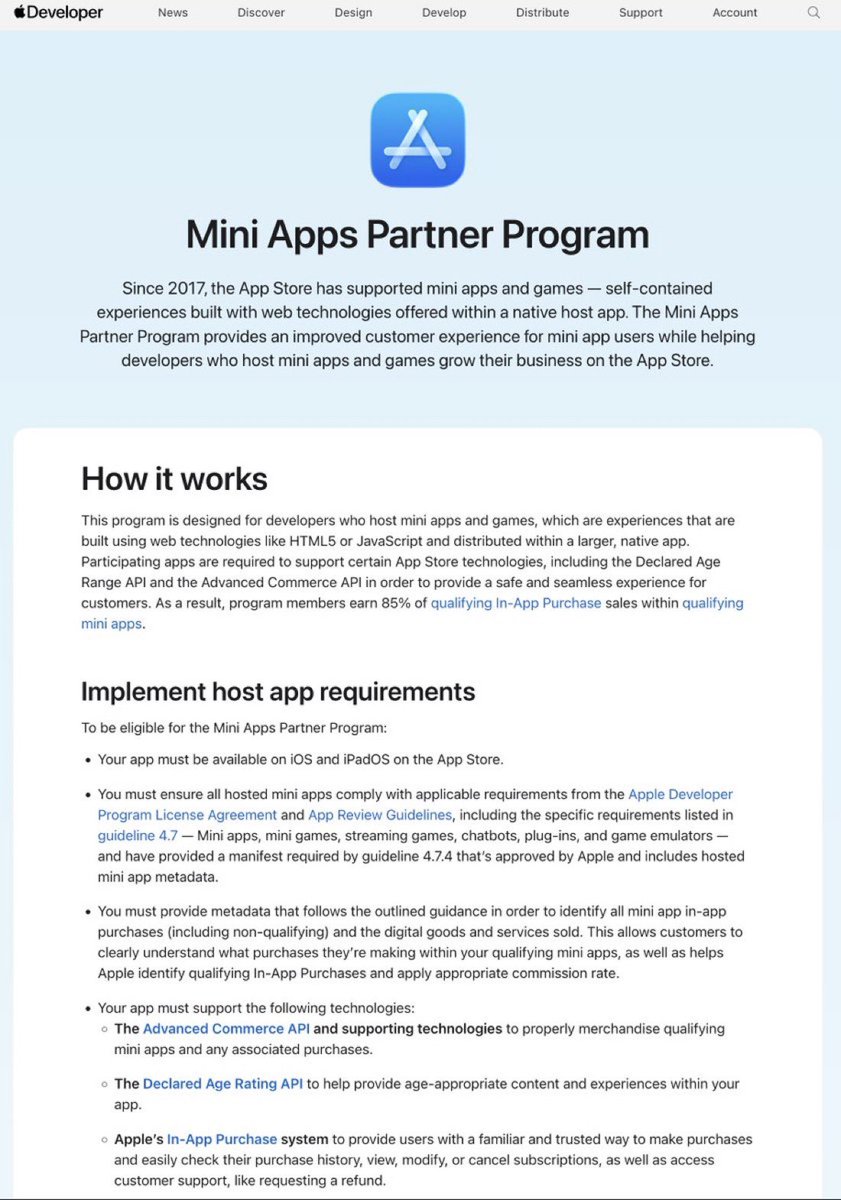
English
@wabi is pioneering this change
They allow individuals build this mini-apps with no code experience at all.
Tap in early with their beta currently running
James Camp 🛠,🛠@JamesonCamp
You may not realize it but this is a major shift for distribution of apps from apple So Apple is launching something called the Mini Apps Partner Program that sounds super boring but its kinda nutty Right now if you build an app you gotta get people to find it in the App Store, download it, another icon on their phone. Three huge barriers. With this your app just lives inside another app that already has users. No download. They click and use it. And you get 85% instead of 70%. WeChat has been doing this forever in China - millions of these mini apps This is big… Distribution just got like 10x easier. You dont need to crack the App Store or spend a ton on ads. You literally just need one partnership with an app that already has traffic. Think of the creator economy opportunity Think about like a fitness app partnering with actual fitness coaches. Each coach builds their own meal plan mini-app that lives inside the main fitness app. Users can follow their specific coachs plan right there. The coach gets instant access to thousands of users, the app gets way more variety without having to build everything. Or education apps partnering with course creators. Each creator has their own mini-course in the app. Students can access different teachers all in one place. Finance apps could partner with advisors who each have their own tools. Business apps with consultants who have their own frameworks and templates. Like this is basically the creator economy meeting distribution. Creators have the expertise and maybe audiences but zero distribution. Apps have the users and tech but need more content and variety. Just connect them. When Apple gives up margin somethings happening. They saw WeChat and knew this was coming eventually. Apps are becoming platforms. You either build the tools that live inside existing apps or you own the app that becomes the platform.
English
English