Nick Gillespie

109.6K posts

Nick Gillespie banner
Nick Gillespie

Nick Gillespie

@nickgillespie

Libertarian. Editor at large, Reason. Host, The Reason Interview with Nick Gillespie.

New York, NY Katılım Ocak 2009
4.5K Takip Edilen118.5K Takipçiler
Nick Gillespie retweetledi
Robert A. George
Robert A. George@RobGeorge·
In @CitizensUnionNY's Searchlight, Kathy Wylde, former CEO of the Partnership for New York City and a member of Mayor Mamdani's COGE initiative, shares panel recommendations for improved efficiency -- and the urgent need for the state legislature to take a more active role in helping clean up red tape. searchlight.citizensunion.org/pothole-social…
English
0
1
4
1.7K
Nick Gillespie retweetledi
DrPopCulture
DrPopCulture@DrPopCultureUSA·
DrPopCulture tweet media
ZXX
1
6
37
2.3K
Nick Gillespie retweetledi
Chris Ferguson 🇺🇸🎇🎆
Half of this is just old whine in new bottles (kids didn't like reading in college 30 years ago, and they don't like reading now). Everyone's pretending they just discovered this cuz it gets attention. The other half is colleges letting in less prepared students they wouldn't have in generations past. Not saying that's bad or good, it's just what it is. Keeping the lights on and all that. Basically: There's neither a mystery nor crisis here. Just people being alarmist to get attention.
Karen Vaites@karenvaites

This one hits like a gut punch: Austin Sarat, my favorite college professor, pens a fierce OpEd on @AmherstCollege students’ inability to read challenging texts. He rightly pins blame on “a K-12 system that has quietly stopped asking them to finish books at all.” “This past term, I enlisted a few colleagues to teach a short course called “Why Read?” We spent three weeks working through essays on the value of reading by scholars like Martha Nussbaum and Edward Said. What struck me wasn’t students’ lack of interest — it was how unevenly prepared they were even to attempt something long and difficult. It was clear to me that the students had very different approaches to and comfort with reading difficult material. I tried to help them see that when it comes to reading, similar to physical exercise, the most benefit comes with the most exertion. Reading longer things requires patience and attentiveness, it cultivates the capacity to follow an argument or a plot, and it requires sustained effort to decode meanings. Surely, this single course won’t end students’ entrenched habits and reverse their retreat from reading. But before we ask our students to read difficult material, those of us who teach in college owe it to all of them to explain that reading books in their entirety matters. If we won’t, or can’t, then higher education will have a bleak future.”

English
6
2
32
4.6K
Super 70s Sports
Super 70s Sports@Super70sSports·
Now here’s a bed fit for a king …
Super 70s Sports tweet media
English
214
265
7.2K
179K
Nick Gillespie
Nick Gillespie@nickgillespie·
I didn't vote for Biden and have never voted for Trump. The longer the latter sticks around, the more he reminds me of the Amtrak enthusiast, talking weird and crazy shit suggesting he needs a nap.
English
13
11
99
9.6K
Nick Gillespie
Nick Gillespie@nickgillespie·
The first city-operated supermarket won't open until the end of 2027, per the Mayor's timeline. But once it does, the savings will be significant... apnews.com/article/mamdan…
English
5
0
13
2.3K
Nick Gillespie
Nick Gillespie@nickgillespie·
Writing a month ago, I noted 'When you've got virtually all of the big firms in an industry and leading politicians from all over the political spectrum calling for stricter oversight of a phenomenally unpopular technology (less popular than the GOP or Stephen Colbert!), it's a safe bet that whatever regulations are in place are only the start of what comes next. It's also a safe bet that those regulations, pushed by politicians who were born before America entered World War II (Sanders), who famously don't use email or even text (Trump), or who have deep ties to tech billionaires and trillionaires (Vance), will ultimately fix the market in favor of the firms currently doing well.' reason.com/2026/06/24/the…
Nick Gillespie tweet media
English
4
2
4
1.1K
Nick Gillespie
Nick Gillespie@nickgillespie·
Hey look, industry leaders now calling for government regulation that they will write and enforce! It's public-choice economics ("politics without romance") in action! blogs.nvidia.com/blog/open-secu…
English
4
2
5
2.2K
Nick Gillespie retweetledi
Vincent Geloso
Vincent Geloso@VincentGeloso·
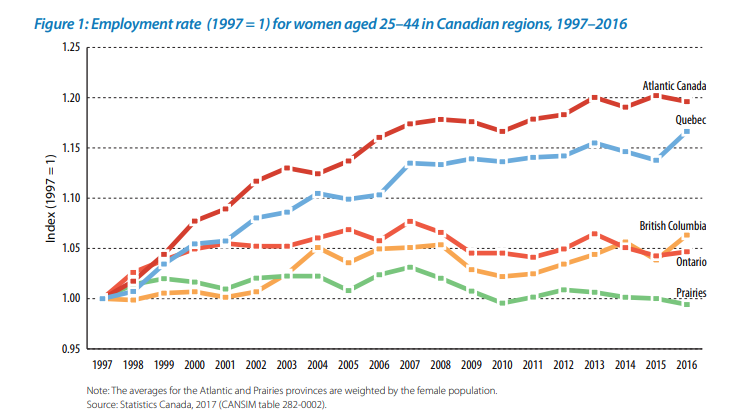
This paper is partially correct but as I pointed out it is overstating the recovery. One reason is the counterfactual for women's labor force participation is built on *All of Canada* except Quebec. The problem is that there are two simultaneous -- unrelated -- reforms in Quebec at the same time: universal childcare and employment insurance reform. Both reforms work in the same direction (higher labor force participation). The problem is that employment insurance reform mattered far more for Quebec than rest of Canada except Atlantic Canada (New Brunswick, Nova Scotia, Newfoundland, Prince Edward Island). The counterfactual is thus polluted by a huge violation namely that donor units should not have a similar treatment. Restricting the effort to the Atlantic provinces only reduces that problem heavily since they and Quebec were the most affected by employment insurance reform. This comparison allows proper assessment of childcare policy on labor force participation. The problem is that they used a dataset that the subsample of working-age mothers and mothers with below six creates an insanely small sample for the Atlantic provinces. Like way too small to do much that would be serious in any case. But if you just look at aggregate data on employment rate for women aged 25-44, you can see exactly that. Quebec and Atlantic provinces had huge surge in employment at the same time with EI reform. The number of women that went back to work BECAUSE of childcare policy in Quebec is smaller than depicted. In work I never published with Israt Jahan, which actually confirmed my point but which I viewed as limited because we were forced to use synthetic control on 4 provinces (way too little and thus only suggestive), we leveraged how much the treatment effect changed (without emphasizing significance because the donor pool was too small). The treatment effect is cut by between 50% and 70% which is pretty much what the figure suggests. The reality is that Quebec's universal childcare policy did do all the things that people say they did. However, they did not do AS MUCH as people say they did. It definitely did not pay for itself. And that new Baker et al. paper does not address any of those point. Its a bit sad because myself and also former Minister of the Treasury Board Martin Coiteux (now chief economist at the Caisse de Dépôts et Placements du Québec) have been pointing it out for two decades now. Some scholars even acknowledged our criticism was valid but owing to the sample size issue in the National Longitudinal Survey of Children and Youth (used in earlier studies), not much could be done. The problem with this WP now is that they use the Labour Force Survey (LFS) which actually could permit to do what I suggest. Honestly, I hope this message gets seen by Baker et al. and others so that people try to find solutions to this very serious problem econometrically which affects a really frequently advanced point.
Vincent Geloso tweet media
Owen Zidar@omzidar

Does universal childcare pay for itself?

English
3
7
24
9.5K
Nick Gillespie retweetledi
Bill Schulz
Bill Schulz@BillSchulz·
This is why I will never make fun of any woman with a shoe addiction…
English
11
4
41
6K
Nick Gillespie retweetledi
Crispin Sartwell
Crispin Sartwell@CrispinSartwell·
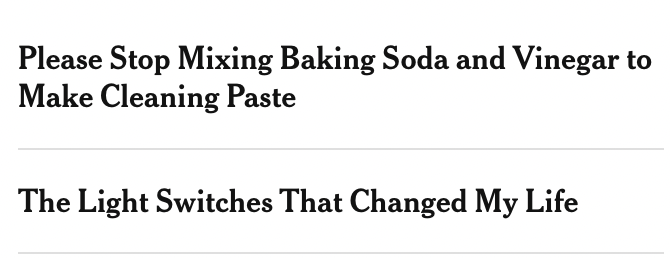
sometimes i worry that @nytimes is not okay.
Crispin Sartwell tweet media
English
3
1
18
2.3K