Sabitlenmiş Tweet
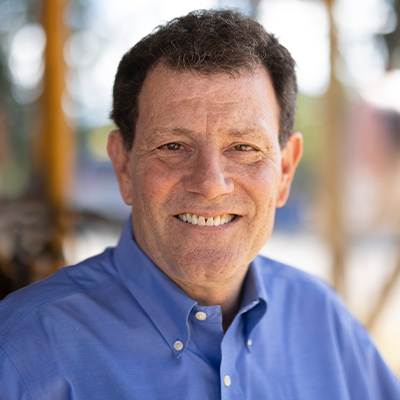
Publication day for "Chasing Hope: A Reporter's Life"! Thanks to all who have helped it come together. It's available everywhere for purchase or download.



English
Nicholas Kristof
57.9K posts

@NickKristof
NY Times columnist, author and farmer of cider apples and wine grapes @KristofFarms
Trump to NYT's David Sanger: "I had a total military victory. But the fake news, guys like you, write incorrectly. You're a fake guy. We had a total military victory. I actually think it's sort of treasonous what you write. You should be ashamed of yourself. I actually think it's treason."




Exclusive: US clears H200 chip sales to 10 China firms as Nvidia CEO looks for breakthrough reuters.com/business/retai…

We need to be honest with ourselves: so far, this campaign has been a major strategic failure. There were certainly important operational achievements, and the level of coordination between U.S. Central Command and the Israel Defense Forces was highly impressive. But wars are not judged by tactical successes alone, they are judged against their original strategic objectives. The Iranian regime did not fall, and at this stage there is no indication that it is close to collapsing. There was no regime change in Iran; instead, there was a change within the regime, and arguably for the worse. The crisis appears to have strengthened Mojtaba Khamenei and the more hardline elements of the Islamic Revolutionary Guard Corps, giving them greater influence over Iran’s decision-making process. On the conventional front, Iran still retains most of its military capabilities. Even where damage was inflicted, it has not fundamentally altered Tehran’s ability or willingness to resume military confrontation. On the nuclear front, Iran continues to possess a massive stockpile of enriched uranium, including the same roughly 440 kilograms enriched to near-weapons-grade levels. More importantly, the regime still possesses the scientific and technical expertise necessary to enrich to 90% if it chooses to do so. And beyond that, Iran still maintains leverage over the Strait of Hormuz — which remained open and stable before the war began. I do not know how this conflict will ultimately end. But if these are the conditions under which it concludes, then this will be remembered as a profound strategic failure — one that leaves behind a far worse regional reality than the one that existed before the campaign began. Ignoring that reality will not improve the situation; it will only deepen the problem. Iran built its national security doctrine around asymmetric capabilities. Damage to its navy or air force, however significant tactically, does not fundamentally undermine its ability to wage this kind of confrontation. That is the reality, whether policymakers are comfortable acknowledging it or not. A serious strategy for weakening the Iranian regime in the future has to begin with an honest recognition of this reality. It is possible that the United States is planning additional, more significant steps. But if we are assessing the campaign as it stands today, the outcome is deeply negative. Without acknowledging that, Washington risks building its next phase on a false premise — and that is exactly how tactical achievements turn into strategic failure. No wonder Iran is not surrendering at the negotiating table if this is indeed the reality. It is time to go back to the drawing board rather than keep insisting on an approach that has already failed. And it starts with one basic understanding: Iran is not Venezuela. Conventional cost-benefit calculations do not necessarily work against a regime that is willing to sacrifice its own population to preserve its rule. There is no textbook solution here. Not the Kurds, not arming the opposition, and not targeted killings. None of these, on their own, provides a strategic answer to the Iranian problem set. It is time to think seriously about a different strategy, because the current approach is not containing the threat. It is producing a security reality that is, almost by definition, worse than the one that existed before. If the objective is to weaken the Iranian regime over time, then repeating tools that have already failed is not strategy. #IranWar
.@JulianGewirtz in NYT op-ed: “Mr. Xi will provide a lavish welcome…but the Chinese leader almost certainly views the visit…not as a time for accommodation and lasting reconciliation, but as a temporary lull in a longer test of wills.” nytimes.com/2026/05/13/opi…


ON AF1 to CHINA: President Trump Eric Trump Lara Trump Secretary Marco Rubio Secretary Pete Hegseth Ambassador Jamieson Greer James Blair Beau Harrison Stephen Miller Steven Cheung Robert Gabriel Michael Kratsios Ross Worthington Walt Nauta Ambassador Monica Crowley The White House provided this partial list.

In a new bonus episode of “The Foreign Affairs Interview,” @RNicholasBurns examines the issues that will take center stage at the Trump-Xi summit—and considers how this meeting will shape the future of U.S.-Chinese competition. foreignaffairs.com/podcasts/when-…