Nina Mäki-Kihniä

12.8K posts

Nina Mäki-Kihniä banner
Nina Mäki-Kihniä

Nina Mäki-Kihniä

@NinaScience

Translator. Writer. Author. Animal welfare. Scicomm. This is my notebook on some topics.

Finland Katılım Temmuz 2015
1.7K Takip Edilen511 Takipçiler
Nina Mäki-Kihniä retweetledi
Maarten De Cock
Maarten De Cock@mdc_martinus·
Bioaerosol scientist @brosseau_lisa:"This whole discussion about aerosols is something...infectious disease physicians…don't want to talk about...I think it frightens them." Why is this even accepted? Would we allow engineers to build bridges if they’re afraid of mathematics?
English
31
353
928
123.3K
Nina Mäki-Kihniä retweetledi
Linsey Marr linseymarr.bsky.social
It's widely accepted that hantavirus transmits from rodent excreta to humans via inhalation of aerosolized virus, so I don't understand why we're so reluctant to acknowledge the inhalation route for human-to-human transmission. nytimes.com/2026/05/14/hea…
English
255
3.1K
21.1K
2.4M
Nina Mäki-Kihniä retweetledi
Al Haddrell
Al Haddrell@ukhadds·
Pro-Tip: When a pathogen (A) spreads via “Close contact” and (B) infects anywhere in the respiratory system, this means that the pathogen is AIRBORNE. Mask. Filtration. Ventilation. Clean the air.
Cat in the Hat 🐈‍⬛ 🎩 🇬🇧@_CatintheHat

HANTAVIRUS OUTBREAK In yesterday’s WHO press briefing, Maria Van Kerkhove announced several BIG changes to their recommendations. 🚨ALL passengers & crew from the MV Hondius should now be classed as HIGH-RISK contacts & be isolated for 42 days. For details, see thread below ⬇️

English
15
259
676
27.1K
Nina Mäki-Kihniä retweetledi
Kristen K. Coleman
Kristen K. Coleman@drkristenkc·
@drseanmullen Both. In person 1x/wk w CR boxes in the classroom. I hand out free N95 respirators for students to wear in high-risk areas. Group project is to carry around a CO2 monitor, plot ppm over time and by location, tally occupants & calculate infection risk via rebreathed air equation.
English
2
1
34
788
Nina Mäki-Kihniä retweetledi
Kristen K. Coleman
Kristen K. Coleman@drkristenkc·
And if the biological mechanism of transmission is unclear, and you are dealing with a highly deadly pathogen, best not to strictly rely on distance and time as the basis for your containment strategy.
English
0
23
178
3.9K
Nina Mäki-Kihniä retweetledi
Linsey Marr linseymarr.bsky.social
Fully agree. "Close contact" describes behavior, but it does not describe how the virus gets from one person to the other. It could be through touch, inhalation of small particles in the air, or spray of large droplets.
Kristen K. Coleman@drkristenkc

Something I touch on repeatedly in my Airborne Infection course is that “close contact” is not a good way to describe how a virus is transmitted. It can be communicated as a risk factor for infection, but it does not say what the actual biological mechanism of transmission is.

English
6
72
320
17.9K
Nina Mäki-Kihniä retweetledi
Cat in the Hat 🐈‍⬛ 🎩 🇬🇧
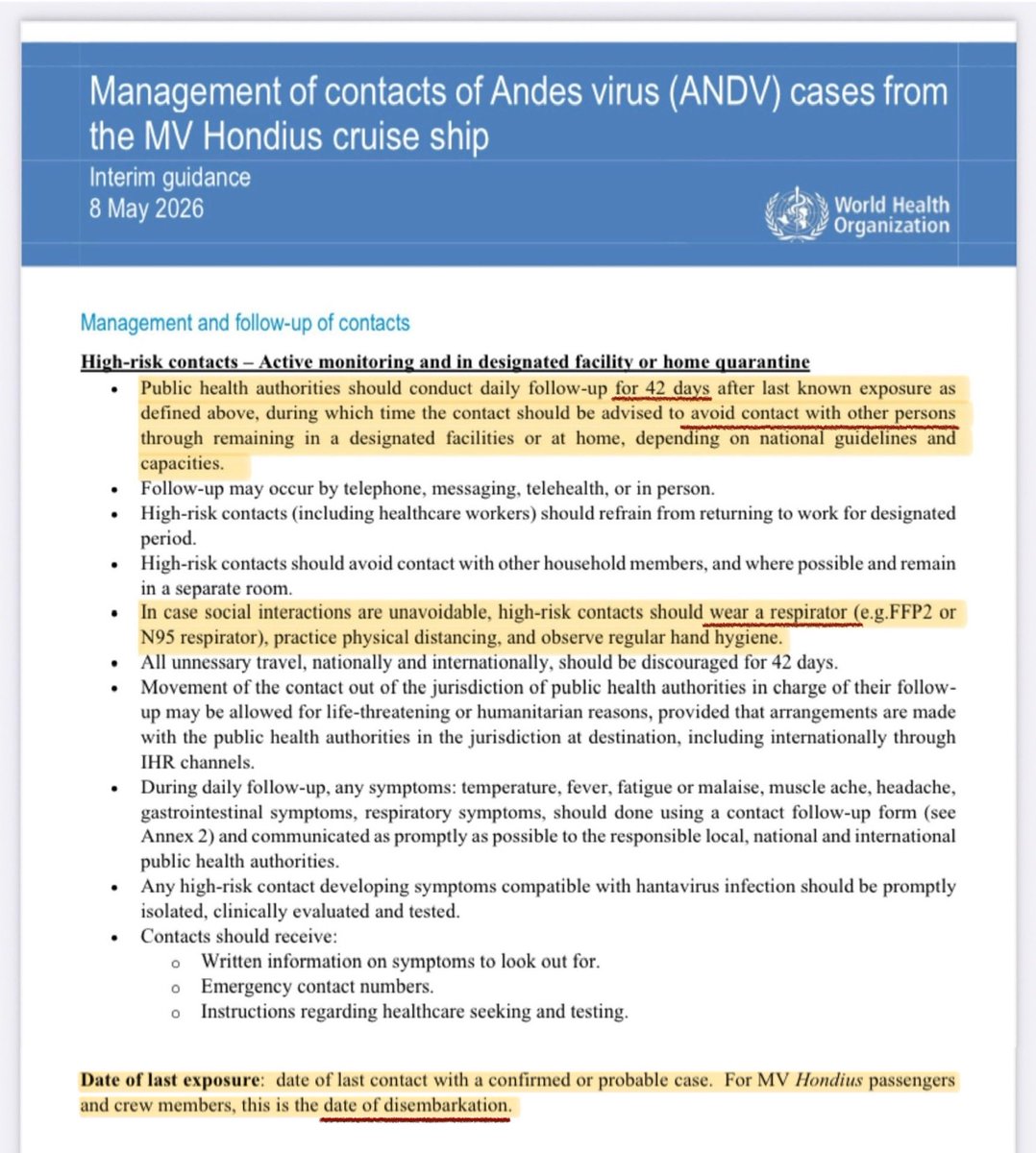
In another change to previous WHO guidance, I’m pleased to see this: “In case social interactions are unavoidable, high-risk contacts should wear a RESPIRATOR (eg. FFP2 or N95)” (Previous guidance had advised surgical masks which do NOT protect against airborne transmission).
Cat in the Hat 🐈‍⬛ 🎩 🇬🇧 tweet media
Cat in the Hat 🐈‍⬛ 🎩 🇬🇧@_CatintheHat

It’s also concerning that, despite the evidence that Andes Virus may be airborne (as per the ‘Superspreader’ paper mentioned earlier), the WHO have ONLY recommended use of medical (‘baggy blue’ surgical) masks, even when caring for symptomatic patients. who.int/emergencies/di…


English
5
52
171
5.4K
Nina Mäki-Kihniä retweetledi
Maarten De Cock
Maarten De Cock@mdc_martinus·
After 6 years, @mvankerkhove has quietly deleted her tweet stating #COVID19 was “NOT airborne” (22/3/2020). No explanation. No rectification. No public erratum. Transparency and accountability are essential for trust in public health. You don’t learn lessons by erasing them.
Maarten De Cock tweet media
English
36
588
1.5K
85.8K
Nina Mäki-Kihniä retweetledi
Andrej Karpathy
Andrej Karpathy@karpathy·
LLM Knowledge Bases Something I'm finding very useful recently: using LLMs to build personal knowledge bases for various topics of research interest. In this way, a large fraction of my recent token throughput is going less into manipulating code, and more into manipulating knowledge (stored as markdown and images). The latest LLMs are quite good at it. So: Data ingest: I index source documents (articles, papers, repos, datasets, images, etc.) into a raw/ directory, then I use an LLM to incrementally "compile" a wiki, which is just a collection of .md files in a directory structure. The wiki includes summaries of all the data in raw/, backlinks, and then it categorizes data into concepts, writes articles for them, and links them all. To convert web articles into .md files I like to use the Obsidian Web Clipper extension, and then I also use a hotkey to download all the related images to local so that my LLM can easily reference them. IDE: I use Obsidian as the IDE "frontend" where I can view the raw data, the the compiled wiki, and the derived visualizations. Important to note that the LLM writes and maintains all of the data of the wiki, I rarely touch it directly. I've played with a few Obsidian plugins to render and view data in other ways (e.g. Marp for slides). Q&A: Where things get interesting is that once your wiki is big enough (e.g. mine on some recent research is ~100 articles and ~400K words), you can ask your LLM agent all kinds of complex questions against the wiki, and it will go off, research the answers, etc. I thought I had to reach for fancy RAG, but the LLM has been pretty good about auto-maintaining index files and brief summaries of all the documents and it reads all the important related data fairly easily at this ~small scale. Output: Instead of getting answers in text/terminal, I like to have it render markdown files for me, or slide shows (Marp format), or matplotlib images, all of which I then view again in Obsidian. You can imagine many other visual output formats depending on the query. Often, I end up "filing" the outputs back into the wiki to enhance it for further queries. So my own explorations and queries always "add up" in the knowledge base. Linting: I've run some LLM "health checks" over the wiki to e.g. find inconsistent data, impute missing data (with web searchers), find interesting connections for new article candidates, etc., to incrementally clean up the wiki and enhance its overall data integrity. The LLMs are quite good at suggesting further questions to ask and look into. Extra tools: I find myself developing additional tools to process the data, e.g. I vibe coded a small and naive search engine over the wiki, which I both use directly (in a web ui), but more often I want to hand it off to an LLM via CLI as a tool for larger queries. Further explorations: As the repo grows, the natural desire is to also think about synthetic data generation + finetuning to have your LLM "know" the data in its weights instead of just context windows. TLDR: raw data from a given number of sources is collected, then compiled by an LLM into a .md wiki, then operated on by various CLIs by the LLM to do Q&A and to incrementally enhance the wiki, and all of it viewable in Obsidian. You rarely ever write or edit the wiki manually, it's the domain of the LLM. I think there is room here for an incredible new product instead of a hacky collection of scripts.
English
2.9K
7.1K
59K
21.1M
Nina Mäki-Kihniä retweetledi
Ethan Mollick
Ethan Mollick@emollick·
Want to talk to the past? Here is an LLM "trained entirely from scratch on a corpus of over 28,000 Victorian-era British texts published between 1837 and 1899, drawn from a dataset made available by the British Library." Quite different from an LLM roleplaying a Victorian.
Ethan Mollick tweet mediaEthan Mollick tweet media
English
131
222
2.6K
236.1K
Nina Mäki-Kihniä retweetledi
Yohan
Yohan@yohaniddawela·
Google just wired DeepMind and Earth Engine directly into the biggest geospatial dataset on the planet. For two decades, millions of people used Google Earth to scale the Himalayas or zoom in on their childhood neighbourhoods. In 2026, Google is basically trying to shift the entire platform toward professional execution. They turned a massive digital twin of the world into an agentic AI engine for global infrastructure. The technical foundation is (obviously) all about data. Google integrated 20-metre and 40-metre elevation contours globally. Engineers and urban planners now have instant access to the exact topographic context required for site planning anywhere on Earth. The data catalogue updates continuously to maintain the freshest imagery possible. Collaboration used to kill geospatial projects. Teams would lose momentum through stale materials or bad handoffs. Google fixed this by building frictionless data import systems. You can now drop KML, KMZ, and GeoJSON files directly onto the global map. Entire departments can align on a single source of truth, moving from a raw question to a definitive answer instantly. The biggest upgrade is the introduction of agentic geospatial intelligence. Users can open 'Ask Google Earth' and search massive satellite and Street View databases using natural language. You type a command, and the AI handles the manual data wrangling. It identifies new site locations and analyses infrastructure before you even open a spreadsheet.
English
12
92
593
45K
Nina Mäki-Kihniä retweetledi
Yohan
Yohan@yohaniddawela·
2.6 million flood events were hiding in plain sight inside the news. Google just turned them into a training set. Satellites and traditional databases are too slow to catch urban flash floods. The United Nations disaster database holds about 10,000 high-impact events. You can't train a global AI model on 10,000 data points. Accurately modelling climate resilience requires massive historical baselines that simply didn't exist. Google researchers built a pipeline called Groundsource to fix this data desert. They pointed Gemini at decades of unstructured global news reports across 80 languages. The LLM translated the text and ran a strict verification process. It separated actual past floods from future warnings. It anchored relative dates to publication timestamps. Then it extracted granular street-level locations and mapped them to standardised spatial polygons. They essentially turned unstructured text into a structured geospatial dataset. Groundsource generated 2.6 million verified flood events spanning 150 countries. Manual reviews showed 82% of these extracted events were accurate enough for real-world spatial analysis. This historical baseline immediately upgrades urban flood forecasting. Google is now rolling out near-global urban flash flood forecasts up to 24 hours in advance. Physical sensor networks take decades to build and deploy. Advanced data engineering provides a massive shortcut. The world's local news is a perfectly valid historical sensor network...
Yohan tweet media
English
3
13
86
4.6K
Nina Mäki-Kihniä retweetledi
Yohan
Yohan@yohaniddawela·
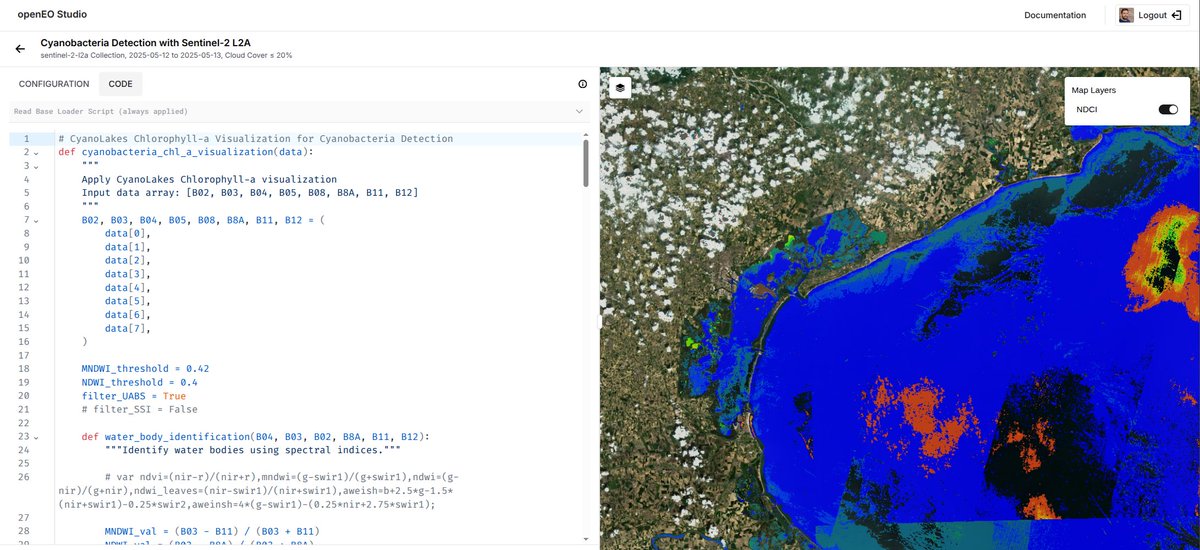
Studying the Earth involves more time downloading files than analysing them. The European Space Agency holds 90 petabytes of planetary data, and they just fundamentally changed how anyone interacts with it. For years, working with Copernicus Sentinel data meant pulling massive files from SAFE archives. You had to store them locally, install mission-specific software, and navigate formats built before cloud computing existed. If you wanted to check a single scene for cloud cover, you couldn't just glance at it. You paid a massive upfront cost in time and hard drive space. That era is now over. ESA's transitioning Sentinel data to Zarr, a cloud-native format that treats data as an API instead of a static file. So ESA has now launched the EOPF Sentinel Zarr Explorer. Everything happens directly from cloud storage. You don't download a single megabyte of raw data to your machine. The workflow starts with discovery. The platform uses STAC, meaning you browse the massive catalogue using open community standards. You locate the exact coordinates and timeframes you need instantly. Then you look at the data. You can load a Sentinel-1 radar or Sentinel-2 optical scene right in your web browser. Analysis happens in the exact same environment through openEO Studio. You write Python code in your browser, define a processing graph, and execute it. A researcher can track algal blooms in the Venice Lagoon by computing a Normalised Difference Chlorophyll Index, and the result appears instantly as an interactive map. The barrier between a hypothesis and a working environmental analysis is now just a few lines of code. The developers actively avoided building a walled garden. They collaborated directly with the wider community to establish modular geospatial conventions. Because they built on open standards, desktop tools like QGIS and libraries like GDAL can read the exact same data without any proprietary plugins. Anyone with a web browser can now run analyses that used to require a dedicated computational lab.
Yohan tweet media
English
6
35
249
11.2K
Nina Mäki-Kihniä
Nina Mäki-Kihniä@NinaScience·
@Laakarilehti Suojainkammo meni liian pitkälle 2026 päivystyksessä ihmetellään hengitysteitse tarttuvien epidemiassa, miksi minulla, oireettomalla, #ffp3 suojain. Tautiko? "Meillä ei oo PAKSIMAKKO!" kiljahtaa työntekijä ja ohjaa sisään tulevan oireisen kyselemättä muiden viereen yskimään 🤔
Suomi
1
6
45
391
Nina Mäki-Kihniä retweetledi
Jerry Liu
Jerry Liu@jerryjliu0·
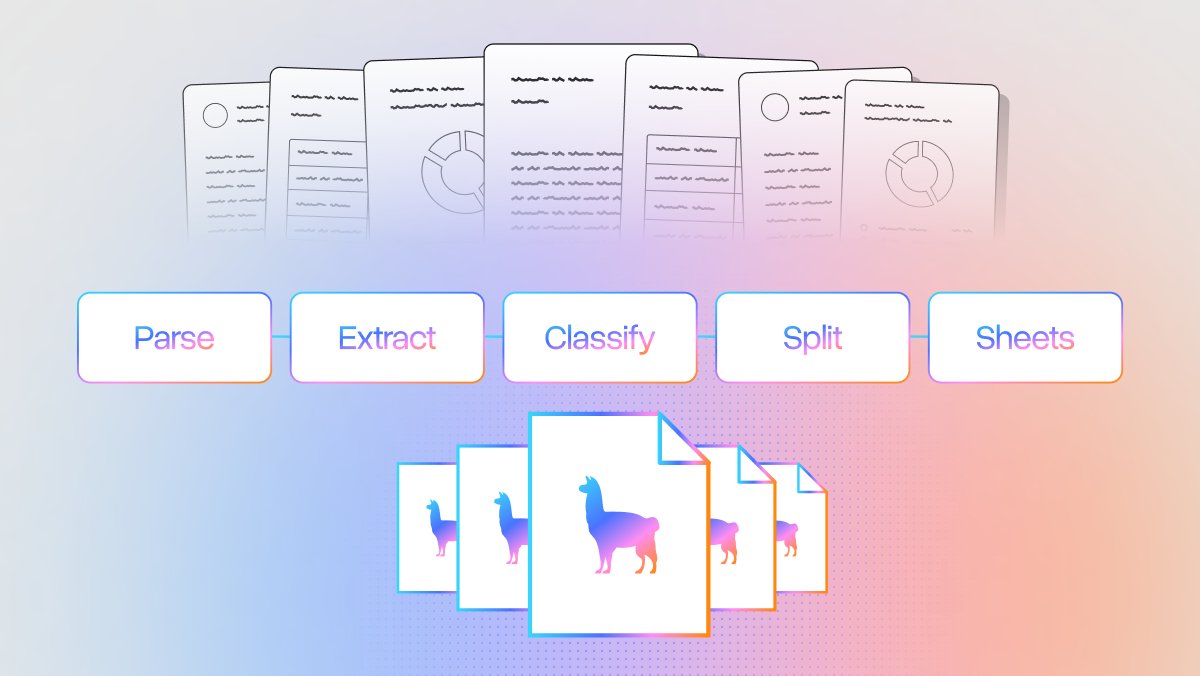
3 years ago, you might’ve known @llama_index as a RAG framework. Today we are not a RAG framework. We are an agentic document processing platform 🦙📑 I wrote a blog post detailing the evolution of our company over the past ~3 years and why we believe our current position is enduring in the rapidly evolving landscape of evolving AI. There are two main points that I want to highlight: 1️⃣ One of the most important opportunities in today’s world is to provide high-quality unstructured context to AI agents. We see ourselves as the best in class OCR module that can unlock context from the hardest document containers (PDFs, Word, Powerpoint, Excel, and more) 2️⃣ Agent reasoning loops have gotten a lot more sophisticated. General LLM abstractions are a lot less relevant. Retrieval patterns have completely changed. We need to build deep, focused tooling that actually provides value in this world of long-running agents. Note: We are not giving up on OSS tooling. We think open-source software is extremely important for democratizing AI access. We will continue to build OSS that is more aligned with our core focus area of AI-native document processing. We will continue to support framework users and point them to updated resources for relevant releases. Come check out our blog: llamaindex.ai/blog/llamainde… Our core managed platform is LlamaParse. If you’re interested come check out our platform: cloud.llamaindex.ai/?utm_source=xj…
Jerry Liu tweet media
LlamaIndex 🦙@llama_index

LlamaIndex has evolved far beyond a RAG framework - we're now focused on agentic document processing that automates knowledge work. 🚀 Agent orchestration has fundamentally changed with sophisticated reasoning loops, tool discovery through Skills/MCP, and coding agents that write Python for you 📄 Document understanding remains a massive opportunity - frontier vision models still struggle with complex tables, charts, and long documents at scale 🏢 LlamaParse now processes 300k+ users across 50+ formats for enterprises like @OneCarlyle, @CEMEX, and @KPMG with multi-agent workflows combining OCR, computer vision, and LLM reasoning ⚙️ Real automation potential exists in workflows where humans manually process documents daily - financial analysis, contract review, insurance underwriting can all become end-to-end agentic processes Our mission is now providing core infrastructure to automate knowledge work over documents, not just being connective tissue between LLMs and data. Read about our evolution and what's next: llamaindex.ai/blog/llamainde…
English
21
38
228
29.2K
Nina Mäki-Kihniä retweetledi
Kimberly Prather, Ph.D.
Kimberly Prather, Ph.D.@kprather88·
1/ If I hear one more public official call indoor air filters a "band-aid," I'm going to explode! It's so logical, yet so readily dismissed. Filtering indoor air should be as standard as filtering water. Full stop. 🧵
English
53
818
2.7K
89.7K
Jouni Tuone'la 🇫🇮 🇺🇦
@BioTurvaMies Eniten ihmettelen heidän puheitaan siitä, että ilman puhtaus päiväkodeissa ja kouluissa ei olisi tärkeää. Näissä laitoksissa infektiot leviävät parhaiten, ja tärkeää olisi lasten voida oleskella tiloissa, joiden ilma olisi puhdasta. Olisi kustannustehokasta ennaltaehkäisyä.
Suomi
2
5
30
307
BioTurvaMies
BioTurvaMies@BioTurvaMies·
Infektiotautien tietämyksen taso on tätä luokkaa Suomessa, että infektioepidemiologian dosentti + lasten infektiolääkäri osastonjohtaja höpöttävät harhoja "immuniteettivajeesta". Järkyttävää! Tällä tasolla lääke"tiede" on Suomessa nykyään! 🙈 hs.fi/mielipide/art-…
Suomi
4
10
51
1.3K