
Norber
81.2K posts

Norber retweetledi

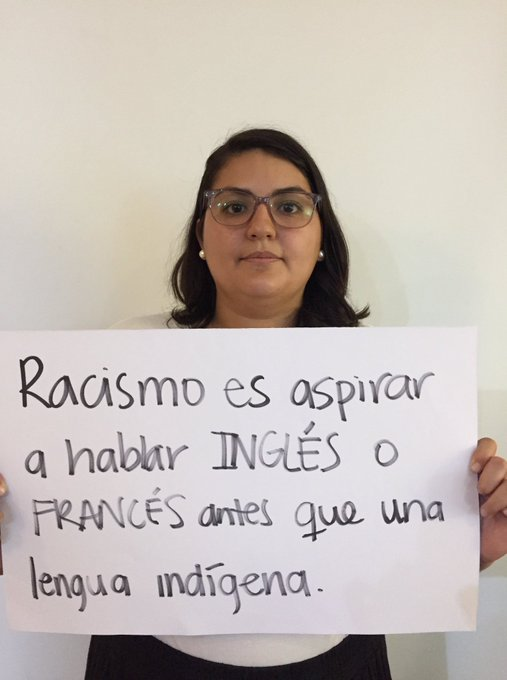
Presentá tu CV en una empresa que busca personal y decí que hablás quechua y tenés conocimientos de guaraní.
Que boludos que son los zurdos.
Español
Norber retweetledi


Norber retweetledi



Norber retweetledi
Team Chunt -- 10 años ininterrumpidos de darle de comer a la gente en la calle -- Tzedaka posta
Flor@florcitwt
@pinchegorro Martes de cocinar para el @ChuntTeam
Español
Norber retweetledi

Norber retweetledi

El himno de Israel 🇮🇱 cantado por una banda Guatemalteca 🇬🇹
NO está perdida la ESPERANZA‼️
🇬🇹🤝🇮🇱
המנון התקוה בעברית ממקהלה גואטמלית!
Română
Norber retweetledi

There is a sound no other people on earth owns.
It is not music.
It is not a song.
It is not a melody you can hum on your way home.
It is older than melody.
It is the sound of a horn — a curved, hollow horn from a ram — pressed to human lips for three thousand three hundred years.
The shofar.
When you hear it, something inside you stops moving. You can be religious, secular, halfway, lost, returning, doubting, broken — it does not matter.
The shofar passes through all of that and reaches the part of you
that was at Sinai.
Because every Jewish soul was there.
The Torah says so.
The kabbalists explain it.
The shofar proves it.
That sound is the only sound on earth that has not changed in three thousand three hundred years.
Languages have shifted.
Instruments have evolved.
Music has been reinvented a thousand times.
But the shofar — no electricity, no strings, no keys, no improvements — sounds exactly as it sounded when our ancestors stood at the foot of the mountain and trembled.
The same vibration.
The same air.
The same trembling.
A Jew in Tetuán in the year 1300 heard it.
A Jew in Cordoba before the expulsion heard it.
A Jew hidden in a cellar in Warsaw in 1943 heard it — and risked his life to blow it anyway.
A Jew at the Kotel in 1967, the day Yerushalayim was reunited, heard it — and the soldiers wept.
A Jew this Rosh HaShanah will hear it in a synagogue in Mexico, in Buenos Aires, in Brooklyn, in Marrakech, in Tel Aviv — and somewhere deep inside them, without being able to explain why,
they will feel that they have heard this sound before.
They have.
Every Jewish soul was at Sinai.
Every Jewish soul has been listening for the echo ever since.
The shofar is that echo.
It is the only voice that has spoken to our people in every century, in every land, in every exile, in every return, without ever needing to be translated.
You do not learn the shofar.
You recognize it. ✡️

English
Norber retweetledi

Paula Abdul, the record-breaking Jewish singer whose father is a Syrian Jew from Aleppo, at the American Music Awards last night.
Now 63, Abdul is famous for being in the all-time top 10 of female artists with the most #1 singles.
In 2013, she visited Israel and had a belated bat mitzvah in the northern city of Tzfat.
Kol haKavod to Paula, on continuing her stunning career!

English
Norber retweetledi

My oncologist told me today I'm Cancer Free !!!!!😭😭 ❤️❤️❤️❤️

English
Norber retweetledi

May God bless and protect the defenders of Israel.
May they return home safely, and may we see peace come to the region.

English
Norber retweetledi

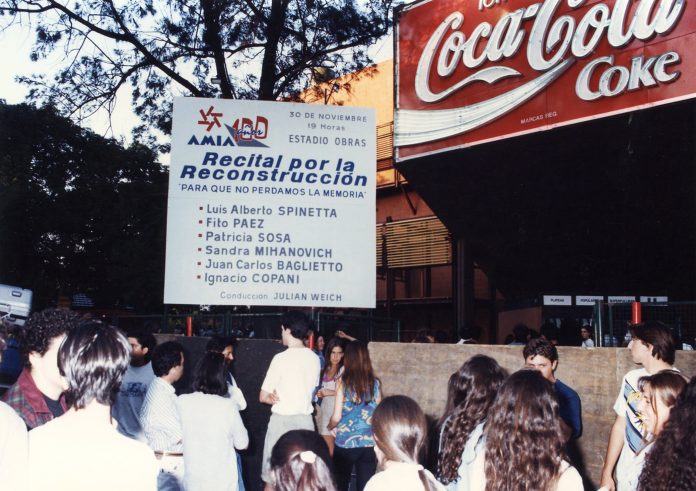
🗓️Hoy se cumplen 27 años del día en el que volvimos a abrir oficialmente las puertas de nuestra casa, tras el atentado terrorista que destruyó la sede de Pasteur 633 y asesinó a 85 personas.
Construido sobre las ruinas del antiguo edificio, casi cinco años después del ataque terrorista, el 26 de mayo de 1999, fue la reinauguración de nuestra sede. Este hito marcó mucho más que la recuperación de un espacio físico: el nuevo edificio se convirtió en un triunfo sobre la muerte, en una expresión de memoria, justicia y continuidad.



Español
Norber retweetledi

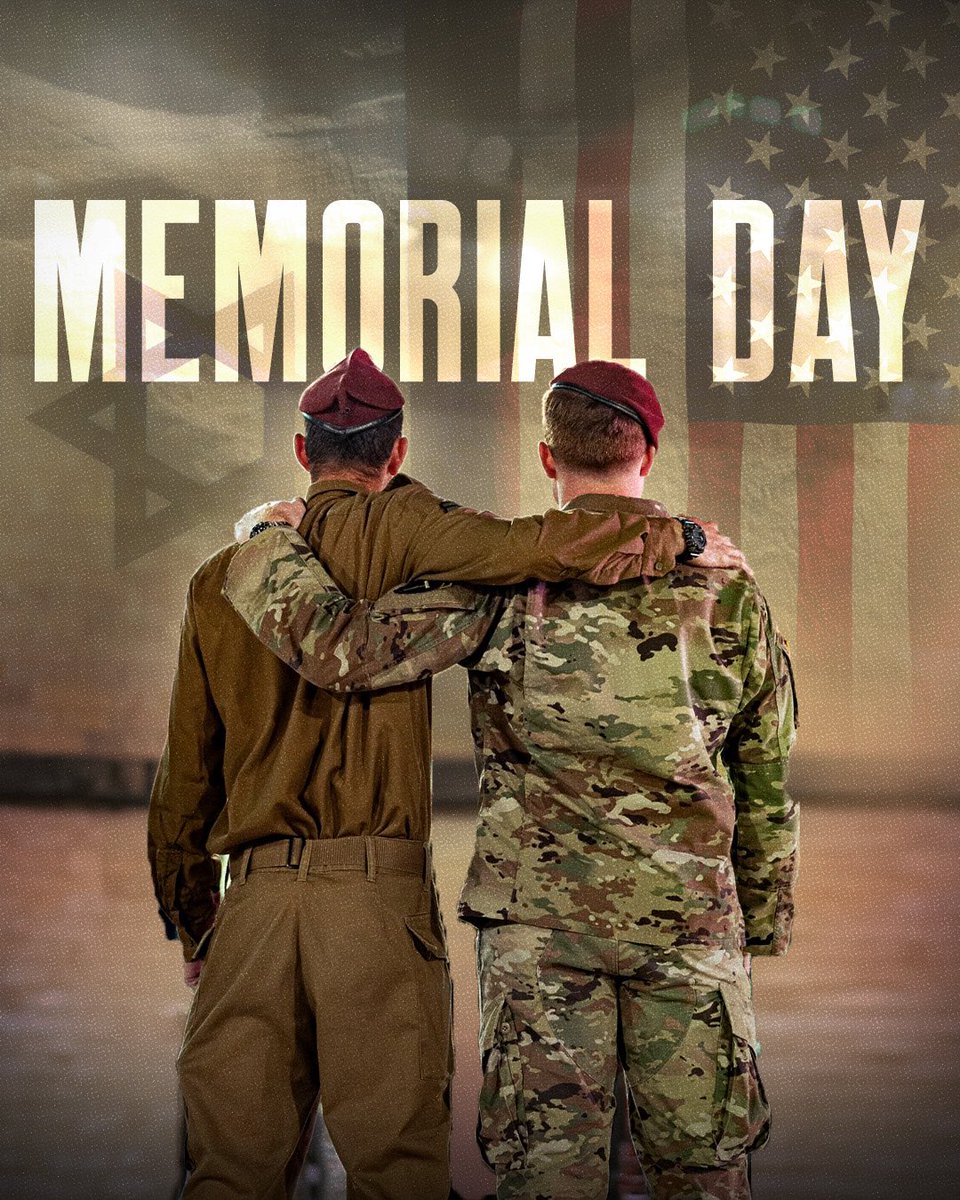
Today, on U.S. Memorial Day, we honor the American troops who risked their lives for their country 🇺🇸🕯️
English
Norber retweetledi

In 1943, the Gestapo finally caught Raymond Aubrac — one of France's most wanted Resistance leaders. He was sentenced to death. His execution was days away.
His wife Lucie was six months pregnant.
Most people would have hidden. Would have grieved quietly and prayed for a miracle. Lucie Aubrac did something else entirely. She obtained forged identity papers, constructed a cover story, and walked straight into the office of Klaus Barbie — the man history would remember as the Butcher of Lyon — and convinced him to grant her a visit with the condemned man.
She wasn't there to say goodbye.
She was memorizing guard positions. Counting minutes. Mapping the route the prison truck would take.
On October 21, 1943, that truck rolled through the streets of Lyon carrying Raymond and other prisoners toward what should have been the end. Lucie had spent weeks quietly assembling a team of Resistance fighters, planning an ambush with the precision of a military operation. When the truck reached the ambush point, the team struck — fast, coordinated, and without hesitation.
In the chaos of gunfire and confusion, Raymond Aubrac was pulled free.
Lucie — visibly, unmistakably pregnant — had organized every detail of his liberation.
They went into hiding. Weeks later, Lucie gave birth to their daughter in a safe house while German forces searched for them across France. When liberation finally came, the Aubracs didn't merely survive — they rebuilt.
Raymond became a celebrated engineer and entered public life. Lucie became a historian, pouring decades into ensuring that the women of the French Resistance — so often unnamed, so easily forgotten — were written permanently into the record. They raised three children. They traveled the world. They argued and laughed and grew old together.
When journalists asked Lucie, years later, what had compelled her to risk everything that October day, she didn't hesitate.
"He was my husband. What else would I do?"
Lucie Aubrac passed away in 2007 at the age of 94. Raymond — who had once needed a commando team to be freed from a German prison — lived on until 2012, reaching 97 years old. In his final years, he continued speaking publicly about the Resistance, about memory, about the obligation to tell the truth.
They had been married for 64 years.
Not a love story built on grand gestures or perfect circumstances. A love story built in occupied France, in safe houses and forged documents and a prison truck ambush on a Lyon street — forged in fire, and never broken.
True love doesn't wait for rescue. Sometimes, it does the rescuing

English
Norber retweetledi


Norber retweetledi


Norber retweetledi

¿SE ACABÓ EL ALTO EL FUEGO?
Israel avanza más adentro del Líbano mientras crece la amenaza de drones de Hezbollah
En respuesta a la amenaza de los drones FPV de Hezbollah, que han estado evadiendo las defensas de las FDI y matando soldados israelíes, las FDI dijeron que avanzarán más adentro del Líbano, más allá de la línea del alto el fuego, para contrarrestar la amenaza.
¿Esto neutralizará los ataques con drones de Hezbollah? ¿O este anuncio busca tranquilizar al público israelí mostrando que el Ejército responderá con dureza a la muerte de sus soldados?
¿Habrá tiempo para infligir suficiente daño a Hezbollah como para garantizar la seguridad de Israel antes de que Trump imponga un cese total de hostilidades?
Español
Norber retweetledi

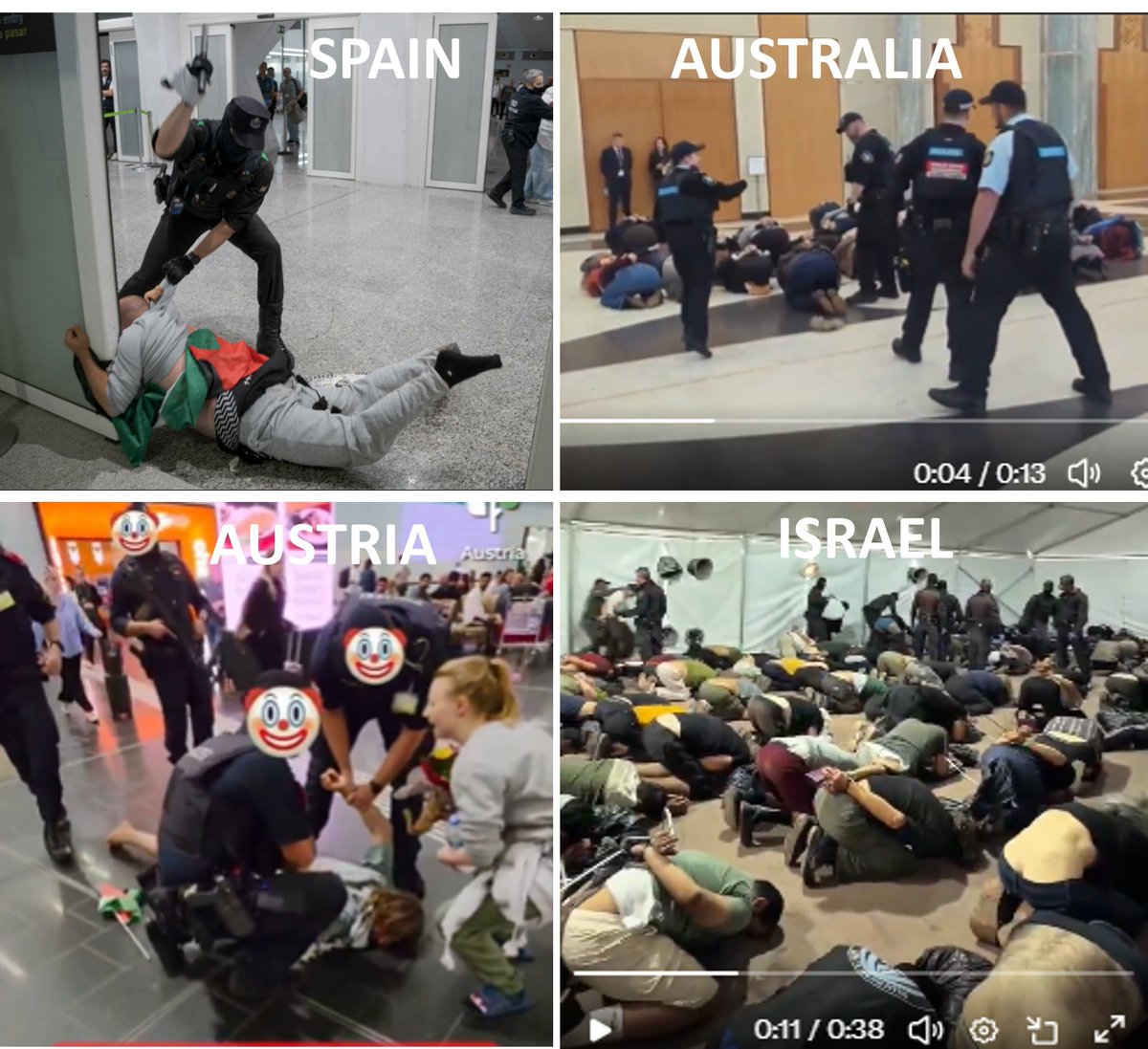
Objetivamente, nadie ha tratado la flotilla como realmente se merece como lo hemos hecho aquí.
¡Viva España!
Español
Norber retweetledi

Eliminación selectiva israelí de terroristas palestinos cerca de la plaza Abu Alaa, al oeste de Khan Younis, en el sur de la Franja de Gaza.
@MediaOriente
Español