Yan Liu

9K posts

Yan Liu banner
Yan Liu

Yan Liu

@NowhereLikeNow

#DeepTech #Biotech #metacognition

San Francisco, CA Katılım Ekim 2015
2.9K Takip Edilen1.6K Takipçiler
Yan Liu retweetledi
Prof. Lee Cronin
Prof. Lee Cronin@leecronin·
Drug Discovery should be renamed Drug Creation. This is because chemical space is so big you cannot search it, you must instead create.
English
16
19
149
11.8K
Yan Liu retweetledi
Martin Picard
Martin Picard@MitoPsychoBio·
The idea that sequencing more genomes would lead to better medicine and better health was a good hypothesis in 2000. But 26 years later, evidence has quite convincingly disproven that hypothesis. The answer to most common chronic illnesses that plague us isn't written in genes. Personalized medicine likely cannot come from sequences of nucleic acids. There is more to life's dynamic nature. Why do we cling onto that hypothesis/dogma like it is truth.
Max Marchione@maxmarchione

The cost of sequencing a human genome dropped from $100M to less than $100 in about 25 years. That's a million-fold decrease, which outpaces even Moore's Law. We're about to enter the era of personalized medicine.

English
83
81
630
116.7K
Yan Liu retweetledi
Long Now Foundation
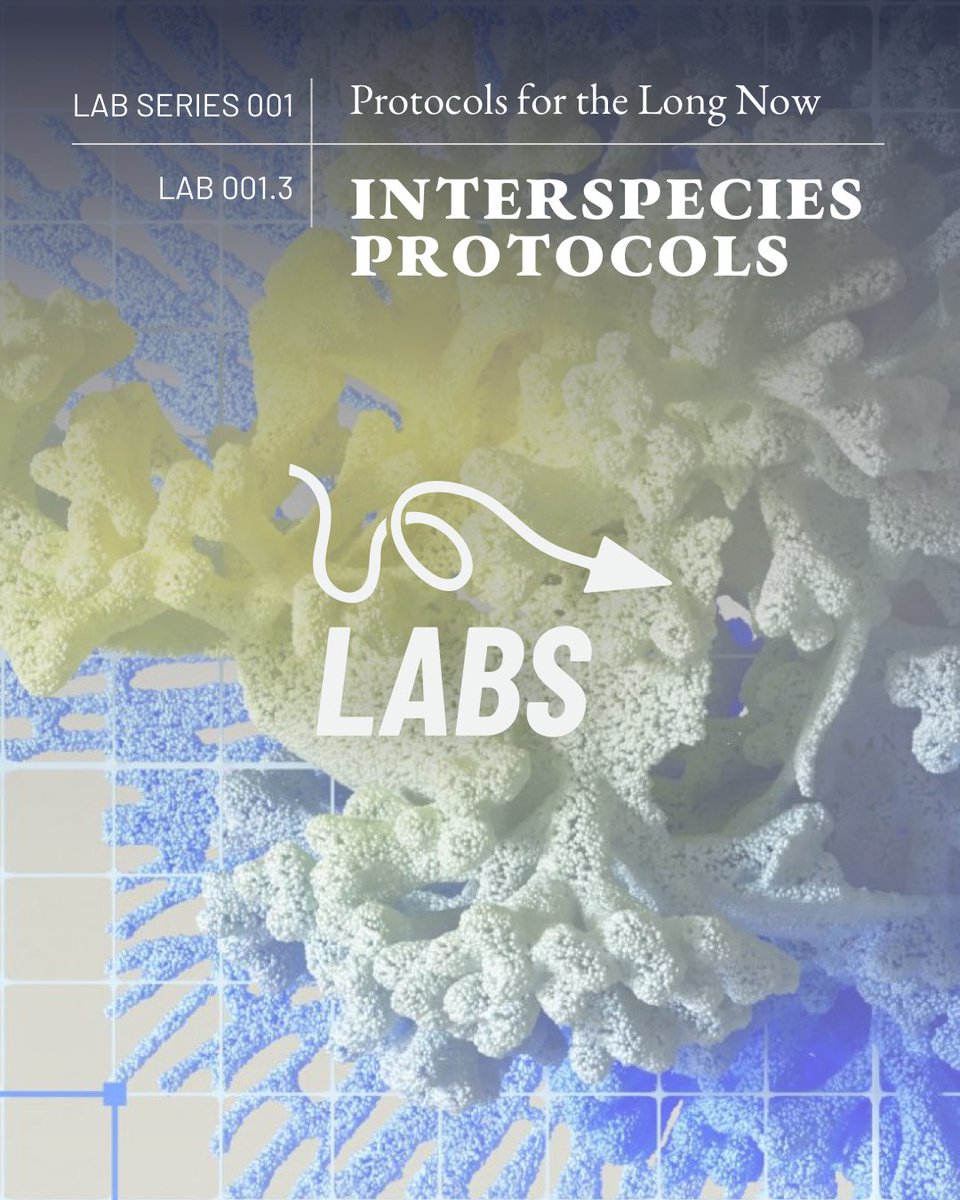
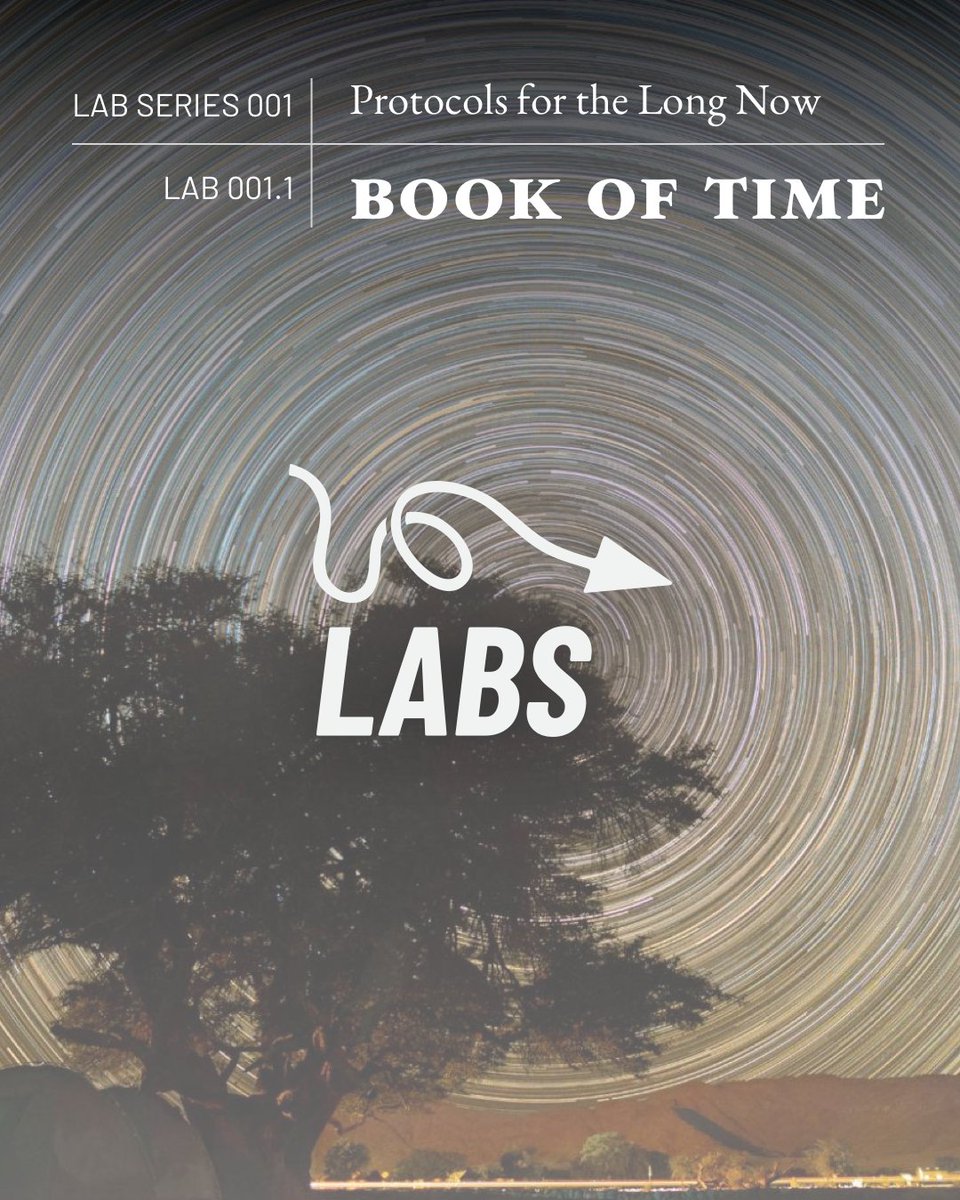
What does long-term thinking look like in practice? Introducing Long Now Labs, a collaborative space to test, prototype, and build long-term tools. Lab Series 001 is a collaboration with the Protocol Institute to investigate three aspects of civilizational durability that are being radically reshaped by frontier technologies. -> Lab 001.1: Book of Time - An open call to submit a concept for a new way of marking, experiencing, or making sense of time. -> Lab 001.2: Epistemic Cycles - Seeking an individual or team to investigate historical patterns of technological disruption that broke down society's ability to discern truth. -> Lab 001.3: Interspecies Protocols - Exploring the protocols needed to support interspecies ecologies. If you are a designer, researcher, writer, or technologist interested in the deep future, we want to hear from you. Submissions are now open. Learn more about Labs and how to apply: na2.hubs.ly/H059wn90
Long Now Foundation tweet mediaLong Now Foundation tweet mediaLong Now Foundation tweet media
English
5
29
112
16.2K
Yan Liu retweetledi
Yan Liu retweetledi
Dr Alexander D. Kalian
Dr Alexander D. Kalian@AlexanderKalian·
I can guarantee that AI will not "cure cancer" - at least, not in any clean singular way. Cancer is an umbrella term for many different diseases, affecting different tissues, with different pathologies and treatment pathways - each requiring different cures. And this is before we discuss the inherent challenges faced by AI drug discovery, which are unlikely to be resolved anytime soon. This "AI will cure cancer" narrative among AI utopianists, demonstrates a mixture of overconfidence, ignorance, and naivety - about both the capabilities of AI, and the applied domain of biology that they so naively delve into.
djcows@djcows

if AI cures cancer, will the anti-AI people still hate AI?

English
88
31
257
26.3K
Yan Liu retweetledi
Dr. Catharine Young
Dr. Catharine Young@DrCatharineY·
The hill I will die on - we have to rethink graduate training. “Scientists are trained for a world where data speaks for itself. Where misinformation moves slowly. Where scientific expertise naturally rises above noise. That world is gone.” sciencepolitics.org/2026/03/18/wer…
Dr. Catharine Young tweet media
English
55
237
848
103.5K
Yan Liu retweetledi
Dr Alexander D. Kalian
Dr Alexander D. Kalian@AlexanderKalian·
You need to be careful of overconfident scientists and CEOs in the AI/bio space. Every conference I go to has someone boasting about an AI that is 99% accurate at predicting some bioactivity. When you ask more questions, it turns out that they used a very easy dataset with a lot of bias, or have completely misrepresented their model's statistics. I am a trained scientist in the AI/bio domain, and so can sniff out this bad behaviour from a mile away. But how's about everyday people, investors, industry clients, civil servants, science communicators, and journalists? Half of them wouldn't stand a chance against these slippery charlatans. A lot of what you see online, about: "Wow omg this AI just SOLVED ageing in mice!" or "This new AI can design a personalised cancer vaccine just for you!" - turns out to be oversold bogus, when you dig deeper. Protect your money from these people, and especially don't let them influence your health decisions.
English
20
18
107
3.6K
Yan Liu retweetledi
signüll
signüll@signulll·
most people operate on a model of gain, it's almost universal. their usual thought patterns revolve around questions like what do i get out of this? what do i win? what's in it for me, to make this move, start this thing, etc? i think the inversion is more interesting & way more honest. my operational model is closer to nothing to lose. especially when you're building a company from zero, you're operating in open territory, or even interacting with anyone new. the downside is almost always capped. the upside is infinite. i guess some ppl might see this as optimism framed another way but i think of it as pure math. & once you internalize that asymmetry, it becomes a filter for everything. it tells you what actually matters & what's just fear. it will free you to take action.
English
40
52
550
33.3K
Yan Liu retweetledi
Michael Nielsen
Michael Nielsen@michael_nielsen·
Just a reminder of @AsteraInstitute's open essay competition about identifying and overcoming scientific bottlenecks. Deadline for entries is May 1!
Michael Nielsen tweet media
English
2
49
153
20.9K
Yan Liu retweetledi
jo johnson
jo johnson@josbjohnson·
the meanest thing you do to yourself is pretend you don’t want the things you want. shrink the desire before anyone can see it. call it unrealistic before someone else does. and then walk around with this low grade starvation you can’t name because you buried the appetite so deep even you forgot where you put it. wanting things is dangerous. I know. it opens you up to disappointment and to looking foolish and to reaching for something that might not reach back. want it anyway. the alternative is a life of pretending you’re full.
English
58
5.5K
24.6K
448K
Yan Liu retweetledi
Justin Welsh
Justin Welsh@thejustinwelsh·
The older I get, the more I realize that speaking your mind bluntly and directly is the fastest way to build relationships with the right people.
English
320
6.1K
31.9K
562.5K
Yan Liu retweetledi
Sahil Bloom
Sahil Bloom@SahilBloom·
The older I get, the more I realize intelligence is overrated. Intelligent people are more likely to overthink, overplan, and overanalyze. They hide behind motion that doesn't create progress. They fear the judgment of others if they're proven wrong. The truth is that intelligence is abundant. Courage is not. The people you admire are the ones who had the courage to act. They aren’t more talented than you. They aren’t smarter than you. They just took action when you didn’t. I often wonder how many extraordinary people wasted their entire lives waiting for permission that never came. Permission isn't granted. It's taken. You get to tap yourself in whenever you want. You can just do things. Courage beats intelligence.
English
509
1.2K
8.6K
664K
Yan Liu retweetledi
signüll
signüll@signulll·
ultimately it’s rumination that will haunt you. introspection doesn’t if you do it right. i think of introspection as game tape. you watch once, extract the signal, & close the tab. whereas rumination is the same clip on loop w/ no new information being processed. it’s reexperiencing dressed up as reflection. you should treat the past as a read only database. you query it, get your answer, & then gtfo.​​​​​​​​​​​​​​​​ i do sometimes wish there was an explicit mechanic in the human mind to effectively hit “archive”. i have personally been on a treadmill here. there is a lot more here to dig w.r.t. to modern therapy culture which is effectively designed to dig deep as far as possible indefinitely & often with a lack of clear purpose.
English
44
95
1.2K
51.4K
Yan Liu retweetledi
Andrew Côté
Andrew Côté@Andercot·
The ability to manipulate reality with your thoughts is forever inaccessible to skeptics, because the only true superpower is belief.
English
93
464
3.3K
69.6K
Yan Liu retweetledi
Ava
Ava@noampomsky·
my problem w the popular conception of agency is that most people are trapped not by an inability to act but rather by an inability to conceive of a wider range of things to use their free will on. their actions are constrained by the aperture of their desire
Ty Ngachira@anto_ty

Beware the trap of being really smart yet spending most of that bandwidth on things you have little control over. High intelligence with little agency is the pipeline to unexplainable anxiety
English
31
160
2.2K
87.4K
Yan Liu retweetledi
Henrik Karlsson
Henrik Karlsson@phokarlsson·
“Each friend represents a world in us, a world possibly not born until they arrive, and it is only by this meeting that a new world is born."— Anaïs Nin
English
2
26
237
8.6K
Yan Liu retweetledi
signüll
signüll@signulll·
the best posts on here land like a punch to the gut or a warm hug. ppl don’t tend to remember what was smart. they remember what felt real. pain, love, joy, loss... this is the stuff every human recognizes instantly. the best writing drags someone into your world & makes them live there for a minute. & when you write from a place that clearly cost you something, people read it like: “oh. this person isn’t performing. they’re actually bleeding.”
English
25
11
231
11K
Yan Liu retweetledi
Dr. Julie Gurner
Dr. Julie Gurner@drgurner·
People all grow up with a certain amount of "training" about what is possible for them. You should do whatever it takes to bend your mind, and break your training. You can be bigger than you think.
English
46
77
558
20.2K
Yan Liu retweetledi
Pratyush
Pratyush@pratyushbuddiga·
Contrary to popular belief, current startup top-down 996 grind culture is not because “AI is important” or even a pushback to COVID-era remote work. It arrived in Silicon Valley when a very specific demographic came of age: the cohort of smart Gen Z who went to top schools. For them, the mainstreaming of grind culture has been part and parcel of their lives since preschool. Millennials were the first generation raised to be future college students - hence “adulting” - but Gen Z Ivy Leaguers were the first that grew up with their parents instilling a specific work ethic and expectation around what getting to Harvard or Stanford would take. Most of them can’t remember a time in their lives where the looming axe of the college admission decision wasn’t weighing over their heads. If you read any account of successful startups in previous generations, people worked hard. Tandem Computers had people in on the weekends in the 80s. PayPal did in the 90s and so did Facebook in the 00s. But the key difference was people came in because they wanted to, not because it was mandated. It’s the difference between someone who loves to play piano staying up til 11 pm practicing versus someone who’s been told they have to. Grind culture comes from a belief that the only thing that makes a difference is sheer hours: that you can SAT prep your way into a billion dollar company. It has no patience for the tinkering of Palmer Luckey in his garage or the wilderness experiments of the early OpenAI years. It’s the fear that if you’re not grinding, you’re falling behind your peers in preparation for the Big Test. What’s the takeaway? Startups aren’t college admissions. Free yourself from the culture that has been instilled in you since your parents were applying for preschools (easier said than done - trust me, I know. I grew up like this before it was even mainstream in America.) Work hard, but because you want to, and the mission demands it. Create a culture that organically rewards work and output, but actual work, not the equivalent of mindlessly clicking piano keys at 9 pm so that your parents think you’re still practicing. Greatness lies on the other side of finding something you work hard at because you actually like it and not because it’s enforced top-down. I’ll end with a section from a brilliant @GrahamDuncanNYC blog: “Novak Djokovic said in an interview with the Financial Times that ‘I can carry on playing at this level because I like hitting the tennis ball.’ The interviewer replied in surprise: ‘Are there really players who don’t like hitting the ball?’ Djokovic answered, ‘Oh yes. There are people out there who don’t have the right motivation. You don’t need to talk to them. I can see it.’ If you can find the thing you do for its own sake, the compulsive piece of your process, and dial that up and up, beyond the imaginary ceiling for that activity you may be creating, my experience is the world comes to you for that thing and you massively outperform the others who don’t actually like hitting that particular ball. I think the rest of career advice is commentary on this essential truth.”
English
24
30
433
108.8K