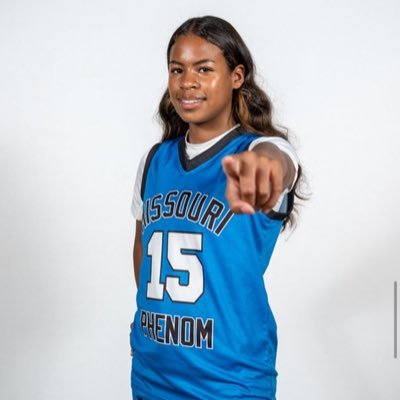
OWU: Talent Projection
137 posts

@OWUTALENT
We use insights and analytics to identify, track, and serve basketball talent through a 6-zone national scouting and development model.


Just dropped @PBRhoops Day 1-Explosive Off the Dribble #HeartOfTexas prepgirlshoops.com/2026/05/day-1-… @SW_Select3SSB @Ballall_Dey33 @addidrew_ @Libbylee04 @pd_skillz @ImmiLou5 @FAMhoopsGbb @LynndenSmith @JPElite_Girls #KylieMohammed @PGHTexas @PGHLouisiana @PrepGirlsHoops

OWU: Conceptually Thinking Basketball (Nike EYBL) @VickeryMaddie @MissouriPhenom Maddie Vickery (2027) — Missouri Phenom / Washburn Rural (Topeka, KS) 6'1"–6'2" Forward | Kansas State Commit | Nike EYBL SIGNAL SNAPSHOT Archetype: Multi-Tool Forward / Secondary Playmaker Primary Value: Rare assist-steal combination from a forward profile Translation Signal: 16.5 PPG / 7.8 RPG / 4.5 APG / 3.7 SPG with verified high-major validation Current Gap: Three-point range consistency at Big 12 pace remains the final separator Vickery operates as a multi-tool forward whose value is rooted in the rarity of her statistical profile. A 6'2" forward averaging 4.5 assists and 3.7 steals per game is not operating as a traditional frontcourt player — that is a possession-creation profile typically associated with guards. The defining signal is not just production volume, but the type of production. She impacts games through scoring, facilitation, rebounding, and defensive disruption without requiring offensive structure to revolve entirely around her. OFFENSIVE PROFILE Vickery generates offense through face-up scoring, interior touch, and advanced connective playmaking from the elbow and high post. Her 16.5 PPG production, paired with a near-20 PPG state tournament run, reinforces a player who scales upward in pressure environments rather than shrinking within them. More importantly, the assist profile confirms that her scoring exists within offensive processing, not isolation-heavy shot consumption. The major translation variable is perimeter shooting consistency. If her face-up game reliably extends beyond the college three-point line, the profile expands into a legitimate point-forward archetype within the Big 12. DEFENSIVE IMPACT Defensively, Vickery profiles as a multi-layer disruptor. The 3.7 steals per game strongly suggest anticipatory instincts, rotational awareness, and active hands rather than gamble-based defense. Combined with 7.8 rebounds per game, the defensive profile translates directly into possession-ending value. @coachbeechum VERDICT Vickery projects along a Big 12 starting trajectory with upside into one of the conference’s more versatile forwards if perimeter range fully activates. The market correctly identified the profile early — Kansas State’s evaluation aligned with the evidence long before consensus fully formed. #OWUEvalDay #ConceptuallyThinking #BuiltDifferent #PlayerTrustNetwork #ScoutingTruths [@PGHBrooks ] [@NXTPROG] [@JrAllStarBB] [] [@IGBRcoverage [@WorldExposureWB] [@_BlakeDerrick] [@WKGameBall] [@EconAdjunct] [@FiveStateHoops] [@OWUTALENT ][@PGHMissouri ] [@JrAllStar_MO ] @gemsinthegym


OWU: Talent Projection Preseason Week 2 Reference Grade Artifact The OWU / ProfileX Preseason Top 25 Board should not be interpreted as a static ranking—it is a live ecosystem map of influence, depth, and championship equity across the girls AAU landscape entering the 2026 cycle. At the top, Team Takeover holds the #1 position not simply as a returning Nike EYBL champion, but as the most stable high-end system in the current ecosystem. Their value is not just star power—it is repeatable structure, lineup continuity, and proven championship translation. In OWU terms, they represent a “closed-loop system,” where talent, coaching, and exposure reinforce each other at the highest level. FBC United at #2 is one of the most important pressure points on the board. While not the defending champion, they may be the deepest program in the country. Depth at this level creates lineup optionality, injury insulation, and sustained performance across live periods. Their ceiling is tied to how effectively they convert depth into role clarity and late-game execution. 7 Days at #3 enters as the reigning Adidas 3SSB champion, giving the Elite Band its defining cross-circuit strength. Their presence confirms that championship equity is not isolated to one ecosystem—it travels across circuits when structure and shot creation scale. The rest of the Elite Band (WHYNOT, CyFair Elite) reflects high-end EYBL infrastructure—programs built on consistent talent pipelines and national visibility. These teams operate with high exposure velocity, meaning their players are constantly evaluated, recruited, and pressure-tested. The next layer—Top Group (6–10)—is where volatility increases and movement potential is highest. West Virginia Thunder, coming off a Select Events Power 24 championship, represents the strongest upward pressure in this tier. They are a system trending toward Elite Band disruption. Legends U and Southwest Select bring alternative pathways (Select 40, 3SSB) into the mix, reinforcing that exposure ecosystems are diversifying. Programs like North Tartan and Team Durant maintain EYBL credibility but must prove they can convert talent into postseason impact. This tier is less about reputation and more about translation. From 11–20 (Depth Zone), the board shifts from championship expectation to ecosystem importance. Programs like AEBL Girlz, Wisconsin Lakers, Team Thrill, and Exodus NYC provide critical talent infrastructure across circuits. Mac Irvin Fire and IFN – It’s Fox Nation highlight hybrid exposure models, where Select Events and GUAA pathways intersect. Notably, All Iowa Attack at #20 continues to serve as a regional-to-national bridge program, producing talent that scales upward despite market size constraints. The final tier (21–25) is not low value—it is latent value. Programs like Sanford Sports, Oklahoma Unity, and Player First (locked at #25) represent system sheet anchors—organizations with either emerging pipelines or strong regional control that could produce breakout movement. The key takeaway: this board is not ranking who is best today. It is mapping where influence, depth, and championship probability are most concentrated—and where disruption is most likely to occur. Preseason Week 2 is not about confirmation. It is about identifying where the system is about to move. #OWUEvalDay #ConceptuallyThinking #BuiltDifferent #PlayerTrustNetwork #ScoutingTruths [@PGHBrooks ] [@NXTPROG] [@JrAllStarBB] [] [@IGBRcoverage [@WorldExposureWB] [@_BlakeDerrick] [@WKGameBall] [@EconAdjunct] [@FiveStateHoops] [@OWUTALENT ][@PGHiowa ] [@JrAllStariowa ]


OWU: Strategy and Analytics Reference Grade Artifact The OWU / ProfilerX Preseason Top 25 is not a ranking—it is a map of infrastructure. What appears on the surface as ordinal placement is, in reality, a signal hierarchy of development environments, exposure ecosystems, and translation reliability across the 2026 cycle. At the top, programs like Team Takeover @TeamTakeoverGBB , @FBCWorldWideGBB , and 7 Days represent more than talent aggregation—they are systems of continuity. These are environments where role definition, decision-making reps, and competitive density converge. The ranking is less about who has the best players and more about which programs consistently produce players whose games travel across contexts. That is the defining metric of institutional basketball intelligence. The circuit layer reinforces this structure. Nike EYBL, GUAA, and Adidas 3SSB dominate the upper tiers because they function as verification ecosystems. These platforms compress decision-making time, increase athletic parity, and expose weaknesses early. They are environments where performance is not just displayed—it is validated. Mid-tier programs—Legends U @Legends_Bball , @SW_Select3SSB , North Tartan—represent the next layer of strategic positioning. These are programs that may not have the same historical gravity but are actively building repeatable pipelines. Their presence signals upward mobility, not just current placement. In a system built on repeatability, momentum matters as much as legacy. Further down the list, programs like All Iowa Attack, Cal Storm, and CP3 Flames highlight a critical insight: geographic diversity no longer limits influence. The national circuit has flattened access. What differentiates programs now is not location, but clarity of identity and developmental consistency. This ranking also reveals a hidden efficiency metric: reuse ratio. Programs that appear consistently in these tiers are effectively producing derivatives—multiple high-level prospects from a single system. They are not creating one standout player; they are generating a repeatable output model. That is the difference between talent spikes and sustainable pipelines. From a Remarkability lens, the artifact succeeds because it creates tension: Is elite talent a function of individual ability, or system design? The answer, increasingly, is system design. Programs rise not by chasing visibility, but by building environments where decision- making, adaptability, and competitive character are trained daily. The most remarkable insight here is not who is ranked—but why the same types of programs continue to appear. Final Read: The OWU / ProfilerX Top 25 is a structural snapshot of where translation is most likely to occur. These programs are not just producing players—they are producing outcomes that scale. And in modern basketball evaluation, scalability is the only metric that holds. #OWUEvalDay #ConceptuallyThinking #BuiltDifferent #PlayerTrustNetwork #ScoutingTruths [@PGHBrooks ] [@NXTPROG] [@JrAllStarBB] [] [@IGBRcoverage [@WorldExposureWB] [@_BlakeDerrick] [@WKGameBall] [@EconAdjunct] [@FiveStateHoops] [@OWUTALENT ][@PGHiowa ] [@JrAllStariowa ] @gemsinthegym
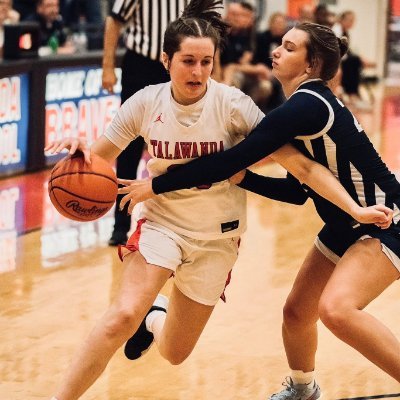
OWU: Strategy and Analytics Reference Grade Artifact The OWU / ProfilerX Preseason Top 25 is not a ranking—it is a map of infrastructure. What appears on the surface as ordinal placement is, in reality, a signal hierarchy of development environments, exposure ecosystems, and translation reliability across the 2026 cycle. At the top, programs like Team Takeover @TeamTakeoverGBB , @FBCWorldWideGBB , and 7 Days represent more than talent aggregation—they are systems of continuity. These are environments where role definition, decision-making reps, and competitive density converge. The ranking is less about who has the best players and more about which programs consistently produce players whose games travel across contexts. That is the defining metric of institutional basketball intelligence. The circuit layer reinforces this structure. Nike EYBL, GUAA, and Adidas 3SSB dominate the upper tiers because they function as verification ecosystems. These platforms compress decision-making time, increase athletic parity, and expose weaknesses early. They are environments where performance is not just displayed—it is validated. Mid-tier programs—Legends U @Legends_Bball , @SW_Select3SSB , North Tartan—represent the next layer of strategic positioning. These are programs that may not have the same historical gravity but are actively building repeatable pipelines. Their presence signals upward mobility, not just current placement. In a system built on repeatability, momentum matters as much as legacy. Further down the list, programs like All Iowa Attack, Cal Storm, and CP3 Flames highlight a critical insight: geographic diversity no longer limits influence. The national circuit has flattened access. What differentiates programs now is not location, but clarity of identity and developmental consistency. This ranking also reveals a hidden efficiency metric: reuse ratio. Programs that appear consistently in these tiers are effectively producing derivatives—multiple high-level prospects from a single system. They are not creating one standout player; they are generating a repeatable output model. That is the difference between talent spikes and sustainable pipelines. From a Remarkability lens, the artifact succeeds because it creates tension: Is elite talent a function of individual ability, or system design? The answer, increasingly, is system design. Programs rise not by chasing visibility, but by building environments where decision- making, adaptability, and competitive character are trained daily. The most remarkable insight here is not who is ranked—but why the same types of programs continue to appear. Final Read: The OWU / ProfilerX Top 25 is a structural snapshot of where translation is most likely to occur. These programs are not just producing players—they are producing outcomes that scale. And in modern basketball evaluation, scalability is the only metric that holds. #OWUEvalDay #ConceptuallyThinking #BuiltDifferent #PlayerTrustNetwork #ScoutingTruths [@PGHBrooks ] [@NXTPROG] [@JrAllStarBB] [] [@IGBRcoverage [@WorldExposureWB] [@_BlakeDerrick] [@WKGameBall] [@EconAdjunct] [@FiveStateHoops] [@OWUTALENT ][@PGHiowa ] [@JrAllStariowa ] @gemsinthegym

OWU: Strategy and Analytics Reference Grade Artifact The OWU / ProfilerX Preseason Top 25 is not a ranking—it is a map of infrastructure. What appears on the surface as ordinal placement is, in reality, a signal hierarchy of development environments, exposure ecosystems, and translation reliability across the 2026 cycle. At the top, programs like Team Takeover @TeamTakeoverGBB , @FBCWorldWideGBB , and 7 Days represent more than talent aggregation—they are systems of continuity. These are environments where role definition, decision-making reps, and competitive density converge. The ranking is less about who has the best players and more about which programs consistently produce players whose games travel across contexts. That is the defining metric of institutional basketball intelligence. The circuit layer reinforces this structure. Nike EYBL, GUAA, and Adidas 3SSB dominate the upper tiers because they function as verification ecosystems. These platforms compress decision-making time, increase athletic parity, and expose weaknesses early. They are environments where performance is not just displayed—it is validated. Mid-tier programs—Legends U @Legends_Bball , @SW_Select3SSB , North Tartan—represent the next layer of strategic positioning. These are programs that may not have the same historical gravity but are actively building repeatable pipelines. Their presence signals upward mobility, not just current placement. In a system built on repeatability, momentum matters as much as legacy. Further down the list, programs like All Iowa Attack, Cal Storm, and CP3 Flames highlight a critical insight: geographic diversity no longer limits influence. The national circuit has flattened access. What differentiates programs now is not location, but clarity of identity and developmental consistency. This ranking also reveals a hidden efficiency metric: reuse ratio. Programs that appear consistently in these tiers are effectively producing derivatives—multiple high-level prospects from a single system. They are not creating one standout player; they are generating a repeatable output model. That is the difference between talent spikes and sustainable pipelines. From a Remarkability lens, the artifact succeeds because it creates tension: Is elite talent a function of individual ability, or system design? The answer, increasingly, is system design. Programs rise not by chasing visibility, but by building environments where decision- making, adaptability, and competitive character are trained daily. The most remarkable insight here is not who is ranked—but why the same types of programs continue to appear. Final Read: The OWU / ProfilerX Top 25 is a structural snapshot of where translation is most likely to occur. These programs are not just producing players—they are producing outcomes that scale. And in modern basketball evaluation, scalability is the only metric that holds. #OWUEvalDay #ConceptuallyThinking #BuiltDifferent #PlayerTrustNetwork #ScoutingTruths [@PGHBrooks ] [@NXTPROG] [@JrAllStarBB] [] [@IGBRcoverage [@WorldExposureWB] [@_BlakeDerrick] [@WKGameBall] [@EconAdjunct] [@FiveStateHoops] [@OWUTALENT ][@PGHiowa ] [@JrAllStariowa ] @gemsinthegym

OWU: Strategy and Analytics Reference Grade Artifact The OWU / ProfilerX Preseason Top 25 is not a ranking—it is a map of infrastructure. What appears on the surface as ordinal placement is, in reality, a signal hierarchy of development environments, exposure ecosystems, and translation reliability across the 2026 cycle. At the top, programs like Team Takeover @TeamTakeoverGBB , @FBCWorldWideGBB , and 7 Days represent more than talent aggregation—they are systems of continuity. These are environments where role definition, decision-making reps, and competitive density converge. The ranking is less about who has the best players and more about which programs consistently produce players whose games travel across contexts. That is the defining metric of institutional basketball intelligence. The circuit layer reinforces this structure. Nike EYBL, GUAA, and Adidas 3SSB dominate the upper tiers because they function as verification ecosystems. These platforms compress decision-making time, increase athletic parity, and expose weaknesses early. They are environments where performance is not just displayed—it is validated. Mid-tier programs—Legends U @Legends_Bball , @SW_Select3SSB , North Tartan—represent the next layer of strategic positioning. These are programs that may not have the same historical gravity but are actively building repeatable pipelines. Their presence signals upward mobility, not just current placement. In a system built on repeatability, momentum matters as much as legacy. Further down the list, programs like All Iowa Attack, Cal Storm, and CP3 Flames highlight a critical insight: geographic diversity no longer limits influence. The national circuit has flattened access. What differentiates programs now is not location, but clarity of identity and developmental consistency. This ranking also reveals a hidden efficiency metric: reuse ratio. Programs that appear consistently in these tiers are effectively producing derivatives—multiple high-level prospects from a single system. They are not creating one standout player; they are generating a repeatable output model. That is the difference between talent spikes and sustainable pipelines. From a Remarkability lens, the artifact succeeds because it creates tension: Is elite talent a function of individual ability, or system design? The answer, increasingly, is system design. Programs rise not by chasing visibility, but by building environments where decision- making, adaptability, and competitive character are trained daily. The most remarkable insight here is not who is ranked—but why the same types of programs continue to appear. Final Read: The OWU / ProfilerX Top 25 is a structural snapshot of where translation is most likely to occur. These programs are not just producing players—they are producing outcomes that scale. And in modern basketball evaluation, scalability is the only metric that holds. #OWUEvalDay #ConceptuallyThinking #BuiltDifferent #PlayerTrustNetwork #ScoutingTruths [@PGHBrooks ] [@NXTPROG] [@JrAllStarBB] [] [@IGBRcoverage [@WorldExposureWB] [@_BlakeDerrick] [@WKGameBall] [@EconAdjunct] [@FiveStateHoops] [@OWUTALENT ][@PGHiowa ] [@JrAllStariowa ] @gemsinthegym

OWU: Strategy and Analytics Reference Grade Artifact The OWU / ProfilerX Preseason Top 25 is not a ranking—it is a map of infrastructure. What appears on the surface as ordinal placement is, in reality, a signal hierarchy of development environments, exposure ecosystems, and translation reliability across the 2026 cycle. At the top, programs like Team Takeover @TeamTakeoverGBB , @FBCWorldWideGBB , and 7 Days represent more than talent aggregation—they are systems of continuity. These are environments where role definition, decision-making reps, and competitive density converge. The ranking is less about who has the best players and more about which programs consistently produce players whose games travel across contexts. That is the defining metric of institutional basketball intelligence. The circuit layer reinforces this structure. Nike EYBL, GUAA, and Adidas 3SSB dominate the upper tiers because they function as verification ecosystems. These platforms compress decision-making time, increase athletic parity, and expose weaknesses early. They are environments where performance is not just displayed—it is validated. Mid-tier programs—Legends U @Legends_Bball , @SW_Select3SSB , North Tartan—represent the next layer of strategic positioning. These are programs that may not have the same historical gravity but are actively building repeatable pipelines. Their presence signals upward mobility, not just current placement. In a system built on repeatability, momentum matters as much as legacy. Further down the list, programs like All Iowa Attack, Cal Storm, and CP3 Flames highlight a critical insight: geographic diversity no longer limits influence. The national circuit has flattened access. What differentiates programs now is not location, but clarity of identity and developmental consistency. This ranking also reveals a hidden efficiency metric: reuse ratio. Programs that appear consistently in these tiers are effectively producing derivatives—multiple high-level prospects from a single system. They are not creating one standout player; they are generating a repeatable output model. That is the difference between talent spikes and sustainable pipelines. From a Remarkability lens, the artifact succeeds because it creates tension: Is elite talent a function of individual ability, or system design? The answer, increasingly, is system design. Programs rise not by chasing visibility, but by building environments where decision- making, adaptability, and competitive character are trained daily. The most remarkable insight here is not who is ranked—but why the same types of programs continue to appear. Final Read: The OWU / ProfilerX Top 25 is a structural snapshot of where translation is most likely to occur. These programs are not just producing players—they are producing outcomes that scale. And in modern basketball evaluation, scalability is the only metric that holds. #OWUEvalDay #ConceptuallyThinking #BuiltDifferent #PlayerTrustNetwork #ScoutingTruths [@PGHBrooks ] [@NXTPROG] [@JrAllStarBB] [] [@IGBRcoverage [@WorldExposureWB] [@_BlakeDerrick] [@WKGameBall] [@EconAdjunct] [@FiveStateHoops] [@OWUTALENT ][@PGHiowa ] [@JrAllStariowa ] @gemsinthegym
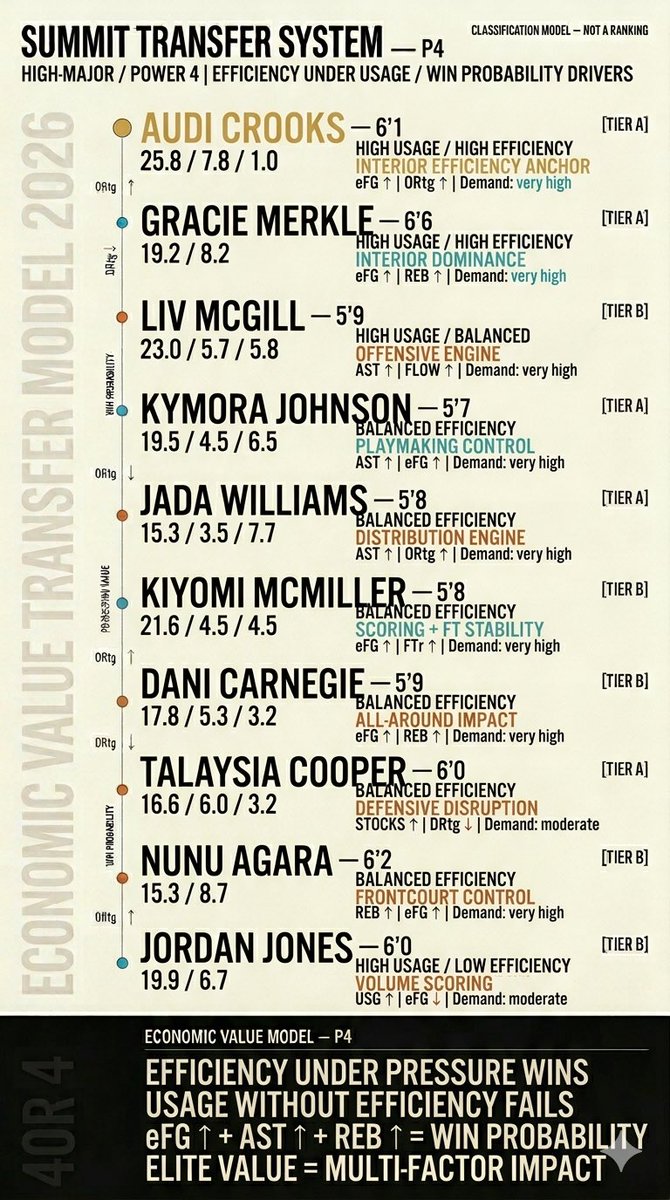
OWU: Strategy and Analytics Reference Grade Artifact The OWU / ProfilerX Preseason Top 25 is not a ranking—it is a map of infrastructure. What appears on the surface as ordinal placement is, in reality, a signal hierarchy of development environments, exposure ecosystems, and translation reliability across the 2026 cycle. At the top, programs like Team Takeover @TeamTakeoverGBB , @FBCWorldWideGBB , and 7 Days represent more than talent aggregation—they are systems of continuity. These are environments where role definition, decision-making reps, and competitive density converge. The ranking is less about who has the best players and more about which programs consistently produce players whose games travel across contexts. That is the defining metric of institutional basketball intelligence. The circuit layer reinforces this structure. Nike EYBL, GUAA, and Adidas 3SSB dominate the upper tiers because they function as verification ecosystems. These platforms compress decision-making time, increase athletic parity, and expose weaknesses early. They are environments where performance is not just displayed—it is validated. Mid-tier programs—Legends U @Legends_Bball , @SW_Select3SSB , North Tartan—represent the next layer of strategic positioning. These are programs that may not have the same historical gravity but are actively building repeatable pipelines. Their presence signals upward mobility, not just current placement. In a system built on repeatability, momentum matters as much as legacy. Further down the list, programs like All Iowa Attack, Cal Storm, and CP3 Flames highlight a critical insight: geographic diversity no longer limits influence. The national circuit has flattened access. What differentiates programs now is not location, but clarity of identity and developmental consistency. This ranking also reveals a hidden efficiency metric: reuse ratio. Programs that appear consistently in these tiers are effectively producing derivatives—multiple high-level prospects from a single system. They are not creating one standout player; they are generating a repeatable output model. That is the difference between talent spikes and sustainable pipelines. From a Remarkability lens, the artifact succeeds because it creates tension: Is elite talent a function of individual ability, or system design? The answer, increasingly, is system design. Programs rise not by chasing visibility, but by building environments where decision- making, adaptability, and competitive character are trained daily. The most remarkable insight here is not who is ranked—but why the same types of programs continue to appear. Final Read: The OWU / ProfilerX Top 25 is a structural snapshot of where translation is most likely to occur. These programs are not just producing players—they are producing outcomes that scale. And in modern basketball evaluation, scalability is the only metric that holds. #OWUEvalDay #ConceptuallyThinking #BuiltDifferent #PlayerTrustNetwork #ScoutingTruths [@PGHBrooks ] [@NXTPROG] [@JrAllStarBB] [] [@IGBRcoverage [@WorldExposureWB] [@_BlakeDerrick] [@WKGameBall] [@EconAdjunct] [@FiveStateHoops] [@OWUTALENT ][@PGHiowa ] [@JrAllStariowa ] @gemsinthegym

OWU: Strategy and Analytics Reference Grade Artifact The OWU / ProfilerX Preseason Top 25 is not a ranking—it is a map of infrastructure. What appears on the surface as ordinal placement is, in reality, a signal hierarchy of development environments, exposure ecosystems, and translation reliability across the 2026 cycle. At the top, programs like Team Takeover @TeamTakeoverGBB , @FBCWorldWideGBB , and 7 Days represent more than talent aggregation—they are systems of continuity. These are environments where role definition, decision-making reps, and competitive density converge. The ranking is less about who has the best players and more about which programs consistently produce players whose games travel across contexts. That is the defining metric of institutional basketball intelligence. The circuit layer reinforces this structure. Nike EYBL, GUAA, and Adidas 3SSB dominate the upper tiers because they function as verification ecosystems. These platforms compress decision-making time, increase athletic parity, and expose weaknesses early. They are environments where performance is not just displayed—it is validated. Mid-tier programs—Legends U @Legends_Bball , @SW_Select3SSB , North Tartan—represent the next layer of strategic positioning. These are programs that may not have the same historical gravity but are actively building repeatable pipelines. Their presence signals upward mobility, not just current placement. In a system built on repeatability, momentum matters as much as legacy. Further down the list, programs like All Iowa Attack, Cal Storm, and CP3 Flames highlight a critical insight: geographic diversity no longer limits influence. The national circuit has flattened access. What differentiates programs now is not location, but clarity of identity and developmental consistency. This ranking also reveals a hidden efficiency metric: reuse ratio. Programs that appear consistently in these tiers are effectively producing derivatives—multiple high-level prospects from a single system. They are not creating one standout player; they are generating a repeatable output model. That is the difference between talent spikes and sustainable pipelines. From a Remarkability lens, the artifact succeeds because it creates tension: Is elite talent a function of individual ability, or system design? The answer, increasingly, is system design. Programs rise not by chasing visibility, but by building environments where decision- making, adaptability, and competitive character are trained daily. The most remarkable insight here is not who is ranked—but why the same types of programs continue to appear. Final Read: The OWU / ProfilerX Top 25 is a structural snapshot of where translation is most likely to occur. These programs are not just producing players—they are producing outcomes that scale. And in modern basketball evaluation, scalability is the only metric that holds. #OWUEvalDay #ConceptuallyThinking #BuiltDifferent #PlayerTrustNetwork #ScoutingTruths [@PGHBrooks ] [@NXTPROG] [@JrAllStarBB] [] [@IGBRcoverage [@WorldExposureWB] [@_BlakeDerrick] [@WKGameBall] [@EconAdjunct] [@FiveStateHoops] [@OWUTALENT ][@PGHiowa ] [@JrAllStariowa ] @gemsinthegym