Sabitlenmiş Tweet

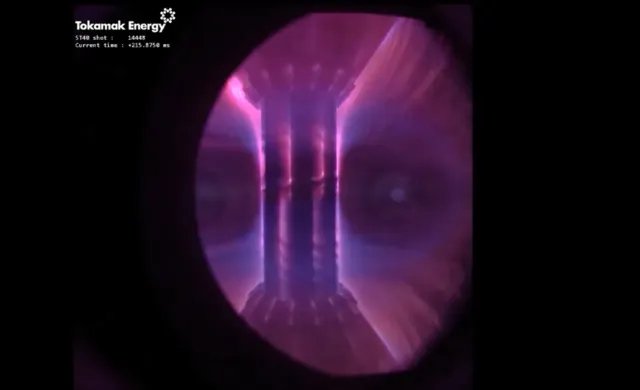
How the ST40 Fusion Reactor Works
The ST40 is a high-field spherical tokamak designed to confine and heat plasma to temperatures sufficient for controlled nuclear fusion.

English
OffBay Archives
781 posts

@OffBayArchives
Archiving The World's Most Significant Advancements Space Exploration | Emerging Tech | Future Science








Wsh c est une dinguerie et dire y’avait ça avant


La mejor forma de vender un producto es probandolo

🚨| Astronauta comiendo pan con miel en el espacio






Scientists have discovered that living bodies emit an extremely faint form of visible light so subtle that it cannot be seen with the naked eye. Using highly sensitive imaging technology, researchers from the University of Calgary and Canada’s National Research Council were able to detect this phenomenon, known as ultraweak photon emission. To observe it, the team used advanced EMCCD cameras capable of capturing individual photons. They recorded light coming from living mice placed in complete darkness for about an hour. Afterward, they repeated the imaging once the mice had passed away while keeping their body temperature at 98.6°F (37°C). Maintaining the same temperature ensured that any changes in light emission were not related to heat. The results showed a clear difference. While alive, the mice released noticeably more visible photons from their skin. After death, the intensity of this light dropped dramatically, with only small amounts continuing to appear from internal organs such as the liver. Ultraweak photon emission occurs at extremely low levels roughly 10 to 1,000 photons per square centimeter per second. For context, even a very dim light bulb releases billions of photons in the same amount of time, which explains why this biological glow is invisible without specialized equipment. The light originates from normal cellular processes. As cells produce energy, they generate reactive oxygen species (ROS). When these molecules interact with lipids and proteins inside the body, they can create excited molecular states that release tiny flashes of visible light. Researchers also examined plants and noticed similar patterns. Leaves that were injured or chemically stressed produced stronger light signals, suggesting that the glow increases when organisms experience oxidative stress. Importantly, this phenomenon is different from body heat. Heat radiation from warm bodies mainly occurs in the infrared spectrum, whereas the photons detected in this study were in the visible range. Because this faint light is closely linked to metabolic activity and oxidative reactions inside cells, scientists believe it could eventually be used as a non-invasive way to monitor stress, disease, or the health of organs. Study: “Imaging Ultraweak Photon Emission from Living and Dead Mice and from Plants under Stress.” The Journal of Physical Chemistry Letters (2025).


in 6 months, voyager 1 will be one light DAY away from earth. any radio signals sent from earth will take 24 hours to reach the spacecraft.

Small arms fire into Nuclear warhead wont set it off due to insensitive high explosives (IHE) being used in their design!
Presentando la calculadora más precisa del mundo, impulsada por GPT-5.2 Pruébala tú mismo