@jarredsumner To me this comes off as 1. An attempt to punish zig for not allowing ai contributions and 2. A PR stunt for agentic coding. I doubt this port would have happened if it were not for the acquisition.
@jarredsumner I love Bun and thank you for creating something amazing.
I think it's just common sense for people to have reservations about a million lines of AI generated Rust code. Hopefully everything goes well!
@Bham314@jonas_shaffer@afkostka He didn't "tell it how it is". He is an insufferable jerk who pulls shit out of his ass and peddles it as the truth. Good riddance
@jonas_shaffer@afkostka He was negative because he tells it how it is. He doesn't sugar coat shit. I used to not care for him. But lately he's been right on cue and speaks what most of us want to say. Only reason they got rid of him
I'll say it again, I think this AI cycle we are in is a net negative on society
A man/team that has made the web significantly more pleasant as a platform for many people and spent years doing so for free has AI effectively destroy the business model by first taking his work
And this is how a member of the community responds. Real sad times
IP theft is real and I personally think that the C-suite of these current companies deserve jail time for the level of theft they enabled
Microservices is the software industry’s most successful confidence scam. It convinces small teams that they are “thinking big” while systematically destroying their ability to move at all. It flatters ambition by weaponizing insecurity: if you’re not running a constellation of services, are you even a real company? Never mind that this architecture was invented to cope with organizational dysfunction at planetary scale. Now it’s being prescribed to teams that still share a Slack channel and a lunch table.
Small teams run on shared context. That is their superpower. Everyone can reason end-to-end. Everyone can change anything. Microservices vaporize that advantage on contact. They replace shared understanding with distributed ignorance. No one owns the whole anymore. Everyone owns a shard. The system becomes something that merely happens to the team, rather than something the team actively understands. This isn’t sophistication. It’s abdication.
Then comes the operational farce. Each service demands its own pipeline, secrets, alerts, metrics, dashboards, permissions, backups, and rituals of appeasement. You don’t “deploy” anymore—you synchronize a fleet. One bug now requires a multi-service autopsy. A feature release becomes a coordination exercise across artificial borders you invented for no reason. You didn’t simplify your system. You shattered it and called the debris “architecture.”
Microservices also lock incompetence in amber. You are forced to define APIs before you understand your own business. Guesses become contracts. Bad ideas become permanent dependencies. Every early mistake metastasizes through the network. In a monolith, wrong thinking is corrected with a refactor. In microservices, wrong thinking becomes infrastructure. You don’t just regret it—you host it, version it, and monitor it.
The claim that monoliths don’t scale is one of the dumbest lies in modern engineering folklore. What doesn’t scale is chaos. What doesn’t scale is process cosplay. What doesn’t scale is pretending you’re Netflix while shipping a glorified CRUD app. Monoliths scale just fine when teams have discipline, tests, and restraint. But restraint isn’t fashionable, and boring doesn’t make conference talks.
Microservices for small teams is not a technical mistake—it is a philosophical failure. It announces, loudly, that the team does not trust itself to understand its own system. It replaces accountability with protocol and momentum with middleware. You don’t get “future proofing.” You get permanent drag. And by the time you finally earn the scale that might justify this circus, your speed, your clarity, and your product instincts will already be gone.
@rickyfm Hell yeah man thanks for sharing the code. Easily my favorite talk at React Conf. I feel like it's so hard to communicate the problem that's being solved here, but it's an important one and I'm excited to see what patterns emerge going forward
If you missed my talk, I shared how integrating Async React features into routing, data fetching, and design component libraries will allow product devs automatically scale the user experience with network, but with a lot less code.
@Asmongold@realwilloxman Government-issued X.509 certificates where sites require client certificate authentication (mTLS) would be a perfect implementation of this. The only PII would be in the distinguished name of the cert.
en.m.wikipedia.org/wiki/Mutual_au…
@realwilloxman Yeah that's why an authentication token that only verifies info and doesn't provide it is the best solution
I don't think anyone wants to upload their ID to every single website online
Internet real ID is inevitable, especially for social media
Denying this is might feel good, but it is a lie and you know it
What isn't inevitable is private companies having access to our public records
The best solution is a gov authentication token that only verifies info
things I believe:
- shipping fast beats the best strategy
- speed is a superpower
- create a bias toward shipping
- small teams ship faster
- ai-native teams will move 10x faster than those not willing to change
- landings > launches (i.e. product adoption > shipping code)
- listen, build, ship, tell the customer, then repeat forever
- you have no career ceiling
- grit > talent
- there’s no substitute for putting in the hours
- get 1% better every day
- be ruthlessly truth seeking
- the truth can be painful
- you can just change your mind if wrong
- have strong opinions, loosely held
- maximize your exposure hours
- “anecdata” > data
- seek the collective truth, not just one opinion
- communication is the job
- clear writing is clear thinking
- everyone (yes, you) needs to become a better writer
- leaders step up to provide clarity when absent
- be the person taking notes, even if it’s just for yourself
- mismatched expectations lead to sadness
- anticipate objections before hitting send, then address them
- education is the best form of developer marketing
- be authentic and own your failures
- never use the word “webinar” ever again
- being helpful compounds
- leadership means owning outcomes beyond the org chart
- influence > titles
- leaders have to do the work themselves *and* delegate
- you can write your own playbook
- study what worked for others, then take your own path
- work can also be your hobby
- this doesn’t mean you can’t have other hobbies
- passion + boundaries > mythical “work-life balance”
- your best work comes from following your curiosity
- demos > memos
- you could have built a prototype in @v0 during the meeting
- only ship things you’re excited about yourself
- hiring is what separates good leaders from great
- there are two hiring answers: hell yes or no
- growth potential > current skill
- hire people you can learn from
- hire people you would someday be happy working for
- favorite interview question: what work are you most proud of?
- always try to assume good intent
- lead with empathy
- they might just be having a bad day
- criticism is good feedback if you listen unemotionally
@housecor I *love* working with RSCs. Combining them with server actions, suspense, useTransition(), and error boundaries simplifies a lot of SPA complexity.
I don't understand the problem people have with them, especially since they are entirely opt-in. Don't like em? Don't use em!
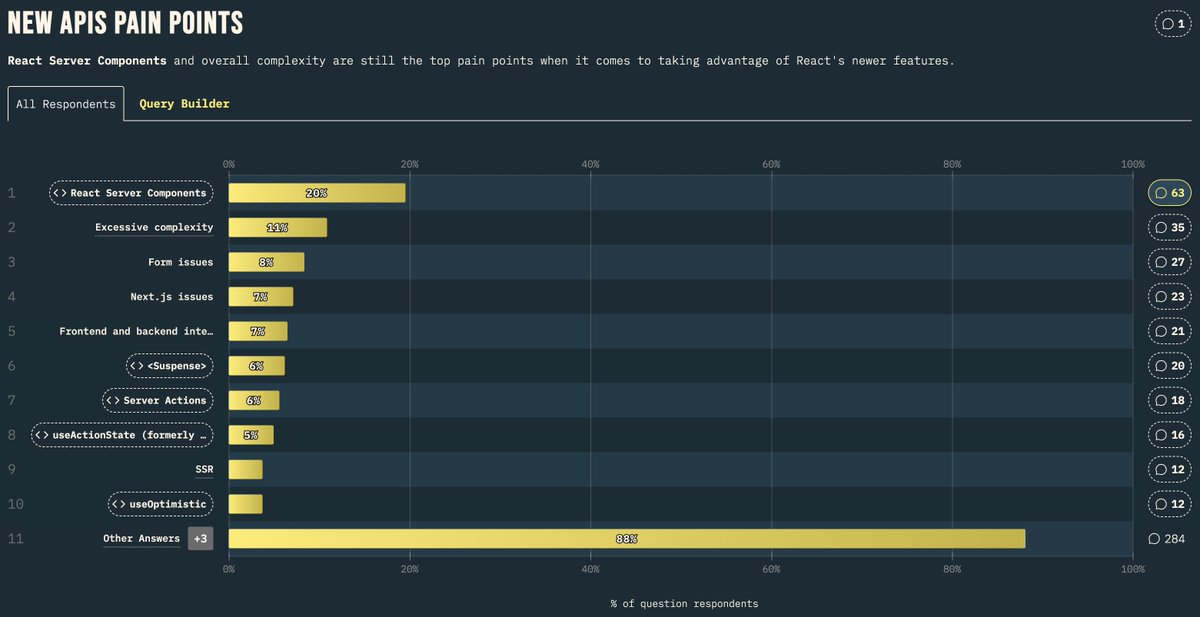
RSC is the most painful new React API in the State of React survey.
Complaints:
- Hard to test.
- Hard to debug.
- Hard to reason about.
- Confusing mental model.
- Seems designed to sell Vercel.
- Some think only Next.js supports RSC.
- More complexity for little benefit.
Why are people are dividing into ideological camps about server versus client rendering when modern web frameworks let you seamlessly compose UI across both environments?
@JohnPAngelos@Orioles you can't clip these wings but you can smudge them.
Bought this a month ago at Camden Yards and now the city is connected to my forehead #ashwednesday
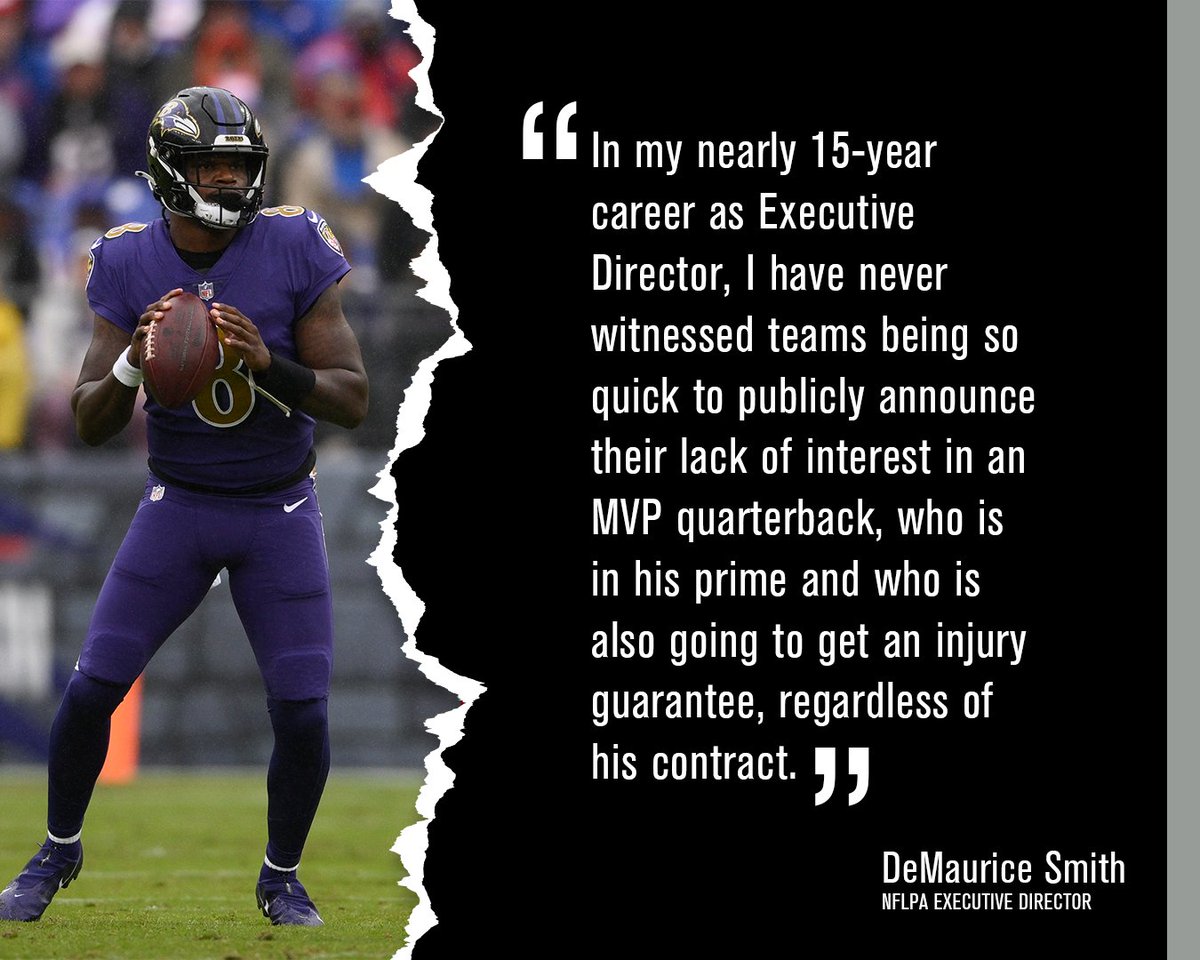
@demauricesmith The NFLPA has only cost Lamar money. With proper advice Lamar would be 60m+ richer right now and set to sign another big deal in a few years
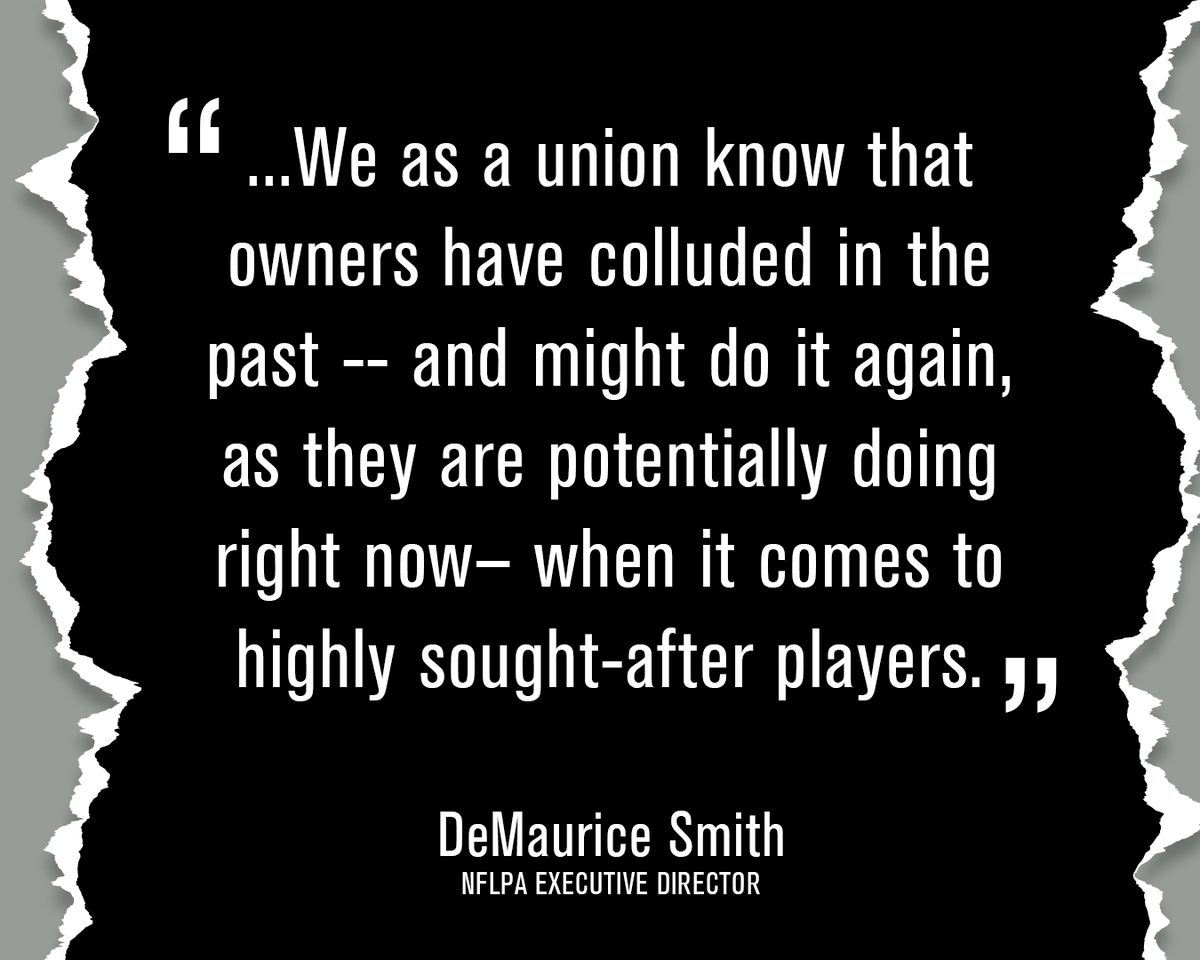
The free agency period is a time when our union and its members can see how far we've come, while also understanding what's still at stake when it comes to player empowerment. Here's why that's particularly true this year.
nflpa.com/posts/nfl-free…