
Zcheatham
296 posts

Zcheatham
@One_boxxing
Founder @ Exergy Fusion
San Francisco, CA Katılım Mart 2024
230 Takip Edilen39 Takipçiler

Our first pilot deployment is in Antofagasta, Chile, with a partner that holds 7500 acres of underexplored, prime copper land. Not a bad start.
English
@josiezayner Agreed and companies have sown the public consciousness with it in a wildly irresponsible manner.

English

I feel like AI psychosis is kind of on the level of covid psychosis at this point
English
@hopes_revenge I dare you to say that to his face. Do you see how much weight he has on that bar?
English


Swallow = Gradually dominate every physical realm & endeavor.
Industry will belong to the nuclear powers. Transport will belong to the nuclear powers. Space will belong to the nuclear powers. Even computation is an irreducibly physical proccess which will belong to those with energy.
English


How many technologies are stuck in a local optima?
Big loudspeakers basically peaked in the 1970s.
Obviously we’ve gotten somewhat better, but it’s a lot closer to: “a couple % more accurate” than “the average person immediately notices the +50-year technological progress”
Miniaturization has improved a lot, so has digital signal processing, amplification. But take a high end setup from 50 years ago, sit in the sweet spot at the same volume…it won’t feel radically different.
I’m trying to think of other fields where the underlying principles were so mature that half a century of progress in materials/software/electronics is underwhelming.
Camera Lenses seem like a good candidate. Non-electronic instruments is another; it’s not like cellos have gotten that much better in the last ~300 years.

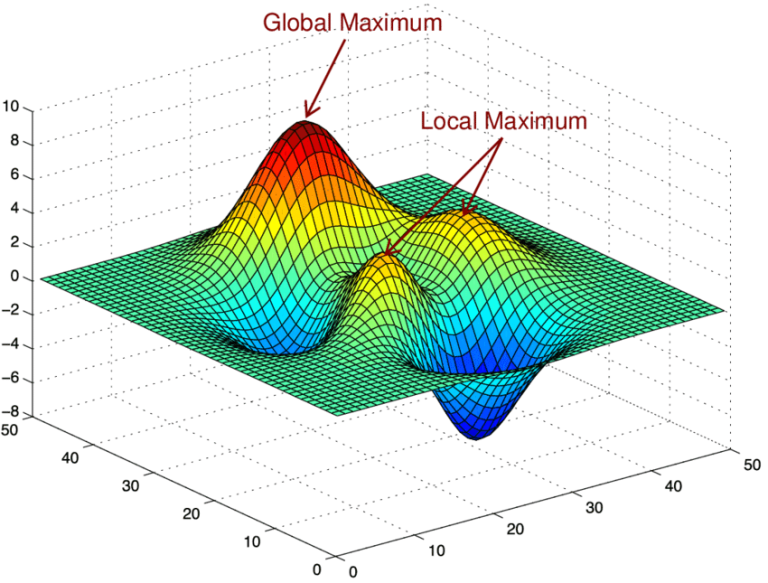
English
Yeah thorium is essentially just a way to turn a 4x more abundant metal into more uranium (common th232 + a neutron makes u-233 which is for all commerical purposes interchangable with u235 or pu-239).
Thing is, we already have HUGE amounts of uranium if you account for seawater reserves.
The weapons proliferation resistance arguments are weak but not entirely untrue. Pure Economic arguments for thorium fuel cycles are non existant, maybe if you want demand domestic fuel production and your country is a huge thorium producer like india.
English

@Egregius4 @One_boxxing @lauriewired I thought about the throium cycle too. I think it depends on your perspective. Nobody is building those, commercially, either. So I guess you could argue irrelevance.
English
@seba1337 @lauriewired You may be right. In which case china + other hardcore nations will swallow the earth in time.
English
@One_boxxing @lauriewired Once regulation will find out, that fusion is also radioactive, it will suffer the same fate as fission.
English
en.wikipedia.org/wiki/Project_P…
I am really saying two things.
1. There are suprisingly few truly new possibillities for fission. We have tried almost everything under the sun in labs. I have been a fission fan since i was a boy and i think the world should be using it more.
2. What little there is in fission that is truly new from a physics perspective (aka weird fission fuels like californium that could allow for insanely small / high performance cores) tends not to be economical.
The low hanging fruit has been eaten, there is only so much that can be done with uranium and its radiation hazard constraints. 99 percent of what the material is good for in the commerical market is just sitting in a big pile acting as a steam source. The bigger the pile the cheaper due to simple scaling rules governing construction / basic thermodynamic reasons. Like, there are untapped markets for district heating, large merchant vessels, trains, industrial heat etc but there is nothing like what fusion would allow.
English
@One_boxxing @lauriewired It's a better argument if people are still building a lot of them. If they ever mass produce the miniaturizes ones, I'd argue that's a leap due to utility.
English
@seba1337 @lauriewired Agree for mcf, disagree for high gain icf.
English
@One_boxxing @lauriewired A fusion reactor is much more expensive than a fission one.
English
Build costs are more expensive then ever.
Fuel effeciency does not matter uranium is basically free relative to the energy it contains vs hydrocarbons. Fast / breeder reactors are literally 1940s tech.
Fission is just SIMPLE, there is very little to improve. It can of course get 1-2 OOM cheaper (personally i bet on roughly 1 cent per kwh) with mass construction but there are no great scientific discoveries still possibile with fission.
English

@One_boxxing @lauriewired nuke cost is mostly driven by capital cost. fuel efficiency has gone through the roof compared to 60s so has safety
English
@seba1337 @lauriewired This will be more expensive then lwr for spinning turbines.
English
@One_boxxing @lauriewired en.wikipedia.org/wiki/HTR-PM this one was invented in the 60s but didn't work until a few years ago.
English
@_itmo_ @lauriewired Safety is a vaguepost. Name a single meaningful effeciency step change? Cost hasnt dropped since the late 60s.
English
@One_boxxing @lauriewired fission has done a lot of efficiency and safety improvements
English
@josiezayner I just try to remember who / what i am loyal to. Giving in to crazy is a luxury well meaning people cannot afford.
English
I hope your cognitive security is good because even the smartest people I know got some form of psychosis
English

The only people doing real social science and anthropology have been internet weirdos for at least 20 years. A lot of real scientists of biology too, doing self-experimentation. Unfortunately not as many chemists and physicists with breakthroughs to brag about.
El Hamsterrifico@Hamsterpilled_
Unironically, incels’ unhinged, precise observations and insights have sparked a great deal of debate among leading scholars in the scientific community.
English
@DeltaClimbs MAD is real and you lack respect for the power of physics vs compared to your fragile body. Nobody would survive actual nuclear war.
English

Funny this blew up.
After reading 4-5 books on nuclear strategy, half while standing around at bars, semi-antisocially, I can tell you that "lesson 1" of nuclear strategy is that MAD is a silly meme that caught on with the masses, but has limited correspondence to reality :)
Delta, Dirac@DeltaClimbs
"Drones bring the logic of mutually assured destruction down to the individual level"
English

>Substantially more efficient computing will likely consist of something other transistors made from something other than silicon and made with something other than photolithography.
As an outsider my bet is on photonics or maybe massively parallel carbon chemputation. Whats your bet as somebody who is actually in the arena?
English

Another layer to elaborate on this: the brain seems to operate relatively close to Landauer's Limit. This is the hard thermodynamic limit on converting information into waste heat. Silicon is still a few OOMs away.
A few points regarding Landauer's Principle and computers that people often miss:
1. While you can bypass this limit via Reversible Computing, doing so ties you to the constraints of logical and physical reversibility. A GPU or TPU gives a speedup over a CPU, but there's a degree of flexibility that a CPU offers that more efficient chips don't. Same thing here. Reversible RAM is possible, but hard. Reversible I/O is an oxymoron, and is fundamentally impossible. So you can make your computer arbitrarily low-power, but streaming data in and out has a cost that you have limited ability to work around.
2. Learning algorithms, when you work through the I/O problem and some simple matters of information theory, is fundamentally very irreversible. Where reversibility works well is in cases where you do a massive amount of compute on a relatively small amount of data in simple data structures.
3. Landauer's Principle is temperature-dependent. Lower the background temperature and converting waste data to waste heat gets cheaper. Cooling costs can easily overwhelm any savings here, so ultra-efficient computers would probably have to move to the Kuiper belt where things are naturally extremely cold. Going below the CMB temperature (2.7K, 100x efficiency boost) might not be practical. Anything closer to the sun will have easier access to power, but far higher power requirements.
4. If you study thermodynamically reversible systems in physics, a common pattern is that they get more efficient at slower speeds. We could certainly see a scenario where we built ultra-efficient reversible computers, but they operate at very low clock speeds. Imagine a computer a trillion times more efficient than the brain, but a clock cycle takes an hour and the workload you want to run will take a decade to complete.
~~~~
With all of this said, the past ten years of the semiconductor industry is just getting pathetic and sad. Moore's Law is very dead. A transistor node upgrade that used to give us a 200% improvement now gives us a 20-30% improvement, while costs have risen dramatically. Anyone telling you that Moore's Law is going to keep chugging along and giving us exponentially faster chips has had their head in the sand for at least a decade. The nanometer numbers are nonsense; "10nm" was actually 54nm, and "2nm" is actually 42nm. The scaling is basically dead now.
Substantially more efficient computing will likely consist of something other transistors made from something other than silicon and made with something other than photolithography.
corsaren@corsaren
There's a non-zero chance that the human brain just turns out to be the most pound-for-pound, watt-for-watt efficient intelligence engine ever. Sure, we'll inevitably create "smarter" machines, but silica may simply never achieve strict dominance.
English
Zcheatham retweetledi



the question you need to be asking is “what delicious ice cream is almost nobody eating”
Cat McGee@catmcgee
peter thiel spotted eating ice cream in buenos aires
English