
Onku
509 posts


Onku
@OnkuOh
Deficient Moral Cause Affirmer | Reformed Catholike | Romans 7:24-25 May He, who is the Way and the Truth, lead us into all Truth.
Katılım Aralık 2023
217 Takip Edilen335 Takipçiler
"The second is Saul's repentance (1 Samuel 15:24). This repentance was as fair and as full in outward expression as David's to Nathan (2 Samuel 12:13). But yet Saul's repentance was not unto life; it failed in four things:
First, his confession was without sorrow. He acknowledged his sin, but we read not that his heart smote him for his sin, or that his heart was broken for his sin, as David's was.
Secondly, Saul's confession was not free, but forced from him by Samuel with the dint of argument. But David's heart smote him for numbering the people, and he confessed the sin before God smote his people with the plague (2 Samuel 24:10).
Thirdly, Saul's confession was by way of diminution. He labored to lessen his sin and to put the fault upon the people (1 Samuel 15:21, 24). But true confession of sin is with the aggravation of the sins we confess. Thus did David (2 Samuel 24:10, 17), and thus did Daniel and Ezra (Daniel 9, Ezra 9).
Fourthly, Saul's confession was mingled with pride (1 Samuel 15:30). He desired honor with the people, though he had no respect from God nor from Samuel. True confession is an humble confession (Ezra 9:6).
The third is Ahab's repentance. His repentance was so great and so remarkable that God bade Elijah take notice of it (1 Kings 21:27, 29). His repentance is expressed in four particulars: he rent his clothes, put on sackcloth, fasted, lay in sackcloth, and went softly. But yet it was not a repentance unto life; it failed in three particulars. First, it was but an outward repentance. All the forenamed expressions were outward; he rent his garments, but his heart was not rent. And therefore God rewarded him only with an outward reward (1 Kings 21:29). Ahab was like a ripe plum that is soft without, but has a hard stone within. Secondly, it was a worldly and carnal repentance, for fear of the loss of his kingdom, and for fear of the dogs that Elijah threatened should lick up his blood. Thirdly, it was a repentance for sin, but not from sin. You shall read in Scripture not only of a repentance for sin (2 Corinthians 12:21, Revelation 9:20), but also of a repentance from sin (Acts 8:22), and "repentance from dead works" (Hebrews 6:1). Now Ahab did not repent from his sin, for in the next chapter he is as bad as ever he was.
The fourth is the Israelites' repentance. You shall read often of their repentance (1 Samuel 7:6; Judges 2:1-3; Judges 10:10). But their repentance was not unto life; it failed especially in two particulars. First, it was only and merely for fear of the Lord; it was repentance only when they were in distress, as appears often in the book of the Judges and also in Psalm 78:34. Secondly, it lasted only as long as the rod lasted; when the affliction was past, they returned to their sins again (Psalm 78:36-37; Judges 4:1; Judges 6:1). They were just like iron, which while it is in the fire is soft and malleable to anything, but when it is taken out of the fire, grows presently hard again; or like water, that while it is upon the fire is very hot, but when taken off, presently grows cold. And this, I fear, is all the repentance that many have in these days. Some are so bad as not to repent at all, even in these killing days; but they that do repent, I fear it is only for fear of the rod, and it will last no longer than the rod lasts. The Lord give us hearts to search our hearts whether it be not so.
The fifth is the repentance of Judas. The text says he repented, confessed his sin, and made satisfaction (Matthew 27:3-4). He also justified Christ's innocency and took shame to himself in going to the high priests to confess his sins. But yet his repentance was not unto life, though there be many in the world that pretend to a right repentance who cannot plead so much to justify their repentance as Judas can. It failed in diverse particulars. First, he sorrowed for what he had done, but he was not reformed from what he had done, for he that murdered Christ before, murdered himself presently after. It was no life-reforming sorrow. Secondly, Judas repented not out of hatred of the sin that he had committed, but only to quiet his conscience; he felt a hell in his conscience, and to quiet that, he repented. Thirdly, this repentance was wholly legal, only for fear of hell, and it was wholly without hope of mercy. It was a desperate repentance, and it drew him not to Christ, but to the gallows. True repentance is out of love to God, and it is always mixed with hope (Ezra 10:2).
The sixth is the heathen man's repentance. There is in a heathen man a natural conscience, and when he sins against the light of nature, this natural conscience will accuse and condemn him, and this oftentimes worketh a natural and moral repentance. [...] This I relate to the shame of thousands of Christians. But yet this was not a repentance unto life. For here, nature reforms nature; refined nature reforms nature abominably profaned; sober Alexander reforms drunken Alexander. Here is no turning to God, no eye to God's glory, no sorrow for displeasing God. It is a repentance upon natural and moral grounds, which is not a repentance unto heaven. Thus, many repent of their gaming, and of their drinking and whoring, because it destroys their estate, their bodies, or their good names. This is a natural repentance upon natural grounds, but not a repentance unto life.
Thus you see what that repentance is which is not unto life. It is our duty to examine whether we exceed these six sorts. There are many that are cried up for great professors that come short of them. And it must needs be a miserable thing to come short of those that come short of heaven. [...] Our confession of sins must be with shame and confusion of face, with heart-breaking sorrow; it must be free and voluntary, not forced; it must be an humble and self-abasing confession. Our repentance must not only be outward as Ahab's was, but inward also; it must be a rending of the heart, a pricking at the heart. Sin must not only be oculi dolium (grief of the eye) but it must be cordolium (grief of the heart). Our repentance must not only be for sin, but from sin. We must not repent for fear of the rod only, as the Israelites did; for this is to repent out of self-love, and not out of love to God. This repentance may be in a man that hath no grace. This is to fear hell, not sin. Neither must our repentance vanish as the morning dew. We must not return to our vomit after the affliction is over. This is to act as a dog, not as a Christian. This will bring utter desolation (Ezra 9:13). This is to mock God who will not be mocked, or rather it is to mock ourselves into hell. Our repentance must not be only to quiet conscience, to escape hell, as Judas's was, but it must be a filial evangelical repentance, arising out of love to God whom we have offended, and out of hatred of sin, and it must always be mingled with hope of mercy. Our repentance must arise not only from natural and moral, but from supernatural and theological grounds and principles.
Now I come to show more particularly what is that repentance which is a repentance unto life; a repentance never to be repented of. For the brief answer to this, you must know that true repentance is a medicine made of Christ's blood that must have five ingredients in it. And if any one of these ingredients be wanting, the medicine will not avail us unto salvation. It is a golden chain that must have five links, and if one link be wanting, the chain is of little use.
The five links of this golden chain are:
First, godly sorrow for sin.
Secondly, a hearty confession of sin.
Thirdly, a sincere endeavor to forsake all sin.
Fourthly, satisfaction for sin.
Fifthly, a turning to God by new obedience.
First, there is godly sorrow for sin. God hath tied sin and sorrow together with adamantine chains; and a woman may as soon look to be delivered of a child in a dream, as for a man to repent without sorrow. Sorrow indeed is the daughter of sin, but God hath made the daughter to be a means to destroy the mother. You must not look to fly to heaven with pleasant wings; you must not look to dance with the devil all day, and sup with Christ at night; to live all your lives long in Delilah's lap, and then to go to Abraham's bosom when you die. Wheresoever there is true repentance there will be sorrow for sin. But this sorrow, it must be a sorrow caused for God's sake; a sorrow more for the offense done against God than for the punishment due unto us. It must be a repentance towards God, as it is called in Acts 20:21, because it eyes God and his offense more than the punishment. It is called a lamenting after the Lord (1 Samuel 7:2). It is a mourning for Christ whom we have pierced by our sins (Zechariah 12:10). Not so much a mourning for the misery we have brought upon ourselves by our sins, as for the dishonor we have brought to Christ. It is a mourning for sin as sin, as it is offensivum Dei, aversivum a Deo, as it is an act of disobedience, an act of unkindness, as it is an act polluting and defiling the soul, making the soul unlike God and like the devil; an act that will bring the soul to the devil. True sorrow must not be only attrition but contrition, which is the grinding of sin to powder. A rock may be broken in pieces, and yet be hard still. True sorrow is when our rocky hearts are ground to powder, and made soft and pliable to do and suffer whatsoever God shall require at our hands. It is (as one saith) annihilatio voluntatis, a swallowing up of our own wills in God's will.
Secondly, there will be also true confession of sin. Even as a stomach when it is surcharged with too great fullness is never quiet till eased by vomit; so if the conscience be overladen and brim-full of sorrow for sin, it will never be at ease till sin be vomited up by confession. Sin in the conscience is as a thorn in a man's foot, as needles in the flesh, or as poisonous matter in a sore, which lieth burning and aching with pain. In such cases, there is no rest unless the sores be lanced and the poison expelled. Confessio peccati est medicina peccati (saith Nazianzen); it is vomitus sordium animae. David did but purpose to confess his sin, and God forgave him (Psalm 32:5). He that hideth his sins shall not prosper, but he that confesseth and forsaketh them shall have mercy (Proverbs 28:13). Judah (which signifieth Confession) got the kingdom from Reuben. True confession of sin is the way to the kingdom of heaven. In confession we accuse ourselves, and we judge ourselves. By accusing ourselves we put the devil out of office. And by judging ourselves worthy of damnation, we put God out of office; for if we judge ourselves, we shall not be judged of the Lord. This is the second link of the chain. But here you must remember that this confession must not be like unto Saul's confession, but like the confession of Ezra, Daniel, and David.
The third link of the golden chain of repentance is an inward sincere endeavor to forsake all sin everlastingly. All poenitentia is in vain without resipiscentia. It is to no purpose to repent for your sins unless you repent from your sins; for a man to say he repents of sin, and yet doth not forsake it, he speaks a contradiction. As for a man to say that he is changed from a fool to a wise man, and yet remains a fool, he saith that which is a contradiction; so for a man to say he repents of his swearing, and yet to swear; to say he is turned from his adultery, and yet remains an adulterer, he saith a contradiction. As Tertullian saith excellently, He that repents with a contradiction, God will pardon him with a contradiction: thou repentest, and yet continuest in thy sins; God will pardon thee, and yet send thee to hell; there is a pardon with a contradiction. True repentance must be joined with an endeavor to forsake sin. But then we must remember that this forsaking of sin must have four properties:
First, it must be inward. We must put away evil from before God's eyes (Isaiah 1:16). We must do that which is good in God's eyes, as the good kings of Israel are said to do. A man may go to hell for the inward desire to sin, though he should never commit any outward act of sin. It is not enough to restrain sin, but we must endeavor to mortify it. A lion chained is a lion still.
Secondly, it must also be sincere. Two things make a good Christian: good actions and good aims. Though a good aim doth not make a bad action good (as we see in the case of Uzzah), yet a bad aim makes a good action bad, as we see in the case of Jehu. We must forsake sin not for worldly respects or self-ends, but we must say with Joseph, How can I commit this thing and sin against my God?. Thirdly, it must be universal. We must make conscience to abstain from every sin, as well as from any sin. We read (Judges 8:30-31) that Gideon had seventy sons and one bastard; and that bastard was afterward the means to kill all his seventy sons. Give me leave to apply this in a spiritual sense. Though thou hast seventy good duties, and yet if thou hast one bastardly sin which thou delightest in, this sin will take away the benefit and comfort of all thy good duties.
Fourthly, it must be everlasting. It is not enough to fall out with sin, and afterwards to be friends again; but we must so hate it as never to be reconciled. The prodigal child never returned to his prodigality; nor David to his adultery.
The fourth link of the golden chain of repentance is satisfaction for sin. This is a part of repentance much abused by the Papists, and seldom spoken of by our Divines; but of great use if rightly understood. The Papists teach that Christ by His death satisfied for the guilt of sin, and for the eternal punishment; but as for the temporal punishment of sin, Christ left that to us to satisfy for by deeds of penance here, and by Purgatory hereafter. But this doctrine is false and heretical. First, it is a derogation to the full satisfaction of Jesus Christ; He is a perfect Savior. Secondly, this makes every man in part his own savior. Thirdly, this takes away the freeness of forgiveness of sins. Fourthly, this takes away all the comfort of afflictions. For if afflictions be satisfactions to God's vengeance, and part of the temporal curse due to sin, where is the comfort of affliction?. Fifthly, what can a poor creature contribute to satisfy an infinite God?. All satisfaction must be de propriis, of something that is our own. And what can we give to God to satisfy Him, but that which He hath first given to us?. Besides, satisfaction is a just proportionable recompense for an injury: and what proportion between the action of a finite creature and the wrath of an infinite God?. And therefore satisfaction in a Popish sense is abominable; but in a Catholic Orthodox sense, it is a point of great consequence. A true penitent sinner will make satisfaction to God, to the Church, to his brother, and to himself.
First, he will make satisfaction to God. Not in a Popish sense, not by tendering up his repentance as a recompensation to the injury offered to the great God by his sin; but by presenting Christ and his satisfaction for an atonement. And therefore the Jews in the Old Law, when they had committed a sin, they were to bring a sacrifice, and first to confess their sins over the sacrifice, and then to offer up the sacrifice for a propitiation. This sacrifice was a type of Christ. He that will procure pardon from God of sin must not only mourn for it, confess it, and turn from it; this is not sufficient to procure pardon because our repentance at the best is imperfect, and we must repent for the defects that cleave to our repentance. But if we would procure pardon, we must tender up Jesus Christ by faith to make up the breach that sin hath made. We must repent, but not trust to our repentance. He that trusteth to his repentance makes an idol of it, and makes a Christ of it. We must not bottom ourselves upon repentance, but upon Christ only.
Secondly, he will make satisfaction to God's Church. If he hath offended it by any scandalous sin, he will take shame to himself in a public way of reparation. For this purpose did David write his penitential Psalms, which are Psalms of David's satisfaction to God's Church for the offense he had given to it. Thus Solomon wrote his Book of Ecclesiastes to make recompensation to the Church of God, which he had wronged by his apostasy. And I trust (through God's mercy) to see this discipline put in execution in England.
Thirdly, he will make satisfaction to his brother, to his body, and to his soul.
First, to his body. If thou hast wronged thy brother in his good name, which is more precious to him than his life, God will not accept of thy repentance unless thou endeavorest to make up the injury thou hast done to his good name. Many go to hell for want of practicing this. This is no easy duty. For a man's good name is like a white piece of paper, which when once blotted, can hardly be made clean again without some remainder of defilement. So again, if thou hast wronged thy brother in his goods, God will not accept of thy repentance unless thou endeavorest with Zacchaeus (according to thy ability) to make restitution. This is a lesson for all men, but especially for soldiers to lay to heart.
Secondly, he will make satisfaction to his soul. If thou hast been a moral cause to make thy brother sin, it is not enough for thee alone to repent, but thou must endeavor not only out of charity, but out of justice, to bring thy brother to repentance also. If thou hast persuaded a woman to lewdness, a man to drunkenness, it is thy duty to make them soul-restitution: a doctrine little preached, and less practiced; but of absolute necessity, in regard of thy endeavor at least to do it. For want of this soul-satisfaction, many souls miscarry.
Fourthly, he will make satisfaction to himself. If he hath injured his body by intemperate eating and drinking, and his soul by taking too much liberty in things indifferent, he will take a holy revenge upon himself; of which you shall read in 2 Corinthians 7:11. Holy revenge is a necessary companion of true repentance. This holy revenge consisteth in fasting, and in abstaining from lawful delights when they prove soul-snares. If thou hast sinned by frequenting such and such company, thou must be revenged of thyself by wholly abstaining from their company. If thou hast sinned by the abuse of lawful games, thou must wholly renounce them. If by immoderate love of the world, thou must be revenged of thyself by a greater measure of charity to the poor. Thus Saint Paul did beat down his body, and brought it into subjection (1 Corinthians 9:27). When Hilarion felt his lusts boiling, and his body prone to filthiness, he said, Ego faciam, aselle, ut non calcitres, I will keep this ass from kicking, by abstinence. This part of repentance is little regarded nowadays though there cannot be true repentance without it. A true penitent will be revenged of his sins, as Cranmer was of his right hand, which he first burnt in the fire (when he was at the stake) because with that he had subscribed to Popery. Thus the Ephesian converts (Acts 19:19) burnt their books before all men: and the women that had prided themselves in their looking-glasses, brought them to the building of the Tabernacle (Exodus 38:8). Thus ought every true penitent to do.
The fifth and last link of the golden chain of repentance is turning unto God by newness of life. Man by sin turneth his back upon God, and wandereth from God as the prodigal child from his father. Now repentance is a returning back unto God. And therefore in the Old Testament, it is expressed under this name: it is called a turning unto God. It is not enough to cease from evil, but we must also do good. As a man cannot go with one leg, nor a bird fly with one wing; no more can any man mount up to heaven by forsaking of sin, if he doth not also labor to turn to God. And this is the consummation of repentance, and the happiness of it. Whereas disobedience estrangeth us from God, who is our light and life, in whose presence is fullness of joy, repentance brings us back again into the love, favor, and friendship of God. And therefore Luther saith well, That optima & optissima poenitentia est nova vita: which saying, though condemned by Pope Leo the Tenth, yet certainly it is a most excellent saying. Repentance without reformation is a deformation; it is a foundation without a building. All sorrow, confession, and forsaking of sin without this turning unto God by holiness of life, is fruitless and unprofitable.
And thus you have the golden chain with all the five links. Now what remains, but:
First, that all you that pretend to a right repentance, be persuaded to examine yourselves whether you have this medicine with the five ingredients, this golden chain with the five links. There are some that will confess their sins, but it is with dry eyes and hard hearts. Others that will mourn for their sins, but not forsake them. Others will forsake some sins, but not all. Some forsake sin outwardly but not inwardly: some forsake sin, but do not turn to God: some forsake sin, but do not make restitution. If a child be born without his legs, or arms, or eyes, we say it is a monster, a deformed child: such a monstrous kind of repentance most people have. Some have a leg of repentance, some have an arm of repentance, but few have the whole child of repentance. Herod had a leg of repentance, he reformed in many things; but his repentance was but a lame repentance. Balaam had a kind of repentance, and so had Jehu; but it was but a monster, not the perfect child of repentance. Examine seriously and let conscience speak: Hast thou the child of repentance formed in thee with every limb in truth, though not in perfection?. Say not thou repentest aright unless thou hast all the links of this golden chain.
Secondly, labor to put on this golden chain this day. It will be an excellent ornament to Lords, Ladies, and Gentlemen. The Lord give you hearts to do it. Repentance is Christ's gift, He is at God's right hand to give it. Sue to Him for it, and He will bestow it upon you. And be sure to remember this truth of God: If any one link of this chain be wanting thou canst not be saved. For I am not now preaching of points in difference between us and the Papists, or between Protestant and Protestant; but of those things which all will confess to be true. If any one of these ingredients be out of the medicine, this medicine of repentance will do thee no good. And therefore labor to thy utmost endeavor by prayer and all other means to obtain all five this day. I say, this day, for this day God calls, and you call; God calls for repentance, and for present repentance, and for a complete repentance; and you call for mercy for your Armies; for present mercy, and for a complete mercy. Would you have God hear you, and will not you hear God?. Consider whether this be equal: Would you have God give you a good return of your prayers, and will not you give God a good return of His Word?. The occasion of our meeting this day, is to pray to God, that God would be pleased to own our forces, for we know not how soon they may be engaged; and that God would be pleased to fight our battles, and not to suffer us to miscarry as we have done lately. Now do you think God will regard your prayers this day, if you do not repent this day?. It is not praying, but it is the penitent prayer that prevails with God. It is in vain to recruit your armies, if you recruit your sins: God looks for penitent prayers, humble prayers. Let the Parliament of England never forget the 7th of Joshua 10-12. Get thee up, saith God to Joshua, why liest thou on the ground? There is a sin committed, and I will not hear thy prayers till the sin be removed. Let the Parliament of England remember the battles of the children of Israel against the Benjamites; though their cause was never so good, yet notwithstanding because they were idolaters, and because they did not manage their cause well, therefore God suffered them twice to miscarry. Let the Parliament of England never forget the story of the people of Israel (1 Samuel 4) that went out and carried the Ark of God with them, and went out to fight against the Philistines who were the enemies of God, and yet they miscarried because of their iniquities. And let the Parliament of England never forget the 23rd of Deuteronomy 9: When your hosts go forth to fight against your enemies, then keep yourselves from every evil way; then, then especially. A repenting Parliament; a repenting Army; and a repenting people; what miracles might not they do?. The Lord make the Army, the Parliament, and all the people such. Amen, Amen."
— Edmund Calamy the Elder, Englands antidote against the plague of civill warre, pp. 34-43.

English
"A Desire after Happiness is so engraven in the Nature of Man, that it was never put to the debate, whether he would be happy or no? This needs no choice; all are agreed in this as the end of a rational Agent: And therefore at last Felicity was accounted a Goddess among the Romans, and St. Augustine tells us, that Lucullus built her a Temple; only he wonders that the Romans that were worshippers of so many God's, had not given Divine Honor to Felicity sooner; which alone would have sufficed instead of all the rest of their Deities, which he reckons up, and saith at last of Numa, that having chosen so many God's and Goddesses, 'tis strange he neglected this; [An eam forte in tanta turbâ videre non potuit?] but though they at last had got a notion of Felicity, yet having no true Piety, that veneration ended in the greatest misery and infelicity, nothing but Wars ensued. Vid. Aug. de civit. Dei, lib 4. cap. 23.
[...]
CHAP. II. Distinctions about meetness for Heaven: What habitual meetness is: Both relative and real.
1. For a more methodical proceeding in explaining this Subject, I shall premise some distinctions, by which you may understand what that meetness for Heaven is, that I mean.
1. There is an [ aptitudo Legalis & Evangelica, ] a Legal and Evangelical meetness. Since the fall of Man, no mere Man can fulfil all Righteousness, or by his own power attain to anything pleasing to God; so a legal meetness is not attainable; We have all sinned and come short of the glory of God: See Rom. 3.23, 24. ch. 8.2, 3, 8. Gal. 3.10.13.
2 Dist. There is an [ aptitudo operum & personae, i. e] meetness of works, and of the person: This explains the former in the Covenant of Works, the person was accepted for the works sake; but in the Covenant of Grace the work is accepted for the persons sake: If the person be accepted in the beloved, Eph. 1.6. God owns both person and offering, as he did Abel, Heb. 11.4, 6. But what proportion can the best Services of the best Men bear to this Eternal Reward? Luke 17.10. Nor can Human Sufferings purchase this Glory to be revealed. Rom. 8.18.
3 Dist. There is [ aptitudo perfecta & progressiva, ] a perfect, complete meetness for Heaven: This is compatible only to the Spirits of just men made perfect, Heb. 12.23. But who can say I have made my heart clean; I am pure from my sin. Prov. 20.9. Alas, we know but in part, and so love but in part. 1 Cor. 13.12. Even Paul that was perfect in point of sincerity, yet was not already perfect in point of degree, but was pressing forward, Phil. 3.12-15. Christians here below are but [ in via non in patria ] in the road to perfection, singing the song of degrees, and not in the height of Zion. Sincerity is Gospel perfection, and the Christians preparation, together with a progressive motion.
4 Dist. There is [ aptitudo habitualis & actualis ] an habitual and an actual meetness for Heaven; or which may be thus distinguished; there is a [ jus haereditarium, and a jus aptitudinale ] an hereditary right, and an aptitude or actual fitness for this Inheritance: My Text includes both, and I shall open both; for they are both necessary in their kind; and in this sense God's Children are said to be counted worthy of Kingdom of God, 2 Thess. 1.5. and saith Christ, They shall walk with me in white, for they are worthy, Rev. 3.4. And therefore are we exhorted to walk worthy of God, who hath called us unto his Kingdom and Glory, 1 Th. 2.12. It imports a conveniency, suitableness, answerableness in a limited Gospel-sense; like Children of such a Father, as Heirs of such an Inheritance, as Candidates for such an Office and Honor: There is a τὸ πρέπον seemliness appertaining to every Calling; Princes, Magistrates, Ministers, must have a decency and suitableness to their Profession: So here.
Well then, I shall chiefly speak to this twofold meetness. 1. Habitual meetness, which is in opposition to perfect unmeetness, i. e. a state of Nature, Unregeneracy. 2. An actual meetness, which is contra-distinct from imperfect meetness; and both are necessary in their kind.
Quest. 1. What is that habitual meetness for the Inheritance of the Saints in Light, without which Men can never attain to it, or have eternal possession of it?
Answ. This habitual meetness consists in a twofold change;
1.Relative.
2.Real.
1. It consists in a Relative change: This also is twofold, viz.
(1.) Justification.
(2.) Adoption.
(1.) The poor sinner is standing at God's Bar as a guilty Malefactor, under the dreadful Sentence of a just Condemnation, for all the World is become guilty, ὑπόδικος subject to judgment, before God, Rom. 3.19. Not a Son of Adam can plead innocence. Its well if we be as the blushing Rose, the Lily-whiteness is lost. He that believeth not is condemned already, John 3.18. and the wrath of God abides on him, verse 36. It was on him when he was born; and it abides still on him, if not taken off him by Justification: Who can think the Prince will promote him to Honor that is under an attainder for Treason? He must be cleared of that charge, or he is fitter for Execution then Promotion. Pardon must precede preferment. You must be first in Christ Jesus, and then there is no condemnation to you, Rom. 8.1. You must be received into Favor before you be promoted to Honor. The sinner must be justified before he can be glorified. Rom. 8.30. Never think of ascending to Heavenly Glory under the load of guilt: That guilt will shut Heavens gates against thee: The guilt of one sin will press a Soul, (yea, millions of Souls) to Hell; for the wages of sin is death. Rom. 6.23. O therefore, what need is there of Justification as the introduction to Salvation! You must be justified by his grace, if ever you be made heirs according to the hope of Eternal Life, Tit. 3.7. Never think your sins will be blotted out in the day of refreshing, except you repent here and be converted: Acts 3.19. You must be justified by faith that you may have peace with God here, and so rejoice in hope of the glory of God: Rom. 5.1, 2. You cannot think to leap from the Bar to the Throne: But must be cleared by order of Justice, through Christ's satisfaction in the Court of God. This, this is absolutely necessary to a meetness for this Heavenly Inheritance.
(2.) Adoption: This is another Relative change. Alas, by nature we have quite lost our Filiation, and so forfeited our Childs part of the Heavenly Inheritance: We are (exules a Regno) banished out of Paradise, and there are placed Cherubims, and a flaming Sword, which turns every way to keep the way of the Tree of Life: Gen. 3.24. Yea, we are voluntarily gone into a far Country, have wasted our substance, disowned our Fathers house, are feeding swinish Lusts, and feeding ourselves with poor husks of worldly things; and till we be adopted and admitted again into our Fathers house, we are not fit to eat the Children's Bread, or heir the Childs Inheritance: God himself hath contrived a way how to settle the best Inheritance on such as he finds strangers. Jer. 3.19. But I said, how shall I put thee among the Children, and give thee a pleasant land, a goodly heritage of the hosts of Nations? Then I said thou shalt call me, my Father, and shalt not turn away from me: Oh blessed contrivance! And will any think to cross God's contrivance! Shall Men's folly challenge infinite Wisdom! Is not the Heavenly Inheritance God's own to give? And doth not our Lord say, such honor shall be given to them for whom it is prepared of my Father. Matth. 20.23. Can you think to wrest Heaven out of God's hands whether he will or not? And must he falsify his word to gratify you? Will he set the Crown on Rebels heads? Or give this Inheritance of Saints to the Devils slaves? No, doubtless you must be adopted Sons, or no Lawful Heirs. Bastards heir no Land. Jephthahs Brethren thrust him out, saying, Thou shalt not inherit in our Fathers house, for thou art the Son of a strange Woman. Judge. 11.2. And what bold intruder art thou, that darest expect to claim such an Inheritance as Heaven without the relation of a Son? Adam its true, was God's Son by Creation; but alas, he and we in him have quite lost that sweet Relation; and we must either be restored in Christ, God's well-beloved Son, or we are like to be banished forever: God sent his own Son, —that through him we might receive the adoption of Sons: Gal. 4.5, 6. And have you the Spirit of his Son in your hearts to cry Abba Father? which elsewhere is called the spirit of Adoption. Rom. 8.15. Tell me not that all Men are the Sons of God: So were the Devils: God will make you know that this is a peculiar privilege, known to very few, enjoyed by fewer; but it is the fruit of singular Love, and is attended with this unparalleled advantage of seeing God as he is; and a day is coming when these Sons and Heirs in disguise shall then be like their Father; 1 Joh. 3.1, 2. then Atheists that will not believe that there is any such difference among Men, and bold intruders, that dreamed of a right, without pretending or proving their Adoption, shall be utterly confounded.
2. But besides this Relative change, there is also a real change upon those Souls that God makes meet for Heaven, and this consists in
1. Conversion to God.
2. Covenanting with God.
1. Conversion to God: This is expressed in the words immediately following my Text, Ver. 13. Who hath delivered us from the power of darkness, and hath translated us into the Kingdom of his dear Son. This is a description of Conversion, and a preparation for Glory: Compare this with Acts 26.18. See there the privilege annexed: Observe it, Conversion makes Saints, and only Saints partake of this Inheritance: If all the Men on Earth, and Angels in Heaven, should join their Forces together, they could not save one unconverted Soul: Truth itself hath asserted it with a solemn asseveration, Matth. 18.3. Verily I say unto you, except ye be converted, and become as little Children, ye shall not enter into the Kingdom of Heaven: The like doth the same mouth assert with a fourfold asseveration; Joh. 3.3, 5. I wonder often how careless sinners ners that are conscious to themselves that never any such work passed on them, can eat and drink, or sleep quietly, and never so much as ask this question; Am I converted or am I not? If I be, when or how did my Soul pass through the pangs of the new birth? What tears, fears, what groans and agonies hath it cost me? What fruits hath it brought forth in me? Where's this new Creature, the Divine Nature, the Image and Seed of God working Heaven-wards? What stamp, what sheep-mark can I show, as the fruit of God's being at work on my Soul, and an earnest of this glorious Inheritance? But if there be no such change, (as I doubt there is not) how can I be quiet? Sure my pillow is soft, or my heart hard, and my Conscience seared, that hear or read my own doom in such a Scripture, from the mouth of the Judge himself, standing at Heaven-gates and shutting me out, as if he named me, saying, Be gone thou unconverted sinner; I know thee not; converting Grace never changed thy Heart or Life; though I often summoned thee, and knocked at thy door, yet thou hadst no heart or desire to turn from thy sinful ways, nor so much as fall down on thy knees, and ask this grace of Conversion of me, or use the means for it, or so much as examine whether thou hast it or no, but wentest on in a golden dream, and now I must tell thee roundly to thy cost, depart, oh be gone from my presence thou poor wretched unconverted sinner: This state, this place is for none but sincere Converts.
2. Covenanting with God: When the glorious day of our Lord's appearing shall spring, he calls forth his covenanted people to crown his gracious promises with complete performance. Psal. 50 5. Gather my Saints together, those that have made a covenant with me by sacrifice: q. d. I take little notice of common or outside Worshippers, they shall be set on my left hand; but there is amongst you some serious Souls that look beyond the Ordinance, I have observed them, they have solemnly devoted themselves to me, and accepted me in a Covenant-way: These, these are the persons, and these only, that I have taken for the lot of my inheritance, and for whom I have laid up a safe and satisfying inheritance: But to the uncovenanted soul, or hypocritical pretender to covenant, God will say, What hast thou to do to declare my statutes, or that thou shouldest take my covenant in thy mouth? Psal. 50.16. What ground hast thou to own me? Or to claim anything from me for this world or another. Man as a creature can have no intercourse with God, but in a Covenant-way; much less can a sinner expect any good from God, but by virtue of Covenant: But what canst thou say for this promised Inheritance, that hast nothing to do with the promises? For all the promises of God in Christ are yea and amen; 2 Cor. 1.20. But thou hast never spent one hour solemnly to review and renew thy Baptismal Covenant, and engage thy Soul to God; and since thou art an Alien from the Commonwealth of Israel, and a stranger from the Covenant of Promise, by consequence thou art without Christ, and without God in this world, and therefore without hope of a better state in the other world: Eph. 2.12. But strangers and foreigners are become fellow-citizens with the Saints of this new Jerusalem; ver. 19. How is that? Doubtless by taking this sacred Oath of Fealty and Allegiance to the King of Heaven: By Covenant you have a title to all the good things of Earth and Heaven. Sinner think of this, thou that lovest to be loose, and scornest the setters of this Holy League; thou dost in effect say, I will have none of God, Christ, Pardon, Heaven: If I must have them on no other terms, but under such bonds and obligations, let them take this Heavenly Inheritance for me: And dost thou think this golden chain of honor, worse then the Devils iron fetters of sin, and amazing reward of flames and torments? If you need not God and Heaven, be it known to you, God needs not you; but can strain for the revenue of Glory to his Justice in your necessary confusion, because you would nor voluntarily submit to his terms for so glorious an Inheritance."
— Oliver Heywood, Meetness for Heaven

English
"4. Lay up tears in God's bottle, prayers in God's book, comforts in others breasts, and promises in your own; I put all under one head, for brevity sake. 1. Lay up many tears in God's bottle, comfort is the portion of mourners, it is promised by God, purchased by Christ, applied by the spirit of comfort, & only suitable to weeping mourning souls, it is the usual constant design of God to comfort those that are cast down, to heal the broken in heart, to revive drooping souls, and contrite hearts; Do you mourn for your sins, and God will comfort you in your mourning, the sorrows of the Saints are like the pangs of a travelling Woman, that tend to and end in comfort, John 16.21. Repentance is the ready road to contentment: the same word in Hebrew, that signifieth first to repent, doth also denote comforting or ceasing from sorrow, because true comfort belongs only to the penitent: the Jews fable, that with such as weep in the night, the stars and planets weep, and if they let the tears fall down their cheeks, God is ready with his bottle to receive them, which he pours (say they) upon the Enemies Edicts to blot the writings that the Jews shall receive no hurt thereby: But sure I am, God is much affected with his Children's tears, and comes (as it were) with an Handkerchief to wipe away those tears, or rather (as the Scripture speaks) puts their tears into his bottle, and reserves them as a precious Liquor for their future comfort: shedding penitential tears is a spiritual seed-time, and they that sow in tears shall reap in joy; even sheaves of comfort are the harvest of this precious seed-plot: this briny water shall be turned into refreshing wine: according to the depth of your sorrow, will be the height of your comfort: not a tear shall be lost that's of the right stamp: every gracious groan is set before the Lord as delectable incense, and every drop distilled from a broken heart, shall in time multiply to a flood of joy: who was more dissolved into tears than holy David? and who had a heart more full of joy, or a tongue so full of the high praises of God, as that sweet Singer of Israel? O sirs, grieve much for sin, and you shall rejoice in, and for your grief: plenty of tears prepares for, and ushers in plenty of joy: But 2. Lay up many prayers in God's book, as well as tears in his bottle, be much in approaching to the Throne of Grace: the sighs of your spirits will be ecchoed with the sweet gusts of God's spirit: the spirit of grace will be a spirit of peace; as prayer goeth up, comfort comes down; God makes Children joyful in the duty of prayer, as well as in the house of prayer: for this (saith the Psalmist ) shall everyone that is godly pray unto thee,—surly then in the Floods of great Waters they shall not come nigh unto him, Psal. 32.6. Prayer reacheth to Heaven, and fetcheth heaven into the heart: prayer seeketh, and the soul by faith in prayer seeth God's face, which is a heart rejoicing sight: it scattereth fears, lighteneth the soul, and preventeth shame and sorrow: ask, saith Christ, and ye shall receive, that your joy may be full, Joh. 6.24. Therefore, Christians, pour out your heart to God, and he will pour in comfort to you: And then, 3dly. Comfort others, as you are able, empty yourselves of experiences, by communicating them to afflicted souls, and they shall recur and retreat upon you with double advantage: there is much pleasure in opening our hearts to Christian friends: when you say, come and I will show you what he hath done for my soul, God will do more for your souls: if you help others, God will help you: you little know how it may comfort you to impart comforts to others: Mr. Knox rose off from his sick and death-bed, and would needs go to the Pulpit, that he might impart to others his sweet Meditations on Christ's Resurrection, and the solacing consolation he felt in his soul: there's no envy in spiritual things, it's the property of a Child of God to long, that others might taste of that which his soul feels comfort in: and indeed, God makes the breasts of some, to be the storehouse of comfort for others, 2 Cor. 1.6. Whether we be comforted, it is for your consolation, and salvation: not only by way of sympathy and affection, but by way of intercourse and communication: Besides, the more you comfort others, the more you have to pity and comfort you, the law of gratitude will engage them, and the treasure you have laid up in them will dispose them to be helps to you in the day of your sadness. 4. Lastly, store up Scripture-cordials, Covenant-promises in your souls: Psal. 119.50. This is my comfort in affliction, thy word hath quickened me: this was David 's portion, heritage, and his Song in the house of his Pilgrimage; especially improve and apply Gospel-promises, these are (fasciae Christi) the swaddling-clothes of Christ, these are like Aqua vitae to the fainting soul: the Scripture is full of them, some have observed that the Covenant of grace is mentioned directly an hundred times, but by clear and necessary consequence a thousand times in the book of God: God hath laid in all these promises for our comfort, that we through patience and comfort of the Scriptures might have hope: to this very end is it, that God hath not only spoken but sworn, that we might have strong consolation, Heb. 6.18. Promises are the breasts of consolation, at which you may suck and be satisfied: promises are sacred Anchors, to fasten the soul upon the Rock of Ages, white sales for the blessed spirit to waft over souls by, to the haven of rest; they are Gospel-pailes, bowles and breasts to suckle and feed the Lord's Lambs, and rich Mines to make the Christian rich in grace, and rich in comfort: therefore let Christians always have these divine Antidotes at hand, for the help and support of their fainting souls: only look to your right to, and improvement of the promises: Divines observe a twofold right to promises: 1. An hereditary right, [ jus haereditarium ] as we are co-heirs with Christ, so an interest in, and union to Jesus Christ, gives us this right. 2. A right of aptitude, fitness, disposedness, [ jus aptitudinale ] and this is by having holy dispositions, Gospel-qualifications, and the required conditions of conditional promises; this is necessary as well as the other, look you after both, and then you shall have the comfort of the promises, and a sure foundation of lively hope."
— Oliver Heywood, Heart-Treasure, Chapter. XVI.

English
"Argument 8. The eighth argument is taken from the nature of saving grace: If saving grace be of a permanent nature and not subject to corruption, then the elect cannot fall from it totally and finally. But the antecedent is true; ergo, etc.
The truth of the antecedent appears, insomuch as it is called a "seed remaining" in those that are born of God (1 John 3:9), an "immortal seed" (1 Peter 1:23), which abides in us forever. Christ never dies in His people, no more than He doth (or can do) at the right hand of God (John 14:16); and the joy of it none can take from us (John 16:22). Grace never differs from itself (saith one), though a gracious man doth from himself; this fire burns always on God's altar (Leviticus 6:12). Corresponding with this is the Vestal fire of the poets, which the Vestal Virgins (lighted first from the sun) kept alive in its place night and day. And if at any time it be covered up under ashes, we are bid [ἀναζωπυρεῖν] to stir up the sparkles again (2 Timothy 1:6).
Gratia in Electorum Cordibus inextinguibilis manet, saith the Father. Habitus non amittitur, Actus intermittitur, Gradus autem remittitur, is the distinction in the Schools. The plenary habits of saving grace cannot be lost; the acts and operations of it may admit (though not an utter loss, yet) an intermission. As in sleep we lose not the faculty but the use of sense; and in drunkenness (or in some transporting passion) men lose not the faculty but the use of reason. Lastly, degrees and measures of grace (formerly attained to) may be lost, as Revelation 2:4 shows. [Non amisit ipsam Charitatem, sed Charitatis fervore aliquid remisit.] He had not lost the habit, or wholly the exercise of that grace, but only that vigor and heat that once appeared in him.
Argument 9. The ninth argument is taken from the type of a true Christian, to wit, the Israelite, that was not to alienate his inheritance in the Land of Promise (Leviticus 25:23-24). If this were so in the type, then must it hold true also in the antitype (Naboth is an example, 1 Kings 21:3), to wit, that a true Christian cannot alienate his inheritance in heaven.
Now the deeds concerning this inheritance are written, sealed, and possession is given accordingly both by way of seisin, in part given here in this life, and in part respited till hereafter (Jeremiah 32:40). ["I will put my fear in their hearts"]—there is possession of the state of grace. ["That they shall not depart from me"]—there is the respited estate of glory. And this state of reversion is put into Christ's hands for us as a feoffee in trust (2 Timothy 1:12). [παρακαταθήκην μου φυλάξαι]. He is able to keep the depositum (though we be not) against that day. We might forfeit all, as Adam did, and we in him; but Christ is not only our Goel, or near kinsman, to redeem our mortgaged heaven for us, but He is our feoffee in trust also, to keep heaven for us, and us for heaven. And He abideth faithful (2 Timothy 2:13) both in drawing, that we should come to Him; and in holding, that we should not depart from Him; so as not to sin unto death, but be saved to the uttermost (Hebrews 7:25). For He is the supervisor of His own will, Himself seeing all His legacies bestowed according to it (Hebrews 9:15).
Argument 10. The tenth argument is taken from the contrary: If those that fall totally and finally be not (nor ever were) true believers, then it follows (by the rule of contraries) that such as are true believers cannot do so. But the antecedent is true; ergo, etc.
The truth of the antecedent appears from John 8:31. They are only Christ's true disciples that continue in His word. Non quaeruntur in Christianis Initia, sed finis, says Jerome. [ τὸ παρὰ μικρὸν γεγονὸς οὐ γέγονεν], "That which is but almost done, is not done," says Basil. Such as wholly fall away have but the flashings of a temporary faith, which (like a land-flood) fills the country with inundations, yet at last comes to nothing. From 1 John 2:19: "They went out from us, because they were not of us." They were no more of the Church than wens and botches be of the body. All true believers continue to the end with the Church, holding fast the confidence firm unto the end (Hebrews 3:6, 14). Those are God's house and partakers of Christ indeed, and they only.
Argument 11. The eleventh argument is taken from the subject of prayer. Whatsoever true believers ask of God, in the name of Christ, according to His will, shall certainly be obtained; but they ask of God in the name of Christ the grace of perseverance; therefore, etc.
The proposition is proved from John 14:13-14, 16:23, and 1 John 5:14-15 ("Whatsoever" and "Anything" are comprehensive expressions). The assumption is manifest from the constant petition of every praying soul: "Lead us not into temptation, but deliver us from evil." Daily perseverance in grace is begged therein: not to be left in temptation, but to be delivered from it. God's promises are the ground of our prayers: He promiseth [πιστὸς δὲ ὁ Θεός, ὃς οὐκ ἐάσει ὑμᾶς], "God is faithful and will not suffer you to be tempted above what ye are able" (1 Corinthians 10:13). The seed of Jacob never seeks the Lord in vain (Isaiah 45:19).
Argument 12. The twelfth argument is taken from testimony, both of Scriptures and Fathers.
1. Scripture Testimony: Some have computed them to 600, as Dr. Moulin; these may suffice: Matthew 24:24; Romans 11:29 & 16:25; John 10:28-29; Luke 22:32; Romans 8:30, 38; 1 John 2:19, 27; 2 Peter 1:8, 10; 2 Corinthians 1:21-22; Ephesians 4:30, etc.
2. Testimony of Fathers: Qui facit bonos, facit perseverare in bono (Augustine). Talis est Dei Timor in Cordibus Piorum ut Deo perseveranter adhaereant idem: Quos Charitas Christi complectitur, facit ei inseparabiles, et dona Vocationis (to wit, Effectual) Non rescindit nec revocat Deus (Ambrose). Proprium est fidei, quod nunquam penitus deturbatur (Chrysostom). Translated: Fides vera est perpetua, et ideo perpetua quia vera (Luther). Fides concuti potest non excuti, sauciari, non occidi aut penitus amitti (Bucer). Cum multis aliis, etc.
Objections and Answers
Objection 1. To teach that grace cannot be lost will beget looseness in professors.
There is grace that is certain, and the feeling of grace that is uncertain.
Answer 1. Grace must be considered either in its εἶναι or in its εὖ εἶναι; the being or well-being of it. It is either radical and fundamental, tending to the being of a saint, as faith, hope, and love; or secondary, flowing from these for his well-being only, as the joy of faith, confidence of hope, zeal, and fervency of love. These are the luster and radiancy of the radical; the beams of the sun, as those are the body of it; the leaves of the trees, as those are the sap and substance; the back of steel that may be put on the bow or taken off, as the former are the bow itself. The latter we may lose, and perhaps irrecoverably (Psalm 51:12). Not so the former, which, like the good housewife's candle, never goes out (Proverbs 31:18). The root remains, though reins be consumed (Job 19:27-28). It is a well of water springing up to everlasting life (John 4:14 & 7:38-39).
2. There is a Divine purpose to be holy even to the end; this is a law that is written in every renewed will, and is always present according to the Apostle's phrase. Secondly, there is a Divine performance or prosecution of this purpose; this is not always found in a gracious heart (Romans 7:18). This ebbs and flows according to the Spirit's influence on us: Modo intenditur, modo remittitur. For our life is not hid in ourselves, but it is hid with Christ in God (Colossians 3:3). This requires our daily dependence on His Spirit (Philippians 1:6, 2:13, 4:13). In the practick part, a partial decay may befall our judgments (as in the bewitched Galatians, Galatians 3:1) and our affections (as in the cooling Ephesians, Revelation 2:4). Christ's spouse may fall asleep in the abatement of her acts, yet her heart awakes (Song of Solomon 5:2). Grace seems to be lost when it is not so indeed; some have sought for that which they have had in their hands, so Mary did Christ.
3. The sun may be eclipsed, yet wade out of it into his former luster; the tree may lose all its leaves and fruit in winter, yet have fresh buddings at spring; the sea may ebb and retire from its banks, yet the next tide return to them again. The babe may live, though it spring not always in the womb. Uzziah by his leprosy lost his Jus aptitudinale to his crown and kingdom, but not his Jus Haereditarium. Nebuchadnezzar, when deposed, was as a tree that is lopped, yet his root springs up again in his returning to the throne. The Romans (saith the historian) lost several battles, but never any war. Israel flies once and twice before their enemies, yet conquer they the Land of Promise. A troop overcomes Gad, yet Gad overcomes at last (Genesis 49:19). Hot water hath a principle in itself to reduce it (when removed from the fire) to its natural coldness. Thus some saints may be παραπλήσιον τῷ θανάτῳ, as Philippians 2:27, but not πρὸς θάνατον, as 1 John 5:16. They may fall as Mephibosheth to lame them, and as Eutychus to hurt them, but not as Eli to kill them. That is great displeasure where such a rout is, as admits of no rallying.
4. Sin makes a forfeiture of all into God's hands, and He might make a seizure if He pleased; as two tenants for non-payment of rent forfeit their leases, and their landlord may seize on the one, and not on the other, pro arbitrio. We incur Divine displeasure (in every act of sin) demeritorie, though not effective; and yet though God do not disinherit us according to our demerit, nor blot us out of the Book of Life, yet doth He withdraw His favor, and embitter all our comforts. As to Peter (Matthew 26:75), He makes relations (that should be comforts) to become scourges to us; as to David (2 Samuel 12:11), He may fill us with anguish (Psalm 38:3-4), which are strong and sufficient curbs to any more new outbursts from God, seeing the evil we smart under, after sin, is commensurate to the pleasure found in sin. Could David have foreseen the evil consequences of his sin (which Nathan foretold him of), he might have said to his sin, "A dear-bought sin thou art like to be to me." Yea, sometimes (as need is) God adds apprehensions of eternal wrath (Psalm 88:6-7) without any hope of being eased. Upon these considerations, this doctrine begets no looseness in any of the Reformed Churches.
Objection 2. Some suffer shipwreck of faith and conscience; the prodigal (a child) yet dead in sin.
Answer 1. That Scripture (1 Timothy 1:19) holds out no more than what is granted, that as a false faith may be lost in the whole, so a true faith may be lost in part. Though a shipwreck be sustained, yet there is Secunda post Naufragium Tabula; as in Acts 27, no life lost.
2. That of the prodigal is but a parable, and Dicta Symbolica non sunt Argumentativa; it may illustrate, but cannot prove. Besides, he was but a lost and dead son in his father's account only, and seemingly in his own. So God's children may (in their own sense and in the opinion of others) seem lost, yet truly and indeed not be so.
3. If one cease to be a son because he commits sin, then saints, as oft as they sin, so oft are they out of sonship, and liable to death eternal, the wages of sin, and so can have neither certainty nor comfort in their estate; unless it could be shown what sins rend this relation, and what not, and so come to the Popish notion of mortal and venial sins.
Objection 3. Angels and Adam did fall from grace. Ergo, etc.
Answer 1. That grace which was creation-love was loseable, but that which flows from redemption-love is not so. Neither angels nor Adam were under the grace of the New Testament, nor were they righteous by faith in Christ, nor were they at all justified, because they did not perform the condition required, that they might be justified before God.
2. The case is altered now in the New Covenant made with the elect (both men and angels). They stood not by a mediator, as saints do now. Neither did Christ pray for them, as in John 17:15, 20 and Luke 22:32, nor promise to them that "The gates of hell should not prevail against them," as in Matthew 16:18.
3. The example of angels is Nihil ad Rhombum, for the ζητούμενον or question is concerning men. Nor is that of Adam to the point, for he had not that evangelical justifying faith, which (we say) cannot be utterly lost.
Objection 4. Saul, Judas, and Esau lost grace. Ergo, etc.
Answer 1. They could not lose what they never had. What they had were only illuminations, and such as Balaam (the sorcerer) had. We grant that common grace is loseable; Gratiae gratis datae sunt amissibiles.
2. The Romanists in the Vulgar Latin, read 1 Samuel 9:2 concerning Saul, that he was Bonus et Electus; yet their own Vatablus reads [Bachur & Tob] as we do: "A choice young man and a goodly." For grace consists not in the beauty of the body but of the soul.
3. Judas was only elected to the apostleship (not to salvation), and that by One who knew how to make good use of evil men, even of vessels of dishonor in His household.
4. Who can say that profane Esau (so he is branded) ever had a true justifying faith?
Objection 5. David and Peter fell totally, and Solomon finally. Ergo, etc.
Answer 1. They all fell foully, yet none of them finally, because they all repented, and are called "holy men of God" (2 Peter 1:21) by the Holy Ghost. Neither did they fall totally, because that grace remained in them, by which they repented. Thus where sin abounded, grace did much more abound. A seal, though dim and defaced, will pass in acts of record, so evidences for heaven.
2. That Solomon fell not finally appears: (1) In being called [Jedidiah], beloved of God (2 Samuel 12:24-25), which is not a name given to any reprobate. (2) He is of the holy prophets that sits down in the kingdom of God (Luke 13:28). (3) He was a type of Christ, so never was any reprobate. (4) God took not His mercy clean from him (2 Samuel 7:14-15). (5) Ecclesiastes is his book of repentance, and never any that repented could perish (Luke 13:3). (6) Koheleth signifies his being joined again to the Church by repentance, which is the Hebrew word for Ecclesiastes ([Koheleth Nephesh]), a soul added to the congregation.
3. Their own Cornelius à Lapide saith, Petrus non perdidit fidem peccato suo. So that Jesuit answers Bellarmine, yea, he answers himself accordingly (lib. 4, cap. 4) lest Peter's fall should cut off the entail of the Pope's inheritance; to say nothing of David, who writ so many penitential Psalms.
Objection 6. Hebrews 6:4-5 & 10:26, Ezekiel 18:24, 26 proves a falling from grace.
Answer 1. Suppositio nil ponit in esse, suppose saints should do so, this proves not that they will or may do so; there may be a supposing quod non est supponendum. As for Ezekiel 18:24, it is to be understood of hypocrites (Ezekiel 3:20 & 33:12-13).
2. It is spoke (Hebrews 6:4-5, etc.) of such as only taste, but digest not; that have their minds informed, not their hearts reformed; sanctified in profession, not in power; that had Fidem Dogmaticam, not Salvificam.
3. It is spoke of that sin unto death (for which "there is no sacrifice") from devilish malice, not human frailty. Saints can never thus sin to waste conscience unto death.
Objection 7. Saints may lose grace totally, but not finally.
Answer 1. As Christ once dead, dies no more: so in His members, the life of grace cannot die totally, ut supra, Romans 6:8-9. The seed remains. 1 Corinthians 5:5: "That his spirit might be saved," that remained still in him, though foully fallen; as Paul saith of Eutychus, "He is not dead" (Acts 20:10). When Peter repented, Non novum infudit habitum sed suscitavit.
2. Then there must be a new engrafting into Christ, and a renewing of baptism as oft as this is done. Faith is but once given to the saints (Jude 3), as we are but once born, so but once born again.
3. Those saints may fall so, as to lose Jus ad Rem, yet not Jus in Re; the Spirit blows upon the sparks that lurk under the ashes of sin.
Objection 8. Then to what purpose be admonitions, etc.? It destroys humility, etc.
Answer 1. None say saints cannot sin, save that unto death (1 John 1:8-9 with 3:9), so it is useful enough.
2. He is not proud that said, "The Lord shall deliver me from every evil work" (2 Timothy 4:18, Romans 8:38).
3. But rather those are proud that boast of having sufficient grace, both in converting and confirming work."
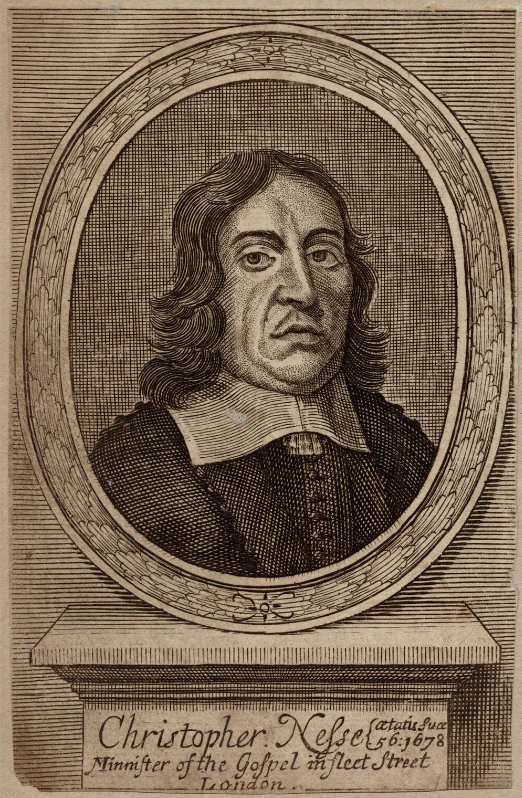
— Christopher Ness, An Antidote against Arminianism, pp. 126-138.
English
"Thirdly, Men that live religiously are to repent.
3. Repentance is not only necessary for those that live civilly, but God calls his own children the live religiously, and he calls upon upon them in a more especiall manner to repent. And therefore Christ sent Iohn Baptist a holy just man to go before him to preach repentance, to shew that holy and just men need repentance. When the people of God sinne, they sinne against more light then others, and against more means of grace then others; against more mercies then others; they sin against better principles then others: God takes it more unkindely at their hands; and they dishonour God more by their sins then others: And therefore the people of God ought especially to repent. They have an ability within them to repent; they have the grace of repentance, and therefore God especially commands them to repent: when they sin, God will chastise them sooner then others, surer then others, more then others in this life; and therefore they ought to repent sooner then others, and more then others, and surer then others: God will chastise them sooner then others, 1 Pet. 4. 17. The time is come that judgement must begin at the house of God. And in the second of the Romans and the ninth; Tribulation and anguish upon every soul that doth evill, but first on the Iew, and then on the Gentile; God will punish the Iew before the Gentile, and the Christian before the Iew. God punisheth them sooner, and therefore they must repent sooner; and God chastiseth them surer then others. Amos 3. 2. You only have I known of all the families of the world, therefore I'le be sure to punish you. And God chastiseth them more then others in this life, Lam. 4 6. The punishment of the daughter of Zion is above the punishments of Sodom. Dan. 9. 12. Under the whole heaven hath not been done as upon Jerusalem. And therefore God cals on his own people to be sure to repent more then others. And I doubt not but you that fear the Lord, will hearken to my counsel this day.
When Gods people fall into any gross sin, such as adultery and murder, though they do not loose jus haereditarium ad coelum, their right and title to heaven, (For David was a child of God, though a child under wrath, in the midst of his sins; he was not a child of wrath, but a child only under wrath) yet they lose jus aptitudinale ad coelum, they lose their fitness to enter into that holy place of heaven. And this fitness is not recovered till they actually repent. And therefore Repentance is very necessary for the children of God.
And thus you see that God calls upon the worst of men, and upon the best of men; upon the least of men, and the greatest of men to repent. God calls upon all men, says the Text. But most especially upon you that are Parliament men, You are to repent as you stand in a double capacity."
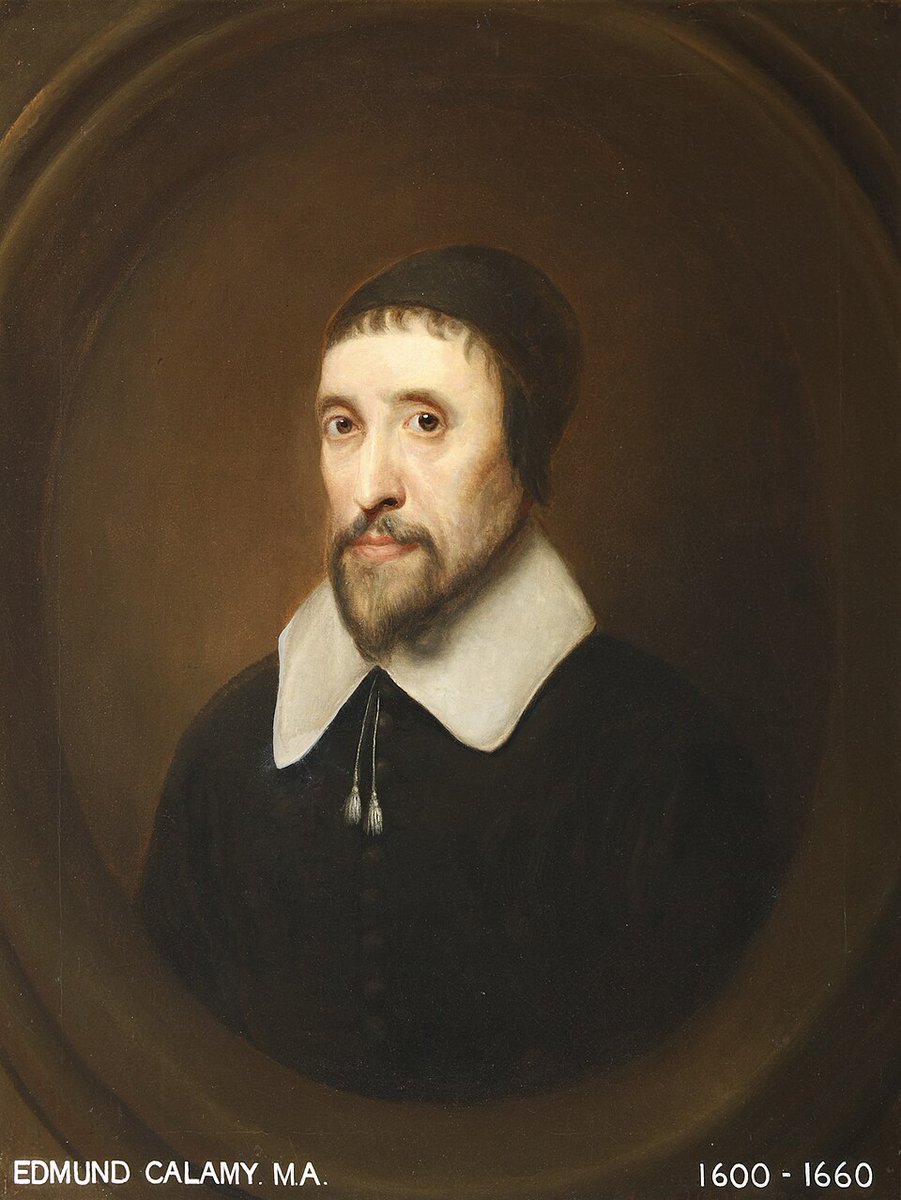
— Edmund Calamy the Elder, Englands antidote against the plague of civill warre, pp. 22-23
English
"Verse 15. Shall we sin, because, &c.] Some Antinomian Libertines would persuade men, That God is never displeased with his people, though they fall into adultery, or the like sin, no not with a fatherly displeasure: That God never chastiseth his people for any sin, no not with a fatherly chastisement. That God seeth no sin in his elect: that the very being of their sin is abolished out of God’s sight: that they cannot sin Coram Deo, or if they do, it is not they but sin that dwelleth in them, &c. What is this but to turn the grace of God into wantonness, which there-thence becometh the favour of death to death unto them: like as Moses his rod, cast on the ground, turned to a serpent; or as dead mens bodies, when the marrow melteth, do bring forth serpents? Corruptio optimi pessima.
See Mr. Calamy’s Sermon to the House of Commons, October 22, An. Dom. 1644. [1]"
— John Trapp, A Commentary or Exposition upon All the Books of the New Testament (London, 1656), on Romans 6:15.
[1] Englands antidote against the plague of civill warre

English
"In the third saying, Melanchthon makes an explicit distinction between Saul and David, which Bertius has deliberately omitted. For after the words which I have cited, Philipp Melanchthon writes thus (p. 98, line 22):
‘And Saul has altogether gone to ruin, being overwhelmed by eternal punishments; but David has again been converted to God, notwithstanding that throughout his whole life he felt a burden of bodily punishments and afflictions.’
Thus clearly showing that David did not perish, but that he was severely punished by God on account of his great sins. And who speaks against that? Who denies that the regenerate can fall into grievous sins and be truly punished by God? The question is only this: whether the believing, regenerate children of God can perish. To this we answer: no; and Melanchthon likewise says no. Therefore this does not serve Bertius’ purpose.
Therefore, this does not serve the matter at all."
— Sebastian Damman [Scribe of the Synod of Dort], Van de volhardinghe der Heylighen, 1615, p. 68.

English
"Catechetical Questions 10 and 11 — On the Punishment of Sin, or On Afflictions
I. What Kinds Are There?
Distinction.
Afflictions are either ordinary or extraordinary. The former are either eternal or temporal.
1. Eternal. Eternal [afflictions] are those either of demons or of the cursed among men. These are the torments of soul and body, in hell, to endure perpetually. Otherwise called the second death, eternal, fire, Gehenna, the worm: Rev. 2:11, ch. 20:6, 14, ch. 21:8, Matt. 25:41, 46, Mark 9:43, 44 and following, Isa. 66:24, Matt. 10:28, cf. Matt. 8:12, ch. 13:50, ch. 22:13, ch. 25:30, Rev. 14:11, ch. 19:20, ch. 20:10, 15, Luke 16:23, 24, 28 — see below at Catechism q. 58, On Eternal Life, qq. 1 and 2.
2. Temporal. Temporal [afflictions] are the miseries of this life of every kind. And these are either punishment or the cross: the former is proper to the impious, the latter to the pious.
Punishment is torment inflicted by God on account of sin, so that His justice may be satisfied.
Objection. Temporal punishment is too small to satisfy the justice of God. Response. It is part of punishment, not the whole punishment, which has three degrees: (1) in this life, Ps. 37:10, 35, 36, Rom. 2:15; (2) at death, Luke 16:22, 23; (3) at the last judgment, Matt. 25:41, 46.
The Cross is the affliction of the pious, which is neither properly punishment nor satisfaction for sins; but is either timorion, or dokimasia, or martyrion.
Timorion is paternal chastisement in the saints, by which they are warned of their sins and called back to the right path (otherwise and more correctly: paideia): 1 Cor. 11:32, Heb. 12:vv. 5–11, Ps. 119:71, Jer. 10:24, ch. 30:11, ch. 31:18, Mic. 7:9 — which, proportionate to their transgressions, is sometimes more severe, sometimes lighter, Luke 12:47, 48.
Dokimasia is the testing of the faith and piety of the saints: James 1:vv. 2, 3, 12, 1 Pet. 1:6, 7, Rom. 5:3, 4, 5, 1 Cor. 10:13, Jer. 12:1, 3.
Martyrion is when the pious seal the divine teaching with their blood: John 21:19, Phil. 1:20, 29, 2 Tim. 3:12, Acts 5:45, Rev. 6:9, ch. 20:4.
Thus far the ordinary [afflictions]. Extraordinary affliction is lytron — namely, the satisfaction of Christ alone for our sins, Matt. 20:28, 1 Tim. 2:6, Isa. 53:4–12, Ps. 69:5."
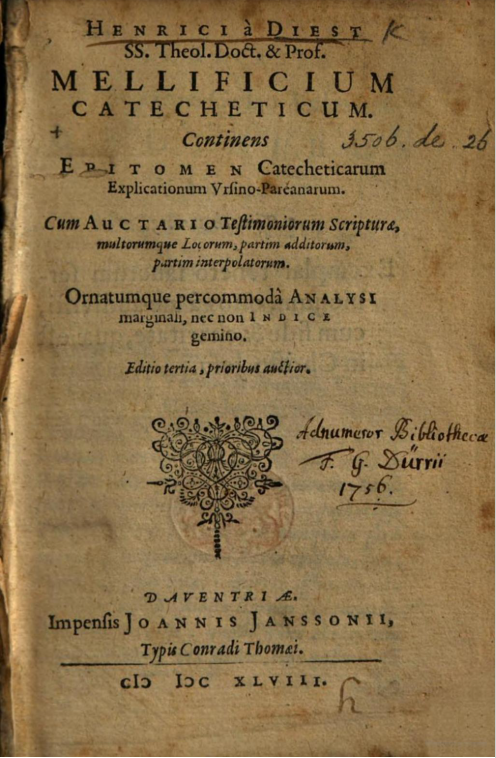
— Heinrich von Diest, Mellificium Catecheticum, pp. 68-70. [1648]
[1] Gisbertus Voetius, Selectarum Disputationum Theologicarum Pars I (Utrecht, 1648), “Lectori benevolo salutem” where Diest’s Mellificium Catecheticum is listed among the common theological textbooks of Utrecht:
"The books which our students most commonly use at our recommendation in their academic course to impress and refine their understanding of the common topics have been hitherto the Theses of Gomarus, the Synopsis of the Leiden Professors, Maccovius' Collected Disputations, Ames' Marrow and Cases of Conscience, Cluto's Idea, the Ursinus-Pareus Catechetical Commentary, and Diestius' Catechetical Treasury."
English
"Furthermore, although our aim is not to enter here into the question of the apostasy of the saints, we cannot nevertheless pass by that question which touches upon it to some degree: whether believers falling into such grave sins that — according to the opinion of the Remonstrants — the course of obedience is severed and faith ceases, will always find the door of God's grace open to their return.
To this Poppius's answer is: As far as their conversion is concerned, or whether the door of grace is always open to them for that purpose, I can give no fixed and certain rule or promise upon which anyone may rely. I find in Holy Scripture that not all such persons are denied God's grace (Enghe Poorte, p. 143) — but that many such persons are still graciously called by God to conversion and also actually brought to it. I say many, but I dare not say all — you ask why: the reason is that I do not read such a promise in God's Word, but find therein some warnings which make it not obscurely understood by some that these things are to the contrary — namely, that certain persons, after they have been sanctified, sinning wilfully, are denied God's mercy. (pp. 146–147) The meaning is, as before: that God herein also acts as a Sovereign Lord, doing what he wills, even outside and above his promises.
And this is precisely the same thing which the Socinian Synod held at Lublin in the month of June, in the Year 1593, adopted as its seventh resolution from their teacher Socinus, drawn from his Theses on the Justification of Man before God, in these words:
'Nevertheless, if it should come to pass that we deviate from this obedience and fall away into one or more sins and remain therein, then we lose our justification. Yet we can through repentance and amendment of life, according to the command of Christ, be justified again — but this [iterata poenitentia] repeated repentance is not in our own power; rather, God gives it to those whom he wills and to whom it pleases him that they may have it.'
Upon this, the following further clarification is needed: that this, just as what has been discussed just now regarding conversion at the hour of death, goes — by Poppius's own admission — outside the content of the Gospel, wherein one certain and sure way to salvation is shown to us.
Our answer therefore is this: even if it could be proven from those warnings and threatenings of Hebrews 6 and 10 which Poppius cites (p. 147), that those who have once truly believed can fall away completely — still it cannot be proven that the door of grace stands open to one apostate believer any more than to another (when both, having fallen away completely from grace, both again truly convert from that apostasy). But according to the threatening and the warning, all those who are there described are rendered incapable of the work of true conversion — such that the force of the warning is nullified when one understands it to mean only that the surest way to enter into eternal life, upon which salvation is promised to us, is there set forth; but that above and beyond that promise and those threatenings and warnings, God still, as a Sovereign Lord, has mercy on whom he will, and hardens whom he will.
We set against all such doctrine of election and reprobation of certain particular persons (wherein Poppius places another uncertain way of salvation outside the content of the Gospel, above the promises and the threatenings) — this counter-gift of the true doctrine of conversion: that so long as it is called Today, to the converted sinner who has from the heart obeyed Christ's command 'Repent', and who offers unto God a contrite spirit and a broken heart — the door of grace from God the Lord is never shut.
But that no one can offer unto God an acceptable contrite spirit and broken heart who does not have, together with true conversion, the true faith. And that the work of conversion is a work in which believers exercise themselves daily, even if they never fall into grave sins. And when they, having fallen into grave sins, truly convert — that this is a proof that their faith has not ceased, but that they are preserved in faith by the power of God. And on the contrary, that it is a proof, where God the Lord shuts the door of grace, that all previous conversion was without faith — the heart remaining unconverted in such faithless conversion, notwithstanding all outward appearance of conversion.
For a conclusion we say: that the truly converted sinner's comfort is undiminished, even if the hour of his conversion is the last hour of his life — since we must count all our days and reckon every hour as potentially the last which we can secure: which also belongs to that fear of God whereby he moves people to faith. And the true obedience to this command of Christ, 'Repent', is thus an infallible mark of God's irrevocable election and calling, and of the blessed, inseparable fellowship with Christ both in life and in death. And according to this content of the Gospel we believe that God will judge both in this and in the coming life, now causing his judgments to be administered through the keys of the kingdom of heaven — which he himself will hereafter execute in person."
— Cloppenburg, Schriftuyrlijck Fondament van de Enghe Poorte, pp. 103-105.

English
"CHAPTER V. On the Perseverance of Faith.
True faith always perseveres and is never lost.
Proof:
II. 1. Because the same reasoning must be applied to Faith as to Election, since true faith is an effect of Election; but the counsel of Election is immutable, as we have proved.
III. 2. Because if faith could be lost, the covenant of grace — of which faith is the condition, which God promises to fulfil in us — could also be abrogated with respect to those who ceased to believe; but the covenant of grace is likewise immutable and can never be rescinded, as is most well known, for it is thus distinguished from the covenant of works, which was made void. I will make with them an everlasting covenant, that I will not turn away from them to do them good, and I will put the fear of me in their hearts, that they may not turn from me. Jer. XXXII: 40. For the mountains may depart and the hills be removed, but my steadfast love shall not depart from you, and my covenant of peace shall not be removed. Is. LIV: 10. Where it is to be noted that God promises His kindness shall not depart from those in covenant, and accordingly shall preserve them in holiness and lead them to felicity.
IV. 3. Because if faith could be lost, the union of the faithful with Christ could be severed; but that union is so firm that nothing can separate them from Him. Rom. VIII: 37–38; and Joh. X: 27, where Christ speaks thus: My sheep hear my voice, and I know them, and they follow me, and I give them eternal life, and they will never perish, and no one will snatch them out of my hand — that is, neither Satan, nor the world, nor the flesh, which are the three enemies of all Christ's faithful.
V. 4. Because if faith could be lost, it could come about that one who believes in the Son does not have eternal life — contrary to what Christ says in Joh. III: 36 and elsewhere throughout — and could come into condemnation, contrary to Christ's assertion in Joh. III: 16 and Joh. V: 24; or that those whom God called are not glorified, contrary to Paul's statement in Rom. VIII: 30.
VI. 5. Because those who believe are sealed by the Holy Spirit unto the day of redemption; but those who are so sealed cannot perish.
VII. 6. Because faith is an effect of Christ's death and of His intercession; but both are of infinite value, and Christ intercedes continually.
VIII. To these arguments we may add passages of Scripture in which our spiritual life is compared to incorruptible seed (1 Pet. I: 23), to a spring of water welling up to eternal life (Joh. IV: 14), and especially the illustrious passage 1 Joh. III: 9: Whoever is born of God does not commit sin, because the seed of God abides in him, and he cannot sin, because he is born of God. In which passage it is to be noted that that seed is said to abide in him, and because it abides, the believer cannot sin. Nor is it to be supposed that this seed can be expelled if men allow the seed of the Devil to be injected into their hearts and bear the fruit of sin; for it is said that this seed so occupies the mind that the seed of the Devil is shut out from any place.
IX. The same thing is demonstrated from what Scripture teaches: that those who go out from us were not of us, that is, were not truly faithful. 1 Joh. II: 19: They went out from us, but they were not of us; for if they had been of us, they would have continued with us; but they went out, that it might become plain that they all are not of us.
X. Yet although we hold that true faith does not perish, we nevertheless confess that it is not always living; and from this it comes about that the faithful sometimes fall into the most grievous crimes — as did David, Solomon, and Peter — at which time they would deserve to be excluded from the kingdom of heaven and condemned to eternal punishment, were it not that God in His mercy brought them back to a better way.
XI. But faith is by no means extinguished in them; nor is it surprising if we say that faith subsists alongside atrocious sins, for it is most well known that contraries can remain in the same subject. Thus, although the flesh and the Spirit war against one another, they cannot nevertheless entirely expel one another so long as we live in this mortal state.
XII. Faith in the faithful who fall into grievous crimes bears the same relation as our soul does to the body when we suffer a fainting fit (syncopem): the soul does not perish, nor does faith either — just as seed in the earth through the cold of winter—
XIII. Here, however, it is to be observed that faith, so long as it is not living, cannot save; and accordingly, if God were to permit the faithful who commit grave sins to die in that state, they would without doubt be damned.
I close this chapter with a passage from Fulgentius: Grace goes before the ungodly man, that he may become just; it follows the just man, lest he become ungodly. It goes before the blind man, to bestow the light he has not found; it follows the seeing man, to preserve what it has conferred. It goes before the fallen man, that he may rise; it follows the risen man, lest he fall. It goes before by giving the man a good will; it follows the willing man by working in him the capacity for a good work, etc."
— Benedict Pictet, Theologia Christiana, Pars Secunda [1733, Editio Ultima]
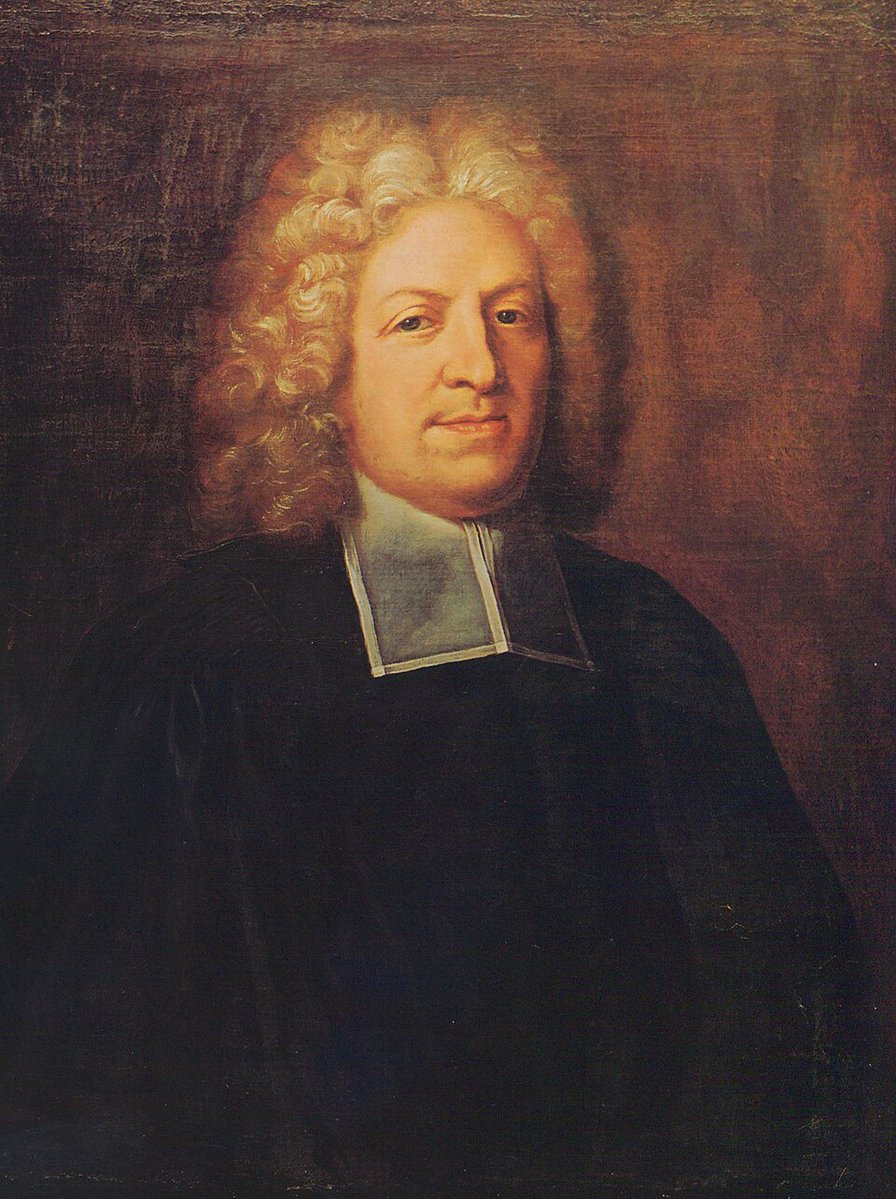
English
"I would also have to copy out entirely the exceedingly prolix dissertation of Rich. Baxter, long the Standard-bearer of the Presbyterians, & of such authority among his own that his followers love to be called Baxterians by him to this day"
— Soren Lintrup, On the Contempt of the Synod of Dort in England, or the Church of England as Witness to Evangelical (Lutheran) Truth Against the Most Grave Errors of the Calvinist Church and the Synod of Dort [1697, Second Edition Enlarged]
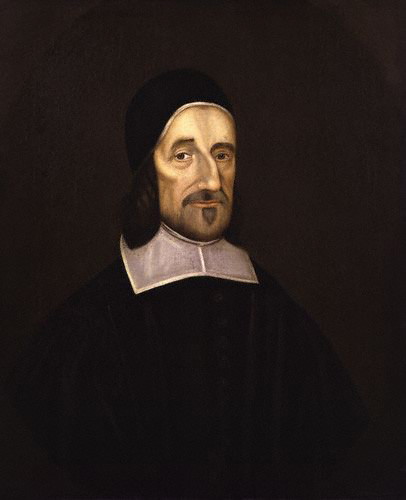
English

"In the first place, this praise remains for the Episcopal theologians called such today in England, this distinction: that they have come closer to us, at least in words, on the matter of the substantial and real presence of the body and blood of Christ in the Supper — as their writings have long since left us persuaded in our minds. But I do not wish to declare that further at this point. Consult in the meantime Johann Heinrich Hottinger's Dissertatio Irenica, ch. 4, p. 175; Davenant's Adhortatio ad Pacem Ecclesiasticam, p. 132; John, Bishop of Durham, in Historia Transubstantiationis Papalis, ch. 1; Thomas Pierce in the Pacificatorium Orthodoxae Theologiae Corpusculum, ch. 23, on the Lord's Supper, p. 239. Add also, if it pleases you, Friedrich Gissenius's Gründlicher Beweis der Worte des heiligen Nachtmahls ["Thorough Proof of the Words of the Holy Supper"].
— Johann Faes, Christus Incoenatus, pp. 224-225

English
"The better theologians among the Reformed agree with us, and indeed in the Synod of Dort itself the English Theologians went to defend the Universality of Christ's merit, among whom the most celebrated is John Davenant, a Bishop, who in the name of the Anglican Church gave the following for the exposition of his opinion:
“GOD, having mercy on the fallen Human Race, sent His son, who gave himself as a price of redemption for the sins of the WHOLE WORLD.” Which proposition, he says, is equivalent to the express article of the Anglican Church established by public Authority in the Year 1562: “The Offering of Christ once made is that perfect redemption, propitiation, and satisfaction for ALL the sins of the WHOLE WORLD, both original and actual” (ART. XXXI). Which itself, he says, is contained in so many words in the consecratory Supplication prefixed to the Holy Eucharist, in the place of our prayers.
“On this merit of Christ’s death,” he says, “rests the Universal promise of the Gospel, according to which all who believe in Christ actually obtain remission of sins and eternal life.” And this opinion, he says, is that of the Anglican Church, Art. Relig. VII.
From these premises, the Same Davenant concludes excellently: “That the Evangelical promises do not produce their just effects in all to whom they are announced, we judge does not arise from any defect in the death of Christ, as if it had less truly founded and confirmed by his death the Evangelical covenant and the promise made to all; or that the promise did not pertain to all, or that GOD less seriously invites all to whom this Evangelical promise is announced through the Ministry of his word, to conversion, faith, and consequently participation in His Salvation: But from the defect which is in man who rejects the Grace which GOD truly and seriously offers.” “For unless,” he concludes, “we embrace this Doctrine, by what right or foundation do the Ministers of GOD seriously exhort and invite all to repentance and faith in Christ, according to the command and promise of the Gospel?”
Thus Davenant; would that these things had been approved in the Synod of Dort! How easy a way could have been found on this foundation, once laid, to Concord between Our and the reformed Church. See the most learned Daillé, who has beautiful things on this matter against Maresius, the enemy of Universal Grace."
— Johann Wolfgang Jager, Exercitatio academica de foedere gratiae [1701]


English
"True love for your neighbor is when we love our neighbor in God only and for the honor of God. For if your neighbor is loved, because he or she is your parent or your friend, without considering the love of God, this love is not Christian, but natural and common even to brute beasts. For this reason, Jesus Christ says in the Gospel, if you love those who love you, what reward will you have? For even the lawbreakers do that. This is why he commanded love of the enemy, in which how we are to love our neighbor for the love of God is more manifestly demonstrated than in other places. For enemies cannot be loved for their own sake, instead they are hated. However, considering them in God, they are no longer an enemy, instead they are a neighbor. Just as the rivers come from the sea and return to it, so does genuine love toward your neighbor. This true love must flow from God and return to God, otherwise it is stagnant."
— Matthieu Virel, La Religion Chrestienne, 118-19.
English
Onku retweetledi

"Gods grace doth not destroy the manner of rationall working in man, but onely addeth a supernaturall virtue to it. Philip. 3. 12. 14."
- Giovanni Diodati, Pious Annotations Upon the Holy Bible (1651), Song of Songs 1:4.
----
"Grace destroyes not nature, but perfects her by supernatural reliefs [i.e. - aids/assistance]."
- English ["Westminster"] Annotations (1657), Song of Songs 1:4.
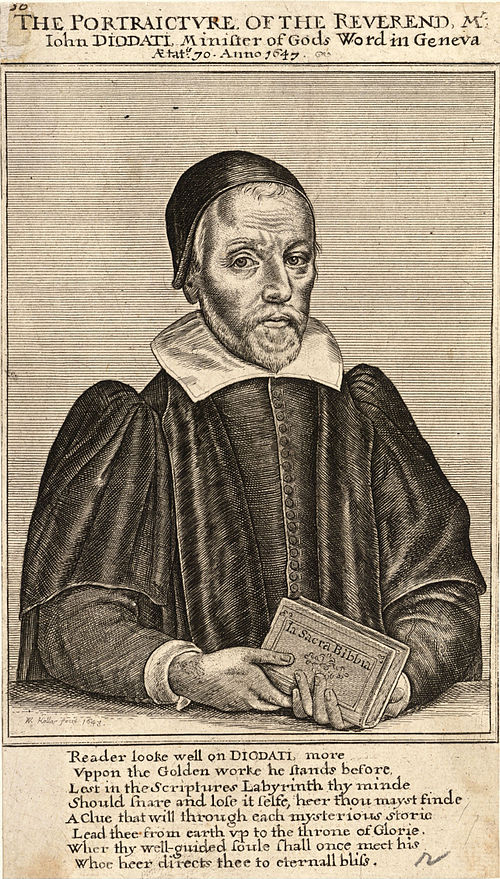
English
"§. 4. Lord! how strange a thing it is, that any man should grow proud? And yet how hard a thing it is, to meet with a man who is truly humble? Our understandings indeed are dark, our wills disobedient, our hearts deceitful, our passions eminently perverse; But, which makes us most miserable, we are so senseless of our being so, That our special Impellents to Humiliation are common Incentives unto our Pride. We are apt to glory in our Infirmities, (if I may use St. Pauls words, not only without, but against his meaning,) and to take honour unto our selves from the justest matter of mortification. 'Tis not the knowledge of what we were, nor the remembrance of what we shall be; 'Tis not the baseness of a Conception, nor the unloveliness of a Grave; 'Tis not the gastliness of Death, nor yet the dreadfulness of judgment, that can subdue our exalted Thoughts to an humble sense of our unworthiness. But apt we are to be transported, with a complacency in our selves, and a contempt of others, although we cannot but be convinc'd, (at least in our lucida Intervalla, or godly Fits,) That we are wretched, and poor, and blind, and naked."
— Thomas Pierce, A collection of sermons
English
"My thoughts are, that men are to be judged godly or ungodly according to the predominant Estimation, Election, Resolution and Operation of their souls, and the bent and course of their lives, and not by a particular act: because no Act will prove us holy indeed, but what proveth a Habit; and a predominant Habit. And withal, that men thus Habituated, never live in a course of willful sin, nor have any one sin which for Ends, Concomitants and all, is such as that of unsanctified men: And that the ungodly have never one true act of saving Love to God. But yet for all that, I think, that Good men may have one hour of their lives so bad' (or a day, or more) and bad men may have some hours oftheir lives so far good, that you will make but a blind unjust judgment of them, if you will judge them both by that one hour; the good by the worst hour of his life, and the bad by the best: and especially if you cull out that one hour of a good man's life, and silence the bent of heart and life that is for God, and then say, [This is Mr. Baxter's Godly man.] I do not think that God will deal all thus by us. And I would make this motion to you in the daily exercise of your watch: Try whether in the very omission of some duties to your flock, or condemning of your Brethren, &c. you may not have sins that are a companyed with as little love of God, as David's and Peters more disgraceful and (materially) heinous sins. Is so, consider whether they prove you graceless. You little suspect that the uncharitable passages in this very learned Book of yours, are as probable a symptom of the absence of Charity as the sin of David or Peter were. I would have you fear it, and search with jealousy, and judge yourself as impartially as you do David and Peter. Be not not angry with me, if I tell you that if I must needs choose one of the two, I had rather die in the state of David before Nathan spoak to him, or of Peter after he had denied his Lord, then of Mr. Pierce that hath committed no such sin, now after this Book, which its like you repent not of (with the rest of your failings, which are known to God.)"
— Richard Baxter, The Grotian religion discovered

English