JOSEPH 👑 (SURE GUY)
19.1K posts

@Onlysureguy
Graphic Designer || Web3 Artist & Innovator | Content Creator || Aspiring Project Ambassador.


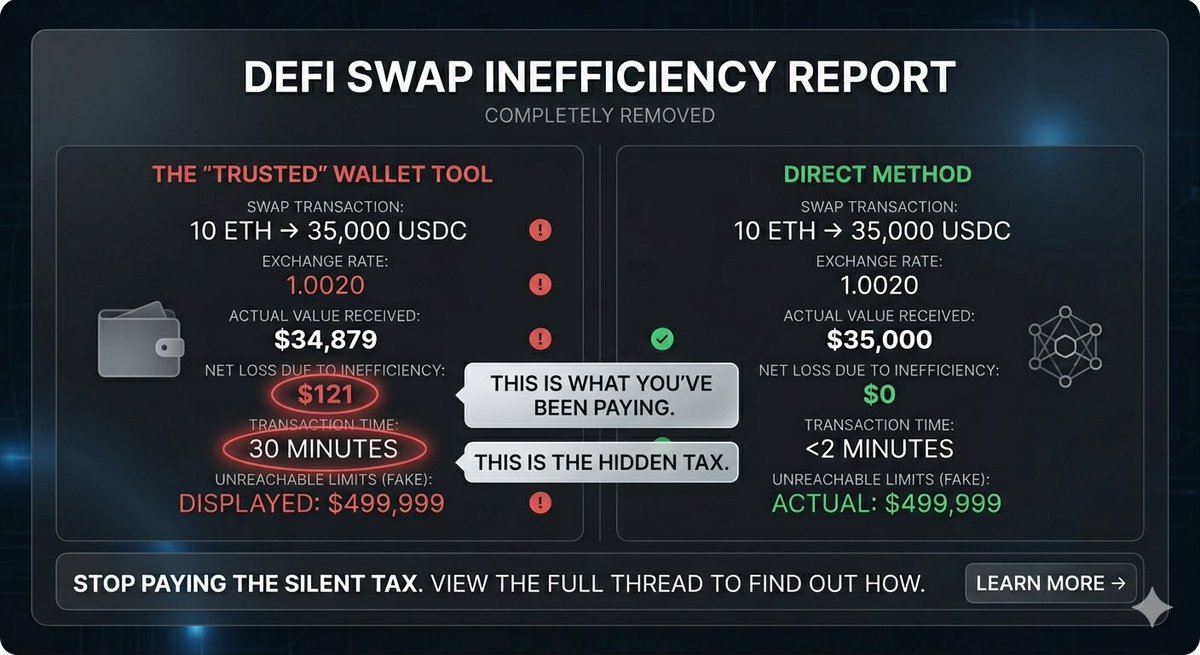
1/ Smart money doesn’t trade in public. @Zcash Rails are now LIVE on RocketX. 🛡️ → Private swaps → Private bridges → Private transfers → No on-chain trace

📢Important Announcement The last date for claiming the $RVF tokens by the token sale participants back in 2021 as well as the migration from V1 to V2 and bridging RVF V2 from BNB chain to ETH is 30-Apr-2026. Post this date, the un-claimed & un-migrated tokens will be burned permanently ❤️🔥& this action is ir-reversible. ⌛️28 days to go


River Sessions - Hong Kong First River meetup in HK. Appreciate every contributor and community who stayed on the journey since day one ▸ April 21, 18:00 ▸ luma.com/i9365mwp Exclusive merch ready, see you there


The Composability Revolution: Why the dAIOS is the Ultimate Legos for Intelligence The hardware benchmarks and the $107M ZeroStack anchor have proven the infrastructure. Now, we are entering the era of Permissionless Composability, where 300+ ecosystem partners are treating the 0G dAIOS as the modular "building blocks" for the next generation of digital life. Beyond the "Silo" trap ➔ Traditional AI is built in closed loops. 0G Labs allows developers to combine storage, DA, and compute layers like architectural legos to create dApps that were previously impossible. Integration of the "Dual-Channel" Architecture ➔ Partners like Cloudician and Alibaba Cloud are now utilizing 0G's 50 Gbps throughput to sync PB-level dataset reads and AI weight files in real-time. Seamless Fault Recovery via Checkpoints ➔ High-bandwidth DA allows new nodes to instantly synchronize 100GB+ checkpoint snapshots, solving the "sustainability" problem of decentralized large model training. The Rise of Cross-Protocol Intelligence ➔ Through partnerships like Bitkub, on-chain AI tools are being integrated into exchange ecosystems to provide deeper, verifiable insights for the retail economy. The "Big Picture" Perspective: We are moving past the phase of building the "pipes" and into the phase of building the "City." 0G Labs isn't just a blockchain; it’s a shared, modular factory where a lending protocol, an AI agent, and a storage node can collaborate in ways their creators never anticipated. The vision for 2026 is Physical Collaboration via Logical Decoupling ➔ A world where thousands of nodes simultaneously process global data through multi-consensus sharding. 0G Labs is the only infrastructure fast enough to be the heartbeat of this decentralized revolution. ______ The 2026 Creator Dilemma: Rented Reach vs. Owned Legacy Most creators don’t realize they are building on a "24-hour lease." If the algorithm shifts or a server blinks, years of work can vanish. I’m diversifying into Permanent Media protocols like @permacastapp. Here’s why this is a strategic move for any serious creator: ✔️ Immutable Proof of Influence By using the Permaweb (Arweave), your media becomes an on-chain asset. It’s about ensuring your "Aura" and your insights aren't subject to 404 errors. You own the timestamped proof of your work, forever. ✔️ Compounding Intelligence Unlike traditional feeds where content "dies" in 48 hours, decentralized media layers use AI-indexing (via AO) to keep content relevant. Your work doesn’t just sit there; it becomes part of a permanent, searchable intelligence graph. ✔️ Infrastructure Sovereignty This isn't about leaving one platform for another; it’s about securing the base layer. Using a protocol that can’t be turned off is the ultimate hedge against platform risk. In 2026, the Future-Proof move is to stop being a "content tenant" and start being a "protocol owner." Secure your legacy.


The internet solved sharing. AI solved creation. Now we need to solve preservation. Knowledge that disappears cannot accumulate. Every deleted post removes context. Every lost archive weakens collective understanding. @permacastapp ensures media remains permanent, verifiable, and accessible forever. It’s not content for timelines. It’s an infrastructure for intelligence. ------------------------------------------------------ The biggest risk in AI today isn’t capability; it’s centralization. When intelligence is controlled by a few entities, innovation becomes permissioned. @0G_labs aims to decentralize the backbone of AI by creating infrastructure optimized for open participation and scalability. A decentralized intelligence layer could redefine how innovation spreads globally.


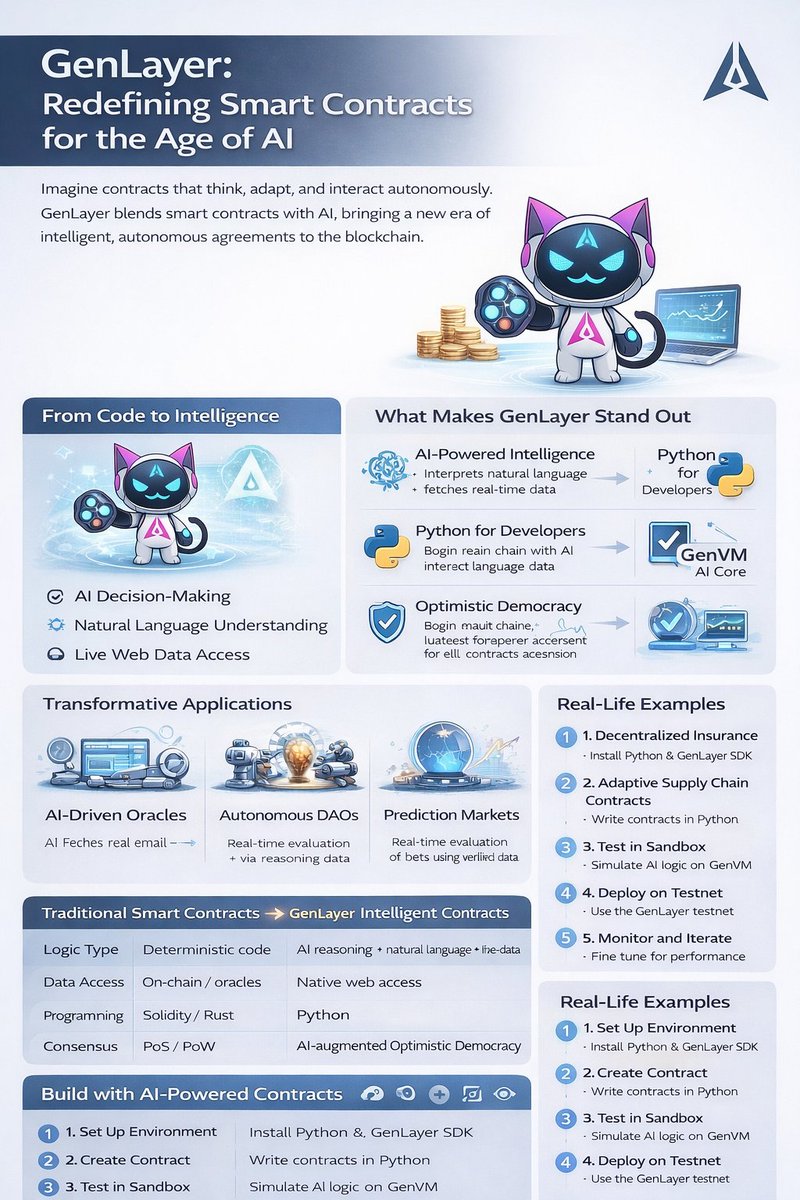
Let's look into ✍️🏽🐾 “Why Top Tech Insiders Are Betting Everything on @GenLayer ”👩💻. In a world where standard solutions fail to integrate efficiency and customization, GenLayer emerges as the tool that bridges the gap effortlessly. Most blockchains are designed around strict determinism whereby They are experts in monochrome. ■Did that transaction occur?🤔 ■Does the signature match?🤔 ■Is the code executing exactly as written?.🤔 These are the types of questions that traditional consensus protocols handle flawlessly. But what about applications that live in the gray area of human judgment ,where truth is often subjective, evidence is interpretive, and context matters? This is where traditional blockchains struggle, because consensus has historically been about what is provable, not what is judged. ●The Problem With Current Consensus Models. Blockchain systems excel at handling transactions, state updates, and verifiable data but they fall short when the application requires human-like reasoning. Consider these examples: Did this creative work meet the project brief? ■Does this claim have sufficient evidence? ■Did an off-chain event, like a charity donation or service delivery, actually happen? These are questions that require layered analysis, often relying on context, experience, or judgment. Right now, these decisions are typically enforced by centralized moderators, trusted authorities, or oracles introducing bottlenecks, subjectivity, and trust risks. ●How GenLayer Changes the Game GenLayer isn’t just using AI ,it’s embedding AI directly into consensus. This is a fundamental shift. Instead of relying solely on deterministic rules, GenLayer allows the network itself to process and agree on judgment-based, subjective questions. Essentially, it enables the blockchain to enforce decisions that previously required human evaluation, while retaining decentralization. Think of it as giving the blockchain a collective “opinion engine.” Instead of just verifying signatures, the network can evaluate: ▪︎The quality of work ▪︎The validity of evidence ▪︎The truth of off-chain events ●Applications That Benefit By incorporating judgment into consensus, GenLayer opens up new possibilities for decentralized applications (dApps): 1. Creative Work Verification: Platforms like @RallyOnChain can scale trust around user-generated content or creative submissions without relying on a single curator or moderator. For platforms like Rally, this is revolutionary: they can now scale trust, opinions, and quality without sacrificing decentralization, opening the door to applications that were previously impossible on-chain. 2. Evidence-Based Claims: Projects can validate claims (e.g., scientific data, product reviews, or social proof) in a decentralized way. 3. Off-Chain Event Verification: Real-world events like charitable contributions, service completions, or supply chain milestones can be assessed and enforced on-chain with confidence. Why does This Matter? The real breakthrough of GenLayer is its ability to bridge human judgment and decentralized enforcement. This has profound implications: Decentralization at Scale: No need to centralize trust in a single moderator or authority. The network collectively evaluates and enforces outcomes. Quality Assurance: Applications can now scale while maintaining high standards of quality and accountability. New Classes of dApps: Anything that requires subjective assessment creative work, reputation systems, evidence verification can now operate natively on-chain. In Short Most blockchains can tell you what happened. @GenLayer tells you what should be considered valid or true in contexts that depend on judgment, context, and evidence. By embedding AI inside consensus, it transforms the network from a passive ledger into an active participant in assessing real-world truth. @RuzgarFlns


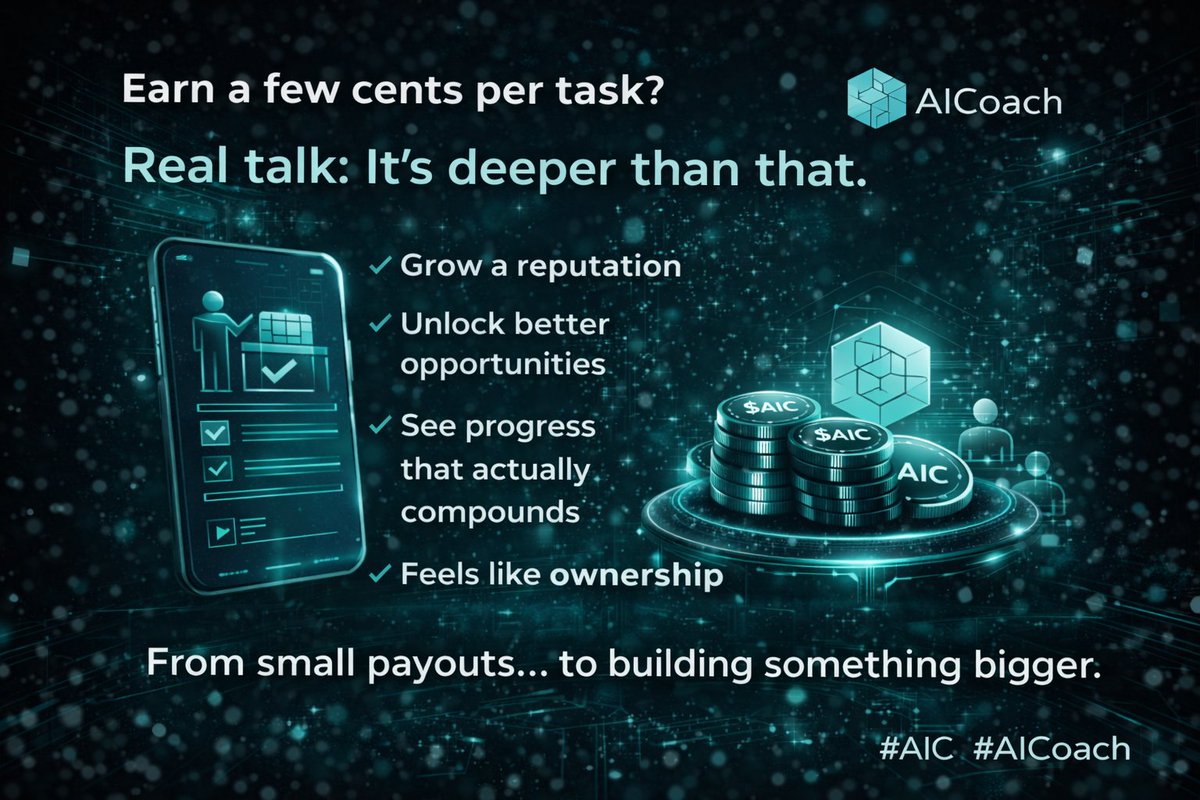
Honest question for everyone in AI/Web3: If you could earn by training AI models from your phone — labeling images, verifying data, rating AI responses — would you? What's the minimum you'd need to earn per task to make it worth your time? Drop your number below. Curious what people actually think. Reply with your honest answer with @aicoachxyz #AIC #AICoach