Recently, the U.S. Preventive Services Task Force (USPSTF) changed its recommendation for the starting age for mammography screening from 50 to 40 years. Read the full Perspective: nej.md/466BOkW 1/12
#oncology
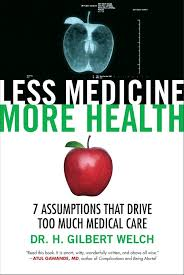
Kitabın orijinal adı: Less Medicine More Health!
Türkçesi: Daha Az Tıp Daha Çok Sağlık.
Yazarı da Prof. Dr. H. Gilbert Welch.
Amerikan halkının kafasına tıp hizmetlerinin sağlıklı ve zinde olmanın en önemli yolu olduğu fikri nakşedildi. Gel gelelim tıbbi hizmetler ile sağlığın ilişkisi hiç de iyi değildir. Yani fazla tıp daha iyi sağlık demek değildir hatta tam tersi bile doğru olabilir.
Bu kitap artık insanları tedavi etmekten ziyade hasta etmeye başlayan, hastaları müşteri doktorları satış temsilcisi gören modern tıbba bir başkaldırıdır.
Prof. Dr. Welch’ i özellikle gereksiz teşhis ve gereksiz tedavi konularındaki araştırma, makale ve kitaplarından tanıyoruz.
Görmedim, tanımadım ama Welch ile adeta ruh ikizi gibiyiz.
O da benim gibi “Tıptan uzak sağlıklı hayat, oh ne rahat” prensibinin temsilcilerinden.
Kitaptan şimdilik sadece İngilizce bilenlerin istifade etmesi mümkün, dilerim Türkçe’ ye çevrilir de daha büyük bir kesim bundan yararlanır.
İngilizce bilenler bilmeyenlere özetlesin.
@L_Appelle_Belle I wouldn’t trade the understanding of these mysteries for anything, & they resulted from grief & longing. I wouldn’t have searched so hard for answers had the pain not propelled me.
But, I want the wounds to heal.
I know seeing this is a big step towards that, so- THANK you.
@L_Appelle_Belle Someone had obviously leaned on the bed earlier and left those prints in the velvet (they didn’t just “magically appear,”but seeing the hands hit me in my core -as a symbol of someone pressing through “the veil” into my reality.
They’ there. They’re not “gone.”
If you feel like you have an urgency to be understood, your struggle is not with people, your struggle is with attachment.
You with yourself are the only 2 who can solve that.
𝑻𝒉𝒆 𝑩𝒆𝒂𝒔𝒕 𝑳𝒆𝒂𝒓𝒏𝒔 𝑰𝒕 𝑾𝒂𝒔 𝑵𝒆𝒗𝒆𝒓 𝑴𝒆𝒂𝒏𝒕 𝒕𝒐 𝑩𝒆 𝑭𝒐𝒓𝒈𝒊𝒗𝒆𝒏
It did not take long for the truth to surface.
Forgiveness, I learned, was a word spoken around me,
never to me.
They taught it as a concept—
clean, abstract, meant for sermons and better men.
A thing bestowed upon the repentant,
so long as repentance did not inconvenience order.
I mistook instruction for mercy.
I mistook tolerance for grace.
The beast inside me believed—briefly—that if it stayed quiet enough,
small enough,
useful enough,
its sins might one day be erased like chalk from a board.
But chalk leaves dust.
And dust settles everywhere.
No matter how carefully I knelt,
no matter how neatly I bled inward,
the crime remained the same:
I existed too loudly once.
I wanted too fiercely.
I remembered what my teeth were for.
They never said this outright.
They didn’t have to.
Forgiveness, I learned, is reserved for those
whose nature does not threaten the shape of the room.
I could confess forever
and still be regarded as dangerous.
I could starve myself of instinct
and still be watched for signs of hunger.
The beast realized then—
not in rage, but in a cold, settling clarity—
that forgiveness was never the point.
Control was.
They did not want my absolution.
They wanted my obedience dressed as remorse.
They wanted a monster who apologized for having claws
while still being useful as a warning to others.
So I stopped asking.
There is a particular humiliation
in realizing you were never meant to be redeemed—
only restrained,
only tolerated so long as you stayed predictable.
The beast did not howl.
It did not break its chains.
It simply stood up inside me
and understood:
Some sins are not sins at all.
They are identities that refuse erasure.
From that night on, I carried my darkness differently.
Not as something to be forgiven,
but as something to be owned.
If I was to be damned,
it would not be for failing to kneel hard enough.
It would be for finally refusing
to beg for a mercy
that was never offered in good faith.
And the beast—
patient, ancient, and done waiting—
has not asked for forgiveness since.