

Orange Bear
8.2K posts

Orange Bear
@OranjeBull
Early adopter $KAS & $TAO. Now deep into $TENSOR HyperTensor, actively accumulating $QTC $PAYAI $SANA $VAULT $NULLA $OPTIMUS $KEEF $MASK $FRED
Orange, TX Katılım Haziran 2020
505 Takip Edilen1.5K Takipçiler
Orange Bear retweetledi

English

@RuggedWojak
Thank you following me.
I think it would be good to analyze the
@hypertensor
what do you think?
Summary $TENSOR
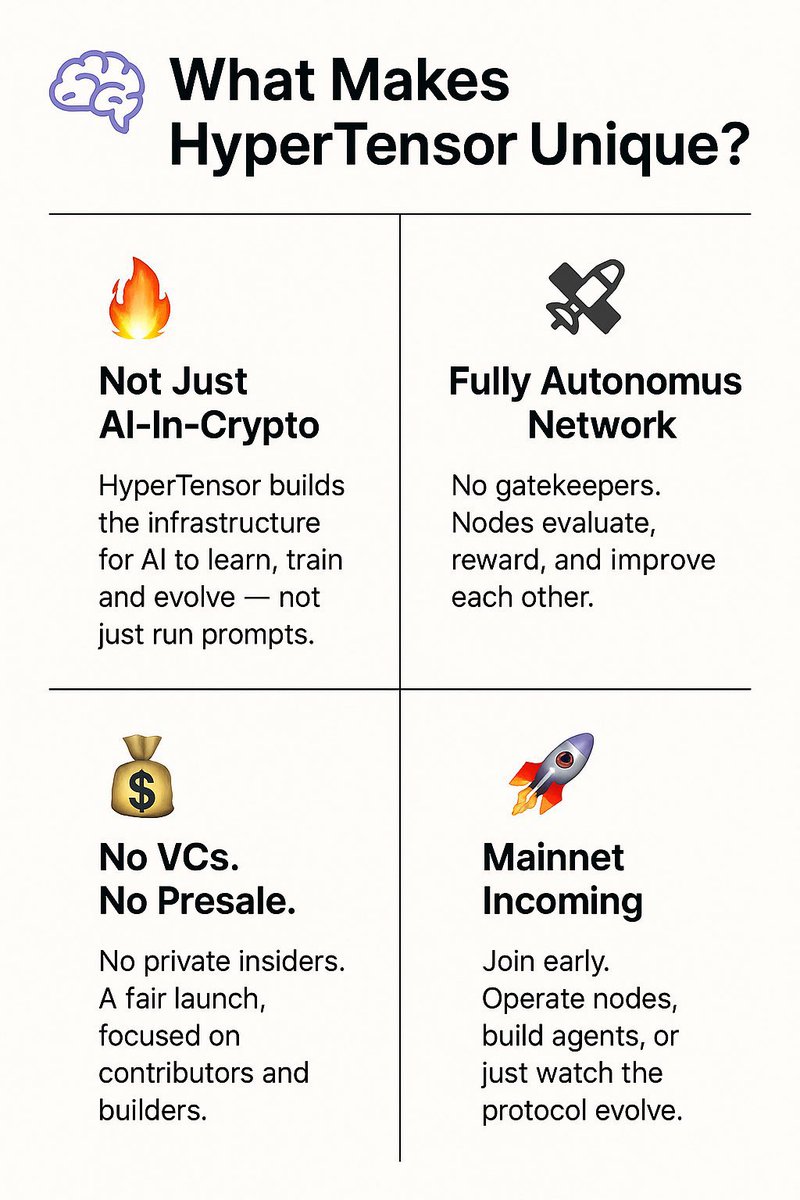
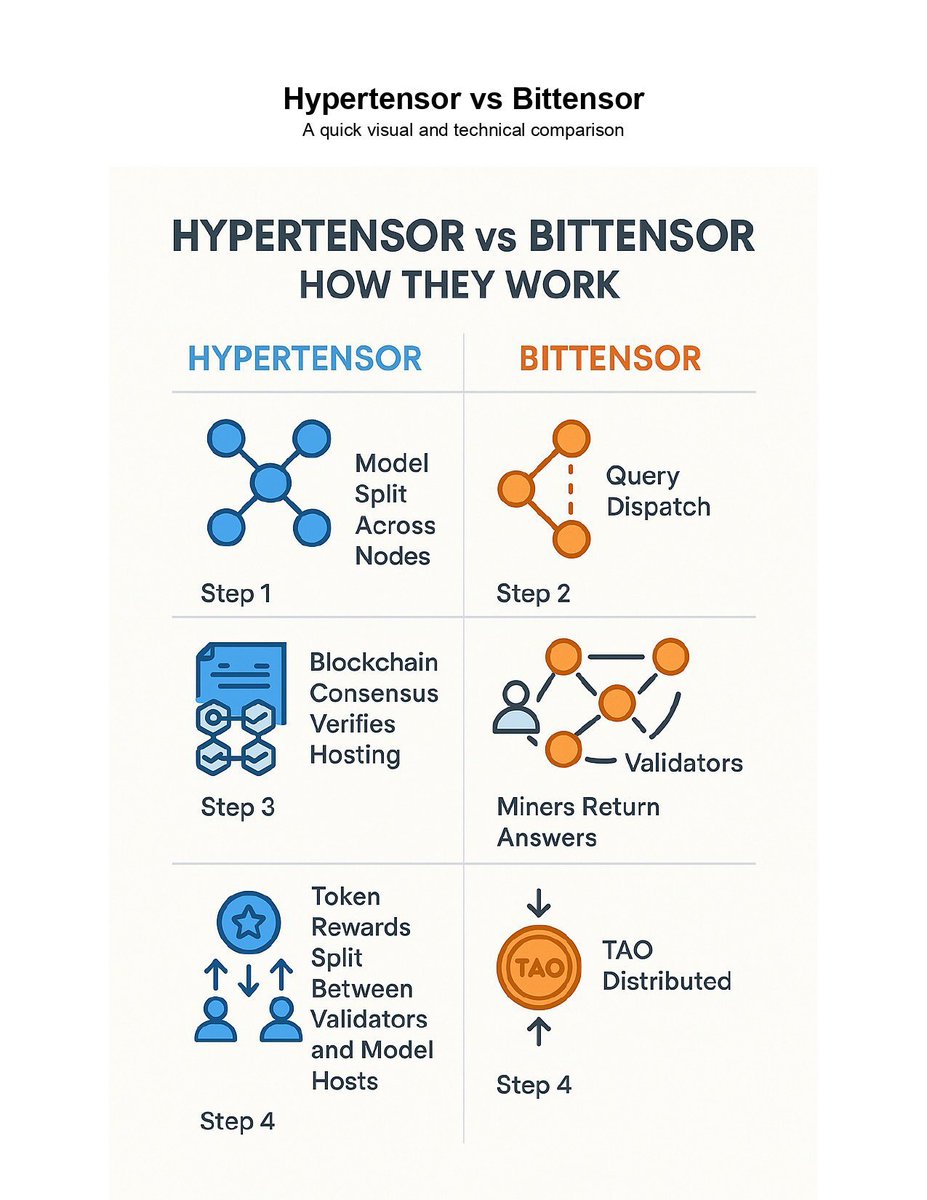
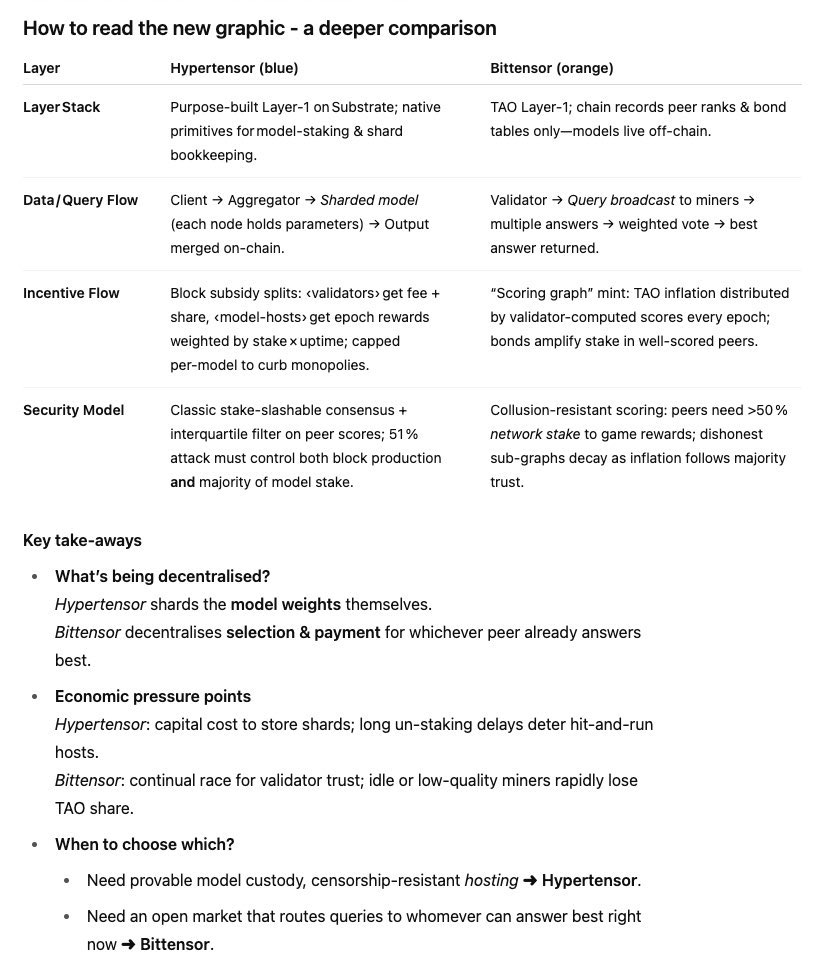
The Only The First #Decentralized P2P #AI Applications Platform $TENSOR
Hypertensor is the Ethereum of AI

English

Orange Bear retweetledi
Orange Bear retweetledi

We just completed day one of the 2-week plan.
We’re currently building the wallets, management keys, and Ansible playbooks required to deploy the new version of the testnet.
The deployment scripts will simultaneously upload the relay binaries across the new validator and bootnode set, and will be used for the overall management of the new $NULLA testnet infrastructure.
These tools will also be shared with the community to help node operators properly deploy and manage their validators.
nullascan.com/#/staking
English
Orange Bear retweetledi

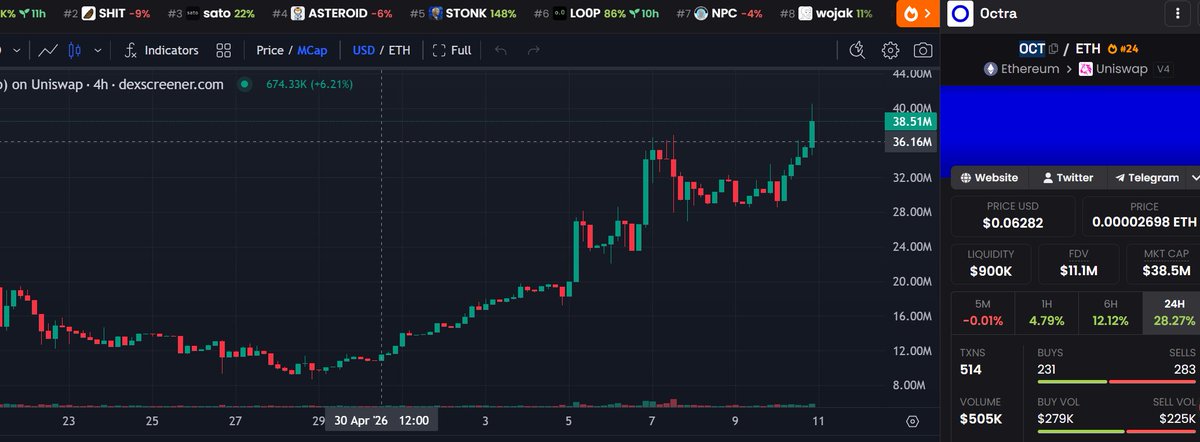
最近 $OCT 的持续上涨,@octra 作为领先的全同态加密(FHE)隐私网络,证明了市场资金的青睐
$NULLA @NullaNetwork 团队从去年十月以来历经牛熊,持续开发交付,不仅在构建全同态加密(FHE)隐私 L1,还加入了抗量子攻击
人工智能使透明系统变得脆弱,隐私会是基础设施
高风险投资,目前市值:13万

Nulla@NullaNetwork
github.com/NullaZK/nulla-… Shipping the operational layer for the Nulla Protocol testnet. These are the scripts we will run live to deploy last quantum updates on both chains — forkless runtime upgrades, parachain registration, and a cross-chain consistency auditor that checks the spend_tag/nullifier state across ProofHub and the RWA chain simultaneously. What's in this drop: * upgrade_proofhub_runtime.js — submits the WASM upgrade to ProofHub via sudo.sudo(system.setCode), waits for finalization, asserts spec_version == 109 * upgrade_rwa_runtime.js — same for the RWA parachain, asserts spec_version == 102. Includes a bug fix from this release: the version check was inverted and was silently reporting SUCCESS on failed upgrades. - audit_chain_state.js — queries both chains and runs 5 consistency checks: all spent spend_tags must have registered values, nullifier count must match or exceed spend_tag usage, Merkle leaves must match commitment counts, RWA purchase count must not exceed ProofHub nullifiers. - register_para.js — parametric parachain registration via parasSudoWrapper. Used to bring ProofHub (para 2000) and the RWA chain (para 2001) online.
中文
Orange Bear retweetledi
Crypto needs decentralised AI that actually works @hyper_tensor $TENSOR
$NOCK $OCT $TAO $AGRS $DEAI $VVV
docs.hypertensor.org
English
Orange Bear retweetledi
github.com/NullaZK/nulla-…
Shipping the operational layer for the Nulla Protocol testnet.
These are the scripts we will run live to deploy last quantum updates on both chains — forkless runtime upgrades, parachain registration, and a cross-chain consistency auditor that checks the spend_tag/nullifier state across ProofHub and the RWA chain simultaneously.
What's in this drop:
* upgrade_proofhub_runtime.js — submits the WASM upgrade to ProofHub via sudo.sudo(system.setCode), waits for finalization, asserts spec_version == 109
* upgrade_rwa_runtime.js — same for the RWA parachain, asserts spec_version == 102.
Includes a bug fix from this release: the version check was inverted and was silently reporting SUCCESS on failed upgrades.
- audit_chain_state.js — queries both chains and runs 5 consistency checks: all spent spend_tags must have registered values, nullifier count must match or exceed spend_tag usage, Merkle leaves must match commitment counts, RWA purchase count must not exceed ProofHub nullifiers.
- register_para.js — parametric parachain registration via parasSudoWrapper.
Used to bring ProofHub (para 2000) and the RWA chain (para 2001) online.
English
Orange Bear retweetledi

Orange Bear retweetledi

I’ve been deep in $NULLA for a while, even remember talking with the founder early on about pushing it toward being not just scalable and compliant, but post-quantum secure.
Now we’re here, the chain is actually moving in that direction.
Mainnet is what I’m watching next.
Yeah, development has been quieter and slower at times. But look around, most projects disappeared. These guys kept building behind the scenes.
And now it’s starting to show.
Doors are opening.
Hope you’re paying attention and not fading this one.
Nulla@NullaNetwork
This release hardens the $NULLA Protocol against quantum adversaries at every layer of the purchase flow. github.com/NullaZK/nulla-… This release hardens the Nulla Protocol against quantum adversaries at every layer of the purchase flow. Classical signatures (Ed25519, ECDSA) can be broken by a sufficiently large quantum computer running Shor’s algorithm. Any protocol that uses them to bind a deposit to a purchase leaks a traceable on-chain link, even with mixers or ring signatures, because the public key is the binding element. We replaced the entire signature stack with FIPS 204 post-quantum primitives and redesigned the deposit–purchase binding so that no on-chain link exists at all. QUANTUM CHANGES IN DETAIL: 1. ML-DSA-44 (FIPS 204) — lattice-based signatures - Public key: 1312 bytes | Signature: 2420 bytes - Replaces Ed25519/ECDSA throughout the proof flow - Verification runs in the pallet via the fips204 crate (no_std) - deposit_public stores the ML-DSA-44 public key hash, not an elliptic-curve key 2. Spend_tag unlinkability (Phase 6, this release) - Spend_tag = BLAKE3("nulla_spend_tag_v1" || deposit_pk_bytes) - The deposit is keyed by a commitment; the purchase is keyed by spend_tag - These two values share no on-chain fields—a chain analyst cannot join the deposit row to the purchase row, even with a quantum computer - SpendTagValues storage: spend_tag → deposited amount (written at deposit) - SpendTagUsed storage: spend_tag → bool (written at purchase) - The nullifier is still enforced separately for double-spend prevention 3. BLAKE3 commitments with quantum-safe domain separation - commitment = BLAKE3("nulla_commitment_v1" || pk || blinding) - spend_tag = BLAKE3("nulla_spend_tag_v1" || pk_bytes) - purchase proof = BLAKE3("nulla_purchase_v1" || ...) - ownership = BLAKE3("nulla_rwa_ownership_v1" || rwa_id || blinding) - BLAKE3 remains collision-resistant against Grover’s algorithm at ~128-bit security 4. verify_purchase in the verifier library - Reads bytes 0..32 from public_inputs as spend_tag (SCALE-invariant) - Derives the expected spend_tag from the ML-DSA-44 public key - Compares them, then runs full ML-DSA-44 signature verification - Any classical or quantum forgery attempt fails both checks independently.
English
Orange Bear retweetledi
This release hardens the $NULLA Protocol against quantum adversaries at every layer of the purchase flow.
github.com/NullaZK/nulla-…
This release hardens the Nulla Protocol against quantum adversaries at every layer of the purchase flow.
Classical signatures (Ed25519, ECDSA) can be broken by a sufficiently large quantum computer running Shor’s algorithm.
Any protocol that uses them to bind a deposit to a purchase leaks a traceable on-chain link, even with mixers or ring signatures, because the public key is the binding element.
We replaced the entire signature stack with FIPS 204 post-quantum primitives and redesigned the deposit–purchase binding so that no on-chain link exists at all.
QUANTUM CHANGES IN DETAIL:
1. ML-DSA-44 (FIPS 204) — lattice-based signatures
- Public key: 1312 bytes | Signature: 2420 bytes
- Replaces Ed25519/ECDSA throughout the proof flow
- Verification runs in the pallet via the fips204 crate (no_std)
- deposit_public stores the ML-DSA-44 public key hash, not an elliptic-curve key
2. Spend_tag unlinkability (Phase 6, this release)
- Spend_tag = BLAKE3("nulla_spend_tag_v1" || deposit_pk_bytes)
- The deposit is keyed by a commitment; the purchase is keyed by spend_tag
- These two values share no on-chain fields—a chain analyst cannot join the deposit row to the purchase row, even with a quantum computer
- SpendTagValues storage: spend_tag → deposited amount (written at deposit)
- SpendTagUsed storage: spend_tag → bool (written at purchase)
- The nullifier is still enforced separately for double-spend prevention
3. BLAKE3 commitments with quantum-safe domain separation
- commitment = BLAKE3("nulla_commitment_v1" || pk || blinding)
- spend_tag = BLAKE3("nulla_spend_tag_v1" || pk_bytes)
- purchase proof = BLAKE3("nulla_purchase_v1" || ...)
- ownership = BLAKE3("nulla_rwa_ownership_v1" || rwa_id || blinding)
- BLAKE3 remains collision-resistant against Grover’s algorithm at ~128-bit security
4. verify_purchase in the verifier library
- Reads bytes 0..32 from public_inputs as spend_tag (SCALE-invariant)
- Derives the expected spend_tag from the ML-DSA-44 public key
- Compares them, then runs full ML-DSA-44 signature verification
- Any classical or quantum forgery attempt fails both checks independently.
English
Orange Bear retweetledi
The Only The First #Decentralized P2P #AI Applications Platform $TENSOR
Hypertensor is the Ethereum of AI
$BTC $ETH $RNDR $QUBIC $ROSE $ONDO $AKT #Grayscale $TAO $ADA #Binance #x100 #Altcoin $MYX #Gem $SOL @cz_binance $AGIX $KAS $FET $NEAR $XRP $LINK @krekenfx #RWA $DASH $QNT $ZEC $SUI $GRT $QTC @coinbase $BASE #Hypertensor #DeAI
Kitty@hayotensor
this is a dag for a subnet why are we building decentalized ai that has blockchain tech? see first tweet
English
Orange Bear retweetledi
Orange Bear retweetledi
@hyper_tensor "delegated node staking "
Boooooom 🔥
#HYPERTENSOR
$TENSOR is now in the final stages of a very pragmatic main net launch straight into multiple utility concepts , Angels and VC all gone, no CEX on board yet either...... It's a crypto christmas party @$9 a gift in Q2
English
Orange Bear retweetledi

Orange Bear retweetledi

@hyper_tensor $tensor going to absolutely change the space
English
Orange Bear retweetledi
