OIAC: Organization of Iranian American Communities

21.9K posts
OIAC: Organization of Iranian American Communities banner
OIAC: Organization of Iranian American Communities

OIAC: Organization of Iranian American Communities

@OrgIAC

We are dedicated to the promotion of a free and democratic Iran. Every Iranian citizen deserves to feel safe and pursue their dreams & aspirations #FreeIran

Washington, D.C. Katılım Şubat 2013
3.7K Takip Edilen18K Takipçiler
OIAC: Organization of Iranian American Communities retweetledi
RedState
RedState@RedState·
To Keep Pressure on the Iranian Regime, Support the Democratic Opposition redstate.com/redstate-guest…
English
13
112
124
3.5K
OIAC: Organization of Iranian American Communities
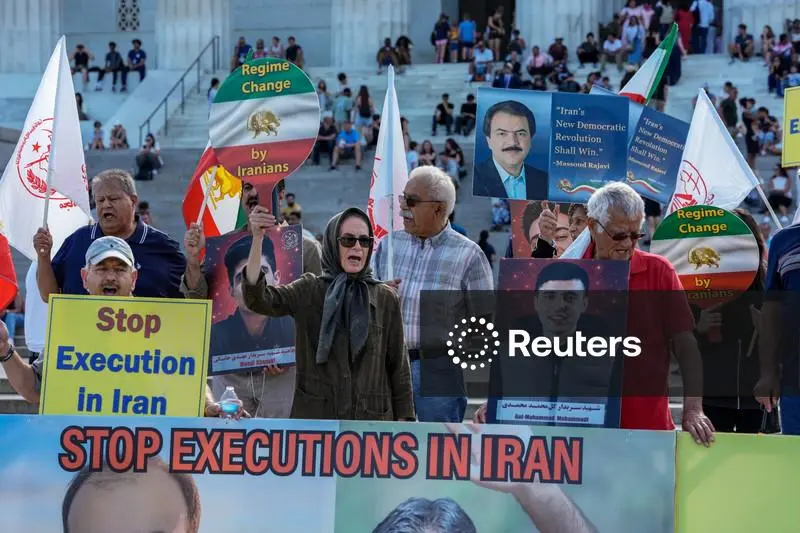
From July 25, 2026 [Washington, DC] @fox5dc Supporters of Iranian opposition leader Maryam Rajavi, President-elect of the National Council of Resistance of Iran (NCRI), gather outside the Lincoln Memorial to honor Mehdi Khanaki, a political prisoner recently executed in Iran, and to protest the Iranian regime's escalating use of the death penalty. Demonstrators called for international accountability for human rights abuses and expressed support for a democratic, secular republic in Iran.
English
3
76
87
715
OIAC: Organization of Iranian American Communities retweetledi
Maryam Rajavi
Maryam Rajavi@Maryam_Rajavi·
In a horrific crime this morning, the clerical regime publicly executed two defiant protesters, Amir-Hossein Safari and Abolfazl Sepahi, in Isfahan, Iran. By carrying out these medieval public hangings and relentlessly executing Iran’s youth, this religious dictatorship desperately hopes to stem the tide of rising public anger. However, these atrocities only harden the resolve of Iran's rebellious youth to overthrow this bloody regime. Once again, I urge the United Nations, human rights organizations, the EU, and member states to forcefully condemn this atrocity. Immediate, effective action is required to halt the regime’s killing machine and save political prisoners on death row, especially 8 other young men facing imminent execution in Isfahan. International silence and inaction are seen by Tehran as a green light to escalate its killings. The regime's record of atrocities must be referred to the UN Security Council, and its leaders brought to justice for crimes against humanity.
Maryam Rajavi tweet mediaMaryam Rajavi tweet media
English
0
694
783
13.9K
OIAC: Organization of Iranian American Communities retweetledi
Amnesty MENA
Amnesty MENA@AmnestyMENA·
The public execution of two protesters today, following the arbitrary execution of at least three other protesters last week, marks a further escalation in the authorities’ use of the death penalty to quash dissent. amn.st/6012BEIpbg
English
4
47
58
1.2K
OIAC: Organization of Iranian American Communities
FROM REUTERS THIS WEEKEND ➡️ Supporters of Iranian opposition leader Maryam Rajavi, President-elect of the National Council of Resistance of Iran (NCRI), gather at the Lincoln Memorial to call for an immediate end to executions, torture, and political repression in Iran, in Washington, D.C., U.S., July 25, 2026. @Reuters
OIAC: Organization of Iranian American Communities tweet mediaOIAC: Organization of Iranian American Communities tweet mediaOIAC: Organization of Iranian American Communities tweet mediaOIAC: Organization of Iranian American Communities tweet media
English
0
57
65
628
OIAC: Organization of Iranian American Communities
UN experts urge Iran to quash death sentences of 12 protesters in single hearing, halt executions⬇️
Mai Sato@drmaisato

Press release I led on the use of the death penalty in Iran and its imposition on protesters, joined by other UN experts. ohchr.org/en/press-relea… UN experts today condemned the imposition of death sentences on 12 young men for their involvement in the January 2026 protests, and called for an immediate halt to executions. “Sentencing 12 people to death in one hearing, in a closed courtroom and without clarity as to each defendant’s individual responsibility violates established fair trial standards,” the experts said. The young men, aged between late teens and early twenties, were reportedly arbitrarily deprived of their liberty, in some cases being subjected to enforced disappearance, ill-treated and accused of involvement in the killing of four security force members, as well as arson and vandalism during the 8 January 2026 protests in Shahid Alikhani Square in Isfahan, based on broadcast confessions. The charges against them remain unclear, as the Revolutionary Court hearings are closed and judgments are not published. On 19 July 2026, two of the men were executed, sparking fears for the remaining 10. Among those facing imminent execution is Shervin Bagherian Jebeli, who turned 18 just days before his arrest. Within a week, and before any trial, State television aired a video of him confessing to violence against security officers during interrogation. He appeared unaware of the meaning of his capital charge – moharebeh (enmity against God) – which raises concerns as to whether he had access to legal counsel of his own choosing at the time of the broadcast. The experts warned that Jebeli’s case illustrates a disturbing pattern of prosecutions imposing death sentences after proceedings that appear to fall short of fair trial standards. “Confessions obtained under coercion must never be admitted as evidence, and broadcasting them before trial violates the presumption of innocence,” the experts said. In 2026, at least 24 individuals have already been executed in connection with the January protests. Many were young people exercising their rights to freedom of expression, peaceful assembly and participation in public life, including protesters from the ‘Woman, Life, Freedom movement’. “As national laws currently stand, it is impossible to take part in any protest critical of the State without risking reprisals and persecution. This cycle will only be broken when civic space opens up and freedom of peaceful assembly and expression is guaranteed,” the experts said. “The rationale appears clear: instil fear across society, deter future demonstrations, and silence dissent. Yet repression only breeds further dissent.” They noted that despite the risks, Iranians continue to demand change. Prisoners are protesting peacefully through the ongoing “No to Executions Tuesdays” campaign and the sit-in strike in Ghezelhesar prison. The experts urged Iranian authorities to heed these calls, and establish a moratorium on executions, pending abolition. “The moratorium should be used to ensure full compliance with international human rights law, including fair trial guarantees and restricting the death penalty to the most serious crimes.” “Executions only add to the violence and grief Iranians have endured,” they said. The experts are in contact with the Government of the Islamic Republic of Iran on these issues.

English
0
32
33
542
OIAC: Organization of Iranian American Communities retweetledi
Mai Sato
Mai Sato@drmaisato·
Press release I led on the use of the death penalty in Iran and its imposition on protesters, joined by other UN experts. ohchr.org/en/press-relea… UN experts today condemned the imposition of death sentences on 12 young men for their involvement in the January 2026 protests, and called for an immediate halt to executions. “Sentencing 12 people to death in one hearing, in a closed courtroom and without clarity as to each defendant’s individual responsibility violates established fair trial standards,” the experts said. The young men, aged between late teens and early twenties, were reportedly arbitrarily deprived of their liberty, in some cases being subjected to enforced disappearance, ill-treated and accused of involvement in the killing of four security force members, as well as arson and vandalism during the 8 January 2026 protests in Shahid Alikhani Square in Isfahan, based on broadcast confessions. The charges against them remain unclear, as the Revolutionary Court hearings are closed and judgments are not published. On 19 July 2026, two of the men were executed, sparking fears for the remaining 10. Among those facing imminent execution is Shervin Bagherian Jebeli, who turned 18 just days before his arrest. Within a week, and before any trial, State television aired a video of him confessing to violence against security officers during interrogation. He appeared unaware of the meaning of his capital charge – moharebeh (enmity against God) – which raises concerns as to whether he had access to legal counsel of his own choosing at the time of the broadcast. The experts warned that Jebeli’s case illustrates a disturbing pattern of prosecutions imposing death sentences after proceedings that appear to fall short of fair trial standards. “Confessions obtained under coercion must never be admitted as evidence, and broadcasting them before trial violates the presumption of innocence,” the experts said. In 2026, at least 24 individuals have already been executed in connection with the January protests. Many were young people exercising their rights to freedom of expression, peaceful assembly and participation in public life, including protesters from the ‘Woman, Life, Freedom movement’. “As national laws currently stand, it is impossible to take part in any protest critical of the State without risking reprisals and persecution. This cycle will only be broken when civic space opens up and freedom of peaceful assembly and expression is guaranteed,” the experts said. “The rationale appears clear: instil fear across society, deter future demonstrations, and silence dissent. Yet repression only breeds further dissent.” They noted that despite the risks, Iranians continue to demand change. Prisoners are protesting peacefully through the ongoing “No to Executions Tuesdays” campaign and the sit-in strike in Ghezelhesar prison. The experts urged Iranian authorities to heed these calls, and establish a moratorium on executions, pending abolition. “The moratorium should be used to ensure full compliance with international human rights law, including fair trial guarantees and restricting the death penalty to the most serious crimes.” “Executions only add to the violence and grief Iranians have endured,” they said. The experts are in contact with the Government of the Islamic Republic of Iran on these issues.
English
33
154
210
6.7K
OIAC: Organization of Iranian American Communities
From July 25, 2026 [Washington, DC] – Supporters of Iranian opposition leader Maryam Rajavi, President-elect of the National Council of Resistance of Iran (NCRI), gather outside the Lincoln Memorial to honor Mehdi Khanaki, a political prisoner recently executed in Iran, and to protest the Iranian regime’s escalating use of the death penalty. Demonstrators called for international accountability for human rights abuses and expressed support for a democratic, secular republic in Iran.
English
2
76
103
758
OIAC: Organization of Iranian American Communities
Today in Washington, DC, we honored Mehdi Khanaki, a member of @PMOIRAN, executed by the Iranian regime for refusing to surrender his beliefs. Executions are not a sign of strength but a desperate attempt to prevent another nationwide uprising. The free world must hold Tehran accountable and stand with the Iranian people’s struggle for a democratic, secular republic. #StopExecutionsInIran #FreeIran #MehdiKhanaki
OIAC: Organization of Iranian American Communities tweet media
English
3
95
123
929