K. Osborn Lab

121 posts

K. Osborn Lab banner
K. Osborn Lab

K. Osborn Lab

@OsbornLab

Tweets do not reflect the position of any affiliated institutions.

Washington, DC Katılım Haziran 2017
71 Takip Edilen518 Takipçiler
K. Osborn Lab retweetledi

UWA
UWA@uwanews·
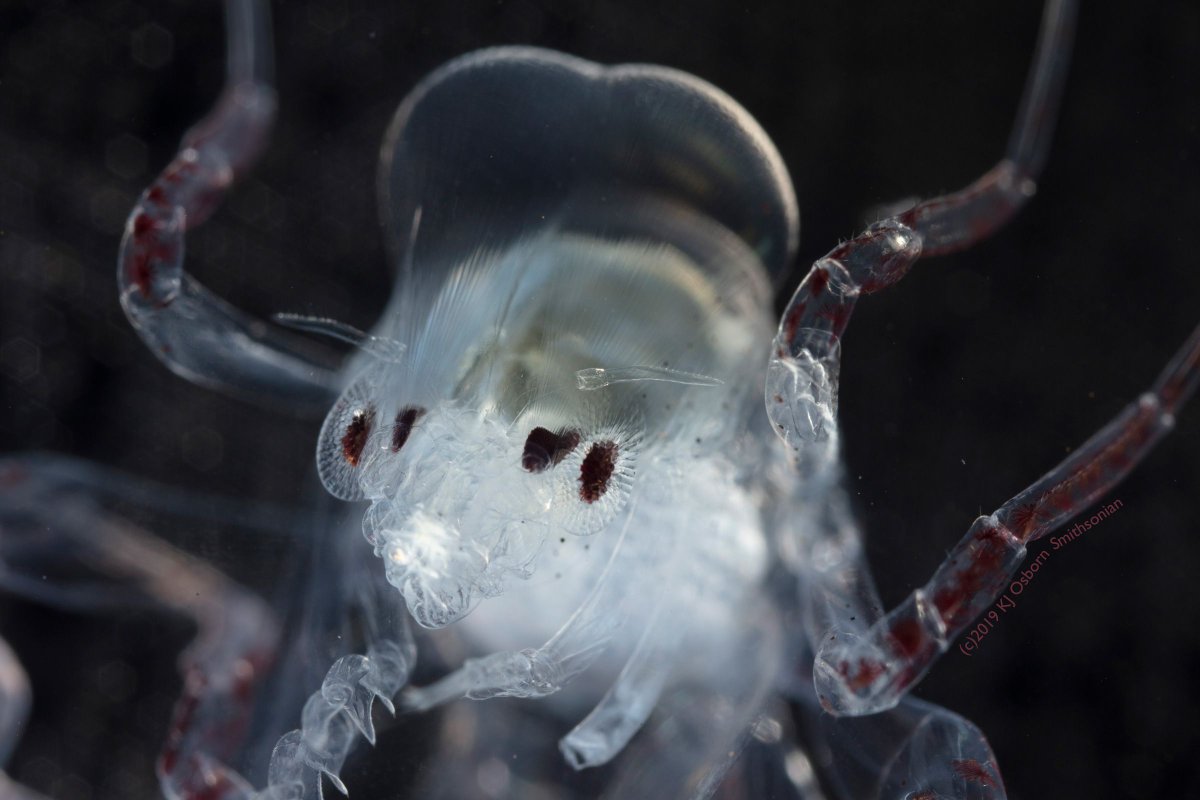
👀 Hyperiid amphipods need to see without being seen. Living in the deep-sea, a dim and uniquely challenging yet simple visual environment, has led to some extraordinary adaptations! 🌊 #UWA @MBARI_News @NMNH @UWAresearch @uwaoceans bit.ly/4bykKHG
English

0
5
12
1.9K
K. Osborn Lab retweetledi
MBARI
MBARI@MBARI_News·
New research by scientists at @uwanews, @uwa_oceans, and @NMNH—including MBARI Adjunct Karen Osborn—has revealed the remarkable visual systems of hyperiid amphipods, shrimp-like crustaceans that live in the ocean’s twilight zone. Learn more: uwa.edu.au/news/article/2…
English
1
26
80
4.4K
K. Osborn Lab retweetledi
UWA Oceans Institute
UWA Oceans Institute@uwaoceans·
"What is unusual about Phronima is that as many as 60 eyelets in the larger eye look at the same point in space" says Dr Zahra Bagheri. New research from OI Members addressing the age-old question of how animals see the world. @UWAresearch @hemmi_lab @OsbornLab @NMNH
MBARI@MBARI_News

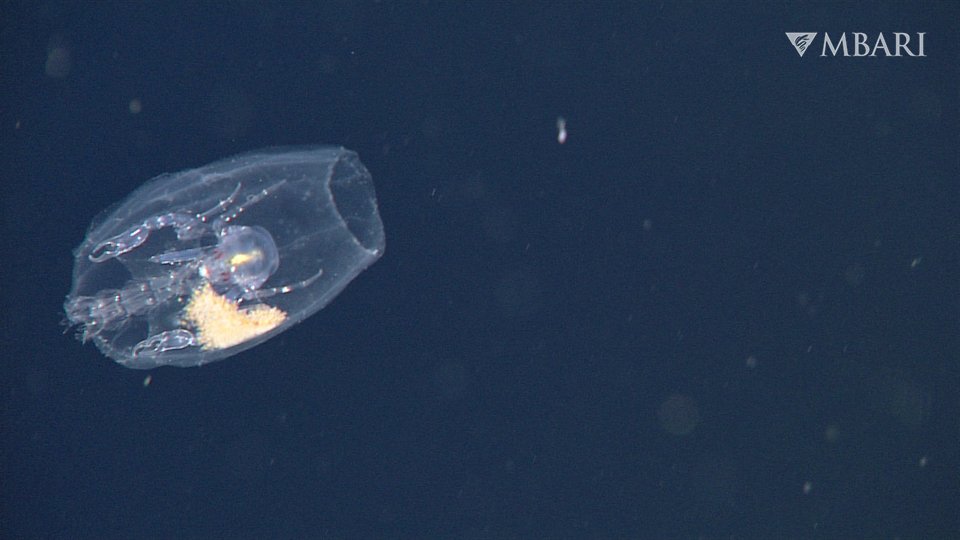
In the darkness of the deep, animals strive to see but not to be seen. A new study has found that the barrel amphipod, Phronima sedentaria, evolved eyes to help it see from within its gelatinous barrel: ow.ly/9F1950Lculp.

English
1
4
6
0
K. Osborn Lab retweetledi
MBARI
MBARI@MBARI_News·
The study, led by MBARI adjunct scientist @OsbornLab, with @hemmi_lab, @uwanews, @NMNH, @uwaoceans, and @InvertebratesDC, found one of the advantages of Phronima’s large eyes—they allow the tiny amphipod to see objects in the deep sea at longer distances over a wider depth range.
MBARI tweet media
English
1
6
29
0
K. Osborn Lab
K. Osborn Lab@OsbornLab·
@Crinoidea_hk That is great. Several species have stripes on their bodies and acicular cirri, but that is a new pattern to me. Any chance you have tissue from it and a specimen, or a few? Very beautiful!
English
0
0
0
0
みさきのうみしだ
みさきのうみしだ@Crinoidea_hk·
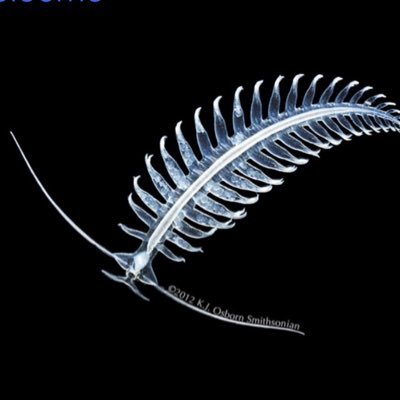
2016年10月に島根県隠岐で採集されたオヨギゴカイ属の1種 Tomopteris sp. です。本種は透明な体がガラス細工のように美しく、均等に並んでいる色素が特徴的な浮遊性のゴカイ類です。
みさきのうみしだ tweet media
日本語
4
96
492
0
K. Osborn Lab retweetledi
MBARI
MBARI@MBARI_News·
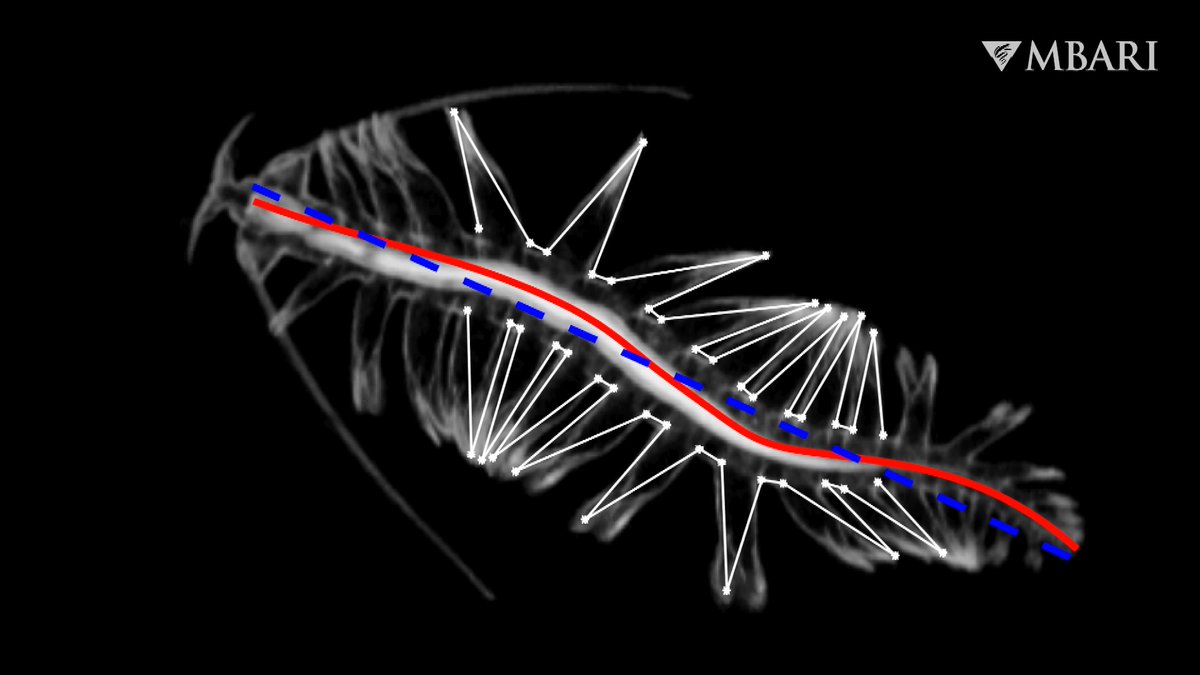
Read the article here: Metachronal swimming with flexible legs: A kinematics analysis of the midwater polychaete Tomopteris. Integrative and Comparative Biology, icab059. doi.org/10.1093/icb/ic… @OUPAcademic
English
2
4
20
0
K. Osborn Lab retweetledi
MBARI
MBARI@MBARI_News·
In the future, this worm could inspire new designs for everything from underwater propulsion to medical technology. Learn more about this incredible intersection of engineering and biology: mbari.org/tomopteris-swi…
English
1
8
28
0
K. Osborn Lab retweetledi
MBARI
MBARI@MBARI_News·
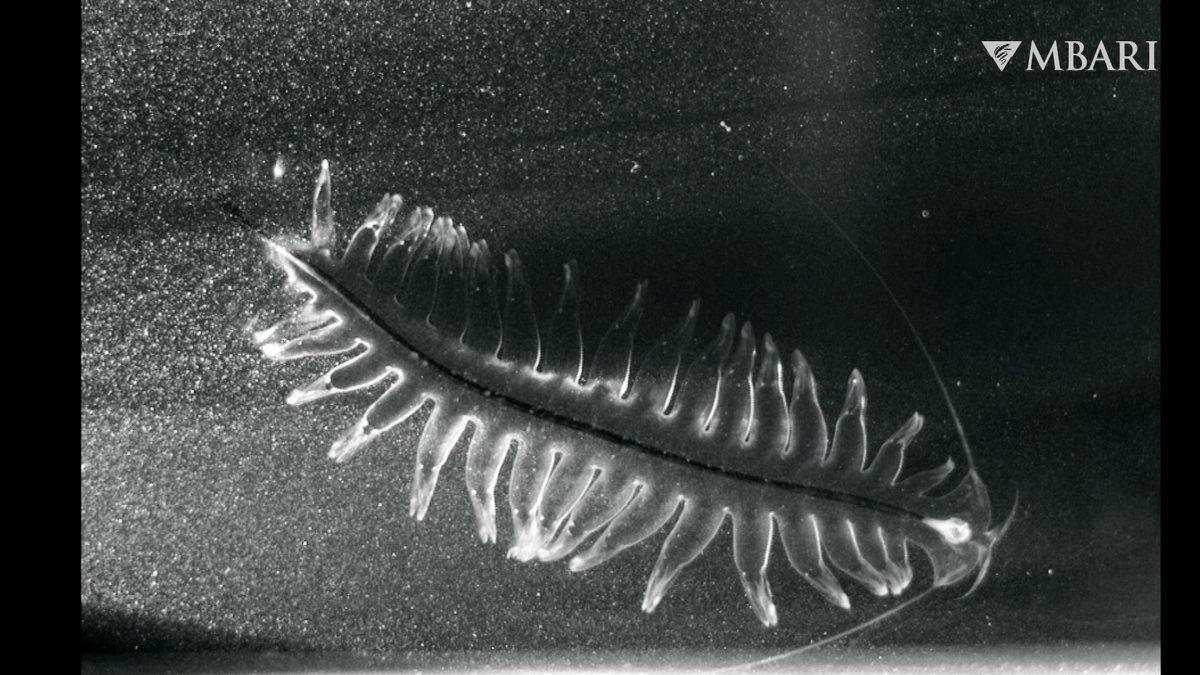
A flexible body plan allows Tomopteris to combine multiple modes of propulsion. This effective technique provides speed and maneuverability for life in the midwater—and makes the gossamer worm’s anatomy and swimming mechanics interesting for engineers.
MBARI tweet media
English
1
6
31
0
K. Osborn Lab retweetledi
MBARI
MBARI@MBARI_News·
The team recorded the animal’s swimming behavior in the field using MBARI’s ROVs. Back in the lab, high-speed cameras and sophisticated illumination systems offered an even closer look at the mechanics of the worm’s movements.
MBARI tweet media
English
1
2
17
0
K. Osborn Lab retweetledi
MBARI
MBARI@MBARI_News·
A study published by MBARI researchers and colleagues from @NMNH has revealed the effective, yet elegant, swimming behavior of gossamer worms in fine detail. @DanielsJoost @KakaniKatija @OsbornLab
English
2
80
257
0