tonmoyorko2121

366 posts

tonmoyorko2121 banner
tonmoyorko2121

tonmoyorko2121

@OviKumar132791

I do business for living 😉

Katılım Eylül 2025
217 Takip Edilen91 Takipçiler
tonmoyorko2121
tonmoyorko2121@OviKumar132791·
Invisible Infrastructure Powering DeFi DeFi’s Shift to Automated Vault Systems Building the Silent Layer of On-Chain Finance Where DeFi Becomes Seamless and Automated The Next Stage of Yield Infrastructure @crypttoji @nic_builds @d3crypt0r25
tonmoyorko2121 tweet media
English
8
0
11
78
tonmoyorko2121
tonmoyorko2121@OviKumar132791·
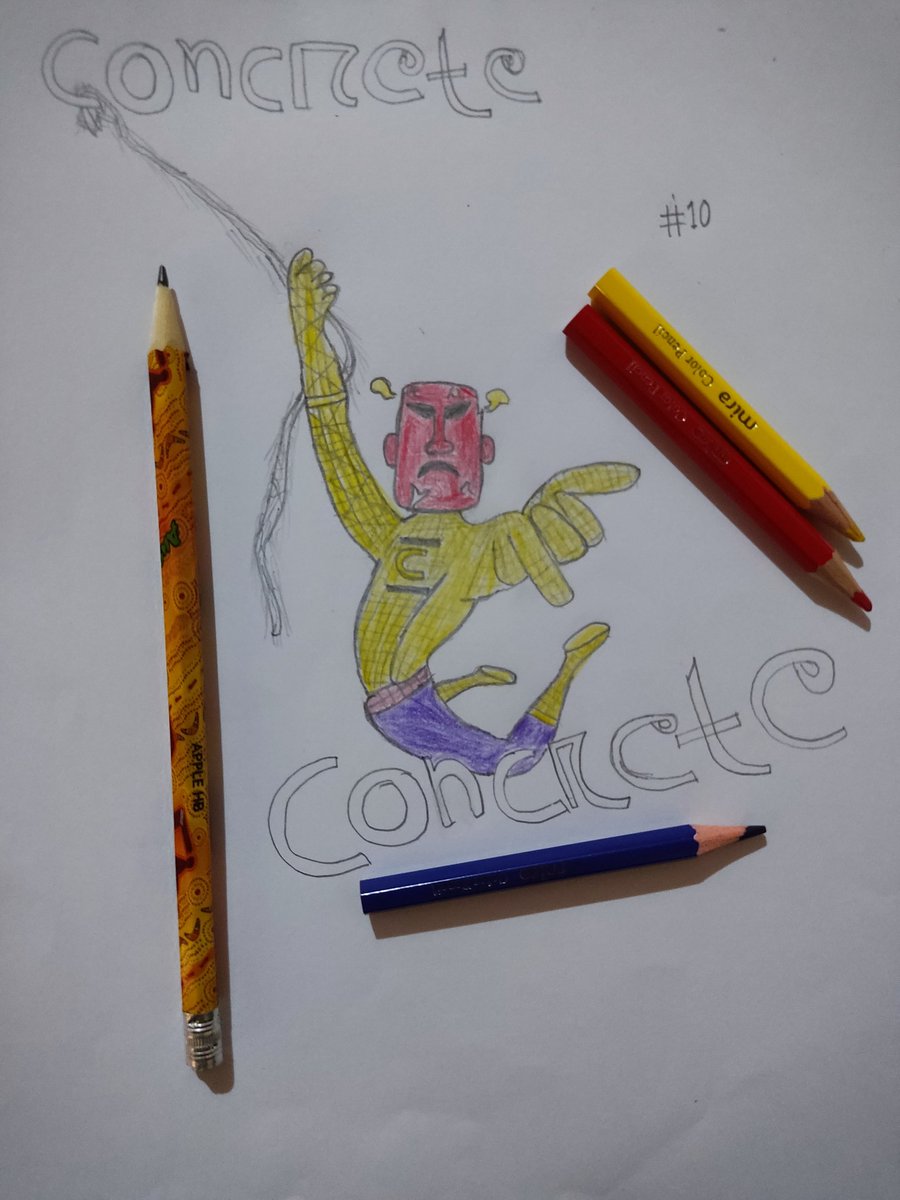
Crypto Growth: Day 1 vs Day 500 Day 1: Deposit into a vault-auto yield starts Day 500 System becomes advanced: 🟡 smarter strategies 🟡cross chain use 🟡 auto rebalancing & swaps Bottom line: Your assets keep evolving over time Small fee applies on generated yield @Concrete
tonmoyorko2121 tweet media
English
0
0
1
7
BloomFI
BloomFI@bloomfi355·
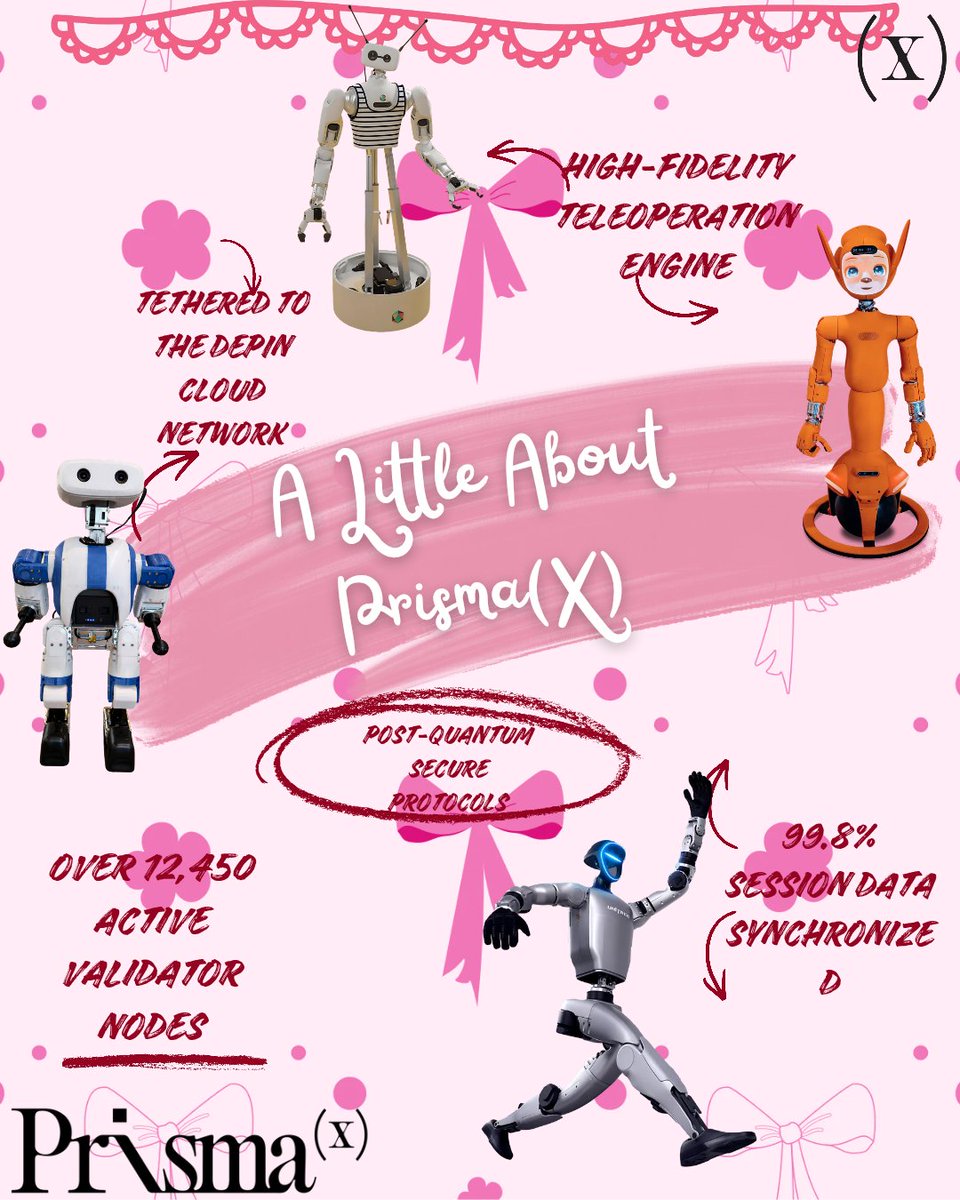
✓ Breaking down the ecosystem one node at a time Want to know what powers the future of Physical AI? ✓ It’s a mix of decentralized hardware ultra-fast data synchronization and absolute security Here’s a quick look at what happens behind the scenes of the @PrismaXai network.
BloomFI tweet media
English
14
0
17
121
Kronos 🇨🇦🐐🍡
After going through @KASTxyz’s latest stablecoin summary, I feel like the industry is slowly entering a different stage entirely. One thing that stood out to me is that stablecoins are slowly becoming part of real financial systems, not just for trading anymore. Circle raising $222M for payment-focused infrastructure, JP Morgan launching tokenized money market products, and real-world assets crossing $32B all point toward the same direction: stablecoins are gradually becoming part of mainstream finance. And honestly, this is why what KAST is building makes more sense now. While large institutions are building the infrastructure layer, KAST seems focused on the user side of the experience, making stablecoins easier to use in everyday life through payments, global transfers, and spending. That’s important because adoption doesn’t only depend on the technology existing. People also need products that make the experience feel simple enough to use naturally. I also found the rise of local-currency stablecoins interesting. It shows the market is slowly moving beyond just digital dollars toward more global payment use cases. To me, the bigger picture here is that stablecoins are starting to move from “crypto assets” into actual financial tools people and businesses can use daily. And if that trend keeps growing, platforms already focused on usability and global payments could benefit a lot from it.
Kronos 🇨🇦🐐🍡@I_m_Kronos

.@KASTxyz partnering with Tempo honestly makes a lot of sense when you look at the direction both teams are heading. KAST is already building the consumer side of stablecoin payments, letting people hold, move, and spend stablecoins globally like normal money through their cards and app experience. But when you start operating at that scale, especially across 170+ countries, the infrastructure underneath matters just as much as the product people see. Tempo seems to be focused on solving exactly that part. Fast settlement, predictable fees, payment-focused infrastructure, and systems designed for real financial activity instead of congested blockchain traffic. That’s important for something like KAST where people expect payments to feel instant and reliable, not delayed because of network spikes. I also like the fact that this partnership isn’t just about payments alone. KAST plans to bring its stablecoin earn product onto Tempo too, meaning users can eventually put idle stablecoin balances to work directly inside the app instead of moving funds around different platforms. To me, this is the kind of direction stablecoin adoption needs. The easier payments, rewards, transfers, and earning become inside one smooth experience, the easier it becomes for everyday people to actually use stablecoins naturally in daily life.

English
15
3
22
258
Crybabe
Crybabe@0xCrybabe·
GPrisma🤎 yesterday's PrismaX Content Clinic on Discord felt like stepping into a room full of sunshine and creative souls ✨💗 over 200 hearts gathered, sharing raw, practical gems on storytelling, content crafting, and how to genuinely add value to the ecosystem the kind of session that leaves you inspired for days. every corner of that digital space was blooming with love, and the biggest reason behind that warmth was our wonderful host @vivianrobotics. the way she held the space, so gently yet so powerfully, made everyone feel seen and safe to learn. truly, so much admiration for her 🫶 and in the middle of all this magic, something happened that made my heart do a little flip… our tiny AMA got reviewed on that very stage alongside other beautiful creator content. and Vivian said she liked it 🥺🌸 i just sat there trying to process. she also sweetly shared that @youngoldman reached out to invite her and the team to our second AMA, but because of company policy, they can't be part of unofficial events. still, with the softest encouragement, she told us to keep the AMA alive, to explore new topics, and bring more freshness… so we're absolutely keeping that promise. more creative ideas, more heart poured value, all coming to life. Vivian, your words are tucked in our hearts forever. thank you doesn’t feel enough 🌸😻🫶 @PrismaXai @vivianrobotics @MaxC16134
Crybabe@0xCrybabe

Prisma 🤎 Yesterday, Office Hours #6 went live and the path forward is looking sharper than ever. Big shoutout to @vivianrobotics PrismaX's Marketing Ops Lead & core team member for hosting the session and breaking down the roadmap with pure clarity. The energy was top tier. Here's what you missed👇 1: Ambassador Program is officially LIVE. 800+ applications, ultra selective, starting with 1 per region. Teleoperators get the edge. Apps close May 24. 2: VLA Foundry hint confirmed. PrismaX is moving beyond teleoperation into a full robotics data network validators, data quality layers, new contribution models. 3: Next 1–2 months = major platform updates. Leaderboards, performance tracking, and reward systems are coming to recognize consistent builders. 4: Content Spotlight channel is now live, prioritizing high effort, original work over AI spam. 5: Teleop stability & arm fixes are actively being worked on your detailed bug reports directly speed things up. Contribution over hype, every single time. The robot future isn't waiting. Apply, build, contribute. 🔥 @PrismaXai @vivianrobotics @MaxC16134

English
19
0
35
331
saze(revival arc)
saze(revival arc)@sazexbt·
ZK builders are trapped and most don't even realize it. the old way of building looks like this: -forced integrations you didn't choose -ecosystem rules you can't break -limited flexibility baked in from day one The result? **Vendor lock-in.** You build on their terms. Not yours. @fermah_xyz Froben exists to break that chain. Literally. --- here's what makes it different It's Proof-System Agnostic. You're not married to one proving stack. Choose from SP1, RISC0, ZKVM or bring your own. The infrastructure doesn't care. You decide. this means: -full flexibility over your tech stack -you own the outcome, not the platform -no ecosystem holding you hostage **The Froben Way breaks down like this:** >YOUR PROVER - you pick it >YOUR STACK - you build it >YOUR RULES - you set them no lock-in,no middleman,just proof. This is what sovereign ZK infrastructure actually looks like. Not a platform that owns your future, a foundation that hands it back to you. One ecosystem shouldn't own your future. Fermah Froben doesn't. Cc: @7wealthh
saze(revival arc) tweet media
English
31
0
56
1.2K
tonmoyorko2121
tonmoyorko2121@OviKumar132791·
@siyam1911 TPS is only half the story network communication is the real bottleneck...
English
0
0
0
2
J. Sʏzo
J. Sʏzo@siyam1911·
Most people still measure blockchain scalability with a single metric TPS. But raw throughput alone does not solve the deeper infrastructure problem. Because blockchains are not just execution engines. They are massive distributed communication systems. Every second, nodes across the network must continuously exchange: transactions consensus messages mempool updates validator signals state changes block propagation data And the larger the network becomes, the harder this coordination gets. This is where one of blockchain’s biggest hidden bottlenecks appears: network propagation efficiency. In many existing systems, data is still transmitted through traditional gossip-based networking models. That means the same information is repeatedly forwarded node-to-node across the network, creating: higher latency redundant bandwidth usage network congestion slower synchronization inefficient scaling under heavy demand Which creates an important reality: a blockchain can theoretically process massive TPS numbers but if information cannot move efficiently between nodes, real-world performance eventually hits a ceiling. That’s why the next era of Web3 infrastructure may be defined not only by execution scalability but by communication scalability. This is exactly the layer projects like getoptimum.xyz are focused on. @get_optimum is building decentralized networking and memory infrastructure powered by Random Linear Network Coding (RLNC), an advanced networking approach designed to improve propagation efficiency and bandwidth optimization across distributed systems. Instead of simply pushing more transactions through blockspace, the goal is to improve how information itself travels across decentralized networks. Their architecture includes: • mump2p A high-performance pub-sub protocol optimized for faster and more efficient propagation. • DeRAM A decentralized RAM layer built for real-time state access and distributed memory coordination. • Flexnodes Permissionless nodes designed to optimize synchronization and communication throughout the network. This becomes increasingly important as Web3 moves toward AI coordination systems real-time onchain gaming autonomous agents high-frequency trading infrastructure DePIN ecosystems machine-to-machine economies All of these require ultra-fast distributed communication. Because the future of blockchain is not only about executing transactions faster. It is about making decentralized systems communicate faster. Execution scalability matters. Consensus matters. But networking efficiency may become the infrastructure layer that ultimately determines how far blockchain technology can scale.
J. Sʏzo tweet media
English
16
0
20
96
Kamrul
Kamrul@kamrulbroz·
Financial agreements are slowly moving from static documents to programmable systems. Rialo is exploring what that future can look like when verification, coordination, and execution work together. An agreement is not only a written promise. → It usually depends on conditions. → A repayment must happen. → Collateral must stay valid. → A settlement event must be confirmed. → A rule must be checked before the next step begins. Today, many of these checks still depend on manual review and disconnected systems. Automated financial agreements change that flow. The agreement can define the rules. Verification systems can check whether those rules are satisfied. Then execution can happen through programmable infrastructure when the required condition is confirmed. A simple example is a loan agreement. Instead of waiting for different parties to manually update records, the system can track repayment status, verify the condition, and coordinate the next action. This does not mean every financial detail needs to be public. It means financial workflows can become more structured, verifiable, and easier to automate. The future of financial agreements is not just about putting documents on-chain. It is about making the logic behind those agreements easier for systems to understand and act on. That is the direction @RialoHQ is building toward.
Kamrul tweet media
English
26
0
52
555
Izh Imon
Izh Imon@IzhImon·
A hand slips out of the shadows, fingers wrapped around the ultimate power card with calm, almost dangerous confidence. It’s the King of Moai but nothing like the version you grew up seeing. This one is a stone faced Moai, the ancient guardian of Easter Island reimagined as pure royalty. Every carved detail across its weathered face looks razor sharp in print, while those hollow eyes stare straight through you with the kind of silence that feels older than history itself. A cigarette hangs loosely from its lips, smoke caught mid curl, giving the statue this effortless rebel energy that basically says, I’ve watched empires rise and fall and I still don’t care. The card feels premium the second you see it. Crisp stock. Clean edges. Every detail is flawless. Club symbols flow around the statue’s armor perfectly the ornate crown, layered patterns, the sword resting at its side blending ancient Polynesian mystery with the swagger of a modern playing card. Behind it, other cards drift through a deep black void while a blurred face lingers in the distance, turning the entire scene into something that feels less like a deck and more like a cinematic poker shot frozen in time. What makes it hit so hard is the contrast. Timeless stone strength mixed with everyday vice. An ancient Easter Island sentinel crowned as king, smoking at the table like he owns the room. It’s more than just a card. It’s art you can shuffle, deal and flex with. Heavy. Raw. Addictive. Who else needs this exact deck in their hands right now? @ConcreteXYZ
Izh Imon tweet media
English
11
1
15
273
S H A HE D (privacy szn)
S H A HE D (privacy szn)@shahed05miazee·
One of the most interesting parts of coded networking is not just fragmentation. It’s reconstruction. At first, splitting data into fragments sounds simple. But the important question is: > How does the network rebuild the original data afterward? This is where coded fragments become powerful. Instead of sending the same full dataset repeatedly, the data is first encoded and divided into smaller pieces. Each fragment carries part of the original information. These fragments are then distributed across different nodes and network paths. Not every node receives the exact same pieces. And that’s intentional. Because the goal is not duplication. The goal is efficient recovery. Once enough fragments arrive, nodes can reconstruct the original data without needing every single piece. That changes how the network handles communication. Instead of waiting for one perfect transmission, the system becomes more flexible and resilient. Even if some fragments are delayed or lost, reconstruction can still happen. This helps the network avoid unnecessary retransmission and bandwidth waste. In practice, this means: • faster data recovery • better propagation efficiency • improved resilience under load • more stable synchronization between nodes Optimum uses this kind of coded fragment distribution to improve how large datasets move across decentralized networks. Rather than forcing nodes to repeatedly exchange full data, the system focuses on moving useful pieces efficiently across multiple paths. The network spends less time repeating the same information and more time coordinating efficiently. That’s what makes coded reconstruction such an important part of scalable networking infrastructure. Because in distributed systems, reliable recovery matters just as much as fast delivery.
S H A HE D (privacy szn) tweet media
English
25
0
36
241
tonmoyorko2121
tonmoyorko2121@OviKumar132791·
3/ When users deposit assets like USDC, the vault issues ERC-20 shares Those shares represent proportional ownership of deposited capital 🟡 generated yield 🟡 vault strategy exposure Simple UX on the front end Complex allocation engine underneath
English
0
0
0
22
tonmoyorko2121
tonmoyorko2121@OviKumar132791·
2/ Everything starts with vault creation. Partners deploy vaults directly through the Factory system. That means: standardized deployment 🟡 upgradeable architecture 🟡 built-in permissions 🟡 automated accounting from day one No need to rebuild infrastructure every time
English
0
0
0
15
tonmoyorko2121
tonmoyorko2121@OviKumar132791·
@RAFA_AI 8/ Better filtering → clearer signals Clearer signals → better decisions That’s the core loop
English
0
0
0
18
tonmoyorko2121
tonmoyorko2121@OviKumar132791·
From Market Noise to Clear Signals: How @RAFA_AI Filters Trading Data? 1/ Markets are noisy by default. They produce signals constantly but not all of them are meaningful. That’s where RAFA AI starts: filtering before thinking.
tonmoyorko2121 tweet media
tonmoyorko2121@OviKumar132791

AI is changing the game, but smart execution changes everything With RAFA AI investing feels more intelligent, faster, and data-driven than ever. From market insights to AI-powered strategies, the future of finance is being built in real time Stay early. Stay sharp @RAFA AI

English
7
0
1
31