Philip Hammond

3.5K posts

Philip Hammond banner
Philip Hammond

Philip Hammond

@PBHammond

🇷🇸 Katılım Mart 2009
1.2K Takip Edilen656 Takipçiler
Philip Cunliffe
Philip Cunliffe@thephilippics·
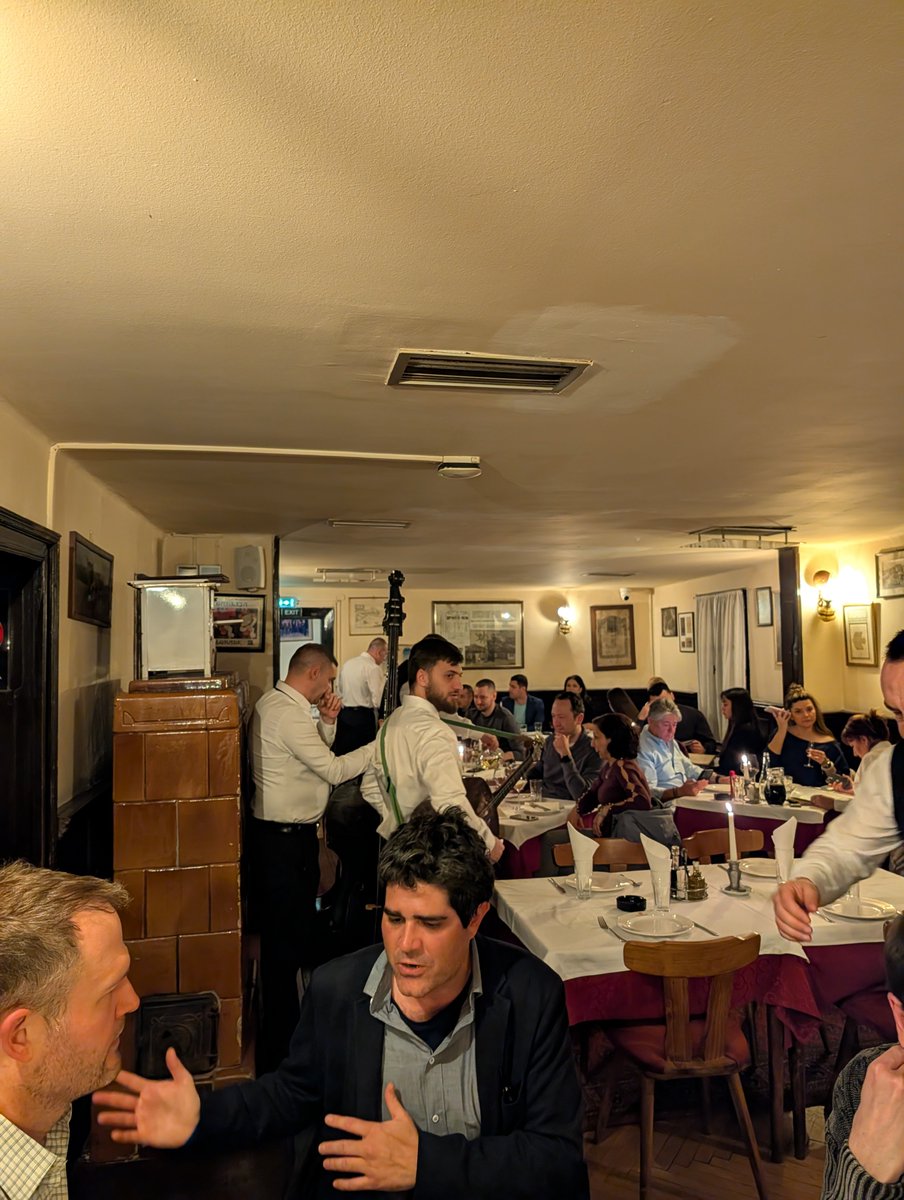
Belgrade by night after first day of a symposium on the Russo-Ukraine war, with @battleforeurope spotted holding forth in a kafana with a band behind him.
Philip Cunliffe tweet mediaPhilip Cunliffe tweet mediaPhilip Cunliffe tweet mediaPhilip Cunliffe tweet media
English
1
3
19
1.4K
Philip Hammond retweetledi
Glenn Diesen
Glenn Diesen@Glenn_Diesen·
Iran has made it clear that there is no going back to the way things were—crippling sanctions and constant threats from US military bases in the Gulf states. Given that political agreements are seen as meaningless and diplomacy as deceptive, Iran has decided that the US must be expelled from the region. The Gulf states cannot survive without access to the Strait of Hormuz; their access may therefore be conditioned on paying taxes as reparations and selling their oil in other currencies to end the petrodollar system that ties the US to the region. This war will prove to have been a historic mistake— as the effort to restore global primacy only intensified its demise. Yet in our local media, the propaganda is still organised around the saviour narrative of “liberating women” and “helping protesters”. This is similar to the absurd narrative of the Ukraine War, where the effort of using Ukrainians to impose a strategic defeat on Russia is sold to the public as NATO "helping" Ukraine defend its sovereignty. If the West wants to maximise its security and end these conflicts on favourable terms, it must break free from the narratives it has created.
English
475
3.8K
9.2K
429.3K
Philip Hammond retweetledi
Glenn Diesen
Glenn Diesen@Glenn_Diesen·
There is something surreal about our government-appointed “experts” speaking about the threat to freedom of navigation. The U.S. attacks boats off the coast of Venezuela and imposes a blockade on both Venezuela and Cuba. NATO countries are currently engaged in a campaign of piracy and attacks on Russian ships. Iranian tankers have been hijacked for years. International law is essentially a set of agreements based on mutual constraints, where predictability depends on reciprocity. You cannot exempt yourself from the rules and then expect compliance from the other side. The West has for years acted like rogue states, and they that sow the wind shall reap the whirlwind.
English
113
2.5K
6.4K
106.4K
Philip Hammond retweetledi
Thomas Fazi
Thomas Fazi@battleforeurope·
So, as expected, the European Commission has finally activated the Digital Services Act’s (DSA) “rapid response system” in the context of the upcoming Hungarian elections, which gives EU-funded “fact-checkers” and “NGOs” a veto over online speech in Hungary. This is a serious escalation in the EU’s interference in the Hungarian elections. The official explanation is that this is needed to combat “Russian interference”. But as I noted in a recent article for @compactmag, no evidence whatsoever has been produced to support this claim. The narrative almost exclusively relies on an “investigation” by journalists at the Warsaw-based nonprofit VSquare, which claims that Putin has instructed a group of political strategists and Russian military intelligence to interfere in the parliamentary elections in Hungary in April in order to ensure that Orbán wins. And what is the evidentiary basis for this extraordinary claim? It boils down to this (literally): “Multiple European national security sources have told me.” In other words, no evidence whatsoever is provided. We are simply asked to trust the “investigative journalists” in question. One might be inclined to extend that trust if the outlet in question were genuinely independent. Regrettably, it is not. A glance at VSquare’s donor list reveals it to be less an independent journalistic outfit than a textbook example of artificial civil society, funded by entities like the National Endowment for Democracy (NED), USAID, the German Marshall Fund of the United States, and various EU-funded consortia. In other words, VSquare is part and parcel of the “color revolution” infrastructure that, for decades, has sought to bring Central and Eastern Europe in line with the agenda of Brussels and Washington. It’s clear what is happening: they’re applying the Russiagate script that was previously used to subvert the elections in Romania just over a year ago. The aim is twofold. Ideally, tilt the elections in favour of the pro-EU, pro-war opposition candidate Péter Magyar by using the DSA to influence the pre-election online narrative. It’s well-known that the the EU’s “rapid response system” enables approved third parties — the aforementioned EU-funded “fact-checkers” and “NGOs” — to submit priority content moderation requests that disproportionately affect “populist” or EU/NATO-critical actors. If this doesn’t work — and it’s unlikely to work in the Hungarian context — then the allegations of Russian interference serve the purpose of laying the groundwork to delegitimise the result if Orbán wins, by seeding seeding a story of “stolen” or “unfair” elections. This is incredibly dangerous, and is yet another confirmation that the very institutions invoking the threat of foreign interference to justify their intervention are themselves the most consequential foreign actors in Hungary’s election. Read the full article here: compactmag.com/article/russia…
Thomas Fazi tweet media
English
76
1.1K
2.4K
250.1K
Philip Hammond retweetledi
Alex Christoforou
Alex Christoforou@AXChristoforou·
Emmanuel Todd on Iran War, end of Empire and @AMercouris mention.
English
22
183
781
28.2K
Philip Hammond retweetledi
Stephen Wertheim
Stephen Wertheim@stephenwertheim·
Behold the National Security Strategy from less than four months ago: “The days in which the Middle East dominated American foreign policy in both long-term planning and day-to-day execution are thankfully over—not because the Middle East no longer matters, but because it is no longer the constant irritant, and potential source of imminent catastrophe, that it once was. It is rather emerging as a place of partnership, friendship, and investment.” “Conflict remains the Middle East’s most troublesome dynamic, but there is today less to this problem than headlines might lead one to believe. Iran—the region’s chief destabilizing force—has been greatly weakened by Israeli actions since October 7, 2023, and President Trump’s June 2025 Operation Midnight Hammer, which significantly degraded Iran’s nuclear program.” “We should encourage and applaud reform when and where it emerges organically, without trying to impose it from without. The key to successful relations with the Middle East is accepting the region, its leaders, and its nations as they are while working together on areas of common interest.”
English
26
423
1.2K
349.5K
Balkan Conflicts Research Team
Balkan Conflicts Research Team@ResearchTeam·
Why the press reported Srebrenica as a premeditated genocide rather than a spontaneous bloody civil war. Blaming the Serbs as uniquely evil distracted from the UN's shameful failure to demilitarise 'safe areas'. rebrand.ly/1l2sq82
English
2
11
56
720
Bronze Age Pervert
Bronze Age Pervert@bronzeagemantis·
In 1999 USA bombed Serbia over Kosovo crisis. Albright stopped a possibly fruitful negotiation to begin an air campaign that everyone assumed would last days. It ended up lasting almost 3 months. That was against a country much smaller, less armed, less fanatical than Iran
Bronze Age Pervert tweet mediaBronze Age Pervert tweet media
English
91
185
1.5K
134.8K
Philip Hammond retweetledi
Glenn Greenwald
Glenn Greenwald@ggreenwald·
The new Iran War has the lowest amount of public support from Americans of any new American war in decades. Too many Americans lived through Iraq, Afghanistan, Syria, Libya, etc. and just see through the propaganda, to say nothing of increased awareness of the role of Israel.
Glenn Greenwald tweet media
English
437
1.8K
6.3K
194.1K
Philip Hammond
Philip Hammond@PBHammond·
@DD_Geopolitics True, but it's not a new development — Minsk (2014/15) and Rambouillet (1999) were also fake diplomacy for e.g.
English
0
0
1
130
DD Geopolitics
DD Geopolitics@DD_Geopolitics·
Tucker Carlson on the U.S. diplomacy trap: The question Tucker says Americans need to know if the negotiations with Iran were genuine, or were they designed to lull Tehran into a false sense of security before a sneak attack? "How is that better than Pearl Harbor? How is that better than any dishonorable sneak attack in history?" He adds that the Ukraine conflict was never settled before the Iran war launched, and now Russia is feeding targeting intelligence to Iran. The chickens are coming home to roost across multiple fronts simultaneously. The conclusion: whether the diplomatic deception happened or not, the world now believes American diplomacy is fake. And that makes every future negotiation with anyone, nearly impossible. "It's a disservice to American citizens. And it makes our future much, much tougher."
English
18
231
838
39.2K
Philip Hammond retweetledi
Thomas Fazi
Thomas Fazi@battleforeurope·
Is China rethinking its defence and national security posture in light of the US-Israeli attack on Iran? An official account of China’s armed forces, @ChinaMilBugle, recently published this image listing five lessons drawn from the ongoing US-Israeli attack on Iran. Though no additional comment is offered, these seem to suggest that the war is actively reshaping how the PLA thinks about China’s defence and national security posture. This matters because it sits in tension with a long-standing principle. For decades, China’s approach to national security has been organised around the following logic: economic development requires stability, and stability requires avoiding military confrontation. The PLA was modernised not to fight wars but to make them unnecessary — a deterrent posture designed to raise the cost of aggression without triggering it. Diplomatic engagement, multilateral institutions and strategic patience were the preferred instruments. That posture now appears to be under significant internal pressure. The US-Israeli strikes on Iran — a country with which China maintains substantial economic ties (Iran supplies around 12% of China’s oil imports), which sits within the broader BRICS constellation of states that Beijing considers strategic partners, and with which China has been working for years towards a global alternative to the dollar-centric system — seem to have sharpened a question that Chinese strategists have been circling for some time: what does it mean to watch an adversary systematically dismantle your partners, and what does restraint actually buy you? Lesson One: The Deadliest Threat — The Enemy Within The Iran case appears to have reinforced an old anxiety in Chinese strategic thinking: that sophisticated adversaries don’t just attack from outside, they exploit vulnerabilities that have already been cultivated within. Whether through intelligence penetration, compromised officials or ideological subversion, the argument seems to be that Iran’s defences were softened before the first missile was fired. The lesson Chinese planners seem to draw is less about foreign espionage in the abstract and more about the reliability of the system itself — its personnel, its loyalties, its resistance to outside influence. From Beijing’s perspective, this likely validates ongoing efforts to tighten internal security screening, expand counterintelligence functions and frame national security as a collective civic responsibility rather than a purely institutional one. The political implication is significant: it provides justification for continued purges and loyalty campaigns within the military and party apparatus under the banner of readiness. Lesson Two: The Costliest Miscalculation — Blind Faith in Peace Iran’s apparent belief that ongoing negotiations might forestall military action is read here as a strategic failure of the first order. The fact that diplomatic talks were still underway when strikes began is presented not as a tragedy of miscommunication but as a deliberate exploitation of Iran’s preference for a negotiated outcome. Blind faith in peace and diplomacy, in this reading, became a liability — a disposition that the adversary weaponised. In other words, Iran was attacked not because it was considered an imminent threat but precisely because it was not. For China, this carries pointed relevance to Taiwan and the broader Pacific region. The implicit argument is that deterrence cannot be outsourced just to diplomacy, and that any willingness to pursue talks must be backed by a credible military posture, otherwise negotiation signals weakness rather than goodwill. In short, complacency dressed up as pragmatism may be just as dangerous as war-mongering, if its signals to the enemy that it can escalate with impunity. Lesson Three: The Coldest Reality — The Logic of Superior Firepower This lesson is the most straightforwardly. The US-Israeli operation demonstrated what integrated, AI-assisted, precision-strike capabilities look like at scale: air superiority was established rapidly and key defences were either lacking in the first place or systematically degraded. The technological gap, in this reading, was not just a matter of hardware but of integration — the ability to synthesise intelligence, command systems and kinetic assets into a coherent operational whole. China’s takeaway appears to be about closing that gap, or at minimum denying it. Investment in hypersonic systems, AI-enabled command and control, electronic warfare and anti-access capabilities all fit within a doctrine designed to ensure that any adversary contemplating a similar operation against Chinese territory or interests would face unacceptable costs. The lesson is not that China needs to match US power projection globally, but that it needs sufficient asymmetric capability to make the calculation prohibitive in its own theatre. Lesson Four: The Cruellest Paradox — The Illusion of Victory Even granting military success, the post-strike environment raises a harder question: what has actually been achieved? The Chinese framing here gestures at a deeper strategic argument — that decisive conventional victory against a motivated adversary rarely produces durable outcomes, and that the destruction of a state’s military capacity tends to generate new forms of resistance rather than submission. For China, this lesson likely cuts in two directions. Externally, it may reinforce skepticism about the US preference for coercive solutions and lend weight to China’s positioning as a power that favours “political resolution” of conflicts — a framing useful in the Global South. Internally, it suggests that any conflict scenario China might face, particularly over Taiwan, would need to account for the long tail of resistance and international delegitimisation that follows even a “successful” use of force. Victory on the battlefield and victory in the strategic sense are treated here as quite different things. Lesson Five: Ultimate Reliance — Self-Reliance The fact that Iran — despite receiving from Russia and China technical-material support to its military production as well as intelligence-satellite support (key in this case was Tehran’s shift from US-controlled GPS to China’s BeiDou navigation system) — was ultimately left to rely on its own military means in its response to the US-Israeli attack is read as a structural condition of the current international order, not an anomaly. Ultimately, no country can count on the automatic support of its “allies” in a conflict. China’s response to this lesson is visible in policy rather than rhetoric: the push for food security, energy independence, domestic semiconductor production and resilience in critical supply chains all reflect a strategic posture premised on the assumption that external support cannot be counted on under pressure. This is not isolationism — China remains deeply integrated into global trade — but rather a deliberate effort to ensure that key dependencies cannot be weaponised against it, as they were against Russia after 2022 and, in this reading, against Iran. Self-reliance is framed not as autarky but as strategic insurance. Conclusion The publication of this list of “lessons” by an official PLA-affiliated account is telling less for what it says than for what its tone implies. The through-line across all five lessons is a single uncomfortable conclusion: that the doctrine China has traditionally followed — challenging empire through self-sufficiency and the development of an alternative international economic order without directly challenging the West’s increasingly unrestrained use of violence — may not be sufficient when your adversary has decided that it’s no longer bound by even the most basic norms of international relations, as testified by the assassination of Iran’s supreme leader Khamenei. Whether this represents a genuine doctrinal shift or an exercise in institutional signalling remains to be seen. But the fact that it is being said, officially and publicly, suggests that within Chinese defence circles, the old consensus is being revisited.
Thomas Fazi tweet media
English
4
22
50
10.3K
Philip Hammond retweetledi
Thomas Fazi
Thomas Fazi@battleforeurope·
Very powerful and sobering piece by Fyodor Lukyanov, editor-in-chief of the magazine Russia in Global Politics, on how we have entered the most dangerous age in human history: “The Iranian head of state was not only liquidated by a precision strike — this act was also hailed as a triumphant achievement and a blessing for future conflict resolution. Ali Khamenei was, according to his country’s laws, the legitimate supreme authority of a UN member state that is internationally recognised almost universally and participates as a full-fledged actor in world affairs — including political negotiations with the very states that brought about his death. The fact that one state deliberately assassinates the head of another state and does so according to the same scheme used to eliminate leaders of terrorist cells or drug cartels gives world politics a completely new, dangerous dimension. This is true even in comparison to previous regime changes and their violent endpoints, such as the lynching of Muammar Gaddafi in Libya or the execution of Saddam Hussein in Iraq. Although both events resulted from external military interventions, Gaddafi died at the hands of Libyan adversaries amid internal unrest. Saddam Hussein, on the other hand, came to an end through a ruling by an Iraqi court — despite legitimate doubts about the objectivity of this procedure. The case of Iran marks the transition to a method that Israel has so far practiced primarily against the leadership of Hezbollah and Hamas. The United States now fully supports this approach. This process dismantles the last stabilising elements that had survived from previous eras of international relations. The actors now make the recognition of state legitimacy dependent on current political circumstances or personal inclinations and dislikes. This transforms world politics into a form of ‘Russian roulette’ and deprives it of its fundamental set of rules. It is not the case that in the past all actors always acted according to law and morality — especially since the latter is interpreted differently depending on the culture anyway. But framework conditions did exist. These are now being torn down. As this process progressed consistently and almost fluidly, many political elites do not seem to have yet grasped the seriousness of the situation in all its drama. In these circles, the events are considered merely drastic but explainable excesses of current contradictions. But not everyone shares this view. The conclusions that the US opponents now inevitably draw are obvious: - Diplomacy as a dead end: negotiations with the Americans seem almost pointless. The end result always demands surrender or exposes itself as a diplomatic simulation that merely prepares the violent solution. - Last resort: in a situation without a way of retreat and without the prospect of preserving what already exists, any remaining argument — i.e., any available form of the ‘red button’ — becomes legitimate, whether literally or figuratively. These findings will stand, regardless of what happens in Iran. Even if a form of ‘social engineering’ based on the Venezuelan model were to succeed there — for example through a backroom agreement on a transfer of power acceptable to all sides (which currently seems unlikely) — this would not reassure other US-critical states. The mechanism of violent submission is now established. This is a much tougher option than even the ‘color revolutions’ of the 2000s. Resistance to this will be more determined and desperate in the future — with consequences that, in the worst case, will develop a fatal dynamic of their own. [...] The general conclusion is as sobering as it is unoriginal: world politics is increasingly relying on naked violence and forced submission. Everything else descends into a trivial matter. Even hypocritical moral or ideological pretexts are rarely used anymore. The evaluation of this development is the responsibility of the individual. But ignorance of these facts is no longer possible”. Full article in Russian: rg.ru/2026/03/01/vyh…
Thomas Fazi tweet media
English
164
1.3K
3.7K
621.2K
Philip Hammond retweetledi
Sayer Ji
Sayer Ji@sayerjigmi·
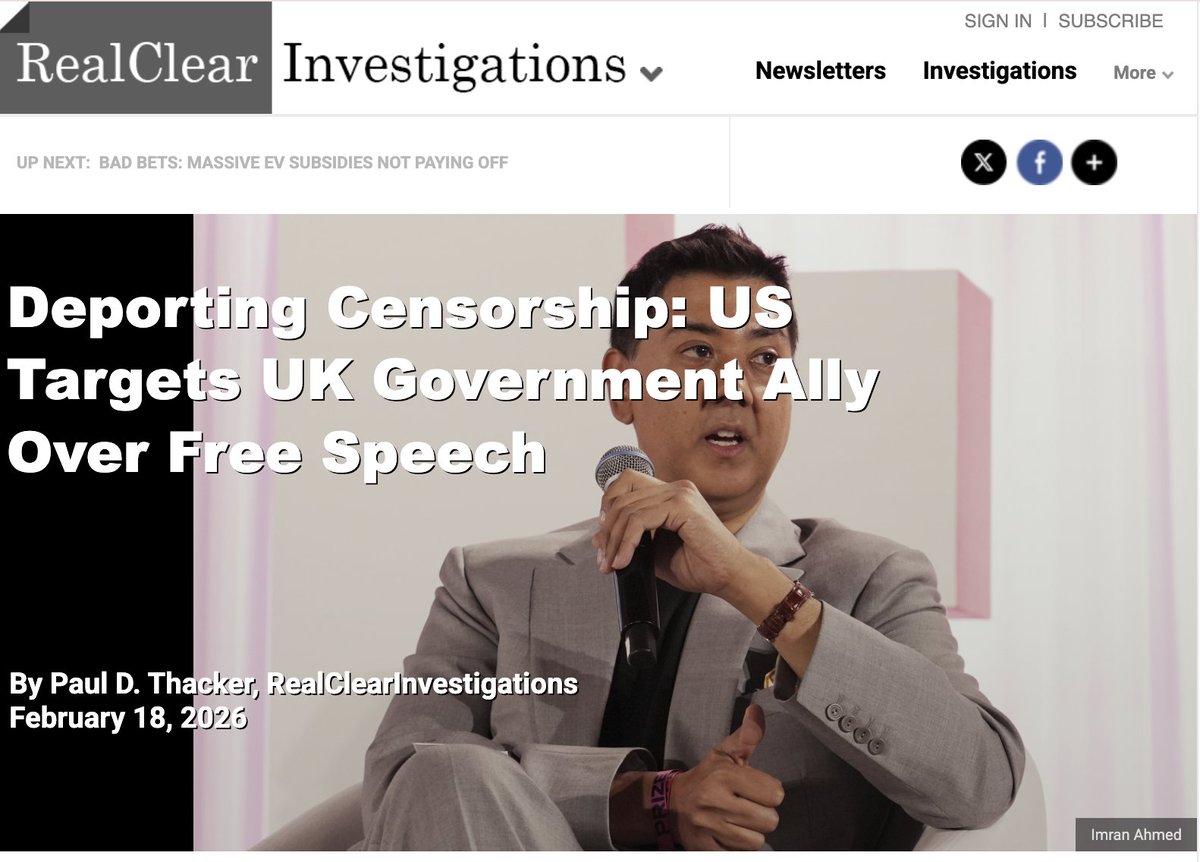
🚨1/ Paul Thacker's latest report SHOULD BE FRONT PAGE NEWS: Leaked whistleblower documents prove CCDH didn't lobby the British government on speech regulation — it wrote the agenda, chaired the meeting, and told the minister when she could speak. The government's own briefing document describes its minister as CCDH's guest. Full investigation 🧵👇
Sayer Ji tweet media
English
11
225
471
72.3K
Philip Hammond retweetledi
Thomas Fazi
Thomas Fazi@battleforeurope·
Ukraine is deliberately destabilising an EU country with the full backing of the EU itself.
Orbán Viktor@PM_ViktorOrban

Open Letter to President Volodymyr Zelenskyy Mr. President, For four years, you have been unable to accept the position of the sovereign Hungarian government and the Hungarian people regarding the Russia–Ukraine war. For four years, you have been working to force Hungary into the war between your country and Russia. During this time, you have received support from Brussels and secured the backing of the Hungarian opposition. We also see that you, Brussels, and the Hungarian opposition are coordinating efforts to bring a pro-Ukraine government to power in Hungary. In recent days, you have blocked the Friendship oil pipeline, which is critical to Hungary’s energy supply. Your actions are against Hungary’s interests and endanger the secure and affordable energy supply of Hungarian families. I therefore call on you to change your anti-Hungarian policy! We, the Hungarian people, are not responsible for the situation in which Ukraine finds itself. We sympathise with the Ukrainian people, but we do not wish to participate in the war. We do not want to finance the war effort, and we do not want to pay more for energy. I urge you to immediately reopen the Friendship oil pipeline and refrain from any further attacks on Hungary’s energy security. More respect for Hungary! Budapest, 26 February 2026 Viktor Orbán

English
55
204
1.2K
19.2K