PEDAGOGUE

1.9K posts

PEDAGOGUE banner
PEDAGOGUE

PEDAGOGUE

@PDPEDAGOGUE

Books for teachers, by teachers. Publisher of 'International Schooling: The Teacher's Guide' (https://t.co/lN4RoUCPxM) and 'The Wisdom of Heads' @thewisdomofheads.

Bangkok, Thailand Katılım Ocak 2013
841 Takip Edilen566 Takipçiler
PEDAGOGUE
PEDAGOGUE@PDPEDAGOGUE·
Are you are lucky leader? Why do some leaders seem to defy the odds while others unravel despite every conceivable advantage? Dr Stephen Whitehead explores why luck, timing and self-belief matter just as much as talent: @denrymachin/f9fc33b73f27" target="_blank" rel="nofollow noopener">medium.com/@denrymachin/f…
PEDAGOGUE tweet media
English
0
0
1
20
PEDAGOGUE
PEDAGOGUE@PDPEDAGOGUE·
Last minute Christmas gift? Some holiday reading? All our ebooks now discounted. The Wisdom of Heads - £1.99 International Schooling - £4.99 My Educated Life - £1.99 That's less than the price of a Starbucks, especially with the 'egg nog' add on. 🎄🧋🎅 amzn.to/4qbzKSJ
PEDAGOGUE tweet media
English
0
3
6
42
PEDAGOGUE
PEDAGOGUE@PDPEDAGOGUE·
As a writer today, everyone suspects AI — especially if you use ‘that’ dash... It’s the AI giveaway, the canary in the digital coal mine; it’s the sign of the times. Anyone who spends time online — on LinkedIn, in forums — can spot AI when they see it, courtesy of that dash. But, the em dash has long been a habit of mine, and I don't intend to give it up. Read why here: foxly.link/nTrKqN
PEDAGOGUE tweet media
English
0
2
5
69
PEDAGOGUE retweetledi
Shane Leaning
Shane Leaning@leaningshane·
Applications close Dec 15th. The cohort forming? Incredible. Experienced leaders who are done with theory and want something that actually works in their context. Few spots left. Every case study comes from real participant challenges - no hypothetical rubbish. Want in? DM me.
Shane Leaning tweet media
English
1
2
3
184
PEDAGOGUE
PEDAGOGUE@PDPEDAGOGUE·
As ever more international schools open (often for-profit), and as UK independent education evolves (increasingly into the hands of for-profits), I was going to repost an old piece on the ‘morality of profit’. But I reread it and, frankly, was embarrassed. Suitably shamed by what I thought passed muster in 2019, I spent the weekend on an entirely new article. I’ve updated the data and rewritten the arguments. Yes, it still leaves a lot of unanswered questions; plenty of “yeah buts” and “what abouts”. But I wanted to stick to roughly 2,000 words, and I wanted to focus on the for-profit debate. It’s an evidence-backed thought piece, not a PhD. It’s a longer read (grab a coffee), but hopefully accessible enough to add some evidence to the debate, without you needing to wade through a stack of academic journals (…you’re welcome). TL;DR Should schools be run for-profit? The data suggest it’s neutral. Or rather, when it comes to quality of education, profit or not is not what matters. - There are good for-profit schools and bad ones, just as there are good not-for-profit schools and bad ones. - Private schooling does confer advantages, but, in terms of grades, it mostly doesn’t matter if a school is for-profit or not. Once you account for who attends and how well the school is run, profit status explains relatively little of the difference. - What’s important is what a school does with the money it has, and that the children within receive an education that is both value-for-money and genuinely valuable. And if you want to test that in context, ask: What happens when there is a trade-off between margin and mission? Do the school’s actions match its stated values when they become expensive? Enjoy. PS: ChatGPT helped with some of the sources, but the writing is mine, not AI—em dashes and all. 😀 linkedin.com/pulse/should-s…
PEDAGOGUE tweet media
English
0
2
4
27
PEDAGOGUE
PEDAGOGUE@PDPEDAGOGUE·
Why don't schools advertise like this iconic 1981 LEGO ad? It's brave, smart, sassy, and emotionally connected—celebrating real, messy childhood over glossy perfection. Time for honest education marketing? Thoughts? foxly.link/uiqYrc #EdMarketing #LEGO
PEDAGOGUE tweet media
English
0
2
3
93
PEDAGOGUE
PEDAGOGUE@PDPEDAGOGUE·
Why don't schools advertise like this iconic 1981 LEGO ad? It's brave, smart, sassy, and emotionally connected—celebrating real, messy childhood over glossy perfection. Time for honest education marketing? Thoughts? foxly.link/uiqYrc #EdMarketing #LEGO
PEDAGOGUE tweet media
English
0
5
6
81
PEDAGOGUE retweetledi
Shane Leaning
Shane Leaning@leaningshane·
Bangkok schools: Change management workshop available 6th Nov (maybe 5th pm). I'm there for Valentina David masterclass + Festival of Ed but got one day free. Workshop or strategy session with your leadership team? DM fast. Share with Bangkok mates!
Shane Leaning tweet media
English
0
3
6
584
PEDAGOGUE retweetledi
TheWisdomOfHeads
TheWisdomOfHeads@WisdomOfHeads·
Teachers like to moan. So do school leaders. And they both like to moan about each other. There’s a lot of moaning. When you’re working in education—with all its emotional labour, policies, bureaucracy, and issues—it’s easy to become jaded with a school, perhaps even with all schools. It’s important to remember, though, that like most organisations, schools might be full of contradictions, varying ambitions, and challenging behaviour, but they are also full of excellence, passion, and delightful people (yes, the students and the teachers). So, whilst it’s necessary and cathartic—healthy even—to boo at the bad parts, remember to also cheer for the good parts. There’s no inconsistency in challenging, say, a school’s assessment structure or timetable while also acknowledging the strength of its safeguarding frameworks, exam results, or curriculum innovation. Schools are never monolithic; they are a mix of ambitions, contradictions, and competing priorities. So, next time you are having a ‘good old moan’, remember it is possible to hold multiple truths at once—to applaud what’s working, push back where it’s not, and to resist the comfort of a single, simplistic narrative. It may not (all be) as bad as you think. ----------------------- Thoughts on leadership, done differently Follow or, sign-up to join my newsletter; wisdom direct to your Inbox weekly (no spam, just nudges to think a little differently): sendfox.com/lp/3ed08p ------------------------
TheWisdomOfHeads tweet media
English
0
4
6
126
PEDAGOGUE
PEDAGOGUE@PDPEDAGOGUE·
Delighted that one of our authors, Paul Halford, has appeared on @leaningshane's excellent 'Education Leaders' podcast. Shane's summary: Most school change fails because leaders don't understand the subjective experience. You see logic and data. They see extra work when they're already drowning. The fix? Stop being a gatekeeper, start being cosmopolitan - open to ideas and emotions. 🎧 Listen here: buff.ly/gicZQvR #EducationLeaders 📖 You can also grab a copy of Paul's book, 'My Educated Life', here: foxly.link/MyEducatedLife
PEDAGOGUE tweet media
English
0
2
3
213
PEDAGOGUE retweetledi
TheWisdomOfHeads
TheWisdomOfHeads@WisdomOfHeads·
With new international school announcements emerging almost weekly, I’m resurfacing another old article that feels more relevant than ever. As the number of international schools grows, more markets are showing signs of saturation—or at least early-stage maturity. But how can you tell if your market is maturing? And what should you do if it is? TL;DR: In growth markets, average often suffices. A rising tide lifts all boats. Most schools can survive, even thrive, on momentum alone. But in maturing markets, that safety net disappears. Maturity exposes inefficiencies and forces clarity. Schools must confront—often for the first time—competitive pressures, strategic trade-offs, and operational weaknesses. In such environments, financial and commercial awareness become a core leadership responsibility. Marketing, finance, public relations, and business acumen are no longer peripheral—they become as critical as pedagogy, curriculum, safeguarding, or pastoral care. Curious where your market sits on the growth–maturity curve? The full article is on LinkedIn here👇 bit.ly/4lEflnB
TheWisdomOfHeads tweet media
English
0
3
6
80
PEDAGOGUE
PEDAGOGUE@PDPEDAGOGUE·
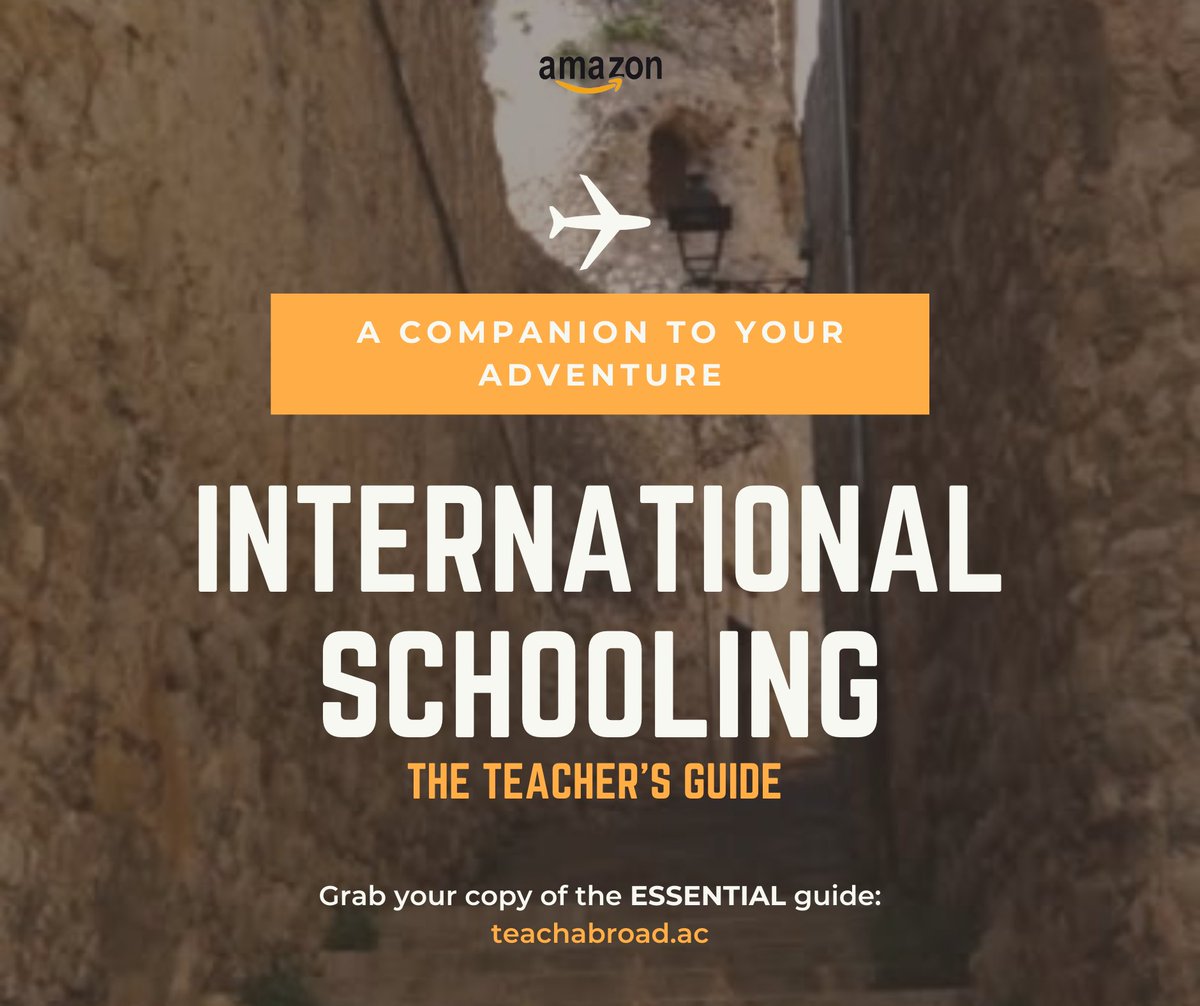
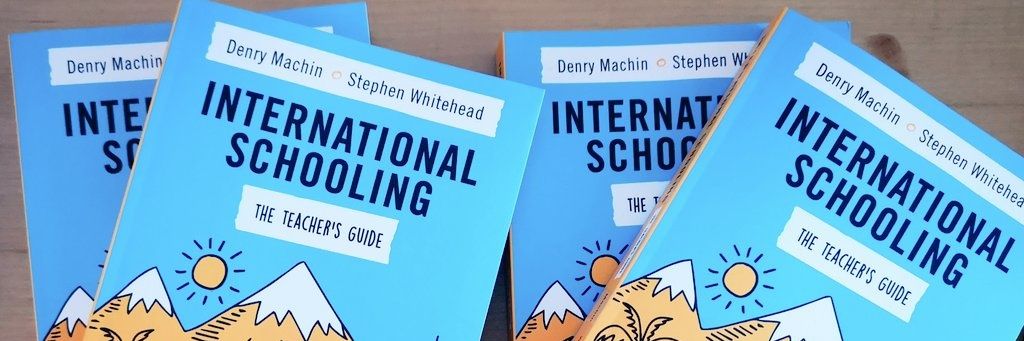
It's that time of year 🛫🏖️🌇🏔️🛬 A time when many teachers are planning and packing for the BIG MOVE - the move to international school teaching. If that's you (or a friend/relative) don't forget to grab a copy of 'International Schooling: The Teacher's Guide'. It's full of hints, tips, and advice from people already enjoying the adventure. Grab a copy here (or just take a look at the FREE bonus section): pedagogue.ac
PEDAGOGUE tweet media
English
0
4
5
80
PEDAGOGUE retweetledi
ManyFacesOfMen
ManyFacesOfMen@ManyFacesofMen·
New Book 📣📖🔖📖📣 “A truly ground-breaking, empowering book and an essential read for any woman who ever felt overwhelmed by the competing demands made on her by society; any woman who sought love and found only disappointment; any woman who doubted she was strong enough to pursue her dreams." Grab your copy here: amzn.to/4jJhuwA
ManyFacesOfMen tweet media
English
0
3
6
77
PEDAGOGUE retweetledi
TheWisdomOfHeads
TheWisdomOfHeads@WisdomOfHeads·
To be an effective school leader, you have to believe that what you’re doing makes a difference—even while knowing that you might falter, stumble…perhaps even fail. That’s obvious, of course. We became teachers to make a difference. Yet, as every school leader knows, the reality is that many initiatives don’t go the distance. Some lose momentum. Others fade into myth (and become the source of staffroom mirth). Even the most thoughtful strategies can fail to take root. Still, schools are full of leaders who step up and try—not because they’re blind to the challenges, but because that’s the job. Making a difference is what we do; it’s why we get out of bed, day after day. The best way to hold both truths — the conviction that what you’re doing matters, and the humility to know it might not succeed (least not quite as you imagined it) — is to lead in a way you’ll be proud of, whatever the outcome. If the initiative doesn’t land, you’ll still know you led with integrity, courage, and care. And if it does? You’ll know it wasn’t luck—it was leadership grounded in something real. Believing in your vision is what fuels the energy, resilience, and commitment it takes to lead. So lead in a way that makes you proud to put your name to it…whatever the outcome. Believe you’ll make a difference—and, bit by bit, day by day, you will. ------------------------ Thoughts on leadership, done differently Follow or, sign-up to join my newsletter; wisdom direct to your Inbox weekly (no spam, just nudges to think a little differently): sendfox.com/lp/3ed08p ------------------------
TheWisdomOfHeads tweet media
English
0
2
4
64
PEDAGOGUE retweetledi
Mr W 🇹🇭
Mr W 🇹🇭@ThtPedagogyGeek·
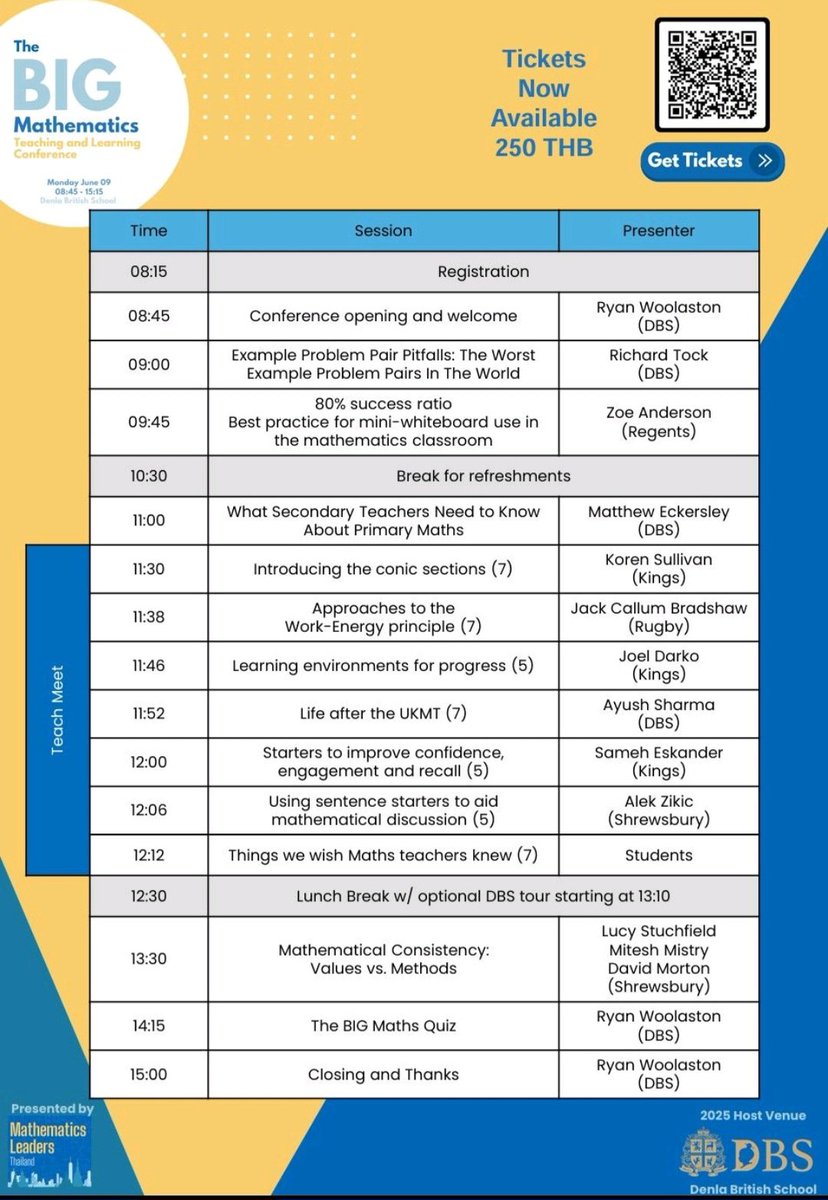
🚨10 days to go! The BIG Maths Teaching and Learning Conference 2025 is nearly here 🧠 Talented speakers 👥 Nearly 50 attendees ❕️Connect, Collaborate, Learn By Maths teachers, for Maths teachers 🎟 Tickets shorturl.at/liopY #BIGMaths2025 #MathsCPDchat #edutwitter
Mr W 🇹🇭 tweet media
English
1
3
5
1.1K
PEDAGOGUE retweetledi
TheWisdomOfHeads
TheWisdomOfHeads@WisdomOfHeads·
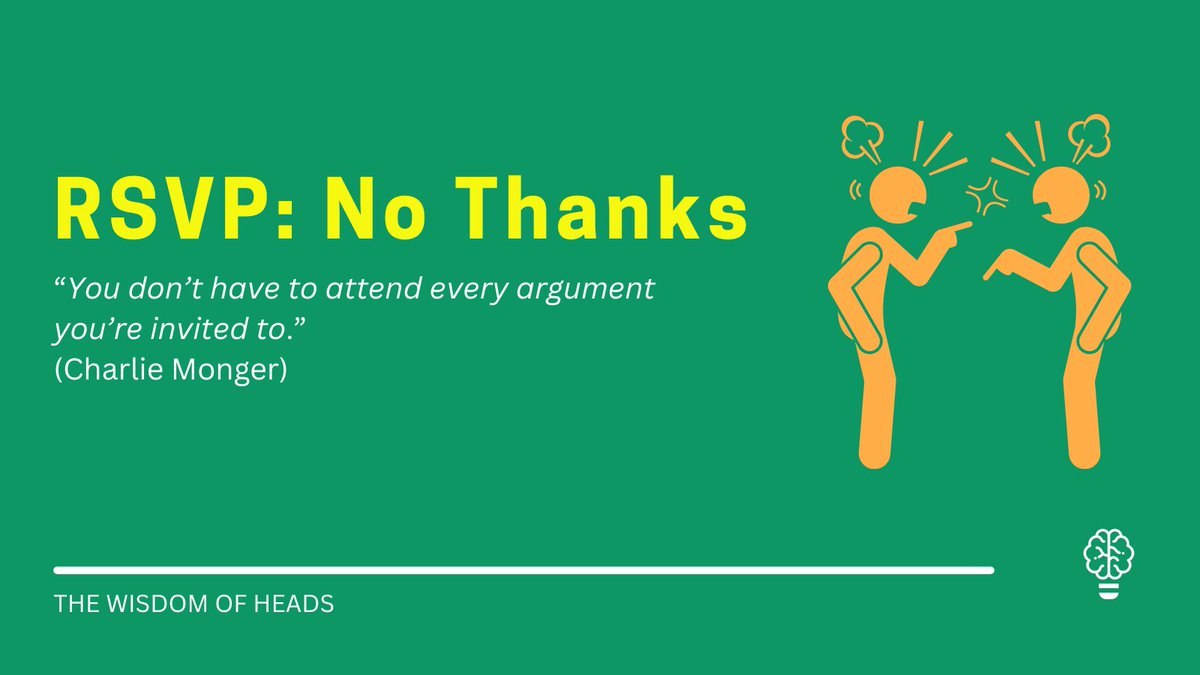
Continuing the theme of wit and wisdom, another quote I can’t claim credit for: “You don’t have to attend every argument you’re invited to.” (Charlie Monger) It’s one of those phrases that’s easy to nod at and much harder to live by. Because when tension rises—when a comment feels pointed, a tone feels off, or a decision gets questioned—our instinct is to step in. To correct. To defend. To push back. And sometimes we should. But not always. Not every comment needs a comeback. Not every raised eyebrow needs levelling. Not every moment of staffroom drama needs a guest appearance from the leadership team. You’re allowed to let some provocations pass. You’re allowed to shrug and walk on. You’re allowed to be the adult in the room by not entering the room at all. Because every argument attended is time, energy, and credibility spent. And in schools, those are limited currencies. Some invitations deserve a response. Others deserve your silence. Knowing the difference is leadership. So next time one lands at your feet, pause. Then ask yourself: do I really need to be at this party? If not, RSVP: no thanks. ------------------------ Thoughts on leadership, done differently Follow or, sign-up to join my newsletter; wisdom direct to your Inbox weekly (no spam, just nudges to think a little differently): sendfox.com/lp/3ed08p ------------------------
TheWisdomOfHeads tweet media
English
0
2
4
63
PEDAGOGUE retweetledi
TheWisdomOfHeads
TheWisdomOfHeads@WisdomOfHeads·
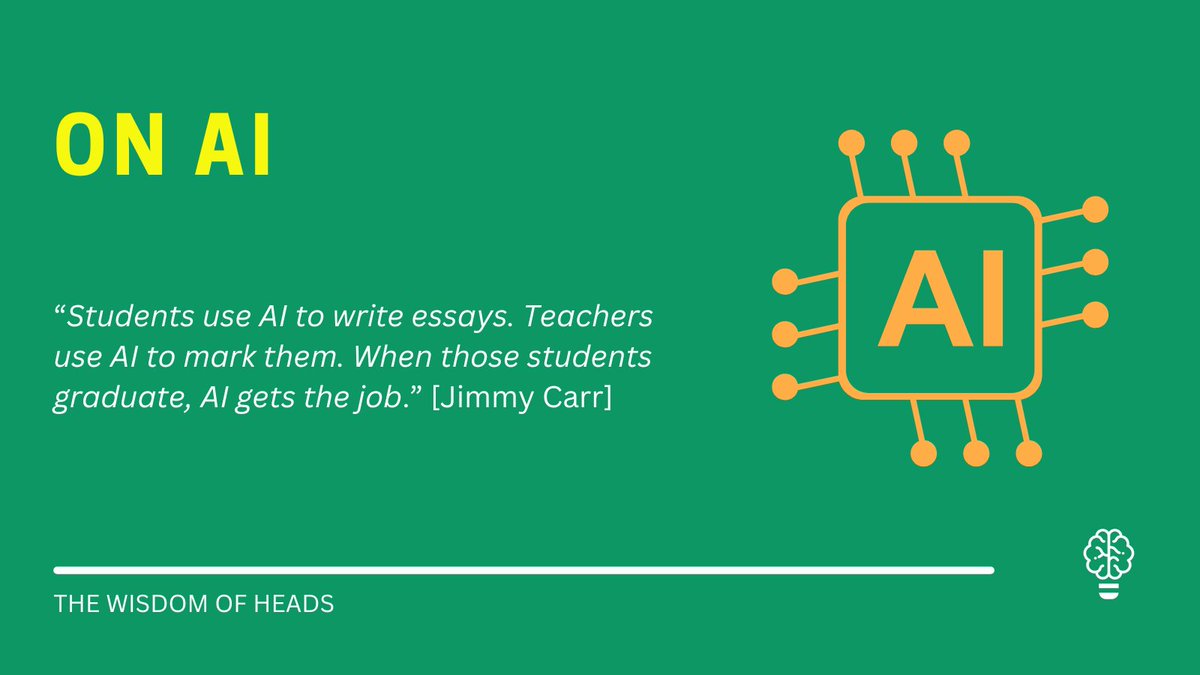
I can’t claim credit for this one—that honour goes to @jimmycarr : “Students use AI to write essays. Teachers use AI to mark them. When those students graduate, AI gets the job.” A useful bit of wit and wisdom. It’s also helpful as a provocation; perhaps even as a conversation starter with students. We don’t know where AI will take us. But when even comedians are talking about it, we do know we need to be thinking about where AI might take us. And not just about how to use AI—but why, when, and what for. Jimmy Carr might be joking, but like all good jokes, the humour hits because there’s truth in it. Maybe AI is a threat. Maybe it’s a tool. Probably both. What matters most is that we stay curious—because curiosity, unlike content, can’t be automated. The punchline’s on us if we’re not paying attention. ------------------------ Thoughts on leadership, done differently Follow or, sign-up to join my newsletter; wisdom direct to your Inbox weekly (no spam, just nudges to think a little differently): sendfox.com/lp/3ed08p ------------------------
TheWisdomOfHeads tweet media
English
0
2
4
60