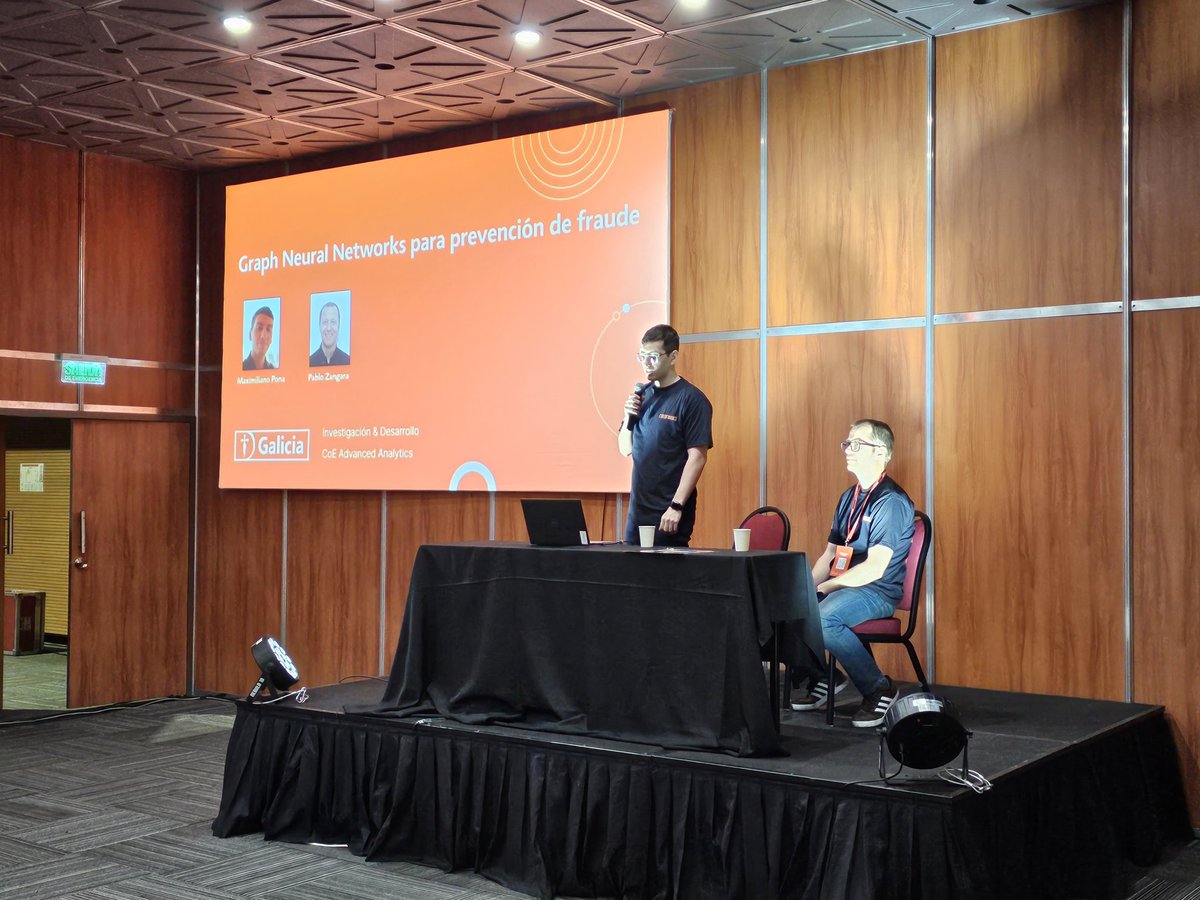
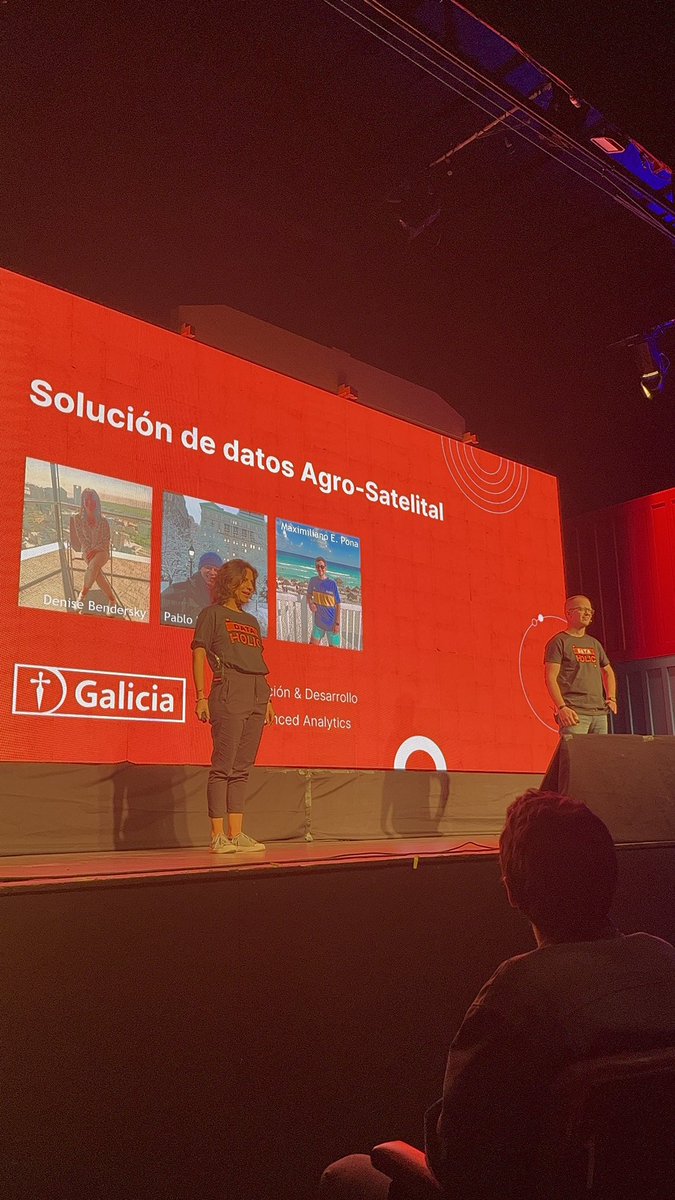
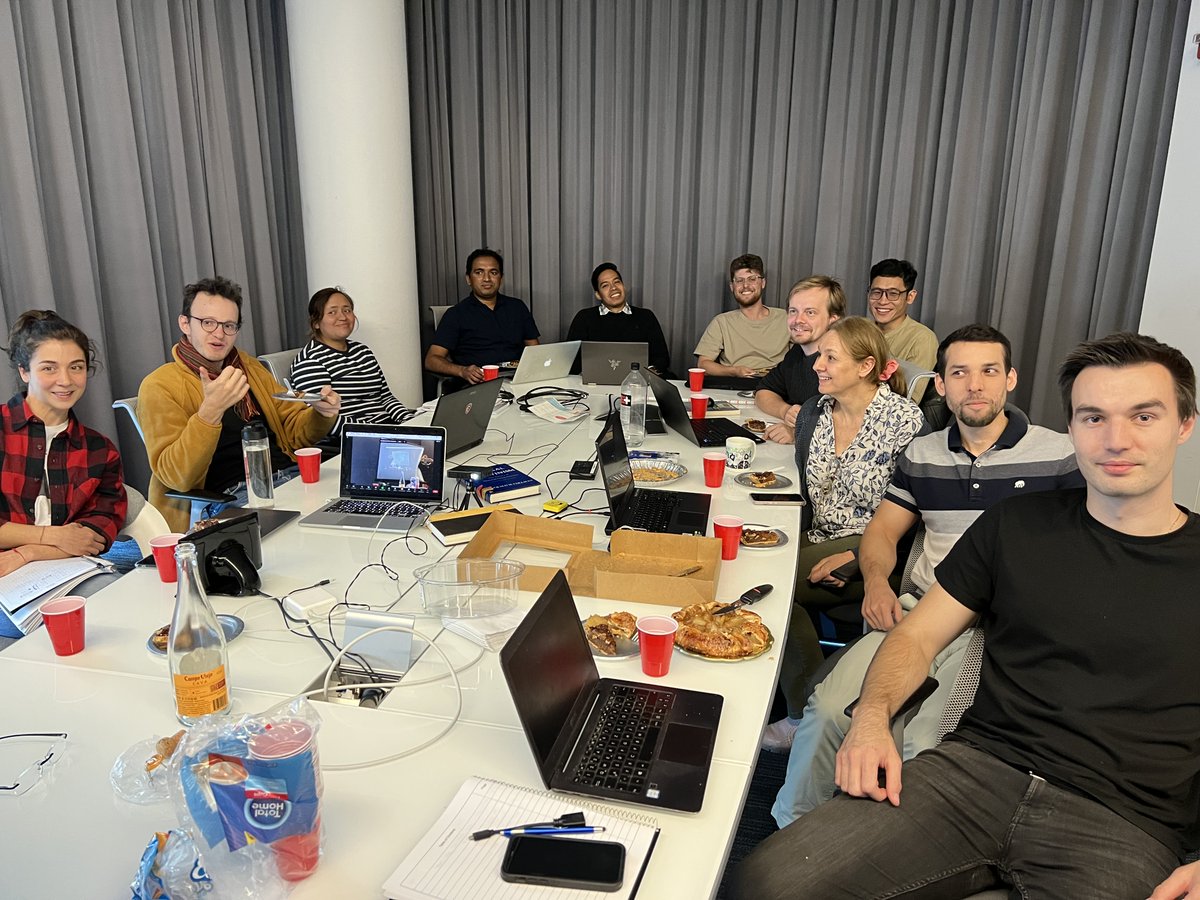
📣Atentos a estos 2 cracks! 📣 @PRZangara y Maxi Pona van a estar presentando su charla: "Redes Neuronales de Grafos para la prevención de fraude" 🤯
Y estarán abriendo el espacio de charlas de #CyberFinance
🗓️Viernes 3/11
⏱️10 a.m.
📍Sala C2
#EKO23@ekoparty
"Por otra parte, @CONICETDialoga financia la mano de obra: hoy hay 3 técnicos CPA : @_zzzoom_ , @morsac4d y Alejandro Silva. “Nadie puede creer que con tan pocas personas tengamos 4 clusters funcionando con buena calidad de servicio. Eso tiene que ver con su capacidad técnica."
"Lo que estamos haciendo es actualizar máquinas PCIe 2.0 a 3.0 y usando placas PCIe 4.0, estamos saltando 2 generaciones a costo casi 0 y con excelentes resultados".
MendietaF2, la 🖥️ + interesante del @CcadUnc. Además nunca falla🦉.
lavoz.com.ar/ciudadanos/men…
por: @oteromariana
What happens if you drop an anti-apple?
In a paper published today in @Nature, the ALPHA collaboration at CERN’s Antimatter Factory shows that, within the precision of their experiment, atoms of antihydrogen – a positron orbiting an antiproton – fall to Earth in the same way as their matter equivalents.
This result is a milestone in the study of the properties and behaviour of antimatter.
Find out more: home.cern/news/news/phys…
The "Via Panisperna Boys" were a group of Italian scientists who made significant contributions to the field of nuclear physics during the early 20th century. The name "Via Panisperna Boys" comes from the street in Rome, Via Panisperna, where the Physics Institute of the University of Rome was located. This group of scientists, led by Enrico Fermi, played a crucial role in advancing our understanding of nuclear reactions and, eventually, the development of nuclear reactors and atomic bombs.
The key members were:
1) Enrico Fermi: Enrico Fermi was the leader of the group and one of the most prominent physicists of the 20th century. He made significant contributions to nuclear physics, quantum mechanics, and statistical mechanics. Fermi is perhaps best known for his work on the theory of beta decay and his development of the Fermi-Dirac statistics, which describe the behavior of particles with half-integer spin. He also conducted pioneering experiments on neutron bombardment, which eventually led to the discovery of nuclear fission.
2) Emilio Segrè: Emilio Segrè was a physicist who worked closely with Fermi and was a key member of the Via Panisperna Boys. He is famous for his experimental work on the identification of artificial radioactivity, specifically the discovery of technetium and astatine. Segrè later played a significant role in the Manhattan Project, which developed the atomic bomb during World War II.
3) Ettore Majorana: Ettore Majorana was an Italian theoretical physicist who made important contributions to quantum mechanics and particle physics. He is known for the Majorana equation, which describes the behavior of neutrinos, and for his work on the theory of the strong nuclear force.
4) Bruno Pontecorvo: While not originally part of the Via Panisperna Boys, Bruno Pontecorvo joined the group later and made significant contributions to the study of neutrinos and neutrino oscillations. He later defected to the Soviet Union and continued his research there.
5) Edoardo Amaldi: Edoardo Amaldi was an Italian physicist who made important contributions to nuclear physics and particle physics. He later played a crucial role in the construction of the first Italian particle accelerator, the "Ciclotrone." Amaldi also made contributions to the field of cosmic ray research and participated in international collaborations in particle physics.
6) Oscar D'Agostino: Oscar D'Agostino was the only chemist associated with the Via Panisperna Boys. He worked with Fermi and Segrè on their experiments, particularly in the identification of artificial radioactivity.
The other member of the group was Franco Rasetti who made significant contributions to nuclear physics and played a crucial role in the research conducted by the group. However, he did not participate in the Manhattan project.
The Via Panisperna Boys were instrumental in advancing our understanding of nuclear physics and played a pivotal role in the development of the atomic bomb during World War II.
📷 Five members of the group. [L-R] Oscar D'Agostino, Emilio Segrè, Edoardo Amaldi, Franco Rasetti and Enrico Fermi.
photographed by Bruno Pontecorvo, ca. 1930
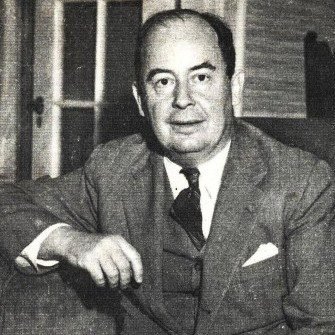
The genius of John von Neumann 🧠
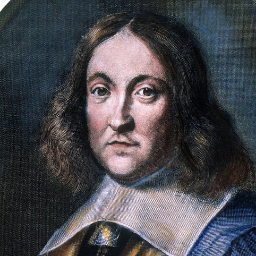
He could speak eight languages by the age of six, including Ancient Greek and Latin. He could divide eight-digit numbers in his head at the age of six. He was familiar with differential and integral calculus by the age of eight. He entered the University of Budapest at the age of 15 and earned a degree in chemical engineering at the age of 19. He obtained his Ph.D. in mathematics from the University of Berlin at the age of 22.
John von Neumann was a remarkable mathematician, physicist, and computer scientist who was born in Hungary in 1903. He was a child prodigy who showed extraordinary talents in language, memory, and calculation. He made major contributions to many fields of mathematics, physics, economics, and computer science, such as game theory, quantum mechanics, operator algebras, von Neumann architecture, and cellular automata.
v. Neumann was a genius who amazed his peers and influenced many disciplines. He is widely regarded as one of the greatest mathematicians of the 20th century.
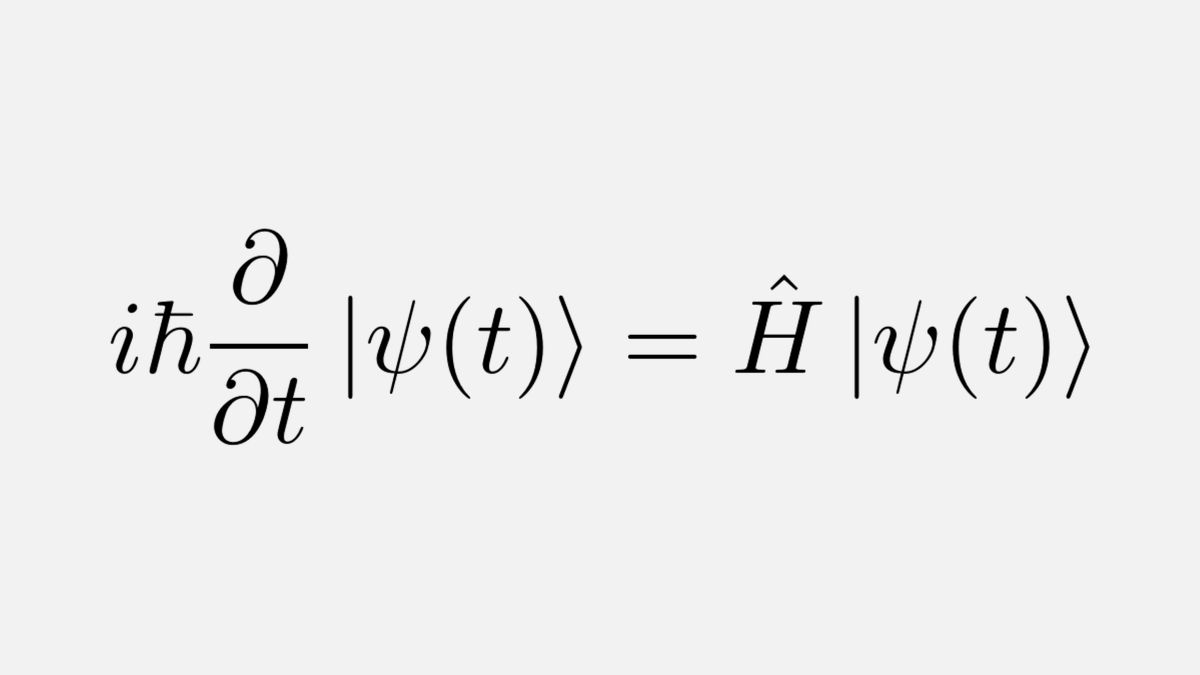
Schrödinger Equation
The equation provides a way to calculate the state of a system and how it changes dynamically in time. |ψ> is the state of a system and H is its Hamiltonian.
Erwin Schrödinger postulated it in 1925 and resulted in the Nobel Prize in Physics 1933.
Thrilled to share that I've been promoted to Full Professor at the University of Chile! I've never been one to emphasize titles, but it feels good to finally be able to drop the "Associate" from the position description. #AcademicTwitter#HigherEducationuchile.cl/presentacion/e…
Carlsberg Brewery offered Niels Bohr a lifetime supply of unlimited beer. Niels Bohr, a Danish physicist who made fundamental contributions to understanding atomic structure and quantum theory, was awarded the Nobel Prize in Physics in 1922. In honor of his achievements, Carlsberg Brewery offered him a gift: a house located next to the brewery.
One of the benefits of this house was a direct pipeline from the brewery to the house, effectively providing Niels Bohr with free and unlimited beer for life.
This story reflects both the respect and admiration that Bohr had in his home country and the strong links that often existed between brewers and the communities they served. The story continues to be popular as it combines two things people often find fascinating: groundbreaking science and beer.
Córdoba de Antaño│10º Aniv
Año 1924. Ortofoto zona de Plaza Vélez Sarsfield, calle Achával Rodríguez, el Observatorio Nacional, calle Urquiza y la Iglesia Santo Tomás. Nótese la zona del actual Bº Güemes y el original recorrido de La Cañada.
Córdoba ciudad, Rep Argentina
A recent @SciImmunology Review highlights the benefits of morning vaccination compared with afternoon/evening vaccination in humans.
Learn more: scim.ag/TZ
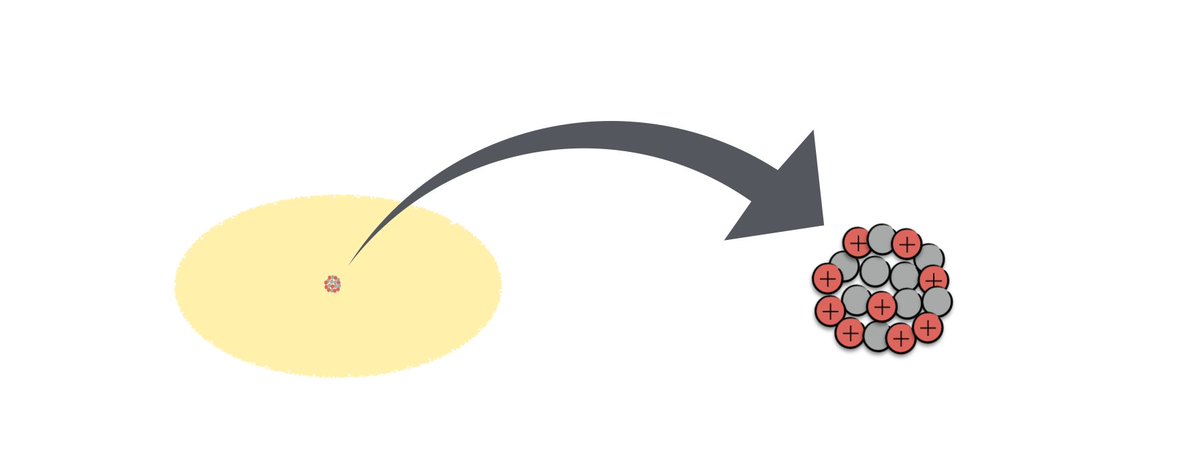
Some physical intuition for how nuclear fission works.
80 years ago Enrico Fermi achieved the first controlled nuclear fission. In the fission process nuclei of atoms break apart and energy is released.
Nuclei are at the centre of atoms.
🧵 1/10
Hoy me encontré un auto modelo 2021 en la calle y lo devolví.
Más vale que esto del karma sea cierto, de lo contrario es otro pésimo negocio que sumo a mi lista de intriunfos.
Before #TheRedeemTeam, the world witnessed a once-in-a-generation Argentina squad, led by Manu Ginobili, end USA men's Olympic basketball dominance with gold at Athens 2004.
@FIBA | @manuginobili | @cabboficial