
Sabitlenmiş Tweet
Die Hinweise zum Absetzen von Antidepressiva des Royal College of Psychiatrists finden sich hier: rcpsych.ac.uk/mental-health/…
Hilfe bietet auch das PsyAb Absetzforum @IHPA___
#notjustsad #notjustsick #antidepressiva
Deutsch
Thorsten Padberg
2.3K posts
@PadbergThorsten
Therapeut in Berlin. @padbergthorsten.bsky.social
🚨Just published in the British Journal of Psychiatry!🚨 Evolutionary explanations of anxiety rated as 5x more useful for patients and 3x more useful for clinicians than genetic explanations of anxiety! Our paper is the largest RCT of evolutionary explanations to date!
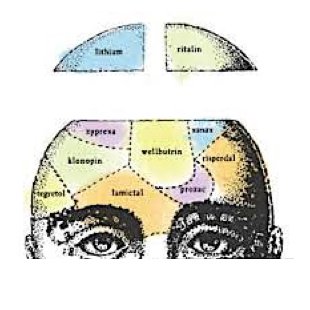

Antidepressants and Suicide In 2019, @HengartnerMP and @PloederlM analyzed all phase II and III trials for antidepressants approved from 1991 to 2013. They found suicide rates of 0.12% in the medication arm and 0.04% in the placebo arm (p=0.02), and suicide attempt rates of 0.71% in the medication arm and 0.30% in the placebo arm (p<0.001). DOI: 10.1159/000501215

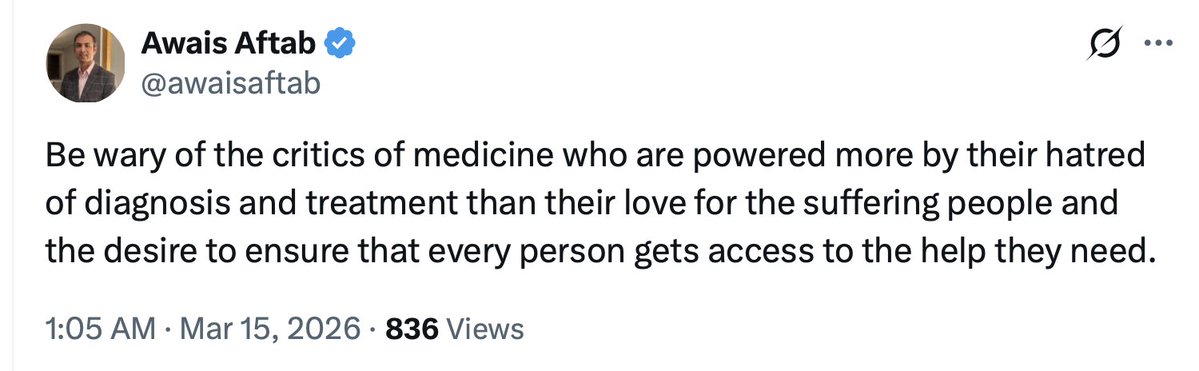
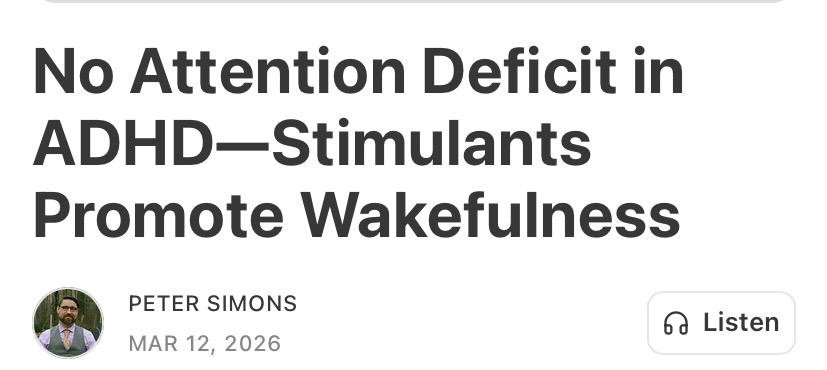

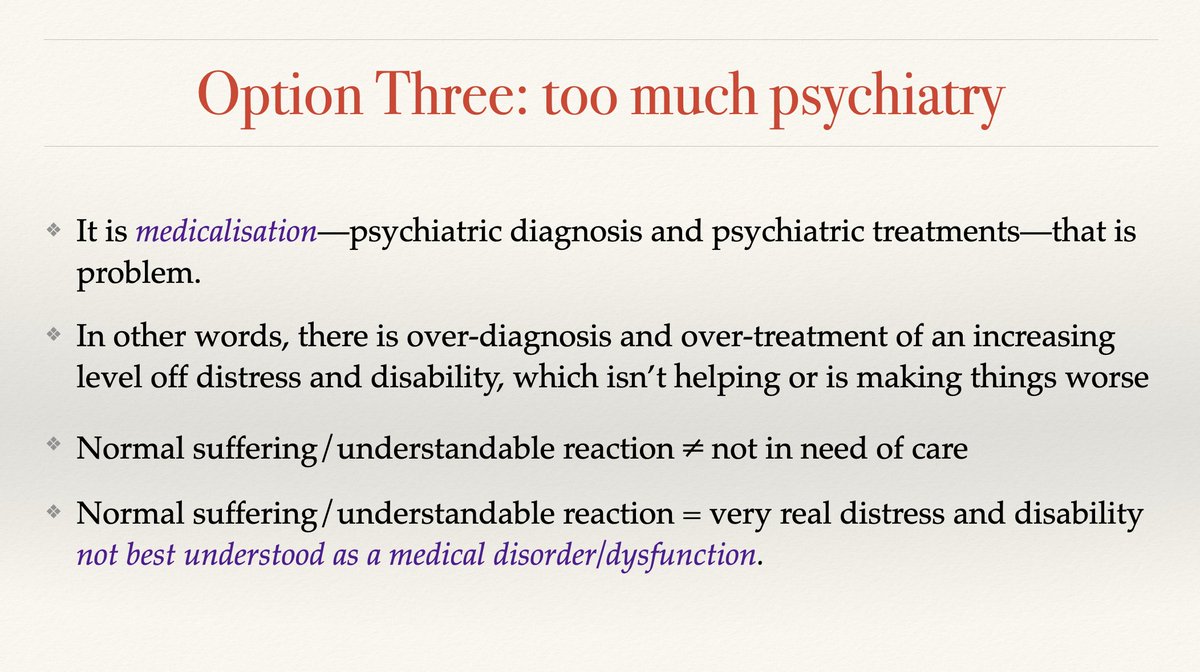
I can’t help but see the British preoccupation with “overdiagnosis” as the flailing of a culture that has given up on the clinical mission of addressing the full spectrum of human distress and disability, because they think they can’t afford to provide the needed care (scarcity), because some people ought to suffer (stoicism), and because some people are only pretending to suffer (malingering).

Is the attribution of mental illness to chemical imbalances in the brain merely "propaganda" created by the pharmaceutical industry? Joanna Moncrieff argues our newfound reliance on medication is not an effective way of dealing with emotional difficulties and mental illness, and stresses the importance of finding alternative solutions. Watch her full interview here. iai.tv/video/the-medi…

"Wo liegt die Grenze zwischen hilfreicher Selbstreflexion und schädlicher Selbstdiagnose? Ein Gespräch mit der Psychologin Esther Bockwyt über ihr Buch „Alles toxisch oder was?“ stuttgarter-zeitung.de/inhalt.sind-je…
I published a new paper on concept creep in narcissistic personality disorder. It shows that the semantic expansion and over-inclusive use of the concept of pathological narcissism is a real thing with potentially negative practical consequences sciencedirect.com/science/articl…
The data of the recent 'expert' UK study, which concludes that there is "no overdiagnosis of ADHD," ends in 2018. Well, here's some data from Denmark till 2024. Looks to me a lot like a parabolic increase after 2018 🤔 @joannamoncrieff @JDaviesPhD @stimimi @DrEvgenyLegedin
We started a podcast with the deliberate aim of talking to a range of voices. We had had enough of the polarisation and mudslinging of social media. We went to significant effort to seek out different perspectives. Our criterion was not whether they agreed with us, but whether we thought they would have an interesting angle to add. We made it clear in the podcast that the views of the guests did not necessarily represent those of the hosts. From the start we wanted this to be a space where people explained their ideas so that the listener could understand and make up their own mind. We wanted to model openness and tolerance of disagreement. We wanted to do something different to what happens on social media. When we released our first episode, with Dame Uta Frith, we quickly discovered why these conversations are impossible. She said things which some people disagreed with, and as a result they blamed us for platforming her. There was little reasoned discussion of her ideas, and a lot of flinging of mud. People I had worked with and who I respected recorded videos about the harm I was causing and how disappointed they were. Others made huge assumptions about what we, as interviewers thought, including dismissing the suffering and experience of others and having a right wing agenda to cut benefits. Things that Uta had not said were attributed to her, and by association to us. Immediately, our other podcast guests started to withdraw. People whose work I really respected and who had fascinating things to say backed away, scared perhaps that they too would be tainted by association. Their viewpoints were very different to Uta and that is exactly why we asked them. Just like when we interviewed Uta, we wanted to really hear and understand what they had to say. That won’t be possible now. There’s something going on in the online autism world, and it’s not healthy. Many people are terrified to say what they think, for fear of the sort of thing that has happened to me this week. Useful and valid viewpoints are not being heard. Self-censuring is rife. Online shaming has been normalised. As a result, the growth of knowledge is stifled. If you disagree with what Uta Frith said and you’d like to come on our podcast, please email me. We’d love to have you. neurosense.substack.com/p/why-we-need-…
The people who behave in this manner do a disservice to everyone, including those who are actually autistic. A big contributor to the collective knee-jerk reaction of distrust and skepticism towards "autism" is due to these self-appointed diagnostic evangelists.