PalSam🇵🇸
4.9K posts



O you who have believed, persevere and endure and remain stationed and fear Allah that you may be successful. 3:200
المُصْحَف@AlMosahf
اصْبِرُوا وَصَابِرُوا وَرَابِطُوا
English
+19 In Islamic theology, the relationship between Allah’s creation of the future (divine decree or Qadar) and mankind’s free will is understood as a balance where both exist simultaneously. The mainstream Sunni perspective (Ahl al-Sunnah) dictates that while Allah possesses absolute knowledge and sovereignty over all events, He has granted humans agency and responsibility for their choices, for which they will be judged. YouTube·Islam On Demand +2The Islamic Ruling on Qadar (Divine Decree)Ultimate Knowledge: Allah knows everything that will ever happen—past, present, and future—before it occurs.The Written Destiny: Everything in the universe was written in the "Preserved Tablet" (Al-Lawh al-Mahfuz).Creation of Actions: Allah is the Creator of all things, including the actions of mankind. However, this does not mean Allah compels humans to do evil, but rather that He created the capacity and the means for them to act, and He wills that they exercise their own choice.Not Fatalism: Islam rejects absolute fatalism (the belief that humans have zero choice). While certain aspects of life are predetermined (e.g., time of birth, parents, death), individuals have free choice in their voluntary actions, beliefs, and behaviors. Reddit·r/islam +7The Islamic Ruling on Free Will and ResponsibilityChoice and Accountability: Humans are accountable for their actions because they are capable of choosing between good and evil, as stated in the Qur’an: "Whoever does an atom's weight of good will see it, And whoever does an atom's weight of evil will see it" (Surah Az-Zalzalah 99:7-8).Free Will within Divine Will: Human free will operates within the framework of Allah's ultimate sovereignty. Nothing happens unless He permits it. A person wills something, and Allah wills that they will it.Purpose of Life: Free will is essential for the test of life. Without it, reward (Heaven) and punishment (Hell) would not be just. American Islamic Outreach Foundation +6Reconciling the TwoKnowledge vs. Compulsion: Allah's advanced knowledge of what an individual will choose does not mean He forces them to make that choice. It is likened to a teacher knowing a student’s capability and predicting their exam results without forcing the result.Unknown Future: Humans do not know what is written, so they must make choices based on guidance and intention.Dua (Supplication): Believers are encouraged to make Dua, as it can change the "contingent" destiny, though the ultimate, eternal decree remains known only to Allah. Yaqeen Institute +4In summary, the ruling is that humans have genuine freedom to choose their actions and are fully accountable for them, while recognizing that this freedom exists within a universe entirely governed by Allah's knowledge and power. Facebook·Al Emaan Centre +1
English

🚨 WHAT IF THE FUTURE ALREADY EXISTS… AND YOU’RE JUST WALKING THROUGH IT? 🤯
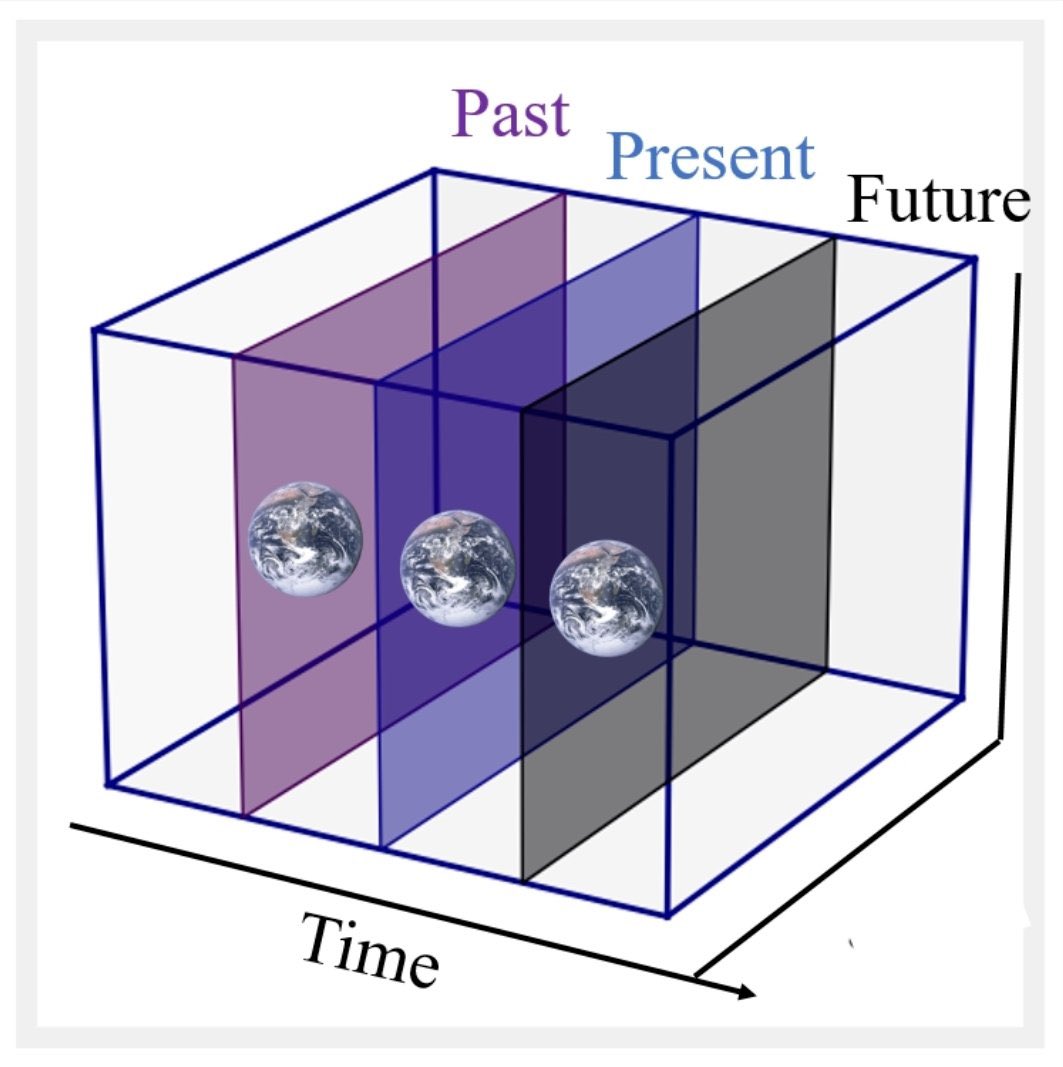
What if time is not moving forward at all? What if yesterday, today, and tomorrow are all already written into the universe, existing side by side like pages of a book? This shocking idea is called the Block Universe Theory, and it comes straight from Einstein’s science — not science fiction.
According to this theory, the universe is not just made of space, but of space and time fused together. Every moment that has ever happened, and every moment that will ever happen, already exists. Your birth, this very second, and your last breath are all frozen inside a giant cosmic “block.” You only feel time moving because your mind experiences one moment at a time.
Imagine watching a movie on a DVD. The ending is already there, even if you haven’t seen it yet. In the same way, the future already exists — we just haven’t reached those frames. Scientists discovered this when they realized that there is no single universal “now.” Different observers experience time differently, meaning the present moment is not the same everywhere in the universe. That alone breaks our everyday idea of time.
This is where things turn disturbing. If the future already exists, do we really have free will? Are our choices truly choices, or are they just moments we are passing through? Some physicists say the universe is not being created second by second — it is already complete. We are simply traveling through it.
Even death looks different in a block universe. If every moment of your life already exists in spacetime, then your life is never truly erased. Every laugh, every mistake, every heartbeat is permanently part of the universe. Time doesn’t take them away — it only moves you.
This theory is still debated, but it is taken seriously by many of the world’s top scientists. And once you hear it, it’s hard to look at time the same way again.
So here’s the chilling question to leave you with:
Are you making the future… or just discovering it?
English
The Athiest would be very ignorant to think he can survive solely based on the merits of building a raft only.
Pray that god provides you the guidance and wisdom to survive then go with practical reasons to support.
Muslims Posting Their W's@MuzlimsPostingW
Notice how Allah gave the believer a raft without any labor
English
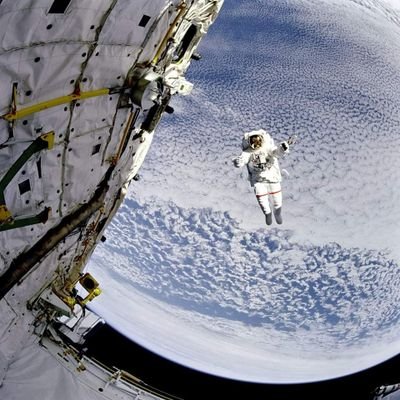
@amazing_physics Only this is never possible. Nothing with mass will travel at the speed of light. Not in human form anyway
English

@Mrhigh611 True but the article is worth reading anyway. More info on that if you want, send me a DM 😀
English

I’m deleting my posts about $OPEN. To anyone who followed my posts and bought, I apologize
The reason behind this is that some of the company’s activities don’t align with my religious beliefs as it might generate income from riba based on what I read, so I’m no longer invested in it
Please do your own research
English
Could be bro. There’s another debate that interest is not riba and no islamic evidence from the first 350 years post hijra that deferment of payment is the same as Riba. Thats more of a long winded debate but worth looking at. An interesting substack article can be found here.
open.substack.com/pub/olabs/p/is…
English
@PalSam3k In some earlier mortgage offerings, Opendoor acted more like a mortgage broker, connecting buyers with outside lenders rather than funding the loans itself.
Later, it launched Opendoor Home Loans, which became an in-house mortgage business.
So SAHM might’ve not updated it
English

@Mrhigh611 Not every home loan is haram bro. Some can be framed through profit share agreements
English

@astrooalert Nope that doesn’t make any sense. The magnificent designer and creator of this earth has us created for a reason. We live and die and get resurrected to be asked about our actions. How we lived our lives, who we lived it for, who did we worship?
English

What if quantum immortality is real and when we die we just wake up at the start of our life again?

English
PalSam🇵🇸 retweetledi

Paul Williams explained the actual meaning of the biblical use of the term “Father”
We Muslims have no problem with the term “Father” as long as its actual Jewish understanding is not distorted.
@freemonotheist
English
@PhilosophyOfPhy Yet he denies god the creator of the entire Universe and what it contains. Baffling
English

Prof Brian Cox often discusses the miracle of human consciousness. In this short, he reflects on the sheer improbability of our existence and how that makes our brief time in the universe deeply precious.
English

PalSam🇵🇸 retweetledi
⏪️ أسئلة لم أجد لها جوابًا إلا في القرآن ..!
Madrid, Spain 🇪🇸 العربية
English


PalSam🇵🇸 retweetledi

An Arab scholar in 1011 was placed under house arrest in Cairo for 10 years. He used the time to invent the scientific method, prove how vision actually works, and write a 7-volume book that Newton studied 600 years later.
I read about him last night and could not stop thinking about it.
His name was Ibn al-Haytham. The book is called the "Book of Optics."
The textbook story names Bacon, Galileo, and Descartes as the founders of modern science. All three of them came 600 years after Ibn al-Haytham. All three of them studied his work directly or through Latin translations. The man who actually invented the scientific method was working alone in a single room in Cairo while Europe was still in the Dark Ages.
Here is the story almost nobody tells you.
He was born in Basra around 965 CE. By his 40s he had a reputation across the Arab world as one of the most original minds alive. Then he made the mistake that almost killed him. He claimed publicly that he could regulate the flooding of the Nile. The mad caliph al-Hakim of Cairo summoned him to Egypt to do it.
Ibn al-Haytham took one look at the river and realized the project was impossible with the technology of his era. The caliph had executed dozens of scholars for less. So he faked madness. The caliph believed him and put him under house arrest in his own home in Cairo for the next 10 years.
Most people would have lost their actual mind. He used the time to invent science.
Before him, knowledge worked one way. You quoted authority. If Aristotle had said it, it was true. If Galen had written it, it was correct. The role of a scholar was to memorize and defend the ancient Greeks. I
Ibn al-Haytham broke this completely. He wrote a sentence in the Book of Optics that quietly destroyed 1,400 years of intellectual culture. "The seeker after truth," he said, "is not the one who follows his natural disposition to trust the writings of the ancients. The seeker after truth is the one who suspects them, questions them, and submits only to argument and experiment."
That single sentence is the foundation of modern science. He wrote it 600 years before the European Renaissance.
The second thing he did was build the actual machinery of experimentation.
He insisted that no claim about the physical world was acceptable until it had been verified by an experiment anyone could repeat. He gave detailed instructions for every experiment in his book. He told his readers, in writing, not to take his word for any of it. Build the equipment. Run the tests yourself. Verify or destroy my claims with your own eyes.
The third thing he did was use the method to overturn one of the most settled questions in physics.
The Greeks had taught for centuries that vision worked because the eye emitted invisible rays. Ibn al-Haytham proved them wrong with a darkened room, a small hole, and a wall. The first camera obscura. He showed that light from the outside world enters the eye, the exact opposite of what every Greek thinker had taught.
Two hundred years later his book was translated into Latin in Spain. Roger Bacon cited him. Kepler cited him. Galileo's work on the telescope was built on his optics. Newton's foundational work on light rested on his framework.
Walk into any physics department today. Ask who founded the scientific method. Almost nobody will say Ibn al-Haytham.
The man who invented the way humanity actually knows things did the work under house arrest, with no funding, no laboratory, and a paranoid caliph next door waiting for an excuse to kill him.
He did it anyway. Most of the world is still pretending it was someone else's idea.

English
PalSam🇵🇸 retweetledi

المخرج الأمريكي ماثيو كوك: "الحرب على الإسلام هي حملة ممنهجة، وممتدة منذ سنوات ."لشيطنة المسلمين، تقف وراءها قوى سياسية وإعلامية وتمويل ضخم
العربية
@Solana_Emperor It depends how you define gambling. If its a calculated effort then its an educational bet based on probability. If you refer to casino gambling then clearly not
English