

红包来了 🧧
Just unsealed my @MezoNetwork Red Envelope (VK4RKHM). Phase II of the MEZO airdrop is here, and this is where allocations grow.
Unseal yours 👇
mezo.org/feature/rewards
English
Palancard
1.1K posts

@Palancard
The cryptobro u need Seismic mag3.0



"We limited content/link sharing to once every 24 hours because some users were constantly posting links and turning the chat into spam, which was lowering the overall quality of the conversation. On average, most people already share around one X post per day, so one daily right feels like a reasonable balance. In addition to that, outside of regional channels, you can also share a link once per day in both the general chat and the magnitude channel, so you are not restricted to a single link across the whole @SeismicSys server." With the end-of-year holidays I haven’t been very active on Discord lately, but overall this sounds like a really good idea. Limiting link sharing should clearly improve the quality of discussions and make conversations easier to follow, without having tons of people constantly spamming their content. Maybe leaving a bit more flexibility or allowing adjustments for regional channels could be worth considering, depending on their activity and size. In any case, the intention behind this decision feels very positive


For those wondering what the @zama NFT actually brings, here’s the concrete breakdown. This NFT isn’t about visuals or rarity — it’s a utility pass tied directly to the $ZAMA token distribution. What you get by holding the NFT: • Guaranteed access to the public sale at the floor price Each NFT lets you buy up to 40,000 $ZAMA at the final clearing price of the auction, not your bid price. So even if the auction clears higher, NFT holders still buy at the lowest valid price. • Allocation reserved for NFT holders In total, 2% of the entire $ZAMA supply is set aside specifically for NFT holders. That’s a real, capped allocation — not a vague promise. • +5% token bonus for holding until the end If you still hold the NFT when the auction fully settles, you receive a 5% bonus on the tokens you purchased. (One NFT max per wallet, so no stacking loopholes.) So the incentive is clear: early supporters get better access, better pricing mechanics, and a measurable upside — not hype-based rewards. Now, how this ties into the auction itself is where it gets interesting. The sale uses a sealed-bid Dutch auction: you submit a price and amount, but your bid stays private thanks to encryption. No one sees quantities, no one reacts to others, no bots racing gas. After the bidding window closes: • the protocol computes one clearing price • bids above it are filled • bids below it are refunded • NFT holders buy their allocation at that clearing price, with the bonus applied Key phases to keep in mind: Pre-auction: shield stablecoins to participate privately Auction phase: submit encrypted bids Post-auction: clearing price is calculated Claim phase: tokens become claimable (+ NFT bonus if eligible) Overall, the NFT feels less like a reward and more like proof of early alignment. Clear numbers. Clear rules. No games. That’s very on-brand for a project building privacy-first infrastructure. #ZamaCreatorProgram

The @SeismicSys Quiz results are in this week’s podium is 100% French 🇫🇷 congrats to @crypto_nohak , @saz_defi , and @Rivuus for a clean and dominant performance big thanks to everyone who participated great competition as always.

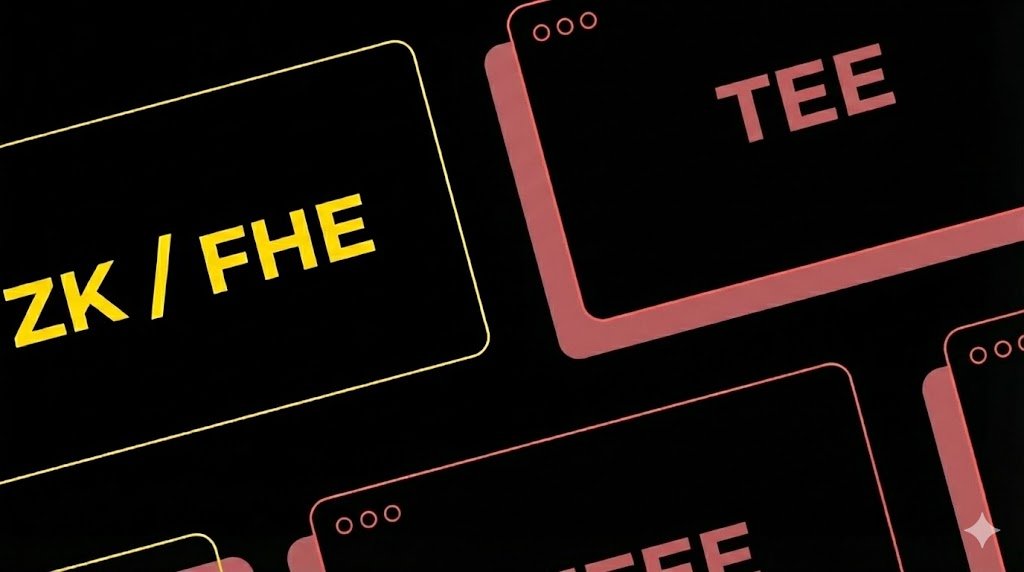


Seismic is one of those projects that makes you stop and think “okay, this actually fixes a real problem.” Most blockchains today are fully transparent by default. That’s great for trust, but in practice it’s also a huge limitation. Every balance, every interaction, every strategy is visible. For a lot of real-world use cases, that’s just not realistic. What @SeismicSys is doing differently is putting privacy directly at the core of the blockchain, not as an add-on or a gimmick. Data can be encrypted at the protocol level, meaning things like balances, addresses, or contract states don’t have to be public unless you want them to be. And the important part is: this happens natively. Developers don’t need to redesign everything or rely on fragile workarounds. What I personally find smart is that Seismic stays EVM-compatible. That’s a big deal. It means developers who already know Ethereum can jump in without relearning an entire ecosystem. Same tools, same logic, just with extra privacy features available when needed. That lowers the barrier a lot and makes adoption much more realistic. Another thing that stands out is that Seismic doesn’t feel like a “theoretical” privacy chain. The use of secure execution environments and encrypted data types shows that the team is thinking in terms of how this actually runs in production, not just how it looks on paper. It feels engineered, not experimental. And when you think about use cases — private DeFi, confidential voting, DAO governance, auctions, financial products — it becomes pretty obvious why this matters. Transparency is great, but selective transparency is what real systems need. Seismic seems to understand that balance very well. Overall, my impression is genuinely positive. Seismic doesn’t try to reinvent everything or chase hype. It focuses on one major weakness of current blockchains and tackles it in a clean, developer-friendly way. If privacy is going to be a serious part of Web3’s future (and it probably has to be), Seismic feels like one of the projects that’s actually building toward that future, not just talking about it.


So basically, @zama went to ASIACRYPT 2025 in Melbourne — which, if you’re into cryptography, is kind of a big deal. One of those conferences where ideas actually shape the future of privacy and security. And honestly? Zama showed up strong. They didn’t just attend. They brought three serious research papers, all accepted and presented. That alone already says a lot. First thing: hidden messages inside signatures One of the papers is about something called anamorphic signatures. In simple terms: imagine signing something… but secretly embedding another message inside that signature. The wild part? Even if someone had all the secret keys, they still wouldn’t be able to tell that a hidden message exists — unless they’re the intended recipient. It’s subtle, elegant, and very “next-level cryptography.” The kind of idea that quietly changes how we think about secure communication. Then: making Fully Homomorphic Encryption actually faster Another paper tackles a core problem in FHE: bootstrapping. Bootstrapping is necessary, but it’s heavy. Slow. Expensive. Zama’s researchers found a smarter way to batch operations together, reducing overhead and improving efficiency. Translation: Less waiting. Less computational noise. More practical FHE. This is exactly the kind of work that moves FHE from “theoretically amazing” to “actually usable.” And finally: pushing TFHE performance even further The third paper zooms in on TFHE, one of the most promising FHE schemes out there. By reordering and optimizing certain steps, Zama managed to cut unnecessary work during bootstrapping, which leads to noticeable speedups. Nothing flashy. Just clean, smart optimization — the kind engineers love because it actually matters in real systems. The overall vibe? Very positive. Very solid. What really stands out is that none of this feels like research for research’s sake. It’s: practical grounded clearly aimed at real-world privacy You can feel that Zama isn’t just publishing papers — they’re building the foundations for confidential computing to actually scale. Quiet progress. Deep work. Long-term impact. And honestly? That’s usually where the most important breakthroughs come from #ZamaCreatorProgram
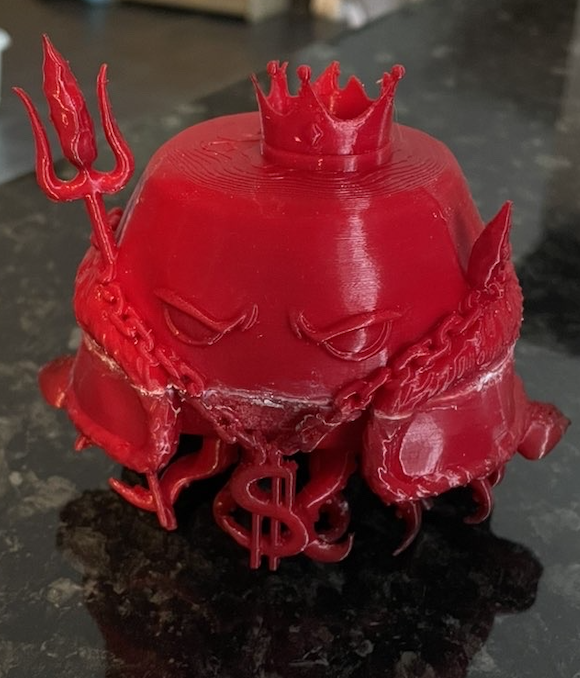


Day 4 of making art for @SeismicSys This artwork shows rocky standing fearless, protected by a massive dinosaur Strength that stands firm, built to last, all in seismic @SeismicSys @NoxxW3 @xealistt @k2sbhai @mzain2292

