Paleonardo

95 posts

Paleonardo banner
Paleonardo

Paleonardo

@Paleonard0

Anglo-Catholic | Laymen

Michigan, USA Katılım Mart 2026
410 Takip Edilen65 Takipçiler
Paleonardo
Paleonardo@Paleonard0·
LECTURE V. ON THE USE OF PRIVATE JUDGMENT: By the right of Private Judgment in matters of religious belief and practice , is ordinarily meant the prerogative , considered to belong to each individual Christian , of ascertaining and deciding for himself from Scripture what is Gospel truth , and what is not . This is the principle maintained in theory , as a sort of sacred possession or palladium , by the Protest- antism of this day . Romanism , as is equally clear , takes the opposite extreme , and maintains that no- thing is absolutely left to individual judgment ; that is , that there is no subject in religious faith and con- duct on which the Church may not pronounce a decision , such as to supersede the private judgment , and compel the assent , of every one of her members . The English Church takes a middle course between these two . It considers that on certain definite subjects private judgment upon the text of Scrip- ture has been superseded , but not by the mere authoritative sentence of the Church , but by its his- torical testimony delivered down from the Apostles . To these subjects nothing more can be added , un- less , indeed , new records of primitive Christianity , or new uninterrupted traditions of its teaching were discoverable . The Catholic doctrines , therefore , of the Trinity , Incarnation , and others similar to these , are , as we maintain , the true interpretations of the notices contained in Scripture concerning those doctrines . But the mere Protestant considers that on these as well as on other subjects , the sacred text is left to the good pleasure or the diligence of private men ; while the Romanist , on the contrary , views it as in no degree subjected to individual judgment , except from the accident of the Church having not yet pro- nounced on this or that point an authoritative and final decision." Lectures on the Prophetical Office of the Church by John Henry Newman
Paleonardo tweet media
English
0
0
0
9
Paleonardo
Paleonardo@Paleonard0·
"In the latter part of the Fourth Century two writers tell us much, Epiphanius and Jerome, not a little from personal acquaintance. Epiphanius, always a confused writer, here surpasses himself; and his materials have to be picked out with the greatest caution. Perhaps he has contributed most to modern confusions by making two separate sects, Ebionæans and Nazaræans. Both names occur likewise in Jerome’s works, and in one famous passage he has been wrongly supposed to distinguish them. The truth seems to be that Nazaræans was a name used by the Jewish Christians of Syria as a description of themselves in the Fourth Century and probably long before, either taken or inherited from the designation of the Apostolic age; while Ebionæans, originally an equally genuine popular name (of course representing the Hebrew Ebionim, the Poor Men) had become the traditional name for them in Church literature, being either misunderstood to be a proper name, or else (as by Origen) misinterpreted. That there were at least two grades, so to speak, of Christological doctrine among them is clear from Origen and Eusebius, and perhaps Justin. But there is no evidence of two distinct communities, much less of the designation of the one as Ebionæans, the other as Nazaræans. On the other hand it is also clear that one set of them whether divided ecclesiastically from the rest or not, did work out a peculiar system of doctrine and usage. These are the Helxaites, the men of the Clementines, now for the last few years with good reason called Essene Ebionites. But to return to the early part of the Second Century. The origin of the main body, whether we call them Ebionæans or Nazaræans, is totally without a record. What seems to me most probable is that they came into existence through the scattering of the old Jerusalem Church by Hadrian’s edict, say a third through that century. Besides men of the same mind and position as Hegesippus, men of whom we seem to catch a glimpse also in Justin, it was likely enough that others would be driven into antagonism to the Gentile Church of Asia, and become Judaistic in principle as well as practice. The men like Hegesippus, the maintainers of St James’s tradition, when once they had become detached from the Holy City, itself no longer visibly holy, might easily in a generation or two become merged in the great Church without. But this would only the more drive the Judaizers into isolation. It may have been then that they called themselves the Poor Men, probably as claiming to be the true representatives of those who had been blessed in the Sermon on the Mount, but possibly adding to the name other associations. This isolation would diminish the doctrinal influence of other Churches; and the Judaistic position was likely in itself to lead to lower views of our Lord’s person, though not necessarily in all cases to the same extent. In this manner the origin and, as far as we know it, the history of Ebionism is, I think, best explained." Hort, Fenton John Anthony. 1894. Judaistic Christianity: A Course of Lectures. Cambridge; London; New York: Macmillan and Co.
Paleonardo tweet media
Michigan, USA 🇺🇸 English
0
0
0
31
Paleonardo
Paleonardo@Paleonard0·
"The scattered and confused memorials of the Council afford little information as to the Creeds brought forward in the course of the discussions. Theodoret (H. E. i 6) mentions an exposition (ὑπαγορεύσαντες δὲ πίστεως διδασκαλίαν) which was presented to the assembly by the small group of bishops comparatively friendly to Arius, led by Eusebius of Nicomedia; and which was at once torn up. Eustathius of Antioch, an eyewitness, cited in Theodoret’s next chapter, tells the same story of “the writing (γράμμα) of Eusebius’s blasphemy,” meaning evidently the same document, which was probably an elaborate private statement of doctrine. From the above-mentioned pastoral letter of Eusebius of Cæsarea, the leader of the middle party, we learn more. Its purpose is to explain the circumstances which had led him after some hesitation to subscribe the Conciliar Creed, as he was afraid that incorrect rumours might cause misunderstanding. “We first,” he says, “transmit to you the writing concerning the faith which was put forward by us, and then the second, which they have published after putting on additions to our expressions. Now the writing presented by us, which when read in the presence of our most religious emperor was declared to have a right and approved character (εὖ τε ἔχειν καὶ δοκίμως ἀποφανθέν), was as follows. ‘As we received from the bishops before us both in our first catechetical instruction and when we were baptized, and as we have learned from the Divine Scriptures, and as we both believed and taught in the presbyterate and in the office of bishop itself, so now likewise believing, we offer to you our faith; and it is this.’ ” Eusebius then transcribed a Creed, to which he added a few lines of explanation and protestation. When “this faith”, he tells his diocese, had been set forth by him (ταύτης ὑφʼ ἡμῶν ἐκτεθείσης τῆς πίστεως), there was no room for gainsaying. The emperor, followed apparently by others, declared his entire agreement with it, and “urged all the bishops to give their assent to it and to subscribe to its articles and to express concurrence with them in this very form, with the insertion of the one single word ὁμοούσιος”; which word he proceeded to interpret by rejecting various erroneous senses. Such, Eusebius says, was the wise discourse of the emperor; “but they, under pretext of the addition of ὁμοούσιος, have made the following writing,” i.e. the Nicene Creed. He then relates how, as soon as the Creed had been propounded, he or his party (the pronouns ‘we’ and ‘they’ are throughout ambiguous) enquired minutely about the intended meaning of the new phrases, and on receiving satisfactory answers thought it right to give consent, having peace always in view." Hort, Fenton John Anthony. 1876. Two Dissertations: On ΜΟΝΟΓΕΝΗΣ ΘΕΟΣ in Scripture and Tradition, and On the “Constantinopolitan” Creed and Other Eastern Creeds of the Fourth Century. Cambridge; London: Macmillan and Co.
Paleonardo tweet media
0
0
0
34
Paleonardo
Paleonardo@Paleonard0·
Chapter I Introduction | The complaint of the Arians against the Nicene Council; their fickleness; they are like Jews; their employment of force instead of reason: 1. Thou hast done well, in signifying to me the discussion thou hast had with the advocates of Arianism, among whom were certain of the friends of Eusebius, as well as very many of the brethren who hold the doctrine of the Church. I hailed thy vigilance for the love of Christ, which excellently exposed the irreligion of their heresy; while I marvelled at the effrontery which led the Arians, after all the past detection of unsoundness and futility in their arguments, nay, after the general conviction of their extreme perverseness, still to complain like the Jews, “Why did the Fathers at Nicæa use terms not in Scripture, ‘Of the essence’ and ‘One in essence?’ ” Thou then, as a man of learning, in spite of their subterfuges, didst convict them of talking to no purpose; and they in devising them were but acting suitably to their own evil disposition. For they are as variable and fickle in their sentiments, as chameleons in their colours; and when exposed they look confused, and when questioned they hesitate, and then they lose shame, and betake themselves to evasions. And then, when detected in these, they do not rest till they invent fresh matters which are not, and, according to the Scripture, ‘imagine a vain thing’; and all that they may be constant to their irreligion. Athanasius of Alexandria. 1892. “De Decretis or Defence of the Nicene Definition.” In St. Athanasius: Select Works and Letters, edited by Philip Schaff and Henry Wace, translated by John Henry Newman and Archibald T. Robertson, 4:150. A Select Library of the Nicene and Post-Nicene Fathers of the Christian Church, Second Series. New York: Christian Literature Company.
Paleonardo tweet media
Windsor, Ontario 🇨🇦 English
0
0
0
32
Austin Mathew
Austin Mathew@Austin_Mathew_·
Fellow Christians! What denomination were you raised in, and what church or denomination are you part of today? Curious about everyone’s faith journey ✝️
Austin Mathew tweet media
English
118
7
64
39.7K
Paleonardo
Paleonardo@Paleonard0·
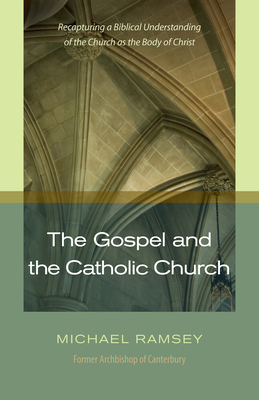
“PART ONE | CHAPTER 6 The Gospel and Episcopacy | 3.: The crucial question, however, for theology is this. Does this developed structure of Episcopacy fulfill the same place in the Church and express the same truth as did the Apostles’ office in Samaria and in Corinth and throughout the Apostolic Church? If “Paul the Apostle” represents an important truth by his place and function in the one Body, does the Bishop represent the same truth? In answering this question we turn to the letters of St. Ignatius of Antioch, an ardent advocate of the necessity of Bishops. Saint Ignatius was sent to Rome to be martyred in or about the year 116 A.D., and during his journey as a prisoner he wrote letters to various churches in Asia Minor and to the Church in Rome. These letters show an intense sense of the unity of the whole Church, in prayer and in suffering and in outward structure, and the writer’s intense belief in Episcopacy as a necessity of the Church’s life and worship. Now why does he take so great an interest in the status of the Bishops? Is he developing an “institutionalism,” rigid and alien to the Gospel, or is he, as Dr. Streeter has urged, a morbid character with a psycho-neurotic obsession about the importance of a Bishop?[6] An examination of St. Ignatius’ whole teaching suggests neither view, but rather that his interest in Bishops springs directly from his sense of the Christian Gospel. Saint Ignatius’ Christianity has about it a Pauline ring. He has died already, and he is on his way to Rome to die once more. The Christians are “united and elect by a true passion” (Eph. 1); they are “branches of the Cross, and their fruit imperishable—the Cross whereby He through His passion inviteth us, being His members” (Trall. 2). “Permit me to be an imitator of the Passion of my God,” cries St. Ignatius (Rom. 6), and repentance means to “return to the Passion, which is our resurrection” (Smyrn. 5). Now as with St. Paul, so with Ignatius, the Gospel is expressed in the fact of the Church, which is the very act and life of Christ Himself. Ye are stones of a temple, which were prepared beforehand for a building of God the Father, being hoisted up to the heights through the engine of Jesus Christ, which is the Cross, and using for a rope the Holy Spirit. (Eph. 9) The ministry is important as linking the Christians with the historic events of Jesus Christ, since Christian experience is not a spirituality unrelated to history, but bears witness to its derivation from Jesus in the flesh. In several striking passages St. Ignatius joins together the ministry and the flesh of Jesus. But your prayer will make me perfect, that I may attain into the inheritance, wherein I have found mercy, taking refuge in the Gospel as the flesh of Jesus and in the Apostles as the presbytery of the Church. (Philad. 5) I salute your godly Bishop and your venerable fellow-presbytery and my fellow-servants the deacons, and all of you severally and in a body, in the name of Jesus Christ, and in His flesh and blood, in His passion and resurrection, which was both carnal and spiritual, in the unity of God and of yourselves. (Smyrn. 12)” The Gospel and the Catholic Church: Recapturing a Biblical Understanding of the Church as the Body of Christ by Michael Ramsey
Paleonardo tweet media
English
0
0
1
41
Paleonardo
Paleonardo@Paleonard0·
“CHAPTER I THE FOUNDATION OF THE CHURCH: (1) It is plain that the visible society admits of being differently represented, according as it is regarded as the home of divine grace, uniting men by the Spirit through Christ to God and to one another; or as the kingdom of truth, maintaining *the ‘witness of Jesus’; or as the organ of divine authority, guiding and disciplining the lives of men. But it is equally plain that such modes of representing the Church are not at all incompatible with one another, and all of them equally postulate the visibility of the Church. We proceed then to trace up the different lines of tradition in the Church so as to show that the difference of colour put upon Christian truth by the varieties of spiritual temperament and the varying claims of circumstance did not affect this central position. And as, of recent years, considerable originality has been assigned to the ‘ Augustinian theory’ of the Church,! we will make a beginning with the Church of St. Augustin—the Church of Africa. Now, whatever, novelty there may have been in Augustin’s presentation of the matter, at least he did not originate the idea of a visible Church. Let us take our earliest representative of African Christianity, Tertullian (at the end of the second century), and listen to what he teaches on the subject, in argument with the Gnostics, giving it as the one thing certain, whatever may be matter for question. ‘Christ Jesus our Lord,’ he says,! ‘so long as He was living on earth, spoke Himself either openly to the people or apart to His disciples. From amongst these He had attached to His person twelve especially, who were destined to be the teachers of the Gentiles. Accordingly, when one of these had fallen away, the remaining eleven received His command, as He was departing to the Father after His Resurrection, to go and teach the Gentiles, who were to be baptized into the Father and the Son and the Holy Spirit. At once, then, the Apostles (the very name indicates ‘‘ mission ”’), after adding Matthias to their number as the twelfth in the place of Judas on the authority of the prophecy in David’s psalm, and after receiving the promised strength of the Holy Ghost to enable them to work miracles and preach, first of all bore witness throughout Judaea to faith in Jesus Christ and established churches, and afterwards going out into the world proclaimed the same teaching of the same faith to the Gentiles, and forthwith founded churches in every city, from which all other churches in their turn have received the tradition of the faith and the seeds of doctrine; yes, and are daily receiving, that they may become churches ; and it is on this account that they too will be reckoned apostolic, as being the offspring of apostolic churches. Every kind of thing must be classed with reference to its origin. Accordingly, many and great as are the churches, yet all is that one first Church which is from the Apostles, that one whence all are derived. So all are the first, and all are apostolic, while all are one: the proofs of unity are the fellowship of peace and the title of brotherhood and the interchange of hospitality—rights which are based on no other principle than the one handing down of the same religion.’ Here we have a perfectly clear conception of the one Catholic Church, founded in fulfilment of Christ’s intentions by His immediate ambassadors, of which every local church is the representative for a particular area. Behind ‘the churches,’ and prior to them in idea, is the one Church which each embodies. Thus the Church is to Tertullian’s mind God’s institution for man’s education and salvation. To the Church belong the Scriptures ; so utterly in fact does he refuse to separate the books of the Church from herself that he declines, in theory at least, even to argue as to the meaning of the Scriptures with those outside the Church, because they do not belong to them. So little does he conceive of the Christian religion as an abstract doctrine written in a Book! ? It was, then, through membership in this one apostolic Church, catholic and local, that African Christians believed themselves to inherit the grace of Christ. Communion with God depended on communion with His Church. ‘He cannot have God for his father,’ Cyprian is fond of emphasizing,’ ‘who has not the Church for his mother.’ ‘ Dost thou believe’ —so runs the baptismal interrogation in St. Cyprian’s day—‘in the remission of sins and eternal life through the holy Church ?’? There is no reason to think that such a question would have startled or shocked the faithful in any part of the Christian Church. Certainly Irenaeus, the bishop of Lyons, who represents the church of Gaul and the churches of Asia where he had been brought up, held the same belief in the Church and made the same exclusive claim for it.” THE CHURCH AND THE MINISTRY BY CHARLES GORE | BISHOP OF OXFORD
Paleonardo tweet media
English
0
0
1
89
alex
alex@dogslovecranmer·
got me an Anglican Office Book roughly a week ago; when i say it’s been amazing, i want you to understand that this is one of the best liturgical texts ive had the privilege of having in my house
English
7
0
43
2.2K
Paleonardo
Paleonardo@Paleonard0·
“Part Two | CHAPTER 13 Ecclesia Anglicana | 1.: This aspect of the English church—its historic order, its sacramental life, its kinship with the pre-Reformation church and with the Catholic elements still existing in Rome—has always appealed specially to one part of the English clergy and laity. Others have been more concerned with the church’s kinship with the Reformers, with the preaching of the Gospel, with the conversion of the individual, and have been indifferent to Church order or have regarded it as something valuable only because it is ancient and because it is useful. Both these schools of thought have existed side by side in the English church; both have had their times of poverty and their times of wealth and revival; and it has become customary to rejoice in the church’s comprehensiveness and to stress the need for balance and for the due recognition of these two elements, besides the element that has kept alive the humanism of the Renaissance and has been known as Broad or Liberal. But, if our reading of the New Testament and especially of the Pauline Epistles is correct, these two truths—the Evangelical and the Catholic—are utterly one. To understand the Catholic Church and its life and order is to see it as the utterance of the Gospel of God; to understand the Gospel of God is to share with all the saints in the building up of the one Body of Christ. Hence these two aspects of Anglicanism cannot really be separated. It possesses a full Catholicity, only if it is faithful to the Gospel of God; and it is fully Evangelical insofar as it upholds the Church order wherein an important aspect of the Gospel is set forth. To belittle the witness of the Reformers and the English church’s debt to the Reformers is to miss something of the meaning of the Church of God; to belittle Church order and to regard it as indifferent is to fail in Evangelical insight since Church order is of the Gospel. Hence “Catholicism” and “Evangelicalism” are not two separate things that the Church of England must hold together by a great feat of compromise. Rightly understood, they are both facts that lie behind the Church of England and, as the New Testament shows, they are one fact. A church’s witness to the one Church of the ages is a part of its witness to the Gospel of God. Varieties of thought and of apprehension of course exist. There are always those to whom certain aspects of truth appeal more than others. There may always be those who dwell chiefly upon the one Body, the Church, as the pillar and ground of the truth; and there may always be those whose minds are more filled with the thought of Christ and the individual, “He loved me and gave himself for me.” But there is a true and a false way of thinking of the comprehensiveness of the Anglican church. It can never be rightly expressed in terms of Victorian latitudinarianism or broad-mindedness, or by saying “Here are two very different conceptions and theologies, but with a broad common-sense humanism we combine them both.” Rather can the meaning of the Church of England be stated thus: “Here is the one Gospel of God; inevitably it includes the Scriptures and the salvation of the individual; as inevitably the order and the sacramental life of the Body of Christ, and the freedom of thought wherewith Christ has made men free.” Translated into practice this means that the parish priest has a heavy responsibility; he must preach the Gospel and expound the Scriptures, and he must also proclaim the corporate life of the Church and the spiritual meaning of its order. In every parish the Prayer Book entitles the laity to hear the Gospel preached, and the Scriptures expounded, and also to receive the full sacramental teaching of the historic Church including the ministry of Confession and Absolution for those who desire it. For the Anglican church is committed not to a vague position wherein the Evangelical and the Catholic views are alternatives, but to the scriptural faith wherein both elements are of one. It is her duty to train all her clergy in both these elements. Her Bishops are called to be not the judicious holders of a balance between two or three schools, but, without any consciousness of party, to be the servants of the Gospel of God and of the universal Church.” The Gospel and the Catholic Church: Recapturing a Biblical Understanding of the Church as the Body of Christ by Michael Ramsey
Paleonardo tweet media
English
0
0
2
94
Paleonardo
Paleonardo@Paleonard0·
@FrMatkin @monkofjustice I can understand that. I'd wager there are some still within the Anglo-Catholic tradition within the TEC that i admire and model myself after. Now outside of the TEC, are you speaking that the ACNA/ACC have a better Anglo-Catholic future? if so, maybe one day
English
0
0
0
61
Will ⚓
Will ⚓@monkofjustice·
I wonder how many ACNA bishops have read this amazing work. How about you, ACNA clergy?
Paleonardo@Paleonard0

“PART ONE | CHAPTER 4 The Meaning of Unity | 1.: In showing us the Christ the New Testament has taken us beyond His historical life and death into a region as hard to define as it is real to Christian experience. This region is described when the writer of Hebrews says, “Jesus Christ is the same yesterday and today, yea and forever” (Heb. 13:8), and when St. Paul says, “Christ liveth in me” (Gal. 2:20). In this region of thought the word mystical at once suggests itself, and it is a word that has often been used to describe that union of the Christian with his Lord that is as real as was the union of the disciples in the days of His flesh. But in this region there lurks a subtle danger, since in it there is the temptation for a Christian to cling to the immediacy of his own experience of Christ, and so, in the very midst of the Body of Christ, to be ensnared into an individualism and self-satisfaction that belie the truth about the one Body. Against this danger the New Testament asserts two important safeguards: (1) the importance of the historical events of the life and death of Jesus in the flesh, and (2) the importance, to the individual member or group, of realizing that the one Body existed before his own conversion and has one continuous historic life in which he is called to share. (1) United with Christ as they are, the Christians will not interpret aright their present union with Him unless they constantly look back to the events whence it has sprung, and remember that these events, wrought once for all, are the source of everything that the Christians are and have and know. They are called upon not to advertise their own “experiences” but to praise God for, and to bear witness to, the historical events wherein the Name and the Glory of God were uttered in human flesh. The faithful Christian will not draw attention to himself as an interesting specimen of life in Christ, but dying to all interest in himself and his “experiences” he will focus attention upon the redeeming acts of Christ in history, as the center of man’s prayers and praises for all time. In other words, the Church is Apostolic; it looks back to the deeds of Jesus in the flesh, and through these deeds it has been “sent” into the world. (2) From the deeds of Jesus in the flesh there springs a society that is one in its continuous life. Many kinds of fellowship in diverse places and manners are created by the Spirit of Jesus, but they all depend upon the one life. Thus each group of Christians will learn its utter dependence upon the whole Body. It will indeed be aware of its own immediate union with Christ, but it will see this experience as a part of the one life of the one family in every age and place. By its dependence upon the Church of history it will die to self-consciousness and self-satisfaction. And as with the group, so with the individual Christian; he will know his dependence upon the other members of the Body, wherein the relation of member to member and of function to function begets humility and love. The gifts that he possesses belong to the Body, and are useful only in the Body’s common life. Thus through membership he dies to self-sufficing, and knows that his life in Christ exists only as a life in which all the members share. In these two ways the Christians will forget themselves and bear witness to the redemption wrought once for all and to the society in which men die and rise.[1] In later language the Church is called “Apostolic” (sent by the one Redeemer in the flesh) and “Catholic” (living one universal life); and both these notes of the Church are essential to its existence as expressing the Lord’s death and resurrection, wherein its “Holiness” consists. By his place in the Body the Christian finds the Gospel of death and resurrection active around and through him. To “believe one holy Catholic and Apostolic Church” is to die to self.” The Gospel and the Catholic Church: Recapturing a Biblical Understanding of the Church as the Body of Christ by Michael Ramsey

English
10
1
31
2.5K
Paleonardo
Paleonardo@Paleonard0·
“PART ONE | CHAPTER 4 The Meaning of Unity | 1.: In showing us the Christ the New Testament has taken us beyond His historical life and death into a region as hard to define as it is real to Christian experience. This region is described when the writer of Hebrews says, “Jesus Christ is the same yesterday and today, yea and forever” (Heb. 13:8), and when St. Paul says, “Christ liveth in me” (Gal. 2:20). In this region of thought the word mystical at once suggests itself, and it is a word that has often been used to describe that union of the Christian with his Lord that is as real as was the union of the disciples in the days of His flesh. But in this region there lurks a subtle danger, since in it there is the temptation for a Christian to cling to the immediacy of his own experience of Christ, and so, in the very midst of the Body of Christ, to be ensnared into an individualism and self-satisfaction that belie the truth about the one Body. Against this danger the New Testament asserts two important safeguards: (1) the importance of the historical events of the life and death of Jesus in the flesh, and (2) the importance, to the individual member or group, of realizing that the one Body existed before his own conversion and has one continuous historic life in which he is called to share. (1) United with Christ as they are, the Christians will not interpret aright their present union with Him unless they constantly look back to the events whence it has sprung, and remember that these events, wrought once for all, are the source of everything that the Christians are and have and know. They are called upon not to advertise their own “experiences” but to praise God for, and to bear witness to, the historical events wherein the Name and the Glory of God were uttered in human flesh. The faithful Christian will not draw attention to himself as an interesting specimen of life in Christ, but dying to all interest in himself and his “experiences” he will focus attention upon the redeeming acts of Christ in history, as the center of man’s prayers and praises for all time. In other words, the Church is Apostolic; it looks back to the deeds of Jesus in the flesh, and through these deeds it has been “sent” into the world. (2) From the deeds of Jesus in the flesh there springs a society that is one in its continuous life. Many kinds of fellowship in diverse places and manners are created by the Spirit of Jesus, but they all depend upon the one life. Thus each group of Christians will learn its utter dependence upon the whole Body. It will indeed be aware of its own immediate union with Christ, but it will see this experience as a part of the one life of the one family in every age and place. By its dependence upon the Church of history it will die to self-consciousness and self-satisfaction. And as with the group, so with the individual Christian; he will know his dependence upon the other members of the Body, wherein the relation of member to member and of function to function begets humility and love. The gifts that he possesses belong to the Body, and are useful only in the Body’s common life. Thus through membership he dies to self-sufficing, and knows that his life in Christ exists only as a life in which all the members share. In these two ways the Christians will forget themselves and bear witness to the redemption wrought once for all and to the society in which men die and rise.[1] In later language the Church is called “Apostolic” (sent by the one Redeemer in the flesh) and “Catholic” (living one universal life); and both these notes of the Church are essential to its existence as expressing the Lord’s death and resurrection, wherein its “Holiness” consists. By his place in the Body the Christian finds the Gospel of death and resurrection active around and through him. To “believe one holy Catholic and Apostolic Church” is to die to self.” The Gospel and the Catholic Church: Recapturing a Biblical Understanding of the Church as the Body of Christ by Michael Ramsey
Paleonardo tweet media
English
0
0
7
2.9K
Paleonardo
Paleonardo@Paleonard0·
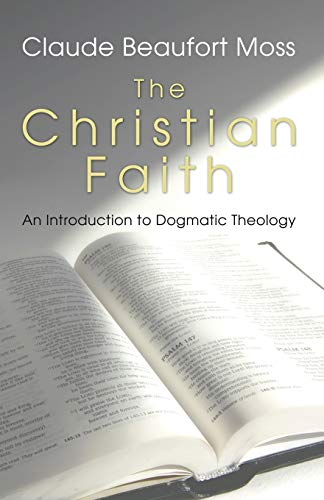
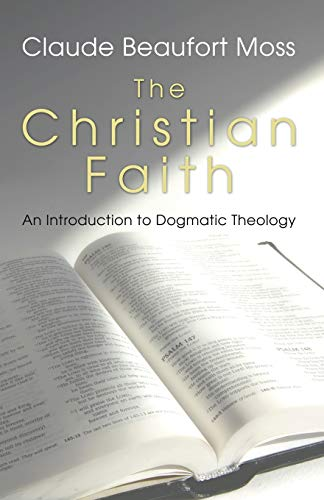
“PART II | CHAPTER 38 THE HOLY GHOST IN THE CHURCH | I. The Church Is THE NEW ISRAEL: THE first means by which the Holy Ghost began to work among men was the Church. The Children of Israel were the chosen people with whom God had made His covenant. When the Word of God became man, He completed the Old Covenant and set up the New Covenant in its place. The Children of Israel, through their supreme council, the Sanhedrin, rejected Him; and from that moment they ceased to be the Chosen People. The apostles and the other disciples, who were all members of the Church of the Old Covenant, now became the remnant of Israel, foretold by Isaiah (Isa. vi. 13, X. 22), with the Anointed King of Israel, the Messiah or Christ, at their head. He sent to them the Holy Ghost, as Joel had foretold (Joel ii. 28; Acts ii. 16). Under His direction, they became the organized people of God, governed by the apostles and their associates. The Church of the New Covenant differed from the Church of the Old Covenant in two ways. It was not confined to one nation, but was thrown open to members of all nations on equal terms; therefore, it came to be called ‘‘ Catholic’, or universal. And it was not governed by a code of laws, like that attributed to Moses; it was bound, indeed, by moral laws even stricter than those of Israel (St. Matt. v. 20), but the civil and ceremonial laws of Israel were no longer binding; this was finally settled by the Council at Jerusalem, whose proceedings are described for us in Acts xv. It follows that the universal Church, which St. Paul calls the Body of Christ (I Cor. xii. 13, 27) and the Bride of Christ (Eph. v. 23: cf. Rey. xix. 9, xxi. 2), is visible—that is, an external ceremony admits her members, their names are known, and they are organized like any other society, with officers, and rules, and powers of discipline. This is everywhere assumed by the New Testament, which knows nothing of disciples who are not admitted into the visible society by baptism. “Are ye ignorant,” says St. Paul, “ that all we who were baptized into Christ Jesus were baptized into His death ?” (Rom. vi. 3). St. Paul himself, after his conversion, had to be baptized-(Acts ix. 18): so did Cornelius and his companions, even after they had received the Holy Ghost (Acts x. 48). As the Congregation of Israel was a visible society, so the Christian Church, which is the Congregation of Israel reformed (Phil. iii. 3), is a visible society, with known membership (I Cor. v. 12: etc.), and officers (Acts v. 13, vi. 2), and rules (I Cor. vii. 17: Acts xv. 28), and powers of discipline (I Cor. vy. 13; I Tim. i. 20; etc.).” THE CHRISTIAN FAITH: AN INTRODUCTION TO DOGMATIC THEOLOGY By CLAUDE BEAUFORT MOSS, D.D.
Paleonardo tweet media
English
0
0
1
117
Paleonardo
Paleonardo@Paleonard0·
“PART 1 | CHAPTER 36 INSPIRATION | V. THE FUNCTION OF REASON: Both Scripture and tradition are subject to the criticism of reason! Scripture, Tradition, and Reason are the threefold cord which cannot quickly be broken (Eccles. iv. 12). At one time some circles in the Roman Communion, especially in Italy, were fond of emphasizing the “ sacrifice of the intellect ”; unthinking obedience was required of the faithful, who were to be like the Light Brigade in Tennyson’s poem: “theirs not to reason why, theirs not to make reply ”. We cannot too strongly deprecate such an attitude. We are to “love the Lord our God with all our mind”. No doctrine of the Faith is too holy to be criticized; for the test of criticism makes our acceptance of every doctrine much stronger. Our reason is given to us to be used; the noblest use of it is to apply it reverently and humbly to the things of God; and the greatest divines of the Church, notably St. Thomas Aquinas, have always treated the reason as a trustworthy instrument for the criticism of religious teaching. We cannot, even if we wish to, get rid of the right and the power of private judgment. Even the most narrow-minded Romanist, who places his entire confidence in the infallible authority of the Pope, is using his private judgment in doing so. It is by the continued use of his private judgment that he denies private judgment and remains subject to the Pope. Private judgment is therefore inevitable: we are responsible to God for learning how to use it. Neither Scripture nor Tradition is to be interpreted as teaching what Reason ‘shows to be certainly untrue. God cannot utter contradictions, and if Scripture, Tradition, and Reason contradict each other, we must find some way of reconciling them. In nothing, for instance, were all Christians more completely agreed until two or three generations ago than in the belief that Adam was a historical person, and that the first five books of the Old Testament were written by Moses. It is now difficult to find any educated man! who believes these things; yet our denial of them has not weakened the Christian faith, but, on the contrary, has greatly strengthened it.” THE CHRISTIAN FAITH: AN INTRODUCTION TO DOGMATIC THEOLOGY By CLAUDE BEAUFORT MOSS, D.D.
Paleonardo tweet media
English
0
0
0
51
Paleonardo
Paleonardo@Paleonard0·
“PART 1 | CHAPTER 35 REVELATION | II. The Method of Revelation: The revelation of God had to be written down; the record of it is found in the collection of books which we call the Bible, the ‘‘ Canon ” of Holy Scripture. It consists of thirty-nine books of the Old Testament (to which must be added the ‘‘ deuterocanonical ” books known as the Apocrypha), and twenty-seven books of the New Testament. The word Testament means “covenant”: the Old Testament is God’s covenant with Abraham (Gen. xvii. 10); the New Testament is the covenant with which our Lord Jesus Christ replaced it (I Cor. xi. 25; Heb. viii. 6; etc.). The Bible is not revelation, but the record of it. It is not itself the word of God (though it has often been called so, especially in the controversies of the Reformation); our Lord Himself is the Word of God (St. John i. 1), and His message, the Gospel, may also be called the word of God; the Bible contains the record of that message, written down by men. We believe that the writers of it were given a _ special kind of Divine guidance, which is called Inspiration; and that those who drew up the Canon or list of the books were also given special Divine guidance, to include these books and no others. This subject will be dealt with at greater length in the next chapter. At the same time, it is difficult to maintain that the whole of the Bible is the record of Divine revelation. ‘There are many chapters, such as Gen. xxxvi (the list of the descendants of Esau), or Ezra ti (the list of the Jews who returned from exile with Zerubbabel), which may have some historical value, but can hardly be said to have any religious value. The old method of using such chapters was to give them an allegorical meaning (though even this would be difficult in the case of the chapters mentioned !). Without denying the value of allegorical interpretation, which is constantly used in the New Testament, it seems better to say that Holy Scripture contains, rather than is, the word of God; so Article 6 says, ‘‘ Holy Scripture containeth all things necessary to salvation”; and the question addressed to priests at their ordination is: “Are you persuaded that the Holy Scriptures contain sufficiently all doctrine required of necessity for eternal salvation through faith in Christ Jesus?” (The question addressed to deacons at their ordination, ‘‘ Do you unfeignedly believe all the canonical Scriptures of the Old and New Testament? ”’, is to be understood in this sense: as was made clear in the 1928 revision, by the addition of the words “ as given of God to convey to us in many parts and in divers manners the revelation of Himself which is fulfilled in our Lord Jesus Christ ”’.) The Old Testament is received by Christians on the authority of our Lord Jesus Christ, who constantly quoted it as having Divine authority. The Canon or list of books drawn up by the Jewish Sanhedrin at Jamnia (A.D. go) is accepted by all Christians. The New Testament is received on the authority of the Church. The formal authority (“‘ imperium’) of all parts of the Church has been given by various Councils, beginning with the Council of Carthage (397) in the West and the Quinisext Council (692) in the East: the authority of the Anglican Communion is found in Article 6. But behind this formal authority lies the general consciousness and witness of the Church. A few of the minor books did not receive full acceptance before the fourth century, and one or two of the remoter Eastern churches are still a little doubtful about the Revelation of St. John. But apart from this, all Christians everywhere agree about the Canon of the Old and New Testament, except for differences on the position of the “ Apocrypha”. The Reformation made no difference; Luther, Calvin, and the sects all accepted the traditional Canon of Scripture. The one exception to this universal agreement is the collection of books commonly called the Apocrypha, which were admitted to the Greek translation of the Old Testament used by the first Christians, but were not in the Hebrew Canon. They consist of nine books: Tand II Esdras (or III and IV Esdras), Tobit, Judith, Wisdom, Ecclesiasticus, Baruch, I and II Maccabees, together with additions to II Chronicles, Esther, and Daniel, fourteen in all. Various opinions have been held about these books both in ancient and modern times. None of them was ever quoted by our Lord or by any New Testament writer; the Jews do not recognize them as canonical. The Anglican attitude towards them is stated in Article 6: “ The other books, as Jerome saith, the Church doth read for example of life and instruction of manners: but yet doth it not apply them to establish any doctrine”. This intermediate position is called “ Deuterocanonical” (The Church of Ireland, however, has since 1874 fallen below the Anglican standard; for though Article 6 is retained, the lessons from these books have been withdrawn from the Irish lectionary.). THE CHRISTIAN FAITH: AN INTRODUCTION TO DOGMATIC THEOLOGY By CLAUDE BEAUFORT MOSS, D.D.
Paleonardo tweet media
English
0
0
0
90
Paleonardo
Paleonardo@Paleonard0·
@dogslovecranmer Thank you for saying this? Never responds to challenges just continues to post AI misgivings on anglicianism
Troy, MI 🇺🇸 English
0
0
1
29