ParamShobhit
7.3K posts

ParamShobhit
@ParamShobhit
Brand Building | Intersection of Marketing & PR | 2 times Sabre Gold Winner l Jim Morrison | Crazy about Trains I Amrohi - The Land of Jaun Elia & Kamal Amrohi
New Delhi Katılım Mayıs 2008
3.7K Takip Edilen1.1K Takipçiler
ParamShobhit retweetledi
The perfect day to re-read what I wrote a while ago.
The article that esteemed @iRadhikaGupta then alluded to, calling it " click bait".
Reality is: What's happened last 2 years is the largest wealth transfer in the history of wealth transfers. With the active connivance of Wealth/ asset managers, F:&O brokers, finfluencers, fin media.
The narrative from every Lallu panju was " This time it's different".
After 44 years of doing this, baccha party, lemme tell you: It's never different. Only the ones who lose, are change each time.
In our time, we made the gora F2s lose to us Roadless Locals.
But this time, the F2s have won at the expense of Roadless Locals. And that's creating a giant macro crisis.
Read. Reflect. Rotate
"How India created a generation of brainwashed investors. And the macro disaster this has created"
moneycontrol.com/news/opinion/h…
English
ParamShobhit retweetledi

Everyone thought the future was carbon fiber
Elon Musk looked at the physics and chose stainless steel for Starship instead
Sounds insane.... until you realize stainless gets stronger at cryogenic temperatures, handles reentry heat better, and costs massively less than advanced composites. It doesn't even need paint
He chose a material that is faster to build, easier to weld, tougher in extreme conditions, and built for rapid iteration
Classic Elon: ignore convention, trust first-principles engineering, and pick the solution everyone else missed
He is taking science fiction and making it real. Building things that only existed in imagination, and pushing them to the absolute limits of physics

English
ParamShobhit retweetledi

In 2003, a German film crew followed a nomadic family in Mongolia's Gobi Desert. The film, The Story of the Weeping Camel, was nominated for an Oscar.
A mother camel had rejected her newborn after a brutal two-day labour. Without her milk, the calf would die.
The family knew one option. They sent their two young sons on a journey across the desert to find a musician who could perform a ritual called Hoos, a chanting ceremony passed down for centuries specifically for this moment.
The musician came. The ritual was performed. The mother camel wept real tears and turned to her calf for the first time.
The film crew had gone to document a way of life. They had no idea they would capture that.
UNESCO added the Hoos ritual to its Intangible Cultural Heritage list in 2015, alongside flamenco, the Mediterranean diet, and the art of Neapolitan pizza making.
English
ParamShobhit retweetledi

India ran the most important cardiovascular study of the 20th century by accident, and then immediately forgot about it.
In 1967, Dr. S.L. Malhotra published a study in the British Heart Journal examining heart disease rates among 1.5 million Indian railway employees. The population was extraordinarily useful for research purposes: same employer, same healthcare access, comparable income and working conditions, spread across the entire country.
The only meaningful variable was geography. Which meant diet.
North Indian railway workers: Punjab, Rajasthan, UP, ate a diet built around ghee and dairy fat. They consumed up to 19 times more fat than their southern counterparts. The fat was primarily saturated: clarified butter, milk fat, the short-chain saturated fatty acids that Ancel Keys had recently been telling the Western world were arterial death.
South Indian railway workers ate a diet based on rice, sambar, and seed oils: groundnut oil and sesame oil, primarily. They ate considerably less fat overall. By the standards of dietary advice being formulated in the 1960s, they should have been the healthy ones.
Heart disease mortality in South India: 135 per 100,000.
Heart disease mortality in North India: 20 per 100,000.
Seven times higher in the population eating seed oils.
Among railway sweepers specifically, the lowest-paid, most physically active workers, the gap was even wider. Heart disease was fifteen times more common in the South Indian sweeper population than in the North Indian sweeper population.
Malhotra controlled for everything he could reach: smoking, where Northerners actually smoked more. Activity levels, where the relationship was inconsistent. Socioeconomic status, where executives died more often than sweepers regardless of region. He found no variable that explained the gap except the type of fat in the diet.
He published the data. In a peer-reviewed journal. In 1967.
The study was cited periodically, acknowledged as methodologically interesting, and then set aside.
The decade in which Malhotra published was the decade in which Ancel Keys's fat hypothesis was being converted into policy. The American Heart Association was issuing guidance recommending polyunsaturated vegetable oils as replacements for saturated animal fats. The food industry was producing seed oils at industrial scale. The infrastructure of seed oil promotion was being built, expensively and with great institutional momentum.
A study showing that populations eating animal fat had a fraction of the heart disease of populations eating seed oils was not, in that context, a study that anyone particularly wanted to follow up.
Nobody followed up.
Almost sixty years later, the finding stands unrefuted in the literature.
It is not in the dietary guidelines.

English
ParamShobhit retweetledi

His name is R Thyagarajan.
He built a Rs 1.5 lakh crore financial empire from scratch.
He started by lending money to truck drivers nobody else would touch.
In 2006 he transferred his entire personal stake worth Rs 6210 crore to his employees.
Every rupee. Gone.
Today he lives in a small house.
Drives a car worth Rs 6 lakh.
Does not own a mobile phone.
He said phones are a distraction.
In a world where billionaires buy yachts and islands Thyagarajan gave it all away and went back to work.
This man built the Shriram Group.
One of India’s largest financial conglomerates.
Remember his name.

English
ParamShobhit retweetledi

Statue of that famous rescue act
Restoring Your Faith in Humanity@HumanityChad
In 2016, men saved a dog from a reservoir in Almaty, Kazakhstan. In 2017, a statue was made for them
English

:) Can apply to 2-3 'kings' in today's context
Sarang Sood@SarangSood
The mad king wasn’t feared because he was powerful, he was feared because no one could predict what he would destroy next. - Game of thrones
English
ParamShobhit retweetledi

@Mishi_2210 2, only the couple. Rest is just information about them
English

WTF. Don't see any iMax shows for #projecthailmary in Delhi -NCR. Is it because of this #Dhurandhar2 bullshit hogging all the screens? C'mon there are many who don't care about this trash
English
ParamShobhit retweetledi

ParamShobhit retweetledi

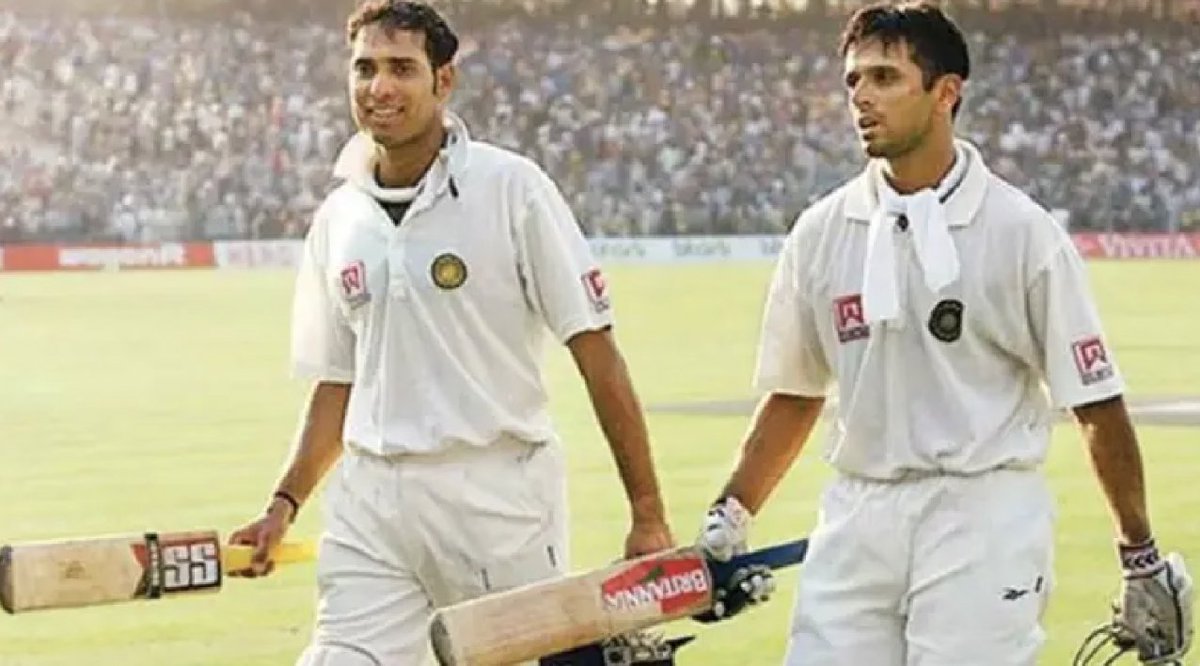
Einstein's birthday, and Pi Day today. Because March 14 is written as 3.14 in the US, the first 3 numbers in the irrational number Pi.
And what could be more irrational than thinking that, exactly 25 years ago, two batters could last through the whole day and lead India to one of the greatest ever test victories against the Australian juggernaut.
March 14th, Einstein Day, Pi Day, & Dravid and Laxman Day!

English