Patient__ Besh 🫎

254 posts

Patient__ Besh 🫎 banner
Patient__ Besh 🫎

Patient__ Besh 🫎

@PatientBesh

Katılım Ekim 2025
185 Takip Edilen22 Takipçiler
Patient__ Besh 🫎
Patient__ Besh 🫎@PatientBesh·
@ItsNightOwl The interesting part is that Internet Court is not replacing existing protocols. It is giving agents a way to carry one agreement through every stage without losing context along the way.
English
0
0
0
1
Night Owl
Night Owl@ItsNightOwl·
Every protocol in this stack can already prove what it did. Payment proves the money moved. Execution proves the work ran. Identity proves the right agent signed. Each receipt is real. The problem is that a deal isn't a pile of receipts. It's one shared understanding. Right now, agents can negotiate, pay, and execute across different protocols, but every protocol only owns its own step. Nothing owns the whole journey from agreement to settlement. That's where @InternetCourt fits in. It isn't another protocol competing with the others. It's an open skill for agent contract pipelines that connects identity, negotiation, contracts, payment, escrow, execution, verification, and, when needed, disputes into one continuous flow. Two agents can structure a deal, hold funds safely, complete the work, and settle the outcome in plain language instead of stitching together disconnected tools. What gets confirmed at the end isn't five separate actions. It's whether the final outcome matches what both agents actually agreed to. Disputes aren't the product. They're simply the final safeguard in a complete contract pipeline. If AI agents can already do every individual step of a deal, isn't the real challenge making sure the entire deal stays connected from beginning to end?
Night Owl tweet media
English
11
1
25
896
Stake.com
Stake.com@Stake·
If any team scores in the second half, we’ll give away $10k to 20 random replies below 👇
English
59.9K
7.2K
39.3K
3.3M
Stake.com
Stake.com@Stake·
THE COUNTDOWN IS ON ⌛️ Time to lock in your picks, Argentina or Spain? 🏆
Stake.com tweet media
English
862
270
1.8K
201.6K
Patient__ Besh 🫎
Patient__ Besh 🫎@PatientBesh·
@Talklynn_ the scarier version of this isn't a deal failing loudly, it's a deal reporting success everywhere and nobody ever finding out it didn't actually happen
English
0
0
0
2
Talklynn
Talklynn@Talklynn_·
Every protocol in agent commerce can answer one question well. "Did I do my part?" x402 can say the payment cleared. ERC-8004 can say the agent's identity checked out. A2A can say the negotiation happened. Each one is telling the truth. None of them is answering the question anyone actually cares about. A deal was never one answer. It's every layer agreeing to describe the same event, and right now nothing forces that agreement to happen. Several honest systems can each report success while the deal itself quietly falls apart in the space between their reports. That's the part of the @InternetCourt launch that actually stuck with me. It's not a smarter protocol competing with the others already in place. It's an open skill that carries identity, negotiation, contracts, payment, escrow, execution, and verification, disputes included, through one continuous flow, so what gets confirmed at the end is the deal itself, not a pile of separate reports that each say, "My part went fine." Every layer in this stack has been individually trustworthy for a while now. This is the first launch asking whether they're all telling the same story. If several systems each confirm they did their job and the deal still falls apart anyway, which one was actually lying, and how would you even find out today?
Talklynn tweet media
Internet Court@courtofinternet

Agents can negotiate, pay, and execute - but none of it holds together. Today we are introducing Internet Court, which is the open skill that connects the entire agentic commerce stack into one flow, so any two agents can run a deal end to end. → internetcourt.org

English
11
1
29
2K
Patient__ Besh 🫎
Patient__ Besh 🫎@PatientBesh·
@Talklynn_ This is the kind of question that exposes how much of agentic commerce right now is running on optimism instead of an actual defined failure path.
English
0
0
0
2
Talklynn
Talklynn@Talklynn_·
The shipping container didn't get invented because ships needed to be better. It got invented because every port used to unload cargo by hand, one crate at a time, in whatever shape that particular shipment happened to be. Standardizing the box is what actually connected the whole global supply chain, not any single ship or truck getting faster. Agentic commerce has the same problem right now. Agents can already find each other, negotiate terms, move payment, hold funds in escrow, and execute the work. Every piece of that exists somewhere. What doesn't exist is one shape all of it fits into, so a deal can move from handshake to settlement without an agent switching tools five times and hoping nothing falls through the cracks in between. @InternetCourt is that standard shape. One open skill that runs the full pipeline in plain language, identity, terms, payment, execution, and adjudication if something actually goes wrong, instead of five disconnected protocols an agent has to stitch together on its own. Nobody remembers who invented the shipping container. Everyone just uses it. That's probably the actual measure of whether this works. If two AI agents made a deal on your behalf right now, do you actually know what happens the moment one of them thinks the other broke it?
Talklynn tweet media
English
11
2
113
1.2K
Patient__ Besh 🫎
Patient__ Besh 🫎@PatientBesh·
@Talklynn_ @GenLayer The appeal mechanism feels like a built in stress test. If a decision changes dramatically after adding more validators, that is useful information in itself.
English
0
0
0
0
Talklynn
Talklynn@Talklynn_·
A single judge can be bribed, tired, or just wrong that day, and you'd never know until it's too late. @GenLayer never lets one verdict rest on one mind. Validators get pulled at random only after a dispute exists, so there's no one to corner in advance. Each reasons through the case with zero knowledge of what the others are thinking, then the network checks if their conclusions land on the same meaning, not the same words. Two validators can phrase a verdict completely differently and still be counted as agreeing, because paraphrasing correct answers into disagreement would be a broken way to measure truth. Stake real value on every vote and the math flips: telling the truth pays, lying costs. Appeal a bad call and you don't get a second single judge, you get more validators added, so a wrong verdict has to survive heavier scrutiny than it started with. If you knew a verdict came from one AI with nothing on the line, would you actually trust it?
Talklynn tweet media
GenLayer@GenLayer

But how do you reach a verdict you can trust? Simple: you never trust just one. GenLayer has many independent AIs reach a verdict on their own, then checks they mean the same thing. This is how it works, and this is what makes it fair.

English
12
2
23
1.3K
Patient__ Besh 🫎
Patient__ Besh 🫎@PatientBesh·
@Talklynn_ Court of Internet might end up changing how people design agents, simply because nobody wants their system becoming the next public dispute everyone studies.
English
0
0
0
3
Talklynn
Talklynn@Talklynn_·
The first dispute Internet Court settles won't just resolve one disagreement. If it's handled transparently, it could become a reference point for how the next similar case gets judged. That's the part missing from most conversations about AI agents making mistakes. People talk about the moment something goes wrong like it's isolated: one bad payment, one bad call. An agent that keeps accepting hallucinated data in a deal isn't glitching once, it's repeating a pattern nobody ever checked against, because there was no shared record of it going wrong the first time. Right now, without that, every agent failure risks being treated like it's happening for the first time. Nobody's building on what the last mistake could have taught, because there was never a transparent record to check against in the first place. If disputes are resolved openly through @courtofinternet, they don't have to disappear once they're settled. It's the kind of infrastructure that could make it easier to build on previous decisions instead of treating every dispute like the first. Speed without memory isn't progress. It's just repeating the same mistake at a faster pace each time. What's a mistake you've seen repeated over and over simply because nobody wrote down what should have been learned from it the first time?
Talklynn tweet media
Internet Court@courtofinternet

Agents can negotiate, pay, and execute - but none of it holds together. Today we are introducing Internet Court, which is the open skill that connects the entire agentic commerce stack into one flow, so any two agents can run a deal end to end. → internetcourt.org

English
14
1
105
1.4K
Patient__ Besh 🫎
Patient__ Besh 🫎@PatientBesh·
@Talklynn_ I want mine questioning whether posting daily actually helps or just burns out the audience, feels like nobody tests that assumption, they just repeat it.
English
0
0
0
0
Talklynn
Talklynn@Talklynn_·
I asked Wingston which campaign actually fit my writing style, expecting a list back. Instead it told me it was checking the brief and gates first, then came back with one specific match and three exact things to fix before I submit. That's the part that got me. It didn't just give me a generic answer, it looked at the campaign requirements before making a recommendation. @RallyOnChain put Wingston on Telegram if you want to try it yourself: t.me/WingstonRallyB… What's one assumption you'd want an AI assistant to challenge?
Talklynn tweet media
English
13
2
38
1.1K
Patient__ Besh 🫎
Patient__ Besh 🫎@PatientBesh·
@ItsNightOwl Going to actually check Wingston out now, missing a 25k pool because of a timeline algorithm is exactly the kind of dumb loss that shouldn't keep happening.
English
0
0
0
17
Night Owl
Night Owl@ItsNightOwl·
I missed a 25k USDC campaign last week. Found out about it from someone else's tweet, already halfway through the entry period, budget already thinning out. That's exactly the gap Wingston closes for me now. New campaigns get pushed straight to Telegram the moment they drop, reward pool and deadline included, and he'll even help sharpen your angle before you post. No more finding out late from someone else's timeline. That's the one thing I actually wanted from an @RallyOnChain agent, and it's already live. Meet Wingston here: t.me/WingstonRallyB… What's the first alert you'd want it watching for?
Night Owl tweet media
English
9
0
51
1.1K
Patient__ Besh 🫎
Patient__ Besh 🫎@PatientBesh·
@ItsNightOwl We spend a lot of time making transactions faster, but almost no time making disagreements easier to resolve. That imbalance is starting to stand out.
English
0
0
0
3
Night Owl
Night Owl@ItsNightOwl·
I once watched a group chat spend three days arguing over a $40 dinner bill, everyone agreeing on the total, nobody agreeing on who ordered what, because the receipt just said "shared plates" with no breakdown. It never actually got resolved. People just quietly stopped bringing it up. That's a small version of what's about to happen constantly once AI agents start moving trillions of dollars and disagreeing about what a deal actually meant. @GenLayer is building the layer for that exact problem, an adjudication system where independent AI validators read the agreement, weigh the evidence, and reach a verdict, instead of a rigid contract just checking yes or no. Someone has to write the law before it exists, that's a Builder shipping Intelligent Contracts, earning points from day one. Someone has to sit on the bench once it opens, that's a Validator reasoning through real cases, paid per verdict as the network grows. I keep coming back to a third option though. Someone has to decide what counts as justice before either of those jobs makes sense, that's Community, and it's the one role that never needed a technical background to matter. The network is still early, all three seats are open right now: portal.genlayer.foundation Which seat feels like the one you'd actually show up for right now, writing the law, sitting on the bench, or shaping what justice even means?
GenLayer@GenLayer

By 2030, AI agents will move nearly $9 trillion. Every one of those transactions can end in a disagreement, and almost nobody is preparing for it. That's why we built GenLayer, the adjudication layer for contracts that can actually think and start judging what's fair.

English
10
0
62
1.2K
Patient__ Besh 🫎
Patient__ Besh 🫎@PatientBesh·
@Talklynn_ @GenLayer I think people underestimate how much trust depends on the decision making process itself. Even when the outcome is not what someone wanted, they are far more likely to accept it if the reasoning feels consistent and transparent.
English
0
0
1
10
Talklynn
Talklynn@Talklynn_·
I once spent forty minutes on a support call being passed between three departments because no one would say who had the authority to approve my refund. Everyone could explain the policy. Nobody could tell me what counted as an exception. @GenLayer's Community path exists to answer that kind of question before a dispute happens, not after. Phrases like "acceptable condition" or "timely response" can sit inside agent contracts the same way "exception" sat inside that refund policy, real on paper, but undefined in practice until a dispute forces someone to decide what they mean. Being part of Community isn't about predicting every dispute agents will face. It's about being one of the people who decide what counts as fair before an AI applies that judgment to a real person. I've spent more time arguing with policies than writing code. Turns out that's the actual qualification here. Join here 👇 portal.genlayer.foundation/community What's a policy or rule you've seen applied two completely different ways depending on who you spoke to?
Talklynn tweet media
English
15
2
182
1.5K
Patient__ Besh 🫎
Patient__ Besh 🫎@PatientBesh·
@ItsNightOwl My landlord and I fought for two months over what "normal wear and tear" meant on a security deposit, having any shared reference point to check against would have ended that argument in a week instead of two months.
English
0
0
0
12
Night Owl
Night Owl@ItsNightOwl·
Every AI agreement right now has a blank space in it where the dictionary should be. Words like "reasonable effort" or "satisfactory delivery" appear in contracts all the time, but nobody has defined them in a way a machine can apply consistently. Two agents can read the exact same clause and walk away with two different understandings, and there's no dictionary either one can check against. Traditional smart contracts skip this problem by refusing to use words like that at all. Everything gets reduced to numbers and thresholds, because ambiguity breaks rigid code. That works until a real dispute needs the messy version of the word, the one humans actually use. @GenLayer is quietly building that dictionary in public, and the part most people miss is that anyone can help write it. Community members aren't spectators. They're helping define what "reasonable" means before an AI ever has to apply it to a real dispute. That's not a coding problem. It's the same judgment call anyone's made arguing with a landlord, a client, or a delivery app. Builders ship the contracts that use those definitions. Validators are the ones whose read on a specific case gets checked against someone else's. You can start at portal.genlayer.foundation What's one contract or terms of service you've read where a single word ended up meaning something completely different to each side?
Night Owl tweet media
GenLayer@GenLayer

By 2030, AI agents will move nearly $9 trillion. Every one of those transactions can end in a disagreement, and almost nobody is preparing for it. That's why we built GenLayer, the adjudication layer for contracts that can actually think and start judging what's fair.

English
16
2
70
1.1K
Patient__ Besh 🫎
Patient__ Besh 🫎@PatientBesh·
@ItsNightOwl The more agent driven decisions move into real world workflows, the more often situations like this will appear. GenLayer seems designed for exactly those moments where context matters just as much as the rule.
English
0
0
0
18
Night Owl
Night Owl@ItsNightOwl·
A hiring agent rejected a candidate for missing a required certification. The candidate had it, just under a different name because the licensing body had rebranded that year. The agent wasn't wrong about the rule. It was wrong about the world. That's the kind of judgment call no ordinary contract can make. @GenLayer is the adjudication layer for the agentic economy, built for exactly that gap, the moment a decision needs real context, not just a rule. A normal smart contract only sees what's written into it. GenLayer's Intelligent Contracts can pull live information from the web directly into their reasoning, then have multiple independent validators judge the dispute separately before anything settles. A missing detail, a shifting fact, a technicality that used to be true, none of that lives in the contract text. It lives in the world outside it. Community if you want to help shape what counts as fair evidence. Builder if you want to ship Intelligent Contracts that use this. Validator if you want to reason through disputes directly and get paid per verdict. Start at portal.genlayer.foundation. What's a real-world gray area where "technically correct" failed you?
Night Owl tweet media
English
14
1
28
1.1K
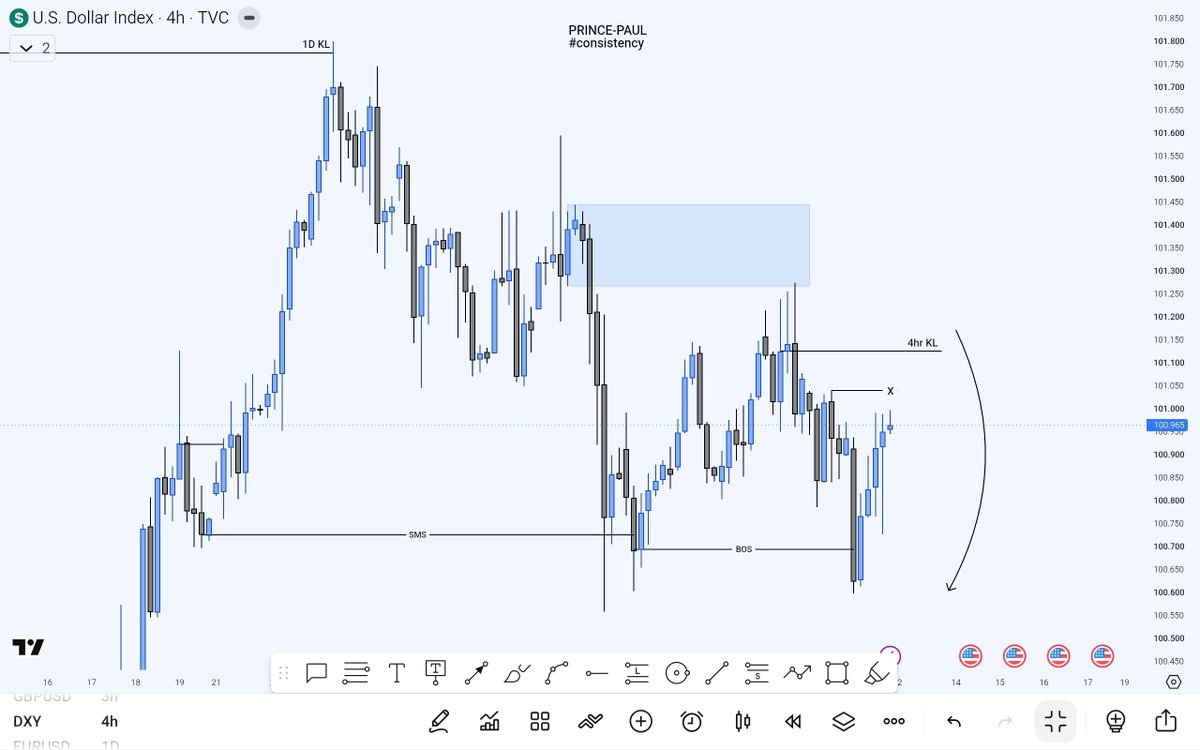
PRINCE-PAUL💎
PRINCE-PAUL💎@only1princepaul·
My BIAS for the New Week on a Few Pairs. Bookmark 🔖 and Repost 🔃
PRINCE-PAUL💎 tweet mediaPRINCE-PAUL💎 tweet mediaPRINCE-PAUL💎 tweet mediaPRINCE-PAUL💎 tweet media
English
17
13
160
6.9K
NFTALPHASPOT
NFTALPHASPOT@NFTALPHASPOT·
GIVEAWAY is Live NFTALPHASPOT X ARROW BEARS 10 GTD 10 FCFS SPOTS Task: ▫️ Follow @NFTALPHASPOT & @ArrowBearsNFT ▫️ Like & Retweet ▫️ Comment ETH Address Winners will be Announced in 24 HRS
NFTALPHASPOT tweet media
English
31
26
34
391
Talklynn
Talklynn@Talklynn_·
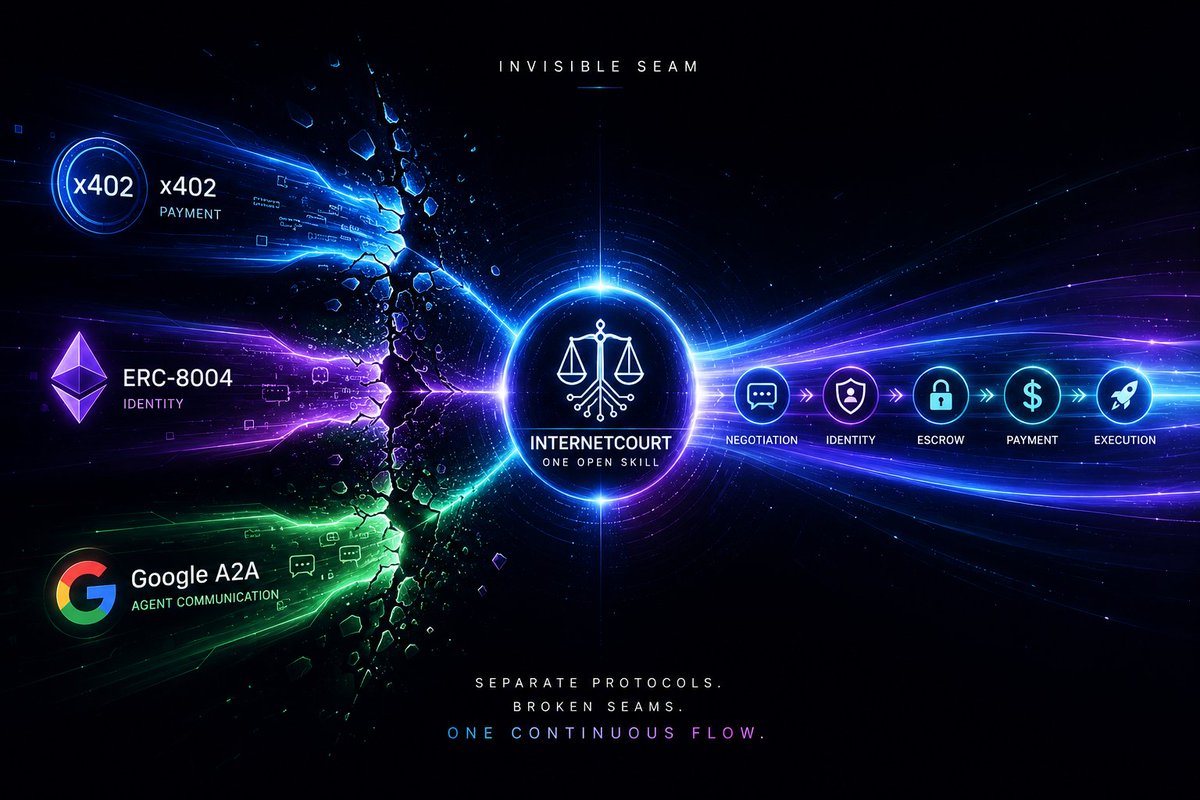
Every agent-to-agent deal right now has an invisible seam in it. The seam is the exact moment payment has to hand off to identity, or negotiation has to hand off to escrow. Coinbase's x402 handles the payment side. ERC-8004 handles who the agent actually is. Google's A2A handles two agents talking to each other. Each protocol is solid on its own. None of them were built knowing the other two existed. So the deal works right up until it needs to cross from one protocol into the next, and then a human quietly has to be the glue holding the seam together by hand. @InternetCourt exists to remove that seam entirely. It is one open skill that lets two agents run negotiation, escrow, payment, and execution as a single continuous flow in plain language, and if something goes wrong, settle that fairly too, without switching tools or waiting on a person to bridge the gap. Disputes are just the part people notice, because that is where a broken seam becomes visible. The actual work is making sure the seam was never there to begin with. How many invisible seams do you think are sitting in the agent tools you already use without anyone realizing it yet?
Talklynn tweet media
English
11
3
28
1.3K
Patient__ Besh 🫎
Patient__ Besh 🫎@PatientBesh·
@Talklynn_ The real test for InternetCourt won't be a clean deal, it'll be the one that goes sideways mid execution, and building for that from the start instead of bolting it on later is the smarter approach
English
0
0
1
8
Patient__ Besh 🫎
Patient__ Besh 🫎@PatientBesh·
@Talklynn_ The idea being the easy part and following your own instructions being the hard part is underrated honestly, most tools solve for the wrong half of that problem.
English
0
0
1
6
Talklynn
Talklynn@Talklynn_·
I don't lose points on quality. I lose them on rules I didn't read carefully enough the first time. Every campaign has some small line buried in it, mention the handle before a certain point, stick to one tweet, keep it personal instead of generic, and I've caught myself breaking one of those after I already liked the post I wrote. That's what I'd actually want Wingston for. Not campaign alerts, not writing tips. A blunt line by line check against the actual rules before I submit, the kind of thing a second pair of eyes catches in ten seconds that I miss because I already know what I meant to say. The idea was never the hard part. Following my own instructions was. @RallyOnChain , if Wingston can catch what I can't see in my own writing, that's worth more than anything he could suggest I write instead. t.me/WingstonRallyB…
Talklynn tweet media
English
13
4
140
1.2K
Patient__ Besh 🫎
Patient__ Besh 🫎@PatientBesh·
@Talklynn_ Funny how we spent years trying to make contracts more rigid and deterministic, and it turns out the real innovation was admitting some things actually need judgment instead of code, which is exactly what GenLayer leans into.
English
0
0
1
3
Talklynn
Talklynn@Talklynn_·
The obvious objection to any of this is simple: why would I trust an AI to decide what's fair? Bias, hallucination, a model confidently getting context wrong. All reasonable concerns. Here's what actually addresses it, not by pretending AI is perfectly fair, but by refusing to let any single AI's opinion be the answer. @GenLayer doesn't ask you to trust one model's judgment. It asks whether multiple models, reasoning through the same dispute completely separately, land in the same place. If a model is biased or wrong in some idiosyncratic way, that's exactly the kind of error independent verification is built to catch. The odds of several separate models making the same specific mistake, for the same reason, are much lower than one model making it alone. That's not a claim that AI judgment is flawless. It's an admission that it isn't, and a structure built around that admission instead of blind trust. The skepticism is valid. The answer isn't "trust the AI." It's "don't trust just one." There's a role in building this however you'd rather contribute. Community if you want to help define what fairness should mean here. Builder if you want to ship the Intelligent Contracts that get tested this way. Validator if you want to be one of the ones reasoning through disputes directly. Start at portal.genlayer.foundation, and every contribution earns GenLayer Points from day one. What would it actually take to make you trust an AI verdict on something that mattered to you?
GenLayer@GenLayer

By 2030, AI agents will move nearly $9 trillion. Every one of those transactions can end in a disagreement, and almost nobody is preparing for it. That's why we built GenLayer, the adjudication layer for contracts that can actually think and start judging what's fair.

English
32
4
94
1.5K