Sabitlenmiş Tweet
Rugaba Patrick
8.8K posts
Rugaba Patrick
@PatrickRugaba
Rooted in the Bwishaza Kingdom (Mpembe–Murambi). Human rights activist,Pan-Africanist,co-author of Survivors Uncensored. For truth,justice & liberty. #TeamIneza
Katılım Ocak 2022
199 Takip Edilen6.7K Takipçiler
Rugaba Patrick retweetledi

@RoyalFamily @DailyMirror @MarkJCarney
@HoCSpeaker
@guardian
@BBC
@AJEnglish
@CNN
@JudiRever
@RadioCanadaInfo
Following the publication of my open letter on X, addressed to His Majesty King Charles III, urging him to reconsider his approval of Louise Arbour as Governor General of Canada because her tainted career history could undermine the dignity of the British Crown. x.com/i/status/20570… . I received a message from an individual in Canada indicating that I was not the only opponent to Louise Arbour's appointment as Governor General of Canada. An article titled “How Louise Arbour Helped Shield Paul from Justice” was written by Judi Rever, a Canadian journalist and highly regarded author on the Rwandan genocide and was published on May 11, 1994. canadiandimension.com/articles/view/… Judi Rever concluded her article by stating, “…for millions of Kagame’s victims in Rwanda and Congo, her record (Louise Arbour) is a profoundly painful one, and will be remembered forever.” I had not read Judi Rever’s article when I wrote my message; however, our assessments are aligned: Louise Arbour is not appropriate for that role. The points I raised were vindicated by those in Judi Rever’s article, which reinforces my resolve to appeal to His Majesty King Charles III and the Canadian authorities, urging them to reconsider Louise Arbour’s appointment as Governor General. It is not too late, as she has not yet been sworn in. Even if she had been sworn in, she could have been forced to resign.
English
Rugaba Patrick retweetledi

Sur cette vidéo, une institutrice explique aux enfants le génocide commis contre les Tutsi en 1994.
Elle pose la question : « Qui peut dire qui étaient les tueurs ? »
Réponse : « LES Hutu. »
Question : « Les Hutu ont tué qui ? »
Réponse : « Les Tutsi. »
[…]
Question : « Est-ce que chacun de vous connaît son ethnie ? »
Réponse : « Non. »
Institutrice : « Actuellement, nous sommes dans un état d’unité et de réconciliation. »
Une telle formulation pose au moins deux problèmes majeurs.
1. L’usage de l’article défini (« LES Hutu ») suggère une responsabilité collective
En disant « ce sont les Hutu qui ont tué les Tutsi », au lieu de dire "des (200 000 ) hutu ont tué entre 500 000 et 600 000 tutsi", on laisse entendre que l’ensemble des Hutu aurait participé aux massacres.
Or, c’est historiquement inexact.
L’estimation la plus couramment citée par des sources fiables (Britannica, United States Holocaust Memorial Museum, etc.) est d’environ 200 000 Hutu impliqués dans les tueries.
Sur une population hutu estimée à 5 à 6 millions en 1994, cela représente entre 3 % et 5 % des Hutu.
En d’autres termes, plus de 95 % des Hutu n’ont pas participé au génocide.
L’immense majorité des Hutu n’a pas tué.
Beaucoup étaient terrorisés, neutres, ou ont même protégé des Tutsi au péril de leur vie.
Des milliers de Hutu ont d’ailleurs été assassinés par les extrémistes hutu eux-mêmes (il faudrait y ajouter 300 000 à 400 000 hutu ayant trouvé la mort au Rwanda et au Congo du fait du FPR ).
Si « LES Hutu » ont tué les Tutsi, les Hutu seraient donc collectivement coupables alors qu’ils existent encore aujourd’hui.
2. L’usage trompeur du terme « Hutu modérés »
On parle souvent des massacres de Hutu « modérés » par les milices extrémistes.
Cette expression est elle-même problématique.
Ces Hutu n’ont pas été tués parce qu’ils étaient simplement « modérés », un terme vague et moralisant.
Ils l’ont été parce qu’ils étaient perçus (à tort ou à raison) comme sympathisants avec le FPR (Front Patriotique Rwandais), donc comme des traîtres potentiels.
Ce choix sémantique contribue à diaboliser l’ensemble des Hutu :
Si les hutu « modérés » ont été tués, alors tous ceux qui ont survécu seraient donc « non modérés », donc complices.
Il s’agit là d’une essentialisation qui suggère, implicitement, que les Hutu survivants "participent" (au sens aristotélicien) du terme à une essence collective génocidaire.
Cette diabolisation collective ne simplifie pas seulement l’histoire. Elle sert aussi à maintenir une forme d’ethnocratie tutsi largement attestée : en plaçant artificiellement l’ensemble des Hutu en position d’infériorité morale permanente, on justifie leur infériorité politique et sociale.
Pourtant, plus de 95 % des Hutu n’ont pas participé au génocide des 500 000 à 600 000 Tutsi (estimations consensuelles actuelles).
Cette stigmatisation insidieuse, relayée par l’école via la formule simpliste « les Hutu ont tué les Tutsi » (au lieu de « des Hutu ont tué des Tutsi » ou « environ 200 000 Hutu ont massacré 500 000 à 600 000 Tutsi »), sape en outre le discours officiel sur l’unité nationale (« Ndi Umunyarwanda » : je suis Rwandais, pas Hutu ni Tutsi).
D’un côté, on interdit officiellement de parler d’ethnie en public (sous peine d’accusation de « divisionnisme » ou d’« idéologie du génocide »).
De l’autre, l’enseignement et la commémoration officielle rappellent constamment l'attribution du génocide non pas à une faible minorité de hutu mais à la catégorie « Hutu ».
Résultat : une culpabilité collective implicite pèse sur les nouvelles générations d’origine hutu, qui n’ont pas vécu 1994, alors même que l’on prétend que les ethnies n’existent plus.
Aujourd’hui, de nombreux universitaires qui se prétendent spécialistes du génocide contre les Tutsi continuent d’utiliser de manière irraisonnée le terme fallacieux, « Hutu modérés » et dans le même temps manquent cruellement d’une connaissance approfondie de l’histoire du Burundi et du suprémacisme tutsi dans la région des Grands Lacs — connaissance sans laquelle il est impossible de comprendre les causes et la genèse du génocide de 1994.
Ceux là n'ont vraisemblablement pas lu l'un des plus grand spécialiste de la région, René Lemarchand, lequel considère l’assassinat du président burundais hutu réconciliateur Melchior Ndadaye par des extrémistes tutsi en octobre 1993 comme ayant joué un rôle majeur dans l’émergence du « Hutu Power » au Rwanda.
Ignorer l'histoire du Burundi pour qui veut comprendre le génocide des tutsi du Rwanda, c’est comme prétendre comprendre la mécanique quantique sans avoir jamais fait de mathématiques.
Enfin, profitons en pour rappeler aux ignorants de la commission Duclert qui n'intégra aucun spécialiste de la région des grands lacs, que le premier grand massacre de masse de la région fut le génocide des Hutu au Burundi en 1972, où 100 000 à 300 000 Hutu (les élites, intellectuels, étudiants et cadres) furent exterminés par le régime tutsi pour préserver l’ethnocratie tutsi. (Cf. le livre magistral : The Dynamics of Violence in Central Africa).
Français

BadRama & Sheila / NTAMUNOZA UKUNDA IKI? x.com/i/spaces/1qGoN…
Filipino

@Imforutembesa13 @AAwithJGS @sibomanaathanaseofficial1901?si=wSOKSn7MmGRWq1d2" target="_blank" rel="nofollow noopener">youtube.com/@sibomanaathan…
🙈🙈
QME

@PatrickRugaba @AAwithJGS Jya uhita utanga link maze duhite tubona référence bitatuvunnye 🫣🫣

Rubyiruko koko amatwi yanyu azakomeza kubeshywa kugeza ryari?
Ko utaganiriye na se atamenya icyo sekuru yasize avuze, mwabajije abakuru ukuri ku mateka Inkotanyi zitubeshya? Niba mushaka kumenya byinshi, ukuri mwahishwe, ni mujye kumva umusaza Sibomana Athanase!
#TeamIneza
Indonesia

@NduhungireheT @sheilakamuzinzi Hahah nakugaya nte kandi uvuga ukuri! Nukumuba hafi ahubwo yanzovu itazamwicara kugakanu 🙈😃 @sheilakamuzinzi
Eesti

@sheilakamuzinzi Ibyo ngiye kuvuga ntaho bihuriye nikiganiro cya @sheilakamuzinzi Ariko it has to be said. Mbona @sheilakamuzinzi agira ijwi ryiza.
Filipino
Rugaba Patrick retweetledi

On August 29, 2026, the #KizitoMihigo Foundation for Peace warmly invites you to the MAP Day in Liège, a gathering dedicated to promoting Christian values, peace, unity, and intercultural dialogue through art.
This initiative brings together artists, peacebuilders, cultural actors, institutions, associations, and members of the public in memory of Kizito Mihigo and all victims of violence and armed conflict around the world.
Everyone is welcome.🤗
@KMPfoundation @kizitomihigo @ndiumuzito @RwandanMetics
English
Rugaba Patrick retweetledi

Aujourd’hui, 24 mai 2026, cela fait 4 ans que mon père, Safari Stanley, est mort empoisonné en Afrique du Sud.
En décembre 2021 déjà, j’avais reçu un appel :
« Votre père doit rentrer. Personne parmi vous ne doit s’y opposer. »
J’ai répondu qu’il ne rentrerait jamais volontairement dans un système qu’il dénonçait depuis des années.
La réponse fut claire :
« Toutes les accusations, même celles fabriquées via les gacaca, disparaîtront s’il rejoint Kigali. »
Le message du régime était simple :
Rejoignez-nous… ou mourez.
Pendant des mois, les pressions ont continué. Menaces, manipulations, intermédiaires envoyés pour le convaincre. Mais mon père refusait toute négociation. Son combat n’était pas personnel. Il voulait dénoncer un système qu’il considérait comme injuste et sanguinaire.
Le 24 mai 2022, des messagers envoyés par le général Dan Munyuza devraient venir lui rendre visite. Leur objectif n’était pas de négocier, mais de créer les circonstances permettant l’exécution du plan.
Comme lors d’autres visites, mon père fait appeler A.N., une femme burundaise qui venait parfois cuisiner lorsqu’il recevait des invités.
Ce même jour, il sera empoisonné.
Après sa mort, le régime tente immédiatement de récupérer son corps pour l’expatrier vers Kigali. Mais grâce à la mobilisation de ses proches et d’une équipe d’avocats déterminés, ce plan échoue. Son corps sera finalement transféré en Europe en juillet 2022 afin qu’il puisse recevoir des funérailles dignes auprès des siens.
Quatre ans plus tard, nous continuons son combat. Nous restons debout pour dénoncer le régime sanguinaire de Kigali, les intimidations, les assassinats politiques et le silence imposé aux Rwandais.
Paix à son âme.
La lutte continue. ✊🏽@MNdayizigi15852


Français
Rugaba Patrick retweetledi

Rugaba Patrick retweetledi

MUZE TUGANIRE
MURI IYI VIDEO UYU MU PAPA ARAGIRA ATI : IWACU NI INYAMATA (BUGESERA), DUFITE ABATUTSI BISHE”, BAKATIWE BURUNDU”
Ati Nonese “ARI UMUTUTSI WISHE,N’UMUHUTU UTARISHE, NINDE MUTUTSI”
Ibi bishaka kwerekana ko mu ndorerwamo y’u Rwanda rwa @rpfinkotanyi , ngo leta y’ubumwe, UMUHUTU AFATWA NK’UMWICANYI,YABISHAKA ATABISHAKA.
Niba nyuma ya 32 , umuturage ajya kuri television akavuga kuriya, wibaza ubumwe n’ubwiyunge @Unity_MemoryRw yigishije ubwo aribwo. Igihamya nuko abayobozi @DrDamascene Ntabwo bazigera bamagana imvugo nk’izi…
Ibi byose ni wa mugambi wa @rpfinkotanyi ( ishyaka riri kubutegetsi) wo gukora “character assassination” y’ubwoko bumwe (Hutu), Nyamara bakifashisha “Ndi Umunyarwanda” ngo “abo ubwenge buke” batamenya “agenda” ihari.
@PaulKagame @paul_rukesha @MafezaFaustin4 @DrDamascene @Dr_JNsengiyumva @KabagambeI
@IGIHE @Ibuka_Rwanda @UnityClubRw
Indonesia
Rugaba Patrick retweetledi

The cowards working for @PaulKagame and his regime in #Rwanda thought they cooked and had me cornered, that was ……….a BIG MISTAKE.
Check out how it went down under this link: youtu.be/uL-E8WjH2xM
#Rwanda #RwandaWorks #RwandaWorks #Congo #Karasira #Kabuga

YouTube
English

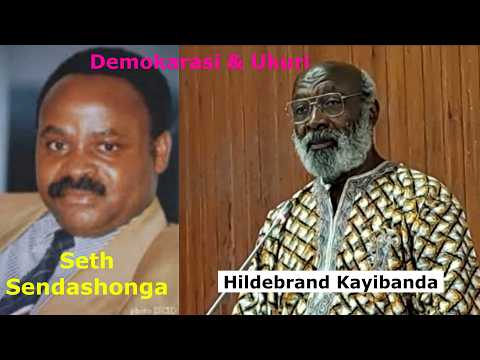
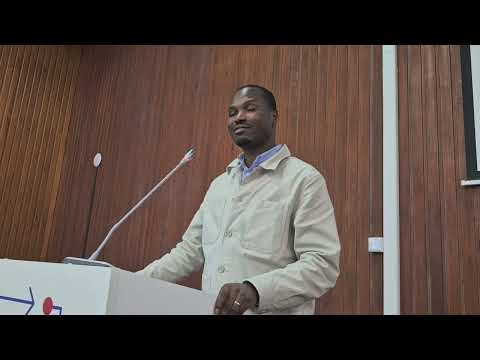
On May 23rd, we gathered to honor the memory of Seth Sendashonga, organised by Institut Seth Sendashonga Pour La Citoyenneté Démocratique (ISCD) 28 years after his assassination. It was a time of reflecting on the Rwanda we want to build after decades of fear, repression, and political violence.
“Ishusho y’u Rwanda twifuza nyuma y’ubutegetsi bwa #FPR. Uruhare rwa buri wese.”
This was not just a conference. It was a call for truth, justice, courage, and responsibility.
While serving as Minister of Local Government in Rwanda after the 1994 genocide, Seth Sendashonga courageously denounced the killing of innocent civilians by RPF soldiers.
At a time when fear and silence dominated political life, he chose to speak directly to Paul Kagame about the crimes being committed against innocent people. It was a rare and heroic act of integrity and courage.
After resigning from the government and fleeing to #Kenya due to growing political persecution and insecurity, Seth Sendashonga was assassinated in Nairobi on May 16, 1998. Years later, Paul Kagame publicly declared that Sendashonga had crossed a “red line” and stated that he was “not apologetic” about his death. His so-called “crime” was refusing to remain silent in the face of injustice.
Today, as a new generation of Rwandans, we refuse to inherit fear. We refuse dictatorship, division, exclusion, and the culture of silence imposed on our people. We stand firmly for a Rwanda built on democracy, freedom, human dignity, accountability, reconciliation, and equal rights for every citizen.
The struggle Seth Sendashonga fought for did not end with his assassination. It lives on through every young person who dares to speak the truth, defend justice, and dream of a free Rwanda without segregation or political persecution.
Special thanks to all panelists and contributors whose voices enriched this important discussion: Alfred Antoine Uzabakiriho, Denise Zaneza, Nadine Kasinge, Achille Kamana, Paul Rusesabagina, Hidebrand Kayibanda,
Dr Théogène Rudasingwa, and Théodore Mpatswenumugabo.
Your courage, commitment, and wisdom continue to inspire those who believe that better #Rwanda is possible.
Truth cannot be silenced forever. Justice cannot be buried forever.
Rwanda belongs to all Rwandans.


English
Rugaba Patrick retweetledi

May 23, 1994. 📅
My brother was killed. 💔
He was 16. 😔
Read that again: Sixteen. A child. 🥺
He wasn’t a number. He wasn’t “one of many.” He was my older brother. And in a moment—his entire future was erased. 💔😭
During the genocide in Rwanda, he was separated from my mother while they were fleeing. He was alone. That’s how he met the militia who killed him.
Pause for a second.
Imagine your older brother at 16 👦. Now imagine never seeing him again 🥺💔😔.
When I think about him, I don’t start with how he died. I start with what was stolen:
The man he would have become 🧔🏾.
The family he would have built 👨👩👧👦.
The life he would have lived ⏳.
The brother I would still have today ❤️..
And then I zoom out.
Because my story is not unique. Millions of futures were erased 💔. Families destroyed 😭. Communities broken 😔.
Here’s the part people don’t understand:
Genocide doesn’t start with killing. It starts with words.
Before 1994, there were jokes. Comments. Small, casual ideas that some people were “different.”
I was a child. I didn’t think much of it.
Today, I see it clearly: that’s where it began.
Those words planted division 💔. They made hatred feel normal 😡. And they made violence possible 💥.
Let me tell you something personal.
The last time I saw my brother 👨👦, he was taking me to a retreat 🏞️. That decision saved my life 🙏❤️.
If I had stayed with him and my mother… I might not be here writing this ✍️.
Today, I remember him in two ways:
Through the eyes of the 13-year-old I was 👧.
And through the understanding of the adult I’ve become 🤔.
As a child: he was my protector ❤️.
As an adult: I see the truth—he was just a child too 🤔.
16 years old 👧. Already carrying the weight of losing our father 💔. Already navigating a country being torn apart 🌍.
Today, I speak as a survivor 🙏🏾.
And I’ll say something that is not always easy to say:
All victims deserve to be remembered 🙏🏾❤️.
Not selectively. Not politically. Fully. Truthfully.
So I ask you:
What kind of world do we build—if we only remember some lives, and not others?
My brother had a name: Nkubito Ntawuhigimana Joseph Olivier, Zézé for me. He had a life. He was loved. He deserved to live.
Today, I remember him.
And through him, I remember all those who were taken.
They were taken, and with them, our world was gone! 😔💔 I remember my brother, other members of my family, my neighbors, my classmates... I remember everyone because we lived together. ❤️
Most of the people in the pictures were killed in the 1994 genocide. I'm sharing their story 📖 so you can get to know them too ❤️, keep their memory alive ✨, and invite you to join me in remembering them 🙏🏾.


English
Rugaba Patrick retweetledi

Today in Brussels, at the conference organized by Institut Seth Sendashonga to mark 28 years since the assassination of Seth Sendashonga, we gathered to reflect on an important question:
“Ishusho y’u #Rwanda twifuza nyuma y’ubutegetsi bwa FPR. Uruhare rwa buri wese.”
Together with @AAwithJGS, @PatrickRugaba, and @NKasinge, we exchanged on key issues shaping Rwanda’s future: youth, reconciliation, political change, civic engagement, and how to avoid repeating the divisions of the past.
Rwanda’s future must be built on truth, justice, dignity, and the active participation of all Rwandans.
@PaulKagame @DrDamascene @Dr_JNsengiyumva


Denise Zaneza@dzaneza
Mu rwego rwo #kwibuka no kuzirikana intwari Seth Sendashonga umaze imyaka 28 yishwe na leta y’u #Rwanda, hazaba ibiganiro mbwirwaruhame ku: "Ishusho y’u Rwanda twifuza nyuma y’ubutegetsi bwa FPR/RPF. Uruhare rwa buri wese." Ibyo biganiro bizabera muri Belgique: 🗓️ 23/05/2026 📍 Rue Washington 40, 1050 Ixelles 🕑 14h00 - 18h00
English