The Lord is risen! Indeed He is Risen! Alleluia!
Chrystus zmartwychwstał! Prawdziwie zmartwychwstał!
Blessed Easter to all!
Sister Servants of the Most Sacred Heart of Jesus
Province of the Most Sacred Heart of Jesus
Cresson, Pennsylvania USA
For the first time since 1994, the Pope is personally carrying the Cross for all 14 Stations of the Cross, as Pope Leo XIV leads the Via Crucis at Rome’s Colosseum in the first Good Friday of his Pontificate.
THERE IS NO EASTER WITHOUT GOOD FRIDAY—A meditation by the Carmelite Nuns of Fairfield, PA
There is a quiet truth at the heart of the Christian story: there is no Easter without Good Friday.
We love the light of Easter morning—the empty tomb, the risen Christ, the promise that death is not the end. But the road to that dawn passes through darkness. Before the joy of resurrection came betrayal, loneliness, suffering, and the Cross.
The night before His death, Jesus went to the Garden of Gethsemane. There, in the silence of the night, He prayed in agony. The Gospel tells us that His sorrow was so deep that He sweat drops like blood. Even His closest friends could not stay awake with Him. In that moment, the Son of God experienced something painfully human: the feeling of being alone.
He knew what was coming. The arrest. The false accusations. The abandonment by those who had followed Him. The suffering of the Cross.
And from that Cross came one of the most haunting cries in all of Scripture:
”My God, my God, why have you forsaken me?”
These are not the words of someone who feels triumphant. They are the words of someone standing in the deepest darkness of human suffering. In that moment, Jesus entered fully into the experience of human despair—feeling abandoned, misunderstood, and alone.
This is why the Cross matters so deeply to those who suffer.
When life feels heavy, when hope seems distant, when prayers feel unanswered, we are not standing in a place that Christ does not understand. He has been there. He has walked through the valley of sorrow, betrayal, and silence. The Cross shows us that God does not remain distant from human suffering—He enters into it.
For the Carmelite tradition, this mystery has always been central. The saints of Carmel speak often about the dark night—those seasons when God seems hidden and the soul feels lost in shadow. Yet these nights are not signs of abandonment. They are often the quiet places where God is drawing the soul closer, purifying faith and deepening love in ways we cannot yet understand.
But the Cross is not the end of the story.
What looks like defeat on Good Friday becomes the doorway to something unimaginable. The tomb that held Christ for three days is not a prison but a passage. The darkness of that Friday gives way to the light of Easter morning.
The Resurrection does not erase the Cross; it transforms it.
The wounds of Christ remain, but they are no longer marks of defeat. They are signs of victory, proof that Love has endured the worst the world could give and has overcome it
This is the hope that Easter offers to every heart that has known suffering: the darkness is real, but it is not final.
There are seasons in life when we stand in our own Good Friday. Times when everything feels lost, when the future seems uncertain, when God feels distant and silent. In those moments, it is easy to believe that the darkness will never lift.
The Carmelite saints remind us that faith is often lived most deeply in these hidden places. Prayer offered in silence, trust offered without answers, and love offered in suffering are precious in the eyes of God. Even when the soul feels empty, God is quietly at work.
The disciples did not know on Good Friday what Sunday would bring. All they could see was loss and grief. Yet even while they mourned, the greatest victory in history was already unfolding.
Hope often works this way in our lives as well. We may not see it immediately. We may not understand what God is doing in the middle of our pain. But the promise of Easter is that suffering is never the final word.
Light follows darkness. Life follows death. Resurrection follows the Cross.
There is no Easter without Good Friday.
And because of that, even in our darkest moments, we can dare to believe that the story is not yet finished.
GOOD FRIDAY
It is Good Friday and the Church mourns the death of our Savior. This is traditionally a day of sadness, spent in fasting and prayer. One tradition encourages that silence be maintained beginning at noon and lasting the three hours of Christ’s crucifixion.
Good Friday is an obligatory day of fasting and abstinence. If possible, the fast on Good Friday is continued until the Easter Vigil (on Holy Saturday night) as the "paschal fast" to honor the suffering and death of the Lord Jesus and to prepare ourselves to share more fully and to celebrate more readily His Resurrection.
According to the Church's ancient tradition, the sacraments are not celebrated on Good Friday nor Holy Saturday. "Celebration of the Lord's Passion," traditionally known as the "Mass of the Presanctified," (although it is not a Mass) is usually celebrated around three o'clock in the afternoon, or later, depending on the needs of the parish.
The altar is completely bare, with no cloths, candles nor cross. The service is divided into three parts: Liturgy of the Word, Veneration of the Cross and Holy Communion. The priest and deacons wear red or black vestments. The liturgy starts with the priests and deacons going to the altar in silence and prostrating themselves for a few moments in silent prayer, then an introductory prayer is prayed.
In part one, the Liturgy of the Word, we hear the most famous of the Suffering Servant passages from Isaiah (52:13-53:12), a pre-figurement of Christ on Good Friday. Psalm 30 is the Responsorial Psalm "Father, I put my life in your hands." The Second Reading, or Epistle, is from the letter to the Hebrews, 4:14-16; 5:7-9. The Gospel Reading is the Passion of St. John.
The General Intercessions conclude the Liturgy of the Word. The ten intercessions cover these areas:
•For the Church
•For the Pope
•For the clergy and laity of the Church
•For those preparing for baptism
•For the unity of Christians
•For the Jewish people
•For those who do not believe in Christ
•For those who do not believe in God
•For all in public office
•For those in special need
Part two is the Veneration of the Cross. A veiled cross is processed through the Church, unveiled, and then venerated by the congregation. We joyfully venerate and kiss the wooden cross "on which hung the Savior of the world." During this time the "Reproaches" are usually sung or recited.
Part three, Holy Communion, concludes the Celebration of the Lord's Passion. The altar is covered with a cloth and the ciboriums containing the Blessed Sacrament are brought to the altar from the place of reposition. The Our Father and the Ecce Agnus Dei ("This is the Lamb of God") are recited. The congregation receives Holy Communion, there is a "Prayer After Communion," and then a "Prayer Over the People," and everyone departs in silence.
“You tell me that you cannot pray well. But what better prayer could there be then to represent to God again and again, as you are doing, your nothingness and misery? The most touching appeal beggars can make is merely to expose to us their deformities and necessities. But there are times when you cannot even do this much, you say, and that you remain there like a statue. Well, even that is better than nothing. Kings and princes have statues in their palaces for no other purpose then that they may take pleasure in looking at them: be satisfied then to fulfill the same office in the presence of God, and when it so pleases Him He will animate the statue.” (St. Francis de Sales)
The Loyola University Chicago student who was shot and killed last week was a “beautiful person” and a “genuine soul,” campus leaders said amid mourning over the 18-year-old’s murder. catholicnewsagency.com/news/270727/lo…
I strongly renew my appeal to persevere in prayer. May hostilities cease and may paths to #Peace finally open up, based on sincere dialogue and respect for the dignity of every human person. #PrayTogether.
“You fast, but Satan does not eat. You labor fervently, but Satan never sleeps. The only dimension with which you can outperform Satan is by acquiring humility, for Satan has no humility.” (St. Moses the Ethiopian, Fourth Century Desert Father)
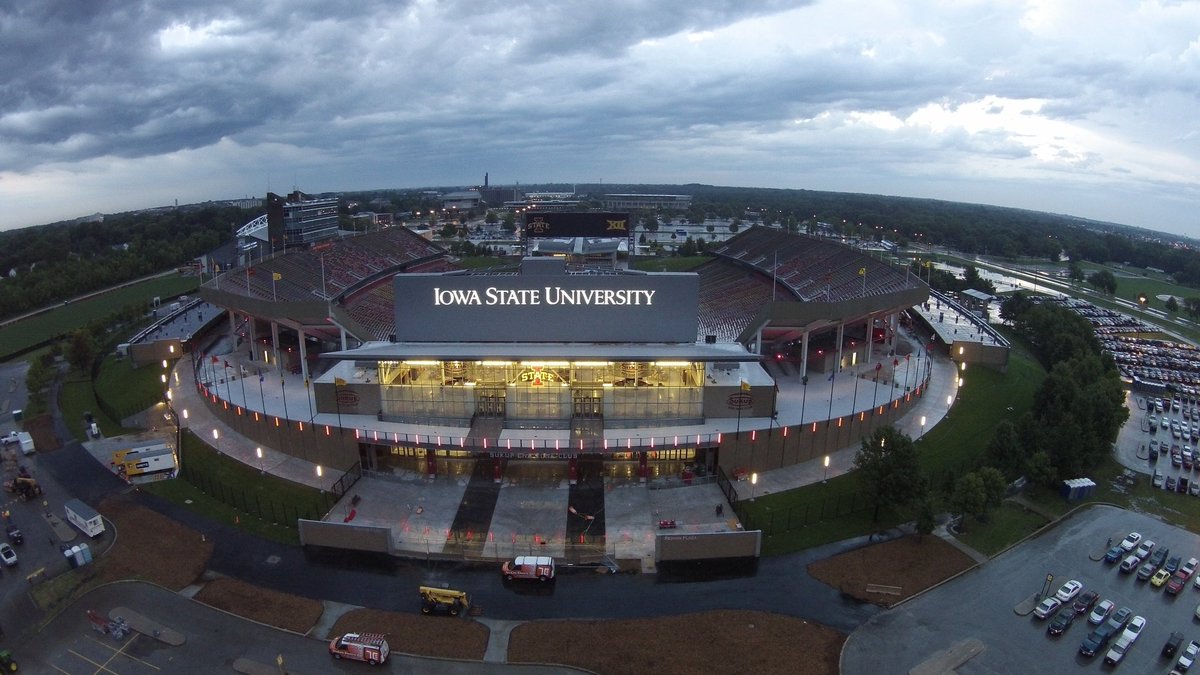
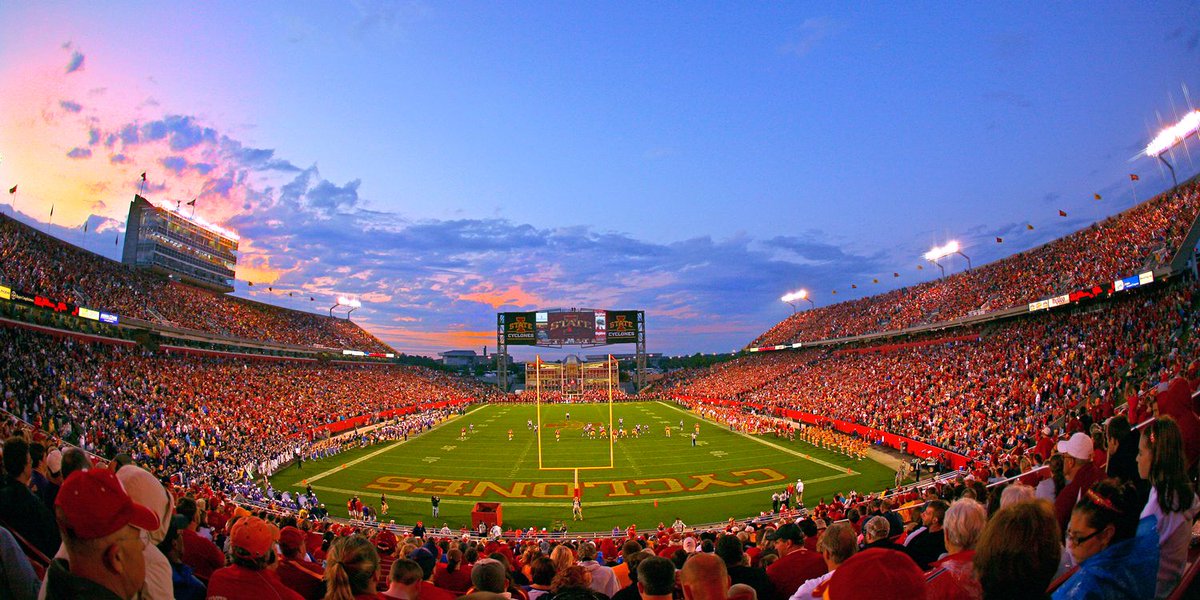
Stadium of the Morning 🥞
🏟️ Jack Trice Stadium
✅ Capacity: 61,500
📍 Ames, IA
Named in Honor of Iowa State's first African American athlete
Home of @CycloneFB
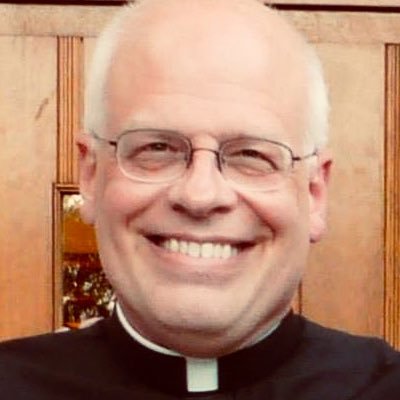
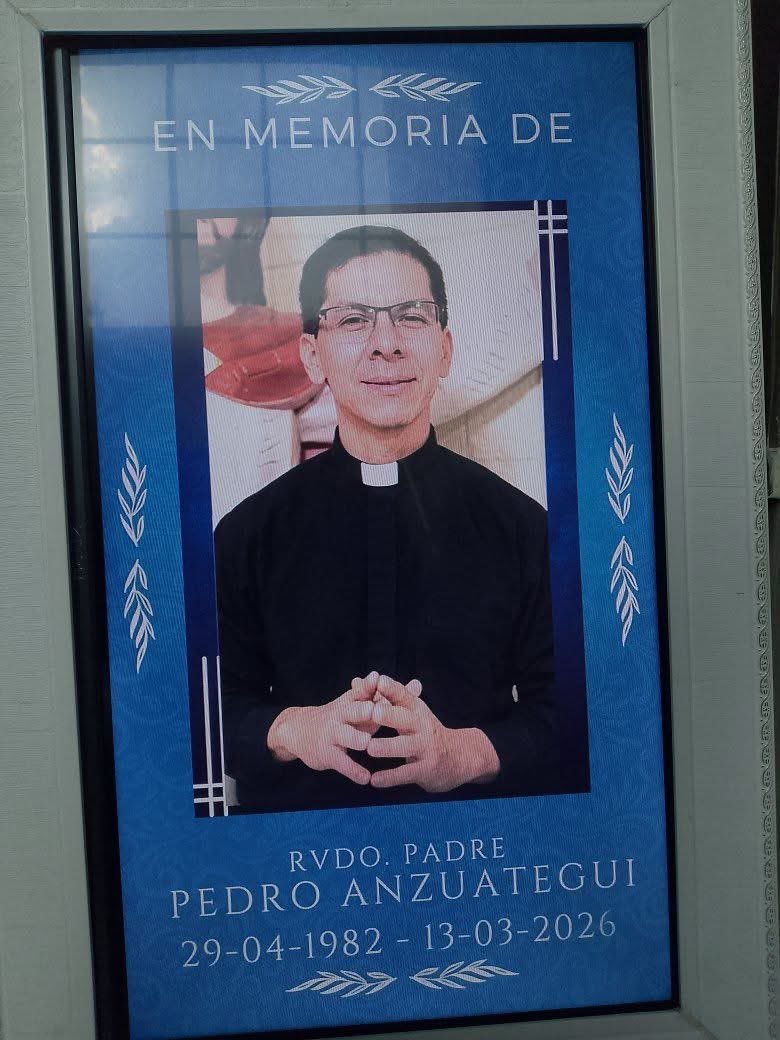
Another Catholic priest, Pedro Anzoátegui, has been confirmed dead after taking part in the rescue of a boy who was drowning in a river in Ecuador.
Info: Daule diocese
Incredibly grateful to those who go the extra mile. Brian drove 5 hours to Knoxville to meet Captain Cary with #PNP who flew Cal to his adopter in IN. Then Brain picked up Mojo, saved from euthanasia, & Abby, both delivered to fosters, saving 3 in 1 day #journeyhomerescuealliance