Ricardo López Castellanos, MD

3.5K posts

Ricardo López Castellanos, MD banner
Ricardo López Castellanos, MD

Ricardo López Castellanos, MD

@PearlsNeurology

#AutonomicDisorders & #MovementDisorders #Neurologist @MUSCneurology | @muschealth | @movedisorder #SoMe Board | @AASAutonomic Education Committee

Charleston, SC Katılım Şubat 2020
1.4K Takip Edilen2.2K Takipçiler
Ricardo López Castellanos, MD retweetledi
Abhimanyu Mahajan
Abhimanyu Mahajan@AMahajanMD·
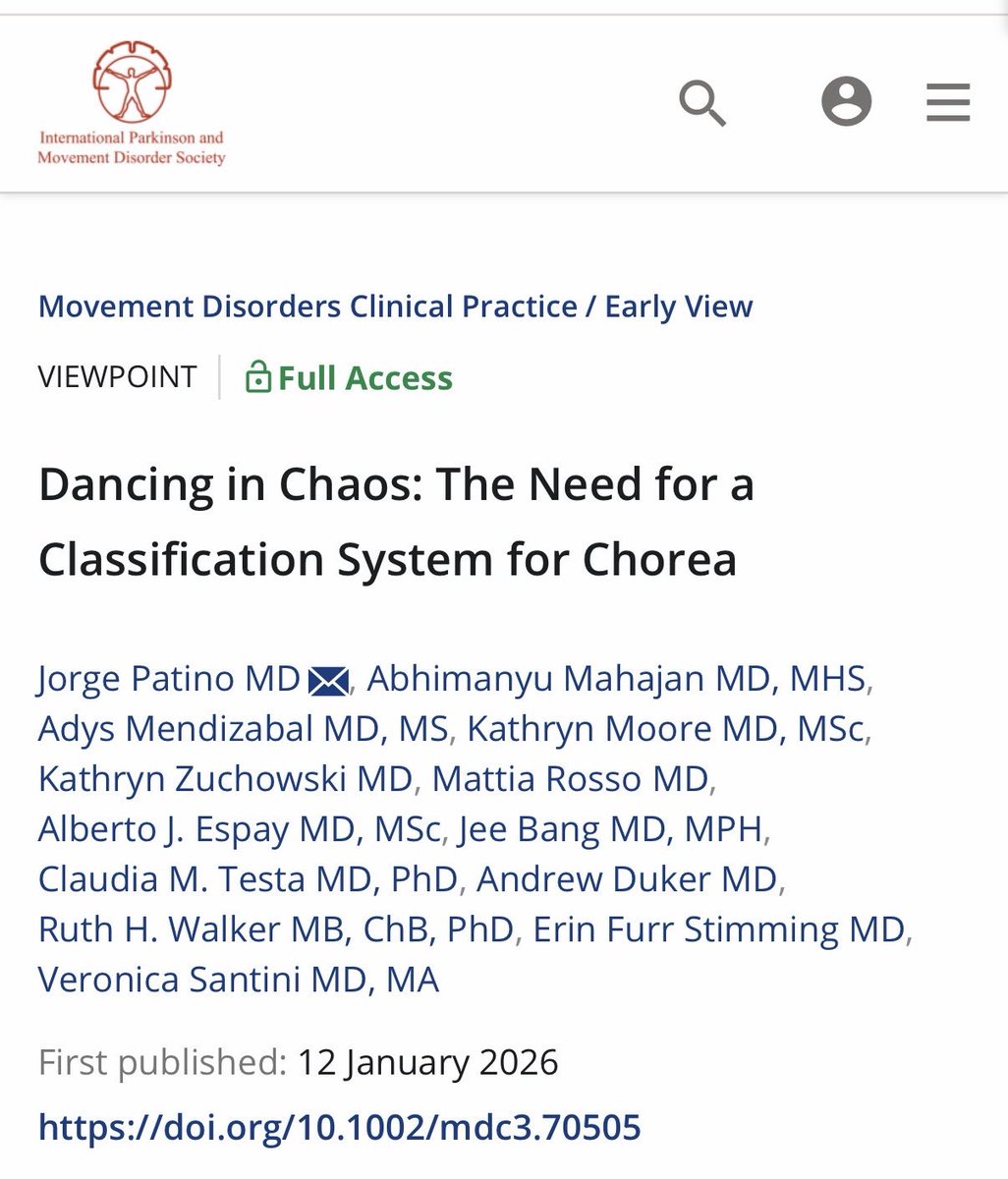
Chorea represents a core phenomenology in movement disorders but one without a consensus classification system to help guide investigations into etiology and treatment. A viewpoint spearheaded by our tenacious fellow, Dr. Jorge Patiño in MDCP is now online.
Abhimanyu Mahajan tweet media
English
3
5
22
1.7K
Ricardo López Castellanos, MD retweetledi
Marcus Pinto, MD, MS
Marcus Pinto, MD, MS@MarcusVPinto·
Meralgia paresthetica is an often underdiagnosed condition. Paresthesias and pain in the anterolateral thigh are common reasons for referral to the neurology clinic and EMG lab. If the symptoms do not originate from the back, and muscle strength and knee reflexes are normal on examination, it essentially confirms the diagnosis of Meralgia Paresthetica.
Marcus Pinto, MD, MS tweet media
English
6
39
181
11K
Ricardo López Castellanos, MD retweetledi
Michael Okun
Michael Okun@MichaelOkun·
Does Whipple's disease always manifest the oculomasticatory or oculofacioskeletal myorhythmia? Spoiler alert: NOPE and in fact only ~50% of cases have any noticeable involvement of the central nervous system. Maslias and colleagues dropped a new paper in Tremor and Other Hyperkinetic Movement Disorders and their comprehensive work sets the record straight. Key Points: - Myorhythmia and ataxia were the most frequently documented movements in Whipple's, each affecting ~40% of the 130 well-described patients. - W/in those w/ myorhythmia, 25% of the well-documented cases had the "pathognomonic oculomasticatory or oculofacioskeletal myorhythmia (OMM/OFSM)." - Digging into that group, the authors uncovered that when oculomotor features were well detailed, "pendular nystagmus of vergence type was noted in 83%." - Vertical nystagmus was described in 17%. - Palatal movements occurred in only 2 people (6%). - Persistence of the OMM/OFSM during sleep was noted in 9 cases or 28%. My take: Whipple’s is rare. It is a multi-systemic infection. The organism causing it is called Tropheryma whipplei and only a minority of those w/ Whipple's get the oculomasticatory or oculofacioskeletal myorhythmia. Don't miss this movement disorder as it is pretty unique. The syndrome is treatable w/ a simple antibiotic. This infection is tricky to identify and treat, so if you see this clue, I expect all of you will make the diagnosis and cure the person. tremorjournal.org/articles/10.53… @movedisorder @GreenJournal @FixelInstitute @ParkinsonDotOrg @ACPIMPhysicians
English
2
9
28
2.4K
Ricardo López Castellanos, MD retweetledi
MUSC Research
MUSC Research@ResearchMUSC·
The MUSC Emerging Scholars Travel Award supports conference travel for students, research fellows & postdocs, like Kubra Calisir Unsal, pictured at the @AACR Special Conference in Cancer Research in Boston, MA.
MUSC Research tweet media
English
0
2
5
181
Ricardo López Castellanos, MD retweetledi
MEDICINE MADNESS
MEDICINE MADNESS@Doctors_GUILD·
A 45-year-old female with rheumatoid arthritis presents with dry eyes and dry mouth. Schirmer’s test is positive. Diagnosis? A) SLE B) Sjögren’s syndrome C) Systemic sclerosis D) Mixed connective tissue disease
MEDICINE MADNESS tweet media
English
59
28
402
59.6K
Ricardo López Castellanos, MD retweetledi
American Autonomic Society
American Autonomic Society@AASAutonomic·
Calling all clinicians‼️ We are co-sponsoring a one day CME program in sunny Clearwater Beach, FL 🌞🌴 with @Dysautonomia Details below ⬇️
English
1
2
4
662
Ricardo López Castellanos, MD retweetledi
Lea Alhilali, MD
Lea Alhilali, MD@teachplaygrub·
Form follows function!!

Do you know functional neuroanatomy?

This post will help you to remember the functional neuroanatomy you need to function if you are reading brain MRIs!

Here’s how:

1. First start at the top
—At the top you will see a gyrus that looks like a thumbs sticking up. This is the superior frontal gyrus (SFG).
—Remember this bc you get a thumbs up when you do a superior job!

2. Next to the SFG is the middle frontal gyrus
—This looks like knuckles next your superior frontal gyrus thumb
—Remember this bc your MIDDLE finger is in your knuckles
—ALWAYS LOOK FOR THE KNUCKLES W/THE THUMBS UP!

3.Use the SFG to find the motor strip
—SFG has a motor & language component
—Motor component is first at the back (remember, you walk before you talk!)
—Motor component of SFG crashes into the motor strip
—Remember, when two cars crash, their MOTORS hit

4.Confirm its the motor strip by finding the hand omega
—Hand motor region looks like an upside down omega
—Remember Omega is a fancy watch brand you wear near your HAND!

Hopefully now you will be eloquent when it comes to this eloquent cortex!!!
English
4
137
583
22.6K
Ricardo López Castellanos, MD retweetledi
NeurologyMATCH2026
NeurologyMATCH2026@NMatch2026·
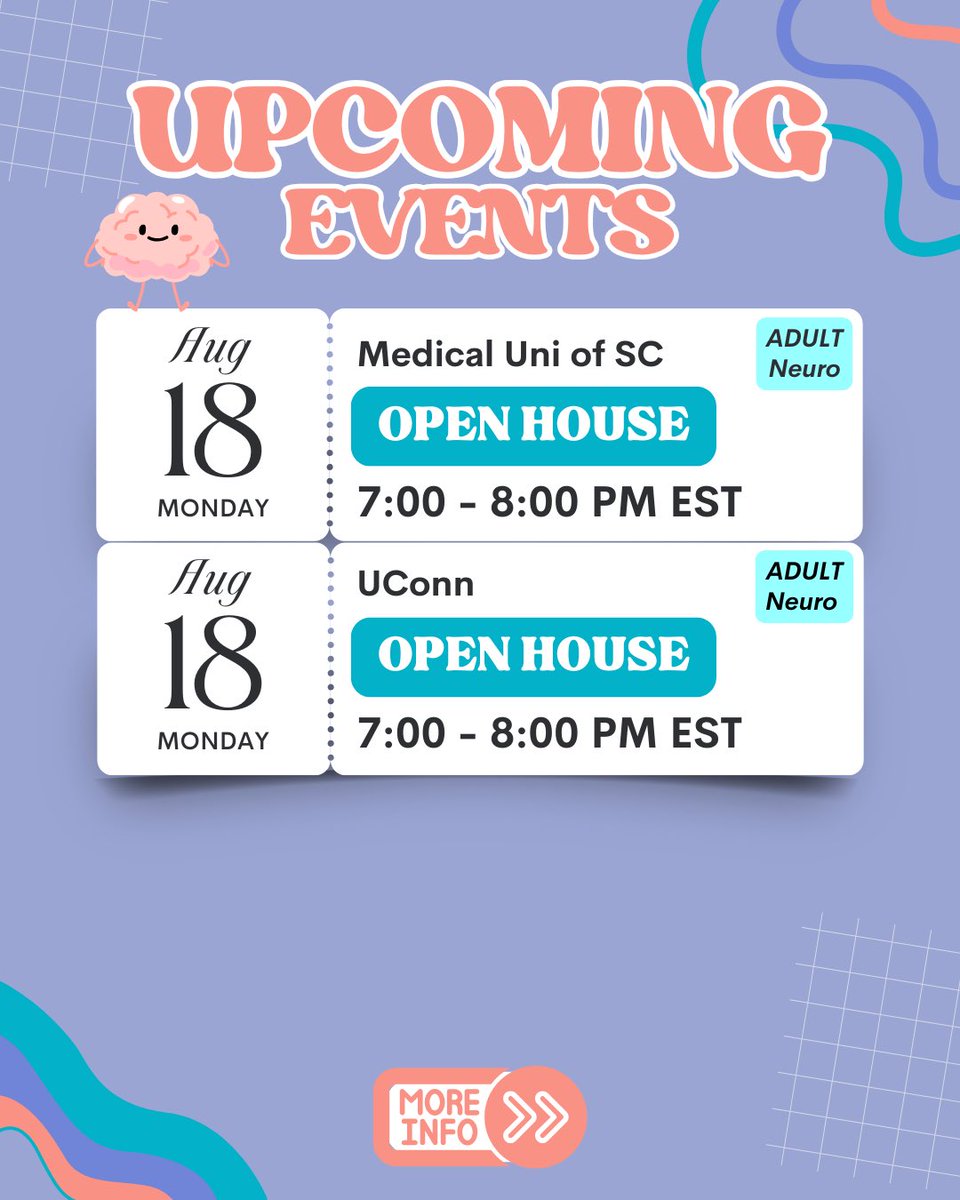
(1/2) Keep an eye out for the TWELVE open houses happening this week! ✨ Stay updated with dates by adding the NMatch calendar to your Google calendar! tinyurl.com/nm26calendar 📆 Check out our calendar or Events highlights on Instagram for event registration links 🔗
NeurologyMATCH2026 tweet mediaNeurologyMATCH2026 tweet media
English
2
4
12
4K
Ricardo López Castellanos, MD retweetledi
Aravind Palraj
Aravind Palraj@Rheumat_Aravind·
🧵 ANA (Antinuclear Antibody): What Every GP Needs To Know—2025 Guide 1/ What is ANA—and Why Test It? ANA is a blood test that helps detect autoantibodies against cell nuclei, seen in autoimmune diseases like lupus, Sjögren’s, and more. It’s NOT a screening test for general complaints. Use it when history or exam genuinely points to autoimmune disorders @IhabFathiSulima @DrAkhilX @CelestinoGutirr @Janetbirdope @SarahSchaferMD @NeuroSjogrens #MedTwitter #RheumatX
Aravind Palraj tweet media
English
11
125
441
56.1K
Ricardo López Castellanos, MD retweetledi
JAMA Neurology
JAMA Neurology@JAMANeuro·
Images in Neurology: An eight-year-old girl was seen in a clinic for cerebrospinal fluid (CSF) rhinorrhea, orthostatic headaches, and an acquired Chiari malformation. ja.ma/4opoW3i
JAMA Neurology tweet media
English
0
8
25
3.1K
Ricardo López Castellanos, MD retweetledi
Michael Okun
Michael Okun@MichaelOkun·
Level Up: Fluctuating cognition and confusion w/ Parkinson's and/or Alzheimers features? Is Dementia with Lewy Bodies 'the overlooked diagnosis?' Bhavana Patel shines a light on the second most common neurodegenerative dementia in the hot off the press AAN Continuum issue. Today, I review the 2nd paper of 11 in this new Continuum AAN Movement Disorders issue. Key Points: - Patel stresses that DLB is not the same as Alzheimer’s. - Think fluctuating cognition, visual hallucinations, REM sleep behavior disorder and parkinsonism. - These symptoms are the clinical cornerstones that separate DLB from other dementias. - Early diagnosis is important. - Prodromal DLB including MCI, delirium-onset and psychiatric-onset should be recognized before iatrogenic harm unfolds, like antipsychotic sensitivity when aggressively administering these drugs. - The α-synuclein skin biopsy and CSF seed amplification assays are reshaping how we detect synucleinopathies. - Better imaging is likely coming soon. My take: We can do better on educating clinicians and families about dementia w/ Lewy bodies. There is a high suicide rate in this population, so let's get to it. Here are 5 points that resonated w/ me. 1- It’s not just memory loss. DLB frequently starts with attention lapses, executive dysfunction and vivid hallucinations. Memory problems may come later. 2- Beware of good days and bad days. If cognition fluctuates dramatically, think Lewy bodies. 3- There is an antipsychotic danger zone. People with DLB can in some cases be extremely sensitive to many antipsychotic medications. 4- Sleep may be filled w/ kicking and punching. Acting out dreams or REM Sleep Behavior Disorder can be an early clue, frequently before any memory changes. 5- Diagnosisis is frequently delayed. DLB is commonly misdiagnosed as Alzheimer’s or psychiatric illness and early specialist referral can be life-changing. This Continuum article is a must-read for health care practitioners and anyone caring for a loved one with dementia symptoms that don’t quite fit Alzheimer’s. Patel’s work moves us one step closer to getting these diagnoses right. continuum.aan.com/doi/full/10.12… #LewyBodyDementia #Neurology #Parkinsons @AANmember @ContinuumAAN @FixelInstitute @ParkinsonDotOrg @lewybody @AANmember
Michael Okun tweet media
English
11
37
149
11.2K
Ricardo López Castellanos, MD retweetledi
Katie Moore, MD MSc
Katie Moore, MD MSc@KatiePMooreMD·
It's here!! It's been such an honor to be part of this issue. Thank you to the patients who contributed videos to this work. I hope readers will enjoy reading and take what they learn into clinical care. @Duke_Neurology @HDSA @TEAMS666301 @movedisorder
Continuum: Lifelong Learning in Neurology@ContinuumAAN

The August #MovementDisorders issue, guest edited by Dr. Michael Okun, is now available on hubs.la/Q03zXVRr0. @MichaelOkun @AlanCarson15 @AMahajanMD @DrRawlsMoveMD @KatiePMooreMD @ludyshihmd @jonstoneneuro @LyellJ @AANMember #Neurology #MedEd #NeuroTwitter

English
2
2
19
693
Ricardo López Castellanos, MD retweetledi
Michael Okun
Michael Okun@MichaelOkun·
A 2025 Parkinson’s Disease Update by Ashley Rawls is fresh off the press in a new Movement Disorders issue of the AAN's Continuum. Parkinson’s is more than tremor, so it’s time to update and refocus the way we approach this disease. There are 11 articles in this special issue of Continuum and I will review each one in the coming days. Key Points: - Precision in Parkinson's diagnosis will be critical to the future. - The article outlines refined clinical criteria for Parkinson's disease. - The diagnosis emphasizes bradykinesia plus either resting tremor or rigidity. - Supporting tools like α-synuclein skin biopsy and dopamine transporter imaging will help in challenging cases and even use of a MRI has been shown helpful in differentiating parkinsonisms. - New treatments including istradefylline, opicapone and subcutaneous levodopa and apomorphine infusions are now available to manage motor fluctuations and off states. - Non-motor symptoms from orthostatic hypotension to REM sleep behavior disorder require just as much attention as tremor or rigidity underscoring the need for a multidisciplinary care model. - Know how to treat psychosis. - DBS and focused ultrasound therapies are options for some but not all. My take: The landscape of Parkinson's is changing and every day I practice medicine I know a little less. Please read this paper knowing my summary is biased, as I was an author on this one, and also edited the entire Continuum edition. Here are 5 points I think important. 1- Parkinson’s is more than a movement problem. It affects thinking, sleep, blood pressure, digestion and more. Your health professional should treat the whole person, not just the tremor. 2- Exercise is medicine. From the first day of diagnosis, staying active improves symptoms, mood and maybe even slows disease progression. 3- There are new treatment options. If your meds wear off too soon or you feel stuck in off periods, ask your neurologist about new drugs and delivery systems like pumps. 4- Don’t ignore the early signs. Loss of smell, constipation, acting out dreams and mood changes that can all appear years before diagnosis. 5- Your voice matters in treatment. Whether it’s starting levodopa, trying DBS or dealing with side effects, shared decision-making is key. Parkinson’s care should always be a team sport. This is just one of 11 powerhouse articles in this month’s Continuum issue on movement disorders. Stay tuned as I will break down the other articles in the coming days. Do you have a plan for Parkinson's? pdplan.org continuum.aan.com/doi/10.1212/co… #parkinson @FixelInstitute @AANmember @ContinuumAAN @ParkinsonDotOrg @LyellJ
Michael Okun tweet media
English
13
104
328
25.3K
Ricardo López Castellanos, MD retweetledi
Michael Okun
Michael Okun@MichaelOkun·
If you have not been diagnosing SCA27b, Tony Lang says you are likely missing it. Watch out for episodic ataxia presentations that progress to typical ataxia. Thanks for bringing all of us up to speed today in Aspen. @movedisorder #ataxia @NAF_Ataxia @AtaxiaUK
Michael Okun tweet media
English
0
22
70
6.7K