pediverse

3.6K posts

pediverse banner
pediverse

pediverse

@Ped2550

Artist Pixel Ar‌‌t & 2d , Animator, Passionate NFT Collector , Locked in At @OpenGradient

sky Katılım Mayıs 2022
1.9K Takip Edilen2.4K Takipçiler
pediverse
pediverse@Ped2550·
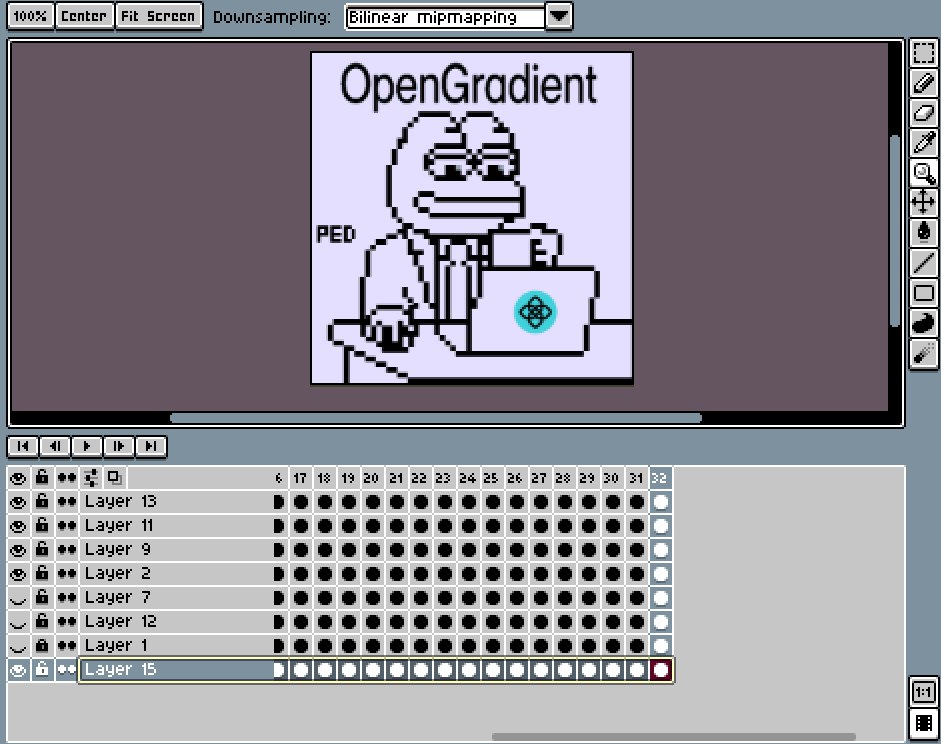
We’ve spent years removing trust from settlement and data availability yet we still blindly trust AI inference, even when @OpenGradient shows how execution can be verifiable. If an agent signs a transaction based on a model output, but the execution path is opaque, what exactly are we securing? Today’s inference flow is provider centric: request → off chain compute → response. No deterministic replay, no execution witness, no way for a validator or counterparty to independently check what actually ran. For systems that aim to be permissionless, this is a structural mismatch. State transitions are provable. Data blobs are attestable. Model outputs? Still reputation based. The emerging stack flips the mental model: inference is treated as a verifiable compute job , not a SaaS call. The unit of value is no longer the response it’s the integrity of the execution. Running inference inside a TEE changes who can trust the result. Not because TEEs are trusted , but because they produce remote attestations : cryptographic evidence of – which binary ran – on what input – in what environment. For validators, this turns AI from an oracle into something closer to a checked transition: you don’t re run the model , you verify the attestation and accept the result under defined rules. For builders working on agent frameworks: this removes the need for a trusted coordinator in multi agent workflows. Agents can require execution proofs before accepting outputs from each other , That’s a new design space for autonomous coordination. For researchers, the real challenge isn’t can we verify? It’s how we price and schedule verifiable inference : latency vs. attestation overhead throughput vs. enclave constraints determinism vs. model complexity. This is where the x402 flow becomes interesting from a systems perspective: payment is no longer an external step , it’s coupled to the compute lifecycle. A job gets funded → executed → attested → settled. No off path billing logic. Compare this with current AI infra: usage is metered by the provider, results are accepted optimistically. Here, metering is tied to execution,and acceptance is policy driven. A concrete scenario: on chain risk engines consuming model outputs. Without verifiability → governance must whitelist operators. With execution attestations → the contract can define which environments are valid instead of who is trusted. Notice how this shifts the trust surface: from identity → to hardware + measurement from reputation → to cryptographic evidence from service agreements → to protocol rules. This also changes composability. When inference outputs carry integrity metadata, they can flow across rollups, agents, and automation layers without re introducing social trust. The long term implication isn’t better AI infra. It’s that AI becomes a first class, policy verifiable compute primitive , inside the same trust minimized stack as execution and DA. Disclosure : Community content | Not paid | Possible rewards | NFA |
English
3
0
4
506
Roku
Roku@RokuTrade·
Roku will take over, last wave for WL application will be dropped soon Who want in?👇
English
526
76
629
17.6K
AdCiFeR
AdCiFeR@0xAdcifer·
Gn CT ✨ Rest your mind. Recharge your body. Tomorrow is another chance to build, grow, and win. 💫
AdCiFeR tweet media
English
4
0
9
55
pediverse
pediverse@Ped2550·
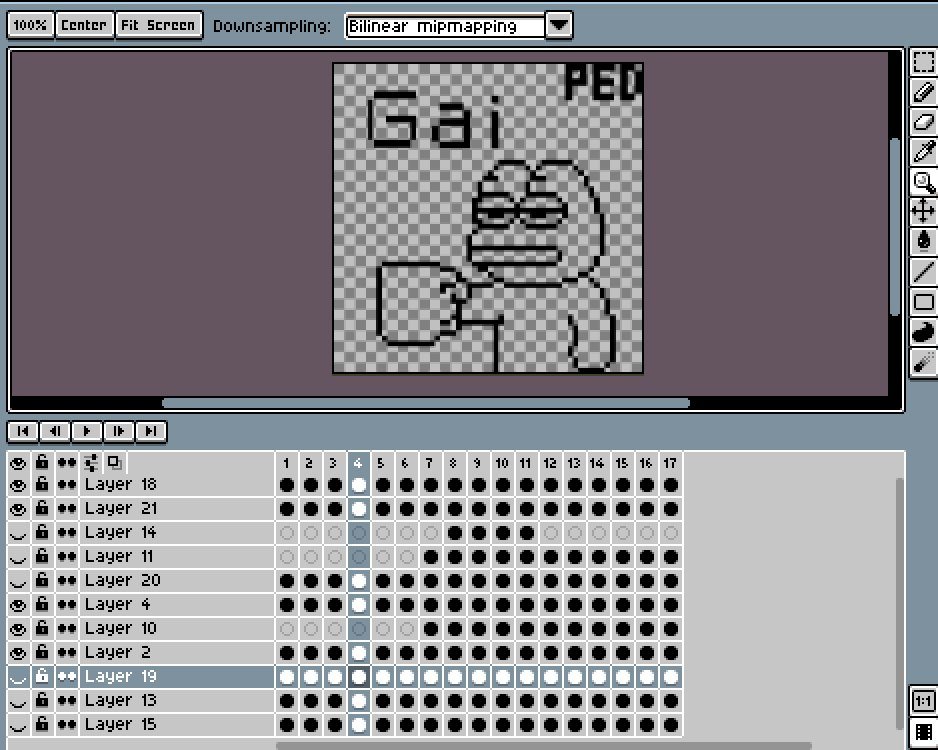
Gai to those who Gai ❤️🔥 @OpenGradient hope you enjoy from art ❤️ Disclosure : Community content | Not paid | Possible rewards | NFA |
GIF
pediverse tweet media
pediverse@Ped2550

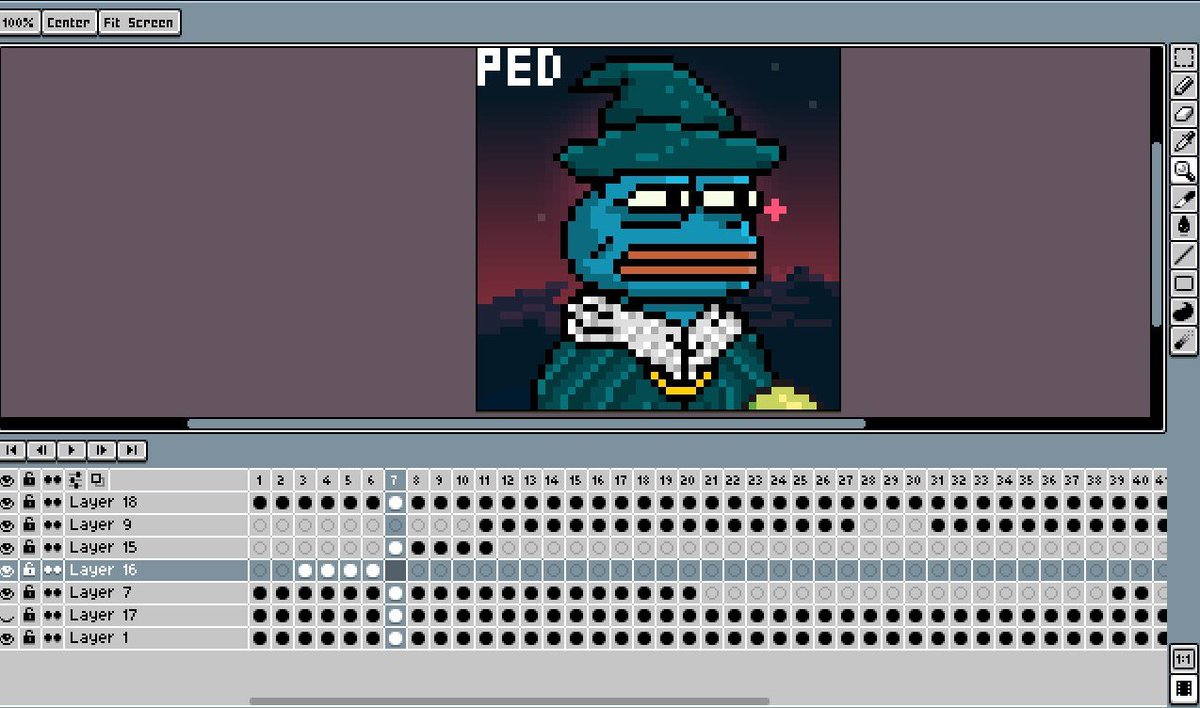
What is @OpenGradient? Most AI onchain conversations still treat inference as a black box and provenance as a social promise. The real question isn’t can AI touch blockspace? it’s where does verifiability live in the execution path? We’ve spent years modularizing consensus, data availability, and settlement. But intelligent execution has remained off ledger opaque GPUs, unverifiable pipelines, and APIs we’re asked to trust. That gap is the missing execution layer for autonomous systems. The emerging answer is a network where: models are addressable primitives , inference is provable, not logged Agents run with deterministic, attestable state transitions Not AI integrated with Web3 AI executing inside verifiable compute. The Model Hub changes the mental model. It’s not a gallery , it’s a deployment surface for onchain reachable intelligence. When models become composable like contracts, new design space opens for builders: domain agents, risk engines, adaptive AMMs, autonomous strategists. The key unlock is the hybrid proof pipeline: zkML for correctness guarantees + TEE attestations for performance grade inference That trade off isn’t theoretical , it’s what lets real workloads run without collapsing into latency theater. For builders, the SDK abstracts the hardest problem:how to move from prompting a model → to orchestrating a verifiable workflow. You’re no longer wiring APIs. You’re defining agent execution graphs with cryptographic finality. MemSync introduces something we’ve been missing in every agent stack: portable, user scoped, cross-app memory with deterministic access rules. Not session memory , Not app level storage. A shared cognitive layer that survives frontends. That single primitive reframes personalization in Web3: state lives with the user, agents become context aware across dApps, and coordination stops resetting at every interface. BitQuant is a concrete example of why this architecture matters. DeFi intelligence stops being dashboard analytics and becomes: a verifiable, agentic risk surface that can act , not just visualize. Compare this to oracle style ML or offchain quant APIs: those give you data. This gives you provable decision processes embedded in execution. For validators and infra operators, this category introduces a new workload class AI compute that is : 👉latency sensitive 👉proof generating 👉state coupled It’s closer to running a high performance coprocessor than a traditional node. For researchers, the interesting frontier isn’t better models , it’s contextual safety + verifiable cognition: how agents reason, remember, and act in environments where every step can be audited. And for agent designers, the shift is subtle but profound: from stateless tool callers → to sovereign, memory bearing actors with cryptographic accountability. We often talk about the modular stack ,this is what intelligent execution looks like when it finally becomes a first class module. When every autonomous system can prove how it reached a decision ,what new coordination mechanisms become possible that were previously too trust heavy to deploy? P.s hope you enjoy from art ❤️ Disclosure : Community content | Not paid | Possible rewards | NFA |

English
6
1
7
574
pediverse
pediverse@Ped2550·
What is @OpenGradient? Most AI onchain conversations still treat inference as a black box and provenance as a social promise. The real question isn’t can AI touch blockspace? it’s where does verifiability live in the execution path? We’ve spent years modularizing consensus, data availability, and settlement. But intelligent execution has remained off ledger opaque GPUs, unverifiable pipelines, and APIs we’re asked to trust. That gap is the missing execution layer for autonomous systems. The emerging answer is a network where: models are addressable primitives , inference is provable, not logged Agents run with deterministic, attestable state transitions Not AI integrated with Web3 AI executing inside verifiable compute. The Model Hub changes the mental model. It’s not a gallery , it’s a deployment surface for onchain reachable intelligence. When models become composable like contracts, new design space opens for builders: domain agents, risk engines, adaptive AMMs, autonomous strategists. The key unlock is the hybrid proof pipeline: zkML for correctness guarantees + TEE attestations for performance grade inference That trade off isn’t theoretical , it’s what lets real workloads run without collapsing into latency theater. For builders, the SDK abstracts the hardest problem:how to move from prompting a model → to orchestrating a verifiable workflow. You’re no longer wiring APIs. You’re defining agent execution graphs with cryptographic finality. MemSync introduces something we’ve been missing in every agent stack: portable, user scoped, cross-app memory with deterministic access rules. Not session memory , Not app level storage. A shared cognitive layer that survives frontends. That single primitive reframes personalization in Web3: state lives with the user, agents become context aware across dApps, and coordination stops resetting at every interface. BitQuant is a concrete example of why this architecture matters. DeFi intelligence stops being dashboard analytics and becomes: a verifiable, agentic risk surface that can act , not just visualize. Compare this to oracle style ML or offchain quant APIs: those give you data. This gives you provable decision processes embedded in execution. For validators and infra operators, this category introduces a new workload class AI compute that is : 👉latency sensitive 👉proof generating 👉state coupled It’s closer to running a high performance coprocessor than a traditional node. For researchers, the interesting frontier isn’t better models , it’s contextual safety + verifiable cognition: how agents reason, remember, and act in environments where every step can be audited. And for agent designers, the shift is subtle but profound: from stateless tool callers → to sovereign, memory bearing actors with cryptographic accountability. We often talk about the modular stack ,this is what intelligent execution looks like when it finally becomes a first class module. When every autonomous system can prove how it reached a decision ,what new coordination mechanisms become possible that were previously too trust heavy to deploy? P.s hope you enjoy from art ❤️ Disclosure : Community content | Not paid | Possible rewards | NFA |
GIF
pediverse tweet media
English
9
0
13
587
pediverse retweetledi
Roku
Roku@RokuTrade·
Starting new position. Roku stood alone on the dark side of the moon as the rocket behind him slowly came alive, lighting the surface with a quiet glow before liftoff. We’re getting started in space. 🌌 We handpicked below 5 WL to join the mission.
Roku tweet media
English
158
48
224
5.4K
pediverse
pediverse@Ped2550·
Every delay has a cost, Every manual step compounds it,@DroseraNetwork removes hidden operational debt , Before it surfaces.
pediverse tweet media
English
0
0
6
145
pediverse
pediverse@Ped2550·
Security isn’t a moment , It’s a continuous state @DroseraNetwork maintains that state, block after block.
pediverse tweet media
English
0
0
5
353
pediverse
pediverse@Ped2550·
Good systems reduce choices , Great systems remove them, @DroseraNetwork does exactly that, And keeps going.
pediverse tweet media
English
2
0
10
631
pediverse
pediverse@Ped2550·
Transparency at @re is engineered, not promised. Independent audits, real time offchain reporting via Chainlink, and provably controlled onchain wallets together deliver continuous, verifiable proof of solvency across all token obligations. @ChazEevee @st3phdoteth @miketwinks hope you enjoy from My art ❤️
pediverse tweet mediapediverse tweet media
Re@re

Appreciate the thoughtful breakdown from @phtevenstrong on reUSDe. In addition to an independent audit by The Network Firm, Re maintains real-time reporting of offchain balances, published to a Chainlink oracle. This sits alongside onchain wallet balances prove-ably controlled by Re, supporting ongoing proof of solvency across all token obligations.

English
8
0
19
445
pediverse retweetledi
Re
Re@re·
Appreciate the thoughtful breakdown from @phtevenstrong on reUSDe. In addition to an independent audit by The Network Firm, Re maintains real-time reporting of offchain balances, published to a Chainlink oracle. This sits alongside onchain wallet balances prove-ably controlled by Re, supporting ongoing proof of solvency across all token obligations.
Stephen | DeFi Dojo@phtevenstrong

🎆BEST END OF YEAR YIELDS 2025!🎇 This is all the best yields from stables, ETH, BTC, and Gold that I can think of. It's a doozie. ⇒ Best unleveraged yields ⇒ Best leveraged yields ⇒ Best vaults ⇒ Best secret yields It's all there. Happy New Year! 📽️👇

English
212
68
565
15.5K