
PenPath

2.2K posts

PenPath banner
PenPath

PenPath

@PenPath

PenPath is a platform that automates analysis and surfaces growth opportunities for Ecommerce Leaders so they can increase sales and cut costs.

St Louis, MO Katılım Şubat 2013
16.8K Takip Edilen21.6K Takipçiler
Sabitlenmiş Tweet
PenPath
PenPath@PenPath·
PenPath gives ecommerce brands the ability to increase #sales and cut costs with data-informed decisions. We provide innovative solutions and expertise in data analysis, automation & marketing strategies and provide insights into the world of analytics #Data #IncreaseSale #Profit
English
0
0
2
385
PenPath retweetledi
Alex Cruz
Alex Cruz@AlexCruz4u·
Hey @ShopifySupport - My payouts have been paused for THREE WEEKS. Ticket #65142066. Your Account Security team's verification emails keep bouncing. I've spoken to 6+ advisors (Brenard, John, Deonila, Carlo) and each time I'm told to wait. The bounces were cleared I am told — I need the verification email actually delivered. Please help. I hear this is a common problem.
English
5
2
6
300
PenPath
PenPath@PenPath·
Love is truly in the air.
English
1
1
5
302
PenPath retweetledi
Alex Cruz
Alex Cruz@AlexCruz4u·
In a world that is soon to be overtaken by AI content, genuine human emotion and experiences will be what continues to connect us.
English
2
2
5
193
PenPath retweetledi
Alex Cruz
Alex Cruz@AlexCruz4u·
We had an ecommerce leader come to us with hundreds of Pinterest conversions (purchases). They knew something seemed off. Sure enough, when we checked the data, there should have only been a few dozen purchases from Pinterest. Why? Because Pinterest—like many ad platforms—tracks multiple types of conversions. If you don’t know exactly what’s being counted, you could end up making decisions based on inflated numbers. They faced this issue trying to build their own reports before working with PenPath: 👉 Their dashboards showed inflated performance because they weren’t using the right data. 👉 They relied on platform-reported metrics without filtering for actual purchases. 👉 A quick audit revealed their conversions included add-to-carts and other custom events. 👉 This distorted downsteam KPIs like CAC and Cost Per Purchase, leading to misleading insights. Here’s how PenPath solves this problem: ✅ Our platform is built for ecommerce leaders—tracking only real purchases. ✅ We standardize conversion tracking across all ad channels (including currency conversion). ✅ We combine insights so brands can see everything in one place and trust their numbers. With accurate conversion tracking, our customers can confidently measure performance, optimize spend, and make data-driven decisions that actually grow their business. We also provide the guidance they need to build a strong measurement strategy. If you’re making big decisions based on ad platform data, make sure you know exactly what’s being counted. What’s been the biggest challenge you’ve faced in getting accurate insights? Follow me for more actionable marketing tips. ♻️
English
0
2
4
146
PenPath retweetledi
Alex Cruz
Alex Cruz@AlexCruz4u·
The truth is, e-commerce brands have too much data. What they need is focus and relevant information that is actionable and high-impact. Every SaaS tool gives you data and dashboards — decision-makers have to dig through dozens of reports and hundreds of metrics. This can make data-driven decision-making overwhelming and confusing. More data doesn’t mean better decisions. Smart business owners don’t just collect data, they organize it strategically. At PenPath, we provide a single source of truth. We combine data and only show practical, relevant, and actionable insights. for example: ✅ CAC, MER, Spend, Sessions together tell a story in your Business Pulse Dashboard ✅ Your custom dashboard environment gives you maximum control to evolve and do what you need if our turn-key dashboards need to be adjusted. ✅ Have insights go to you, not the other way around as any report can be turned into an email update with any cadence you’d like. Always have visibility and control of your business. Doing this helps: 👉 Catch and resolve revenue dips as soon as they happen 👉 Spot inneficient ad spend to minimize waste 👉 Make faster, data-led decisions Remember, numbers don’t make money. Decision do. So, focus on how you can optimize your decision-making with simple steps. Follow me for more actionable marketing tips. ♻️ #DataGrouping #DataAnalytics #PerformanceTracking #EcomTips
English
0
1
3
121
PenPath retweetledi
Alex Cruz
Alex Cruz@AlexCruz4u·
When your campaigns finally hit that ROAS target you want, it's an amazing feeling. But then you need to scale. Here’s where I see e-commerce brands slip up: 🚨 Not tracking ad spend regularly enough → missing single day anomalies kill performance 🚨 Messy or missing UTMs → this adds too much friction to see what’s working and why 🚨 Decisions made on opinions → Not having data-backed decisions means you aren’t focusing your limited resources correctly 🚨 No mapped-out customer journey → You may be optimizing bottom of funnel and totally ignoring top of funnel 🚨 Fear of data → Many feel intimidated by data and this stops them from being more involved when they need to scale - they may only default to increasing spend which isn’t always the answer So, how can you fix this: ✅ Set strict budget limits and monitor spending daily ✅ Use structured UTMs to track every campaign & conversion ✅ Base decisions on data, not guesses or opinions. Shifting your process to a data-first approach will change everything… → See which campaigns are giving the best ROAS → Segment your best performers to understand exactly how much to scale → Develop forecasting models that will help you prioritize what to scale and why → Save time so you can only focus on where you’ll have the most impact Remember, data isn’t scary with the right approach and tools. Losing money is. What’s been your biggest challenge when scaling ROAS?
English
0
2
4
120
PenPath retweetledi
Alex Cruz
Alex Cruz@AlexCruz4u·
Most eCommerce leaders look at aggregate numbers and stop there. But the real insights come when you segment. Take ROAS, for example. Seeing a 4X overall might look solid, but if you break out TOF vs. BOF, you’ll likely find BOF is driving a much higher ROAS. That’s where your real efficiency lies. For example, if your campaigns are structured like this: ✅ TOF (Prospecting) – [TOF] Broad - Interest-Based ✅ MOF (Consideration) – [MOF] Retargeting - Engaged Users ✅ BOF (Conversion) – [BOF] Retargeting - Cart Abandoners And you check ROAS at each level, you might see something like: TOF: 1.5X ROAS (normal for prospecting) MOF: 3.2X ROAS (engaged users) BOF: 8X+ ROAS (high intent buyers) If you only look at the blended 4X, you’re missing the bigger picture. Where should you scale? Where do you need to optimize? This is exactly why we built PenPath to make segmentation effortless. With one click, you can break down performance by TOF, MOF, and BOF—so you instantly see where to double down and where to adjust. Most ecom leaders aren't set up for success and don't revisit these types of insights. They are leaving a lot of money on the table.
English
0
1
4
126
PenPath retweetledi
Alex Cruz
Alex Cruz@AlexCruz4u·
As AI continues to advance, it will become increasingly unrealistic to expect workers not to engage with it for a significant portion of their day. If this trend holds, failing to utilize AI in one's job will eventually be seen as neglectful.
English
0
2
3
164
PenPath retweetledi
Alex Cruz
Alex Cruz@AlexCruz4u·
We've just cracked over 200 RSVPs for tomorrow's webinar. If you are an ecommerce leader, make sure you invest in yourself. Studies show that you learn better on a live webinar. Ask questions and get immediate answers. Mark your calendars and RSVP here:
English
1
1
3
149
PenPath retweetledi
Alex Cruz
Alex Cruz@AlexCruz4u·
Not all of your customers will purchase on their first visit. But they might leave clues… What I’m about to explain helps you dig deeper to diagnose if people are interested in what you offer. We often hear ecom leaders say things like: “I’m not sure where to look to improve ROAS anymore.” “How do I actually improve conversion rate?” “How do I lower customer acquisition costs?” One approach is clustering relevant activity on your site. We call this Purchase Intent… Purchase Intent is the aggregate of all relevant digital buying signals (website events). For example: If you were to combine all your add to carts, begin checkouts, in-site searches, or newsletter subscriptions etc., you would have your website’s total Purchase Intent. Your site might have different events you might want to include. Maybe you sell custom closet modules and you have a way to measure how often people design their own closet. That might make sense to include. For the sake of this example, let’s assume your total Purchase Intent was 4,000 in December and it’s 30% higher than last December. Tip: pick only the most relevant events for this to work. I.e, how many people scrolled on your site might not be be a factor here. Bottom line is if sales are down for a specific campaign, are you visitors still considering making a purchase? Next, divide Purchase Intent by Total Sessions to get Purchase Intent Rate (PIR): 👉 PIR = Total Sessions ÷ Total Purchase Intent Events Segmentation is key: compare PIR between Google Ads, Meta Ads, or Organic Search – notice any patterns? Whats the PIR for your Branded Search campaign? We’ve had customers who sell expensive products that take more consideration so measuring PIR makes more sense for them to track for top of funnel (prospecting) efforts.
English
1
1
3
155
PenPath retweetledi
Alex Cruz
Alex Cruz@AlexCruz4u·
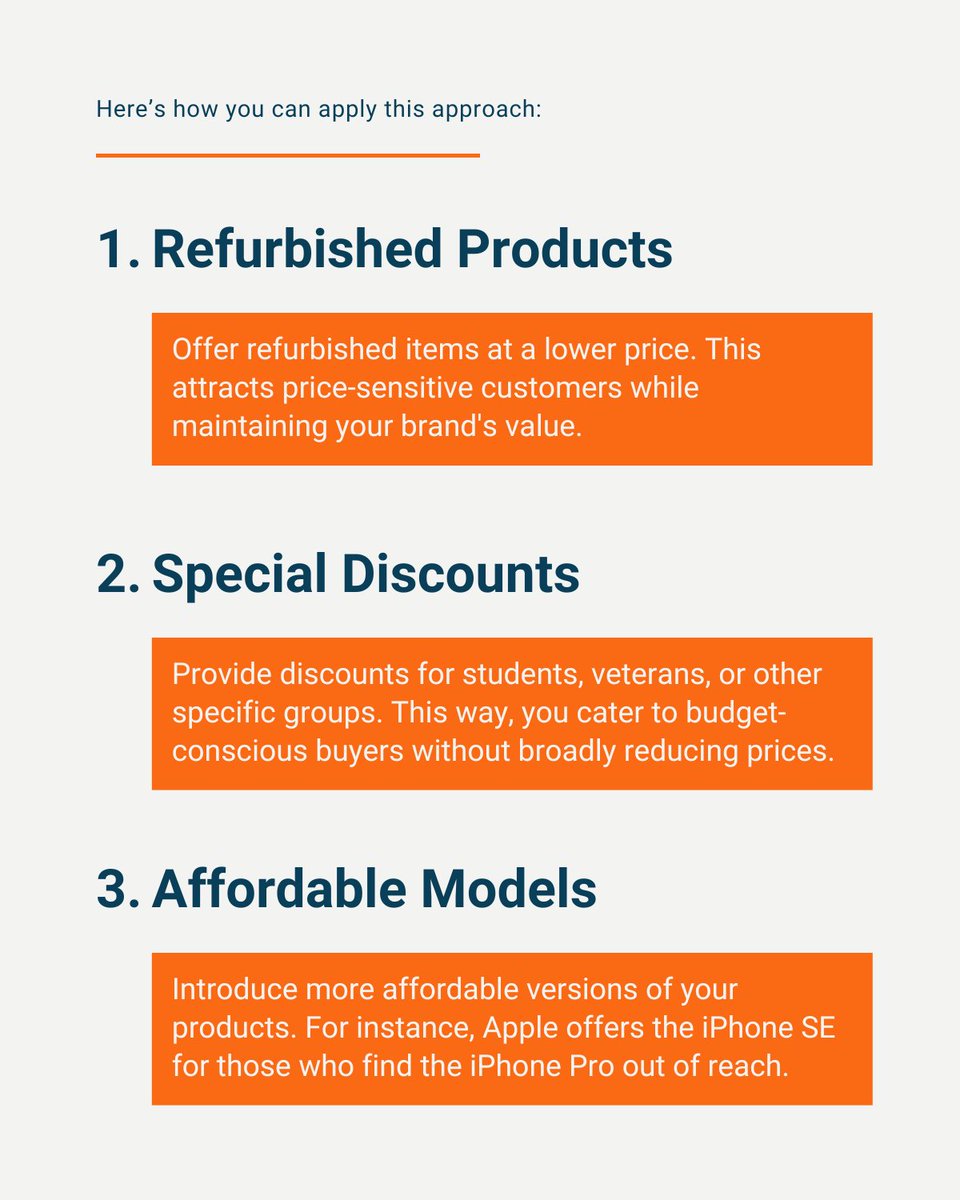
The bad news: Relying on discounts for customer acquisition can harm your brand. The good news: Your Ecommerce business doesn’t have to depend on discounts to grow. Here is a better alternative: While discounts and downselling might seem similar, they serve different purposes. Take a look at Apple, a brand known for not discounting its products. Instead, they frequently use downselling to appeal to budget-conscious customers without devaluing their brand. 💡 Here’s how you can apply this approach: Refurbished Products 👇 Offer refurbished items at a lower price. This attracts price-sensitive customers while maintaining your brand's value. Special Discounts 👇 Provide discounts for students, veterans, or other specific groups. This way, you cater to budget-conscious buyers without broadly reducing prices. Affordable Models 👇 Introduce more affordable versions of your products. For instance, Apple offers the iPhone SE for those who find the iPhone Pro out of reach. By adopting a downselling strategy, you can: ✅ Retain your brand’s premium market position ✅ Avoid constant reliance on discounts ✅ Reach a wider range of customers 🛍️ How are you balancing pricing strategies to maintain brand integrity? Let’s discuss in the comments below. Follow me for more insights on Ecommerce data. #Ecommerce #BusinessStrategy #Downselling #CustomerAcquisition #BrandManagement #PenPath #Marketing #ProductStrategy #Apple #SalesStrategy #branding #ecommercebranding
Alex Cruz tweet mediaAlex Cruz tweet mediaAlex Cruz tweet mediaAlex Cruz tweet media
English
1
1
2
121
PenPath retweetledi
Alex Cruz
Alex Cruz@AlexCruz4u·
If your ecommerce conversion rate is 2.5%, is that good? 📈 We often get questions about what "normal" performance should be. These are valid questions! However, the answer ultimately depends on your industry, price point, and growth strategy. Fortunately, there are many ways to reach your profitability target, and it's ok for the KPIs you optimize and prioritize to evolve over time. With that said, here are five essential marketing ROI metrics for a healthy ecommerce strategy AND a ballpark range of what's typical to see: 1. Customer Lifetime Value (CLV): Understand the total revenue you can expect from a customer over their entire relationship with your business. Aim for a CLV to Customer Acquisition Cost (CAC) ratio of 3:1. For every dollar spent on customer acquisition, you generate three dollars in revenue. 2. Customer Acquisition Cost (CAC): Measure the total cost of acquiring a new customer. On average, U.S. eCommerce businesses spend $70 to acquire a customer. Costs vary by industry, with beauty and food on the lower end, and electronics and jewelry on the higher end. 3. Conversion Rate: Track the percentage of website visitors who complete a purchase. A healthy conversion rate typically ranges from 2% to 3.5% from visit to purchase. 4. Return on Ad Spend (ROAS): ROAS measures the revenue generated for every dollar spent on advertising. Similar to CLV, aim for a ROAS ratio of 3:1. For each dollar spent on ads, you should earn $3. Ecommerce leaders can significantly improve ROAS with the proper measurement and growth strategies. 5. Churn Rate: This metric indicates the percentage of customers who stop purchasing over a given period. Keeping a churn rate below 5% is ideal, as retaining existing customers is more cost-effective than acquiring new ones." How are you tracking your ROI metrics? Where do you feel you struggle most? Let us know in the comments below 👇 Would you like to know what your stats should look like? Shoot me a DM, or head to PenPath and book a time to chat. We'll take a look and diagnose your growth drivers. #Ecommerce #MarketingROI #DigitalMarketing #CustomerAcquisition #DataAnalytics #ConversionRate #ROAS #CustomerRetention #PenPath #MarketingMetrics #BusinessStrategy #2024Trends #Shopify
English
0
2
3
132
PenPath retweetledi
Alex Cruz
Alex Cruz@AlexCruz4u·
I wanted to remind an ecommerce leader who wanted to bring all his platform data together something very important... Data from different platforms doesn’t always play well together. The Economist famously said data is the new oil. I disagree. I think everyone has too much oil, what we need are refineries. Because PenPath is a “refinery” we know all too well that data doesn’t always integrate. Some ecommerce leaders like the idea of having all their data connected, but that only sometimes makes sense to do. Because ultimately, having all your data in one place doesn’t mean you'll have actionable insights. A good way to think about it is to chunk the data based on its utility. 💡 Use the 80/20 Rule: Sometimes, it's more sensible to group data by relevance, such as all revenue-related data, budget allocation data, or inventory data, rather than trying to mix all aspects of the business. 🧐 When Seeking Insights: Ask yourself, what can you DO with the information once you access it? Sometimes insights confirm you are on the right track and provide peace of mind. Other times, insights enable critical decisions or adjustments to sustain or scale performance. Group data sources that lead to action, facilitate understanding, or accelerate communication is critical for success. You can’t improve what you can’t measure.
English
0
2
5
142