Pendulum Flow

19.6K posts

Pendulum Flow banner
Pendulum Flow

Pendulum Flow

@PendulumFlow

Wealth management. Markets since 2003. Current research S&P holdings to 1957 & Polymarket database growing @ 25M rows / day. Prediction Market Advocate.

Katılım Haziran 2009
1.7K Takip Edilen11.1K Takipçiler
Pendulum Flow
Pendulum Flow@PendulumFlow·
@cremieuxrecueil There are many things that nature does that a difficult to measure. For example my wife produced some kind of super serum when our baby got sick. Hard to imagine formula could come close to the same benefits even if it doesn't show in the data.
Pendulum Flow tweet media
English
0
0
2
35
Crémieux
Crémieux@cremieuxrecueil·
Breastfeeding benefits are overhyped -> moms worry they're bad if they can't produce C-sections and epidurals are claimed to cause dangers they don't -> mothers, babies die or otherwise suffer Acetaminophen is attacked -> babies die, are harmed, etc. Being wrong is evil.
English
17
10
239
7.7K
Crémieux
Crémieux@cremieuxrecueil·
It's sad when people blatantly lie like this. It makes life harder for mothers, who actually do worry about stuff like whether a C-section -- which can be medically necessary -- is going to hurt their kid, or whether they're being a bad mom by fighting a fever with Tylenol.
ai waifu@waif0000

Babe wake up, the 22-year C-section follow up data just dropped, and it’s *much* worse than the public was led to believe. 1 in 3 American babies are born this way.

English
40
13
499
75.7K
Pendulum Flow retweetledi
Jesús Fernández-Villaverde
Jesús Fernández-Villaverde@JesusFerna7026·
Replacement fertility in one chart: Even if 90% of women have children and average 2.2 each, we still fall short. Why? The fertility rate of a population equals the product of the proportion of women who have children and the average number of children per mother. That is, if 90% of women have children and the average number of children per mother is 2.2, the fertility rate of this population is 1.98. This simple formula gives us the relationship between the proportion of mothers in a population and the average number of children per mother required to reach the replacement rate. As I explained two days ago (check my feed if you missed it), this replacement rate is 2.1 in Western countries, where sex selection and infant mortality are low. The figure plots the result (if you are technical, this is called the iso-replacement curve). Obviously, if 100% of women become mothers, the average number of children per mother required to reach replacement is 2.1. If we move to 90%, this average rises to 2.33. Notice that if we fall to 80%, the average increases substantially to 2.6. I selected 80% because it implies that one in five women never becomes a mother, close to what we now see in Japan and parts of Southern Europe. The current young cohorts in advanced economies seem to be on track to be well below 80%, but we will not know for sure for another 20 years or so. Having an average of 2.6 children per mother requires many very large families. And modern societies are not organized for this to happen.
Jesús Fernández-Villaverde tweet media
English
52
160
820
111.1K
Pendulum Flow
Pendulum Flow@PendulumFlow·
They can make formula but they can't make breast milk. They can give you a baby but they can't give you the experience of carrying that child for 9 months and the investment in their well being that comes with that. They don't but a new born on a random person when they are born. They put them skin to skin on their mother. The physiological changes that occur are measurable and secure the bonding. You can't emulate that without the pregnancy process. It isn't about what is safer for the adult. It is about what gets the best outcome for the child. Any person who has seen the birth of their child will understand.
English
1
0
1
12
Pendulum Flow
Pendulum Flow@PendulumFlow·
Wow, we need a lot of 3 & 4 child households. Gulp.
Jesús Fernández-Villaverde@JesusFerna7026

Let me lay out the unpleasant arithmetic of the replacement rate, and why a modern society finds it so hard to reach. A population of 100 women in an advanced economy needs 210 children to replace itself. Why? Absent sex-selective practices, roughly 105 boys are born for every 100 girls. Evolution overshoots male births because boys are more prone to early death from accidents and disease. Therefore, of 210 children, about 108 are boys and 102 are girls. Not all girls reach the midpoint of their fertile age: accidents, suicide, homicide, and illness take some. In an advanced economy, about 98% of them survive, leaving 100 women to replace the original 100. Now consider the distribution of children per woman. Imagine 15 women have no children. Five do so by choice, for various reasons (professional, affective, religious). Ten face unfixable fertility problems, theirs or their partner’s. The 10% figure is conservative: the medical literature points to around 13%, and that does not even count male fertility problems. Of the remaining 85, 10 have one child, 60 have two, 10 have three, and 5 have four. I am stopping at four to keep the post concise; very few women in younger cohorts have five or more children, but I could adapt the example to account for them. Hence, the 100 women in this population have 180 children, for a completed fertility rate of 1.8. Interestingly, this is roughly the rate we saw in many advanced economies until the early 1990s, and in the U.S. until around 2008. But we are still 30 children short of replacement! Voluntary childlessness is only 5%. Three-quarters of women have two or more children. Look around: most of your friends will have two, plenty will have three or four. And yet, we are well below replacement. You would not look at this population and call it selfish (is having two kids hedonistic?) or accuse it of losing family values (only 5% of women are choosing voluntarily not to have children). The point is simpler. To reach 210 births, you need a substantial share of women to have three or more children. Two as the “normal” pattern will not get you there. And modern society makes three or more a costly proposition for most families. Of course, current fertility rates in most advanced economies are well below 1.8. But my point is that, under present social arrangements, we should not expect 2.1, even if (to humor last weekend’s debate) we banned smartphones and TikTok. We need many, many more families with three or four children. More pointedly, there is no self-regulating mechanism that pushes a society back to 2.1. The market-clearing analogy many economists use is flawed; scarcity feedback does not work the same way. (Another post on this another day.) And, as I often read, the claim that “nature” somehow regulates current overpopulation is just childish mumbo jumbo. So yes, the arithmetic of replacement rate is unpleasant.

English
4
3
10
2.4K
Pendulum Flow retweetledi
Howie Hua
Howie Hua@howie_hua·
If you repeatedly flip a coin, which sequence is more likely to appear first: HTT or TTH? Believe it or not, one is 3 times more likely to appear first!
English
76
51
1.3K
221.9K
Peter Strachan
Peter Strachan@Peter_Strachan·
No country has improved living standards while population growth exceeds 2%, & none has seen a reduction in its proportion of workers due to ageing or population decline. The “crisis” is a myth devised to scare ordinary people into accepting higher immigration to pump corporate profits, while squeezing their living standards and trashing our natural environment population.org.au/media-releases…
Peter Strachan tweet media
English
7
82
303
4K
Pendulum Flow
Pendulum Flow@PendulumFlow·
@Peter_Strachan Sure. There is no stopping this train though. You can't de-grow a system built on debt and old people expecting pensions.
English
1
0
0
8
Pendulum Flow
Pendulum Flow@PendulumFlow·
@Peter_Strachan A declining working age population is the end of the demographic dividend. The demographic divided is characterized by a growing working age population and a declining dependency ratio.
English
1
0
0
17
Pendulum Flow
Pendulum Flow@PendulumFlow·
What is best for the child? A healthy mother who is lactating that smells like the womb. There a physiological changes that occur in men and women through the pregnancy process that make them more invested in the well being of the child. Artificial wombs sever so many natural processes that it will result in worse outcomes for children. Eventually we would lose the ability to give birth naturally. Society eventually collapses (as it always does) and without the ability to do it naturally we really would be at a dead end. We need to look at it from the perspective of the best outcomes for children not what is most convenient for adults or the economy. Example: my wife produced the mutant super serum when our baby got sick. This is just one example of the benefits to a child of a natural pregnancy. Having seen the birth of my 3 kids I can tell you with certainty that you can't mechanize the process without racially degrading what is best for the child.
Pendulum Flow tweet media
English
2
0
1
93
Pendulum Flow
Pendulum Flow@PendulumFlow·
@KellerZoe As a father of 3 (so far) each new child makes the childhood experience more rich for the entire household. There are also bunk beds. Look at the size of the homes your great grand parents generation lived in. People would have more kids if they didn't desire the Instagram life.
English
0
0
0
19
Zoe Keller
Zoe Keller@KellerZoe·
@PendulumFlow Non even easy to find homes large enough, let alone financially able to support them. After the first, any other kid subtracts disposable time, income and energy from the first.
English
1
0
0
8
Pendulum Flow
Pendulum Flow@PendulumFlow·
@KellerZoe @thinkingfejlgk I would rather a falling population than artificial wombs. The opportunity for child abuse that comes without a mother and a father and all the evolutionary psychology that goes with it.
English
1
0
1
14
Grace
Grace@graceprods·
@sola_chad I was all on board till you said the last sentence and pissed me off because there are people in the world who might actually *need* abortions. i.e rape, incest, if the mother’s LIFE is at RISK!
English
5
0
4
206
𝕊𝕠𝕝𝕒 ℂ𝕙𝕒𝕕 🎚️
This is the hand of a preterm baby at 24 weeks reaching out for human touch. A human life searching for comfort. Imagine the amount of propaganda it took to convince people that this child is just “a clump of cells.” Abortion is murder and must be abolished.
𝕊𝕠𝕝𝕒 ℂ𝕙𝕒𝕕 🎚️ tweet media
English
15
135
729
6.2K
Pendulum Flow retweetledi
Kristan Hawkins
Kristan Hawkins@KristanHawkins·
It genuinely blows my mind that we have incredible photos like this and people still argue that children in the womb aren’t living human beings.
Kristan Hawkins tweet media
English
152
921
4.7K
50.8K
Pendulum Flow retweetledi
Chelsea Olivia Follett
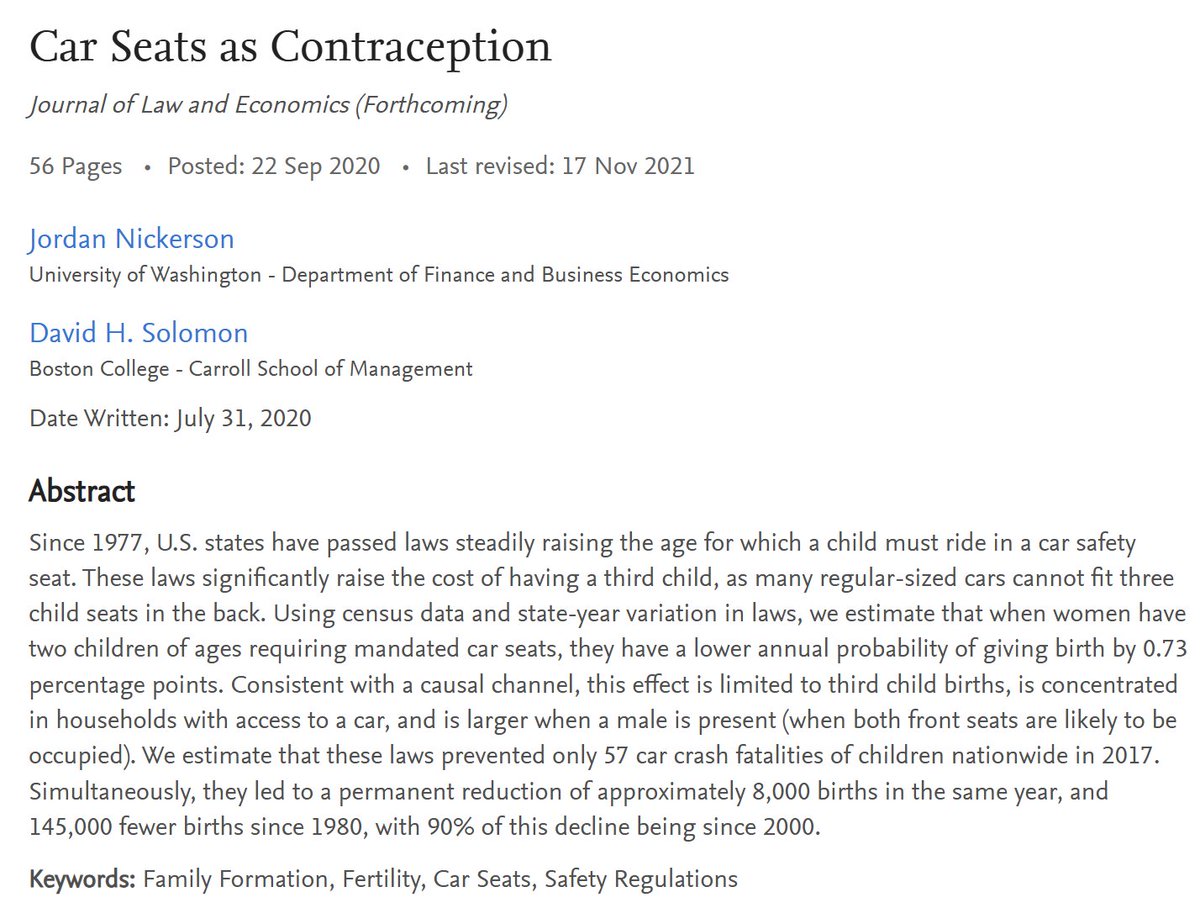
If it's true that "you need a substantial share of women to have three or more children," then we should take a close look at unnecessarily burdensome regulations that make having a third child particularly expensive for families. Increases in the mandatory age at which a child must stay in a car seat raise the cost of a third child by forcing parents to buy larger vehicles to accommodate three car seats. The age keeps rising with a minimal impact on safety. Last year, a new minivan's average cost was $59,031. The expense makes having a third child so costly that one study estimates extended-age car seat requirements "prevented only 57 car crash fatalities of children nationwide in 2017. Simultaneously, they led to a reduction of approximately 8,000 births in the same year, and 145,000 fewer births since 1980, with 90 percent of this decline being since 2000."
Chelsea Olivia Follett tweet media
Jesús Fernández-Villaverde@JesusFerna7026

Let me lay out the unpleasant arithmetic of the replacement rate, and why a modern society finds it so hard to reach. A population of 100 women in an advanced economy needs 210 children to replace itself. Why? Absent sex-selective practices, roughly 105 boys are born for every 100 girls. Evolution overshoots male births because boys are more prone to early death from accidents and disease. Therefore, of 210 children, about 108 are boys and 102 are girls. Not all girls reach the midpoint of their fertile age: accidents, suicide, homicide, and illness take some. In an advanced economy, about 98% of them survive, leaving 100 women to replace the original 100. Now consider the distribution of children per woman. Imagine 15 women have no children. Five do so by choice, for various reasons (professional, affective, religious). Ten face unfixable fertility problems, theirs or their partner’s. The 10% figure is conservative: the medical literature points to around 13%, and that does not even count male fertility problems. Of the remaining 85, 10 have one child, 60 have two, 10 have three, and 5 have four. I am stopping at four to keep the post concise; very few women in younger cohorts have five or more children, but I could adapt the example to account for them. Hence, the 100 women in this population have 180 children, for a completed fertility rate of 1.8. Interestingly, this is roughly the rate we saw in many advanced economies until the early 1990s, and in the U.S. until around 2008. But we are still 30 children short of replacement! Voluntary childlessness is only 5%. Three-quarters of women have two or more children. Look around: most of your friends will have two, plenty will have three or four. And yet, we are well below replacement. You would not look at this population and call it selfish (is having two kids hedonistic?) or accuse it of losing family values (only 5% of women are choosing voluntarily not to have children). The point is simpler. To reach 210 births, you need a substantial share of women to have three or more children. Two as the “normal” pattern will not get you there. And modern society makes three or more a costly proposition for most families. Of course, current fertility rates in most advanced economies are well below 1.8. But my point is that, under present social arrangements, we should not expect 2.1, even if (to humor last weekend’s debate) we banned smartphones and TikTok. We need many, many more families with three or four children. More pointedly, there is no self-regulating mechanism that pushes a society back to 2.1. The market-clearing analogy many economists use is flawed; scarcity feedback does not work the same way. (Another post on this another day.) And, as I often read, the claim that “nature” somehow regulates current overpopulation is just childish mumbo jumbo. So yes, the arithmetic of replacement rate is unpleasant.

English
12
33
272
31.8K
Pendulum Flow
Pendulum Flow@PendulumFlow·
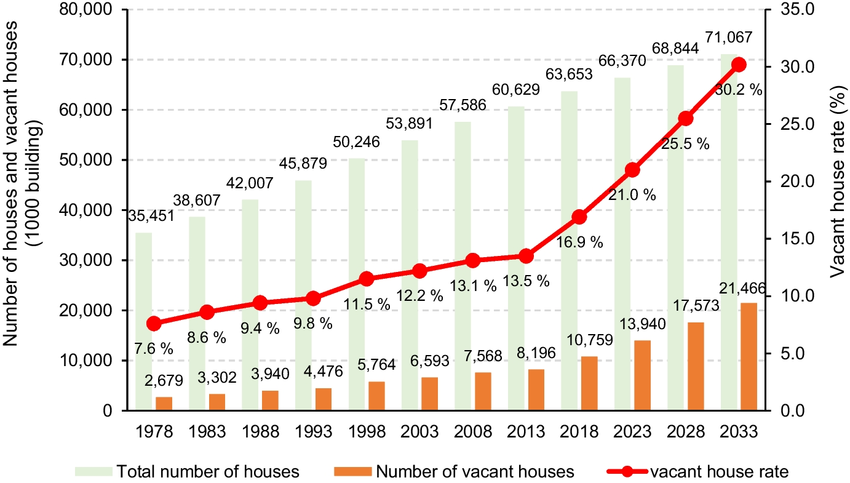
Agreed. Robots are only a bandaid. What is fascinating is seeing homes go to zero and through the roof in the same country as people abandon some towns and all head to the big cities. This will happen on a national level also. The safe countries with a functioning healthcare and pension system are going to be utopia attracting all the motivated young families and vice versa.
English
1
0
0
11
Billy Bishop
Billy Bishop@TopAlliedAceWW1·
@PendulumFlow Heavily dependent on robotics. Can't put too much hope on AI. There is such a huge gap between reality and hype. You can only get so far with what you might think of as a race of idiot Savant interns.
English
1
0
1
14
Pendulum Flow
Pendulum Flow@PendulumFlow·
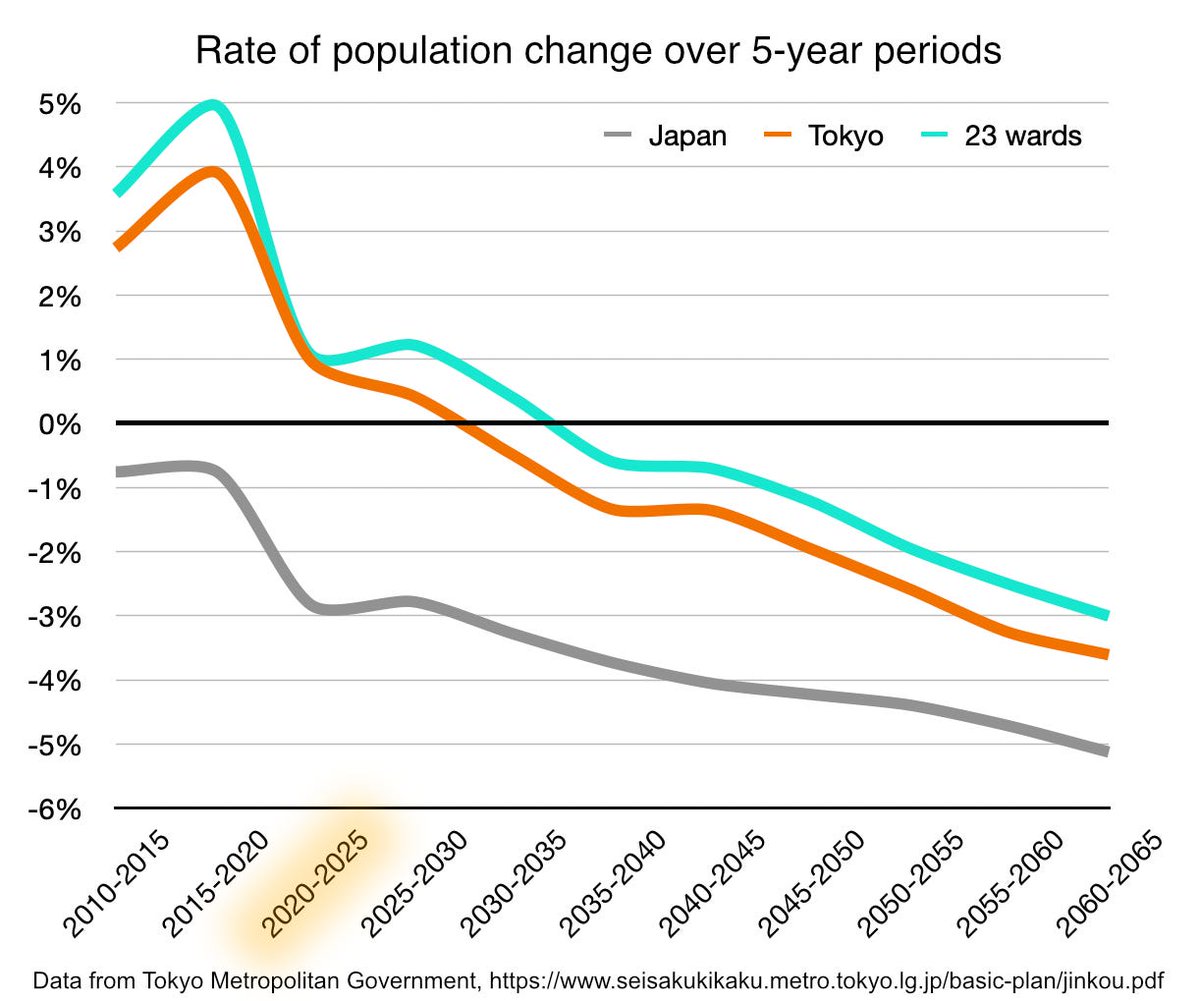
@TopAlliedAceWW1 Japan and others will be interesting to watch as they are far ahead in the demographic transition.
Pendulum Flow tweet mediaPendulum Flow tweet media
English
1
0
1
18
Billy Bishop
Billy Bishop@TopAlliedAceWW1·
@PendulumFlow Feminism + great wealth = predictable result. The optimist in me says an economic model that provides prosperity with a shrinking population will emerge organically, somewhow. I see a lot of real estate being returned to a natural state or to farm land.
English
1
0
1
30
Pendulum Flow retweetledi
Pizza
Pizza@number_pizza111·
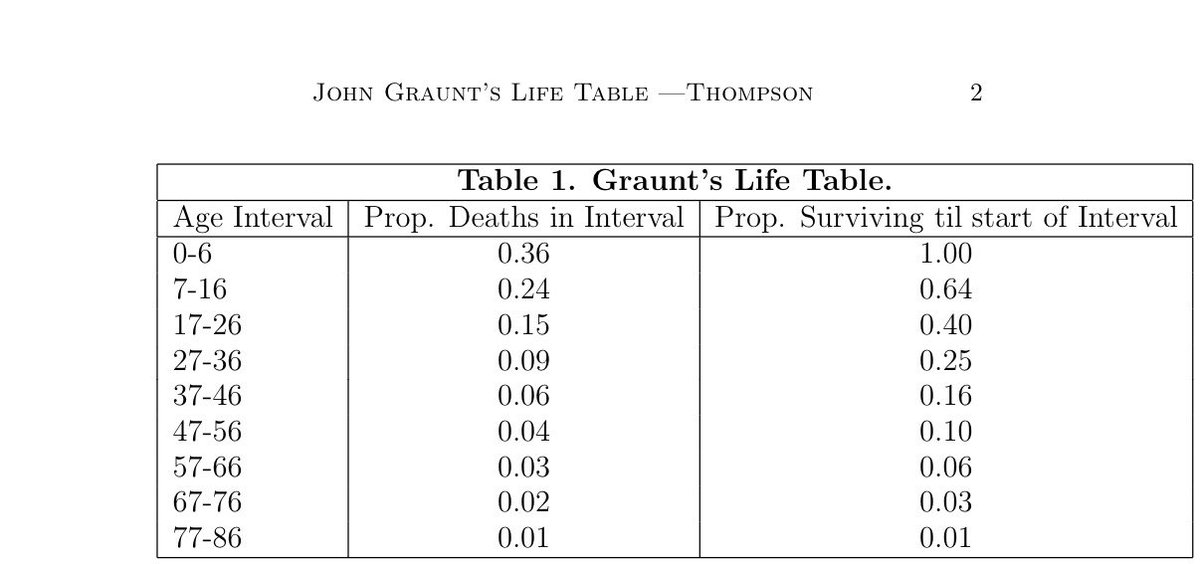
The earliest ever actuarial table, constructed by John Graunt in 1661, estimated a newborn had a 40% chance of making it to 18 and 1% chance of making it to 76. Primary sources from before 1800 agreed that people weren’t expected to make it to 18.
Pizza tweet media
Jason Nordsell@jason_nordsell

@DouthatNYT @lymanstoneky I find it hard to believe that half of all children died in 1800. Someone is plugging alot of assumptions in to incomplete data to come up with that "shocking" figure

English
9
46
628
18.8K