Sabitlenmiş Tweet
Permission
7.8K posts

Permission
@PermissionIO
The AI generation is here. Is your family ready?
Katılım Ocak 2010
4.6K Takip Edilen57.4K Takipçiler

Meta and Google are partnering with child-focused institutions to promote “digital responsibility” for children.
While also building products designed to keep them on screens.
Your kids should be shaped by your values, not algorithms.
Get Trusted AI for the Family → permission.ai
Source: Reuters, May 2026.

English

@DeFi3053 Hi we changed our login, here it is! ask.permission.ai/login
English

@PermissionIO Why can't I login to my account?
English

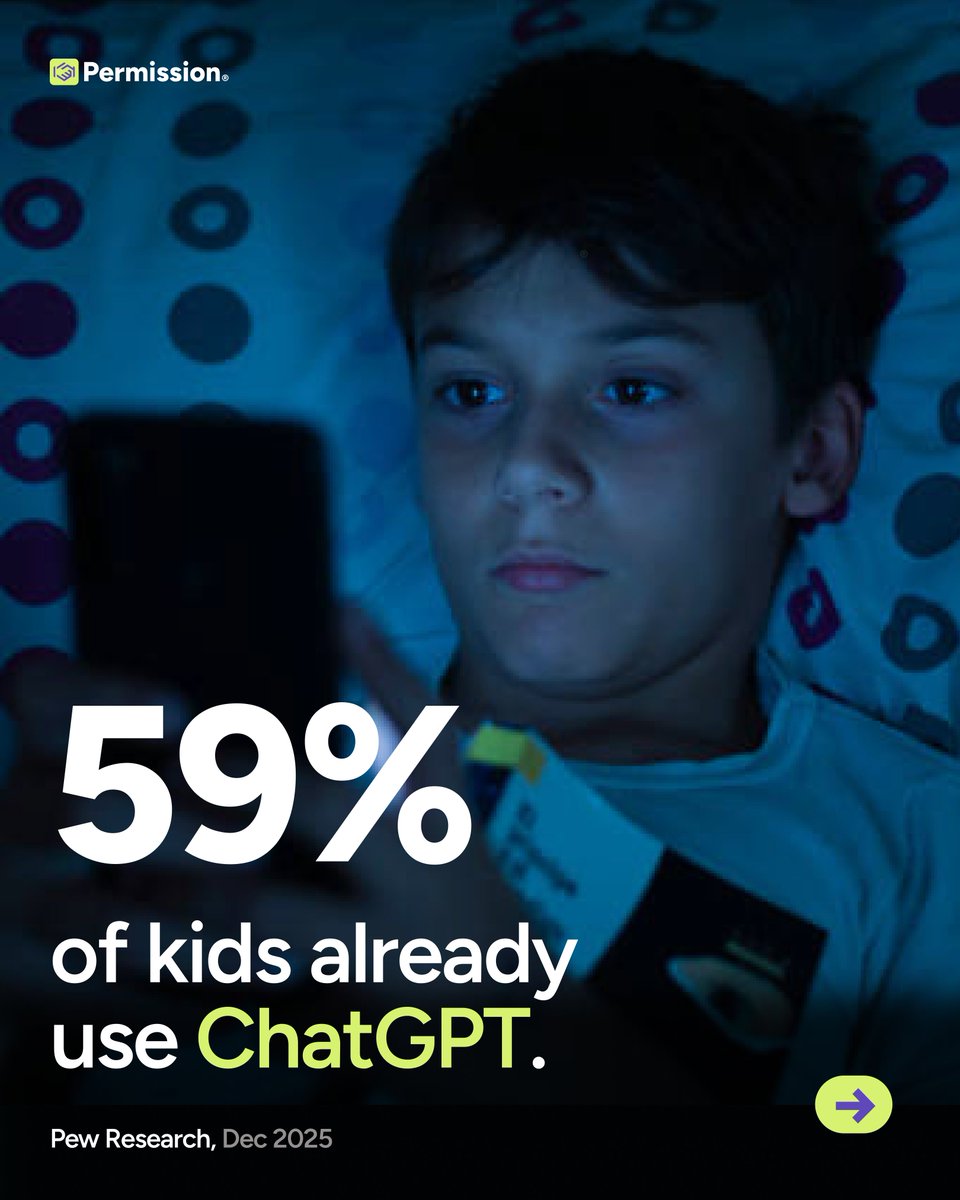
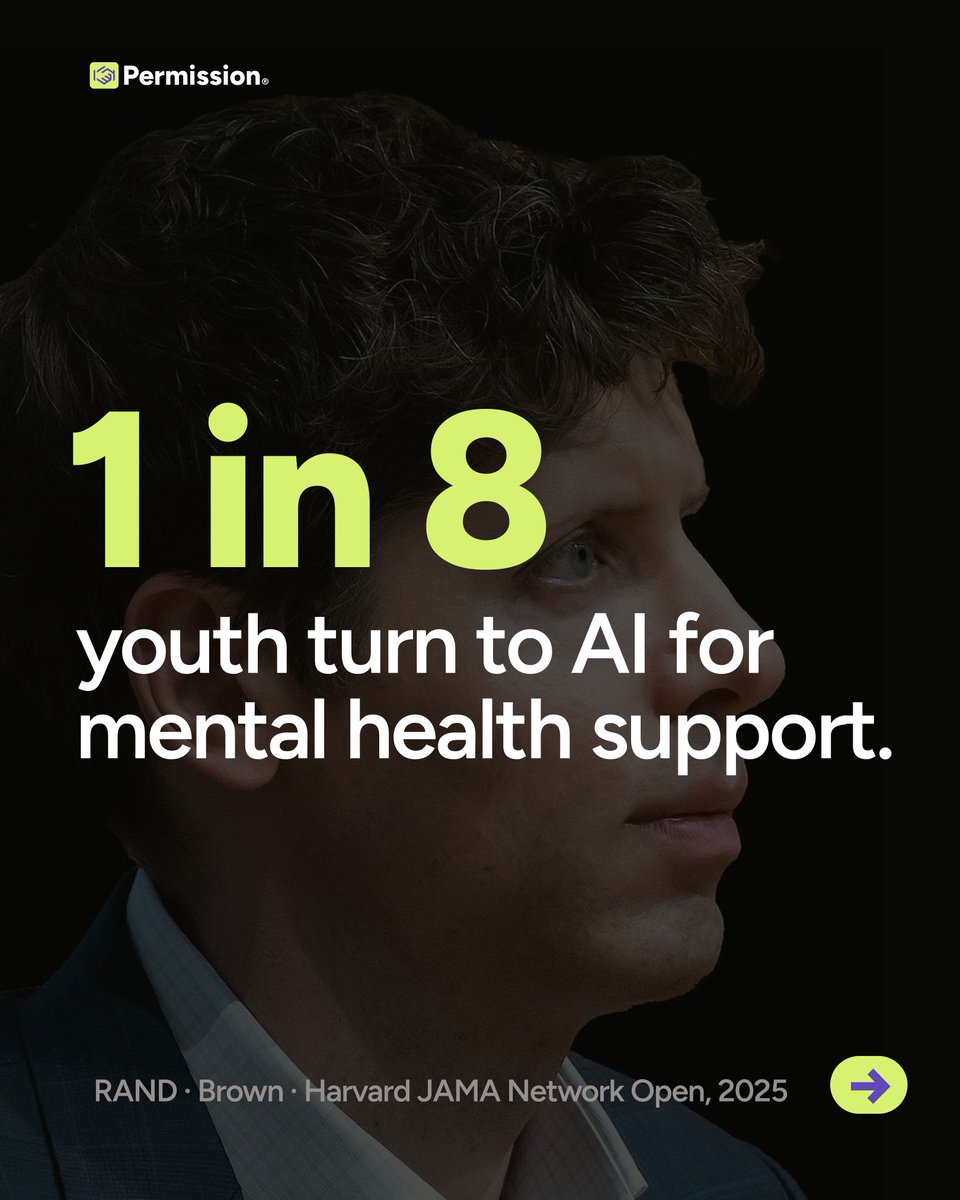
Kids are relying on AI.
1 in 8 already use it for mental health support.
What are they saying that they're not saying to you?
Get your Family AI for a safer internet : permission.ai


English

@RobertFreundLaw Transparency and user control should be the default in AI. People shouldn’t have to wonder how their data is being used.
English

@MrEwanMorrison Real change comes from how AI is used day to day at home and in learning. Parents can help kids use it to support thinking, so they still learn how to reason, question, and work through ideas on their own.
English

@MalloryMcMorrow Limiting phones in schools is part of the solution, but it doesn’t address the broader issue. What matters just as much is how these platforms are designed and how they shape kids’ attention outside the classroom.
English

Gen Z is the first generation to be less cognitively capable than the one before them. A neuroscientist told Congress why: screens.
I've helped pass legislation to get phones out of classrooms and I have a plan to hold Big Tech accountable. My guiding principle will always be putting our kids first.
English

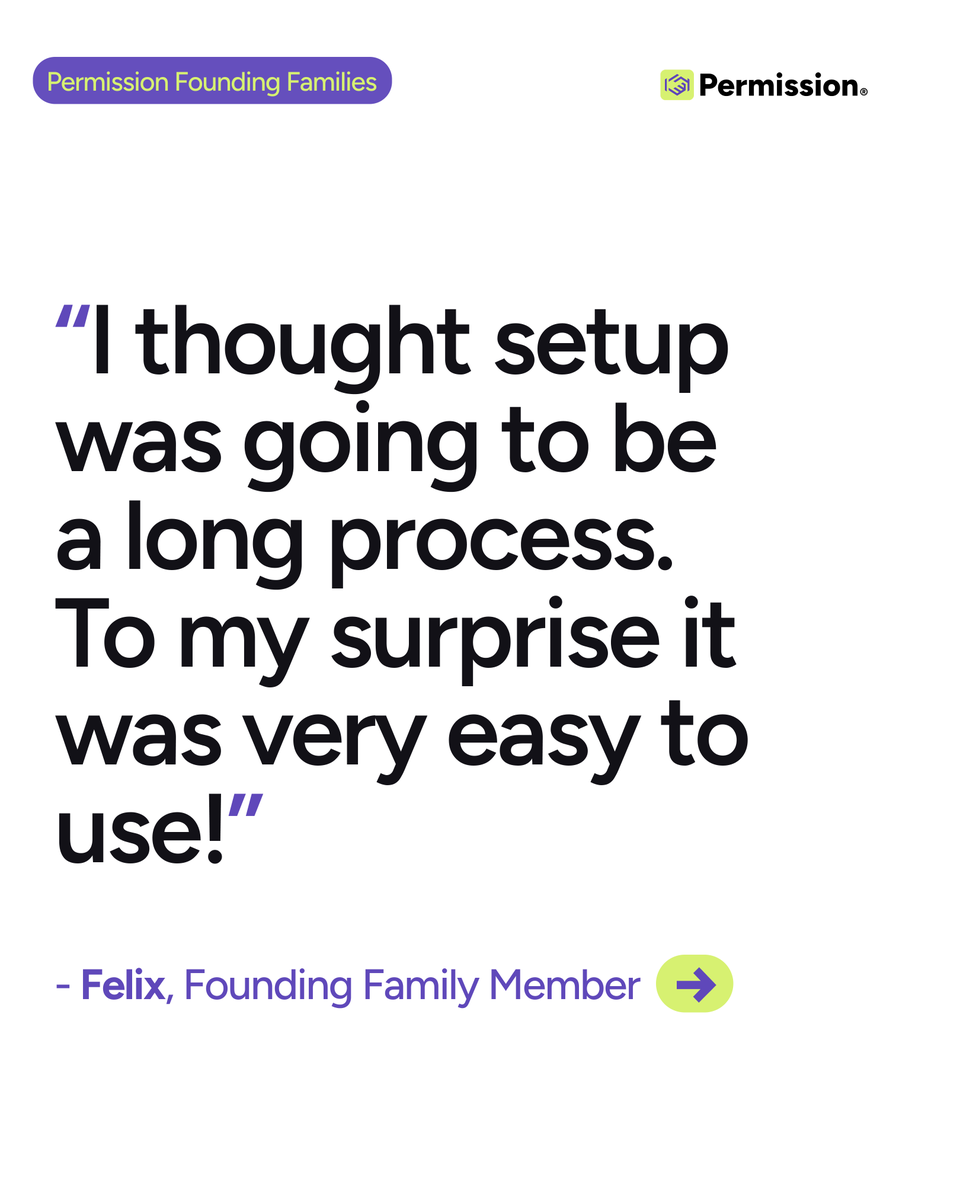
Parents are already using Family AI.
What we're hearing from our Founding Families has been overwhelmingly positive.
Get trusted AI for your family: permission.ai


English

@DefiantLs This goes beyond screens in classrooms—the deeper issue is how quickly digital systems entered childhood learning without meaningful transparency or long-term guardrails for families.
English

The CEO of Pinterest said social media isn’t safe for kids.
So he changed it.
People said Gen Z would leave.
Now they’re 50% of users.
Safety didn’t push them away.
It built trust.
Guardrails open the conversation.
Bring that same trust home.
Get Safe AI for Your Family: 🔗 app.permission.ai/signup?utm_sou…

English

@NewYorker Inevitable for the companies selling it. Not necessarily for the families living with it.
Parents should be part of this conversation, with real visibility and real tools.
x.com/PermissionIO/s…
Permission@PermissionIO
AI is already shaping your kids in the classroom, in their apps, and in their social feed. The issue isn’t AI. It’s parents not being part of how it’s guided. Parents need visibility, tools, and guardrails. Algorithms shouldn’t shape your kids. Your values should. Get trusted AI for your family: app.permission.ai/signup
English

The tech world assumes that A.I.-aided education is necessary and inevitable. A growing number of parents, educators, and cognitive scientists say the opposite. newyorker.com/culture/progre…
English

@conorsmurf This. Nobody should be forced to use it. The question is whether families have the tools to decide for themselves how it shows up in their kids' lives — and right now most don't.
English

The challenge is not the technology but how we all should use it.
Really?
Why?
Why should we all use AI?
Just because it exists?
Does this rule cover everything that exists?
Ciara Quill ☘️🇮🇪🇫🇷🇩🇪🇪🇺 💚💛@ciaraquill
#edchatie The reaction to the article in @Independent_ie on AI by the Minister for Further and Higher Education and by AI over on BlueSky…..
English

@lwalshmill @NewYorker That's exactly the gap. When products are built for engagement over wellbeing, families need their own layer. One built for them, not for the platform.
English

@NewYorker The tech world is trying to sell products. At the end of the day that’s all we need to remember. They’re not doing any of this because it’s good for anybody but themselves.
English

AI is already shaping your kids in the classroom, in their apps, and in their social feed.
The issue isn’t AI. It’s parents not being part of how it’s guided.
Parents need visibility, tools, and guardrails.
Algorithms shouldn’t shape your kids. Your values should.
Get trusted AI for your family: app.permission.ai/signup


English

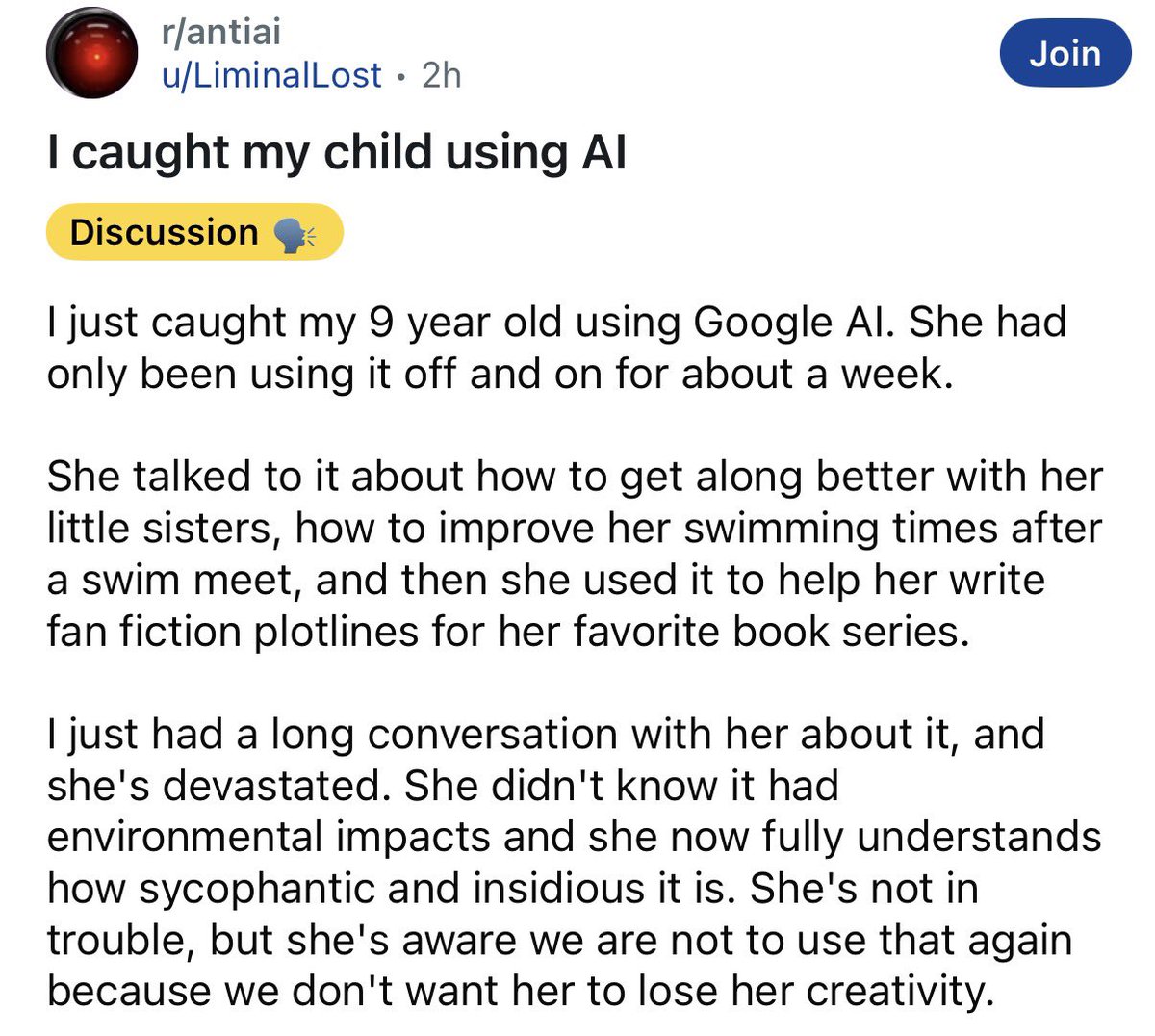
It’s understandable for a parent to feel uneasy or even upset seeing their kid use AI in a way that doesn’t match their expectations or values. That’s exactly why guardrails matter, so families can set clear boundaries and norms around how these tools are used at home. At the same time, AI is becoming a normal part of school, sports, and eventually most jobs, so kids will need to learn how to use it responsibly, not just avoid it.
English

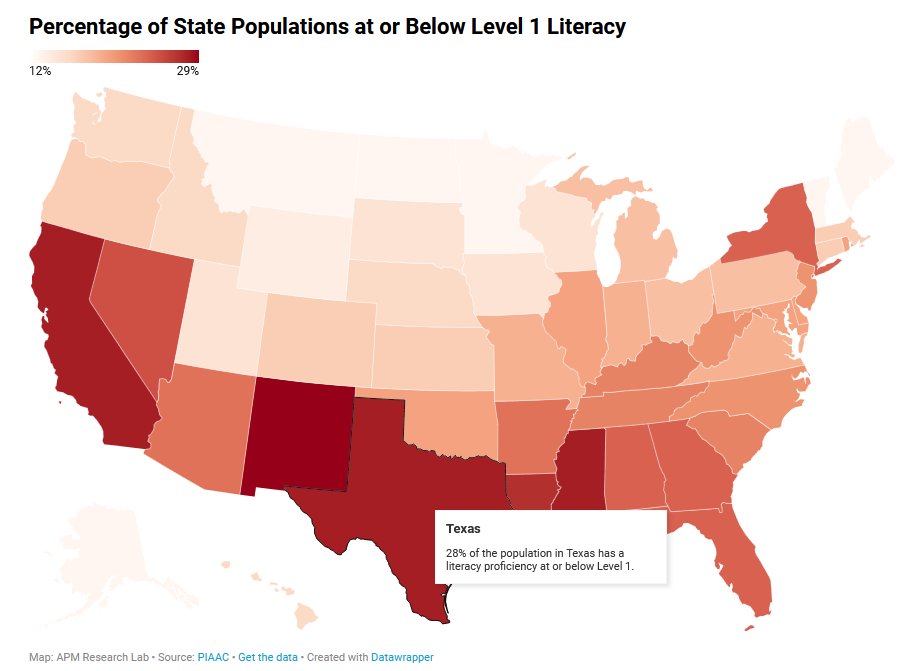
@athenaeumbc This is concerning—we need to prioritize early literacy and sustained support across education, not just access to more technology.
English

@FortuneMagazine This feels necessary, especially as AI accelerates how quickly new technologies enter classrooms without clear safeguards in place.
English

“It took more than 10 years to ban cell phones from schools. We can’t afford that again," Leonie Haimson, executive director of the Parent Coalition for Student Privacy, told Fortune. bit.ly/4ceLfF1

English

@GMA @SamChampion A step in the right direction. The bigger challenge is creating balanced digital environments both in and out of the classroom.
English

The Los Angeles Unified school board has voted to require screen time limits and encourage the use of pen and paper for assignments, becoming the first major school district to do so. @SamChampion reports.
English

@Reuters Seems like a step in the right direction but screens in classrooms are only one piece of a much bigger environment kids are navigating daily.
English

Los Angeles' school board passed a measure regulating students’ screen time during classroom assignments, reflecting concerns that technology could be linked to a host of ailments including obesity and depression reut.rs/4mIx0fh
English

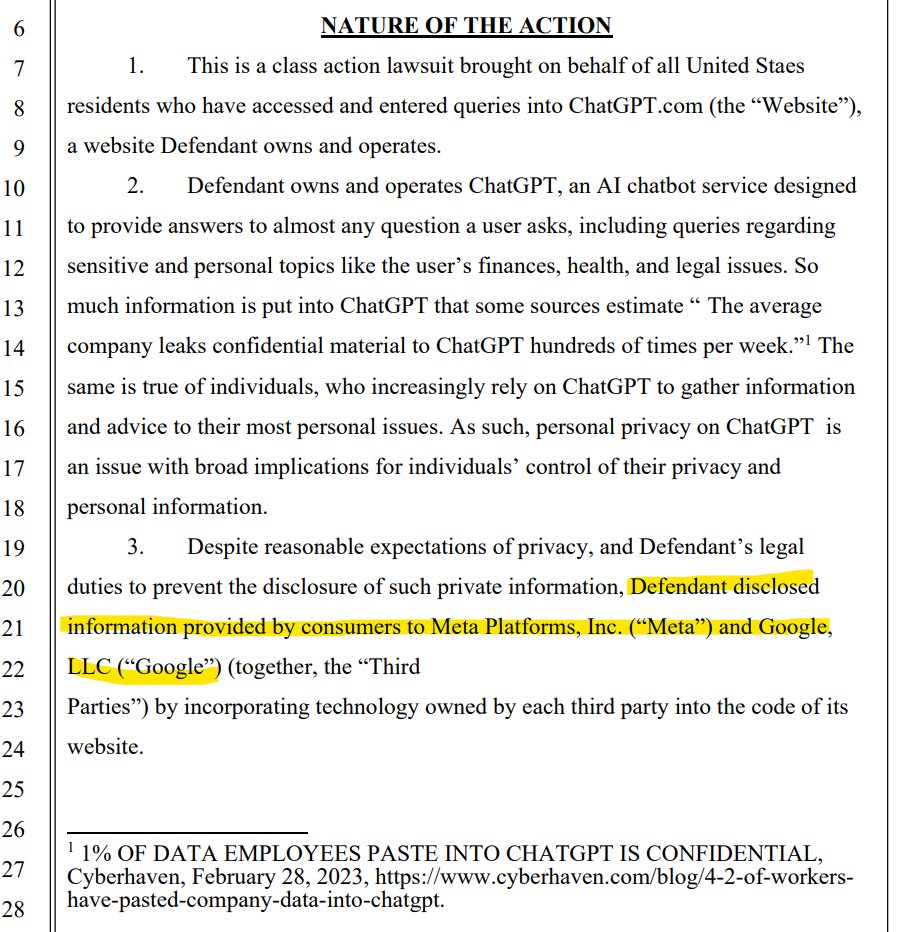
@Reuters If true, this blurs an important line between building AI and collecting deeply personal workplace data—without clear consent.
English

Exclusive: Meta is installing new tracking software on US-based employees' computers to capture mouse movements, clicks and keystrokes to train its AI models, the company told staffers in internal memos seen by Reuters reut.rs/4sPJwuW
English