
Philippe Martin
1.5K posts

@PhyByte
Observer of humans & the solar system. Space engineer (ground stations · ExoMars · Galileo). Writing about civilisation and the cosmos.


Les milliardaires radicalisés comparent ds êtres humains à des zombies sur lesquels il faudrait mitrailler sans réserve Lorsqu’à l’école vous vous demandiez pourquoi personne n’avait empêché les nazis dans leur folie meurtrière et raciste Le processus en cours est sous nos yeux

Score solide pour Mélenchon qui prend la 111ème place du classement mondial des notes de la communauté.

Many have asked how this photo was made. This is my explanation. The ISS rotates about its pitch axis as it orbits Earth at 17,000mph to keep its nadir view constant. Because of this long exposure photography turns stars into arced lines. Sidereal clock drives on Earth match the planet's rotation to see stars clearly. I knew one designed for space could do this too. So a camera mount was custom built at @RITtigers to rotate once every 90 minutes using a 60 to 90 toothed gear system, cancelling out the orbital motion of ISS and allowing the capture of distant stars as fixed points! In essence, it is a a rotational coil spring powered analog star tracker. It was machined out of aluminum and is entirely mechanical to bypass NASA's strict electrical requirements for cargo. We had to get creative! After Expedition 72 it was safely returned to Earth and is to be displayed at RIT. Which I am pleased to say because a similar barn door tracker I made from spare parts on Expedition 6 for nighttime city photography was destroyed in an atmospheric trash disposal! Photography is an important part of sharing the journey to new frontiers for all people of Earth!


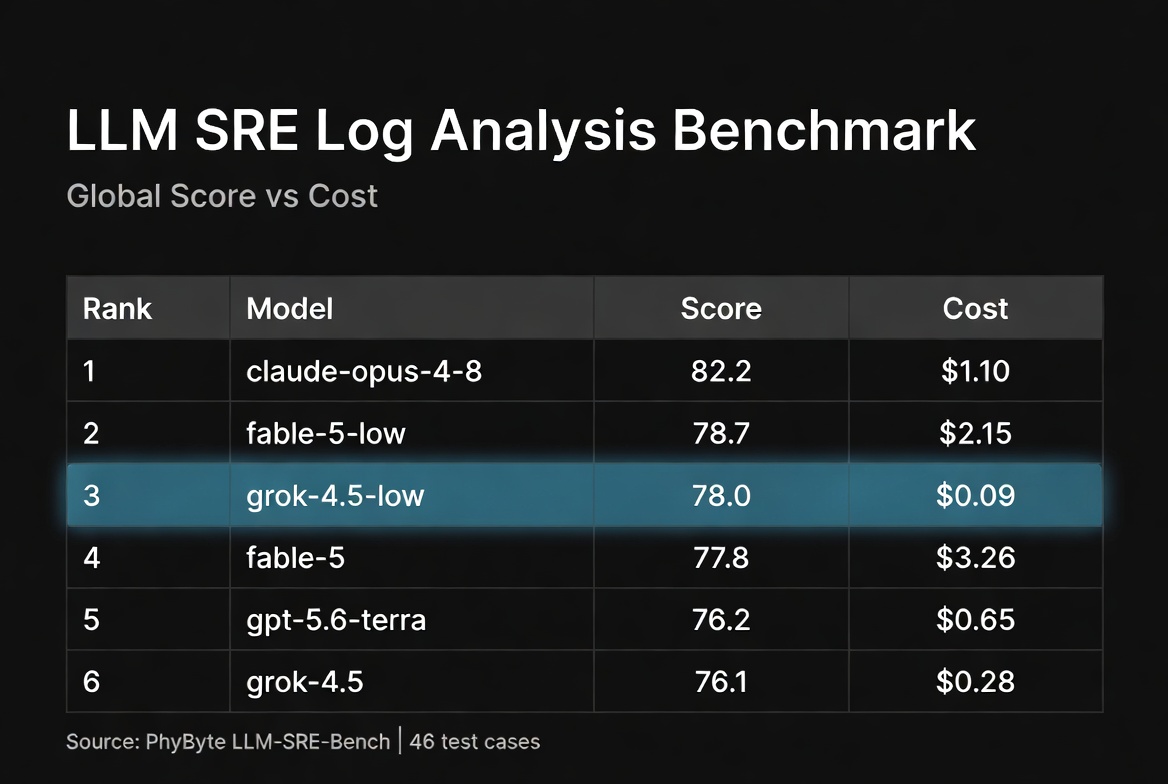
Also happy to see that that Grok 4.5 was the best frontier model in their testing.


Most of the West is literally going extinct.


Yesterday I cohosted a dinner with @dexhorthy with a wonderful group of founders, to talk about agent loops and loop engineering. Some interesting insights: * Most of our group was *not* actively using /loop in Codex/Claude Code * You can build long-running autonomous agent loops through multi-agent handoffs, event triggers, or….just stacks of cron jobs (?) * Almost everyone believes that no one will be reviewing code in 1-2 years. * The more interesting question is whether we’d be reviewing *anything* in 1-2 years. * AI is still a bit of a skill issue. Humans are responsible for maximizing AI output and reducing slopification. * Will human intellect provide alpha as models get better, or will the playing field be leveled? Most people think it will be leveled a bit, but there is a need for humans to provide alignment, guardrails, judgment, creativity. * The minimum amount of context you need for AI could be just the codebase with some documentation. Any research/plan files are for one-off tasks and not meant to be maintained. Having a self-organizing wiki is nice but adds complexity. If you missed this one, we’ll be hosting more dinners like this on a regular cadence! If you have thoughts on what we should talk about, let us know :) (e.g. continual learning, RL envs, competitive differentiation vs. Anthropic, etc.)


Space Force picks 15 companies for $981 million training range contract spacenews.com/space-force-pi…


Overhauled the 𝕏 Developer Console with a fresh coat of paint. More improvements to come as we continue investing in our DX! console.x.com