Federal Ministry of Budget & Economic Planning NG

3.1K posts

Federal Ministry of Budget & Economic Planning NG banner
Federal Ministry of Budget & Economic Planning NG

Federal Ministry of Budget & Economic Planning NG

@PlanningNG

Official Twitter Handle of Nigeria’s Ministry of Budget and Economic Planning, led by the Hon. Minister, Sen. @atikuabagudu.

Abuja, Nigeria Katılım Mayıs 2014
138 Takip Edilen9.2K Takipçiler
Federal Ministry of Budget & Economic Planning NG retweetledi
HOPE-GOV
HOPE-GOV@HOPE_GOV·
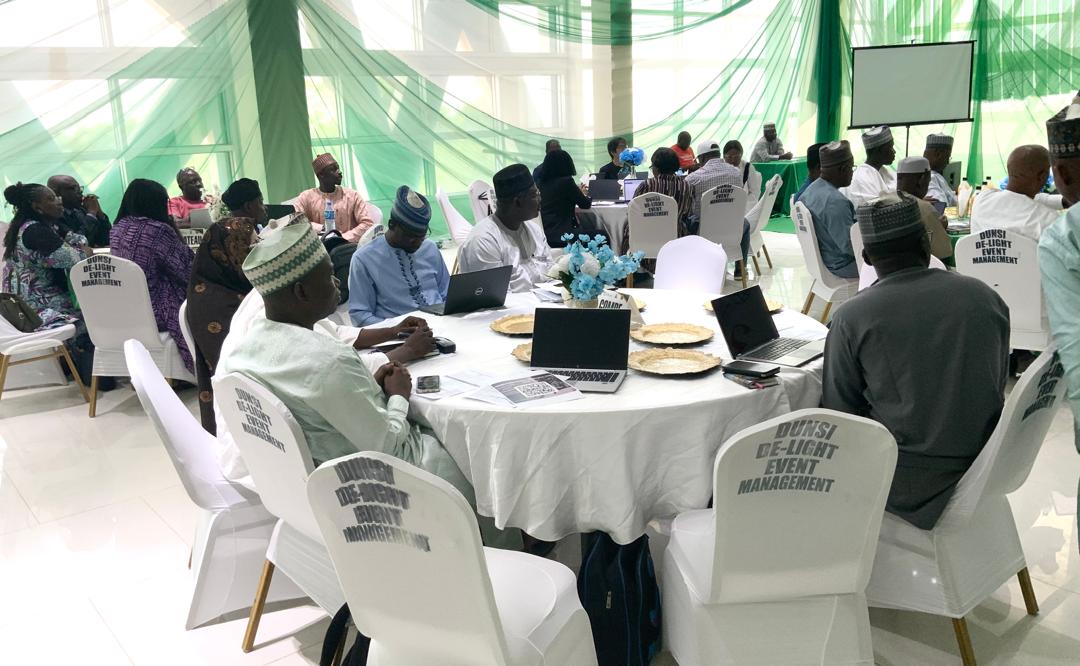
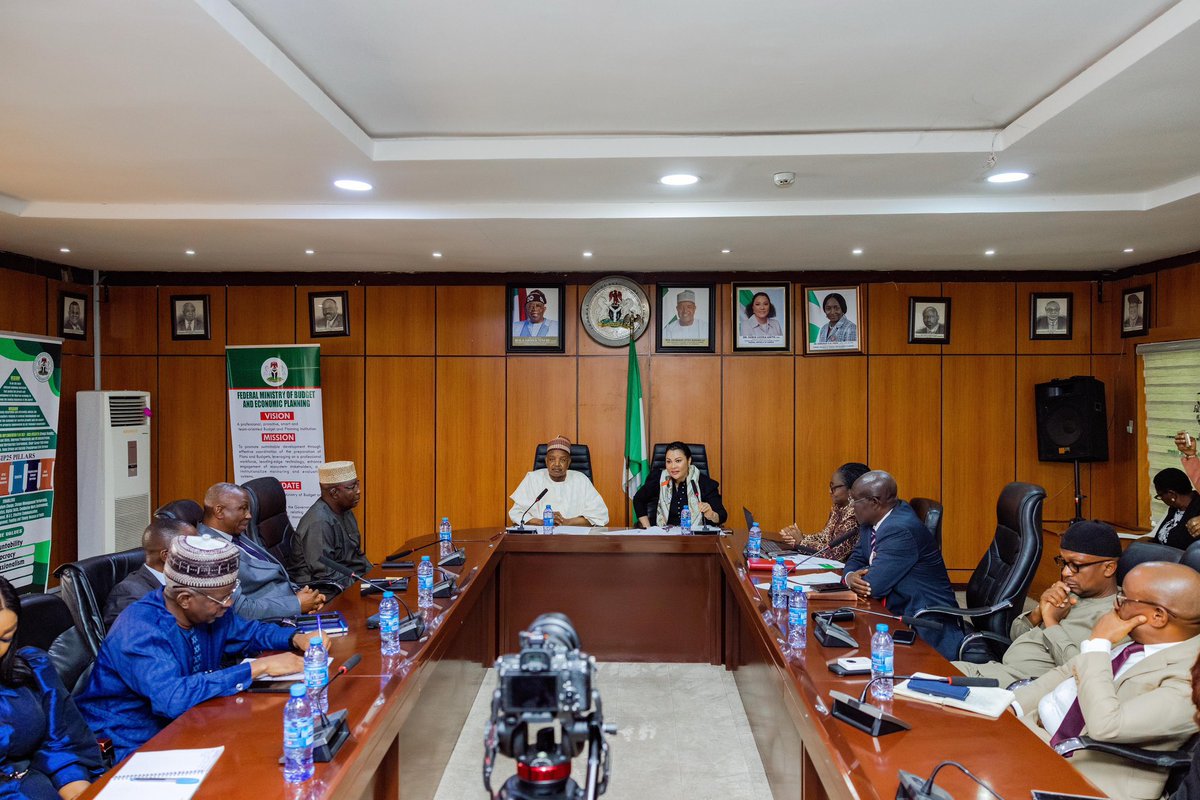
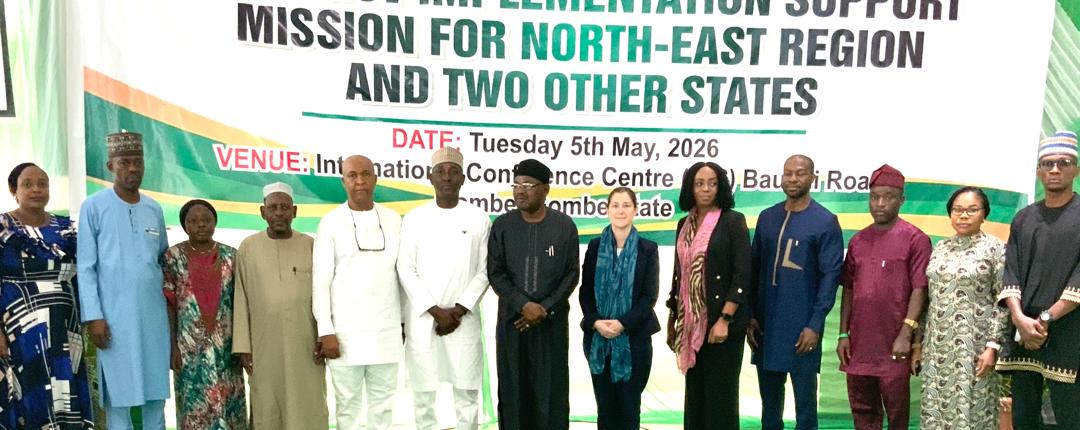
@WorldBankGroup-supported HOPE Governance Program Partners States to Recruit More Teachers, Primary Health Care Workers The @WorldBankGroup-supported HOPE Governance Program of the Federal Ministry of Budget and Economic Planning is working in partnership with State Governments to address critical manpower gaps in basic education and primary health care sectors. The National Coordinator of the Program, Dr. Assad Hassan disclosed this in an interview with newsmen on the sidelines of the HOPE Governance Program Implementation Support Mission for the North East in Gombe on Tuesday. He said improved recruitment and equitable deployment of teachers and primary health care workers are essential to strengthening service delivery in the two sectors. “We are also trying to look at how we can improve the recruitment of teachers as well as primary health care workers. Not only recruitment but also equitable deployment of teachers and primary health care workers. “There are challenges in deployment to areas that are hard to reach, so the HOPE Governance Program is another opportunity to complement already existing efforts of the Federal Government and indeed the State Governments to address service delivery in basic education and primary health,” he said. Dr. Assad Hassan said that filling the manpower gaps in the basic education and primary health care sectors forms part of the Disbursement Linked Results (DLRs) agreed upon between the World Bank and participating State Governments under the $500 million intervention Program. He said that under the Program-for-Results model of the World Bank, states that achieve the agreed Disbursement Linked Results (DLRs) targets will be rewarded with funding, enabling them to invest additional resources in both sectors. The National Coordinator said the Program was designed to work with the state governments to implement far-reaching reforms in the two sectors by promoting accountability, good governance, and ensuring that public expenditure delivers measurable improvements. “The HOPE Governance Program provides us with an added opportunity to see us strengthen our systems in terms of accountability and also ensuring that public resources deliver real impact for citizens across service delivery for primary health care and basic education,” he said. He stressed the need for all implementing agencies and the state governments to institutionalize the reform template of the HOPE Governance Program to ensure efficient and impactful service delivery across both sectors. “We need to keep asking ourselves, how do we sustain the gains we have made? How do we institutionalize the reforms that we have made thus far because without this, we cannot really make impact on our citizens,” he stated. Dr. Assad Hassan used the occasion to commend the Gombe State Government for hosting the Implementation Support Mission and its commitment to developing the basic education and primary health care sectors in the state. He said the commitment of the Gombe State Government to reducing the number of out-of-school children by 50% by 2030 is highly commendable. In his remarks, the World Bank Task Team Lead for the HOPE Governance Program, Ikechukwu Nweje, said the Implementation Support Mission was convened to assess states’ progress in implementing the Disbursement Linked Results and to facilitate the exchange of experiences among participating states in order to promote peer learning towards the successful implementation of the Program. The Secretary to Gombe State Government, Professor Ibrahim Abubakar Njodi declared the Implementation Support Mission opened on behalf of the State Governor. States from the North East as well as Plateau and Jigawa States participated in the Implementation Support Mission in Gombe. Joe Mutah Communications Officer HOPE Governance Program 5th May, 2026
HOPE-GOV tweet mediaHOPE-GOV tweet mediaHOPE-GOV tweet mediaHOPE-GOV tweet media
English
0
2
3
195
Federal Ministry of Budget & Economic Planning NG retweetledi
Bolaji Adebiyi
Bolaji Adebiyi@BolajiAdebiyi2·
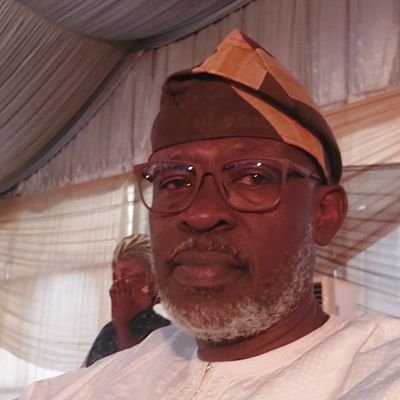
PRESS RELEASE Tinubu committed to inclusive, innovative development, says Bagudu Minister of Budget and Economic Planning, Senator Abubakar Bagudu, has reaffirmed President Bola Tinubu’s commitment to inclusive, sustainable, and innovation-driven national development, emphasising that this commitment is essential to achieving his administration’s ambitious vision of a $1 trillion economy by 2030. “Mr President believes that development must include everyone, be sustainable over time, and embrace innovation, because what worked yesterday may not work today,” he told participants at the inaugural Annual Advocacy Lecture of the Nathaniel Atebije Foundation for Planning Advocacy on Tuesday in Abuja. Speaking to the lecture’s theme, which he said closely aligned with the federal government’s current priorities, he stated that Nigeria is finalising its 2026 National Development Plan, a critical component of the administration’s vision to transform the nation into a $1 trillion economy within the next five years. “Nigeria is not where we want to be, but we are determined to move forward with clear choices and a shared vision to unite all Nigerians towards achieving a $1 trillion economy,” the minister stated. While acknowledging the scale of the ambition, the minister emphasised that achieving such growth would require deliberate planning, strategic collaboration, and the active participation of intellectuals, professionals, and stakeholders across all sectors of society. “This goal cannot be achieved in isolation. It requires deep thought, collaboration, and contributions from all sectors of our society,” he added. He stressed that national development extends beyond economic policy, encompassing coordinated planning across physical, environmental, social, and financial domains. According to him, the success of Nigeria’s development agenda rests on three pillars: inclusiveness, sustainability, and innovation. “Development must include everyone, it must be sustainable over time, and it must embrace innovation, because what worked yesterday may not work today,” he noted. Highlighting the critical role of physical planning, the minister described it as a key driver of economic progress and national stability. He observed that many persistent conflicts across the country, particularly those over land use among farmers, herders, and communities, often result from inadequate or poorly implemented planning systems. “Many of the conflicts we face today stem from how we use land and space. Poor planning breeds tension, while good planning fosters peace and prosperity,” he said. Drawing on practical examples, the Minister illustrated how poorly managed urban and rural spaces can become flashpoints for conflict, reinforcing the need for proactive, structured, and inclusive planning approaches. “Planning is not just about land or infrastructure; it is about people and how they live together,” he emphasised. He further linked these priorities to the administration’s Renewed Hope Agenda, which aims to unify Nigerians around a shared vision for national progress. He urged a shift away from dwelling on past shortcomings towards pragmatic, forward-thinking solutions. “Rather than spend all our energy debating the past, we must focus on what unites us and drives collective action for the future,” he stated. The minister also emphasised the importance of intergovernmental collaboration, noting that effective planning requires seamless coordination among federal, state, and local governments. “Development is a shared responsibility. Federal, state, and local governments must collaborate to ensure planning is inclusive and effective,” he said. He further emphasised the urgency of adopting modern approaches to address population growth and technological change. “As our population grows and technology reshapes our world, we must plan more intelligently and proactively to meet emerging demands,” he added. Concluding his remarks, the minister reiterated that Nigeria’s ability to achieve sustainable economic growth, reduce conflicts, and build a stable society will largely depend on how effectively it manages its physical and economic spaces. “If we get our planning right—by being inclusive, sustainable, and innovative—we will create opportunities for all Nigerians and build a more prosperous and united nation,” he said.
Bolaji Adebiyi tweet mediaBolaji Adebiyi tweet mediaBolaji Adebiyi tweet media
English
0
1
2
153
Federal Ministry of Budget & Economic Planning NG retweetledi
Margaret Titilayo Oboh
Margaret Titilayo Oboh@MargaretTitila5·
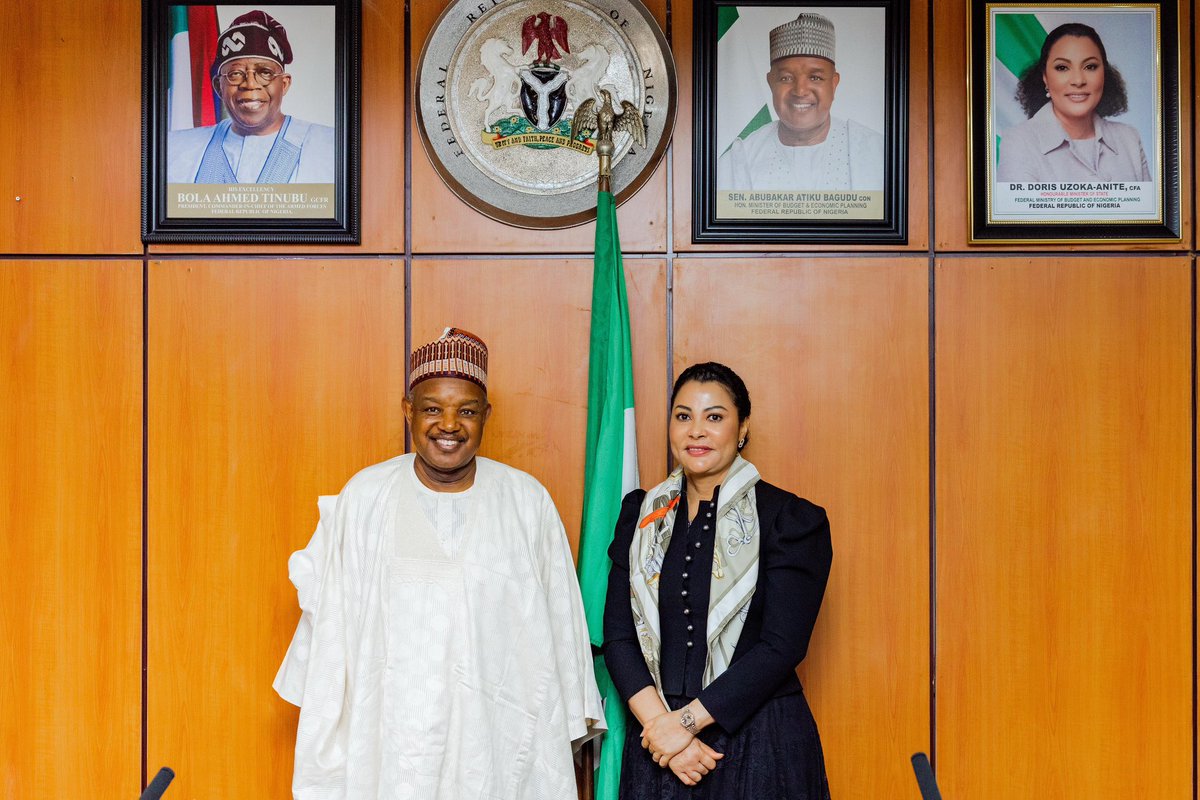
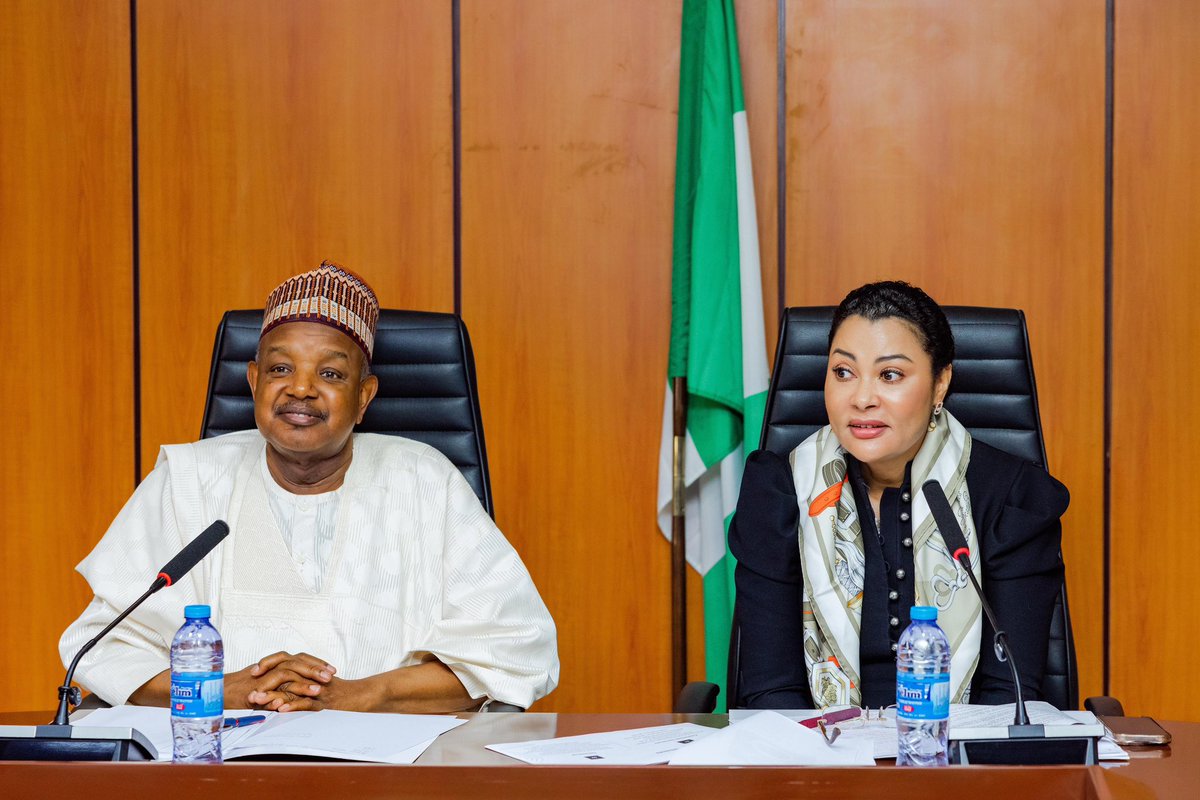
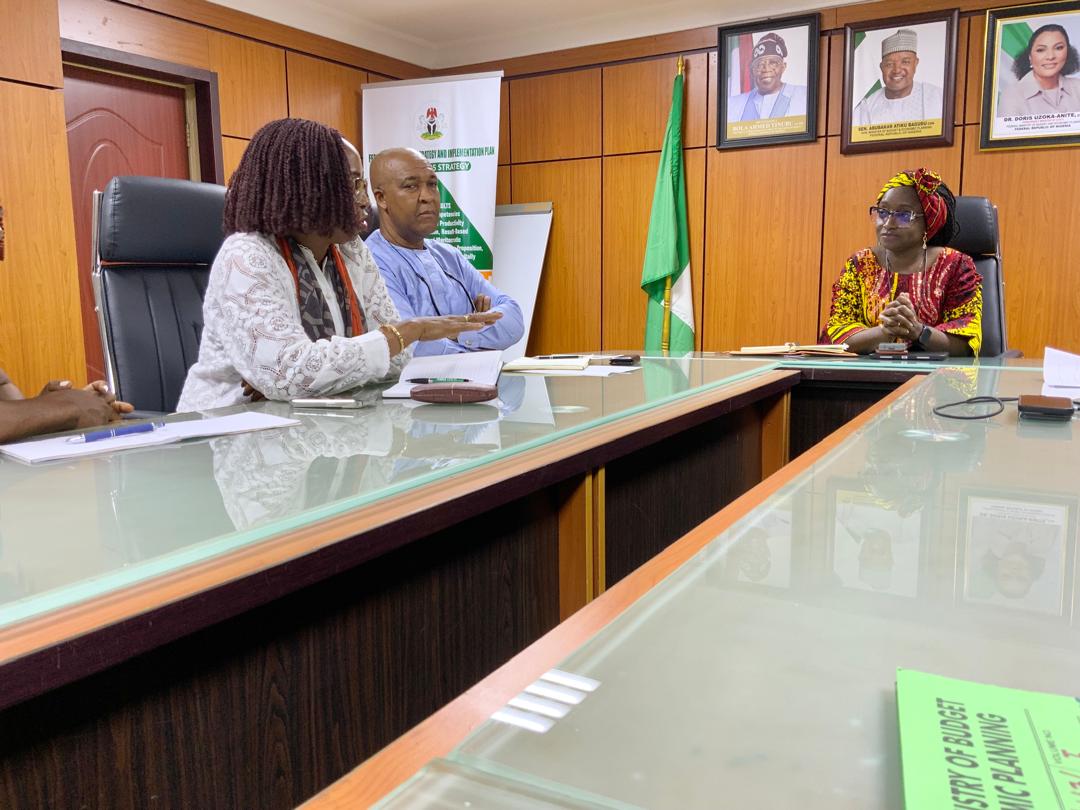
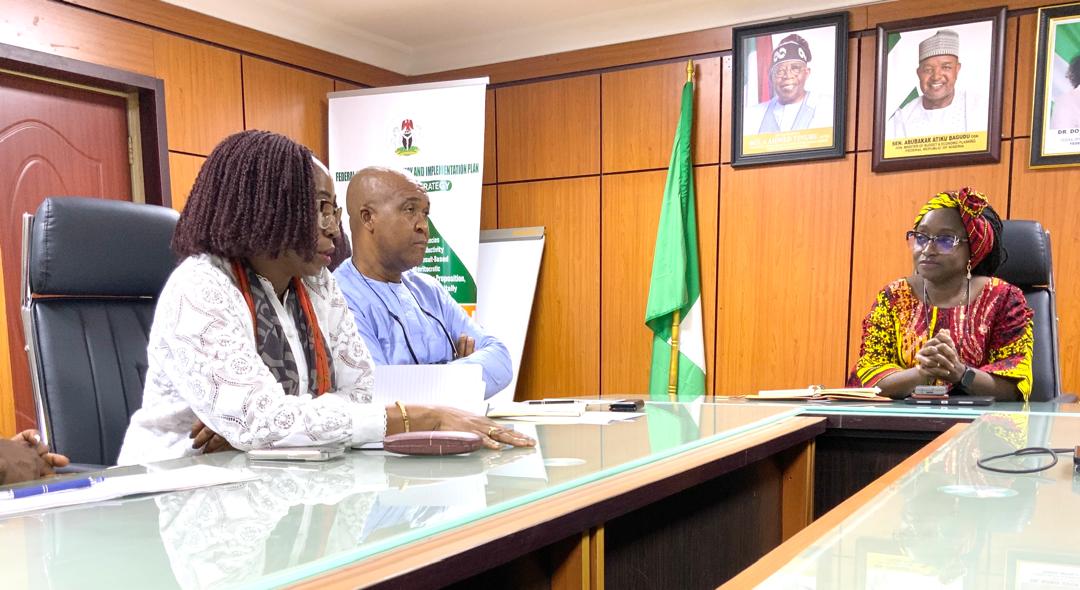
PRESS RELEASE Bagudu reaffirms commitment to $1 trillion economy target as Uzoka-Anite resumes Minister of Budget and Economic Planning, Senator Abubakar Atiku Bagudu, has emphasised the importance of strong policy coordination and strategic planning in achieving the Federal Government’s ambitious economic goals. Receiving the new Minister of State for Budget and Economic Planning, Dr Doris Uzoka-Anite, on her assumption of duty on Monday, he said the target of growing Nigeria’s economy to $1 trillion by 2030 would be pursued vigorously. He said the President Bola Tinubu administration plans to achieve this objective by growing the economy at 7 per cent annually, explaining that the upcoming National Development Plan (2026–2030) will guide economic reforms, investment priorities, and development initiatives across the country. Bagudu welcomed Uzoka-Anite’s appointment and told her that, as the official planning authority of the country, the Federal Ministry of Budget and Economic Planning is responsible for preparing and coordinating national development plans, harmonising fiscal and economic policies, providing policy advice to the President, and coordinating development initiatives across the federal, state, and local levels. The minister recalled recent discussions at the National Economic Council, which identified several key policy priorities to accelerate national development, including improved coordination among federal, state, and local governments, especially since state governments account for about 48% of public expenditure. Other priorities, he said, involved increasing investment in security, securing ongoing funding for transformative infrastructure, and strengthening enforcement against illegal activities in the extractive sector, particularly crude oil theft and illegal mining. He stated that the ministry continues to coordinate international development partnerships to support Nigeria’s economic growth, explaining that one recent milestone is the upgrade of bilateral relations between Nigeria and China to a comprehensive strategic partnership, which has led to several cooperation agreements focused on economic development. In her response, Uzoka-Anite noted that for Nigeria to attain the desired level of growth, 95% of the economic development must be driven by the private sector, with the federal government contributing 5%. She also advised that the Renewed Hope programme should be led by the private sector to achieve its objectives. According to her, “I have no doubt that Mr President can achieve the one trillion dollar economy as he has started by laying the foundation for that to happen through the introduction of economic reforms and the implementation of the National Development Plan (NDP).” She took the opportunity to thank President Bola Ahmed Tinubu for the chance to serve in his administration in various roles: first as Minister of Industry, Trade and Investment, then as Minister of State for Finance, and now as Minister of State for Budget and Economic Planning, and to serve on other economic committees. Permanent Secretary of the Ministry of Budget and Economic Planning, Dr Deborah Odoh, remarked that the minister of state’s assumption of office at this significant time is most welcome. We are confident that your distinguished experience in public service, finance, and economic management will further strengthen the Ministry's work as we continue to advance the Government’s economic reform agenda and improve the quality of national planning and budgeting. She hoped that her insights, guidance, and engagement would add value to the work of the ministry and its agencies, noting that her presence would undoubtedly help strengthen the collective capacity of the leadership team as the management continues to deliver on the Ministry’s mandate in support of Mr President’s Renewed Hope Agenda.
Margaret Titilayo Oboh tweet mediaMargaret Titilayo Oboh tweet mediaMargaret Titilayo Oboh tweet media
English
1
6
16
1.2K
Federal Ministry of Budget & Economic Planning NG retweetledi
HOPE-GOV
HOPE-GOV@HOPE_GOV·
FG Ramps Up Efforts to Sign Subsidiary Agreement With States To Participate in $500m HOPE Governance Program The Permanent Secretary of the Federal Ministry of Budget and Economic Planning, Dr. Deborah O. N. Odoh, has stated that the Ministry is collaborating closely with the Federal Ministry of Finance to ensure that all 36 states of the Federation sign the Subsidiary Loan Agreement that would enable them to participate in and benefit from the @WorldBankGroup-assisted HOPE Governance Program, aimed at improving service delivery in the basic education and primary healthcare sectors. Dr. Deborah Odoh made this remarks in Abuja on Wednesday when she received the HOPE Governance Team from the World Bank on a courtesy visit to her office. “We have been strategising with the Federal Ministry of Finance with the involvement of our Honourable Minister Sen. Abubakar Atiku Bagudu. We will put in extra efforts to make it happen even faster given the time constraints. We have a timeline drawn up recently to achieve this,” she said. The Permanent Secretary pledged to provide all the necessary institutional support to ensure that HOPE Governance delivers significant impact across the country. “I’m glad we are having this meeting, which is long overdue and certainly we are here all the time. We expect to see more tangible results and impact shortly,” she said. The World Bank Task Team Leader, HOPE Governance Program, Ikechukwu John Nweje, had earlier appealed to the Permanent Secretary to utilise all available channels within the Ministry to engage state governments and secure the signing of the Agreement, thereby enabling them to access funds under the Program upon verification of the Disbursement-Linked Results. “However you can help us to fast track these processes, this will really be appreciated to get this program up and running in terms of disbursement,” he said. He stressed that governance remains a key challenge to improved service delivery in the basic education and primary healthcare sectors, which is why the Federal Government, in collaboration with the World Bank, has initiated the HOPE Governance Program to address the issue. “If the governance part fails, we will continue to have the same problems we are having on the sectoral side. That is why the ministers prioritised governance because they found out that governance is the issue in the two sectors that will help to unlock the ability to deliver results,” he stated. Earlier, the National Coordinator of the HOPE Governance Program, Dr. Assad Hassan, stated that the meeting was convened with the World Bank to apprise the Permanent Secretary of the milestones recorded and the challenges encountered in the implementation of the Program so far. The HOPE Governance Program is a $500 million World Bank-assisted initiative domiciled in the Federal Ministry of Budget and Economic Planning, aimed at promoting good governance in the administration of basic education and primary healthcare in Nigeria. Joe Mutah Communications Officer HOPE Governance Program 26th March, 2026
HOPE-GOV tweet mediaHOPE-GOV tweet mediaHOPE-GOV tweet mediaHOPE-GOV tweet media
English

0
5
14
1.4K
Federal Ministry of Budget & Economic Planning NG retweetledi
Bolaji Adebiyi
Bolaji Adebiyi@BolajiAdebiyi2·
Farmers’ group proposes collaboration with FG on ward development programme. President Bola Tinubu’s administration’s grassroots economic emancipation initiative, the Renewed Hope Ward Development Programme, has received support from a farmers' group, the Crop, Aquaculture, Livestock Farmers and Value Chain Economic Actors Association of Nigeria. During a meeting with the Minister of Budget and Economic Planning, Senator Abubakar Bagudu, in Abuja on Wednesday, the group offered to collaborate with the federal government to accelerate the programme's implementation. Unveiled last year by the president, the programme aims to reset development planning by boosting economic activities at the ward level through collaboration among the federal, state, and local governments. Welcoming the delegation, led by Mr Aliyu Adulraheem, the minister emphasised the importance of dialogue between government institutions and organised stakeholders in advancing Nigeria’s development agenda. He noted that the ministry remains willing to collaborate with professional associations, civil society organisations, and private-sector actors to carry out its mandate more effectively. According to the minister, the Renewed Hope Ward Development Programme is a significant effort to overhaul Nigeria’s development framework by promoting stronger cooperation among the federal, state, and local governments, while also involving citizens and development partners in a “whole-of-society” approach to national progress. He explained that Nigeria’s constitutional framework assigns development responsibilities to the three tiers of government, but in practice, these roles have not always been well coordinated, often resulting in duplication, inefficiencies, and interruptions in development initiatives. “The Renewed Hope Ward Development Programme aims to address this by concentrating development planning at the ward level, which is the lowest administrative unit in Nigeria’s governance structure,” the minister said. He stated that Nigeria has 8,809 wards, each with unique economic prospects that can be accessed through targeted interventions. “Our belief is that every ward in Nigeria is an acre of diamonds waiting to be uncovered. Each community has its own strengths and potential, and development strategies must reflect these distinctive qualities," he said. The minister explained that the programme aims to enable communities to identify their own development opportunities rather than relying solely on a top-down approach. Under the initiative, wards will determine their priority economic opportunities, after which the federal government, state governments, local authorities, and development partners will work together to provide the necessary support. He emphasised the importance of human capital as the main resource of any community, stressing that development planning must start with an understanding of the people and skills present within each locality. In reference to President Bola Tinubu’s vision of transforming Nigeria into a $1 trillion economy, the minister stated that decentralised development initiatives, such as the Renewed Hope Ward Development Programme, would play a key role in unlocking economic opportunities across the country. The ministry’s Permanent Secretary, Dr Deborah Odoh, praised CALFAN for its dedication to bolstering Nigeria’s agricultural sector and recognised the vital role of partnerships in fostering inclusive economic growth. She noted that agriculture remains a critical pillar of Nigeria’s economic transformation, playing a major role in food security, employment generation, rural development, and economic diversification. “The Renewed Hope Ward Development Programme aims to unlock economic opportunities at the grassroots level by supporting community-driven initiatives that can boost productivity and prosperity within each ward across the federation,” she said. She added that working with organised groups like CALFAN could help improve programme delivery and strengthen engagement with farmers, co-operatives, producers, and other stakeholders across the agricultural value chain. In response, CALFAN’s National President, Abdulraheem, outlined the association’s proposal to serve as a field-level implementation partner for the Renewed Hope Ward Development Programme. He highlighted CALFAN’s extensive grassroots structure, including Ward-Level Extension Service Offices (WESOs) and a digital platform that supports real-time beneficiary identification, community mobilisation, data collection, and monitoring of development activities. The presentation states that the proposed platform will facilitate economic mapping of rural communities, infrastructure assessments, digital surveys, and real-time data collection to support evidence-based policy decisions and programme monitoring. CALFAN highlighted its inclusive approach that encompasses the entire agricultural value chain, including farmers, input suppliers, processors, transporters, traders, and service providers. The meeting offered an opportunity for dialogue on how CALFAN’s grassroots infrastructure and digital platforms could support the Federal Government’s efforts to promote inclusive economic growth and grassroots development. It concluded with appreciation for CALFAN’s presentation and a commitment to ongoing engagement and collaboration to advance the goals of the Renewed Hope Ward Development Programme and Nigeria’s broader economic development agenda.
Bolaji Adebiyi tweet mediaBolaji Adebiyi tweet mediaBolaji Adebiyi tweet media
English
0
2
3
302
Federal Ministry of Budget & Economic Planning NG retweetledi
Bolaji Adebiyi
Bolaji Adebiyi@BolajiAdebiyi2·
FG, Doctors Without Borders deepen partnership · Focus on sustaining humanitarian efforts The Federal Ministry of Budget and Economic Planning today hosted a high-level meeting with the leadership of Médecins Sans Frontières (MSF) Nigeria to discuss the renewal of the Federal Cooperation Agreement and to bolster collaboration for uninterrupted humanitarian operations across the country. Minister of Budget and Economic Planning, Senator Abubakar Bagudu, reaffirmed the Federal Government’s commitment to supporting humanitarian efforts while recognising the key challenges impacting service delivery across several states. He listed the challenges as includinglimited infrastructure in many LGAs, weak laboratory capacity due to electricity and equipment gaps, and insufficient or poorly maintained ambulance and emergency services. Others are uneven health-system performance across wards and regions, persistent disparities in development indicators, especially in northern states, community perceptions affecting acceptance and participation in programmes, and the need for better allocation and management of public resources. He emphasised the Federal Government’s commitment to improving coordination, accountability, and long-term development planning. He also highlighted ongoing efforts to strengthen health systems, expand economic opportunities, support agriculture, and promote sustainable local structures that reduce reliance on external aid. Speaking on behalf of MSF, Country Director Dr Pitchou Kayembe expressed sincere gratitude for the collaboration with the Government of Nigeria and reiterated MSF’s commitment to maintaining life-saving humanitarian services. He highlighted MSF’s longstanding involvement in Nigeria and underscored: • Ongoing support and encouragement for field teams working in challenging conditions. • Active participation with government stakeholders on operational matters • Ongoing project supervision, site inspections, and verification • Collaboration with ministries on policy coordination and service provision • Dedication to correct procedures, fair process, and programme enhancement He acknowledged the difficulties faced but reaffirmed MSF’s commitment to maintain high-quality medical and humanitarian aid. Dr Deborah Odoh, Permanent Secretary of the Ministry, expressed her appreciation for MSF’s contributions, recalling her own past experience working closely with the organisation. She praised MSF’s commitment to reaching remote northern communities and reaffirmed the Ministry’s promise to fully back the ongoing humanitarian efforts. The meeting ended with a shared understanding of the urgency of renewing the cooperation agreement to prevent any interruption in essential humanitarian services benefiting communities across Nigeria. Both parties pledged to collaborate to enhance health outcomes, increase programme transparency, and strengthen partnerships. Medicine San Frontiere (MSF), also known as “Doctors Without Borders”, is a globally renowned, international, non-profit humanitarian organisation. MSF-Spain, a vital part of the MSF movement, which provides impartial medical assistance to populations affected by conflict, epidemics, disasters, and healthcare exclusion, without discrimination, has been operating in Nigeria since 1996, demonstrating a long-standing partnership with the Federal Government. The organisation currently implements healthcare projects in 11 states, including Zamfara, Sokoto, Kebbi, Borno, Ebonyi, and Cross River. Its focused operations include supporting General Hospitals in Shinkafi and Zurmi (Zamfara) and maintaining a mobile emergency response team.
Bolaji Adebiyi tweet mediaBolaji Adebiyi tweet mediaBolaji Adebiyi tweet media
English
1
1
2
234
Federal Ministry of Budget & Economic Planning NG retweetledi
Bolaji Adebiyi
Bolaji Adebiyi@BolajiAdebiyi2·
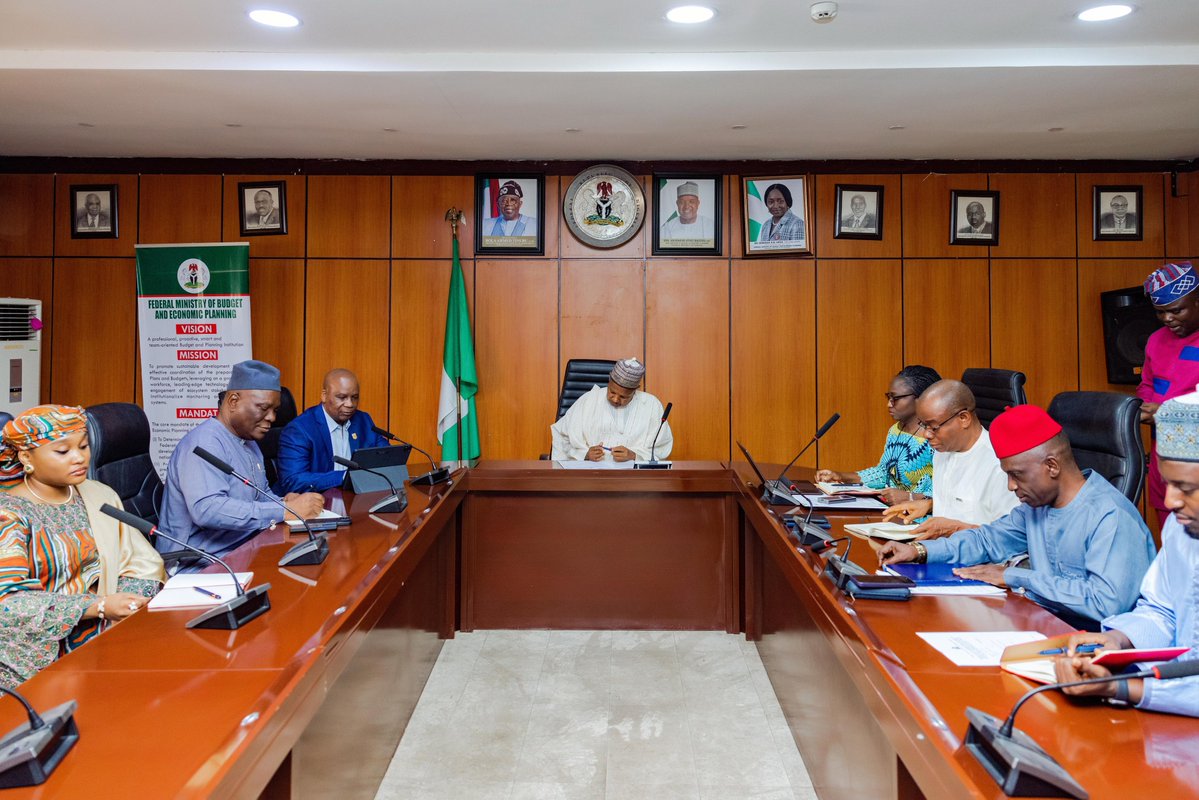
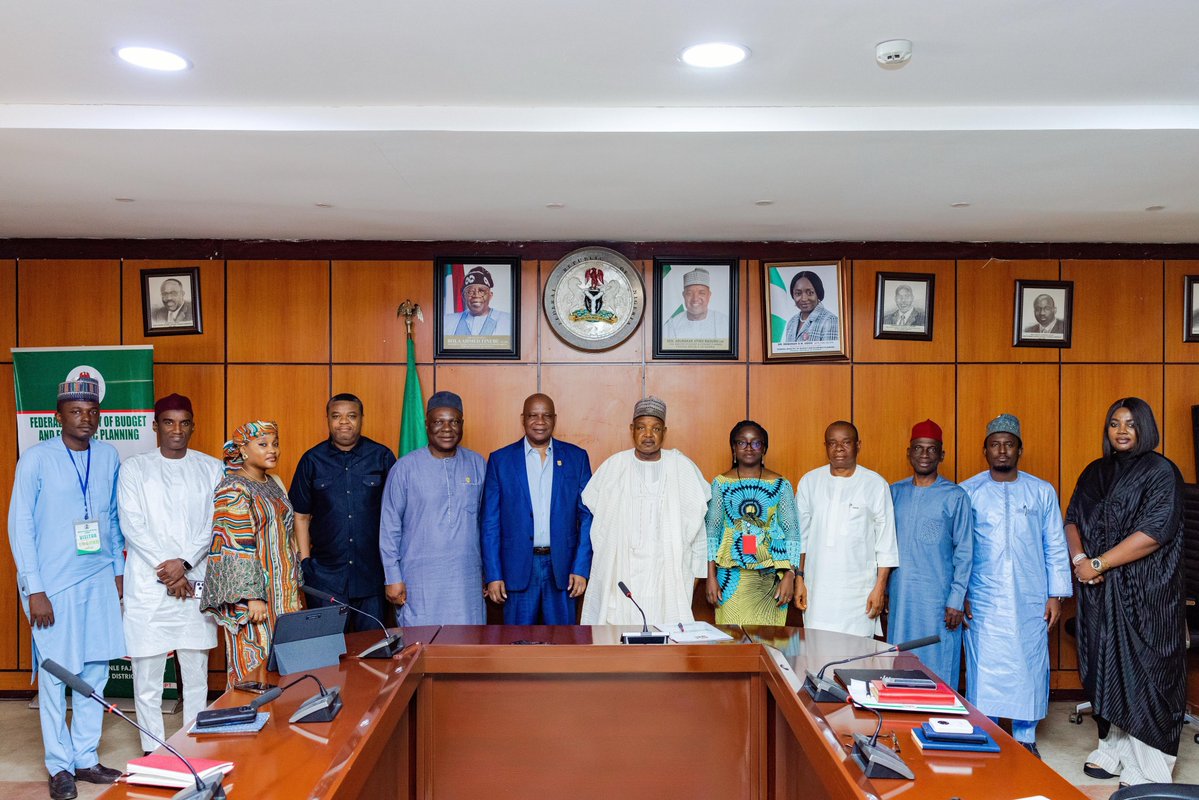
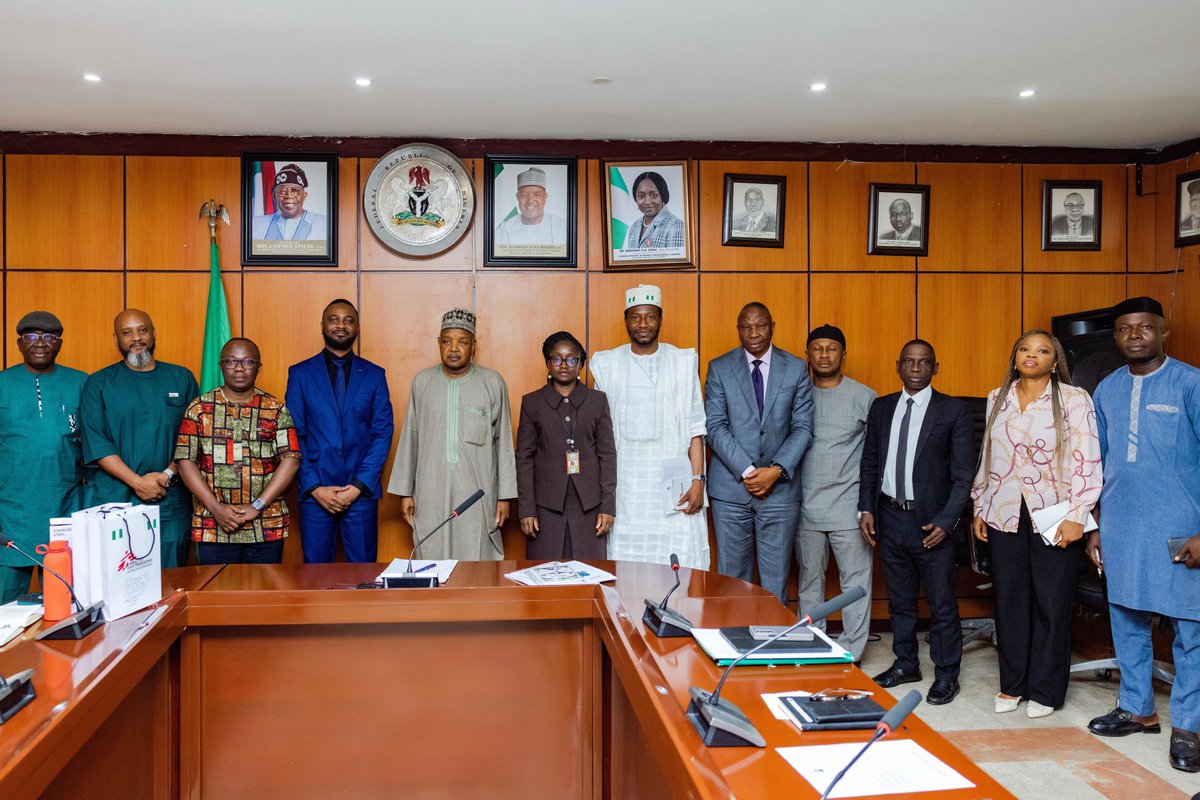
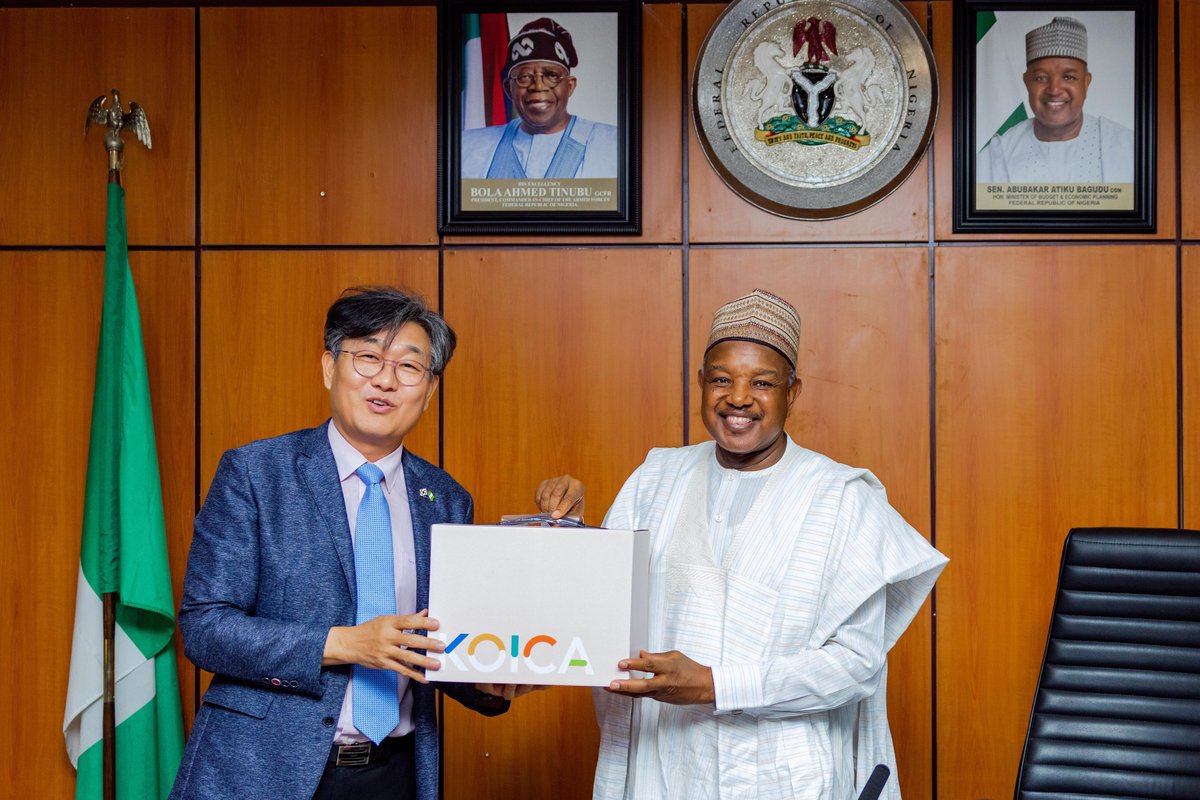
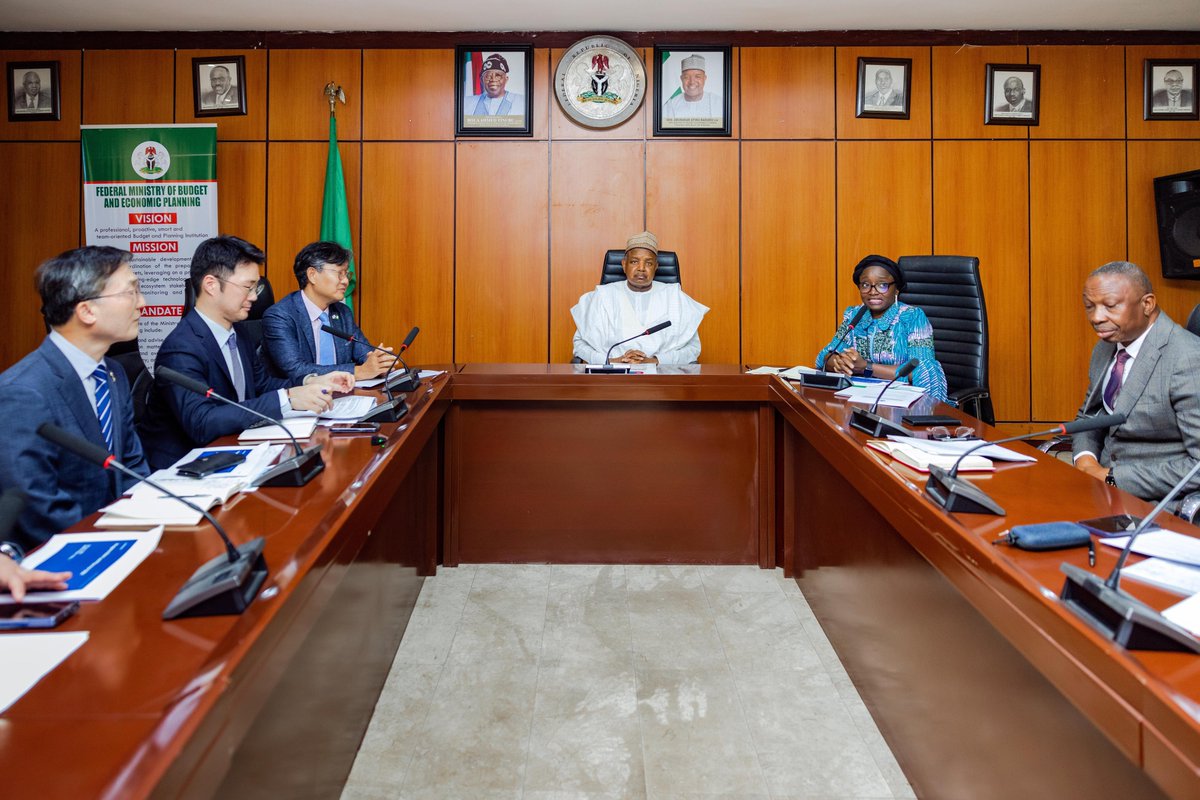
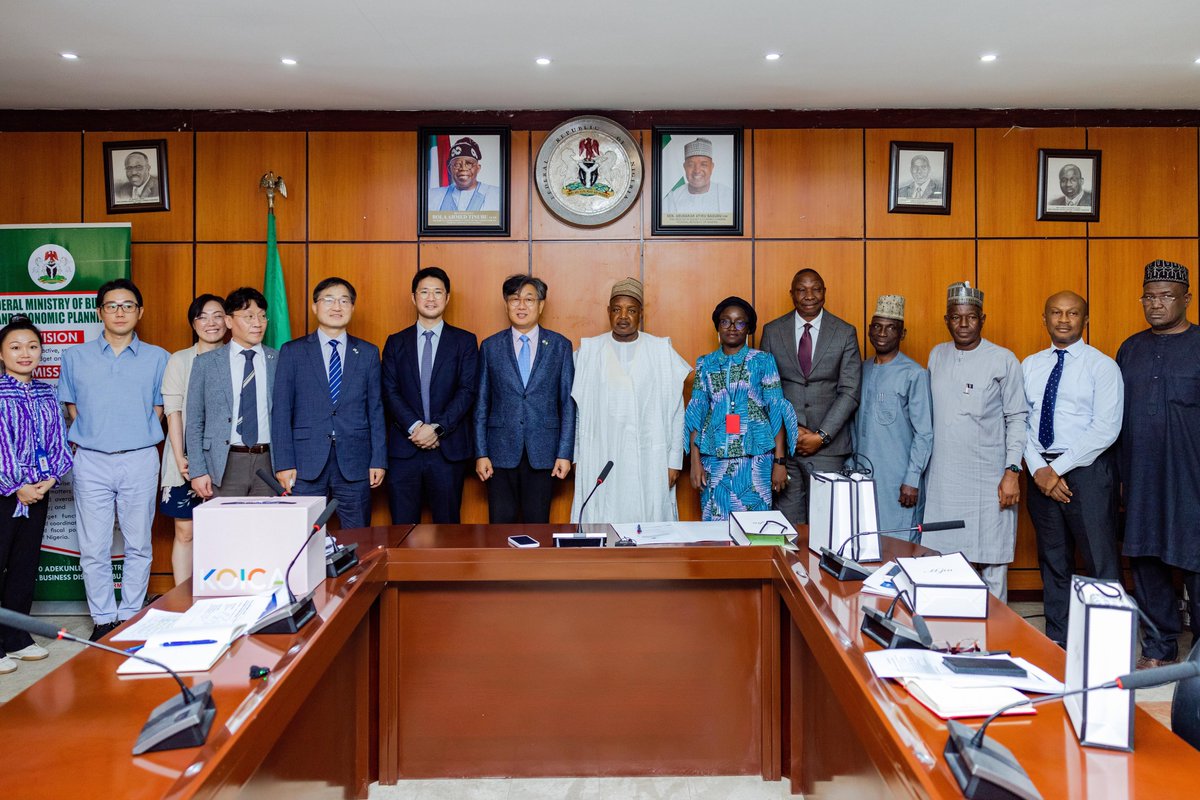
PICTURE 1: L–R: Senior Deputy Country Director, KOICA, Mr. Baik Ki-Hyun; Country Director, KOICA, Mr. Kim Eunsub; Minister of Budget and Economic Planning, Senator Abubakar Bagudu; Permanent Secretary, Federal Ministry of Budget and Economic Planning, Dr. Deborah Odoh; Director, International Cooperation, FMBEP, Dr. Sampson Ebimaro, during a meeting with the KOICA team on the project “Strengthening Youth and MSMEs through the Establishment of a Start-up Digital Innovation Academy” at the Ministry’s headquarters in Abuja on Monday, January 26, 2026. PHOTOS: FMBEP
Bolaji Adebiyi tweet mediaBolaji Adebiyi tweet mediaBolaji Adebiyi tweet mediaBolaji Adebiyi tweet media
English
0
1
7
461
Federal Ministry of Budget & Economic Planning NG
Sen. Abubakar Atiku Bagudu (CON) makes an Appearance on NTA Tuesday Live program The Hon.Minister will be the guest on NTA Tuesday Live program with Cyril Stober. He will be discussing on the topic, "Nigerian Economy and the Agricultural Sector in 2025 and Prospects for 2026"
English
1
1
2
291
Federal Ministry of Budget & Economic Planning NG
reshape bureaucracy for better governance and operational efficiency. Congratulations to our Permanent Secretary Dr. Mrs. Deborah O.N. Odoh for the smooth take off of the ECM in the Ministry.
English
0
0
0
250
Federal Ministry of Budget & Economic Planning NG
of Management Staff of the Ministry. The program which had as it's theme, ' Driving Efficiency, Transparency and Digital Transformation in Service Delivery' is aimed at encouraging Ministries, Departments and Agencies of government to go paperless and thereby eliminate wastages,
English
0
0
0
186
Federal Ministry of Budget & Economic Planning NG
The Federal Ministry of Budget and Economic Planning (FMBEP) had its Go-Live ceremony on Enterprise Content Management (ECM), on 16th December, 2025. The Head of Civil Service of the Federation Mrs. Didi Esther Walson -Jack OON, Mni performed the launch of the ECM to the delight
Federal Ministry of Budget & Economic Planning NG tweet media
English
0
0
3
231
Federal Ministry of Budget & Economic Planning NG retweetledi
Bolaji Adebiyi
Bolaji Adebiyi@BolajiAdebiyi2·
PRESS STATEMENT FG, World Bank Commit to Expanding Social Protection, Economic Opportunities The Federal Government and the World Bank have reiterated their commitment to expanding social protection systems and economic opportunities for the poor and vulnerable citizens. The assurance was given during the visit of the World Bank Regional Manager for Social Protection and Labour for West and Central Africa, Mr Robert Chase, to the Minister of Budget and Economic Planning, Senator Abubakar Bagudu, in Abuja on Wednesday. Welcoming the bank’s official, who was visiting Nigeria for the first time since his appointment, the minister expressed deep appreciation for the development institution’s continuous support, noting that Nigeria’s macroeconomic reforms and social protection programs have benefited substantially from the partnership. He also welcomed the ministry’s new Permanent Secretary, Dr Deborah Odoh, to her first formal engagement with the bank, commending her strategic expertise and leadership in social policy and reform implementation. Bagudu stated that the Nigerian Constitution mandates the federal, state, and local governments to pursue shared national objectives, including social welfare and inclusive development. He explained that this legal framework guides the ministry’s leadership in coordinating social protection policies and ensuring alignment across all tiers of government. The minister highlighted the importance of coherence in social enhancement programs, including NG-CARES, the Nigeria for Women Project, and the HOPE Agenda, pointing out that they should operate in a harmonised ecosystem. He advocated for functional ward-level governance structures to prevent overlaps, resolve conflicts, and strengthen community participation and sustainability. Speaking on poverty prevalence, the minister explained that although most Nigerians are hardworking, they are trapped in poverty because their economic returns are limited. He, therefore, emphasised the urgency of scaling interventions that support livelihoods, enhance resilience, and expand opportunities, particularly amidst internal displacement and multidimensional poverty challenges. “Mr President has challenged us to translate these reforms into measurable improvements in people’s lives. Our goal is to lift millions out of poverty by 2030 through coordinated programs, strengthened efficiency, and expanded financing,” Bagudu stated. The minister highlighted the ministry’s central role in coordinating national development efforts, fostering collaboration across all tiers of government and international partners. He commended the World Bank delegation for its continued commitment to Nigeria's development and expressed confidence that the renewed engagement will unlock greater opportunities for inclusive growth across Nigeria. Welcoming the delegation, the Permanent Secretary, Dr Odoh, described the World Bank as a longstanding and dependable partner in Nigeria’s development journey, noting the transformative impact of its technical and financial support across the country’s social protection and macroeconomic reforms. She stated, “We are proud of the progress achieved so far and optimistic about the future. We especially welcome the new Regional Manager for Social Protection, and we trust that he will find Nigeria both enriching and welcoming.” Odoh assured Chase of the Federal Government’s unwavering commitment to deploying all available resources towards realising President Bola Tinubu’s vision for a more inclusive and resilient nation.” Chase commended Nigeria’s leadership and innovation in delivering large-scale social protection programs, which he described as expansive, innovative, and a model across the continent. He emphasised the strong national ownership of NG-CARES, noting that the World Bank’s US$750 million support has been leveraged by more than US$2.2 billion in state-level investments. He stated that the first phase of NG-CARES will be concluded by 2025, with Additional Financing expected to become effective by December 9 and fully launched in January 2026, to ensure seamless implementation. The next phase, he explained, will expand cash transfers, identification systems, and livelihood support in alignment with the World Bank’s Country Partnership Framework for Nigeria. Caption: L-R: World Bank Regional Manager for Social Protection and Labour for West and Central Africa, Mr Robert Chase, Minister of Budget and Economic Planning, Senator Abubakar Bagudu, and the ministry’s Permanent Secretary, Dr Debora Odoh, during the visit of the World Bank’s official in Abuja on Wednesday, 03/12/25. PHOTO: FMBEP
Bolaji Adebiyi tweet mediaBolaji Adebiyi tweet mediaBolaji Adebiyi tweet media
English
0
1
1
287
Mallam jabir
Mallam jabir@Mallam_jabeer·
If you want to have a proper and comprehensive understanding of insecurity in the North, read this paper. I was present during the lecture presentation. Drop your email for the soft copy .
Mallam jabir tweet media
English
2.2K
1.1K
3.7K
733K