The Plumb Line

255 posts

The Plumb Line banner
The Plumb Line

The Plumb Line

@PlumbLine271

Exploring Church history, Scripture, & authority through a Reformed lens. Amos 7:7-8.

Katılım Şubat 2026
71 Takip Edilen18 Takipçiler
The Plumb Line
The Plumb Line@PlumbLine271·
@redeemed_zoomer @AnglicInn Most of the beautiful historic Congregations in SC are ACNA. St Michael’s built in 1751, St Philips church 1680 (oldest Anglican congregation south of Virginia), and Old Saint Andrew’s parish church 1706 being examples.
English
1
0
3
243
Redeemed Zoomer
Redeemed Zoomer@redeemed_zoomer·
@AnglicInn ACNA is a rare aesthetic - failing to live up to the beauty of old mainlines but you can tell they’re trying
English
5
0
37
1.7K
The Plumb Line
The Plumb Line@PlumbLine271·
@AccentsSouthern Woah now. Rebels implies they weren’t their own country. This was a war between the States, not a rebellion.
English
1
0
1
22
Southern Accents
Southern Accents@AccentsSouthern·
Excellent post, as always, from Echos of War about our VMI boys’ bravery on this day in 1864. Your ancestors were not evil, and you come from a long line of noble, courageous rebels. May we strive each day to make the our lives worth their sacrifice.
Echoes of War@EchoesofWarYT

May 15, 1864. The Shenandoah Valley. A Union army marched south to burn the breadbasket of the Confederacy. Standing in its way: John C. Breckinridge, former Vice President of the United States, the man who had run against Lincoln in 1860, with 4,500 men he didn't have. Among them, 257 cadets from the Virginia Military Institute. The youngest was 15. They had marched 80 miles in four days to reach the field, sleeping in the rain, eating nothing but hardtack. Breckinridge ordered them held in reserve. "I will not put those children in," he said. By afternoon, his center was buckling. He turned to his aide, eyes wet. "Put the boys in, and may God forgive me for the order." They advanced through a rain-soaked wheat field. The Virginia mud was so deep it sucked the shoes from their feet. The locals would call it the Field of Lost Shoes forever after. They didn't run. They didn't break. They charged a Union battery in the open, and took it. One cadet swung the captured gun around and fired it back at the retreating Federals. 10 boys died. 47 fell wounded. The youngest killed was 17. 162 years later this morning, VMI will call their names. A bugler will play. The Corps will stand silent in formation. They have done this every May 15 without missing a year.

English
10
23
326
8.8K
The Plumb Line retweetledi
Ryan Burge 📊
Ryan Burge 📊@ryanburge·
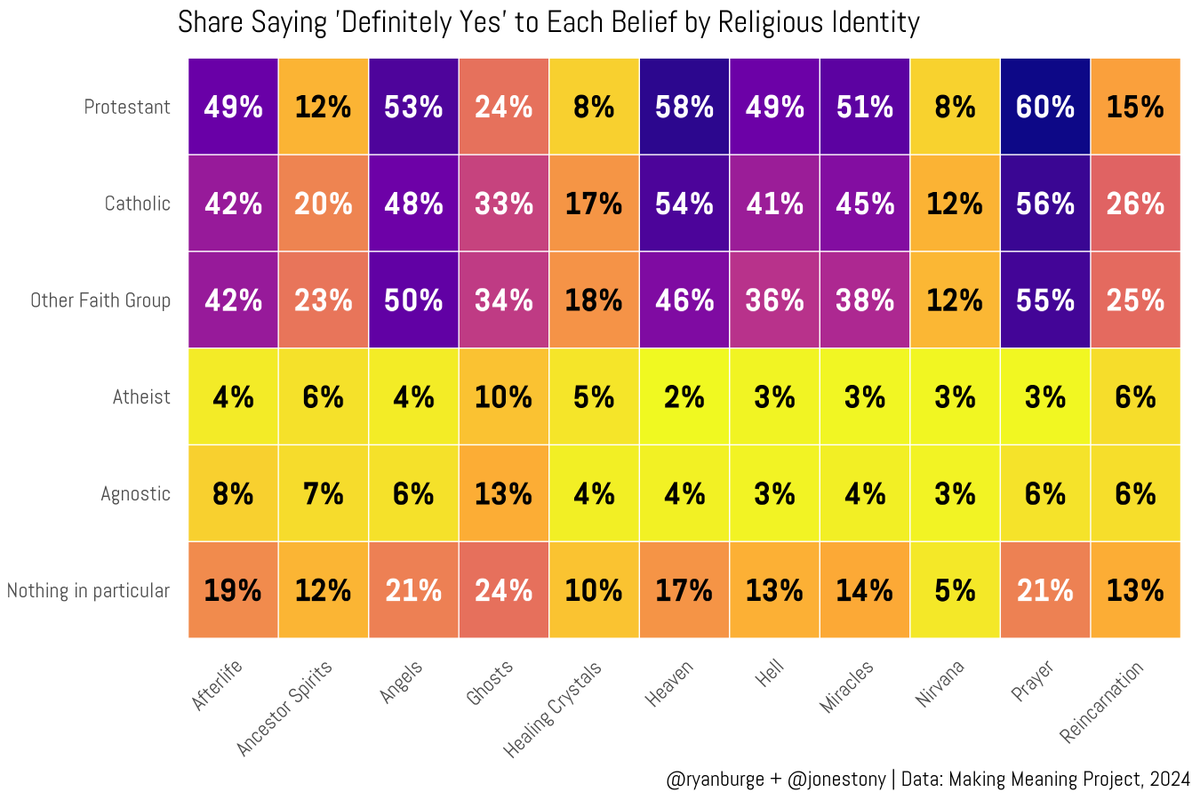
Catholics are 11 points more likely to believe in reincarnation than Protestants. And 9 points more likely to believe in ghosts. However, they are 6 points less likely to believe in miracles and 8 points less likely to believe in Hell.
Ryan Burge 📊 tweet media
English
41
41
259
60.7K
The Plumb Line retweetledi
Redeemed Zoomer
Redeemed Zoomer@redeemed_zoomer·
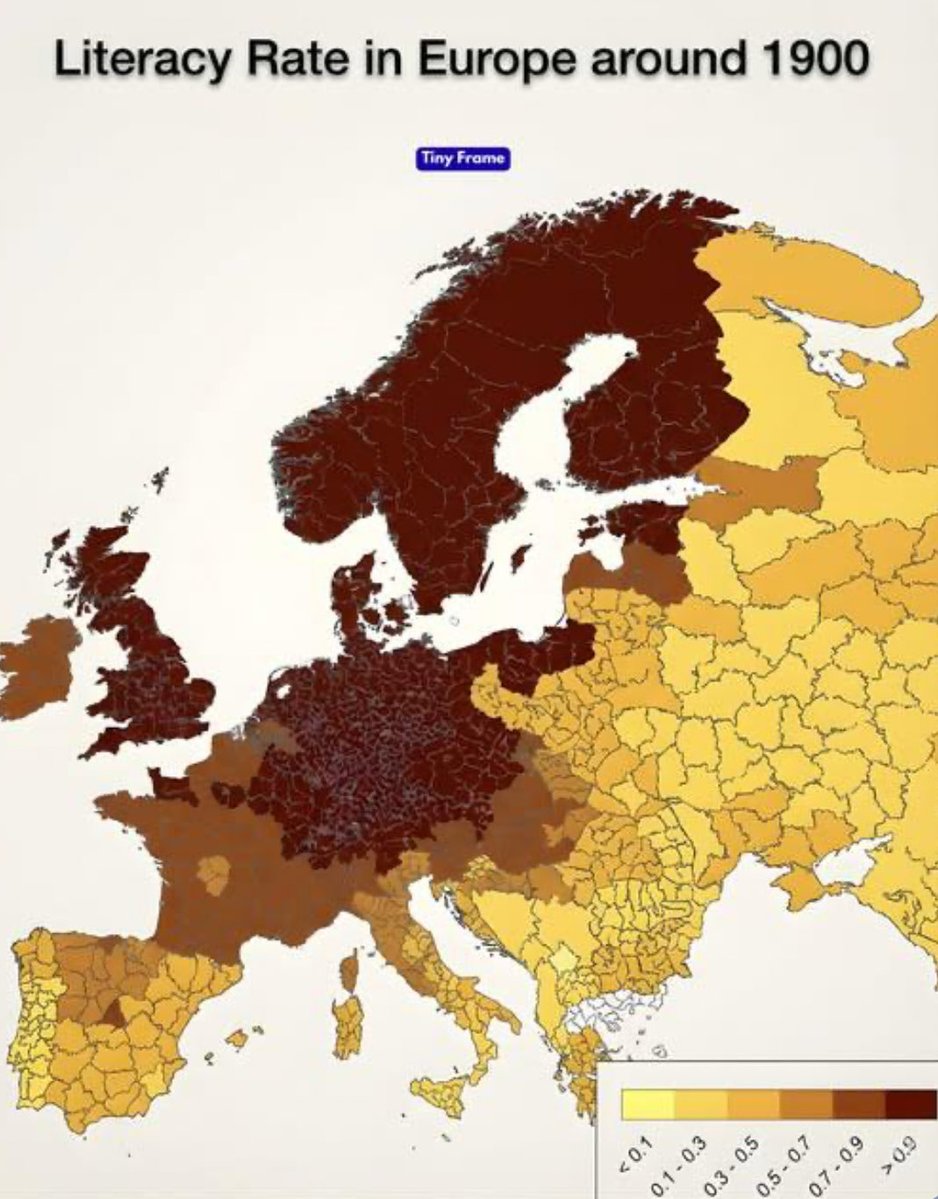
Protestants had some of the only pre-industrial societies with mass literacy
Redeemed Zoomer tweet media
English
195
99
942
90.8K
The Plumb Line retweetledi
Redeemed Zoomer
Redeemed Zoomer@redeemed_zoomer·
I know about an equal number of faithful Christian women horribly burned by men as vice versa. Total depravity is everywhere, let's not blame each other like people did in Genesis 3. Ragebait posts that try to turn men and women on each other are NOT good for our birthrates.
English
17
24
378
10.3K
The Plumb Line retweetledi
Ryan Burge 📊
Ryan Burge 📊@ryanburge·
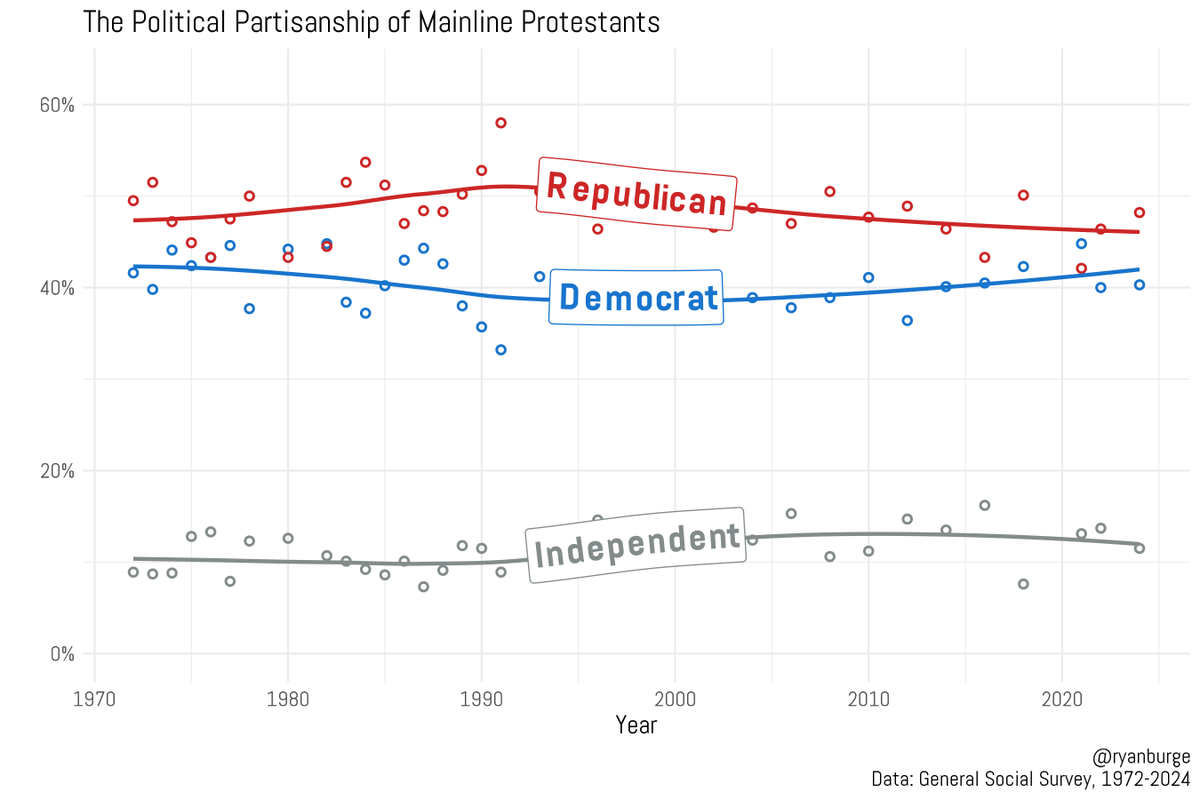
The average mainline Protestant is more likely to be a Republican than a Democrat. That was true in 1972. It was true in 2002. And it's still true today.
Ryan Burge 📊 tweet media
English
6
24
191
27.6K
The Plumb Line
The Plumb Line@PlumbLine271·
Sola Scriptura exploded Literacy in Protestant areas of Europe because Protestants thought it was important everyone could read the Bible and consequently believed it was important everyone could read. Believe everyone regardless of social class should be able to attend school and get an education? Thank Sola Scriptura.
The Plumb Line tweet media
English
0
0
2
44
Uche is a girl
Uche is a girl@UcheMaryOkoli·
I'm just curious 🤔. What have we benefitted from sola scriptura? I can name a thousand things the world has benefitted from the Catholic Church. But I can't name one single good thing that has come out of sola scriptura or what the world has benefitted from it. Does anyone here know?
English
54
2
41
12.3K
The Plumb Line
The Plumb Line@PlumbLine271·
Therein lies the flaw, you cannot read scholastic definitions of terms back into non-scholastic authors. Therefore, you can not determine deductively that when John Knox writes about baptismal regeneration he means something different than a given church father - especially while asserting a scholastic like Aquinas did. Moreover I believe you’ve misunderstood my point with Jerome. Certainly Jerome believed in the episcopate, however the ontological identification and development is the point pressed. That doesn’t imply however that a presbyter structure of governance would be invalid.
English
1
0
0
12
Chad Autist (anti-woke)
Chad Autist (anti-woke)@AN1Guitarman·
I read most of them, they don’t affirm all these things in the same way, and unanimous consent doesn’t mean 100% of people writing at the time needed to agree. Also Jerome very significantly submitted to the bishop of Rome with his translations so it’s odd to say that that was not completely understood in his time. There was crystal clear long before him. Even if some of these confessions use the same words to describe some of their doctrine, they don’t always mean the same thing, and none of them mean the same thing as the early church fathers did. That’s more than enough to make RZ’s statement objectively false.
English
1
0
0
18
The Plumb Line
The Plumb Line@PlumbLine271·
He isn’t reformed 😂. Read the Westminster Standards. Reformed theology teaches the old and new covenant are different administrations of the same covenant of grace - that is the Old Testament church is the New Testament church and people were justified in the Old Testament by faith as in the new. Obviously there are discontinuities but these are from changes in administration not substance.
English
0
0
0
132
𝕊𝕠𝕝𝕒 ℂ𝕙𝕒𝕕 🎚️
Ben Shapiro: “The main pitch for me to become Christian would be to get rid of all the rituals. As a Jew, I do more rituals than you as a Catholic. Catholicism is more similar to Judaism than Protestantism. Catholicism essentially backfilled all the rituals of Judaism.” That’s because Rome teaches a false gospel filled with rituals. The Biblical gospel teaches that we’re saved by grace through faith apart from works. Ben would love being a Protestant.
English
332
155
2.4K
800.8K
Pope Respecter
Pope Respecter@poperespecter1·
@sola_chad @JoshuaBarzon Catholicism is in continuity with the Old Testament. The Old Testament rituals pointed to a Messiah that was yet to come. The New Testament rituals point to a Messiah that has come.
English
0
0
0
9K
The Plumb Line
The Plumb Line@PlumbLine271·
All historical protestant churches teach 1) God Imputes his righteousness when we are justified and infuses his righteousness as we are sanctified. 2) Justification is by faith alone but sanctification is by faith and works. 3) Justification saves but sanctification always follows justification. Sanctification means “to make holy.” Justification means “to declare righteous.”
English
0
0
4
151
Jessica — Meek & Wild
Jessica — Meek & Wild@swamthetiber25·
I think one of the bigger differences between Catholicism/Orthodoxy and evangelicalism/protestantism. We aren’t righteous in the sight of God because He covers our sin in the way flowers might cover a heap of dung- as made popular in the common evangelical view of penal substitutionary atonement. We ARE made righteous, not just covered over.
English
19
3
40
9.7K
The Plumb Line
The Plumb Line@PlumbLine271·
Always found this one of the sillier Catholic arguments which relies on a virtual denial of history up to this point. Catholic nations have historically been poorer, less stable, and more prone to left wing totalitarianism than historically protestant countries: Countries run by Left Wing dictatorships in the 20th century or prior - many of these governments were popularly elected indicating problem was the people: - French Revolution (anti-clerical) - Spanish Republic (Socialist/Communist and anti-clerical) - Bolivia - Argentina under Peronist regimes - Venezuela under Chavez - Chile under Allende - Mexico (socialist and anti-clerical under multiple occasions) - Nicaragua under Sandista (under Ortega today) - Peru under Alvarado - Panama under Torrijos - Guatemala under Árbenz - Cuba under Castro - Socialist Italy under Mussolini - Communist Poland - Communist Czechoslovakia - Communist Lithuania *many of these countries have had multiple coups/dictators so any of the given governments may seem short but demonstrates point about instability.* Even today: - Spain - one of the most liberal countries in the EU is on the verge of socialism currently. - Brazil under Lula - Belgium - hyper liberal - France - extremely liberal - Bolivia, Cuba, Paraguay, Venezuela, Nicaragua - still socialist.
Flag Mouse🇻🇦✝️🇺🇸 🇵🇱🇩🇪✝️@GringoPapist

Why did Protestant nations descend into liberal disorder far faster than Catholic nations?

English
0
0
0
32
The Plumb Line
The Plumb Line@PlumbLine271·
This is not true - spend some time in South America. In fact protestant nations have been more stable and far less extreme than Catholic countries - with the obvious outlier of Hitler but this was the same time as Mussolini, Franco, Stalin, and others so it isn’t an outlier that can be pinned on Protestantism. Also: - French Revolution - Communist waves in South America - Communism in Spain (lead to Spanish Civil War) - The USSR (established in orthodox country) - Ukraine (historically orthodox) - Consider that most historically protestant countries in Europe still have their monarchs.
English
0
0
2
172
The Plumb Line
The Plumb Line@PlumbLine271·
Very true. In fact the most influential author for theological language in English is William Tyndall. He coined hundreds of terms including atonement, scapegoat, Passover, and long-suffering as well as many more common words like fisherman, busybody, castaway, and brokenhearted. His impact on the English language is comparable to Shakespeare’s.
English
0
1
30
4.1K
Become A Saint
Become A Saint@BeSaintly·
Goodbye = God be with you Holy smoke = election of a Pope Breakfast = break the fast Holiday = Holy Day People have forgotten who they are, they don’t even know what the words they are saying actually mean.
English
294
3.2K
43.9K
1.4M
The Plumb Line retweetledi
Redeemed Zoomer
Redeemed Zoomer@redeemed_zoomer·
There is nothing that the Church Fathers unanimously agreed on that the Protestant Confessions do not also teach
English
237
33
668
160.8K
The Plumb Line
The Plumb Line@PlumbLine271·
Several of them do match, others match generally. The argument however wasn’t that all of them agree with the Protestant Cannon. The argument was whether the deuterocanonical books were cannon has been disputed in every age. Some people rejected all of them, some people rejected some but not others, and some people accepted all of them. Athanasius falls in the category of rejected most but not the books - that’s fine because it still supports the claim the canon was disputed. Your argument however was that only two people disputed the 73 book cannon which is obviously false.
English
1
0
0
13
Christian Goomba
Christian Goomba@Chi_Rho_Goomba·
@PlumbLine271 You haven't actually looked at these, because none of them match your canon. You're just repeating lies someone told you For example, Athanasius included Baruch in his protocanon and excluded Esther, and still considered his deuterocanon inspired scripture
GIF
English
2
0
1
56
The Plumb Line
The Plumb Line@PlumbLine271·
Only two? I’m always happy to dispel unwarranted confidence: Melito of Sardis (170 AD): Matches the Protestant canonical books (22 in combined count; equivalent to 39 Protestant OT books). No deuterocanonicals. Origen of Alexandria (185-253 AD): Listed the 22 Hebrew canonical OT books “as the Hebrews have handed them down.” Excluded deuterocanonicals from the core canon. Athanasius of Alexandria (367 AD, 39th Festal Letter): Complete 66-book equivalent list (22 OT + 27 NT). Placed the 7 deuterocanonicals in a separate “books to be read” category for instruction/edification but not canonical Scripture. Classic two-tier. Cyril of Jerusalem (350 AD, Catechetical Lectures): 22 OT books matching Protestant canon. Warned against apocryphal writings; restricted public reading in worship to the canonical books. Hilary of Poitiers (310-368 AD): 22 OT books per Hebrew tradition. Noted that “some add Tobit and Judith” but did not treat them as core. Gregory of Nazianzus (329-390 AD): Listed only the canonical OT books (22, sometimes omitting Esther). Epiphanius of Salamis (310-403 AD): 22/27 OT books matching Hebrew canon. Treated Sirach and Wisdom as “disputed”; used a two-tier framework (core Scripture vs. lesser/edifying books). Rufinus of Aquileia (345-411 AD): Listed the 22 Hebrew books as “canonical.” Called deuterocanonicals “ecclesiastical books” - readable in church for edification but not for confirming doctrine. Jerome (347-420 AD): Strongest advocate for the Hebrew canon (22 books). Explicitly called Wisdom, Sirach, Judith, Tobit, Maccabees, etc., “not in the canon” (apocrypha). Translated them at request but maintained the two-tier view. (Basis for many later scholars.) John of Damascus (675-749 AD): Accepted the 22-book Hebrew OT as canonical. Called Sirach/Wisdom “virtuous… but not counted” in the canon. Hugh of St. Victor (1096-1141 AD): Followed Jerome exactly (22 Hebrew divisions). Deuterocanonicals for edification but not canonical. Nicholas of Lyra (1270-1340 AD): Same as Hugh; deuterocanonicals for morals/history only, not proving faith. Cited Jerome. Cardinal Cajetan (1469-1534 AD): Pre-Trent Catholic scholar. Followed Jerome: deuterocanonicals not for confirming doctrine/faith, only edification. Council of Trent (Session 4, April 8, 1546): 24 in favor, 15 against, 16 abstentions on the decree (including anathema) that equated the 7 deuterocanonicals fully with the protocanonicals. And perhaps most notably: Pope Gregory the Great (590-604 AD): In Moralia in Job (Book 19, ch. 34): “We are not acting irregularly, if from the books, though not canonical, yet brought out for the edification of the Church, we bring forward testimony” (quoting 1 Maccabees 6:46). Clear two-tier example. Also worth noting this is not an exhaustive list, but a mere sampling from every age to demonstrate whether the 7 DC books are cannon or merely edifying is a debate that has been with the church in every age.
Christian Goomba@Chi_Rho_Goomba

@PlumbLine271 @marcado_razon @Rblv73 @WesleyLHuff Because there arn't any Closest you'll get is Melito, but he's not giving us a Chirstian canon, but a rabbinic Jewish one, and Jerome, who included the additions to Daniel and Ester that protestants reject And neither of them thought they had the Church's authority to decide

English
1
0
0
42
The Plumb Line
The Plumb Line@PlumbLine271·
Not any of the people you listed thought they had the authority to decide the canon for the entire church either - until Florence, so I suppose listing anyone’s thoughts before Florence is irrelevant by your logic. Moreover what they taught is incredibly important, but this notion that you must agree with them 100% on everything or you “don’t care what they taught” or can’t reference them is a nonsense position. No one agrees with them 100% on everything not even the Catholic church.
English
0
0
0
10
Christian Goomba
Christian Goomba@Chi_Rho_Goomba·
@PlumbLine271 Futhermore, you don't actually care what any of these men thought. Not one of them thought they had the authority to determine the canon for the entire Church, or believed the things you do. You're just abusing them to justify your disobedience
Christian Goomba tweet mediaChristian Goomba tweet media
English
1
0
0
13