Divyaratan Popli

40 posts

Divyaratan Popli

Divyaratan Popli

@PopliRatan

Doctoral researcher, @MPI_EVA_Leipzig Interested in population genetics, human evolution and prehistory

Katılım Nisan 2021
179 Takip Edilen216 Takipçiler
Divyaratan Popli retweetledi
Leonardo N. M. Iasi
Leonardo N. M. Iasi@IasiLeonardo·
Out today in @sciencemagazine, we've journeyed into our shared history with Neandertals by analyzing over 300 present-day and ancient modern humans, including 59 individuals who lived between 2,000 and 45,000 years ago. science.org/doi/10.1126/sc…
English
3
38
109
37.7K
Divyaratan Popli
Divyaratan Popli@PopliRatan·
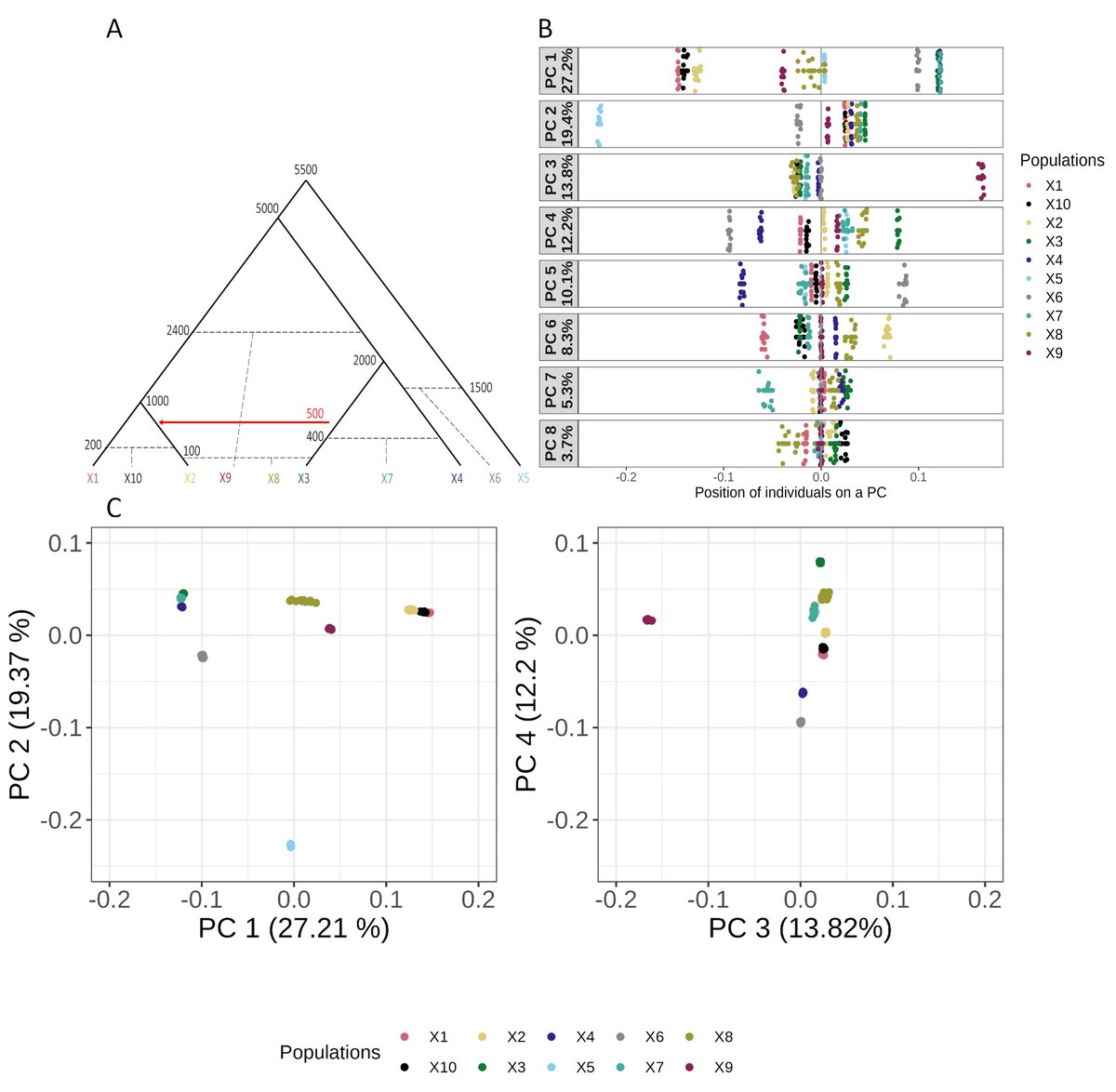
The estimation of PCA and F-statistics in a joint framework enables a quantitative interpretation of PCA plots. This gives us some insights for when different PCA methods should be used. We also discuss how PCs should be plotted when displaying population genetic variation.
Divyaratan Popli tweet media
English
0
1
2
215
Divyaratan Popli
Divyaratan Popli@PopliRatan·
PCA and F-statistics are routinely used in population genetic studies. We provide a statistical framework to combine them into a joint analysis, and show that this addresses some of the limitations of estimating them independently. Check out our preprint: biorxiv.org/cgi/content/sh…
English
4
10
31
2.3K
Divyaratan Popli
Divyaratan Popli@PopliRatan·
Finally, we apply the probabilistic PCA-based framework to re-analyze a published Neandertal dataset. We find that our framework has advantages when estimating individual-based F-statistics using pseudohaploid sequences.
Divyaratan Popli tweet media
English
0
0
0
113
Divyaratan Popli
Divyaratan Popli@PopliRatan·
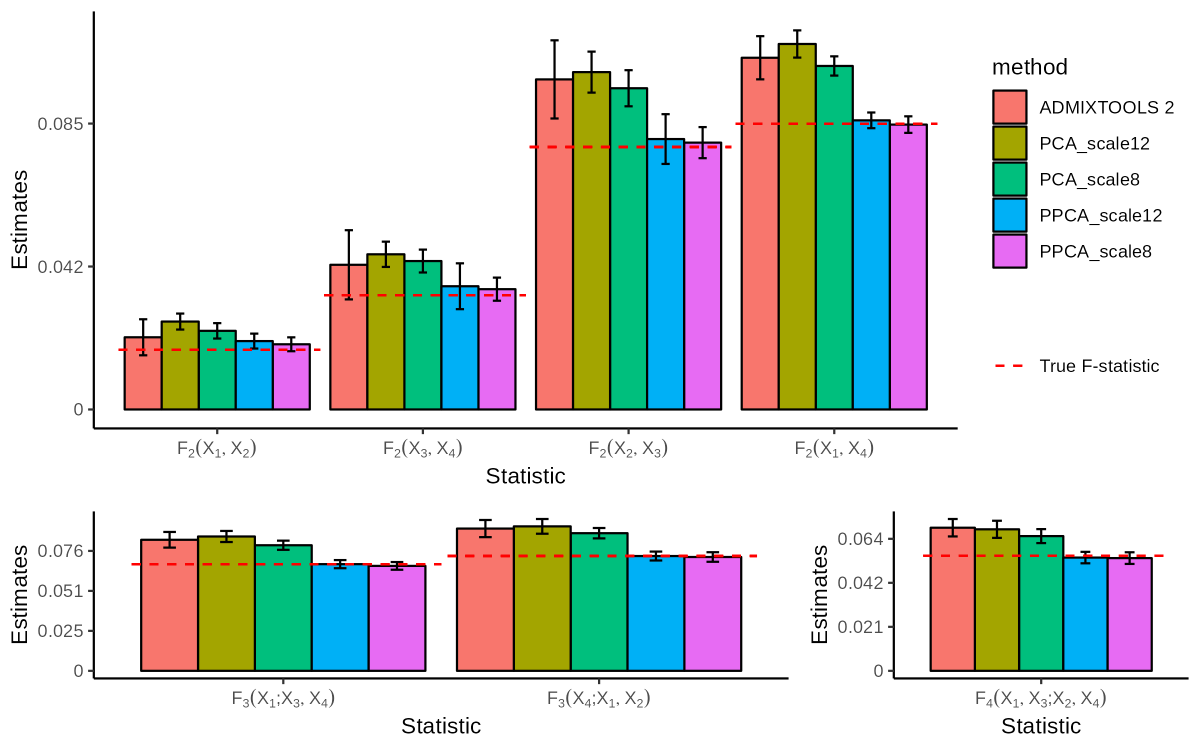
With simulations we show that F-statistics can be accurately estimated using a probabilistic PCA-based framework, even when only few samples are available for analysis, population assignments are not known a priori, and large amounts of the genotypes are missing randomly.
Divyaratan Popli tweet media
English
0
0
0
103
Divyaratan Popli
Divyaratan Popli@PopliRatan·
In particular, we discuss the differences in the modeling of sampling noise in genetic datasets by 3 PCA methods: classical PCA, Latent Subspace Estimation and probabilistic PCA, and show that F-statistics are more naturally interpreted in a probabilistic PCA framework.
Divyaratan Popli tweet media
English
0
0
1
135
Divyaratan Popli
Divyaratan Popli@PopliRatan·
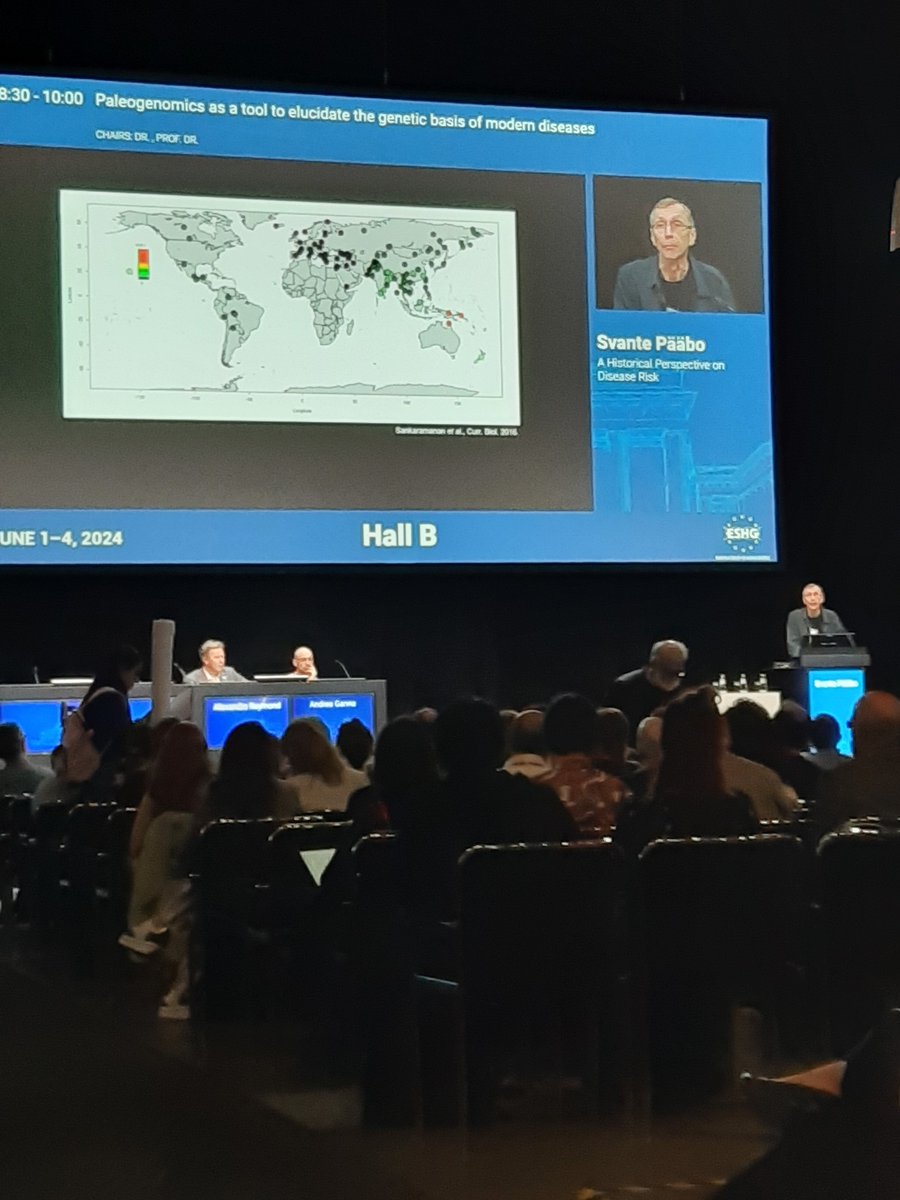
#eshg2024 starts with talk on studying disease risk with ancient DNA by Svante Pääbo
Divyaratan Popli tweet media
Eesti
0
0
5
155
Divyaratan Popli retweetledi
Mateja Hajdinjak
Mateja Hajdinjak@MatejaHajdi·
So incredibly proud of @ElenaEssel and @ElenaIreneZ ❤️ and the entire team behind this wonderful research, led by Matthias and @MarieSoressi. If you haven't had a chance yet, see the 🧵👇
English
1
7
45
5.8K
Divyaratan Popli retweetledi
Harald Ringbauer
Harald Ringbauer@HaraldRingbauer·
Excited to share that we are developing a method to detect relatives in ancient DNA up to the 20th degree using epigenetics. By analyzing joint methylation at CpG sites, we can infer genetic relationships even when no actual DNA is shared. More details in our upcoming preprint!
English
8
13
112
16.4K
Divyaratan Popli
Divyaratan Popli@PopliRatan·
@ShaiCarmi Thank you, in future we can add an option to input pseudo-haploid data as well. For now we compare all reads from a pair of individuals, and for libraries with ~1x coverage we utilize more data compared to random sampling, resulting in better confidence level.
English
0
0
5
0
Shai Carmi
Shai Carmi@ShaiCarmi·
Took the time to read the full paper. Brilliant work! This could become the go-to method for estimating relatedness in ancient DNA. p.s. Wondering if it can be implemented also with pseudo-haploid genotypes, which are often more accessible.
Divyaratan Popli@PopliRatan

Relatedness inference with low-coverage ancient DNA data is still a hard problem. Today, we posted a preprint presenting a new method called KIN that identifies close relatives up to 3rd-degree while differentiating parent-child from siblings: biorxiv.org/content/10.110… (1/3)

English
1
6
23
0
Divyaratan Popli
Divyaratan Popli@PopliRatan·
@Mick2474 Thanks, KIN can work for any diploid species. If the avg. recombination rate is similar to humans, it can be run directly. If not, then transitions need to be estimated as explained in our method section. You can specify the number of chromosomes as explained on the github page.
English
0
1
0
0
Mick Westbury
Mick Westbury@Mick2474·
@PopliRatan This looks like a super useful tool. Thanks for sharing. Are there plans to extend it to non human datasets? Specifically referring to the requirements of 21 chromosomes and them to be named accordingly?
English
1
1
0
0
Divyaratan Popli
Divyaratan Popli@PopliRatan·
Relatedness inference with low-coverage ancient DNA data is still a hard problem. Today, we posted a preprint presenting a new method called KIN that identifies close relatives up to 3rd-degree while differentiating parent-child from siblings: biorxiv.org/content/10.110… (1/3)
English
4
33
85
0
Divyaratan Popli
Divyaratan Popli@PopliRatan·
@EranElhaik Thanks, I'll add my email ID. 1) The script takes bam files as input, and does not randomly sample. Instead, all reads for first individual are compared to the other. In case of very low coverage, this is equivalent to pseudo haploid seq. 2) We report genomic windows in IBD.
English
1
0
0
0
Divyaratan Popli
Divyaratan Popli@PopliRatan·
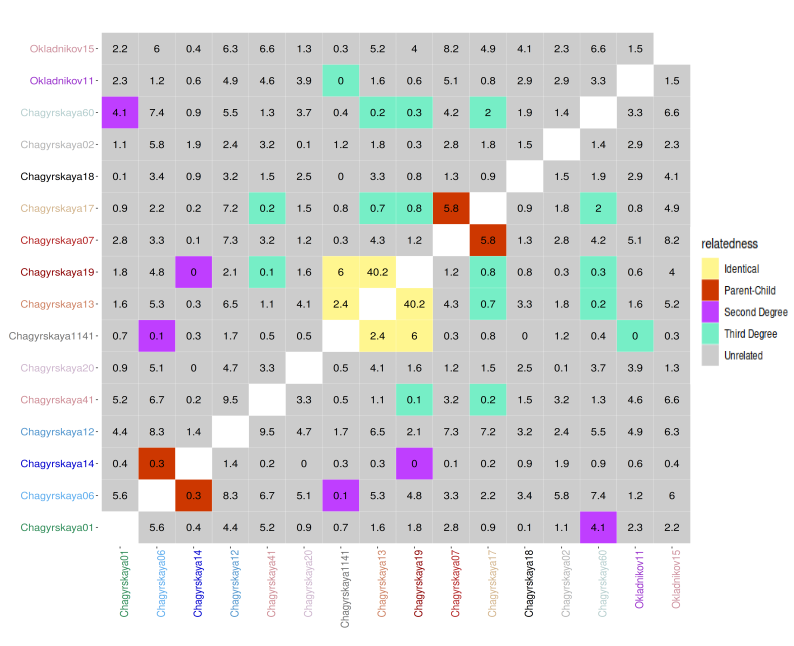
When applying our new method to the recently published Neandertal-family-data (nature.com/articles/s4158…), we confirm their results and find an additional third-degree relatedness! (3/3)
Divyaratan Popli tweet media
English
1
1
4
0
Divyaratan Popli
Divyaratan Popli@PopliRatan·
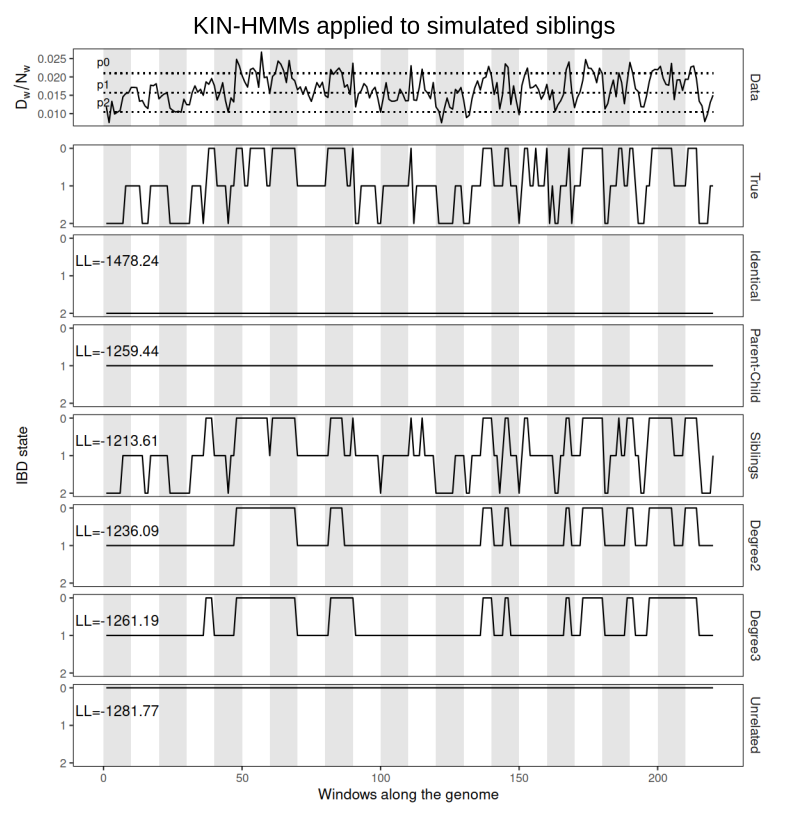
KIN uses an HMM to fit different relatedness categories to the genome, and we have added a few features tailored specifically to ancient DNA; for example we built in a contamination correction and an adjustment for runs of homozygosity. (2/3)
Divyaratan Popli tweet media
English
0
2
3
0